
A Visa card you load from your own wallet, with three tiers and one important blank space
 Available in US
The Tria card is a Visa card that spends from a self-custodial crypto wallet, and it comes in three tiers — a digital Lite card that is free, a plastic Pro card and a metal Max card priced by annual membership. The strengths that matter to most people are concrete: a very wide token and network list for topping up, a stated zero Tria foreign-exchange fee, and a self-custodial wallet so your funds do not sit with a provider. The weakness is equally concrete: on the pages I could read, the operating company is not named, and the reliability of the setup is the lowest of every criterion I scored. So the card suits a reader who wants to hold a lot of different tokens and reach Visa acceptance with them, and suits a reader much less if what they need first is a named, established institution behind the plastic.
The conditions described here are current as of October 28, 2026.
Verdict: 7.3 out of 10
I scored Tria at 7.3 out of 10. Not a rounding error — the card is genuinely strong on the things you touch day to day and genuinely unproven on the things that only matter when something goes wrong. Here is the whole breakdown.
| Criterion | Mark | Why |
|---|---|---|
| Who can get it | 8 / 10 | Eligibility turns on country of residence, with a 200+ region list in the app; an unlisted country fails KYC |
| Cost | 7 / 10 | Lite is $0, Pro $109 a year, Max $250 a year; Tria FX fee zero and no top-up fee, but the ATM charge is $1.00 plus 1% |
| Top-up options | 9 / 10 | 1,000+ tokens across Bitcoin, Ethereum, Polygon, Base, Arbitrum, Optimism, BSC, Aptos, Solana, plus USDC and USDT on L2s and Solana; minimums are BTC $50 and $10 for everything else |
| Reliability and complaints | 4 / 10 | Neither operator nor issuer is named on the official pages; Trustpilot sits at 3.4 out of 5 on only two reviews, one of them asking whether the company is legitimate at all |
| Everyday use | 9 / 10 | Lite is digital, Pro is plastic, Max is metal; Apple Pay and Google Pay work where supported; ATMs on Pro and Max, none on Lite |
The pattern to read across those five rows is that the card is generous on breadth and stingy on disclosure. Top-up options and everyday use both earn nines because the list of accepted tokens and networks is long, and because a Visa card plus mobile wallets is simply a usable combination. Reliability earns a four not because users complained in a pile — there are barely any reviews — but because I could not find the name of the company that runs the thing, and a thin review base is not evidence of quality.
There is also an unofficial trail worth flagging early, because it is the kind of thing that will surface the moment you search. A third-party site dated 2 Oct 2026 lists Tria’s Lite membership at $20 a year and an FX fee of 4% (3% FX plus 1% international). Neither matches the official pages, which say Lite is free and renews at $0, and that the Tria FX fee is zero while a Visa FX fee may still apply. I would treat both third-party figures as unconfirmed and go by what the app shows you for your region.
Will they give you the card?
The rule is by country of residence, not citizenship. Your documents have to match the country you selected, and you have to be physically there when you register. The app’s dropdown lists more than 200 regions — Australia, Canada, Germany, Hong Kong, the UAE, the UK and the US among the examples. If your country is not on that list, you will not get past KYC. Citizenship is not addressed at all on the pages I read, which is a gap rather than a permission.
Two further constraints are worth planning around. One account per person, so a second try with different documents is a duplicate-account problem rather than a fresh start. And physical shipping only exists “once shipping is officially enabled” for your country — meaning the digital Lite card is the version you can rely on in most places.
None of this tells you whether you would rather not deal with a KYC check at all, but that is a decision only you can make about your own situation.
How to get it
You buy the card first and do the verification afterwards, in the mobile app. Desktop is not supported for this, which is worth knowing before you start on a computer and stall. The app asks for your personal details, a valid identity document and a selfie photo. It is a one-time check — there are no tiers of verification to climb, no level one and level two.
What is not stated on the public pages: the specific document types accepted, and whether any proof of address is required. A help-centre article titled “KYC Document Requirements” is referenced, so the detail likely exists somewhere; I just could not read it on the page itself. The minimum age is 18.
If the check fails, the listed reasons are worth reading before you retry. Official rejection reasons include a duplicate account with the same documents or phone number, incorrect or incomplete data, suspected political exposure or sanctions involvement, missing documents, photos that are poor-quality or cannot be verified or that do not match the documents, an unsupported ID, and a wrong region — meaning the country you selected differs from your physical location or your documents. A VPN leads to a decline. Expired or damaged documents may not be accepted. Proof of address is not mentioned in any of this.
What a Tria card really costs: Fees
Here is the honest position: Tria’s own help centre does not state the membership prices in the body text. It tells you to check the Membership section in the app, because prices vary by region. The figures below are what I could establish — the renewal prices Tria has published, plus the card-level fees, which are stated clearly.
| Fee or limit | What it is |
|---|---|
| Lite membership | $0 — free, renews at $0 |
| Pro membership | $109 a year; promotional first-year price cited as $90 |
| Max membership | $250 a year; promotional first-year price cited as $225 |
| Deposit fee | No direct Tria service fee on card deposits “at this time”; provider fees may apply |
| Tria FX fee | Zero for members |
| Visa FX fee | May still apply — the zero is Tria’s own fee, not the network’s |
| ATM withdrawal (Pro, Max) | $1.00 plus 1% of the amount; $750 per transaction, 3 withdrawals per 24 hours; the article is Japan-specific |
| ATM withdrawal (Lite) | No ATM access |
| Daily spend limit | Stated as “up to millions per day”; no exact figure published |
| Cashback spend cap | $1,000 a month on Lite and Pro; $2,000 a month on Max |
| Free ATM allowance | Not stated |
Prices may vary by region and plan, and the app shows the exact figure for your case.
Let me walk through three everyday payments, because the fee structure makes more sense once you see it applied.
A coffee at 5.00 EUR. If you hold euro or a euro-pegged stablecoin in the card balance, you pay nothing to Tria beyond what you already spent. If the balance is in dollars and you are paying in euros, the conversion happens at the payment, and Tria’s own FX fee is zero — but the Visa FX fee may still apply, and that is the number to watch. Tria says travel-related fees stay under 1%. At a 1% spread on a small purchase, a 5.00 EUR coffee costs you a fraction of a cent extra. This is the everyday case where the card feels free.
An online subscription at 49.99 USD. Same arithmetic, same structure. What can bite here is not the fee but the decline: a card with a small balance, or one issued in a different country from the merchant’s expectations, can be refused at the till. Address verification is mainly offered in the US, Canada and the UK, and is generally unavailable for foreign-issued cards, which causes declines. That is a category-wide behaviour, not a Tria quirk, but it lands on you at the moment you were counting on the payment going through.
Withdrawing 200.00 USD from an ATM in Tokyo. Here the card is blunt: $1.00 plus 1% of the amount, on Pro and Max. That is $3.00 on a 200.00 USD withdrawal, plus whatever the ATM operator charges, which the card does not control. On Lite you simply cannot do it — no ATM at all. The per-transaction cap of $750 and the three-per-24-hours limit come from a Japan-specific help article, so treat them as indicative for Japan rather than a global rule. Whether any free allowance exists is not stated.
One thing the membership fee buys is cashback: Lite pays cashback on eligible spend at a basic rate, Pro higher, Max highest. The percentages are shown in the app and not stated publicly — and the unofficial source gives a Lite figure of 1.5% in USDC or USDT on the first $1,000 a month, paid quarterly in batches and within 12 months at the very latest, with unpaid cashback forfeited if the account closes. If you are relying on cashback to make the membership pay, check that number in your app before you upgrade.
How to Top up the card
This is the strongest part of the card and the reason I scored it nines. You can deposit 1,000+ tokens from the Tria wallet, and also fund from external wallets — Gemini and MiniPay are named — or buy with a credit or debit card.
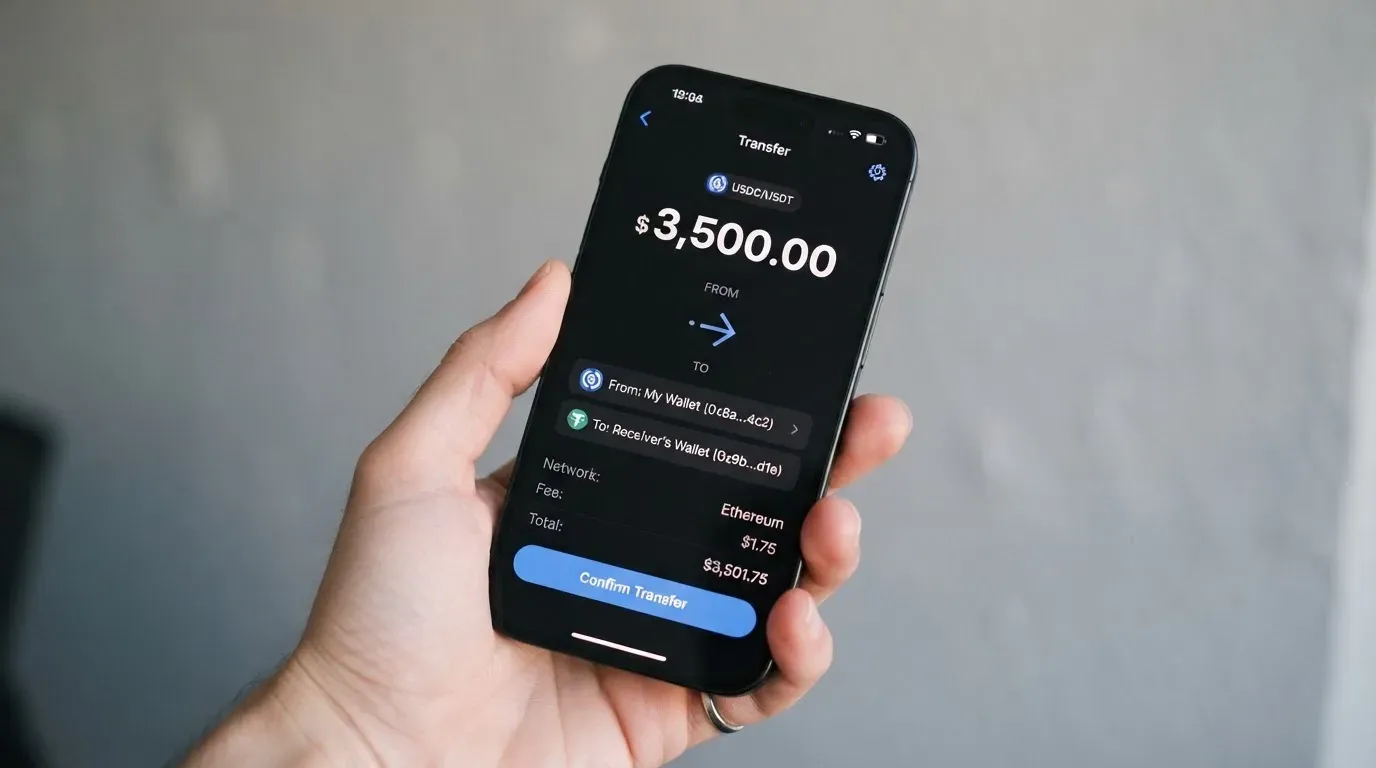
The minimums are simple: BTC $50, every other token $10.
The networks are Bitcoin, Ethereum, Polygon, Base, Arbitrum, Optimism, BSC, Aptos and Solana. Two exclusions catch people out. Avalanche is not supported for card top-ups. And SOL must be converted first — you cannot send Solana’s native token straight to the card.
Network fees are handled better than on most cards in this category: most chains are gasless, meaning you are not charged to deposit. Two are not. Solana needs native SOL in the wallet to pay its own fees. The Tron network charges a fee, which needs TRX. The rule of thumb most people land on: USDC and USDT on the L2s — Optimism, Arbitrum, Base, Polygon — are typically the cheapest route.
Timing is usually instant, with up to 2 to 4 hours in congestion. On the fee side, there is no direct Tria service fee on deposits at this time, but a “Provider Fee” covers swaps, liquidity routing and bridging, and it is shown in the app before you confirm. That is the figure to look at, not the headline zero.
On withdrawal, the wallet is self-custodial, and renewing or downgrading does not touch the wallet or the funds. What is not stated: withdrawing a card balance back to crypto or to a bank account, and what happens to the balance if you close. One behaviour is stated and worth knowing — if you do not renew, the card is not cancelled and keeps its number, but the account drops to Lite and the cashback rate goes away.
Paying with it every day
The card tiers differ in form more than function. Lite is digital only. Pro is a physical PVC card and includes a Lite card. Max is a metal card and also includes a Lite. All are Visa, and all convert to local currency (USD or EUR) at the point of payment. Multi-currency balances are not stated.
You can link the card to Apple Pay or Google Pay “where supported”. Whether that means everywhere, or a smaller list, is not spelled out on the pages I read — so if your phone is your main way of paying, treat that as something to confirm yourself rather than a given.
Cashback scales with tier, as above. Blocked merchant categories are not stated, which matters if any of your spending sits in a grey area — gambling is the classic one, and issuers block it by policy rather than law, with a different list at each issuer. You would have to ask support what Tria’s policy is, and I could not find it published.
The app is required for KYC, which means a phone. The platforms and App Store or Google Play ratings are not stated. Support is in-app; email, Telegram and hours are not listed, and the help centre is published in English, Japanese and Spanish.
If a payment fails and you are owed a refund: contact the merchant first to confirm the refund has started. It usually arrives within 14 business days of the merchant processing it, and Visa’s own processing can extend that to 31 business days. If nothing has happened after two weeks, contact Tria support with the refund transaction ID. A formal chargeback or dispute process is not stated — and a chargeback is a refund the issuer orders to settle a dispute, with reason codes such as fraud, duplicate billing or goods not received. Not being able to find that process described is a gap you should weigh if you plan to rely on this card for anything expensive.
What can go wrong
The first thing is the one I keep coming back to. On the official pages, the operator and the issuer are not named. Third-party listings name the issuer as Nimbus, LLC — unofficial, and not confirmed by the card. The operating company is still unnamed. I am not going to tell you this makes the card unsafe, because I cannot see the structure and you cannot either from these pages. I am telling you that when you are choosing between crypto cards, the ability to point at a registered entity with a regulator is worth real money, and Tria does not give you that on its public pages.
Second, the complaint surface is thin rather than clean. Trustpilot, as I read it, shows 3.4 out of 5 from exactly two reviews — one five-star from 25 March 2026, one one-star from January 2026 asking whether the company is legitimate. The profile is unclaimed, and there is no recurring theme to identify because there is barely any data. No App Store or Reddit data was found. Third-party reviews do call the “0% FX” marketing misleading, reportedly because the terms allow up to 3% FX — unverified, and it contradicts the official zero-fee statement, so treat it as a question to ask rather than a finding.
Third, the delivery model. Physical cards ship in batches, earlier buyers first, and only to countries where shipping is enabled. Delivery time and delivery cost are not stated. In-app physical-card reissue is “still pending”, and replacement promo codes are currently unavailable. The one reissue path that works today is the digital Lite card, which can be reissued up to three times. If you lose a Pro or Max card and need a replacement, you are in unstated territory.
Fourth, the security features you would want are partly absent from the public description. What is there: a self-custodial wallet, card number and CVV hidden until revealed with an eye icon and a biometric check, PIN reset in the card details, and the ability to freeze a physical card in the app. Whether a Lite card can be frozen is not stated. Two-factor authentication, spending controls and insurance are not stated either — and I would not assume any of them exist until you see them in the app.
Fifth, the crypto side of the risk sits with you, as it does with any self-custodial wallet. Blockchain transfers are irreversible, so a deposit sent on a network Tria does not support, or to an address belonging to another network, can be lost or need manual support recovery with no guarantee. And self-custody cuts both ways: the funds stay in your wallet until the moment of payment, but sole responsibility for key loss, phishing and clipboard-hijacking malware that swaps copied addresses rests with you. A seed phrase is typically 12 to 24 words in an unencrypted form of the private key, and anyone who obtains it can restore the wallet and spend it. No network can freeze or return a stolen transfer.
Sixth, a lesser one but a real annoyance: a declined authorisation can leave a hold on your funds that stays for several days, typically up to 7.
Finally, if you were hoping for news or announcements: there is no news section on the official pages and no dated events found. The help centre lists a “Season 3 Rewards” guide and Tria Futures/Earn collections. Duplicate crypto payments are refunded in 3 to 4 business days, which is at least one number stated in your favour.
What to take instead
If the missing company name is what stops you, these three have their own trade-offs, and I have scored them on the same scale as Tria.
TokenPocket — 5.8 out of 10. The lowest of the four. It issues a Mastercard or Visa debit depending on where you are, with Visa for a list of European countries and territories — Germany, France, Spain, Switzerland among them — and Mastercard for Australia, Canada, Hong Kong, Japan, Taiwan, New Zealand, Singapore, South Korea and the UK, with the Americas planned. It runs on Arbitrum, balances sit in EUR24 and USD24, and Fiat24 cards are virtual. The catch is the fee structure: a 1% fee on every crypto deposit, which the company says is refunded later through rewards and reduced transaction fees rather than returned in cash. Beyond that, it says it charges no additional fees. It is an NFT creation fee partly covered by TokenPocket where the user pays “a small portion”, amount unstated. There is no cashback stated. Specific coins and networks are not listed in the FAQ.
MetaMask — 7.1 out of 10. The nearest alternative, and the one I would look at hardest. Sign-up is open in 45 listed countries and territories — Andorra, Argentina, Brazil, Canada, Mexico, Germany, France, Spain, Uruguay among them — with other regions on a waitlist, and US and UK sign-ups temporarily closed per the FAQ. Proof of residency is required, and the guidance is useful: ineligible regions limit sign-ups, not spending. It is a Mastercard, issuer Monovate, card provider Crypto Life. You get a virtual card instantly and one card per user, with metal pre-orderable in the app after approval. The virtual card is free with no annual or maintenance fee; metal is $199 a year. Fees are described as a “minimal fee for each transaction”, amount not stated on the pages I read, no additional MetaMask fees, and no foreign transaction fee — the Mastercard rate applies. It spends directly from your connected wallet over Linea, Base, Monad and Solana, with mUSD, wETH, EURe, GBPe, USDC and USDT named. Cashback is paid in mUSD into the Money Account: 1% on virtual; on metal the headline is 3% with a footnote limiting 3% to the first $10,000 spent then 1%, plus a $FLY bonus of 5X or 7X through the Blackbird dining app. A caveat worth weighing: Solana-only wallets cannot withdraw credit.
KAST — 6.1 out of 10. The most openly tiered of the three, and the most expensive ladder. Virtual and physical cards, up to 10 per user, in Visa Platinum (Standard), Visa Infinite metal (Premium) and Visa Infinite gold-plated (Private), with other designs in Pengu, Solana and Bitcoin. Membership is Standard 0 USD, Premium 1,000 USD a year, Private 10,000 USD a year, billed annually upfront with no monthly option. An extra virtual card is 2 USD, a Standard physical card is 0 USD plus 40 USD delivery, Premium and Private physical cards are included, and there is a 1 USD a month inactivity fee after 12 months. Fees are unusually explicit: stablecoin top-up 0%, card spend in USD 0%, transaction fee 0%, Apple and Google Pay 0%, and a non-USD FX fee of 0.5% to 1.75% depending on your residence country, transaction country and card programme, plus 0.10 USD on non-USD transactions under 25 USD and 0.50 USD for a declined transaction. Cashback is USD: 1.5% on the first 2,000 USD a month at Standard, 2% on the first 10,000 at Premium, 3% on the first 40,000 at Private, plus KAST Points of +1% and +2% on Premium and Private. Two things to notice: it accepts stablecoins USDT, USDC, PYUSD and RLUSD, but its terms say acceptable tokens are “currently USDT and USDC” — that conflict is worth raising with support. And it applies the same residence-versus-ID distinction Tria does, only more bluntly: living in a supported country while holding an ID from a restricted region may still make you ineligible, and a VPN does not bypass it.
| Tria | MetaMask | KAST | TokenPocket | |
|---|---|---|---|---|
| Score | 7.3 / 10 | 7.1 / 10 | 6.1 / 10 | 5.8 / 10 |
| Network | Visa | Mastercard | Visa, three tiers | Visa or Mastercard by region |
| Free tier | Lite, $0 | Virtual, free | Standard, 0 USD | Not stated |
| Annual fee | Pro $109, Max $250 | Metal $199 | Premium $1,000, Private $10,000 | Not stated |
| Stated FX fee | Zero for members (Visa fee may apply) | None; Mastercard rate | 0.5%–1.75% outside USD | Not stated |
| Cashback stated | Tier-based, figures in app | 1% virtual, 3% metal to $10,000 | 1.5% / 2% / 3% in USD | None |
One structural note that applies to every card on this list, not just the four above. A card number starts with an issuer identification number of six or eight digits that tells a merchant which institution and country issued it. Merchants can look that up and apply extra scrutiny when the issuer country differs from the billing address — which is why a card issued in one country can look foreign in a shop in another, and why some merchants decline prepaid or foreign numbers. And the crypto brand is often only a programme manager or a front end: Visa and Mastercard route the messages and set the rules, the issuer holds the programme, and the brand markets the card. Visa and Mastercard do not issue crypto cards to consumers themselves; they license issuers and can suspend a programme. In November 2022 Visa said it had terminated its global agreements with FTX, and the FTX US debit card programme was wound down by its issuer. If you want to see how that risk lands, that is the example to look at.
Who I would recommend it to
I would recommend Tria to someone who already lives in a supported country, holds a mixed bag of tokens across many chains, and wants a Visa card to spend from that balance without moving everything to one exchange first. The 1,000+ token list, the ten networks, the $10 minimum on everything except BTC, and the zero Tria FX fee add up to a genuinely practical setup. If you need ATM cash, you are on Pro or Max and you should factor $1.00 plus 1% into whether that is worth the membership. If your spending is all online subscriptions, Lite is free and may be all you ever need.
I would be more cautious if any of these are true of you:
- You cannot find the name of the company behind the card in the official material. That is a legitimate reason to walk, and the fact that the issuer is named only by a third-party site does not change it.
- You are spending large amounts through it, because the chargeback and dispute process is not stated publicly.
- You need the physical card quickly, because shipping is in batches, earlier buyers first, and physical reissue is still pending.
- You plan to lean on cashback to justify the membership, because the percentages live in the app and the unofficial Lite figure comes with quarterly batching and a 12-month outer limit.
- You are outside the 200+ region list, or your documents and your physical location will not match the country you select.
And the thing I would tell anyone regardless of which card they pick: nothing here is insurance. Funds in a self-custodial wallet are your responsibility; a transfer on the wrong network can be gone; and in the EU, e-money customer funds must be safeguarded by segregation or insurance, but they are not bank deposits and may not be covered by a deposit guarantee scheme. In the US, prepaid-card coverage varies and should not be assumed. I am not a lawyer and this is not legal or tax advice — but if tax treatment matters to you, note that digital assets are generally treated as property, so each payment funded from crypto may be a separate disposal measured at the fair market value on the transaction date.
Frequently asked questions
What is the Tria card?
The Tria card is a Visa payment card linked to a self-custodial crypto wallet, so crypto in that wallet can be converted and spent like a card balance. It comes in three tiers: Lite, a digital card that is free; Pro, with a physical PVC card; and Max, with a metal card. Pro and Max both include a Lite card. Because it draws on a stored balance rather than a bank account, it behaves much like a prepaid card.
Is Tria a bank, and who owns it?
The public pages do not name the operating company, and they do not name the issuer either. A third-party listing gives the issuer as Nimbus, LLC — unofficial and not confirmed by Tria. That matters more than it might sound: a card number’s first six or eight digits identify the issuing institution, so there is normally a licensed entity behind the programme. Here you have to take it on trust or look for it yourself.
Does the Tria card require KYC?
Yes. You buy the card, then verify once in the mobile app with personal details, a valid ID document and a selfie. Desktop is not supported. There are no verification levels — it is a single check — and the minimum age is 18. Official rejection reasons include duplicate accounts, incomplete data, suspected PEP or sanctions involvement, unverifiable photos, unsupported ID, and a country selection that does not match where you physically are.
How do I get a Tria card and activate it?
Start in the mobile app, choose your tier, buy it, and complete the one-time identity check. Physical cards ship in batches with earlier buyers first, and only to countries where shipping has been officially enabled; delivery time and cost are not stated. In-app reissue of a physical card is still pending, though the digital Lite card can be reissued up to three times.
How much does a Tria card cost?
Lite is free and renews at $0. Pro renews at $109 a year, with a promotional first-year price cited at $90, and Max at $250 a year, promotional $225. The help centre does not publish prices in its text and points to the Membership section of the app, saying they vary by region. Tria’s own deposit fee is nil “at this time” and its FX fee is zero, though a Visa FX fee may still apply.
Is the Tria card free, and is it worth paying for Pro?
Lite is genuinely free, which covers digital use and cashback on eligible spend. Pro is what buys the physical PVC card and ATM access — withdrawals cost $1.00 plus 1% — plus a higher cashback rate and enhanced earning “when available”. Whether it is worth $109 depends on whether you need plastic or cash. A third-party site lists Lite at $20 a year, which conflicts with the official free figure; go by your app.
What are Tria’s fees for FX, ATM and conversion?
Tria states a zero FX fee for members and says travel-related fees stay under 1%, but a Visa FX fee may still apply on top. There is no direct Tria service fee on card deposits at this time, though a “Provider Fee” for swaps, liquidity routing and bridging is shown before you confirm. ATM on Pro and Max is $1.00 plus 1%, with a $750 per-transaction cap and three withdrawals per 24 hours from a Japan-specific article.
How do I top up the Tria card?
From the Tria wallet or a supported external wallet such as Gemini or MiniPay, or by purchase with a credit or debit card. The minimum is BTC $50 and $10 for every other token. Networks are Bitcoin, Ethereum, Polygon, Base, Arbitrum, Optimism, BSC, Aptos and Solana — Avalanche is not supported, and SOL must be converted first. Most chains are gasless, but Solana needs native SOL and Tron needs TRX for fees.
Can I add the Tria card to Apple Wallet?
You can link the card to Apple Pay or Google Pay where supported. That qualification is not expanded on the public pages, so it is worth confirming in the app before you rely on it as your only way to pay. Blocked merchant categories are also not stated, which is worth asking about if any of your spending would fall into a restricted category.
Is the Tria card safe, and can I withdraw money from it?
Your wallet is self-custodial, so funds are not held by a provider and renewing or downgrading does not touch them. The card shows number and CVV only after an eye-icon reveal with biometric check, and a physical card can be frozen in the app. But blockchain transfers are irreversible, transfers on an unsupported network can be lost, and the balance-withdrawal and account-closure rules are not stated. Read the terms in the app before you hold a large balance.
Wallet cards on the shortlist – cryptocardshortlist
Content created by the «cryptocardshortlist» team