
Honest OKX card review: what you get, what it costs, and who should avoid it
 Available in US
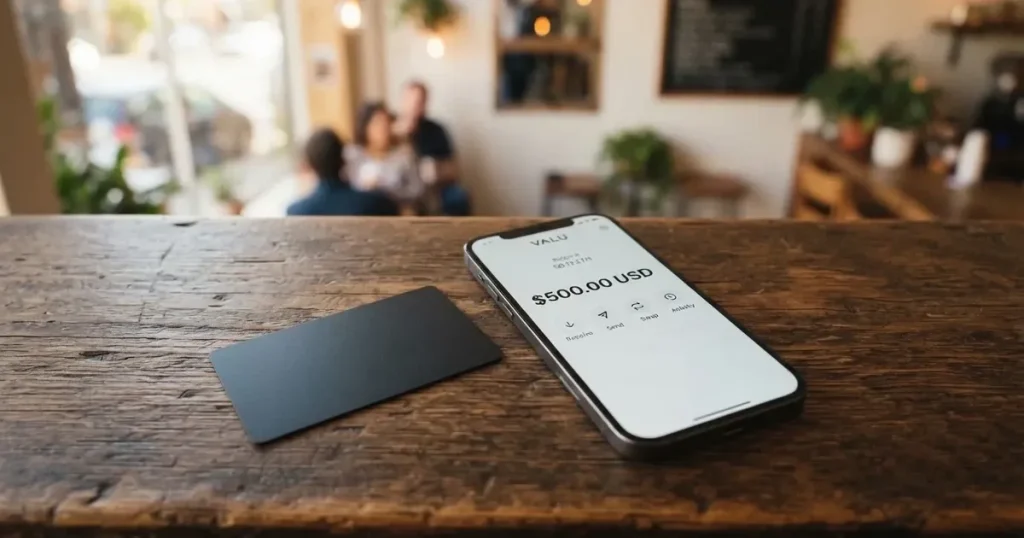
The OKX card scores 6.2 out of 10 — a mid-range result that reflects a genuinely interesting combination: the card is free to hold, has no transaction fees, and charges no FX fee, but it comes with real limits on who can get it, how you fund it, and what you can actually do with it once it’s active. I’m going to walk you through exactly what works, what doesn’t, and whether the package makes sense for the way you actually spend money.
These conditions are current as of October 28, 2026.
The verdict: who this card suits and who it doesn’t
The OKX card is built for one specific person: an EU resident who already holds USDC or USDG on OKX and wants to spend that balance at an ordinary shop without touching a bank. If that describes you, the cost side is genuinely attractive — no card fee, no per-transaction charge, and no FX fee charged by OKX itself.
But the card has sharp edges. It’s available in the EU plus Norway, launched 28 January 2026, and excludes Iceland and Liechtenstein. It’s a virtual euro-denominated Mastercard, not a physical card. You can only fund it with USDC or USDG. The cashback only works on USDG purchases. And the provider behind it has a documented record of complaints about withheld assets and slow support.
Let me break down the score by category so you can see where the strengths and weaknesses actually lie.
| Criterion | Score | Reason |
|---|---|---|
| Who can get it | 5 / 10 | EU plus Norway, launched 28 January 2026; Iceland and Liechtenstein excluded |
| Cost | 9 / 10 | Card without fee, no transaction fee, no OKX FX fee; conversion spread 0.1 % per explainer, 0.4 % per press release |
| Top-up options | 5 / 10 | USDC or USDG balance in OKX Pay via Convert or external deposit; other coins must be converted first, networks not named |
| Reliability and complaints | 6 / 10 | OKX Europe Ltd. with MiCAR licence, issuer unnamed in official text; unofficial: Monavate; complaints about exchange — asset holds, account restrictions, slow support |
| Everyday use | 5 / 10 | Virtual euro Mastercard, Apple Pay and Google Pay; physical card and ATM not named |
| Total | 6.2 / 10 | A solid cost proposition with significant geographic and funding restrictions |
The pattern here is clear: this card excels on price but struggles on flexibility. If you need a physical card, need to spend from multiple cryptocurrencies, or live outside the EU, this isn’t the right choice. But if you’re an EU user holding USDC or USDG who wants a clean spending interface without conversion fees, it delivers well on its promise.
Will they give you the card?
Availability is the first gate, and it’s narrower than you might expect. The OKX card launched in Europe on 28 January 2026 and is available in the EU plus Norway. Iceland and Liechtenstein are explicitly excluded. One explainer’s conclusion says “entire EEA,” which contradicts the more specific country list — so if you’re in a border region, check directly with support rather than assuming.
There’s an entity question worth understanding here. The rule applies to users of OKX Europe Ltd., which is the MiCAR-licensed entity handling EEA customers. This matters because MiCAR is the EU’s markets-in-crypto regulation, and licensed entities have specific compliance obligations. It also means you’re dealing with a regulated operation, not an offshore exchange.
The practical reality is that if you’re in the EU or Norway, you can apply. If you’re anywhere else — the UK, Switzerland, the US, Canada — this card simply isn’t for you.
How to get it
The signup process is straightforward. You’ll need to complete full identity verification with a valid ID document and proof of address. Age requirements aren’t stated in the public materials, though EU prepaid and debit cards generally go to adults 18 and up.
Once you’ve passed verification, the steps are short: activate the card in the OKX app, then hold USDC or USDG in OKX Pay. That’s it — there’s no separate application form beyond the account verification.
The card itself is a virtual Mastercard, euro-denominated, linked to your OKX Pay balance. Press release details say it’s issued through an unnamed European licensed payment provider. There’s no mention of a physical card option, and delivery details for a physical version aren’t provided — the explainer only mentions activating in the app.
Verification has one level for the card: valid ID and proof of address. There are no tiers, and specific timeframes or rejection reasons aren’t stated.
Fees: what it really costs
This is where the OKX card shines. The cost structure is refreshingly simple, and it’s the strongest argument in the card’s favour.
| Fee or Limit | Value |
|---|---|
| Card issuance | None |
| Monthly fee | None |
| Transaction fee | None |
| FX fee (charged by OKX) | None |
| Conversion spread | 0.1% (explainer, May 2026) / 0.4% (launch press release) |
| ATM fees | Not stated |
| Daily limit | Not stated |
| Monthly limit | Not stated |
The card itself is free to hold — no issuance fee, no monthly charge. Transactions cost nothing extra. And OKX doesn’t add an FX fee on top of conversions. That last point matters if you travel.
The only real cost is the conversion spread when your USDC or USDG gets converted to euro at the point of purchase. Here’s where the sources disagree: the explainer says 0.1%, but the launch press release says 0.4%. The explainer is newer (modified 14 August 2026), so 0.1% is likely current. Either way, it’s a fraction of what many crypto cards charge.
To put this in practical terms:
- Buying a €30 coffee: If you pay with USDG, the conversion happens at the spread rate. At 0.1%, that’s roughly €0.03. At 0.4%, roughly €0.12. Either way, negligible.
- Paying a €200 online order: Same logic. The spread cost is €0.20 to €0.80 depending on which spread is current.
- Travelling and paying in a non-euro currency: Since there’s no FX fee charged by OKX, the conversion happens at the spread rate only. This is significantly cheaper than most traditional bank cards that charge fees on foreign transactions.
There’s no ATM fee information provided, so if you plan to withdraw cash, you’ll need to ask support. Similarly, daily and monthly spending limits aren’t stated publicly. One unofficial source — a German deals forum post from 2026 — mentions a monthly limit of €50 for a cashback promotion, but that’s unverified and may not reflect your actual limit.
On cashback: it’s only paid on USDG purchases, not USDC. The rates depend on your OKX VIP level:
| VIP Level | Cashback Rate | Monthly Cap (EUR) |
|---|---|---|
| Regular | 2% | 10 |
| VIP1 | 4% | 300 |
| VIP2 | 4.5% | 450 |
| VIP3 | 5% | 1,000 |
| VIP4+ | 10% | 1,000 |
These rates took effect 29 May 2026. The text says 2-5% but the table shows 10% for VIP4+, which is inconsistent. Promotional offers vary — the launch release mentioned a 30-day promo of up to 20% for VIP users and 15% for regular users.
Top up: how to fund it
The funding mechanism is straightforward but narrow. You fund the card by holding USDC or USDG in your OKX Pay balance. There are two ways to get it there:
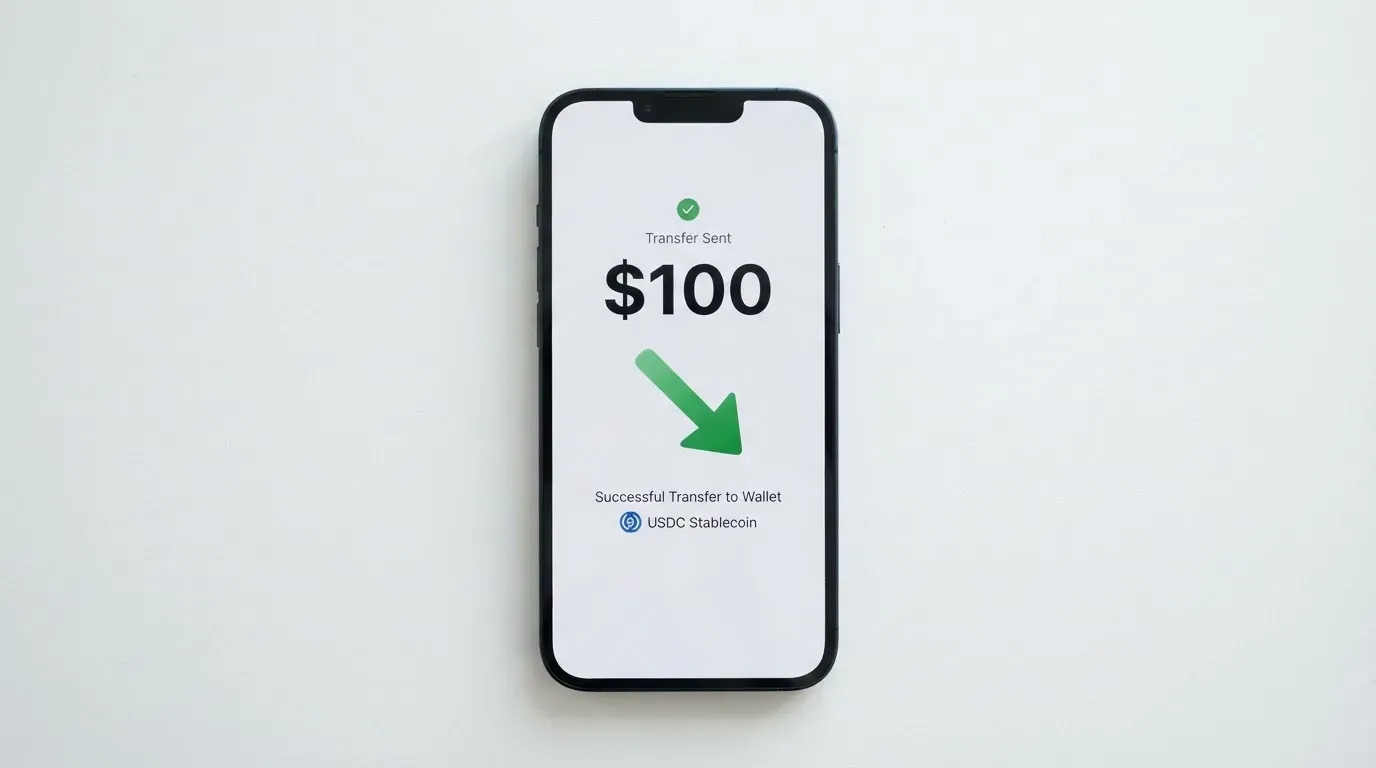
- Convert within OKX Pay: If you hold other cryptocurrencies in your OKX account, you can convert them to USDC or USDG through the Convert function.
- External deposit: You can deposit USDC or USDG from an external wallet directly into OKX Pay.
No deposit fee is stated. Minimum top-up amounts and network fees aren’t provided either. Crucially, there’s no auto top-up feature — if your balance is insufficient, the payment is simply declined. You need to manage your balance manually.
Any other cryptocurrency must be converted to USDC or USDG first before you can use it with the card. The specific networks used for deposits aren’t named in the public materials, which is worth noting because sending funds on the wrong network can mean lost money.
One important clarification: the stablecoins stay in your OKX Pay wallet until you make a purchase. The balance isn’t sitting on the card itself — it’s in your account, and it converts to euro only when you spend.
Paying with it every day
The card works as a standard Mastercard in the virtual form. You add it to Apple Pay or Google Pay for tap-to-pay, both confirmed in the launch press release. This is how most people will use it day to day — the virtual card lives in your phone’s wallet.
There are some limits on where you can use it. Blocked merchant categories aren’t specified, so you can’t know in advance whether gambling, adult content, or other restricted categories will work. However, the general industry pattern is that many issuers block gambling (MCC 7995) by policy rather than law.
The OKX app itself has strong ratings. The App Store shows 4.6 out of 5 from about 23,000 ratings — though this is the main OKX app, not card-specific. Unofficial data from a Google Play mirror shows 4.4 out of 5 from 917,376 reviews.
There are no details about how disputes work — what happens if a charge is wrong, if goods never arrive, or if you need to reverse a payment. This is a gap in the public information.
What can go wrong
The biggest risks here aren’t about the card mechanics — they’re about the company behind it.
Company structure and licensing: OKX Europe Ltd. is the MiCAR-licensed entity handling EEA customers. The card is issued through “a European licensed payment provider” — but that provider isn’t named in the official text. Unofficial reports from Cointelegraph identify it as Monavate, a UK-headquartered e-money institution. Additionally, OKX obtained a Maltese Payments Institution licence in February 2026, according to industry reporting.
Custody and security: The launch release says stablecoins remain in your self-custody wallet until checkout. That’s a positive — you’re not handing over private keys to OKX. But the MiCAR and EU AML requirements mean KYC is required, and account freezes can happen. Details on freeze policies, two-factor authentication, and insurance are not stated.
Complaint patterns: Trustpilot shows about 1,619-1,621 reviews for OKX, with OKX Europe rated 4.3 out of 5 from 29 reviews according to an aggregator. The negative themes that appear repeatedly:
- Assets held with no clear reason given
- Account restrictions blocking access to funds
- Withdrawal holds
- Slow support responses
An aggregator called rfp.wiki notes that public reviews often cite slow support and region-dependent verification and withdrawal experiences. OKX has a complaints section on SikayetVar, though no detailed information is provided there.
Support: There’s no information about support channels, response times, or languages available. This is a significant gap given that the complaint pattern specifically mentions slow support.
The issuer question: In the FTX collapse, WaveCrest was a card issuer that supplied multiple crypto card brands. It was suspended by Visa in Europe in 2018, closing all its programmes. While OKX’s situation is different, it shows how card programmes can end. When that happens, users typically get a notice period, then spending and loading stop, then you’re asked to withdraw remaining balances.
What to take instead
The OKX card isn’t your only option. Here’s how it compares:
Young Card (score: 5.7/10)
- Cashback paid in YNG tokens at varying rates by Club tier (Essential 0.1%, Gold 1.8%, Platinum 3.6%)
- Availability, card type, fees, and funding details aren’t stated in official sources
- Lower overall score, but the rewards structure works differently
Coinbase Card (score: 6.4/10)
- Available in all US states except Hawaii
- Visa prepaid debit, virtual or physical, spends cash or crypto
- No spending fees, no annual fees, no Coinbase transaction fees
- A spread applies when converting crypto at payment time
- Fund by linking a bank account or depositing part of a paycheck
- Optional crypto rewards on every purchase (US only, variable rate shown in app)
BingX (score: 5.8/10)
- Available in Europe (EEA), APAC, LATAM, and other selected regions
- Virtual (instant) or metal card (15-30 business days), Visa debit, settles in USD
- Fund with USDT only from BingX Fund Account
- Fees and rewards not stated
Quick comparison
| Feature | OKX | Coinbase | BingX | Young |
|---|---|---|---|---|
| Score | 6.2 | 6.4 | 5.8 | 5.7 |
| Card type | Virtual Mastercard | Virtual or physical Visa | Virtual or metal Visa | Not stated |
| Funding | USDC/USDG | Bank account or crypto | USDT only | Not stated |
| Cashback | Yes, USDG only | Optional crypto | Not stated | YNG tokens |
| Physical card | Not mentioned | Yes | Yes (metal) | Not stated |
| Availability | EU + Norway | US states | Multiple regions | Not stated |
If you’re in the US, the Coinbase Card edges out OKX on overall score and has more flexibility — physical card, bank funding, broader crypto support. If you need a physical card, both Coinbase and BingX offer that while OKX doesn’t. BingX’s USDT-only funding is narrower than OKX’s two-stablecoin option, but it does offer a metal card variant.
Who I would recommend it to
I’d recommend the OKX card if you:
- Live in the EU or Norway (and not Iceland or Liechtenstein)
- Already hold USDC or USDG and want to spend it without converting through a bank
- Are comfortable with a virtual card used through Apple Pay or Google Pay
- Value the low cost — no card fee, no transaction fee, no FX fee
- Accept that cashback only works on USDG and requires understanding OKX’s VIP tier system
- Can live without a physical card or ATM access for now
I’d steer you away if you:
- Need a physical card or plan to withdraw cash regularly
- Live outside the EU or Norway
- Want to spend from a wide range of cryptocurrencies without pre-converting
- Are concerned about the company’s complaint history around account holds and slow support
- Need confirmed spending limits (which aren’t publicly stated)
The cost proposition is genuinely strong. If you fit the profile of an EU user with USDC or USDG who wants a clean interface for everyday spending, this card makes sense. The 6.2 score reflects a solid but limited product — excellent on price, constrained on geography and flexibility.
Frequently asked questions
What is the OKX card?
The OKX card is a virtual, euro-denominated Mastercard that lets you spend USDC or USDG directly at merchants. It launched in Europe on 28 January 2026 and works through OKX Pay, converting your stablecoin balance to euro at the point of purchase. You add it to Apple Pay or Google Pay for tap-to-pay. It’s essentially a bridge between your crypto holdings and everyday spending, without needing a traditional bank account.
How does the OKX card work?
You hold USDC or USDG in OKX Pay, then pay with the virtual card. When you make a purchase, the stablecoin converts to euro automatically at the current rate plus a spread. The card draws on your stored balance like a prepaid card — it can’t overdraw because it only spends what’s there. Cashback applies only to USDG purchases, not USDC, and depends on your OKX VIP level.
Who can get the OKX card?
The card is available to users in the EU plus Norway, excluding Iceland and Liechtenstein. You must be a customer of OKX Europe Ltd., the MiCAR-licensed entity. Verification requires a valid ID document and proof of address. Age requirements aren’t stated publicly, though EU prepaid and debit cards generally go to adults 18 and up.
How much does the OKX card cost?
The card itself is free — no issuance fee, no monthly charge. Transactions cost nothing extra, and OKX charges no FX fee. The only cost is the conversion spread when spending, which is either 0.1% or 0.4% depending on the source. The newer explainer says 0.1%, so that’s likely current. There are no ATM or withdrawal fees listed, though those details aren’t provided.
How do I top up the OKX card?
You fund it by holding USDC or USDG in OKX Pay. You can convert other cryptocurrencies to USDC or USDG through OKX’s Convert function, or deposit USDC/USDG from an external wallet. There’s no auto top-up — if your balance runs low, payments will simply decline. Any other crypto must be converted to USDC or USDG first before spending.
Does the OKX card require KYC?
Yes, full identity verification is required. You need a valid ID document and proof of address. This is standard for EU-regulated services under MiCAR and anti-money-laundering rules. There’s one verification level for the card specifically, with no tiers or additional steps. Specific processing times and rejection reasons aren’t publicly stated.
Is the OKX card safe?
The company operates under MiCAR regulation through OKX Europe Ltd. and uses self-custody — stablecoins stay in your wallet until you spend. However, the company has a documented pattern of complaints about asset holds, account restrictions, and slow support. Trustpilot shows around 1,620 reviews, with OKX Europe rated 4.3 out of 5 from 29 reviews. Details on insurance, freeze policies, and two-factor authentication aren’t provided.
What are the OKX card’s limits?
Daily and monthly spending limits aren’t publicly stated. One unofficial German forum post from 2026 mentions a €50 monthly limit for a cashback promotion, but this is unverified and may not reflect your actual limit. Cashback has monthly caps ranging from €10 for Regular users to €1,000 for VIP4+. If limits are critical for your spending, contact support directly before applying.
Can I use the OKX card with Apple Pay or Google Pay?
Yes, both are supported for tap-to-pay, confirmed in the launch press release. The card is virtual and euro-denominated, so it functions as a standard Mastercard in your mobile wallet. You can use it at any merchant accepting contactless Mastercard payments, though blocked merchant categories aren’t specified in the public materials.
Is the OKX card worth it?
For EU residents holding USDC or USDG who want to spend crypto without bank involvement, yes — the zero fees and low conversion spread make it cost-effective. The 6.2 score reflects strong economics but limited flexibility: no physical card, USDC doesn’t earn cashback, and the company’s complaint history gives pause. If you need a physical card or broader crypto support, Coinbase or BingX might serve you better depending on your region.
Exchange cards on the shortlist – cryptocardshortlist
Content created by the «cryptocardshortlist» team