
A dollar card for Nigeria, Kenya, Ghana and South Africa — reviewed on what is actually published
 Available in US

Javex is a crypto wallet app with a virtual dollar card attached to it. You hold a balance, the balance pays for things, and the card itself is numbers in your phone rather than plastic. That combination puts it into a narrow and useful category: a way to spend crypto-denominated money like ordinary dollars without a local bank being willing to issue you an ordinary card. For a Nigerian, Kenyan, Ghanaian or South African user who needs a dollar card, the idea fits. Whether the paperwork behind it is strong enough to rely on is a much harder question, and it is the one that decides my score of 3.8 out of 10.
The conditions described here are current as of October 28, 2026.
Verdict: 3.8 out of 10
The single biggest problem with this card is not that it does anything wrong. It is that it does very little of what you would need to check, on the record. The site says “lowest fees” and “transparent pricing” and gives no figures at all. The terms say withdrawals cost a fee and do not say how much. The card is virtual only, so there is no plastic in the post. Coins and networks are not named, so you cannot tell in advance which stablecoin to send or on which chain. The issuer is not named either — only the parent company, with a Nigerian corporate registration and a self-description as a licensed exchange with the licence itself unnamed. None of that is disqualifying on its own. Together it means you would be opening an account with essentially no ability to model the cost, verify the counterparty or plan a withdrawal.
| Criterion | Mark | Why |
|---|---|---|
| Who can get it | 2 / 10 | Site names Nigeria, Kenya, Ghana and South Africa; verification needs a BVN and top-ups from an account in your own name |
| Cost | 5 / 10 | Card fees are never published — only “lowest fees” and “transparent pricing”; withdrawal is charged and the amount is not stated |
| Top-up options | 4 / 10 | Crypto deposits convert automatically into the wallet balance that feeds the card; no coins and no networks named |
| Reliability and complaints | 5 / 10 | Javex Technologies Ltd, CAC registration RC8795706, “licensed” with no licence named; issuer not named; App Store 5.0 from 2 ratings; no complaints found |
| Everyday use | 3 / 10 | Virtual dollar card only; Apple Pay and Google Pay, ATM not disclosed; 2FA, PIN and biometrics |
| Total | 3.8 / 10 |
Who this suits, plainly. Someone in Nigeria, Kenya, Ghana or South Africa who already has crypto or stablecoins on the platform, who is comfortable sending funds on a blockchain without being able to read the instruction sheet first, and who treats the balance as spending money rather than savings. For that person the card does something a local bank often will not: it gives a dollar-denominated number that works internationally.
Who it does not suit. Anyone whose money has to last. Anyone who cannot absorb a surprise on a card payment, because the conversion cost is invisible until it happens. Anyone in a country outside those four who was hoping the “international transactions” line meant worldwide eligibility. Anyone who needs a physical card for a payment terminal that has no contactless reader. And anyone who intends to close an account and get the money out, because the withdrawal fee is a real number the company knows and you do not.
Will they give you the card?
The company’s own site names users in Nigeria, Kenya, Ghana and South Africa. That is the supported set as published, and it is worth reading carefully rather than skimming: a card that works internationally at merchants is not the same thing as a card you can open from anywhere. The terms separately bar nationals or residents of any “Sanctioned Country or Restricted Jurisdiction” — the list itself is not given, and the App Store listing sits on the Nigerian storefront. So if you are in one of the four countries and a citizen of a restricted one, the answer is likely no, and you will not find out which list applies.
This matters most for the person reading this outside Africa, or inside a fifth African country. The public pages do not say anything about eligibility beyond those four names and that sanctions clause. That is the whole of it.
Two things are conspicuously absent from the public pages, and I want to name them rather than let them pass. The first is the KYC tier system — verification levels, what unlocks at each level. The second is which specific document set is required, beyond the BVN and the AML checks described in the terms. If you are the kind of person who wants to know on day one whether your passport will be accepted or whether you need a utility bill, the answer is not published and you will find out during onboarding.
How to get it
The signup picture is short, and that is itself informative. The terms describe identity verification including BVN validation and anti-money-laundering checks. Deposits must come from a bank account in your own name. The minimum age is 18. One account per person. Beyond that, the card-specific steps are not stated — the public pages do not walk through the application flow the way most card issuers do.
Two constraints here deserve more than a glance. The BVN validation points to a Nigerian identifier, which is consistent with the app being distributed through the Nigerian App Store and with the site naming Nigeria first, but it makes me less certain about how a Kenyan, Ghanaian or South African resident completes verification, and the pages do not say. And the requirement that deposits come from an account in your own name means you cannot top up from a joint account, a business account in a partner’s name, or a payment handle belonging to someone else — that restriction is there for anti-money-laundering reasons, and it will catch people out who normally move money through a shared arrangement.
What you get at the end is the “Javex Virtual Dollar Card” — a virtual card for international transactions. The network is not stated. Delivery is virtual only, so the whole “wait for the post” question does not arise: there is no physical card, and there is no indication that one is planned.
A quick check before you start
- Can you verify with a Nigerian BVN if you do not have one? The pages do not explain the alternative.
- Do you have a bank account registered in your own legal name? That is stated as a requirement, not a preference.
- Will you need a physical card at any point? If so, this product cannot serve you today.
- Do you plan to hold more on the platform than you could lose in a support call? Hold less.
Fees: what it really costs
Here is the honest situation. The card’s own fee schedule is not published. What the site says is “best exchange rates and lowest fees” and “transparent pricing” — marketing phrases with no numbers attached. The terms add one real mechanic: instant buy and sell fees are built into the quoted rate, which means you will not see a separate line item when you convert, because the cost is already inside the price you were shown. Whether that rate is good cannot be checked without a second quote from somewhere else, and the company does not publish one.
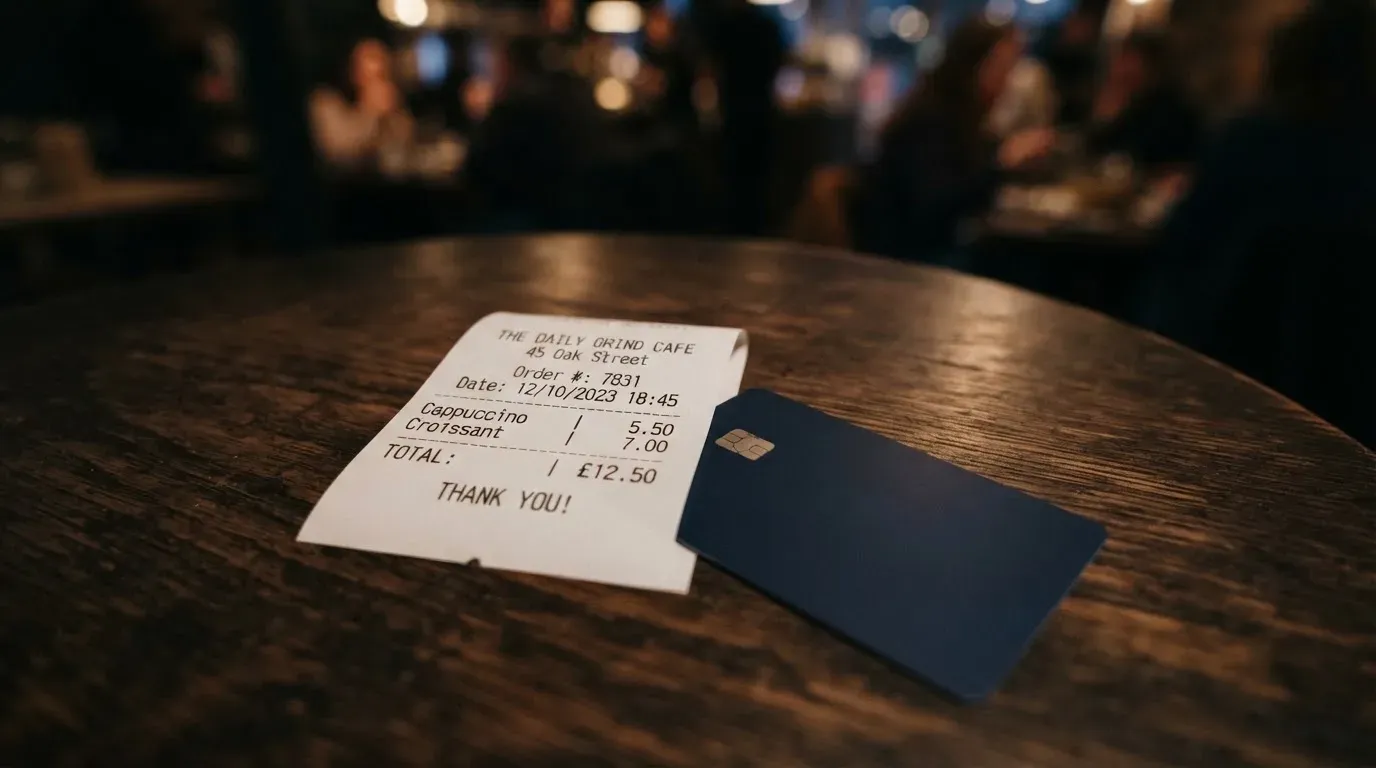
Withdrawal is charged a fee, and the amount is not stated. ATM use is not disclosed at all. Daily and monthly limits are not disclosed. There are no card tiers described. The card is denominated in US dollars; the wallet also holds local currency.
| Item | What is published |
|---|---|
| Issuance | Not stated |
| Monthly fee | Not stated |
| Conversion | Instant buy/sell fees built into the quoted rate; no figures published |
| FX / exchange | Site claims “best exchange rates” and “transparent pricing”; no numbers |
| ATM | Not stated |
| Daily limits | Not stated |
| Monthly limits | Not stated |
| Withdrawal | Charged, amount not stated |
What that does to you in practice. Let me walk through three ordinary situations and show you where the money goes.
A subscription you already pay for. You have US dollars sitting in the wallet and a streaming service bills you monthly. The card number pays it. What applies: the conversion, if any, happens at the point the balance is spent, at a rate you were shown in-app and cannot independently verify. What does not appear: no per-transaction fee is mentioned, no monthly fee is mentioned. This is the cleanest case, and it is clean largely because the card is dollar-denominated and the bill is in dollars.
A day out in your own country. You spend local currency at a shop or restaurant. The card is a dollar card, so your local balance has to become dollars at the quoted rate, and the site’s “best exchange rates” claim is doing all the work here with nothing behind it. Add whatever the network or merchant adds, which the company does not control and does not publish for this card. This is the case where the missing numbers actually bite, because you have two conversions in one purchase — local currency to dollars, then dollars to whatever the merchant charges.
Taking money back out. You withdraw to an approved Nigerian bank account. A fee applies on every withdrawal and the amount is not stated. So the round trip — crypto in, dollars spent, or dollars back to a local account — has one leg whose cost is knowable in advance and one that is not. If the reason you want a card is that your local banking is difficult, this is the leg you care about, and it is the one the company has published least about.
I am not going to invent a number to fill those gaps, and you should be sceptical of anyone who does.
Top up: two routes, one of them a guess
There are two ways money arrives, and only one is described in any detail.
From a bank account. The terms require deposits to come from an account in your own name. That is the cleanest route and the one the compliance rules are built around.
From crypto. This is the interesting one and the frustrating one. Crypto deposits are automatically converted into your wallet balance, and that balance is what funds the card. The convenience is real: you send assets, the app does the conversion, and the card has money on it without you doing anything else. What is missing is everything you need to do it without a mistake — the coins are not listed and the networks are not listed. There is no published table saying “send USDT on Tron” or “send USDC on Base”. The crypto top-up fee is not stated either.
That gap deserves an explanation, because it is not just an omission — it is where money actually gets lost. Blockchain transfers are irreversible: if you send on a network the provider does not support, or to an address belonging to a different network, the funds can be gone or need manual support recovery with no guarantee of success. And the choice is not trivial even when you know your coins. ERC-20 tokens on Ethereum need ETH in the wallet to pay the gas, so a wallet holding USDT and nothing else cannot send it at all. Tron prices its fees with bandwidth and energy, often by burning TRX. Circle stopped supporting USDC on Tron in February 2024, so the familiar “USDC over TRC20” route is not a native option. Circle lists USDC as natively supported on 38 networks, as of 16 September 2026. If you plan to top up from crypto, work out the network from the app or from support *before* you send, not after.
Withdrawals go to approved Nigerian bank accounts, and every withdrawal is charged a fee that is not published. Approved is doing real work in that sentence — it suggests a whitelist you may need to be added to.
Paying with it every day
The product is a virtual dollar card, so “every day” means phones and laptops. There is no physical card in this product as published, which rules out the places where a tap is the only option — some transit gates, market stalls, older terminals. If you are choosing this because you want a dollar card for subscriptions, travel bookings and online services, the shape is right. If you want to walk into a shop and tap, it does not do that today.
Wallets: Apple Pay and Google Pay are supported. ATM withdrawals are not disclosed. Security on the app side is reasonable on paper — two-factor authentication, a transaction PIN, biometric login. What is not stated is the custody model, which is the question that actually decides whether those three controls protect you. If the provider holds the keys, your protections are account-login protections: they stop someone using your phone, not someone using the company’s systems. If you hold the keys, you have full control and full responsibility, including for a lost seed phrase, where anyone who has it can restore the wallet and spend everything in it.
Rewards are thin and easy to misread. There is no cashback stated. The app gives reward points on eligible transactions and referral bonuses — points, not money back, and eligibility is decided by the app rather than published as a rule.
The app itself: on iOS it is listed as “Javex: Crypto & Gift Cards” at 5.0 from 2 ratings, version 1.0.9, as I read it on 21 October 2026. Two ratings is not a sample that means anything in either direction. The Android listing’s rating was not retrievable. A rating count that small tells you the app is young and barely used in public, which is a reason for caution rather than comfort — there is no long public track record here to lean on.
One more everyday-use fact that matters and is easy to skim past: the wallet name includes gift cards. That is not something I could evaluate on the published pages, but if you are trying to picture what this app does day to day, gift cards sit in the same interface as your payment balance, and that is worth asking about.
What can go wrong
The company details are thin, and one gap is the big one. The entity is Javex Technologies Ltd. The site cites a Corporate Affairs Commission registration, RC8795706, and describes itself as a “Licensed and regulated digital exchange platform” — without naming the licence. Governing law is Nigerian. The card issuer is not named at all. That last point is the one to hold onto. A card programme sits with an issuer that is licensed under the card network’s rules, and a crypto brand is often just the front end and the programme manager. Here you cannot see who holds that role. If something goes wrong with your card balance, you do not know which institution to approach.
Complaints: none found, which cuts both ways. I found no official incidents and no user reports on Trustpilot or Reddit. A Trustpilot page was not found in search on 21 October 2026, and there were no recurring complaint themes to identify. In one sense that is reassuring. In the other, an app at version 1.0.9 with two App Store ratings and no review footprint is exactly what a young product looks like before its first wave of users hits a problem. Absence of complaints at this volume is not evidence of reliability — it is mostly evidence of a small footprint.
Disputes have a location, not a policy. The terms point to arbitration in Lagos under the Arbitration and Mediation Act 2023. No refund or chargeback policy is stated. This matters more than it sounds. A chargeback is the mechanism by which an issuer orders a merchant to refund you, with reason codes for fraud, duplicate billing or goods not received. Without a stated policy, you have no published route to it. In the US, debit card reversal rights come from Regulation E and prepaid-card coverage varies and should not be assumed — this card is not US-issued, so none of that scaffolding is yours to lean on. If you are shopping with a card whose dispute process is arbitration in Lagos, weigh that against the size of the purchase.
Support is claimed rather than described. There is a contact page, a “24/7 support team” claimed, and presence on Facebook, TikTok, Instagram and X. A 24/7 claim with no published response time is common on crypto products and means less than it sounds. For the irreversible-transfer scenarios above, support quality is not a convenience — it is the difference between recovering a misdirected deposit and not.
Three-D Secure may shift liability onto you. Online card payments with 3-D Secure add an identity step where the issuer assesses risk and either approves silently or challenges you with a one-time code or biometric. Visa’s brand is Visa Secure, Mastercard’s is Identity Check. The design intent is that liability for a fraudulent online payment moves from the merchant to your bank. Critics argue it moves too often to the cardholder. With no issuer named, you cannot tell who would be on the other end of that shift.
Some merchants simply refuse cards like this. A merchant can look up the BIN — the 6 or 8 digit issuer identification number at the front of the card number — and see the institution and country, and apply extra scrutiny when the issuer country differs from your billing address. Address verification, which compares the numeric parts of your billing address with issuer records, is mainly offered in the US, Canada and the UK and is generally unavailable for foreign-issued cards, which can cause declines. Some merchants decline prepaid or foreign BINs as policy. Merchant category codes matter too: MCC 7995 covers gambling, and many issuers block it on specific cards by policy rather than law, with the blocked list varying by issuer. If a payment is declined and a hold is left on your funds, it can sit for several days, typically up to 7. Any of this can happen with a perfectly honest, fully funded card.
Sanctions screening is a live risk, not a formality. Nationality is recorded and screened separately from residence, because sanctions screening and issuer risk policy are often applied to citizenship and country of birth as well as country of address. The terms already exclude nationals and residents of restricted jurisdictions. Stablecoins are not censorship-proof either — Tether says it disables tokens in wallets on the OFAC sanctions list and has frozen funds tied to illicit activity.
Taxes are yours. I am not giving tax advice here and you should talk to a professional about your own position, but the general principle matters for anyone spending from crypto: digital assets are treated as property in the US by the IRS, so exchanging them for goods, services or dollars generally produces a taxable gain or loss, measured in local fiat currency at fair market value on the date of the transaction. That means each card payment funded from crypto can be a separate disposal. Keep records.
What to take instead
None of these is a recommendation — the fit depends on where you are and what you are solving for. But each of them publishes more than Javex does, which is itself a form of quality.
| Option | Score | What it is | What it tells you |
|---|---|---|---|
| Javex | 3.8 / 10 | Virtual dollar card on a crypto wallet, for Nigeria, Kenya, Ghana, South Africa | Fees, networks, issuer and limits all unpublished |
| Coinbase Card | 6.4 / 10 | Visa prepaid debit card, virtual or physical, spends cash or crypto | “Zero spending fees and no annual fees”; all crypto converted to US dollars for purchases and ATM withdrawals |
| OKX | 6.2 / 10 | Mastercard euro virtual debit card linked to OKX Pay, EU plus Norway | Card fee none; conversion spread 0.1% per the explainer (May 2026) vs 0.4% in the launch release — the explainer is newer |
| Young Card | 5.7 / 10 | Card with token-based cashback | Cashback paid in YNG tokens by Club tier: Essential 0.1%, Gold 1.8%, Platinum 3.6% (Bronze and Silver not stated) |
Coinbase Card is the most transparent of the group on the points that matter for your costs. It is available in all US states except Hawaii, and account opening follows the US PATRIOT Act identity rules — name, address, date of birth, ID. No other countries. So this is an option if you are in the United States, and not one otherwise. On fees: zero spending fees and no annual fees, with everything else in the Cardholder Agreement and User Agreement; there are no Coinbase transaction fees but a spread applies when Coinbase buys, sells or trades crypto, which is exactly the cost you cannot see. Funding is by linking a bank account or depositing part of a paycheck into Coinbase at zero fees. Rewards are optional crypto rewards on every purchase for US Card users, with a variable rate shown in the app and a rotating choice of currency.
OKX is the most specified of the three on numbers, and it is the closest structural comparison: a virtual card on a crypto platform. It is a Mastercard euro-denominated virtual debit card linked to OKX Pay, issued through an unnamed European licensed payment provider, with no physical card mentioned. Availability is the EU plus Norway, launched 28 January 2026, with Iceland and Liechtenstein excluded. Note the caveat there: one explainer concludes “entire EEA”, which is inconsistent with that. Card fee is none, per the explainer as of May 2026. No transaction fee and no OKX FX fee; conversion spread is where the sources conflict. Funding needs USDC or USDG held in OKX Pay, whether via Convert or an external deposit — other coins must be converted first, there is no auto top-up, and a payment is declined if the balance is insufficient. Cashback is on USDG purchases only, so USDC earns none, with monthly caps in euro that vary by tier and promos that vary. The pricing section alone is more informative than everything Javex publishes combined.
Young Card publishes almost nothing about eligibility, card type, cost, fees or funding — on those five points its public pages are silent, which is the same problem Javex has. What it does publish is the rewards structure, and here is the catch worth knowing: cashback is paid in YNG tokens, not naira, and the rate depends on your Club tier — Essential 0.1%, Gold 1.8%, Platinum 3.6%, with Bronze and Silver not stated. A token-denominated reward with a tier ladder is closer to a loyalty programme than to cashback, and token rewards carry their own price risk.
Who I would recommend it to
I would recommend Javex, cautiously, to one specific person: someone in Nigeria, Kenya, Ghana or South Africa who already uses crypto platforms as a matter of routine, who needs a US-dollar card number for online and international payments, who can accept that they will not be able to predict the exact cost of a transaction before making it, and who will treat the balance as spending money rather than money they are saving.
To everyone else, I would point elsewhere. If you are in the United States, the Coinbase Card publishes its fees and has a long public record. If you are in the EU or Norway, OKX tells you what its spread is and which stablecoin to hold. If you are outside all of these regions, Javex is not documented as available to you at all. And if your priority is a physical card, or a dispute process you can rely on, or a fee schedule you can read before you commit — this product does not offer those things today.
The deeper point is not that Javex is bad. It is that it asks you to be the risk-taker in a relationship where it holds all the information. Nobody has published the numbers that would let you price that risk. I would rather you found the missing figures yourself before you needed them.
Frequently asked questions
What is the Javex card?
It is a virtual US-dollar card attached to a crypto wallet app rather than a bank account. You hold a balance in the app, and that balance pays for purchases wherever a dollar card is accepted online or internationally. There is no physical card in the product as published, so it works in your phone rather than in your hand.
How does the Javex card work?
Crypto you deposit is automatically converted into your wallet balance, and that balance funds the card. Spending draws down the balance. The company also holds local currency in the wallet alongside dollars. Instant buy and sell fees are built into the quoted rate rather than shown as a separate line.
Is Javex a bank?
No — it describes itself as a licensed and regulated digital exchange platform, operated by Javex Technologies Ltd with a Corporate Affairs Commission registration RC8795706. It does not name the licence it says it holds, and it does not name the institution that issues the card. Governing law is Nigerian.
Who can get the card, and who cannot?
The site names users in Nigeria, Kenya, Ghana and South Africa. The terms separately bar nationals or residents of any “Sanctioned Country or Restricted Jurisdiction”, though that list is not published. Minimum age is 18, one account per person, and verification includes BVN validation and AML checks.
How much does the Javex card cost?
The public pages do not publish a fee schedule. The site claims “lowest fees” and “transparent pricing” with no figures. Conversion costs are built into the quoted rate, and every withdrawal carries a fee whose amount is not stated. Issuance fees, monthly fees, ATM charges and daily or monthly limits are all undisclosed.
How do I top up the Javex card?
Two routes: a bank account in your own name, which the terms require, or a crypto deposit, which converts automatically into wallet balance. The coins and networks accepted are not listed, which matters because transfers on the wrong network can be lost or need manual recovery with no guarantee.
Can I add the Javex card to Apple Wallet or Google Pay?
Both Apple Pay and Google Pay are supported. Since the card is virtual and dollar-denominated, in-app wallet setup is the main way it is meant to be used. Apple Pay replaces the card number with a device-specific number stored in the Secure Element and uses a fresh security code per payment, and the issuer can restrict a tokenised number by channel.
Is the Javex card safe?
The app has two-factor authentication, a transaction PIN and biometric login, which is a sensible set. What is not stated is the custody model, and that is the deciding question: if the company holds the keys, the protections are login protections, not protection of the funds themselves. No refund or chargeback policy is published, and disputes go to arbitration in Lagos.
Where can I actually use the card?
Anywhere a virtual dollar card is accepted for international and online payments, plus Apple Pay and Google Pay in-app. Two things constrain it. ATM withdrawals are not disclosed, and there is no physical card, so contactless-only terminals are out. Some merchants decline prepaid or foreign-issued cards, and address verification is generally unavailable for foreign-issued cards.
How do I withdraw money from Javex?
Withdrawals go to approved Nigerian bank accounts, and every withdrawal is charged a fee that is not published. Because the card itself is dollar-denominated and virtual, this bank leg is the exit route that matters most if your motivation is limited local banking access — and it is the leg with the least published detail.
Exchange cards on the shortlist – cryptocardshortlist
Content created by the «cryptocardshortlist» team