
A crypto-funded virtual card whose cashback comes back as mining power
 Available in US
GoMining’s card is one of the newer crypto-funded payment cards on the market, and it arrives with a twist: the cashback you earn is paid not in fiat or in a stablecoin, but in mining power, the same resource that the parent platform sells to users who want to mine Bitcoin without running their own hardware. That single design choice is the lens through which I read the rest of the product, because it tells you what kind of customer the card is really aimed at, and what trade-offs you accept when you pick it over a more conventional crypto card.
In the rest of this review I’ll walk through who GoMining is willing to issue the card to, how the application works, what the costs look like in practice, how to top it up and spend with it day to day, and where the risks sit. The facts I quote come from GoMining’s own pages and from a handful of independent sources, and the score at the top of the verdict reflects how the card holds up across those dimensions. Where GoMining’s public pages don’t publish a number, I’ll say so plainly rather than guess.
The conditions described here are current as of October 28, 2026.
Verdict
GoMining’s card lands at 6.6 out of 10. That’s an average that pulls in different directions: a generous, if unusual, cashback mechanic; an easy top-up if you already hold Bitcoin, USDT or GOMINING; and a published issuer and licence that put it ahead of cards run by anonymous teams. What holds it back is the long list of figures that the company has not published, from card-network and card-currency to ATM fees, monthly limits, and the specific KYC levels the application requires. The card is also virtual only for now, which limits where you can use it.
The breakdown below shows how the overall mark is composed, with the individual scores.
| Criterion | Mark | Why it lands there |
|---|---|---|
| Who can get it | 8 / 10 | No public country list, but the platform is positioned as broadly available except in prohibited jurisdictions. |
| Cost | 5 / 10 | The card itself is issued for free and comes with a 1 TH mining bonus, but the cash conversion rate, ATM fee, and monthly cost aren’t disclosed. |
| Top-up options | 7 / 10 | BTC, USDT, GOMINING and other coins can be loaded from a GoMining wallet, but the supported networks aren’t published. |
| Reliability and complaints | 6 / 10 | Issued by Unlimit under a Central Bank of Cyprus EMI licence, with segregated funds, but an outside commentator has questioned the broader GoMining business model. |
| Everyday use | 7 / 10 | Apple Pay and Google Pay are supported on the virtual card and ATM withdrawals are possible, but a physical card isn’t yet shipping. |
| Total | 6.6 / 10 |
If you are already inside the GoMining ecosystem and you think of mining power as a useful reward rather than a strange one, the card is a sensible extension of what you already use. If you are coming in fresh, looking for a plain crypto-to-Visa card with a known fee schedule, the published gaps on this product are likely to frustrate you.
Who they’ll give the card to
The single most important thing to check before you apply for a crypto-funded card is the country list, because eligibility is usually narrower than the marketing suggests. GoMining’s card pages don’t publish a country list at all. Instead the terms note that products “may not be available in your jurisdiction” and that availability is subject to eligibility and regional checks. Earlier documentation for the platform described it as available worldwide except in prohibited jurisdictions, and that is still the best reading of the current wording.
What that means in practice is that you only find out whether you can have the card by starting the application. You won’t be able to filter by country on a marketing page, and you can’t tell from the App Store listing whether your address will be accepted. The wider GoMining platform is reachable from many countries, so the card is most likely available where the rest of the service is, but that’s a soft signal rather than a guarantee.
The other check worth doing in your own time is sanctions: regulated card issuers in Europe screen applicants against sanctions lists, and the card’s terms, like any regulated EMI, will refuse to onboard people who appear on those lists or who are residents of sanctioned countries. That part is industry-standard rather than unusual, but it is the most common reason an application that looks fine on paper gets declined.
Because the country list is not published, the rest of this section is also light. The product is positioned for individual users rather than businesses, and there is no statement of a minimum or maximum age on the card’s pages (for context, most prepaid and debit cards are restricted to adults aged 18 and over). If you want certainty, the cleanest test is to download the GoMining app, create an account, and see whether the card shows up in the banking section for your address.
How to get the card
The application path is short, because the card is only available inside the GoMining app and the platform. There is no public web form to fill in from a desktop browser; the page at app.gomining.com/banking-cards is the entry point, and the GoMining app itself (the same one used to manage mining power) is where you actually complete the flow. If you don’t already have a GoMining account, you create one first.
KYC is required, although the specific tiers GoMining uses for the card are not stated on the public pages. An earlier internal check found two KYC levels on the platform, Basic and Advanced, and it is reasonable to expect the card to fall into whichever level your account has reached. EU-style customer due diligence, which the card’s EMI issuer Unlimit is bound by, typically asks for your name, address, date of birth, nationality and an identity document, plus a sanctions screening. The card application will only complete once those checks pass.
What you actually receive at the end of the process is a virtual card. A physical card is on the product roadmap under a “coming soon” label, but it is not currently shipping, so there is no delivery time to think about, no courier and no shipping address to enter. If the card page changes while you are reading this, the in-app status will tell you whether a physical version is available for your region.
The card’s network and billing currency aren’t stated on the public pages either, so the moment you get the card, the in-app card details panel is the only source of truth for whether the card runs on Visa or Mastercard and what currency it settles in. That information affects which merchants will accept the card without friction, and it affects any foreign-exchange fees, so it’s the first thing to confirm after the card is issued.
What it really costs: Fees
This is the section where the published gaps matter most, because fees are where most crypto card complaints end up. GoMining does not publish a fee schedule for the card. There is no table on the card page, no link to a separate fees page, and no breakdown of what an ATM withdrawal, a foreign-currency payment, or a top-up costs. I worked through what is and isn’t stated, and laid it out below.

| Fee or limit | What GoMining says |
|---|---|
| Card issuance | Not stated; opening a card grants a free 1 TH miner bonus |
| Monthly or annual fee | Not stated |
| Conversion (crypto to fiat at spend) | Not stated |
| Foreign-exchange fee | Not stated |
| ATM withdrawal (virtual card) | Withdrawals supported; fee and allowance not stated |
| ATM withdrawal (physical, when available) | Said to be worldwide; fee and allowance not stated |
| Daily spending limit | Not stated |
| Monthly spending limit | Not stated |
On top of that, the cashback mechanic is worth understanding. GoMining says you can earn “up to 5% cashback” on purchases, paid in mining power rather than in fiat or in a token. The exact rate depends on your VIP level, and the thresholds for each VIP tier aren’t published. The cashback figure of 5% is the ceiling, not the default; for most users the effective rate will sit below that, and because the cashback is paid in mining power, the real value of the cashback depends on what happens to the price of mining power afterwards, on the Bitcoin mining difficulty, and on the GOMINING token’s price if you decide to sell the rewards you earn. Treat the 5% as a headline number.
To make the cost picture more concrete, here are three everyday situations and which fees actually bite.
A coffee paid in your home currency from your GoMining balance. The card is a pre-loaded balance, so the only fee in play is the spread between the crypto you top up with and the fiat balance used at the till. GoMining does not publish that spread, and stablecoin-to-fiat spreads vary by provider; the practical move is to top up in USDT, which usually converts close to one-for-one, rather than in BTC where the price can move between top-up and spend.
A hotel booked online in a foreign currency. Foreign-exchange fees and the card-network cross-border fee are the two usual charges, and neither is published. If the card settles in euros or dollars and the hotel charges in another currency, expect a cross-border fee plus the FX margin; the only way to know the size is to look at the in-app statement after a small test charge.
A cash withdrawal at an ATM. The virtual card supports ATM withdrawals already, and the physical card is described as usable worldwide, but the withdrawal fee and the daily ATM limit aren’t published. Some issuers also charge the ATM operator’s fee on top, and that part is independent of the card. Because the cap is not stated, the safe first move is to take out a small amount and read the receipt before you rely on the card at an unfamiliar ATM abroad.
The reward side of the cost picture is more concrete. Opening the card grants a 1 TH mining bonus, which is real mining capacity that would otherwise cost real money on GoMining’s marketplace. VIP levels raise the cashback rate, but the spending thresholds for each level aren’t disclosed, so a user thinking about chasing the 5% cap is working without a map.
Top up
Topping up the GoMining card means transferring crypto from your GoMining account into the card balance, because the card is set up to spend from a pre-loaded balance rather than to pull funds at the moment of payment. The supported coins include BTC, USDT, GOMINING and other coins, and an earlier reading of the platform’s documentation described the card as being funded from the GoMining wallet, which is the wallet inside the GoMining app where mining rewards and deposits are held.
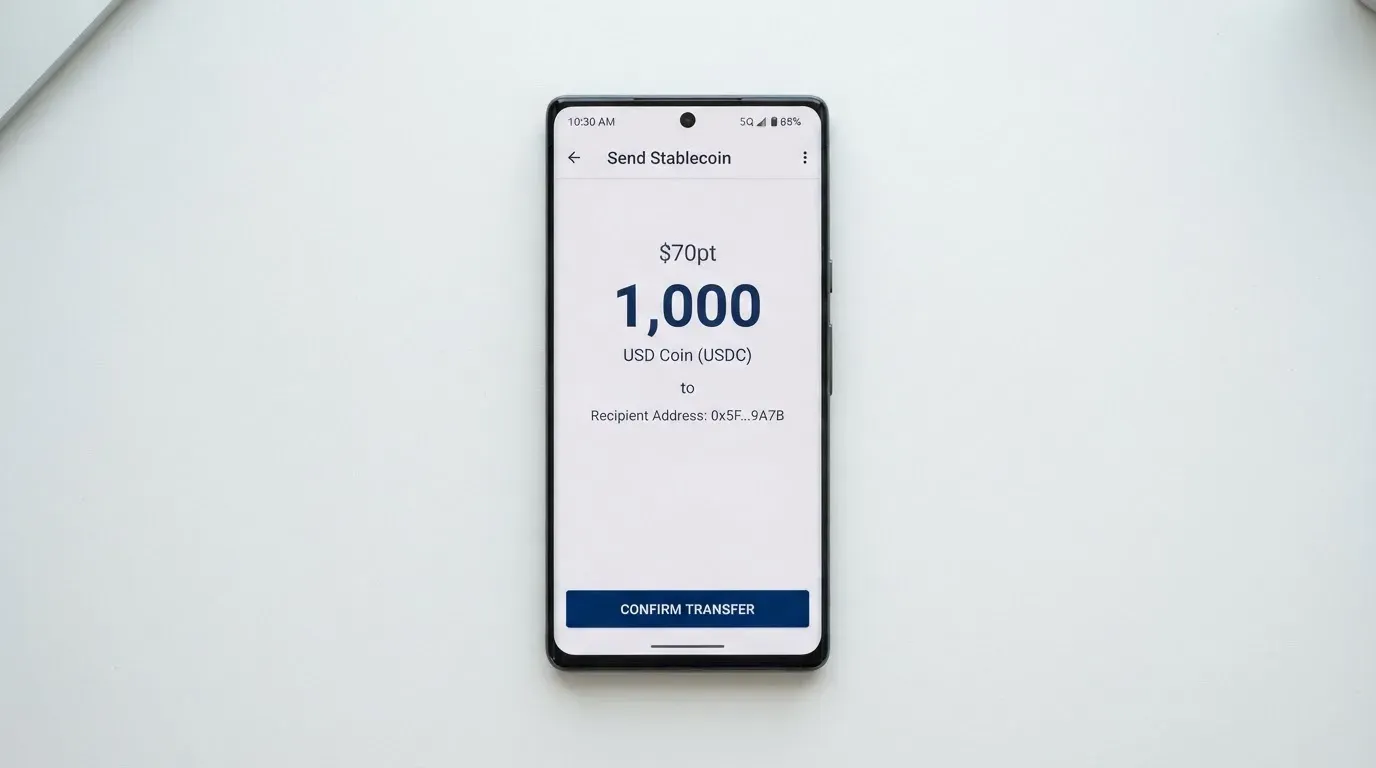
The supported blockchain networks are not stated on the public card pages. That’s a real risk, because sending USDT on a network the card’s deposit system doesn’t support is one of the most common ways to lose funds on a crypto card: a transfer to the wrong network is generally irreversible, and recovery depends on the card provider’s support team being willing and able to return the funds. Before you top up, the in-app deposit screen is the only reliable source of supported networks and the deposit address for each one.
The cost of a top-up has two parts. On the GoMining side there is a conversion from the coin you send to the fiat balance the card spends from; that spread is not published. On the blockchain side, the network fee (gas on Ethereum, bandwidth and energy on Tron, and so on) is paid to the network itself, not to GoMining, and the cost depends on the chain you choose. USDT on a low-fee chain is usually cheaper to send than USDT on Ethereum mainnet, and the difference is paid by you, not by GoMining.
A 2025-era promotion, noted on the platform’s announcements, advertised 5% cashback on purchases made with GOMINING on TON. That promotion is not the current default rate, but it tells you that GoMining has used network- and token-specific bonuses before, and that any current offer is worth checking in the app before you commit a large top-up.
For the reader who is new to this kind of card, the practical routine is to start with a small test top-up, confirm that the card balance reflects the deposit, spend a small amount, and only then scale up. Until the supported networks are clearly published, that small test is the cheapest insurance you can buy.
Paying with it every day
For everyday use, the card behaves like a prepaid card backed by crypto. You load a balance, the card spends that balance, and once the balance is gone the card declines until you top up again. This is the model most crypto cards use, and it has a useful property: the card cannot overdraw, and you can only lose what you have put in.
On the virtual card, contactless payments through Apple Pay and Google Pay are supported, which means the card works on most modern payment terminals without the plastic ever being present. ATM cash withdrawals are also supported on the virtual card, although the fee and the cap aren’t published. The physical card is described as “coming soon” and is expected to be usable worldwide, but until it ships, you are limited to virtual spend and mobile wallets.
Blocked merchant categories aren’t published. Most crypto cards block a handful of categories by policy rather than by law, with gambling (MCC 7995) being the most common; other issuers add cash advances, certain financial services and a few adult-entertainment categories. If a category matters to you, the only safe test is to attempt a small charge in that category and see whether it goes through.
Rewards sit on top of the spend flow. Cashback is paid in mining power, and the rate rises with your VIP level, so the more you spend, the higher the rate climbs, in theory up to the 5% ceiling. Because the cashback is denominated in mining power, its real-world value depends on what mining power is worth at the moment you realise it, which depends in turn on Bitcoin mining difficulty and on the GOMINING token’s price if you sell the rewards for cash. The 5% headline is best read as a ceiling under conditions that are not all in your control.
The GoMining app is the control panel. It is published on iOS and handles the day-to-day from a single place: balance, top-up, card details and (presumably) freeze. Standard app-based safeguards, like two-factor authentication and an instant card freeze, are common in this category, but GoMining has not stated whether both are available on the card specifically, and a freeze control in the app is the kind of feature to look for before you load a meaningful balance. Disputes, chargebacks and the formal complaint process are not stated on the public card pages; if a transaction goes wrong, the in-app help and the /faq and /contact-us pages are the channels you have, and the card’s EMI issuer Unlimit sits behind them.
What can go wrong
Crypto cards live or die by what happens at the edges: when an issuer changes a programme, when a regulator objects, when a network like Visa or Mastercard decides a programme is no longer fit for purpose, and when the brand behind the card runs into trouble. The risk picture for GoMining is mixed.
The company and licence are well documented. The card is issued by Unlimit, an e-money institution authorised in Cyprus under EMI licence number 115.1.3.7 issued by the Central Bank of Cyprus, and the services are tied to GoMining (Cyprus) Limited. Funds are said to be held in a segregated account protected from Unlimit’s creditors in the event of insolvency, which is the standard EU safeguard for an EMI. That safeguard is not the same as deposit insurance: balances held at an EMI are not covered by Cyprus’s deposit guarantee scheme, so if the issuer fails, you stand in the queue as a creditor rather than as an insured depositor. The product literature mentions “advanced security measures”, but specifics like two-factor authentication and a freeze control aren’t spelled out for the card.
The bigger question mark sits one level up, at the GoMining business model rather than the card itself. A February 2026 review by ScamMinder, an outside site, has questioned the transparency and sustainability of the wider GoMining platform and called the model a possible Ponzi scheme. That is one outside opinion, not a regulatory finding, and it isn’t about the card specifically; it is about the parent platform that issues the cashback. It is the kind of allegation that doesn’t change whether you can spend the card today, but it does change how comfortable you should feel holding a long-term balance in mining-power cashback. Independent reviews of the GoMining app on the App Store are mixed: a Russian-language reviewer complains about poor returns, others praise payouts. There is no public Trustpilot page for gomining.com, which makes it harder to triangulate.
Two structural risks are worth holding in your head even if GoMining itself stays out of trouble. First, programmes close. Visa terminated its global agreements with FTX in November 2022 and the FTX US debit programme was wound down; in 2018 WaveCrest, a Visa issuer that supplied several crypto card brands, was suspended by Visa in Europe and every WaveCrest-issued programme shut down. Card networks can pull the plug, and when they do, balances and unspent cashback become the user’s problem to recover. Second, the cashback you earn is paid in mining power, which is a GoMining-internal unit of account, not a token you can move to another wallet or sell on a public exchange without first converting. The 5% headline is real, but the realised value of that cashback is exposed to the same risks the rest of the platform carries.
There is no public record of card-specific incidents, no major complaint thread about the card, and no regulator statement about the card, and those are the things that would move the score the other way. The risks above are the ones I’d be thinking about before I loaded anything I wasn’t prepared to leave on the card for a long time.
What to take instead
If the things missing from the GoMining card page put you off, here are three alternatives that publish more, and trade other things in return.
| Card | Score | What it offers | Where it falls short |
|---|---|---|---|
| Kinesis Virtual Card | 4.8 / 10 | Converts gold (KAU), silver (KAG), crypto and C1USD from a Kinesis account at the point of sale; 2% cashback in gold during a free launch window | Country list and fee schedule not published on the page read; lower headline cashback than some peers |
| Greencart (Gnosis Pay) | 6.9 / 10 | Visa card powered by Gnosis Pay; no monthly, annual, withdrawal, transfer, deposit or FX fees according to the site; 0.5% guaranteed floor in B3TR rising to 4% on staked B3TR, capped at $40 per transaction and $40 per month | The App Store text describes cashback “up to 8%” and partner purchases up to 15%, which differs from the site; eligibility is EEA plus a short Latin American list; 48 categories earn no cashback |
| Young Card | 5.7 / 10 | Cashback paid in YNG tokens at rates that scale with Club tier, up to 3.6% at Platinum | Country list, card type, fee schedule and lower tiers (Bronze and Silver) not stated officially |
Kinesis is the most direct alternative if you want cashback paid in a hard asset (gold) rather than a token whose price you have to trust. Greencart is the cleanest fee story of the three, with the site saying there are no hidden, monthly or annual fees and no fees on withdrawals, transfers, deposits or FX, but eligibility is narrower and the cashback ceiling is structured around a B3TR staking layer that not every reader will want to take on. Young Card is the closest comparison to GoMining in shape: token-based cashback that rises with a tier, although the cashback token is YNG rather than mining power, and GoMining’s headline ceiling of 5% is higher than Young Card’s published 3.6% ceiling. None of the three is a perfect substitute; they each make a different trade between disclosed fees, disclosed eligibility and disclosed cashback mechanics.
If you are not tied to a crypto-funded card, an ordinary bank-issued prepaid card will publish every fee on one page and will not expose your balance to a separate business-model question, but it will not give you any crypto-related reward either, and you will be relying on a different kind of trust.
Who I would recommend it to
A short, honest version of who the GoMining card is for, and who should look elsewhere.
You should consider it if you already keep funds inside the GoMining app, think of mining power as a useful unit of account, and want a virtual card that turns that balance into everyday spend with Apple Pay or Google Pay. The 1 TH bonus you get for opening the card is real, and the 5% cashback ceiling, even if the realised rate is lower, is higher than most crypto cards publish. The pre-loaded balance model means the card cannot overdraw, and the issuer behind the card (Unlimit, under a Central Bank of Cyprus EMI licence) is a recognisably regulated entity.
You should not consider it if you need a published fee schedule before you commit, if you want a physical card today, if you intend to spend in countries where the network and the billing currency matter, or if you are uncomfortable with cashback paid in a GoMining-internal resource rather than in fiat or in a token you control. The combination of undisclosed fees, virtual-only at launch, and the open questions about the wider GoMining business model make the card a poor fit for a reader who wants certainty, and a reasonable fit for a reader who already accepts the platform on its own terms.
The 6.6 out of 10 reflects that balance: a generous reward design, a regulated issuer, and a familiar set of gaps that are common to newer crypto cards and that, in this case, you can only resolve by trying the product yourself.
Frequently asked questions
What is the GoMining card?
The GoMining card is a prepaid virtual payment card, issued by Unlimit under a Central Bank of Cyprus EMI licence, that spends a fiat balance topped up from your GoMining account in crypto. It currently has a 1 TH mining bonus for opening and offers up to 5% cashback in mining power.
How does the GoMining card work?
You open a GoMining account, complete KYC, and apply for the card inside the app. Once issued, you top up the card by sending BTC, USDT, GOMINING or other supported coins from your GoMining wallet to the card’s deposit address on a supported network, and the card then spends that pre-loaded balance wherever Visa or Mastercard is accepted.
Is GoMining a bank?
No. GoMining is the platform that markets the card; the card itself is issued by Unlimit, an e-money institution authorised by the Central Bank of Cyprus, which means Unlimit is a regulated payments provider, not a bank, and the funds on the card are not covered by a bank deposit guarantee scheme.
Who owns GoMining?
GoMining is operated by GoMining (Cyprus) Limited, with the card programme issued by Unlimit. The card pages do not publish the wider ownership structure of the GoMining group, so anything beyond the named legal entities is not stated on the product pages themselves.
Is the GoMining card available in my country?
The card pages do not publish a country list and only note that products “may not be available in your jurisdiction”. The cleanest test is to download the GoMining app, create an account with your real address, and see whether the card appears in the banking section; an application will only complete if your jurisdiction is supported.
How do I apply for the GoMining card?
Apply at app.gomining.com/banking-cards or inside the GoMining app, after creating an account. You will be asked to complete KYC, which on EU-style EMI programmes typically means an identity document, a proof of address and a sanctions screening, before the virtual card is issued.
Does the GoMining card require KYC?
Yes. The card’s EMI issuer is bound by anti-money-laundering rules, and the application will not complete without identity verification. The exact KYC levels used for the card (Basic or Advanced) are not stated on the public pages, so the documents you need to provide will be visible only once you start the application.
How do I top up the GoMining card?
Top up by sending BTC, USDT, GOMINING or other supported coins from your GoMining wallet to the deposit address shown in the app. The supported networks are not published on the public card pages, so use only the network shown in the in-app deposit screen; sending on the wrong network is one of the most common ways to lose funds on a crypto card.
Can I add the GoMining card to Apple Wallet or Google Pay?
Yes. The virtual card supports Apple Pay and Google Pay, and that is the main way to use the card in shops today while a physical card is still listed as “coming soon”.
Is the GoMining card safe?
The card is issued by a regulated e-money institution (Unlimit, under a Central Bank of Cyprus EMI licence), with customer funds said to be held in a segregated account, but those funds are not covered by a deposit guarantee scheme. Outside the card, an external review has questioned the wider GoMining business model, so the card is safer than an unlicensed product but the realised value of mining-power cashback depends on the platform’s own health.
Credit and cashback cards on the shortlist – cryptocardshortlist
Content created by the «cryptocardshortlist» team