
AQUA card review: a closed programme, what it means for holders and what to use now
 Available in US
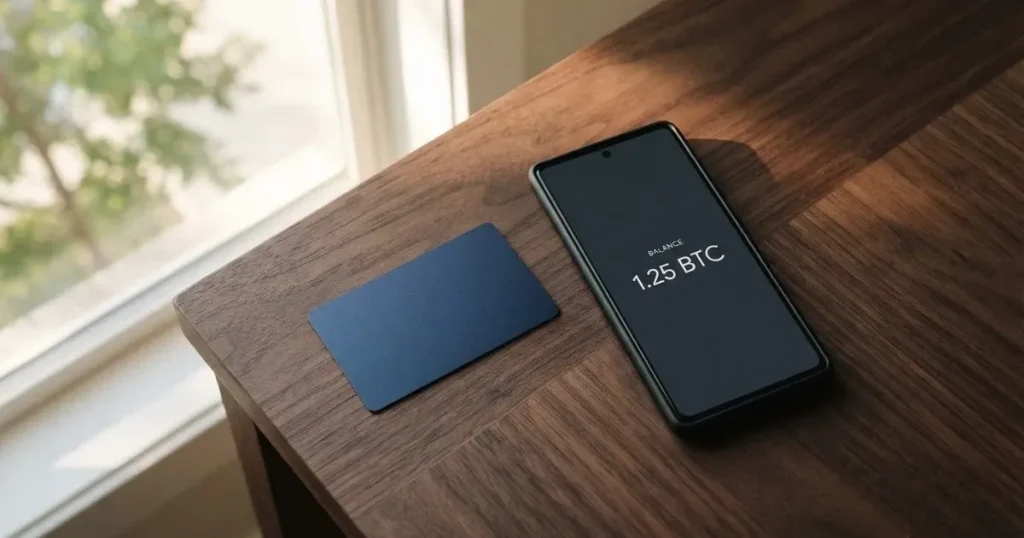
The AQUA card, briefly known as Dolphin Card during its beta, no longer issues new cards. JAN3, the company behind the AQUA wallet, announced a global suspension on 4 December 2025 after a problem with its card provider. Months later, no replacement has been announced, no restoration date has been published, and the official channels are still telling users to claim their remaining balance through a refund form. If you are reading this because you held one, the practical question is how to get your money back. If you are reading it because you were considering one, the practical question is which other card to look at.
This review walks through the timeline, what existing users are told to do, the risks that came with the programme, the alternatives worth comparing, and the questions people most often search for. I have kept the conditions as the card stated them at the time of writing, noting carefully what was official and what came from third-party coverage.
Conditions are current as of October 28, 2026.
Verdict
The AQUA card scores 2.4 out of 10, and the headline numbers are honest about why. A crypto card that no longer exists cannot be recommended, and the only meaningful audience for this page is someone who already holds one and needs to recover their balance. New users have nothing to buy into.
| Criterion | Mark | Reason |
|---|---|---|
| Who can get it | 0 / 10 | Dolphin Card was suspended worldwide on 2025-12-04 because of a card-provider problem; no resumption has been announced |
| Cost | 5 / 10 | Fees were never published; a third-party review did not mention any issuance or monthly charge, but that is not a published fee statement |
| Top-up options | 4 / 10 | BTC, L-BTC or Liquid USDt, on the Liquid network only |
| Reliability and complaints | 1 / 10 | Programme suspended on 2025-12-04, balances were returned in USDT on Liquid, pending merchant refunds will not come back to the card, and the card issuer was never named |
| Everyday use | 2 / 10 | Virtual Visa only; Apple Pay and Google Pay were planned but were not live at launch |
Total: 2.4 / 10.
The audience note that should sit alongside any of this: existing cardholders who need to recover their remaining balance. If that is you, the holder section below is the part that matters; the rest is context.
What happened to the programme
The Dolphin Card beta was announced on 21 May 2025 in a blog post on the AQUA site. It described a virtual Visa card denominated in US dollars, reloadable, managed inside the AQUA app’s Marketplace tab. The target audience was users outside the United States and Canada, with the company noting that some merchants in certain countries would not work. A US and Canadian launch was hoped for “in the coming months”.
Sign-up during beta was unusually light. A JAN3 account with an email address and a verification code was all that was asked. No identity documents were mentioned. That matched the feel of the broader AQUA wallet, which markets itself around a non-custodial Bitcoin experience. It also meant the programme sat in an unusual corner of the market: a Visa card on a network the size of Visa, issued without the identity checks most issuers require.
The card itself was virtual only, USD-denominated, and reloadable. Top-ups used BTC, L-BTC or Liquid USDt, all routed through the Liquid network. The AQUA app at the time sat at version 0.3.0 beta. The blog post talked about Apple Pay and Google Pay “in the coming months”, but neither was live at launch, and tap-to-pay was not available. No blocked merchant list was published. The card was meant to be added to a phone wallet, but for the first phase it was effectively a virtual card number that you typed in online.
Fees were not stated in the public materials. Neither issuance, nor monthly, nor transaction fees appeared in the beta post. A third-party review by CriptoNoticias on 24 October 2025 also did not mention any issuance or monthly fee, but absence in a review is not the same as an official statement that there are no fees. For the purpose of this review, the cost question is unresolved. No tiered structure was described. No physical card was offered. The currency was USD; multi-currency support was not stated.
Then came the suspension. On 4 December 2025, JAN3 announced that all Dolphin Cards had been suspended globally “effective immediately” because of a problem with its card provider. The provider was not named. Other AQUA wallet services were said to be unaffected. In a separate post dated 30 November 2025, JAN3’s CEO said partners had told him all cards were being suspended and that the team was negotiating refunds and looking for alternative providers.
Searches in 2026 have not found a replacement provider or a relaunch date. As of the date on this page, the card programme is still closed.
If you already have the card
If you are one of the users who loaded the card before 4 December 2025, the practical situation is specific.
The remaining balance on a suspended card is being refunded in USDT on the Liquid network. You do not get the original crypto you loaded; you get USDT, even if you topped up in BTC or L-BTC. Refunds are not automatic. You have to fill in a secure request form on the AQUA website, and the team starts processing once it receives the funds from its card provider. The page says you will get email confirmations along the way. Refund fees have not been published.
You can send the refund to your AQUA wallet or to any other Liquid-capable wallet. If you have never used Liquid, it is a Bitcoin sidechain, and you will need a wallet that supports it before you fill in the form, or you will not have anywhere for the USDT to land.
The spending limit during the card’s life was $4,000 USD per month. That number is no longer relevant in the sense of future spend, but it can matter if you are reconciling transactions against a personal cap.
One important caveat for anyone still waiting on a refund from a merchant: pending refunds will not come back to the Dolphin Card. The card is closed, and there is no path described for routing a merchant refund onto it. If you bought something just before the suspension and the seller is willing to refund, ask them to refund to a different card or a bank account, not to the Dolphin Card number.
A couple of useful details from the third-party CriptoNoticias review, given as unofficial and not confirmed by JAN3: on-chain BTC top-ups required miner fees and three to four network confirmations before the balance updated, BTC loaded onto the card was automatically converted to USD, and the card was described as nameless. These are not official terms; they are observations from one review.
Support is a thin area. The beta blog post did not name a support channel, and the terms of service simply referred users to a country list. For refund-related questions, the refund form and the email confirmations that follow are the main point of contact.
What can go wrong
A card programme that closes mid-life is the obvious risk, and it is the one that materialised here. The lessons sit in three layers.
The first is provider risk. The card was suspended because of a problem with its card provider, and the provider was not named. For a user, that is the single most important fact in the whole story. You can choose the brand you hold the card with, but you often cannot choose the issuer behind it, and if that issuer loses its relationship with Visa or Mastercard, the card stops working. Visa and Mastercard themselves do not issue crypto cards to consumers; they license issuers, and they can suspend programmes. The WaveCrest suspension in Europe in 2018 is the historical example: a single issuer’s loss of its licence closed every crypto card brand it had been powering at the time. FTX’s US debit card was wound down in 2022 after Visa terminated its global agreements with FTX.
The second is refund risk. Even when a programme closes, money is not always easy to get back. In this case JAN3 has been explicit that balances will be returned in USDT on Liquid, that processing depends on receiving funds from the provider, and that pending merchant refunds will not return to the card. If the provider relationship turns out to be tangled, refund timelines can stretch. The exchange rate at which your balance is converted to USDT, and the moment at which that conversion is locked, also affect what you actually receive.
The third is information risk. The card issuer was never named. The fees were never published. The supported countries were hinted at but not listed. The support channel for non-refund questions was not stated. For something you would put a meaningful balance on, that is a lot of “not stated” to live with. The other Aqua wallet services were said to be unaffected, which is reassuring for the wider app, but it is also a reminder that the wallet and the card were always different products sitting on different rails.
Beyond the closure, the mechanics carried the usual crypto-card risks: the private key or seed phrase for the underlying crypto belongs to the holder, and crypto transfers are typically irreversible. A seed phrase is, in plain terms, an unencrypted form of the private key, and anyone who obtains it can restore the wallet and spend its funds. If you sent the wrong network to a Liquid address, the funds would not be recoverable. Stablecoin issuers can also freeze funds tied to sanctioned addresses, which is part of the regulatory reality rather than a quirk of this card in particular.
What to take instead
Because the AQUA card is closed, the comparison below is between the way it was and the way other cards work now. I have picked three cards that cover the spectrum from light to heavy use. The scores reflect the original ratings.
TokenPocket (TP Card), 5.8 / 10
TokenPocket offers a Mastercard or Visa debit card (Fiat24) that runs on Arbitrum, with virtual cards and balances in EUR24 and USD24. Sign-up covers a list of European countries and territories for Visa, and a separate list including Australia, Canada, Hong Kong, Japan, Taiwan, New Zealand, Singapore, South Korea and the UK for Mastercard; the Americas were planned for Q2 2025. The card needs an NFT creation, partly subsidised by TokenPocket; the user pays “a small portion”, with the amount not stated. Apart from that, TokenPocket says it does not charge additional fees, but a 1% fee is charged on crypto deposits to the TP Card, to be refunded later through rewards or reduced transaction fees. Foreign-exchange fees were not stated, and extra fees can come from inter-institution settlement. The card supports crypto deposits from the TokenPocket wallet; specific coins and networks are not listed in the FAQ beyond the Arbitrum wallet. No cashback was stated.
MetaMask Card, 7.1 / 10
MetaMask’s card is issued by Monovate, with Crypto Life as card provider. Sign-up is open in 45 listed countries and territories, including parts of Europe, Latin America and Canada; other regions join a waitlist. Proof of residency is required, and the FAQ notes that “ineligible regions limit sign-ups, not spending”. US and UK sign-ups were temporarily closed at the time of writing. A virtual card is issued first and instantly; a Metal card can be pre-ordered in app after Virtual approval, one card per user. The Virtual card is free with no annual or maintenance fee; the Metal card is $199 per year. Fees are described as “minimal” per transaction, with no foreign transaction fee (the Mastercard rate is used) and no additional MetaMask fees. Spending happens directly from the connected wallet on Linea, Base, Monad or Solana, against tokens including mUSD, wETH, EURe, GBPe, USDC and USDT; Solana-only wallets cannot withdraw credit. Cashback is paid in mUSD into the Money Account: 1% on Virtual; 3% headline on Metal, with a footnote limiting 3% to the first $10,000 spent and then 1%. A $FLY bonus of 5x (Virtual) or 7x (Metal) is also available through the Blackbird dining app.
KAST, 6.1 / 10
KAST offers virtual and physical cards, up to 10 per user, on Visa Platinum (Standard), Visa Infinite metal (Premium) and Visa Infinite gold plated (Private); other designs include Pengu, Solana and Bitcoin. Eligibility is shown at KYC, and the country list is not publicly published; KAST also applies the rule to citizenship, not just residence, and rejects IDs from restricted regions even if the applicant lives in a supported country. Account opening in an unsupported country is possible, but KYC stays locked. Annual membership is tiered: Standard is free; Premium is $1,000 a year; Private is $10,000 a year, billed annually upfront with no monthly option. Extra virtual cards cost $2, and Standard physical cards carry a $0 card fee plus $40 delivery. Premium and Private physical cards are included. There is a $1 monthly inactivity fee after 12 months and renewal or reactivation fees whose amounts were not stated. Stablecoin top-ups and card spending in USD are 0%, and non-USD foreign exchange fees are 0.5% to 1.75% depending on residence, transaction country and programme; non-USD transactions under $25 attract a $0.10 fee and a declined transaction due to insufficient balance is $0.50. Funding is in stablecoins: USDT, USDC, PYUSD and RLUSD, on Ethereum, Solana, Polygon, Arbitrum and TRON (the app lists current networks). The Terms name USDT and USDC as acceptable, which conflicts with PYUSD and RLUSD. Cashback is paid in USD when a transaction is authorised, tiered by spend: 1.5% on the first $2,000 a month for Standard, 2% on the first $10,000 for Premium, 3% on the first $40,000 for Private; KAST Points add 1% for Premium and 2% for Private.
| Card | Where it works | Issuance / annual | Cashback | Funding |
|---|---|---|---|---|
| TokenPocket | Visa in selected EU countries, Mastercard in selected non-EU markets | NFT creation, partial fee; no other stated fees | None stated | Crypto via TokenPocket wallet on Arbitrum |
| MetaMask Card | 45 listed countries | Virtual free; Metal $199 / year | Virtual 1% in mUSD; Metal 3% up to $10,000, then 1% | Direct from connected wallet on Linea, Base, Monad, Solana |
| KAST | Country list shown at KYC, not public | Standard $0; Premium $1,000 / year; Private $10,000 / year | 1.5% to 3% in USD, by tier | USDT, USDC, PYUSD, RLUSD on multiple networks |
If you are choosing among these, the trade-offs are not subtle. MetaMask Card has the cleanest onboarding for someone who already lives inside a self-custody wallet, with a free virtual tier and a clear fee structure, though US and UK sign-ups were closed at the time of writing. KAST has the strongest cashback on the Premium and Private tiers, but the $1,000 and $10,000 annual fees make the headline rate less attractive unless you spend heavily. TokenPocket sits between them, with a quiet fee structure but no cashback and country coverage that does not include the Americas at launch.
Who I would recommend it to
Almost no one, in its current form. The card programme is closed, the issuer is unnamed, the fees were never published, and the only path forward for a user who held one is the refund form. The narrow case for recommending anything AQUA-related here is for existing cardholders who need to recover their remaining balance. If that is you, fill in the refund form, send the USDT to a wallet you control on Liquid, and don’t wait on a pending merchant refund to come back to the card.
For anyone who came to this page because they were considering the card, the honest answer is that there is nothing to consider. The card is not being issued, and a replacement provider has not been announced. The three alternatives above are real cards, with real fees and real coverage, and they are the right place to spend the time you would have spent comparing AQUA against them.
Frequently asked questions
What is the AQUA card?
The AQUA card, also called Dolphin Card during its beta, was a virtual Visa card denominated in US dollars, managed inside the AQUA wallet app and issued through JAN3. It was announced on 21 May 2025, suspended globally on 4 December 2025, and has not been reissued as of the date on this page.
How does the AQUA card work?
The card was a reloadable virtual Visa. Users topped it up with BTC, L-BTC or Liquid USDt on the Liquid network through the Card Management page in the AQUA app, and the balance converted to USD for spending. Top-ups were on-chain and required network confirmations before they were credited.
Is AQUA a bank?
No. AQUA is a wallet brand operated by JAN3, the company also known for Bitcoin and Liquid Network tools. The card issuer was never named publicly, and the card programme sat on top of an unnamed provider that JAN3 itself did not operate.
Who owns AQUA?
AQUA is a product of JAN3, the company founded by Samson Mow. Other AQUA wallet services remain operational, but the card programme was suspended globally in December 2025 and has not been relaunched.
Is the AQUA card available in my country?
During beta the card targeted users outside the United States and Canada, and JAN3 said US and Canadian support was hoped for “in the coming months”. The programme was suspended in December 2025, so country availability is no longer a live question. Pending merchant refunds will not return to the card.
How do I get an AQUA card?
You cannot, at the time of writing. New cards are not being issued, and JAN3 has not announced a replacement provider. The relevant action for existing users is the refund form, not a sign-up page.
Does the AQUA card require KYC?
During beta, sign-up required only a JAN3 account, an email address and an emailed verification code. No identity documents were mentioned in the official beta post, and a third-party review described the same. The wider JAN3 account is a separate process with its own KYC requirements.
How do I top up the AQUA card?
Top-ups were made through the Card Management page in the AQUA app using BTC, L-BTC or Liquid USDt, all on the Liquid network. The AQUA blog recommended a small test load first, and balances could take a moment to update. The card is closed, so this is no longer a current path.
How do I withdraw money from AQUA?
If you held a Dolphin Card, the official path after the 4 December 2025 suspension is a secure request form on the AQUA website. Refunds are paid in USDT on the Liquid network, to your AQUA wallet or any Liquid-capable wallet, after AQUA receives funds from its provider. Pending merchant refunds will not return to the card.
Is the AQUA card safe?
The card is closed, so the question is about what to expect from the refund process. The CEO has said user funds are safe, refunds are being paid in USDT on Liquid, and the team is working with a provider. The structural risks are the ones any closed card programme carries: refund timing, conversion rate, and the fact that pending merchant refunds will not come back to the card.
Wallet cards on the shortlist – cryptocardshortlist
Content created by the «cryptocardshortlist» team