
Pyypl Card Review: A Prepaid Visa for Three Countries — With Fine Print Worth Reading
 Available in US
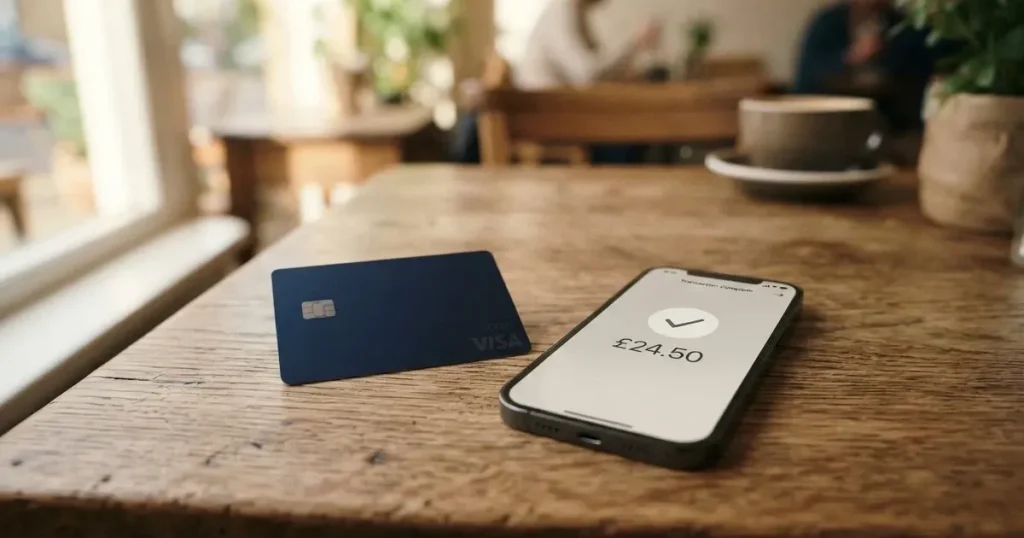
The Pyypl card is a prepaid Visa that you load with money and spend like an ordinary payment card — no bank account required, and in three countries you can actually get one. That is the good news, and it is genuinely good news for the person who cannot open a normal account. The rest is more mixed. Pyypl is licensed in the UAE, Bahrain and Kazakhstan, not everywhere; the pages it publishes leave key numbers — issuance fee, FX markup, ATM charges — unstated and visible only inside the app; and the independent reviews on Trustpilot sit at a TrustScore of 2.5 out of 5 across more than eight hundred reviews, with frozen funds and locked accounts as recurring themes. My score for the card is 5.0 out of 10. That middle number is not a polite shrug — it reflects a product that solves a real problem for residents of three specific countries, built on a solid regulatory footing, wrapped in documentation that asks you to trust the app rather than the website.
The conditions described below are current as of October 28, 2026.
Who is this card for? If you live in the UAE, Bahrain or Kazakhstan, you have no access to an ordinary bank card, and a prepaid Visa is genuinely the tool for daily life — groceries, transport, subscriptions. If you are anywhere else, or you are comparing this against a card that also earns rewards or handles multiple currencies, look elsewhere; the alternatives below do several of those things better. The full reasoning follows.
| Criterion | Mark | Why |
|---|---|---|
| Who can get it | 3 / 10 | Licence is residence-based: UAE, Bahrain, Kazakhstan only |
| Cost | 7 / 10 | No monthly fee, but issuance and FX amounts are not published |
| Top-up options | 3 / 10 | Methods vary by country and are not listed publicly |
| Reliability and complaints | 5 / 10 | Properly licensed, but frozen-funds complaints and a 2.5 TrustScore |
| Everyday use | 7 / 10 | Prepaid Visa with Apple Pay and Google Pay; digital card only |
| Total | 5.0 / 10 | Right tool in the wrong countries, with thin public detail |
Notice how the shape of that table explains the total. The two everyday-use marks are strong; the two access marks are weak. Pyypl does not spread itself thin trying to be a universal crypto card — it stays small, licensed and narrow. The narrowness is the product’s strength and, for most of the world, its dealbreaker at the same time.
Will they give you the card?
They will give it to residents of the three countries where the company holds a licence: the United Arab Emirates, Bahrain and Kazakhstan. The legal page states it plainly — “Pyypl services are currently available to residents of the countries in which we are licensed” — and those are the three. The support centre adds only that services “vary” by location. The eligibility test is residence, not citizenship: what matters is where you live, and the rule is the same regardless of which passport you hold.
One thing to flag, because it will confuse you if you go looking. Pyypl’s own card page describes its region more loosely as “Middle East, Africa, Central Asia,” which reads as far wider than the licensed reality. Take the legal page as the source of truth. Africa and much of Central Asia are not on the licensed list, whatever the marketing line suggests. If you are outside the UAE, Bahrain or Kazakhstan, there is no application to make and no amount of persistence that will change that.
That is a narrow door, and it is narrow by design. Pyypl is a licensed financial company choosing to operate where its licences are, not a global platform that has not arrived in your country yet. Whether that is reassuring or limiting depends entirely on where you stand.
How to get it
The signup is phone-first, and this is the part Pyypl has done well. You need a smartphone, a valid mobile number, a valid identity document and a selfie. The company says you can “open your account in minutes using just your phone and ID.” There is a minimum age, though the exact figure is not stated on the pages I read, so check it yourself before you start. Proof of address is not mentioned anywhere in the signup requirements.
Verification is tiered, but the tiers are not named. Features unlock after you pass verification, and your “verification level” affects your limits — so the more thoroughly you are checked, the more you can do, in broad strokes. Processing “may take sometime if additional checks are required,” which is the standard way of saying some applications are quick and some are not. The card’s public pages do not say what happens if you are turned down, so if your situation is unusual, expect uncertainty there.
On the card itself: it is a prepaid Visa, issued digitally in the app. The pages describe a digital card; a physical plastic card is not mentioned anywhere I looked, and delivery details are not stated. The card currency is US dollars. So the physical reality is: you are signing up from your phone and paying by phone or by adding the number to a mobile wallet. Whether you ever receive plastic is genuinely unclear from the public documentation.
Fees: what it really costs
The headline is good and accurate: “No monthly fees.” That is the number most people search for, and it is true. Everything around it, however, is thinner. Here is what is published and what is not.
| Fee or limit | What Pyypl publishes |
|---|---|
| Monthly fee | “No monthly fees” |
| Issuance fee | not stated |
| Conversion / FX fee | “may apply” by country; amount not published |
| ATM withdrawal | not stated on official pages |
| Card replacement fee | may apply by country and product; amounts in app only |
| Inactivity fee | may apply by country and product; amounts in app only |
| Daily / monthly spend limits | depend on country, verification level and regulation; figures in app only |
Read that right-hand column carefully, because it is the honest answer to “is Pyypl free.” The card carries no monthly fee. It is not, however, a card where the total cost is fully knowable in advance. Issuance is not disclosed. Foreign-currency spending is converted to the USD card base at the moment of the transaction, and an international or FX fee or markup “may apply” depending on your country — the amount is not published anywhere. If you spend outside the United States or outside your own currency, you will find out what that fee is at the point of payment, not in advance. A crypto conversion fee is also not stated. Card, replacement-card and inactivity fees may apply by country and product, and the amounts live only in the app, under Profile then Fees.
An ATM note, flagged carefully: the official pages say nothing about ATM withdrawals. A third-party listing does describe ATM withdrawals worldwide, but it is unofficial, undated, and — a warning sign — it names the network as Mastercard, which conflicts with the Visa the company states everywhere else. Treat ATM availability as unconfirmed.
Limits do exist and they are real: separate caps on top-ups, per-transaction spending, daily, monthly and yearly totals, and sending or withdrawing. They depend on your country, your verification level and local regulation. The specific numbers are visible only inside the app, under Profile or Settings. There is a single stated tier — one prepaid card, with features that vary by market — so there is no premium version to pay up to.
The currency point is worth restating because it is a structural fact, not a fee: the card is denominated in US dollars and “cannot be changed.” Any other currency you spend is converted at the moment of transaction. A dollar card is simple to reason about and genuinely convenient if you think in dollars; it is a drag if you are budgeting in a different currency and want to know exactly what a purchase will cost.
Three everyday payments, and which fees actually touch them:
- Groceries in your own country, priced in dollars. The cleanest case. No conversion, so the FX question does not arise. You spend the balance you loaded.
- A monthly streaming subscription in dollars. Fine in dollars. If the subscription is billed in another currency, the conversion happens at transaction time and the international fee “may apply” — this is where the unstated markup actually bites.
- Paying a local bill denominated in your national currency, not dollars. Here the card converts at the transaction rate and any international or FX fee by country applies. This is the payment most likely to surprise you, because the amount you planned in your own currency will not be the amount that leaves your balance.
The pattern: Pyypl is cheapest for dollar spending and most expensive, and least predictable, for cross-currency spending. If your life runs mostly in dollars, that is a good deal. If it runs mostly in something else, the missing FX number is a real problem you cannot solve by reading harder.
How to top it up
Top-ups happen in the app, under Top-up. The official position on which methods work is, word for word, “supported methods in your country” — and the card does not list them. This is the single biggest gap in the whole product for someone trying to plan around it. Binance Pay is not mentioned in current materials. An earlier check had it as an option with USDT converted to USD; that has not been confirmed on the pages I read, so I would not build a routine around it without seeing it in your own app first.
Timing is stated with useful honesty: “Some methods are instant, while others may take 1-3 business days.” So budget for both an instant path and a slow one. Fees on top-up, and minimum top-up amounts, are not stated — another figure to discover rather than to plan around.
On the other side of the ledger, sending and withdrawing also carry fees and limits that depend on country and product. Whether you can withdraw crypto itself is not stated. What happens to a remaining balance if you close the account is also not stated — worth asking about directly if you ever intend to leave, because getting money out of a closed prepaid account is the classic place people get stuck.
The honest summary of funding: instant for some methods, one to three business days for others, methods unknown in advance, costs unknown in advance. It works, but you are discovering it as you go.
Paying with it every day
Daily use is where Pyypl scores well, and it is the part of the card with the fewest asterisks. It is a prepaid Visa, so it works anywhere a Visa is accepted — online, in shops, in person. You can add it to Apple Pay and Google Pay directly from the app, which is the practical way most people will actually use it, since the card is digital and lives in your phone. Blocking categories are not stated.
What you will not find: no cashback or rewards programme is mentioned anywhere, and none is implied. If earning something back on your spending is part of why you want a crypto card, Pyypl is not that card.
The apps exist on both Android and iPhone. I tried to read their store ratings on 21 October 2026 and could not — so treat any star figure you see quoted elsewhere as unverified, and read the recent reviews yourself before you commit. Review quality on the app store is often the most honest early warning you will get about what support is like.
If a payment goes wrong, the dispute position is not clearly stated for the card. There is a gift-card refund article, and the Terms refer to product-specific terms, so the route for a card dispute exists in principle but is not spelled out in a way you would want to rely on in a stressful moment. That is a reason to keep your own records.
A note on why any of these cards can behave oddly at a till, since it explains more real-world friction than the app does: a card number starts with an issuer identification number of six or eight digits that tells the merchant which institution and country issued it, and a merchant can look that up. When the issuer country differs from your billing address, the merchant may apply extra scrutiny. This is why a card issued in one country can look “foreign” to a shop in another, and why a prepaid card can occasionally be declined at a till that would happily accept a domestic one. It is a property of how card payments work, not a fault particular to Pyypl.
What can go wrong
This is the section that decides whether you should read the rest.
Start with the company, because it is genuinely solid. Pyypl Ltd is incorporated in the Abu Dhabi Global Market (registration number 000001116) and holds an FSRA Licence No. 170031 “for providing money services.” It is also regulated by the Central Bank of Bahrain and by the Astana Financial Services Authority in Kazakhstan. It issues the card under its own principal Visa membership. That is a real multi-jurisdiction regulatory footprint, and it is more than most cards in this category can show.
But it says clearly, in terms worth hearing: “We are not a bank, and balances … are not deposits.” That sentence is the key to understanding the risk. Your money sits with a licensed e-money institution, not in a bank deposit. It is safeguarded under e-money rules rather than covered by a deposit guarantee scheme. In practice that usually means segregation in a dedicated account; the card does not state its safeguarding arrangements, so I would not assume more than the law requires.
Then the complaints. I found no official record of regulatory incidents against the company — that is worth noting, because it is not always true. But independent user reports are consistently poor. On Trustpilot, read on 21 October 2026, the TrustScore is 2.5 out of 5 across 828 reviews (only 11 of them in the last year; counts drift between 821 and 828 depending on when you look). The split is stark: 46% five-star, 39% one-star. In the years 2024 to 2026 the recurring themes are withdrawals and frozen funds, accounts locked after verification, refunds unprocessed for three months or more, and support that does not reply. There is also a strand of complaints about the service simply not being available in a reviewer’s region, or the app disappearing — which is consistent with a licence-based service that switches markets on and off.
Here is the pattern I would want you to notice, because it is the same shape across all of them: money gets stuck. Frozen or unreturned funds in January 2026, accounts locked in May and August 2026, refunds sitting for months. For a prepaid card this is the worst possible failure, because the balance is the entire asset — there is no second account to fall back on, and no deposit guarantee to lean on. I would treat the TrustScore not as noise but as the most direct evidence available of how the product behaves under stress.
Security and safeguards are reasonable in the ordinary way. It is a custodial prepaid e-money wallet, which means Pyypl holds the credentials and you trust them completely — the private keys are not yours, so you cannot move the funds without going through the provider. The card adds an instant freeze and unfreeze in the app, spending notifications, PCI DSS compliance, encryption and 24/7 fraud monitoring. Safeguarding of funds is not stated. Support is an in-app Help Center with a bot first and a human agent after, plus a web form. Whether that support chain is fast enough is exactly what the Trustpilot reviews dispute.
The category risks apply here too, and they are not small. Custodial platforms have a history: Mt. Gox (roughly US$350 million reported stolen, 2011–2014), Coincheck (about US$400 million, 2018), Ronin Network (US$625 million, 2022). Blockchain transfers are typically irreversible and a stolen key has no recovery path. And stablecoins, which are the fuel for most cards like this, are not reliably stable — TerraUSD collapsed in May 2022 and USDC briefly lost its peg in March 2023. Two further things to know about the rails: transferring on a network the provider does not support can lose the funds outright, and stablecoin issuers do freeze assets tied to illicit activity, so these balances are not censorship-proof either.
On taxes, one thing to be aware of and not advice: the IRS treats digital assets as property, so swapping them for goods or dollars generally produces a taxable gain or loss, measured in local currency at fair market value on the date of each transaction. Every card payment funded from crypto can be a separate taxable event. That is the IRS position; your own jurisdiction may differ, and this is not something to take from a card review.
What to take instead
Three cards come up repeatedly in this category, and each does something Pyypl does not. Here is how they compare on the dimensions that matter for a person choosing between them.
International Visa Card — a US-issued Platinum Visa, virtual, pays in dollars. Scores 6.7 out of 10 in our comparison.
- Where: not available to residents or legal registrants of Belarus, mainland China, North Korea, Cuba, India, Iraq, Iran, Israel, Myanmar, Nepal, Nicaragua, Russia, Syria, Turkey, Ukraine, Venezuela or Vietnam; FATF grey-list countries are reviewed case by case with compliance approval. Purchases are blocked in North Korea, Cuba, Iran, Russia, Syria, Ukraine and Venezuela. The rule is by residence or registration, not citizenship.
- Cost: virtual card issuance $5 one-time, no maintenance fee. Plans: Classic free, Pro $9.00/month, Max $19.00/month.
- Fees: card use in USD is free on all plans; foreign currency is “Visa exchange rate + 2% FX fee.” Deposits of any kind carry no fee.
- Funding: deposit USDC or USDT into the USD account free at 1:1, plus USD, EUR, SEPA, SWIFT and FedNow deposits. Networks not stated.
- Card: virtual only; the physical card is “Coming soon.”
- Rewards: no cashback stated.
UNi Card — a multicurrency card on the Mastercard network, spending from the UNi.Global balance. Scores 6.1 out of 10.
- Where: not stated.
- Cost: “No annual fee”; issuance fee not stated.
- Fees: “No annual fee or foreign transaction fee”; assets converted at live OTC rates with “no hidden exchange fees.”
- Funding: not stated.
- Card: multicurrency Mastercard; physical or virtual not stated.
- Rewards: “Spend-to-Earn rewards” up to 3% with the UNi Card.
- Card currency: spend directly in the currency of your balance rather than converting everything to dollars.
Morse — a Visa prepaid debit spending from a self-custodial wallet. Scores 7.5 out of 10, the highest of the four.
- Where: eligibility is by residence, not citizenship — you must be “at least 18 years old” and “a resident in a supported country.” The app is available in “over 140 countries” and local add/withdraw works in over 70. Morse “cannot serve customers subject to sanctions issued by the United States” (also UK, EU, UN). Some countries are closed-beta and need an invite code: American Samoa, Australia, Cape Verde, Guernsey, Hong Kong SAR China, Isle of Man, Japan, Jersey, New Zealand, Serbia, Singapore, Switzerland, Thailand, Türkiye, United Kingdom, Western Sahara. The card is “available only in certain countries” — check the app, the list is not published.
- Cost: issuance and monthly fee not stated; the card page says “Fees may apply. See Cardholder Agreement.”
- Fees: “Zero foreign exchange fees or markups,” using the real-time Visa exchange rate; paying with the card online and contactless is free.
- Funding: deposits by debit card, stablecoin transfer, and account details (USD, EUR, MXN, COP; BRL needs a Brazilian CPF). USDC, USDG and EURC via Solana are free; other tokens and blockchains carry a fee. Bitcoin, USDT and Ethereum can be deposited.
- Card: “Morse Card is fully virtual for now”; Visa prepaid debit spending from Morse Balance “in any currency.”
- Security: the Morse Wallet is self-custodial — your keys, your funds, no custodian to be hacked.
A note on how these cards relate to the networks: Visa and Mastercard do not issue crypto cards to consumers themselves. They license issuers and can suspend a programme. It has happened — Visa terminated its global agreements with FTX in November 2022 and the FTX US debit card was wound down, and WaveCrest, an issuer that supplied several crypto card brands, was suspended by Visa in Europe in 2018, closing all its Visa programmes. Programme closures typically mean a notice period, then loading and spending stop, then you are asked to withdraw whatever is left. Any card in this category carries that tail risk.
So: which one? If you want the broadest reach and cheapest cross-currency use, Morse is the strongest on paper, though its country list is unpublished and some markets are invite-only. If you want a stablecoin-denominated account with clean USD deposits and no FX fee at all, UNi Card is built for that, at the cost of the least transparency about where it operates. If you want a plain dollar Visa with cheap deposits and clearly spelled-out eligibility, the International Visa Card has the most transparent restrictions of the three. And Pyypl remains the right answer to one specific question: a prepaid Visa for residents of the UAE, Bahrain or Kazakhstan who need a card now.
Who I would recommend it to
I would recommend the Pyypl card to exactly this person: you live in the UAE, Bahrain or Kazakhstan, you cannot open a normal bank account, you spend mostly in dollars, and what you need is a card that works in shops and in Apple Pay without a credit file or a bank relationship. For that person, this is a good product with real regulatory backing and a genuinely free monthly fee. The app-first design suits a smartphone-based daily life, and adding it to Apple Pay or Google Pay makes a digital card feel like an ordinary one.
I would not recommend it if you are outside those three countries, if you are comparing on fees and want every number published in advance, if you want cashback or rewards, if you need a physical plastic card, or if you hold several currencies and would rather spend them directly than convert everything through dollars. And if you are the kind of person who would be unsettled by a TrustScore of 2.5 and a pattern of frozen-funds reports, pick a different card — the alternatives here all publish more and have better independent reputations right now.
My own caution, if I were being honest about my hesitation: the licensing is real, but the transparency is thin. The card asks you to trust the app for what the website will not tell you, and the reviews say that trust has been misplaced for some people at the worst possible moments. Open it with a small balance. Top it up gradually. Do not leave your month in there, and make sure you know how to get it back out before you put it in.
Frequently asked questions
What is the Pyypl card?
The Pyypl card is a prepaid Visa that pays out of a balance you load in advance, rather than drawing on a bank account. It is issued digitally through the Pyypl app and works wherever Visa is accepted, including Apple Pay and Google Pay. It is issued by Pyypl Ltd under its own Visa membership, and Pyypl is a licensed financial company, not a bank.
How does the Pyypl card work?
You load money into the card, and it spends that stored balance — like a gift card you top up yourself. Because it is prepaid rather than a debit card, it cannot overdraw, and it does not need a linked bank account. Foreign-currency payments are converted to the US dollar card base at the moment of transaction, and an international or FX fee may apply depending on your country.
Is Pyypl a bank?
No, and it says so itself. Pyypl Ltd is a licensed e-money and money-services company — FSRA Licence No. 170031 in the Abu Dhabi Global Market, plus regulation by the Central Bank of Bahrain and the Astana Financial Services Authority. Its own wording: “We are not a bank, and balances … are not deposits.” Your money is safeguarded under e-money rules, not covered by a bank deposit guarantee scheme.
Who owns Pyypl?
Pyypl is operated by Pyypl Ltd, incorporated in the Abu Dhabi Global Market under registration number 000001116. It holds an FSRA licence for providing money services, and is also regulated by the Central Bank of Bahrain and, for Kazakhstan, the Astana Financial Services Authority. It issues the card itself under its principal Visa membership.
Is the Pyypl card available in my country?
Only in the UAE, Bahrain and Kazakhstan. The company states that services are available to residents of the countries in which it is licensed, and those three are the licensed ones — despite broader-sounding wording elsewhere on its site. The test is residence, not citizenship. If you are outside those three, there is no application to make.
How do I apply for the Pyypl card?
You need a smartphone, a valid mobile number, a valid identity document and a selfie. The company says you can open the account in minutes using just your phone and ID, and it also uses in-app verification tiers that unlock features and affect limits. A minimum age applies, though the exact figure is not published; check it in the app before you start.
Does the Pyypl card require KYC?
Yes. It asks for identity verification before you can use it, in line with anti-money-laundering rules that apply to any regulated financial company. The card also uses a verification level that determines which features and limits apply to you, and may require additional checks, which can extend processing. Refusing to complete verification is the most common reason an account cannot be used.
How do I top up the Pyypl card?
You top up in the app, under the Top-up option. The company lists the methods as “supported methods in your country” without naming them, so what you see depends on where you are and which methods your app offers. Some methods are instant, others take one to three business days. Fees and minimum amounts are not published, so check the app itself.
Is the Pyypl card safe?
The company has real licences and reports no official regulatory incidents, and the app has sensible safeguards: instant freeze, spending notifications, PCI DSS compliance, encryption and 24/7 fraud monitoring. But it is a custodial wallet, and independent reviews are poor — Trustpilot shows 2.5 out of 5 across 828 reviews, with frozen funds and locked accounts recurring. Treat reviews as a warning, and keep only a modest balance on it.
Is the Pyypl card worth it?
For a resident of the UAE, Bahrain or Kazakhstan who needs a Visa and has no access to a normal bank account, and who spends mostly in dollars, yes — the monthly fee is genuinely zero. If you are outside those countries, want published FX figures, want cashback, need a physical card, or want to hold and spend several currencies, it is not worth it: the alternatives do those things better.
App and neobank cards on the shortlist – cryptocardshortlist
Content created by the «cryptocardshortlist» team