
CardFlow reviewed: a Nigeria-focused virtual card with more gaps than answers
 Available in US

CardFlow is a virtual USD Mastercard aimed at Nigerian users, with a side door for “global users” who want to load it from Bitcoin, USDT, ETH or a Nigerian naira bank transfer. That is, in two sentences, the entire product the public-facing site describes: a prepaid-style card that lives on your phone, holds a USD balance, and is created in three minutes. The pitch is short because the product itself is short. There is no physical card, no ATM, no Apple Pay or Google Pay integration on the page, no rewards programme, and no published fee schedule. What you get is speed and simplicity. What you do not get is disclosure.
The score reflects that mix. CardFlow clears the bar for a quick virtual USD card you can spin up to pay online, but it does not clear it for a product I would tell someone to commit serious money to without doing their own homework first. The details that follow walk through what is actually published, what is conspicuously missing, and how it stacks up against the alternatives.
Conditions are current as of October 28, 2026.
Verdict
I scored CardFlow 4.9 out of 10. The number is not a moral judgement on the team behind the site; it is the result of weighing a fast, free virtual card against a list of unanswered questions that would matter to anyone moving real money through it. The five marks that built it up were the free virtual card creation, the naira and crypto on-ramp, the one-tap freeze, the chat widget and the absence of public complaints. The marks that pulled it down were the missing country list, the missing fee schedule, the missing issuer and company information, the missing KYC detail, and the absence of any third-party review footprint I could verify.

| Criterion | Mark | Why it sits there |
|---|---|---|
| Who can get it | 5/10 | Aimed at Nigeria and “Nigerians and global users”, but no country list and no exclusions published. |
| Cost | 6/10 | Free to create a virtual card; no monthly fee, top-up fee or FX fee disclosed. |
| Top-up options | 6/10 | Bitcoin, USDT, ETH and naira bank transfer; USDT on TRC-20 is near-instant, BTC and ETH take 5–30 minutes. Networks for the rest are not named. |
| Reliability and complaints | 4/10 | Issuer and operating company are not named; no public Trustpilot, Reddit thread or news story surfaces. |
| Everyday use | 3/10 | Virtual USD Mastercard only, no ATM, no Apple Pay or Google Pay on the page, no mobile app listing. |
| Total | 4.9/10 |
In plain English: this is a card for a Nigerian user who wants a USD balance in three minutes, has crypto or naira ready to load, and is comfortable treating the product as experimental. It is not for someone who needs a physical card, an ATM, a published fee schedule, or a regulator they can look up.
Who they will give the card to
The site introduces itself as “Nigeria’s smartest fintech card platform” and the same line of copy repeats the “Nigerians and global users” framing throughout. There is no country allow-list, no country block list, and no citizenship versus residence distinction. The product is aimed at Nigerian users funding a USD card with naira or crypto, and that matches what the public pages actually say.
For a reader outside Nigeria, the practical question is whether your country is implicitly excluded. Without a published list, you have nothing to check against before you sign up. That is one of the more uncomfortable features of the product. Even cards that do publish a list usually separate residents from citizens because, as the background section below touches on, sanctions screening and issuer risk policy often run on citizenship and country of birth as well as on your address. CardFlow does not give you that information either way.
KYC requirements are not stated. The sign-up section below covers what is actually published, and what is not, but the short version is that you should expect identity verification in the same way you would on any other regulated payments product, even though the site does not say so explicitly. Age is also not stated, although the general industry baseline is eighteen or older for prepaid and debit cards.
If you are a Nigerian resident with a bank account in naira, the use case is the one the site is built around: a USD card you can use to pay for things denominated in dollars, from a balance that you fund in naira or in stablecoins and major coins. If you are somewhere else, the same product is technically available, but with fewer guardrails and less to read up on.
How to get it
The published sign-up story is short. You create a virtual card in three minutes. The site FAQ puts “Create Free Card” on the dashboard and the marketing copy repeats the three-minute figure. There is no mention of a physical card anywhere, no shipping address to enter, and therefore no delivery step to think about. The card you get is a virtual USD Mastercard with the usual standard set: a card number, an expiry, a CVC. That is what sits in your account when the three minutes are up.
What the site does not tell you is which pieces of identity you will be asked for, when you will be asked, and what happens if you cannot complete the checks. Industry norms for a card product include name, date of birth, address, nationality, an identity document and a sanctions screen, and in the United States the customer identification programme requires name, date of birth, address and an identification number. Some of that is likely to apply to CardFlow too, but you only find out by going through the flow.
There are no tiers published. The site does not describe a “standard” versus “premium” account, and there is no published upgrade path or KYC level system. You either have a working card or you do not.
Practically, this means two things. First, the on-ramp is unusually quick for a card product, and that is genuinely the point: a USD card in three minutes is fast. Second, the unknown parts of the sign-up only show up when something blocks you, which is the worst time to discover them. A reader who needs certainty about whether their documents will be accepted has nothing to read in advance.
What it really costs
The cost story has one published number and a long list of unknowns. “Creating a virtual card is completely free” appears in the site FAQ under “Create Free Card”. No monthly fee, no annual fee, no inactivity fee, no minimum balance fee, and no top-up or FX fee is published anywhere I could find on the public pages. The same is true for ATM fees, which is moot for a different reason: there is no ATM access, because the card is virtual only. Daily and monthly spending limits are not stated either.
That absence is not the same as “free in practice”. It means the company has chosen not to publish a fee schedule, and the cost you actually pay depends on what happens between the moment you send crypto or naira and the moment a merchant accepts the payment. There are at least three places where a fee can appear without being on the site: the spread between the mid-market rate and the rate you are converted at, the network fee the blockchain charges for the deposit, and any fee your sending bank or exchange applies to a transfer. None of these is necessarily labelled “CardFlow fee”, but all of them are paid by you.
| Fee or limit | CardFlow |
|---|---|
| Card issuance | Free (virtual card only) |
| Monthly fee | Not stated |
| Conversion fee | Not stated |
| FX fee | Not stated |
| ATM fee | Not stated (no ATM access) |
| Daily limit | Not stated |
| Monthly limit | Not stated |
| Top-up fee | Not stated |
| Minimum top-up | Not stated |
| Inactivity fee | Not stated |
| Card tiers | None published |
To make the gaps concrete, walk through three everyday payments:
Paying for a Netflix subscription in USD. The site says the Mastercard works on Netflix, so the payment itself is supported. What it costs you in naira depends on the conversion rate used at the moment the USD balance is created from your naira top-up, and on whether there is a spread or fee in that step. Neither is published.
Paying Amazon for a USD-priced item. Same logic, same unknowns. You fund the card in naira, the card balance is USD, Amazon charges USD, and the only cost the site promises is zero for creating the card.
Buying coffee online with USDT on TRC-20. The site says USDT on TRC-20 is “near-instant”. The cost of the transfer is the network fee the Tron blockchain charges, which is not a CardFlow fee, plus whatever the rate on the platform-side conversion to USD is. That rate is not published.
A reader who wants to estimate the all-in cost before committing money has to do the conversion in a separate tool, watch the rate at the moment of top-up, and assume nothing.
The contrast with the alternatives in the section below is sharp. Card.fi publishes Classic and Premium top-up fees of 1.5% plus one dollar and 1% respectively, and FX fees of 3.5% and 2.5%. Nero publishes a four percent top-up commission. CardFlow publishes nothing, and “free to create” tells you only the first step is free.
Top up: how to fund the card
Funding is the part of the product the site explains most clearly. The wallet is funded by bank transfer in naira, or by crypto in Bitcoin, USDT or ETH. The site FAQ puts the two paths plainly: “Fund the wallet via Bank Transfer or Crypto (BTC, ETH, USDT)”. The product also says the platform supports NGN and USD wallets, and a virtual naira account, so you can hold balances in either currency and spend from the card in USD.
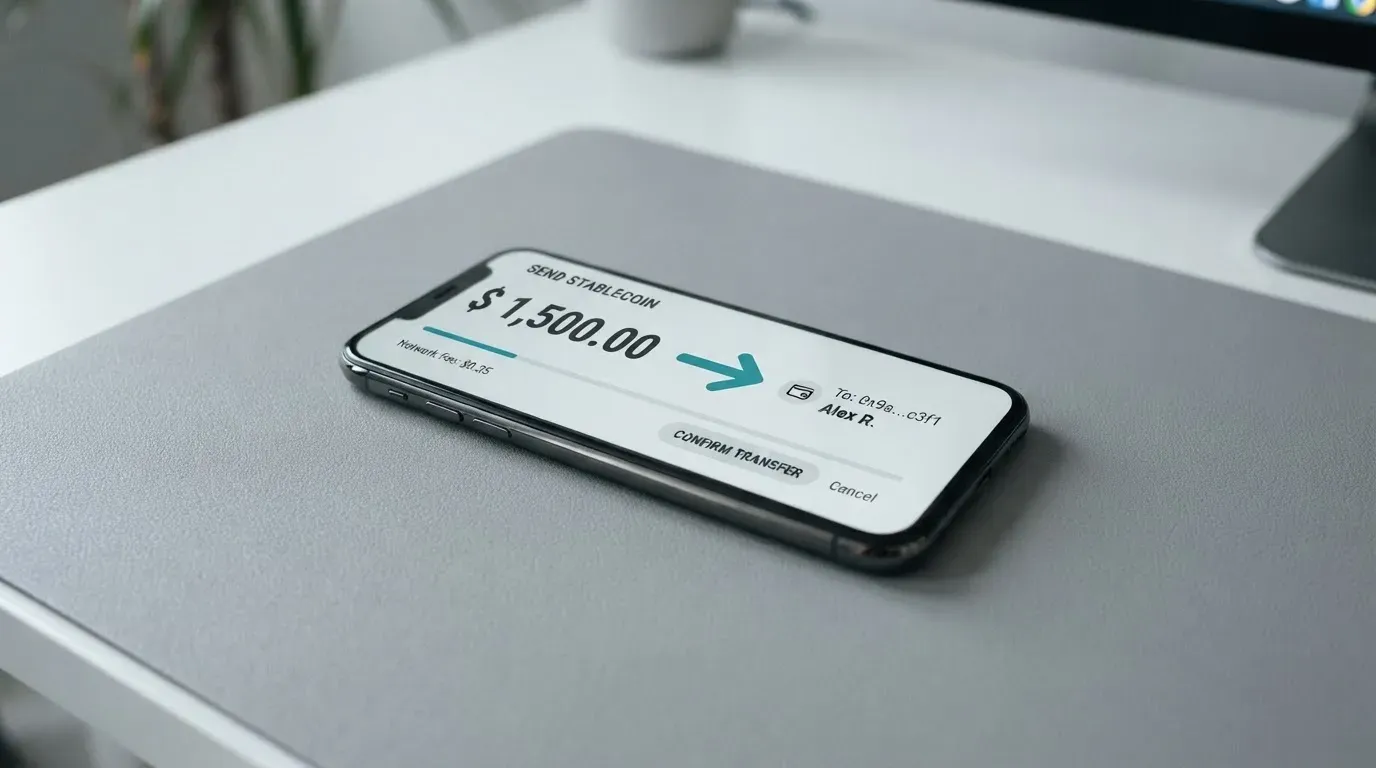
Speed and network coverage are partly disclosed. USDT on TRC-20, the Tron network, is described as near-instant. BTC and ETH are described as taking five to thirty minutes. Networks for any other coin you might want to send, including which Ethereum network for ETH (mainnet versus an L2, for example), are not stated. The product itself only lists Bitcoin, USDT and ETH as options, so the practical question is narrower: when you send USDT, the site is happy to take TRC-20; when you send ETH, the confirmation window is five to thirty minutes; the specific network expectation for each coin is otherwise not on the page.
The irreversibility point is worth spelling out. A crypto transfer cannot be reversed by the network. A deposit sent on a network the card provider does not support, or to an address belonging to a different network, can be lost or need manual support recovery with no guarantee. The site does not warn you about this; the general background below does.
Minimums, fees, processing cut-off times and what happens to a top-up that fails or arrives in an unexpected currency are not stated. There is no published “supported networks” table to check your send against, which is a small but real gap given that USDT alone is issued on a long list of blockchains and the wrong one is a common way to lose money.
The bank transfer side of the funding story is the naira on-ramp. The site refers to a virtual naira account, which is a standard Nigerian pattern: a unique account number that maps deposits to your wallet, so a regular bank transfer in naira lands as a top-up without any extra step. The fee the receiving bank or the platform takes on that transfer is not published.
A small but useful detail: because the card holds a USD balance, the cost of your top-up is the cost of converting your naira or your crypto to USD at the rate the platform applies. Whether that rate is the mid-market rate, a rate with a spread, or a rate with a published fee on top is something only a test transaction will show you. Treat the first top-up as a probe.
Paying with it every day
The everyday-use story is also short. The site says the CardFlow Mastercard “works on” Amazon, Netflix, Shopify, AWS and “more”, which is a partial merchant list rather than a guarantee. Standard online card payments are supported; the card is a Mastercard with a number, an expiry and a CVC, so anything that takes card details online should at least try to take it. Apple Pay and Google Pay integration is not mentioned, and there is no app store listing for CardFlow in the public app stores I could see, which is consistent with the site being a web product rather than a mobile app.
What that means in practice is that you can use the card for online checkout and for subscriptions, in USD, anywhere a USD Mastercard is accepted. You cannot tap to pay in a physical store with a phone, because the card is not in Apple Pay or Google Pay, and there is no physical card to swipe or insert. You cannot use an ATM, because the card is virtual. Cash access is therefore not part of the product at all.
Blocked merchant categories are not stated. The general background below describes how some issuers block specific merchant category codes, such as gambling, by policy; CardFlow does not publish a list, and there is no way to know in advance whether a particular subscription will be declined. A declined authorisation can also leave a hold on the card balance for several days, typically up to seven, so an unsuccessful payment is not free: it ties up part of the balance until the hold clears.
There is no rewards or cashback programme on the public pages. A reader who expects a small percentage back on every purchase will not find it.
The two safety features that are on the page are worth keeping. The site explains a one-tap freeze from the Cards page: click Freeze on any card, unfreeze any time. Two-factor authentication is also mentioned. Custody and safeguarding of funds, in the formal sense the background section below uses, is not stated; the site does not tell you who holds your naira or USD balance, where it is held, or whether it is segregated.
What can go wrong
The honest framing of risk here is that the public footprint of the product is thin, and the absence of information is itself a risk. The major categories.
Issuer and operating company. The legal entity behind CardFlow, the licensed issuer of the card, and the jurisdiction in which the issuer is regulated are not stated on the public pages. A card that works on the Mastercard rails is issued by a bank or an e-money institution licensed to issue under that scheme, and a reader who wants to know whose name is on the regulator’s list has nothing to point at. By contrast, the alternatives in the next section name their programmes in their terms.
Custody of funds. The platform takes custody of your naira, your USD balance, and any crypto you convert, and the site does not describe how those funds are held. The general background below describes the failure history of custodial platforms, which is the standard reason a reader would want to know whether balances are segregated, insured, or held in a separate client account. None of that is on the page.
Reversibility of crypto deposits. A transfer on the wrong network, or to an address of a different network, can be lost. The site does not warn you about this; the Tron-versus-Ethereum confusion around USDT is a common and recurring way for users to lose money. Speed of recovery depends on the support team, and the only support channel the site describes is an in-site chat widget labelled “Online, replies in minutes” plus a FAQ. There is no published support email, no support phone number, and no published response-time commitment beyond the in-app label.
Regulatory coverage. Without a named issuer, a reader cannot check whether the product is registered with Nigeria’s SEC, whether the card programme is authorised in the EU under MiCA’s transitional rules, or whether the platform is on any sanctions list. The background section below describes how the European framework works; the practical point is that there is nothing on the CardFlow site to look up.
Programme shutdown. Cards in this category can be wound down by the network or by the issuer. The background section below describes the FTX and WaveCrest episodes as illustrations. When that happens, the standard pattern is a notice period, then new loads stop, then spending stops, then users are asked to withdraw remaining balances. A reader who uses CardFlow should know that a closure of the programme would mean withdrawing the balance quickly, and that the only channel for that is the in-site chat.
Public complaints. Searches for reviews of the card returned no Trustpilot page, no Reddit thread of substance, and no news story. That is a data point, not a verdict: a young product can be legitimate and still have no review footprint, and a product with many complaints can still be operating. The information here is that you cannot rely on third-party reputation to triangulate.
Disputes and chargebacks. The site’s policy on disputes, chargebacks and refunds is not stated. The general background below describes the chargeback mechanism; the practical point is that a reader who has a problem with a merchant has no published route to follow.
Fraud and account takeover. The site does describe a freeze button and 2FA, which are the two safety features most commonly expected in a modern card product. It does not describe device management, login alerts, withdrawal allow-lists, or address whitelists, so a reader who relies on those will not find them.
The all-in framing is: the freeze button and the chat widget are real, and the rest of the risk picture is drawn from what is not on the page.
What to take instead
CardFlow is one of several virtual or prepaid cards aimed at users who want to spend a crypto or local-currency balance online. Three alternatives in the same rough category are worth comparing on. Each scores the way the score here does; the marks are not on a single shared scale, but the trade-offs are visible.
| Card | Score | Card type | Cost published | Funding | Rewards |
|---|---|---|---|---|---|
| CardFlow | 4.9/10 | Virtual USD Mastercard only | Free to create; nothing else published | BTC, USDT, ETH, naira bank transfer | None |
| HyperCard | 4.7/10 | Prepaid “HyperCard” (network not stated on the App Store page) | Not stated; no fees listed on the App Store page | USDT, BTC, ETH in the app; converted to USD or EUR on the card | Not stated |
| Card.fi | 6.6/10 | Virtual and physical, including metal; scheme not named publicly | Classic virtual $49 once, Premium virtual $249 once; no monthly, annual, inactivity or minimum-balance fee | 32 coins on 5 networks (Ethereum, Base, BNB Chain, Solana, Kaanch) | 0.8%–2% cashback on spending, headline 10% at coffee shops with caps |
| Nero | 4.8/10 | Virtual card, scheme not named | One-time issuance fee, amount not stated; no monthly fee stated | USDT or USDC, converted to fiat at payment | Not stated |
Reading the table across the row, the patterns are clear. CardFlow is the only one of the four that does not publish a fee schedule, and the only one that does not describe a physical card option. HyperCard is closer in style but a step down on published detail. Card.fi is the most fully priced and has a working rewards structure, at the cost of a one-time card fee. Nero sits between CardFlow and Card.fi: a one-time fee that is not published, a 4% top-up commission that is, and a virtual-only product.
If the deciding factor is “I want a free virtual card right now and I am in Nigeria with naira in my bank”, CardFlow is the only one of the four that targets that flow directly. If the deciding factor is “I want to know what I am paying”, Card.fi is the most transparent of the alternatives above, and the most expensive in absolute terms. If the deciding factor is “I want a metal card with cashback and I am willing to fund it in 32 coins”, Card.fi is again the match.
A reader who came to CardFlow for the naira on-ramp and wants a backup plan for when the USD card is not enough has, on the public information available, no perfect answer. The closest functional alternatives are HyperCard (for a similar virtual-only experience) and Card.fi (for a fully priced product), with the trade-off that neither one is a one-for-one replacement for the naira-funded flow.
Who I would recommend it to
The narrow recommendation. CardFlow is a fit for a reader in Nigeria who has a naira bank account and either naira balance or a small amount of USDT, BTC or ETH ready to load, who wants a USD card to pay for a specific online subscription or USD-priced purchase, and who is comfortable treating the first transaction as a test. The one-tap freeze and the chat widget are useful safety features, and the no-card-fee structure is real even if the rest of the fee schedule is not on the page.
The broader non-recommendation. CardFlow is not a fit for a reader who needs a physical card, an ATM, Apple Pay or Google Pay, a published fee schedule, a published regulator, a published issuer, or a published dispute and chargeback process. It is also not a fit for a reader planning to hold a meaningful USD balance for a long time, because the absence of disclosed custody and safeguarding information makes that a custodial decision the reader is making on trust.
A short checklist for the reader to use before signing up. Confirm your country is not implicitly excluded by your bank or by any sanctions regime that applies to you; treat the first top-up as a probe of the rate; keep the balance small until you have used the freeze button at least once; do not store more on the platform than you would be willing to lose in a worst-case custody event; and consider whether the alternatives in the previous section fit your need better even at a higher upfront cost.
The verdict is the one the score reflects. CardFlow is fast, free to start, and useful in a narrow case. It is not yet a product I would describe as well-disclosed, and that is the single most important thing to know before you send it money.
Frequently asked questions
What is the CardFlow card?
CardFlow is a virtual USD Mastercard that you create online in three minutes. You fund the card’s USD balance with a naira bank transfer or with Bitcoin, USDT or ETH, and you spend the balance anywhere a USD Mastercard is accepted online. It is a prepaid-style product aimed at Nigerian users and “global users”.
How does the CardFlow card work?
You sign up, the system creates a virtual card with a number, expiry and CVC, you fund the USD wallet from a naira bank transfer or from crypto, and you use the card details to pay online. USDT on TRC-20 is described as near-instant; BTC and ETH are described as taking five to thirty minutes.
Is CardFlow a bank?
That is not stated on the public pages. A card that runs on the Mastercard rails is issued by a licensed bank or e-money institution, but CardFlow does not name the issuer, the operating company, or the regulator in its public materials. Treat the product as a card programme whose back-end details are not disclosed.
Who owns CardFlow?
The owning company is not named on the site. Searches for press coverage, company registration details and a Trustpilot page did not surface a verifiable answer. The site is at the CardFlow website; no other corporate information is on the public pages I read.
Is the CardFlow card available in my country?
The site does not publish a country list or a block list. The product is described as aimed at Nigeria and “Nigerians and global users”. Without a published allow-list, the only safe way to find out is to start the sign-up flow and see whether the page blocks your country or asks for documents you do not have.
Does the CardFlow card require KYC?
The site does not say. Industry norms for a card product include name, date of birth, address, nationality, identity documentation and a sanctions screen, but CardFlow does not publish the specific checks it runs or the moment they happen. Expect to be asked for documents at some point in the flow, even though the timing is not on the page.
How do I top up the CardFlow card?
You top up the wallet by a naira bank transfer to the virtual naira account the site provides, or by sending Bitcoin, USDT or ETH to the deposit address the platform gives you. USDT on TRC-20 is near-instant according to the site, and BTC and ETH take five to thirty minutes. Networks for ETH and for any coin other than USDT-TRC-20 are not stated.
Can I use the CardFlow card with Apple Pay or Google Pay?
That is not stated. There is no mention of Apple Pay or Google Pay on the public pages, and no mobile app listing for CardFlow was found. Treat mobile wallet tokenisation as not supported unless the company confirms otherwise after you sign up.
Is the CardFlow card safe?
The site describes two safety features: a one-tap freeze from the Cards page and 2FA. The site does not describe how funds are held, who the issuer is, or how disputes and chargebacks are handled. For a fuller safety picture, weigh those disclosed features against the absence of disclosed custody, issuer and dispute information.
How do I withdraw money from CardFlow?
The site does not describe a withdrawal method. There is no ATM access, because the card is virtual, and no published bank-transfer withdrawal path. If you need to get the balance back out, the only contact channel on the site is the in-site chat widget; the response pattern and any fees for withdrawal are not published.
Virtual cards on the shortlist – cryptocardshortlist
Content created by the «cryptocardshortlist» team