
Cashinout card review: a virtual card for crypto, with a small footprint and a few rough edges
 Available in US

Cashinout is one of those crypto cards that lives in a small, particular corner of the market. It is built around a virtual dollar card, paid for in rubles, Bitcoin, USDT, or a handful of other coins. The product is run by Platflow LLC in Georgia, the service is available in Russian, the card is virtual only, and the fees add up in a way that matters more for small, frequent purchases than for large, one-off ones.
I have gone through the official pages, third-party listings, and the Trustpilot reviews that the company has not answered. Below is what the picture looks like in practice, and where I think the card is a sensible choice, and where I would look at something else.
Conditions are current as of October 28, 2026.
Verdict
Cashinout earns 5.6 out of 10 in my scoring, which puts it in the middle of the pack for crypto cards. The card does a few things well, and a few things in a way that I would not be comfortable with if I were holding any meaningful balance on it.
The headline reasons I gave it that score:
- Who can get it: 5/10. The official site is in Russian, the QR and SBP (Russia’s Faster Payments System) rails are Russia-only, and the published public pages do not list which countries are eligible.
- Cost: 5/10. Funding the card from the internal wallet costs 2.5%, putting crypto into the wallet itself is free on the listed coins, and an SBP top-up in rubles costs 1%. Third-party listings mention an extra half-US-dollar per transaction or decline, which the company has not confirmed.
- Top-up options: 9/10. Nine different coins across the major networks, plus SBP in rubles from more than a hundred Russian banks.
- Reliability and complaints: 4/10. The operator is a Georgian LLC, the issuing bank is not named, and Trustpilot’s 48 reviews sit at 3.0 out of 5 with several complaints about unreturned balances.
- Everyday use: 6/10. The Pay Card works with Apple Pay and Google Pay, lets you withdraw cash, and is accepted in 197 countries; the Online Card is for subscriptions only.
The audience that Cashinout fits best is users funding a virtual card from rubles through SBP, or anyone holding USDT, TON, or TRX who wants a quick way to spend a small balance. The audience it does not fit is anyone who needs a physical card, and anyone who plans to keep more than a few hundred dollars on the platform for any length of time.
| Criterion | Mark | Why |
|---|---|---|
| Who can get it | 5/10 | Russia-leaning service, eligibility rules not published in English |
| Cost | 5/10 | 2.5% card top-up; unofficial per-transaction fees add uncertainty |
| Top-up options | 9/10 | BTC, LTC, USDT, BNB, ETH, TRX, USDC, TON, plus SBP in rubles |
| Reliability and complaints | 4/10 | Issuing bank not named, several unresolved Trustpilot balance cases |
| Everyday use | 6/10 | Pay Card works with Apple/Google Pay and cash; Online Card is online-only |
| Total | 5.6/10 | A niche card that does the basics, but with trust concerns |
Who can get the Cashinout card
The first question I ask of any crypto card is the same one you should be asking: who, exactly, will they let through the door? For Cashinout, the answer is partly on the public pages, and partly a silence.
What the public pages do say is that the service is in Russian, the QR and SBP payment rails are for Russia only, and the company warns that paying services based in sanctioned countries will lead to the account being blocked without a refund. That is a hard line that you do not see on most crypto card sites, and it is worth taking seriously: if you are not sure whether the merchants you want to pay are within the rule, the rule will hit you.
What the public pages do not say is a list of accepted countries, a list of excluded countries, or a list of accepted citizenships. There is no English-language terms page I could find that spells out who is welcome and who is not. The third-party affiliate listing on affcatalog.com says KYC is required, but the documents, the age floor, and the proof-of-address rules are not specified anywhere I could verify. A Habr commenter claims KYC is mostly absent, which is a user report rather than a fact, so I would not rely on it either way.
In short: the card is built with the ruble as a first-class citizen, and if you live outside that picture, you are reading an FAQ in translation about a service that was not designed with you in mind.
How to get the Cashinout card
The signup flow described on the official blog and in the RuStore listing runs through three steps. You register an account in the app or the Telegram bot. You put money into the Cashinout wallet. You issue a card from the wallet balance. There is no separate card application form to fill in, and no separate card-issuance fee quoted on the official pages, although the third-party listing on affcatalog.com says issuance is free, and partnerkin.com says it costs $25 to issue a card named Online Pay Cards+ with a non-reducible $31.50 minimum balance.
The cards themselves come in two main flavours. The Pay Card is the offline one, with Apple Pay and Google Pay support, cash withdrawals, and acceptance in 197 countries, funded in USDT. The Online Card is for subscriptions, AI tools, and SaaS (Software as a Service — online subscriptions), and does not work with Apple Pay or Google Pay. Third-party sites mention a Mastercard and Visa network, 3-D Secure (the card-network authentication step you see as “Verified by Visa” or “Mastercard Identity Check” on checkout pages), and two further products called Traffic Pay (for ad budgets) and NFC Pay. The official pages do not list the card scheme (Visa or Mastercard) by name, which is unusual for a card product, and I would want to confirm the network before relying on it at a specific merchant.
Cards are virtual only. There is no plastic, no metal, no shipping. That simplifies things, but it also means you cannot hand the card to anyone in person, and you cannot use it where a physical tap is the only option.
Verification status is shown inside the bot. The RuStore listing for the Android app mentions AML (anti-money-laundering) checks, two-factor verification, KYC (Know Your Customer — the standard identity checks financial firms are required to run) procedures, and Liveness verification (a selfie check that confirms you are a real person and match your ID photo). Partnerkin.com adds that an ID is required for cash pickup, which is a separate code path. The full KYC scope — which documents, which age floor, which address proof — is not spelled out on the official pages.
Fees: what it really costs
The cost of using a crypto card is rarely the headline number. It is the combination of issuance, monthly maintenance, conversion, foreign-exchange spread, and per-transaction charges that decide whether the card is cheap or expensive. For Cashinout, several of those numbers are not confirmed by the company.
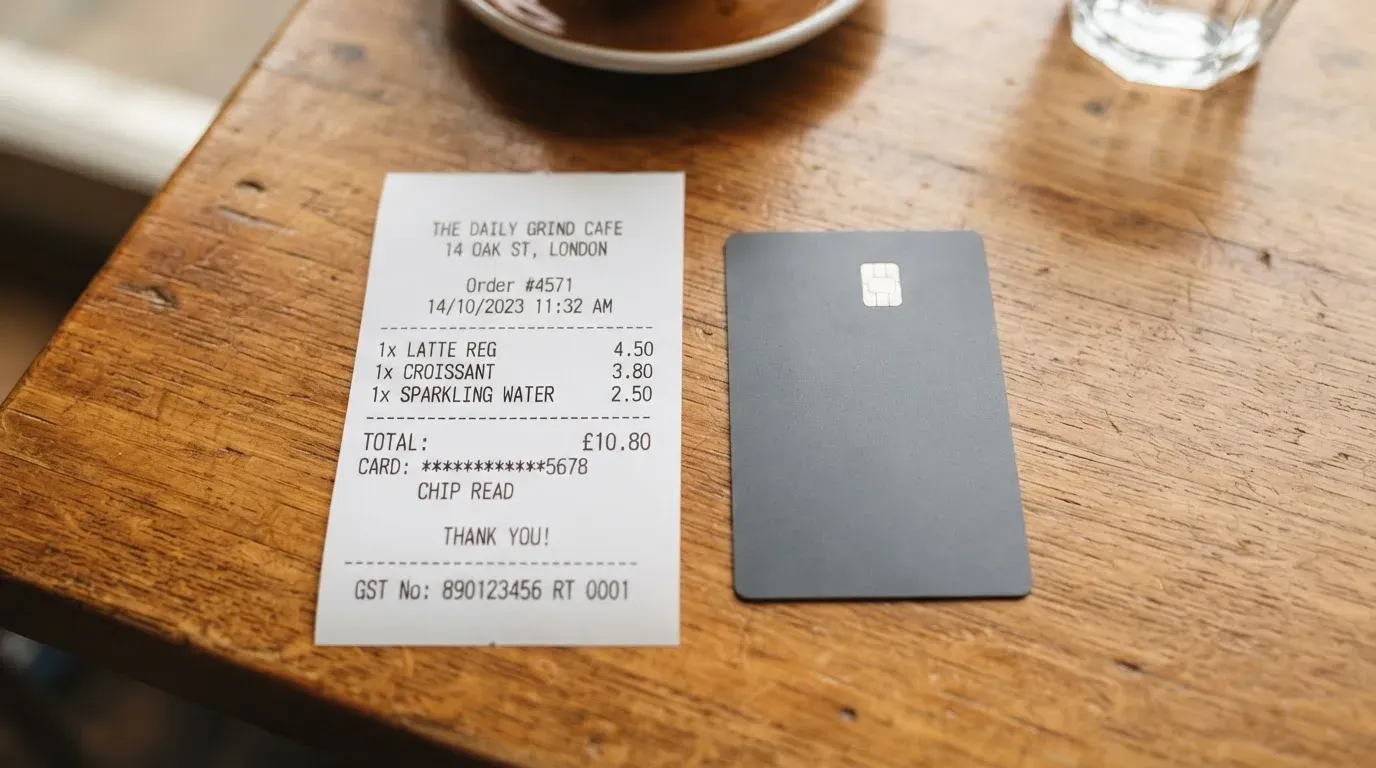
What the company does confirm:
- Card top-up from the internal wallet costs 2.5%.
- Putting crypto into the wallet is free on the listed coins and networks.
- SBP top-ups in rubles cost 1%.
- Each card keeps a non-reducible $5 balance, which is a small amount that is locked in the card and cannot be moved back.
- Card top-up minimum is $5.
What third-party sites add, without company confirmation:
- Affcatalog.com lists issuance at $0 and monthly maintenance at $0, but also a $0.50 per-transaction fee and a $0.50 per-decline fee; these are third-party figures not confirmed by the card.
- Partnerkin.com lists a $25 issuance fee for the Online Pay Cards+ product, a $31.50 minimum card balance, a $0.50 per-successful-transaction fee, up to $1 per decline, and a 6% card top-up fee; these are third-party figures not confirmed by the card.
- One partnerkin.com review (October 2025) reports a monthly fee continuing to be charged on an expired card that the user had not deleted.
I cannot tell you which of these is “right,” because the company has not published a fee schedule that resolves the differences. The base commission of 2.5% for card top-ups is the safest number to plan around. The per-transaction fees, the ATM allowance, and the FX (foreign exchange) spread are not stated officially, and you should assume they exist.
For everyday payments, the fees that bite are the ones you do not see until the statement. Three examples to make the picture concrete.
- A 1,000-ruble coffee in Moscow, paid by Apple Pay from a Pay Card funded in USDT. You will pay 2.5% on the card top-up that brought the USDT into the card, plus the spread inside Cashinout’s own USDT-to-USD conversion. There is no FX because the card is in USD and the merchant settles in rubles, but the spread between Cashinout’s internal rate and the mid-market rate is not published. A third-party per-transaction fee of $0.50 would also apply if affcatalog.com’s listing is right. A 1,000-ruble coffee becomes something like 30 to 50 rubles of fees, before the merchant’s own mark-up.
- A $50 monthly SaaS subscription, paid by the Online Card. You will pay the 2.5% card top-up fee, the same internal conversion spread, and again the $0.50 per-transaction fee if it is real. For a $50 subscription, that is at least $1.75 on top of whatever the spread costs you, with no cashback to soften it.
- A $200 cash withdrawal abroad, paid at an ATM with a Pay Card. The company confirms cash withdrawals are supported on the Pay Card, but the ATM fee and the per-transaction fee are not stated officially. If affcatalog.com’s $0.50 per-transaction figure is right, and a 2.5% top-up fee has already been paid, you are looking at $5 on the top-up and a further $0.50 on the withdrawal, before the ATM operator’s own surcharge.
| Fee or limit | Amount (official) | Source |
|---|---|---|
| Card top-up fee | 2.5% | Company blog |
| Wallet crypto deposit | 0% on listed coins/networks | Company blog |
| SBP ruble top-up | 1% | Company blog |
| Card top-up minimum | $5 | Company blog |
| Non-reducible card balance | $5 | Company blog |
| SBP top-up range | 1,000 to 100,000 WUD per operation (1 WUD = 1 ruble) | Company blog |
| Issuance fee | not stated officially | — |
| Monthly maintenance | not stated officially | — |
| Transaction / FX fee | not stated officially | — |
| ATM fee and allowance | not stated officially | — |
| Spend limits | not stated officially | — |
| Per-transaction fee | $0.50 (unofficial, affcatalog.com) | UNOFFICIAL |
| Per-decline fee | $0.50 (unofficial, affcatalog.com) or up to $1 (unofficial, partnerkin.com) | UNOFFICIAL |
The practical takeaway: the card is cheapest if you top up with crypto, pay with the Pay Card, and avoid the foreign-exchange and per-transaction surcharges that the company has not pinned down. It is most expensive if you top up with rubles through SBP and then make small, frequent purchases that pick up per-transaction fees.
Top up: how to fund the Cashinout card
You cannot fund the Cashinout card from your bank account or a card-to-card transfer. The card can only be loaded from the Cashinout internal wallet, and the wallet can be loaded in three ways: crypto, SBP in rubles, or a transfer from another Cashinout user by their ID (free).
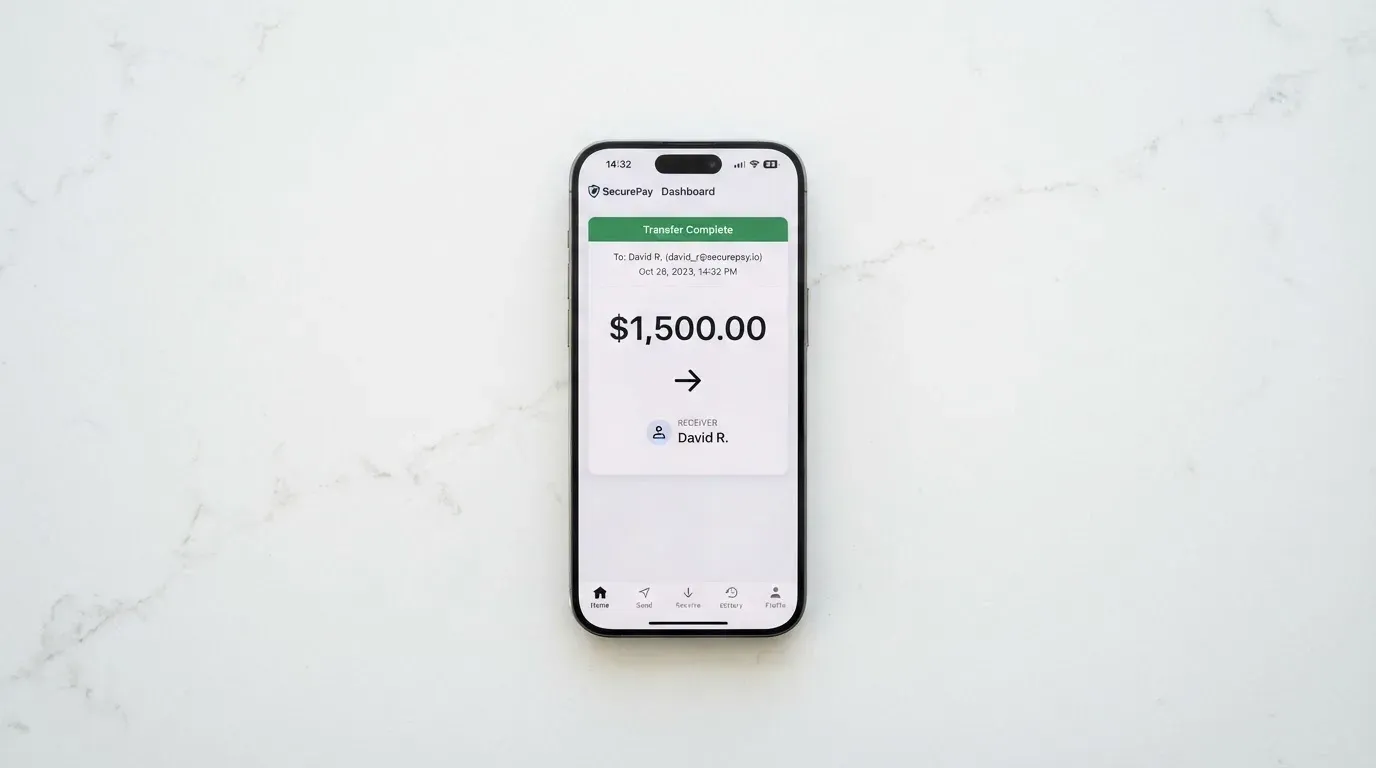
The crypto list is the strongest part of the offer. BTC (Bitcoin), LTC (Litecoin), USDT (Tether), BNB (Binance Coin), ETH (Ethereum), TRX (Tron), USDC (USD Coin), and TON (Toncoin) are all accepted. USDT and USDC each have a separate deposit address per network, which is the standard practice for multi-chain stablecoins, and the company explicitly warns that sending on the wrong network may lose the funds. On-chain fees — the gas (the network fee paid to the blockchain, not to Cashinout) for your deposit — are paid by the sender, and the company does not commit to covering them if a deposit fails.
SBP top-ups in rubles come from more than a hundred Russian banks and must be sent from a card in your own name. Non-matching senders are returned to their card within 24 hours, which the company states on its pages. That is a useful safeguard and worth knowing if you ever try to send from someone else’s card.
Top-up from another Cashinout user is free, and is the most frictionless way to move money between two accounts on the platform.
What the company does not state is how to move the balance back from the card to the wallet, or how to withdraw a card balance if you have changed your mind. The wallet itself can be exchanged to rubles, euros, dollars, or tenge, and SBP withdrawals from the wallet cost 3.5% according to partnerkin.com, with euro cash available through RIA money-transfer points in 17 European countries. None of this is confirmed on the official pages, and the third-party numbers may not match the live rate.
| Top-up route | Assets | Fee |
|---|---|---|
| Crypto on-chain | BTC, LTC, USDT, BNB, ETH, TRX, USDC, TON | 0% on listed coins/networks |
| SBP in rubles | 1,000 to 100,000 WUD per operation | 1% |
| User-to-user | By Cashinout ID | 0% |
The plain-language version: send crypto, and the only fee is the network’s. Send rubles through SBP, and you pay 1%. Top up the card from the wallet, and you pay 2.5%. Withdraw the wallet to your bank, and you pay roughly 3.5% on top, per third-party numbers.
Paying with it every day
What the Cashinout card actually does at the checkout is the part that decides whether it is a tool you can rely on or a curiosity.
The Pay Card works offline in 197 countries, supports Apple Pay and Google Pay, supports cash withdrawals, and is funded in USDT. The Online Card does not support Apple Pay or Google Pay and is built for subscriptions, AI tools, and SaaS. The two products together cover most of the cases a normal user would have, with the caveat that you do not get a physical card for either.
Cashback is not stated on the official pages, and the third-party affiliate listing mentions a referral program that pays 0.3% of referred users’ deposits, which is a different thing from cashback and is paid for recruiting, not for spending.
The Android app on RuStore is at version 2.4.6 (released 4 May 2026), with 1K+ downloads and no ratings recorded. I could not read the App Store or Google Play ratings for this review, and the absence of ratings is itself a small signal that the product is not widely reviewed on the mainstream stores.
Blocked merchant categories are not stated. The company states that paying for services in sanctioned countries will lead to the account being blocked without a refund, and a third-party summary suggests that paying for Russian services in rubles may also block the card. Neither of those is a comfortable line for the reader to walk.
Dispute and chargeback rights are not stated. Trustpilot reviewers mention slow or absent refunds, which is consistent with a prepaid card that does not have the same chargeback protections as a US debit or credit card. Under US law, Regulation E covers debit card reversals and Regulation Z covers credit card rights, and prepaid card coverage is thinner than either, so I would not expect to lean on chargeback rights here.
The day-to-day picture is: Apple Pay works on the Pay Card, online subscriptions work on the Online Card, the wallet can hold rubles, dollars, euros, tenge, and the cards settle in USD. The card-issuer bank is not named, which means the BIN (the first six or eight digits of a card number that identify the issuing bank) and the country of issue are not published, and a merchant’s anti-fraud system may or may not like what it sees.
What can go wrong
I separate “what can go wrong” from “what is wrong” because the second one is a verdict and the first one is a list of things to look at.
The most important risk to think about is counterparty risk: the company that holds your balance is Platflow LLC in Georgia, the issuing bank is not named on the official pages, and the cards work because the issuer bank is willing to settle the transactions. If the issuer pulls the programme — the same way Visa pulled WaveCrest in Europe in 2018, or Visa terminated its global agreements with FTX in November 2022 — the cards stop working, and the path to getting any leftover balance back becomes the company’s customer-support process, not a banking channel.
The second risk is the unconfirmed fees. I have laid these out in the cost section. If you do not know what you are paying per transaction, you cannot plan what you are paying per transaction.
The third risk is the trust signals. Trustpilot has 48 reviews for Cashinout, with a 3.0 out of 5 average, 71% five-star and 23% one-star, and the company has not replied to negative reviews. Themes from the last year or so:
- A cancelled-card balance was not returned after three months (June 2026).
- A payment was deducted but the merchant did not receive it (September 2025).
- Support was unresponsive after a lost card (March 2026).
- A user reported an advertised Apple Pay feature that did not work as promised (November 2024).
- A 50 USDT TRON deposit was held for AML review (December 2025) and later credited.
None of these is a smoking gun, and a small user base can produce a noisy set of reviews. The pattern that bothers me is not the existence of complaints — every card has them — but the absence of company replies, the unreturned balance cases, and the unconfirmed fee schedule.
The fourth risk is the regulatory picture. Cashinout’s pages mention two EMI (Electronic Money Institution) licences, but I could not verify that on the official pages, and the operator’s licence to issue cards in any given country is not published in English. Under the EU’s MiCA regulation (Markets in Crypto-Assets, the EU’s framework for crypto-asset issuers and service providers — full rules applying from 30 December 2024), an authorised crypto-asset service provider in one member state can serve the EU, but the grandfathering period for pre-existing providers runs only until 1 July 2026, after which providers need full MiCA authorisation to continue. The card itself is a payment service, regulated separately, and a crypto card depends on two licences: a payment-services licence and a crypto licence. Whether Cashinout has both, and where, is not on the public page I could read.
The fifth risk is on-chain mistakes. Sending USDT on the wrong network, or sending USDC on Tron — which Circle stopped supporting in February 2024 — can mean the funds are not credited, and recovery is at the support team’s discretion, with no guarantee.
The sixth risk is the locked $5 card balance. Each card holds a non-reducible $5 balance, so closing a card and reopening it does not let you move that $5 back to the wallet.
What to take instead
Three alternatives cover the ground that Cashinout does not, depending on what you are actually trying to do.
CardFlow — a virtual USD Mastercard aimed at Nigerian users, with a “create a virtual card is completely free” line in the FAQ. CardFlow scores 4.9 out of 10. It is a quick-to-issue card funded in Bitcoin, USDT, ETH, or a Nigerian naira bank transfer, and the network-specific details (fees, country list, monthly fee) are not stated on the pages I could read. The card is built for the Nigerian market and its diaspora, not as a general-purpose card.
HyperCard — a prepaid card, USD or EUR balance, funded by USDT, BTC, or ETH in the app, with acceptance advertised in “more than 176 countries.” HyperCard scores 4.7 out of 10. The App Store page lists no fees, but the official page does not state a country list, and the card network is not named on the App Store page either. HyperCard is a simpler product than CardFlow and a less complete one than Card.fi.
Card.fi — the strongest of the three, scoring 6.6 out of 10. Cards ship to 200+ countries (subject to a sanctions clause), and the product range includes virtual, physical, and metal cards, with cashback on spending, a 32-coin, 5-network deposit list, and explicit top-up and FX fees in the terms. The Classic tier charges 1.5% + $1 per top-up and 3.5% on FX, the Premium tier charges 1% and 2.5%, and cashback is tiered from 0.8% to 2%, with a 10%-at-coffee-shops headline capped at 10 USDT per month. Card.fi is a fuller product than Cashinout, with a published fee schedule and a clear sanctions clause, and is the one I would point a reader to if Cashinout’s silence on the basics is a deal-breaker.
| Card | Score | Card types | Network | Where | Top-up | Headline cashback |
|---|---|---|---|---|---|---|
| Cashinout | 5.6/10 | Virtual only | not stated officially | Russia-leaning | BTC, LTC, USDT, BNB, ETH, TRX, USDC, TON, SBP | not stated |
| CardFlow | 4.9/10 | Virtual USD Mastercard | Mastercard | Nigeria | BTC, USDT, ETH, naira bank | not stated |
| HyperCard | 4.7/10 | Prepaid, USD/EUR | not stated | “176+ countries” | USDT, BTC, ETH in app | not stated |
| Card.fi | 6.6/10 | Virtual, physical, metal | not stated officially (under licence from a network) | 200+ countries, sanctions clause | 32 coins across 5 networks | 0.8%–2% on spending |
If you are choosing between these, my short version is: Card.fi is the most professional product, with a clear fee schedule and the strongest geographic spread. Cashinout is a viable choice for users holding small USDT or TRX balances who are willing to take the trust risk. CardFlow and HyperCard are simple niche products for users whose situations match theirs.
Who I would recommend it to
I would recommend the Cashinout card to a narrow, specific reader.
You are holding a small balance in USDT, TRX, or TON, and you want a way to spend that balance at an international online merchant without going through a centralised exchange. You are happy with a virtual card, do not need Apple Pay or Google Pay on a physical card, and you are topping up with crypto rather than rubles. You will load the card with a few hundred dollars at a time, spend it within a few days, and not keep a meaningful balance on the platform for longer than that.
I would not recommend it to anyone outside that picture. If you do not have familiarity with the service’s language and support channels, the friction will eat more time than the fees save you. If you need a physical card, the product does not have one. If you plan to keep a balance of more than a few hundred dollars, the unconfirmed fees, the unreturned-balance cases on Trustpilot, and the unnamed issuing bank add up to a counterparty risk I would not want you to take. And if you are paying for services in sanctioned countries, the company’s own warning is that the account will be blocked without a refund, so the choice has already been made for you.
The most useful thing you can do before signing up is to confirm three things on the live site: the card scheme (Visa or Mastercard) of the card you want, the per-transaction and FX fees, and the support channel for getting an unused balance back from a closed card. If any of those three is not stated, the score is the score, and the risk is yours to size.
Frequently asked questions
What is the Cashinout card?
The Cashinout card is a virtual card product issued under the Cashinout brand, available in two main variants: a Pay Card that works with Apple Pay and Google Pay, supports cash withdrawals, and is funded in USDT, and an Online Card for subscriptions, AI tools, and SaaS. The cards are denominated in USD and load from a Cashinout internal wallet that you can fund with crypto or with rubles through SBP.
How does the Cashinout card work?
You register an account, fund the Cashinout wallet with crypto or rubles, and issue a card from the wallet balance. The card draws on the loaded USD balance, and the wallet sits behind it. The operator is Platflow LLC in Georgia, the issuing bank is not named on the official pages, and the cards are virtual only.
Is Cashinout a bank?
No. Cashinout is a fintech operated by Platflow LLC, registered at 88 Avtomshenebeli Street, Kutaisi, Georgia, and it runs cards through an issuing bank whose name is not stated on the public pages. Funds held with the platform are not bank deposits and are not covered by deposit guarantee schemes.
Who owns Cashinout?
The product is operated by Platflow LLC, a Georgian company. The advertising text on one third-party source mentions two EMI licences, but I could not verify the licences on the official pages, and the card-issuing bank is not named. The service is in Russian and the listed top-up rails (SBP, QR) are Russia-focused.
Can I use the Cashinout card in my country?
The official pages do not publish a country eligibility list. The Pay Card is accepted in 197 countries, and the Online Card is for online use anywhere. The catch is that the company warns it will block, without refund, accounts that pay for services based in sanctioned countries, so the question is less about acceptance and more about which merchants you plan to use.
How do I get a Cashinout card?
You register in the Cashinout app or Telegram bot, complete the verification shown there, fund the wallet with crypto or rubles through SBP, and issue a card from the wallet balance. The official pages do not state a separate card-issuance fee; third-party sites list $0 or $25 depending on the product.
Does the Cashinout card require KYC?
The RuStore listing mentions AML checks, two-factor verification, KYC procedures, and Liveness verification, and partnerkin.com says an ID is required for cash pickup. The full document list (which ID, which address proof, which age floor) is not stated on the official pages, and a Habr commenter claims KYC is mostly absent, which is a user report rather than a fact.
How do I top up the Cashinout card?
You cannot top the card up directly. You fund the Cashinout wallet with crypto (BTC, LTC, USDT, BNB, ETH, TRX, USDC, TON) on the listed networks, with rubles through SBP from 1,000 to 100,000 WUD per operation, or with a free user-to-user transfer by Cashinout ID, and you then load the card from the wallet balance, which costs 2.5%.
How do I add the Cashinout card to Apple Wallet?
The Pay Card supports Apple Pay and Google Pay. Adding it follows the standard tokenisation flow (the process of replacing the real card number with a device-specific number that Apple or Google stores in a secure chip, so the actual card number is never shared with merchants): you add the card in the Cashinout app and complete the issuer’s verification. The Online Card does not support Apple Pay or Google Pay.
Is the Cashinout card safe?
The card uses standard safeguards (AML checks, 2FA, KYC, Liveness), but the funds you load are held by the operator, the issuing bank is not named, the company’s Trustpilot profile has several unresolved cases of unreturned balances, and the fee schedule is not fully published. Safety here depends on how much balance you keep on the platform and how quickly you spend it, more than on any technical control the operator can offer.
Virtual cards on the shortlist – cryptocardshortlist
Content created by the «cryptocardshortlist» team