
Freedomia pays out crypto, skips verification, and leaves several important blanks
 Available in US

Freedomia is a virtual Visa that you load with cryptocurrency and spend like an ordinary prepaid card, with no identity verification at signup. That combination makes it genuinely interesting for one specific person: someone who cannot get a normal bank card, or who does not want to hand over documents to get one. It also makes it a poor fit for almost everyone else, mostly because the card’s own public pages leave too many of the important questions unanswered.
My score for Freedomia is 6.1 out of 10. That is not a rounding of something lower. The top-up and funding side of this card is unusually good and earns near-full marks; the cost, the day-to-day convenience, and the transparency of the company behind it are all considerably weaker, and they pull the total down hard.
Before anything else, the conditions described here are current as of October 28, 2026. Card terms, fees and country rules change without notice, and several of the gaps I describe below may have been filled since.
Verdict: 6.1 out of 10, and the split is lopsided
Freedomia scores 6.1 out of 10. The shape of that number matters more than the number itself, because it is not an average of mediocrity. This is a card with one excellent half and one thin half, and the thin half is the half you touch every time you pay for something.
| Criterion | Mark | Why |
|---|---|---|
| Who can get it | 8 / 10 | Described only as “Global”, with no country list or restrictions on the home page; the FAQ question about restricted countries exists but the answer was not readable |
| Cost | 4 / 10 | Founder is $5/month or $60/year; top-up 1.3%, standard conversion 2.5%, spending in USD 0%; the issuance fee is not disclosed |
| Top-up options | 9 / 10 | Lightning, BTC, XMR, ETH, LTC, SOL, TRX, BNB, USDT (Polygon), USDC (Polygon) “and more”, plus exchange to USD |
| Reliability and complaints | 5 / 10 | Freedomia Digital Group LLC, Delaware; no issuing bank and no licences named; unofficial reports describe a custodial, closed-code service; no Trustpilot reviews found |
| Everyday use | 5 / 10 | Digital Visa only, instant issuance, 3DS Secure; Google Wallet works, Apple Pay is “coming soon”; no plastic and no ATM |
So who does this suit? In my reading, the card suits privacy-minded users who want to fund a virtual Visa with BTC or Lightning and who are comfortable treating the provider as the custodian of their money. If that describes you, the funding side is genuinely excellent, and Lightning in particular is something most cards in this category simply do not offer.
Who does it not suit? Anyone whose income or spending is measured in tens of thousands of dollars a month, because the monthly limits are low. Anyone who needs a physical card, because there is no plastic mentioned. Anyone who lives somewhere payment is often declined despite the card working technically, because a virtual card with an unfamiliar issuer country behaves exactly that way. And anyone who needs to read what happens to their money when something goes wrong, because the documents that would tell them are not readable.
Will they give you the card?
The short answer, as far as the public pages go, is that Freedomia describes itself as “Global” and stops there. There is no country list on the home page and no stated restrictions. That sounds like an open door, and for many readers it will function as one. But it is worth being precise about what is missing rather than reading the absence of restrictions as a promise of eligibility.
There is an FAQ question on the site asking which countries are restricted. The question is there. The answer was not readable. So I cannot tell you which countries are on the list, whether your citizenship matters, or whether your country of residence matters. Those are three different questions in this category, and the difference between them can be the whole ballgame. If your situation is unusual — a country under sanctions, a residency that differs from your nationality, a country where virtual card issuing is restricted — this is the first thing to confirm directly with the company before you commit anything.
The other thing worth knowing up front is what kind of checks apply once you are in. The signup is marketed as “No verification. No approval.” Signup is by email. That is the whole advertised flow.
Here is the important caveat, and I want it clearly separated from what the card itself says. Unofficial reporting, citing CriptoNoticias in September 2026, describes Freedomia as a pseudonymous card with no KYC at or below $5,000 in monthly spend, and points to section 4.3 of the terms as allowing KYC or AML checks above that monthly figure. I have not confirmed this against the card’s own pages. Treat the $5,000 figure as something reported by a third party rather than a commitment from Freedomia, and note that the practical consequence is the same either way: if you are a large spender, this card is not for you regardless of the no-verification marketing.
The card’s own public pages do not state an official verification level. They do not state what documentation is required, or what triggers a review, or what happens to your balance if a review fails. That silence is not damning on its own, but it means the risk sits entirely with you.
How to get it
Getting the card is, in the literal sense, the easy part. You sign up with an email address, and the card is virtual, digital and issued instantly. You can re-issue it at any time from the account, and 3-D Secure is built in for online payments. The card currency is USD.
What you do not get is mentioned anywhere: a physical card. Plastic is not offered, and there is no delivery question to answer because there is nothing being delivered. If you have been imagining something you can hand to a waiter, this is not it.
The account lives in the web interface rather than a standalone app. From there you can freeze the card, view card data and set card limits. Card limits are adjustable inside the card interface, which is worth noting against the fixed tier limits below — that flexibility can matter more than the headline figure if a particular purchase needs headroom.
Fees: what it really costs
This is the section where Freedomia is weakest, and the weakness is mostly in what is not said rather than in what is charged. The published numbers are reasonable; the omissions are what should make you pause.

- Founder: $5/month or $60/year, available now
- HODL: $9.99/month or $119.88/year, coming soon
- MOON: $17.99/month or $215.88/year, coming soon
- Top-up fee: 1.3% on all tiers
- Standard FX fee: 2.5%
- Spending in USD: 0% FX
- Issuance fee: not stated
| Fee or limit | Value |
|---|---|
| Founder monthly | $5/month or $60/year |
| HODL monthly | $9.99/month or $119.88/year (coming soon) |
| MOON monthly | $17.99/month or $215.88/year (coming soon) |
| Issuance fee | Not stated |
| Top-up fee | 1.3% (all tiers) |
| Standard conversion / FX fee | 2.5% |
| Spending in USD | 0% FX |
| ATM | Not stated (virtual card) |
| Founder limit | $5,000 monthly / $60,000 annual |
| HODL limit | $5,000 monthly / $60,000 annual |
| MOON limit | $10,000 monthly / $120,000 annual |
Two of the tiers do not exist yet. HODL and MOON are both marked “coming soon”, so if you are choosing between them today, you are choosing between them on the strength of a pricing page rather than a working product. Only Founder is available.
Now let me put that table into three everyday payments, because a fee percentage only means something once you know what it is applied to. The mechanism underneath is simple: your crypto is swapped to USD, you hold a USD balance, and the card spends that balance.
A $40 lunch, paid in USD, on a balance you already loaded. No FX fee at all, because the card is USD and you are spending USD. What you have already paid is the 1.3% top-up fee when the money arrived. There is no per-transaction charge listed for a plain USD purchase. This is the cheapest way to use the card, and if you already hold stablecoins, it is the way to use it.
A €30 purchase in Europe. Your balance is in USD, so this is a conversion, and the standard FX fee of 2.5% applies. On €30 the fee is a fraction of a euro, but the principle is what matters: any purchase not in USD costs you the standard FX fee, and that fee is stated as a flat rate rather than a spread, so it is not hidden in the rate you see.
A £25 purchase in the UK with an empty card that you top up £25 worth of crypto into. Two fees stack. The 1.3% deposit fee is charged on the way in, and then the 2.5% FX fee is charged on the way out because the balance is USD-denominated. These fees add up significantly before any network cost. This is the case that separates cards like this from ordinary bank cards, and it is the case that should decide whether this one is right for you.
The tier differences are about support and limits rather than pricing. Founder gives priority support and a $5,000 monthly limit. HODL gives standard support and the same $5,000 monthly limit — which is a genuinely odd pairing, since you pay roughly twice as much for the same ceiling and less support. MOON gives priority support and $10,000 monthly. Nothing on the pages describes what HODL is actually for, and I would not want to pay for the privilege of finding out later.
How to Top up
This is the best part of the card, and it is why the funding score is 9 rather than something average. The choice of rails is broad and includes several options most competitors simply do not carry.
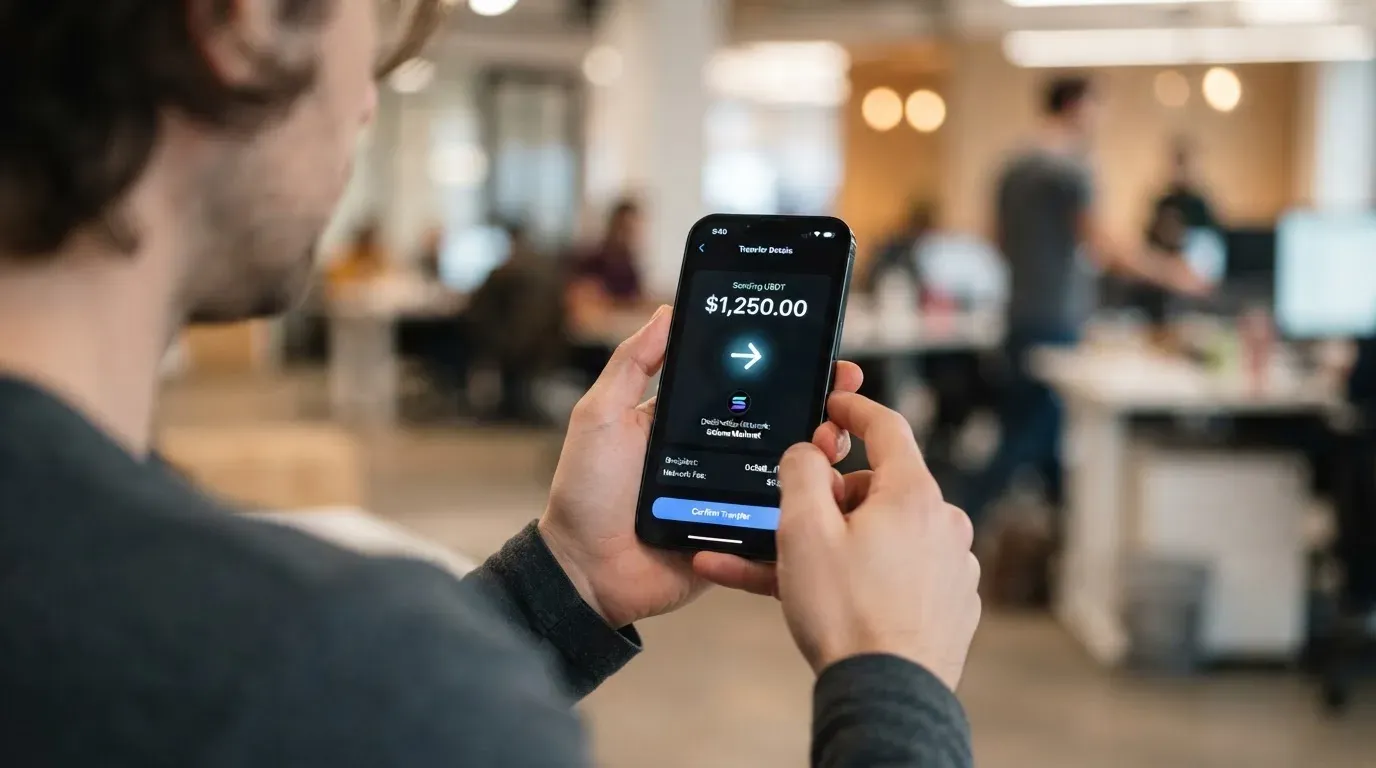
You can send to a personal Lightning Address over the Lightning Network. You can send BTC, XMR, ETH, LTC, SOL, TRX, BNB, USDT (Polygon) or USDC (Polygon), with the list ending in “and more” rather than a closed set. Whatever arrives is auto-swapped to USD.
- Deposit fee: 1.3%
- Minimum deposit: not stated
- Who pays the network fee: not stated
- Methods: Lightning and crypto only, no fiat option listed
- Withdrawal: not stated
Three caveats go with that list, and all three are the kind that cost real money if you ignore them.
The first is the network question. Blockchain transfers are irreversible. If you send on a network the provider does not support, or to an address belonging to a different network, the funds can be lost entirely or need manual support recovery with no guarantee. The listed options include Polygon for both stablecoins, and Tron for TRX; those are different chains, and sending USDC on Tron when the card expects Polygon is exactly the mistake described. Check the network twice before you confirm, every time.
The second is the network fee. On-chain costs — gas on Ethereum, resources on Tron — are charged by the blockchain, not by the card provider, and whoever sends the deposit pays them. The card’s pages do not say who bears that cost on your deposits, so assume you do until told otherwise. Lightning is the exception that proves the rule: it is cheap and fast by design, and for small regular top-ups it is the most sensible rail on this list.
The third is the absence of fiat. Only Lightning and crypto are listed. If your money currently sits in a bank account, you have a conversion or an exchange step in front of you before the card sees it. One of the top-up options is an exchange to USD, which suggests a route exists, but the details are not stated on the public pages.
And there is no withdrawal function described at all. The card’s public pages do not state how, or whether, you can move money back off a Freedomia balance. That matters more for a custodial service than it would for a self-custody one, and I would treat it as a question to ask before loading anything you are not willing to leave there.
Paying with it every day
Day-to-day spending is where a virtual card feels like a compromise rather than a product, and Freedomia is no exception.
The core is solid: instant issuance, 3-D Secure on online payments, a freeze function you can trigger at any time, and adjustable card limits in the interface. Those are the four things you actually reach for when a card is your everyday tool, and all four are present.
Google Wallet is enabled for tap-to-pay. Apple Pay is listed as “coming soon”, so if you are on iPhone, that function is not available to you today. There is no standalone app described — the card is managed in the web account.
- Google Wallet: enabled, tap-to-pay
- Apple Pay: “coming soon”
- Physical card: not mentioned
- ATM: not stated
- Blocked merchant categories: not stated
- Rewards or cashback: not stated
- Dispute and chargeback terms: a section titled “Returns, disputes and chargebacks” exists (section 19), but the text was not readable
That last row is the one I keep coming back to. When something goes wrong with a card payment — a merchant who took your money and did not deliver, a duplicate charge, a subscription you cannot cancel — what happens next depends on the terms of the dispute and chargeback section. The section exists. I could not read what it says. If you are considering this card as your primary way to pay, that is the single most important document to request and read yourself.
Two practical warnings about everyday use, both general to this category rather than specific to Freedomia. First, virtual cards are declined more often than physical ones, and the reason is usually invisible: address verification compares the billing address you type with issuer records, works mainly in the US, Canada and the UK, and is generally unavailable for foreign-issued cards. Second, a declined authorisation can leave a hold on your funds for several days, typically up to seven, so a failed attempt is not always as harmless as it looks.
The blocked-category question also goes unanswered. Cards in this category commonly restrict gambling, and a four-digit merchant category code exists precisely so issuers can block such categories by policy. Freedomia does not state a blocked list, so you cannot tell in advance whether a category you need is closed off to you.
What can go wrong
Freedomia’s risk profile is unusual: I found no incidents to report, and I also found no track record. Those are different things, and conflating them would be a mistake.
On the positive side, no official incidents surfaced. No Trustpilot or Reddit reviews were found for Freedomia — and unofficial reporting describes a Trustpilot absence as well, which is consistent. A young service with no complaints can be a good service, or it can be a service nobody has used hard enough to complain.
The structural facts are these:
- Freedomia Digital Group LLC, registered at Newark, New Castle, Delaware 19713
- Issuing bank: not named
- Licences: not named
- Official incident history: none found
- Reviews: no Trustpilot page found
- Unofficial: described as a custodial, closed-code service (CriptoNoticias, September 2026)
The unnamed issuing bank and unnamed licences are the ones I would raise with anyone considering this seriously. In this category, the card network licenses the issuer, and the crypto brand is frequently only a programme manager or front end rather than the body holding the licence. When the pages do not say who that body is, you cannot check it. EU and UK users have a concrete tool for this: ESMA keeps an interim register of authorised crypto-asset service providers, white papers and non-compliant entities, and you can look a provider up there. Delaware registration tells you where a company is incorporated and very little about what it is permitted to do.
The custodial point deserves a straight statement. Control of crypto belongs to whoever holds the private key. Where the provider holds it, you must trust the provider completely — and the weight of that trust is not theoretical. Mt. Gox reported about $350 million stolen between 2011 and 2014, Coincheck about $400 million in 2018, and Ronin Network $625 million in 2022. Transfers are typically irreversible, and a stolen private key has no recovery mechanism: the network cannot freeze or return the funds.
That does not mean this card is unsafe, and I am not in a position to claim that either way. It means the risk sits with you, and that the counterparty behind it is a Delaware LLC with no named licences on its public pages. Note also that the card’s own pages do not state a withdrawal route, which determines how exposed you are if you need to get funds out.
One piece of good news on the security side, beyond the 3-D Secure and freeze functions: Tor and onion support are mentioned. For readers who arrived here because they want less trace, that is a genuine feature rather than a marketing line.
Support runs on email at [email protected] and Telegram at @Freedomiaio, with priority support on Founder and MOON.
What to take instead
If any of the concerns above bite, the sensible move is to look at a card that answers more of them. The comparison below is not a recommendation between them — it is a way to see which of these three publishes more of what you need.
| Freedomia | CardFlow | HyperCard | Card.fi | |
|---|---|---|---|---|
| Score | 6.1 / 10 | 4.9 / 10 | 4.7 / 10 | 6.6 / 10 |
| Card | Virtual Visa, instant | Virtual USD Mastercard, ~3 minutes | Prepaid “HyperCard”, network not stated | Virtual and physical, Classic and Premium, metal option |
| Cost | $5/month or $60/year | “Creating a virtual card is completely free”; monthly fee not stated | Not stated; App Store lists no fees | One-time $49 Virtual Classic, $249 Virtual Premium; no monthly fee |
| Top-up fee | 1.3% | Not stated | Not stated | Classic 1.5% + $1.00; Premium 1% |
| FX fee | 2.5%; 0% on USD spend | Not stated | Not stated | Classic 3.5%; Premium 2.5% |
| Funding | Lightning, BTC, XMR, ETH, LTC, SOL, TRX, BNB, USDT (Polygon), USDC (Polygon) | BTC, USDT, ETH or Naira transfer; networks not stated | USDT, BTC, ETH; networks not stated | 32 coins across 5 networks |
| Who it targets | Privacy-minded users funding a virtual Visa | Nigeria and “Nigerians and global users” | Acceptance in “more than 176 countries” per the App Store | Cards ship to “200+ countries” |
CardFlow, at 4.9 out of 10, is aimed squarely at Nigeria and describes itself as Nigeria’s fintech card platform, while also addressing “Nigerians and global users”. Its virtual card is created in 3 minutes and, in its own words, “creating a virtual card is completely free”. The attraction is the free entry point. The problem is that fees, networks and country exclusions are all unstated on the pages I could read, so the free part is the only part you can rely on.
HyperCard, at 4.7 out of 10, is a prepaid card with a balance in USD or EUR. You deposit crypto such as USDT, BTC or ETH in the app and it converts to USD or EUR. Its App Store page says the card works in more than 176 countries — that is a statement about where the card is accepted, not about who can hold it, which is a distinction worth holding on to. Fees are not stated on the pages available.
Card.fi, at 6.6 out of 10, scores slightly above Freedomia and is much more forthcoming. It ships to “200+ countries”, with terms barring residents of, or orders from, a country subject to sanctions that would prohibit the service. It offers virtual and physical cards in Classic and Premium, a stainless steel metal option, and every physical order includes a virtual card. One-time pricing is $49 for Virtual Classic and $249 for Virtual Premium, with no monthly, annual, inactivity or minimum-balance fee. Fees are stated: top-up 1.5% + $1.00 on Classic and 1% on Premium, FX 3.5% on Classic and 2.5% on Premium, with the conversion fee shown before each top-up. It accepts 32 coins across 5 networks and warns explicitly that the wrong chain risks permanent loss. It also has the one feature on this list that pays you back: cashback on card spending only — 0.8% on Classic capped at 10 USDT monthly, 1% on Premium, and 1.2% or 2% on Metal depending on tier. Its card currency is not stated, and the issuing scheme is licensed rather than named.
The honest summary: Card.fi costs more to enter but tells you nearly everything, and offers a physical card. Freedomia is cheaper to enter, tells you less, and stays virtual. Those are genuinely different products, not better and worse versions of the same one.
Who I would recommend it to
I would recommend Freedomia to a person who already holds bitcoin or Lightning, spends most of their money in USD, and spends it in places where a virtual Visa is accepted without fuss. Someone paying for software, hosting, travel in dollars, or online services would get the full benefit: 0% FX on USD spend, a 1.3% top-up fee, and the widest funding list here including Lightning. Someone paying for groceries locally in a non-dollar currency would pay the 2.5% every time and wonder why they did not just use a bank card.
I would not recommend it as a primary card, because there is no physical card and no ATM, because Apple Pay is still “coming soon”, because the spending limits are low, and because the dispute terms are unreadable. I would not recommend it to anyone moving significant sums, given the unnamed issuing bank, the unnamed licences, the custodial structure and the absence of a stated withdrawal route. And I would not recommend it to anyone who has to answer a bank, an employer or an immigration authority where the origin of funds needs explaining, because a pseudonymous Visa with no named issuer is not a helpful document.
If you are still weighing it, the questions I would ask the company before sending money are narrow and answerable: which countries are restricted, and does that apply to citizenship or residence; who is the issuing bank and under what licence; what does section 19 say about disputes and chargebacks; what is the issuance fee; who pays the network fee on a deposit; and how do I withdraw my balance.
Frequently asked questions
What is Freedomia card?
Freedomia is a virtual Visa card that you fund with cryptocurrency rather than from a bank account. Signup is by email, the card is issued instantly in digital form, and no identity verification is required at signup. Deposits in supported coins are automatically swapped to a USD balance, and the card spends that balance. There is no physical card and no ATM functionality mentioned. The operating company is Freedomia Digital Group LLC, registered in Delaware, though the issuing bank and licences are not named on the public pages.
Does Freedomia card require KYC?
The card markets itself as “No verification. No approval.” Signup is by email only. However, unofficial reporting citing CriptoNoticias in September 2026 describes it as pseudonymous with no KYC at or below $5,000 monthly spend, and cites section 4.3 of the terms as allowing KYC or AML checks above that figure. The card’s own public pages do not state an official verification level, so treat the $5,000 threshold as unconfirmed third-party reporting rather than a published rule.
How does Freedomia card work?
You fund the card with crypto, it is converted to USD on arrival, and the stored balance pays for purchases like a prepaid card. Spending in USD carries no FX fee; other currencies incur a 2.5% standard FX fee. Each deposit costs 1.3%. Because it is a virtual card, payments are made by entering card details or through Google Wallet, and 3-D Secure applies to online transactions. Spending limits are adjustable in the card interface, and the card can be frozen instantly.
How much does Freedomia card cost?
The available tier, Founder, costs $5 per month or $60 per year. Two further tiers are listed as coming soon: HODL at $9.99 per month or $119.88 per year, and MOON at $17.99 per month or $215.88 per year. On top of the subscription, top-ups cost 1.3%, spending outside USD carries a 2.5% FX fee, and USD spending carries none. The issuance fee is not stated on the public pages, which is the number you would want before signing up.
How to top up Freedomia card?
You send crypto to the card’s deposit details and it is auto-swapped to USD. Supported options include a personal Lightning Address, BTC, XMR, ETH, LTC, SOL, TRX, BNB, USDT on Polygon and USDC on Polygon, with the list ending in “and more”. The deposit fee is 1.3%. No minimum is stated, and it is not stated who pays the on-chain network fee. Critically, blockchain transfers are irreversible — sending on an unsupported network or to an address of another network can mean losing the funds.
Is Freedomia a bank?
No, not as far as the public pages indicate. Freedomia Digital Group LLC is a Delaware company, and it does not name an issuing bank or any licences on the pages available. In this category the card network licenses the issuer, while the crypto brand is often just a programme manager or front end. Because the issuer and licence are not named, you cannot check them against a regulator’s register yourself — which for EU or UK readers is the single most useful thing you could learn about the company.
Is Freedomia card safe?
I found no official incidents and no reviews at all — no Trustpilot page exists for Freedomia — so there is no track record either way. Official safeguards include 3-D Secure, an instant card freeze, adjustable limits and Tor or onion support. Unofficial reporting describes the service as custodial and closed-code, which means the provider holds the credentials to your funds and you depend on them entirely. Treat an absence of complaints as an absence of history, not as evidence of safety.
Can I add Freedomia card to Apple Wallet?
Not yet. The card lists Apple Pay as “coming soon”, so it is not available on iPhone at the time of writing. Google Wallet is enabled and supports tap-to-pay, which is the working option if you want contactless payment now. A CriptoNoticias review published on 20 September 2026 also lists Apple Pay as coming soon, so this has been the status for at least that long.
Is Freedomia card worth it?
It is worth it for a narrow group: privacy-minded users who already hold bitcoin or Lightning, spend mainly in USD, and pay things that accept virtual cards without trouble. Outside that, the 2.5% FX fee on non-USD spending, low limits, no physical card, unnamed issuer and unreadable dispute terms make it a weak choice. Compare Card.fi at 6.6 out of 10 if you want a card that publishes its fees, limits and legal entity, and which also offers physical and metal cards.
How do I withdraw money from Freedomia?
The card’s public pages do not state a withdrawal method at all, and that silence is worth taking seriously. Because unofficial reporting describes the service as custodial, your balance is held by the provider, and how you get it back — and whether a fee applies — determines how exposed you are if you ever need to exit. Ask the company directly before you deposit anything you would not be willing to leave there, and treat the answer you get as part of your decision.
Virtual cards on the shortlist – cryptocardshortlist
Content created by the «cryptocardshortlist» team