
A prepaid Visa that only exists in your phone and only works nine countries
 Available in US
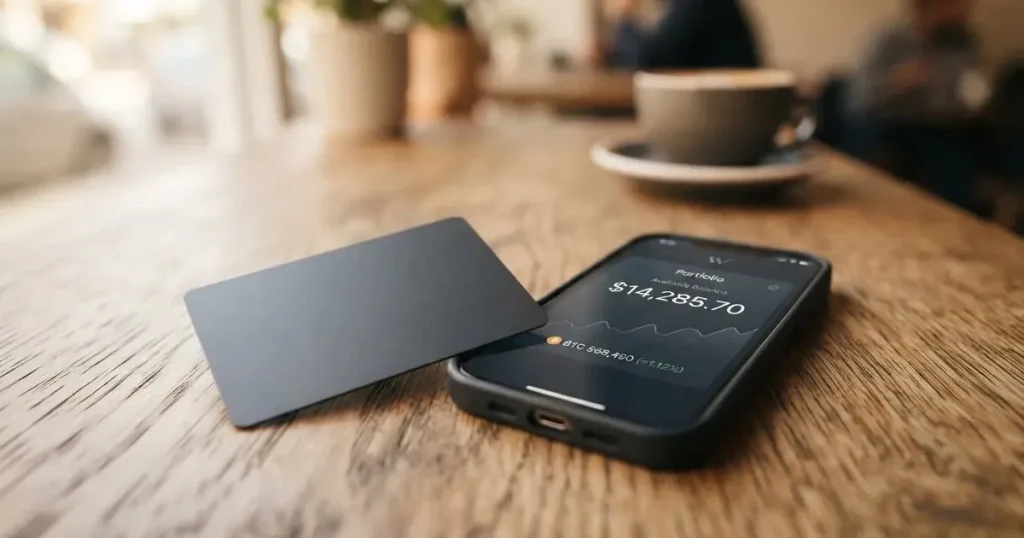
Kite is a Hong Kong app company that gives you a prepaid Visa card number stored in your phone, funded from a crypto wallet holding USDC or USDT. The card costs nothing to open and nothing to keep. Spending in dollars is free. And then the small print arrives: the card is only issued to residents of nine Asia-Pacific countries, there is no plastic version at all, you cannot withdraw cash from an ATM, Apple Pay is nowhere on the company’s website, and the financial side of the business is run by a partner the terms never name. I gave it 5.9 out of 10. That is not a rejection — it is a card that does one thing well and leaves three or four obvious gaps, and whether those gaps hurt you depends almost entirely on where you live and how you already pay for things.
The conditions described here are current as of October 28, 2026.
Verdict: 5.9 out of 10, and the reason is geography
The score breaks into six parts, and reading them in order tells you more than the total does.
| Criterion | Mark | Why |
|---|---|---|
| Who can get it | 4 / 10 | Card only for residents of Australia, Japan, Malaysia, Philippines, Singapore, South Korea, Taiwan, Thailand and Vietnam |
| Cost | 8 / 10 | Annual fee $0, issuance $0, virtual replacement free; top-up 0.53%; non-USD spending 1.8%, USD spending free, gas covered by Kite |
| Top-up options | 8 / 10 | USDT on Ethereum, Polygon, Arbitrum, BSC; USDC on Base, Ethereum, Polygon, Arbitrum, BSC |
| Reliability and complaints | 6 / 10 | Kite App Limited, Hong Kong, issuer not named in the terms (unofficial: DCS Card Centre Pte. Ltd.); no complaints found, App Store 5.0 from 8 ratings |
| Everyday use | 3 / 10 | Virtual Visa only, Google Pay present, Apple Pay not named, ATM “coming soon” |
| Total | 5.9 / 10 |
Who this suits: residents of those nine countries who already hold USDC or USDT, spend a lot in dollars, and are comfortable with a card that exists only as a number in a phone app. If you spend in your local currency most days, the 1.8% foreign-exchange fee adds up fast, and a card with no ATM access stops being useful the moment you need cash. Who it does not suit: anyone outside the nine countries, anyone who needs a physical card for a venue that insists on one, anyone who needs Apple Pay, and anyone who is uneasy about a Hong Kong company whose card-issuing partner is not publicly named.
Two more honest caveats. The company says it is “available in 46 countries”, and its wallet can send and receive in many more places — India, Hong Kong, the UAE, Nigeria, Mexico among them. But having an app in your country and being allowed a card in your country are two different things, and the second is limited to the nine. And the card that exists today is called the Stable Card; a second product called the Select Card is marked “Soon” with no details at all, so nothing I write about a coming tier is more than a label.
Will they give you the card?
They will, if you are 18 or older and live in one of nine countries: Australia, Japan, Malaysia, the Philippines, Singapore, South Korea, Taiwan, Thailand or Vietnam. That is the whole list for the card. Identity verification is required. The company’s own site claims availability in 46 countries without publishing the list, which is the kind of sentence that reads as generosity until you reach the eligibility screen and find out what it means.
It is worth being precise about the distinction, because people confuse it constantly. The Kite app and its wallet work in a much wider set of countries — you can send and receive crypto in dozens more. The card is what is fenced. So if you are reading this from Nairobi or São Paulo or Warsaw, the answer to “can I get the Kite card” is no, and the answer to “can I use Kite for crypto” is probably yes. Those are different products and only one of them is behind the residency check.
There is also a wider list of places the terms treat as restricted — including the United States, Cuba, Iran, North Korea, Syria, Russia, and the Crimea, Donetsk and Luhansk regions — which tells you Kite’s own risk view of where its users should be. That does not affect you unless you live in one of those places, but it is a reasonable proxy for how the compliance team thinks.
One detail that changes over time: an earlier version of the app noted 39 countries, and the site now says 46. The number is climbing, but the card eligibility has not visibly widened with it.
How to get it
The route is short, which is genuinely nice. Install the app, verify your identity, and the virtual card comes with no fee. The company calls the identity step “Smart Verification”. Sumsub appears among the partner logos — that is the identity-checking vendor doing the work behind the screen.
What documents you will need is not stated on the public pages, and you should not assume the two-minute estimate survives contact with a document review. What is stated is the set of things that get a verification refused: a blurry photo of your ID; a name on the ID that does not match your proof of address; an ID that is expired or expiring within six months; a selfie that does not match the photo; a document type that is not supported; being under 18; or being a resident of an unsupported country. Read that last one as permanent — age and country are the two reasons you cannot fix by sending better paperwork.
There is a single KYC level, no tiers. The terms point at government ID, a selfie or liveness check, and proof of address through Sumsub. Processing time for anything beyond the headline figure is not stated.
What arrives after approval is a virtual card inside the app. There is no physical card: the card page describes the product as spend anywhere Visa is accepted, and physical delivery is not mentioned anywhere I could find. Requests are handled in-app after verification, through a “Get Card” step. Replacing a lost virtual card is free. Replacing a physical one, if a physical product ever appears, would be subject to fair use under the terms — that language is in the terms for the card partner’s programme, not for a product currently on sale.
It is a prepaid Visa, pre-funded, with the balance held in dollars, and Google Pay works. The currency the card itself runs in is not stated, which matters a little less than it sounds if you are spending mostly in dollars.
Fees: what it really costs
Headline cost is excellent. The Stable Card has a $0 annual fee, $0 issuance, and free replacement of a virtual card. There is no inactivity fee at the moment; if one were introduced, the company says it would give 30 days’ notice. That is a better starting position than most cards in this category, and better than several conventional fintech cards.

One flag while you are reading the site’s numbers: a separate stats block on the same page shows a “$100 annual fee”, which contradicts the $0 figure. The card pages say the $0 figure clearly; the $100 appears without attribution and does not say which card it refers to. Treat $0 as the real number for the Stable Card and treat the $100 as unexplained.
| Fee or limit | Value |
|---|---|
| Annual fee | $0 |
| Virtual card issuance | $0 |
| Virtual card replacement | Free |
| Inactivity fee | None currently (30 days’ notice if introduced) |
| Top-up fee | 0.53% of the amount |
| Spending in USD | No fee |
| Spending outside USD | 1.8%, plus possible FX fees |
| Crypto conversion fee | Not stated |
| Sending and receiving over the network | $0 |
| Network gas | Covered by Kite |
| ATM withdrawals | Not yet available / coming soon |
| ATM limits | Not published |
| Daily spending limit | $50,000 and 50 transactions, resetting 12:00 AM UTC+8 |
| Monthly limit | Not stated |
| Per-transaction limit | Not stated |
| Apple Pay | Not named on the site |
| Google Pay | Supported |
An unofficial third-party source adds an annual cap of $990,000 or 1,040 transactions, dated August 2026; its daily figure matches what the company publishes. That annual number is not confirmed by Kite.
Now the three everyday payments that decide whether this matters to you:
A $30 subscription in dollars. Top up $30, spend $30. You pay the 0.53% on the top-up — about 16 cents — and nothing on the spend. That is the best case, and it is genuinely cheap.
A $30 lunch in euros. Same top-up, then a 1.8% fee on the conversion — roughly 54 cents — plus whatever spread the network or the partner adds on the currency itself. Roughly 70 cents on a meal.
A $30 purchase in your local currency in Manila, Bangkok or Taipei. Exactly the same 1.8%. This is the number to look at honestly, because a card that is free in dollars is not free if you spend in pesos, baht or ringgit. At that rate, every $100 of everyday spending costs $1.80 before any other fee. If most of your life is denominated in something other than the dollar, that fee is the whole story.
And the day you need cash: there is no ATM. The card is described as not yet available for withdrawals, marked coming soon, with no limits published. That is a real constraint for travellers and for anyone who lives somewhere cash still matters.
Top up the card
Topping up is where Kite is strongest, and this is the section that earned 8 out of 10. You load the card with USDC or USDT, and the fee is 0.53% of the amount. Network gas is covered by Kite, so you are not left hunting for a little ETH to pay the bill. Top-up time is stated as < 200s.
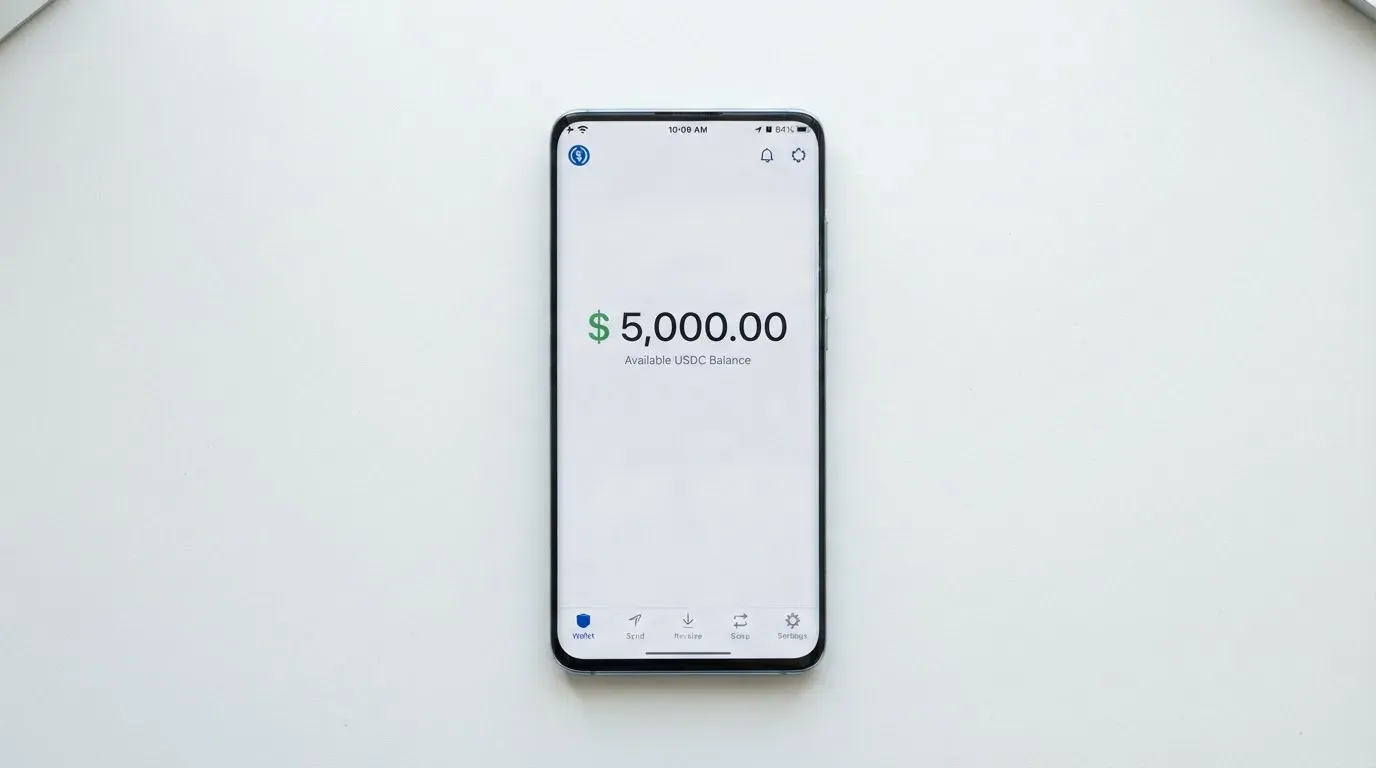
The networks are the part people actually need, and they are clear:
| Coin | Networks |
|---|---|
| USDT | Ethereum, Polygon, Arbitrum, BSC |
| USDC | Base, Ethereum, Polygon, Arbitrum, BSC |
The wallet behind this is non-custodial, using a split-key scheme, so the crypto side is yours rather than Kite’s. Getting this wrong is how people lose money, so be precise: send USDT only on one of the four networks listed for USDT, and USDC only on one of the five listed for USDC. A deposit sent on a network the provider does not support can be lost or need manual support recovery with no guarantee, and the network will not reverse it. Base is on the USDC list and not the USDT list — that asymmetry catches people out.
Minimum top-up and top-up limits are not stated. The rate at which your crypto becomes card balance is not guaranteed at the moment of conversion, which is worth remembering: the 0.53% is what you are told about the fee, not a promise about what rate you will get.
Getting money back out is where the documentation thins out. Withdrawing card balance back to crypto is not described in the terms. If you close your account, you email [email protected] and withdraw digital assets first, with at least 30 days allowed for withdrawal on termination. Any remaining fiat balance on a cancelled card is handled under the separate cardholder agreement, which I have not read and which is the document that would actually govern a stuck balance. Read it yourself before you close anything.
Paying with it every day
Where it works: online and in stores, anywhere Visa is accepted, through Google Pay. That is the whole list of what the site names. Apple Pay is not mentioned anywhere on Kite’s pages — not as supported, not as unsupported, just absent. Third-party reporting from August 2026 says Google Pay, Alipay and WeChat Pay are supported and Apple Pay is not; that is unofficial and not confirmed by Kite.
That absence matters more than a line on a features list. If your phone is an iPhone and your bank’s app lives in Apple Wallet, Kite asks you to keep one wallet for your money and another for this card. It is friction, not a wall, but it is friction every single time.
Also unstated: which merchant categories are blocked. Cards in this category often refuse gambling merchants, and some refuse entire categories, but Kite publishes no list. If a transaction is declined for that reason, you will find out the same way everyone else does.
The apps exist on both platforms — iOS and Android. The iOS app was at version 1.1.4 on 12 October, and the App Store rating was 5.0 out of 5 from eight ratings when I looked. Eight ratings is not a track record; it is a rounding error, and it should reassure nobody. The Google Play rating was not readable.
There is no cashback or rewards programme stated anywhere, and none mentioned. If you were hoping to claw back the 1.8% with rewards on spending, that hope is not on the table.
When something goes wrong with a payment, the terms do not cover disputes. Disputes fall under the card partner’s cardholder agreement, which I have not read, and blockchain and QR payments are irreversible once settled. No time frames are stated. In practice this means: if a merchant takes your money and does not deliver, your route is the card issuer’s dispute process under a document Kite itself points away from, and you should be clear-eyed about that before you put something expensive through it.
What can go wrong
Start with the thing that worries me most, which is not a scam warning but a structural one: Kite names no issuer. The terms describe the card as issued through “licensed third-party partners” and leave them unnamed. Third-party reporting from August 2026 identifies the issuer as DCS Card Centre Pte. Ltd., a Singapore entity listed by the Monetary Authority of Singapore as a credit and charge card licensee — that is unofficial and Kite does not confirm it. If that identification is right, you have a regulated issuer; if it is wrong or changes, you have a card programme run by a Hong Kong app company through a partner you cannot name from its own marketing. I would want you to confirm the issuer in the cardholder agreement yourself.
Kite App Limited is registered in Hong Kong, company number 78561804, and it operates the app. The company’s issuer licence is not stated officially.
On the crypto side the picture is better. The wallet is non-custodial, with the key split between parties, social-login backup through Google or Apple, and the ability to export your private key. Kite says it does not hold your funds or keys. The card balance, though, is held with the card provider — that is a different pot of money under a different set of rules, and the difference is exactly where the risk sits. Freeze, two-factor authentication and insurance are not stated officially, though the terms do say Kite may restrict card use for fraud. Unofficial reporting says the card can be frozen in-app with spending settings and transaction alerts, and that there is 24/7 in-app chat.
On complaints: there is nothing to report. No Trustpilot threads, no Reddit threads, no news about Kite App. Searching for complaints returns results about unrelated products. This cuts both ways — a young product with almost no users generates almost no complaints, which is not the same as a good track record. It is an absence of evidence.
Support is [email protected], usually answering within a day, with a help centre at kiteapp.xyz/help, a Telegram channel and an X account. The App Store text says 24×7 chat support and lists English.
And the category risks apply on top of all this. Visa and Mastercard do not issue crypto cards to consumers themselves; they license issuers, and they can suspend a programme — Visa terminated its global agreements with FTX on 13 November 2022, and WaveCrest, an issuer that supplied several crypto card brands, was suspended by Visa in Europe in 2018, closing every WaveCrest-issued programme. When a programme closes, the pattern is a notice period, then loading and spending stop, then you are asked to withdraw what is left. That is the scenario to keep in mind before you hold a large balance on any card in this category.
One more practical risk, which is yours rather than Kite’s: blockchain transfers do not reverse. Send on the wrong network or to the wrong address and there is no customer service that can undo it.
What to take instead
The honest comparison is not against other crypto cards in the abstract — it is against what your 1.8% and missing Apple Pay actually cost you. Here are three alternatives I looked at, with their own marks for context.
| Card | Score | Annual fee | Foreign-currency fee | Top-up | Key gap |
|---|---|---|---|---|---|
| Kite | 5.9 / 10 | $0 | 1.8% | USDC/USDT, 0.53% | Nine countries, no Apple Pay, no ATM |
| Morse | 7.5 / 10 | Not stated | Zero FX fees or markups | Card, bank rails, USDC/USDG/EURC on Solana free | Closed beta in many countries, needs an invite |
| International Visa Card | 6.7 / 10 | Free plan, Pro $9.00/month, Max $19.00/month | Visa rate + 2% FX fee | USDC/USDT 1:1 free, plus USD, EUR, SEPA, SWIFT, FedNow | Long exclusion list, physical card “coming soon” |
| UNi Card | 6.1 / 10 | “No annual fee” | “No foreign transaction fee” | Not stated | Eligibility not stated, Mastercard not Visa |
Morse scores 7.5 and is the one to look at first if you spend in more than one currency, because it advertises zero foreign-exchange fees or markups and uses the real-time Visa rate, and it says paying with the card online and contactless is free. Its wallet is self-custodial, and USDC, USDG and EURC transfers on Solana are free while other tokens and blockchains carry a fee. But the catch is severe: it runs a closed beta in a long list of countries including Australia, Japan, Singapore, Switzerland, the United Kingdom, Hong Kong SAR China, Thailand and Türkiye, which means it needs an invite code — and several of those overlap with Kite’s nine. If you are in Manila, Jakarta or Ho Chi Minh City you may be left choosing between the two.
The International Visa Card is a U.S.-issued Platinum Visa, virtual, paying in dollars, with $5 issuance and no maintenance fee, plans at free, Pro $9.00/month and Max $19.00/month. Deposits of USDC or USDT go in free at 1:1, and it also takes USD, EUR, SEPA, SWIFT and FedNow, which is a genuinely different proposition if you get paid in ordinary money. Its foreign-currency cost is higher than Kite’s — Visa’s rate plus 2% — and it will not serve residents or registrants of a long list including Belarus, mainland China, India, Iran, Israel, Russia, Türkiye, Ukraine and Vietnam, with FATF grey-list countries handled case by case. Note that Vietnam is on that exclusion list, and Vietnam is one of Kite’s nine. Also note the physical card is “coming soon” there too.
UNi Card is a multicurrency Mastercard spending from a UNi.Global account balance, with no annual fee, no foreign transaction fee, assets converted at live OTC rates and “no hidden exchange fees”, plus spend-to-earn rewards up to 3%. Its eligibility requirements are not stated, and its funding methods are not stated, which is a lot of missing information for a card you might move money onto.
The pattern worth noticing: every one of these is virtual-only or nearly so, and three of the four quote no annual fee. Physical plastic is simply not part of this category any more. What separates them is geography and currency cost, and on both axes Kite is at the restrictive end — nine countries, and 1.8% on anything that is not a dollar.
Who I would recommend it to
If you live in Singapore, Seoul, Tokyo, Sydney, Taipei, Kuala Lumpur, Bangkok, Manila or Ho Chi Minh City; you already hold USDC or USDT and are comfortable sending them on Base, Ethereum, Polygon, Arbitrum or BSC; you spend most of your money in dollars; and you are happy with Google Pay as your only tap-to-pay — then Kite is a reasonable, cheap card and there is little reason not to try it. You would be paying 0.53% to load it and nothing to spend the dollars.
If you spend mostly in your local currency, do the arithmetic first: at 1.8% on every non-dollar purchase, the savings that made the card attractive in dollars disappear. If you need cash, the missing ATM is disqualifying on its own. If your phone is an iPhone and Apple Pay is non-negotiable for you, look elsewhere — the card is not listed as supporting it, and unofficial reporting says the same. If you are outside the nine countries, the answer is simply no, however good the app looks in your store.
And if you are drawn to it mainly because you dislike banks or distrust conventional card issuers: this is not the escape you are looking for. The crypto in your wallet is yours, but the card balance sits with an unnamed issuing partner under a separate cardholder agreement, the app company is registered in Hong Kong, and the whole programme depends on a Visa licence held by someone else who could pull it. Keeping a small balance here is a different risk posture from holding cash in a deposit-taking bank, and it is worth deciding consciously rather than by default.
Frequently asked questions
What is Kite card?
Kite is a prepaid Visa card, virtual rather than plastic, issued by the Hong Kong app company Kite App Limited and funded from a crypto wallet holding USDC or USDT. The card number lives in the app and works through Google Pay wherever Visa is accepted. Spending in US dollars is free, and the card is currently offered only to residents of nine Asia-Pacific countries. There is also a second product, the Select Card, marked “Soon” with no published details.
How does Kite card work?
You convert or top up crypto into a dollar balance, and the card spends that balance — much like a prepaid card, except the money behind it arrived as stablecoins. Your crypto wallet is non-custodial, so the coins are yours until the moment they are converted. The card balance itself is a separate pot of money held with the card provider. That two-layer structure is the thing to keep in your head about how it works.
Is Kite a bank?
No. Kite App Limited is a Hong Kong registered company, number 78561804, that operates an app; the terms describe the card as issued through unnamed licensed third-party partners. Third-party reporting from August 2026 names DCS Card Centre Pte. Ltd. in Singapore as the issuer, which would be a regulated card issuer — but that is unofficial and not confirmed by Kite. I would check the cardholder agreement yourself before relying on it.
Who can get the Kite card and is it available in my country?
Residents of Australia, Japan, Malaysia, the Philippines, Singapore, South Korea, Taiwan, Thailand and Vietnam, aged 18 or over, with completed identity verification. The site claims availability in 46 countries, but that refers to the app and wallet, not the card — the crypto wallet works in many more places. The residency requirement cannot be fixed by resubmitting documents; only age and country are listed as non-fixable rejection reasons.
Does Kite card require KYC, and what documents do I need?
Yes, a single level of identity verification with no tiers, run through Sumsub. The public pages do not say which documents are required, though the terms point to government ID, a selfie or liveness check, and proof of address. Common rejection reasons include a blurry ID photo, a name mismatch between ID and proof of address, an ID expiring within six months, and an unsupported document type.
How much does Kite card cost to open and keep?
The Stable Card has a $0 annual fee and $0 virtual card issuance, and replacing a virtual card is free. There is no inactivity fee at present, though the company would give 30 days’ notice before introducing one. Note one inconsistency: a separate stats block on the site shows a “$100 annual fee” without saying which card it refers to, which contradicts the $0 figure everywhere else. Loading the card costs 0.53% of the top-up amount.
What fees do I pay when spending?
Spending in US dollars carries no fee. Spending in any other currency costs 1.8%, plus whatever spread the network or partner adds on the currency itself — so a $30 lunch abroad costs roughly 70 cents all in once you count the top-up. That is the number to test against your own spending: if most of your purchases are not in dollars, the card is not free. Network gas for top-ups is covered by Kite.
How do I top up, and which networks do I use?
Send USDC or USDT to the wallet, and the card is loaded in < 200s for a 0.53% fee, with gas covered. USDT is supported on Ethereum, Polygon, Arbitrum and BSC; USDC on Base, Ethereum, Polygon, Arbitrum and BSC. Match the coin to its own list — Base is on the USDC list only — because blockchain transfers cannot be reversed, and a deposit on an unsupported network can be lost or need manual recovery with no guarantee.
Can I use Kite card in Apple Pay or at an ATM?
Apple Pay is not named anywhere on Kite’s site, and unofficial third-party reporting from August 2026 says it is not supported; Google Pay is the working option. At ATMs, withdrawals are not yet available — the company describes the feature as coming soon, with no ATM limits published. A third-party source also reports Alipay and WeChat Pay support, which Kite has not confirmed. So if tap-to-pay on an iPhone or cash withdrawals matter to you, this card does not currently serve that need.
Is Kite card safe, and what happens if the company disappears?
Your crypto wallet is non-custodial, with a split key, social-login backup and private-key export, and Kite says it does not hold funds or keys — that side is genuinely yours. The card balance is not: it sits with an unnamed card partner under a separate cardholder agreement. Freeze, two-factor authentication and insurance are not stated officially. Cards in this category can be wound down when an issuer’s licence changes — Visa ended FTX’s agreements in November 2022 — and closures follow a pattern of notice, then stops, then a withdrawal request. Keep the balance small for that reason.
App and neobank cards on the shortlist – cryptocardshortlist
Content created by the «cryptocardshortlist» team