
Holding dollars in USDC, spending them on a virtual Visa — what the ZAR card actually delivers
 Available in US
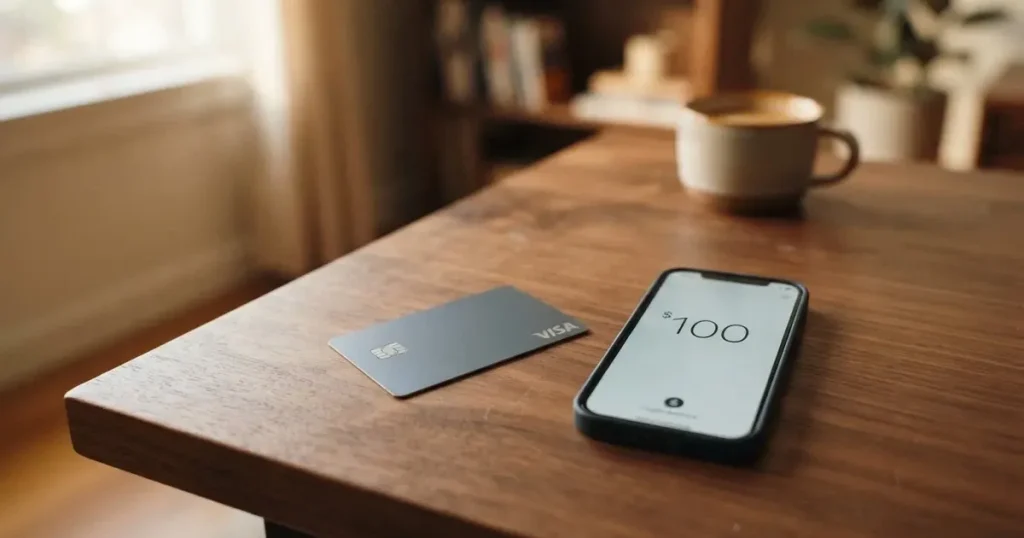
If you have ever been turned down for an ordinary bank card, or you simply want to hold dollars in a stablecoin and pay directly from that balance, the ZAR card is one of the more interesting recent options to land in my review pile. The pitch is unusually clean: a virtual Visa in US dollars, funded by USDC on Solana, with no foreign-currency fees tacked on at the till. The reality, once you start asking the kind of practical questions a real shopper asks, is more uneven — and that is what this review is here to walk you through.
The conditions described below are current as of October 28, 2026.
Verdict
ZAR earns 7.3 / 10 in my scoring, and that lands it in a comfortable middle band. It is not the cheapest card on the market, it is not the most generous with rewards, and it is not the easiest to top up if you are used to a dozen funding options. What it does well is something narrower and more useful for a specific kind of user: it lets you park dollars in USDC, and then spend those dollars on a Visa card, in a setup that does not drag in foreign-transaction fees every time you tap to pay abroad. That combination is rarer than it sounds, and the rest of this review is about who can actually use it, what it really costs, and where the rough edges are.

The breakdown of that score, criterion by criterion, is below. I have written the reasoning in my own words so you can see where the marks come from and where the card trades points for simplicity.
| Criterion | Mark | Why |
|---|---|---|
| Who can get it | 8 / 10 | The card opens to people in 100+ countries and rejects a clear list of sanctioned and restricted jurisdictions. |
| Cost | 9 / 10 | Account opening and virtual cards are free, and the headline promise of “no foreign fees” is matched by what the app shows. |
| Top-up options | 5 / 10 | Only USDC on Solana is accepted directly; other stablecoins are converted, and bank transfer is offered as well. |
| Reliability and complaints | 7 / 10 | Operated by a Singapore fintech, with dollars from Circle and banking by an FDIC-member bank; few public complaints but a small review base. |
| Everyday use | 6 / 10 | Virtual Visa in USD, with Apple Pay tap-to-pay already working; physical plastic is still on the way. |
If the score is a little lower than you expected for a card that markets itself as frictionless, that is because the top-up step is genuinely narrow and the everyday-use score is held back by missing pieces like Google Pay, an unannounced ATM allowance, and a physical card that has not shipped yet. You can read about each of those in their own section below.
In short: ZAR suits someone who already holds USDC on Solana, or who is happy to route through it, and who wants a clean way to spend those dollars in shops and online. It does not suit someone who wants a primary bank-replacement card, or who needs a wide menu of ways to load funds, or who is allergic to anything that is still a work in progress.
Who will they give you the card
ZAR says it is available in 100+ countries, and the app store listing goes a little further with 110+ countries. The Terms, though, make a more careful statement: ZAR may refuse service in certain locations, and the Terms explicitly call out Russia, Belarus, Iran, Iraq, China, Japan, Vietnam and Venezuela, with the wording suggesting this is not an exhaustive list. If you are in any of those places, or are subject to sanctions, the card is not for you. The terms require users to be 18 or older and not under sanctions.
What I could not pin down is whether the rule is based on where you live, where you were born, or both. The public pages do not make that distinction, and the terms are intentionally non-exhaustive, which is a pattern you see across newer crypto card programmes that do not want to be drawn into a country-by-country commitment.
The practical advice here, before you install the app, is to check both your current residence and your citizenship, and to read the most recent terms before you start the sign-up flow, because the exclusion list is a moving target and what matters for the card is what the terms say on the day you apply, not what some third-party guide says today.
How to get it
The sign-up path is straightforward in shape, even if ZAR does not publish the finer details. You will go through KYC and AML checks before you can connect a bank or use the card, and identity verification is handled by Plaid. The documents ZAR accepts, according to the public information, are passports and driving licences. The programme also runs politically exposed person screening, which is the standard PEP check you would expect from any regulated onboarding flow. Age is set at 18 and above.
Beyond the identity check, the public pages do not publish processing times, do not describe any tiered KYC levels, and do not say whether you need a proof-of-address document on top of your passport or licence. That is a real gap in the documentation, and it is one of the reasons I would plan a small buffer of time before you need the card for an urgent purchase. They will tell you more in the app, but they do not say so on the website.
Once you are through, you get a virtual Visa card immediately, and a physical card is described as “coming soon”. Both are denominated in US dollars, which is the currency the card spends from and the currency your balance is held in. Because the physical card is not yet shipping, I cannot tell you how long delivery takes or which courier is used — that detail has simply not been published.
A final note on the account itself: the terms reserve the right to suspend an account for fraud, for legal requirements, or for breach of the terms. That is normal, but it is worth flagging that the KYC/AML flow is the gate, and the gate is not optional, even though the card is sold as a frictionless crypto-on-ramp to spending.
What it really costs
The headline numbers for ZAR are friendlier than most of the field, and the cost section is where the card picks up most of its score. The table below is built only from the public information ZAR has published, and you can see where the gaps are.
| Fee or limit | What it costs |
|---|---|
| Account opening | Free |
| Virtual card | Free |
| Physical card | Depends on country; figure not published |
| Monthly fee | Not stated |
| Foreign transaction fee | “No foreign fees” |
| Conversion fee | Not stated; fees shown before confirmation |
| ATM withdrawal | Allowance and fee not stated |
| Daily transaction limit | Set on registration, by currency, method and KYC result; no amounts published |
| Monthly limit | Not stated |
Two things stand out. First, the absence of any monthly fee in the public information is a positive signal, but it is also an absence, and you should not treat a missing fee line as a permanent zero until you have seen your own account screen. Second, the terms say that fee changes will be announced one week ahead, which is reasonable but worth noting if you are used to a card where the fee schedule is published and rarely moves.
Now let me walk through what these numbers mean in a few ordinary payments, because that is the moment most people actually feel the cost of a card.
A coffee bought abroad in local currency. The merchant prices the drink in, say, euros. The Visa network handles the conversion to USD on the way through, and ZAR’s “no foreign fees” promise means the card adds no extra percentage on top of that. The amount that hits your balance is the network rate alone, which is the closest thing to a fair exchange that retail cards ever offer.
A subscription in US dollars. The card was always going to spend in dollars, so this is the easy case. There is no FX layer, no conversion, and the fee before confirmation is whatever the app shows, which for a USD subscription is typically nothing.
A cash withdrawal from an ATM. This is the line I would push on, because the terms say ZAR supports worldwide ATM withdrawals in local currency, but the fee and the allowance are not published anywhere I could find. Banks and e-money programmes usually charge a flat fee per withdrawal and a percentage after a monthly cap, and the absence of those numbers means you have to test with a small amount first rather than learn by an expensive mistake. A good first move is to take out the smallest amount the ATM allows, and check your balance and any fee line in the app before you do anything larger.
Top up
Funding the card is the area where the score drops the most, and the reason is that ZAR has chosen a deliberately narrow path. The Terms say only USDC on the Solana network is accepted directly. Other stablecoins may be accepted, but they are converted into USDC, and the terms warn that sending on the wrong chain can lose your funds. Beyond the crypto route, the site also lists a bank transfer and a cash-at-a-merchant option.
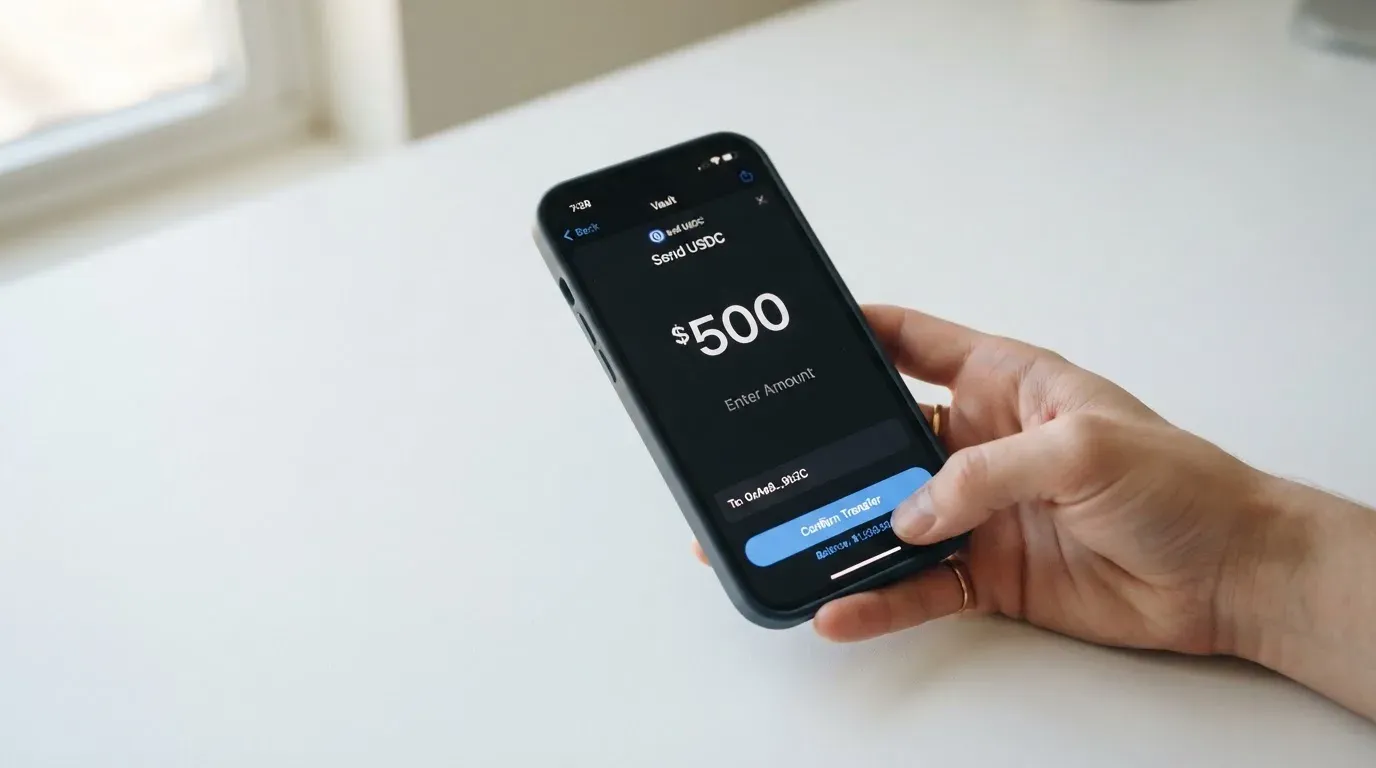
In practice, this means three things. If you already hold USDC on Solana, you are in the happy case and the transfer is just a matter of pasting the right address and watching for the network fee. If you hold USDT, or USDC on a network other than Solana, you can still fund the card, but the route is to send the token and have the programme convert it into USDC, with whatever spread or fee that conversion involves, and with a network fee charged by the blockchain for the transfer itself. If you do not hold any stablecoin at all, your realistic path is the bank transfer, and that brings its own cost structure: fees vary by method, and the terms say you will see the fee before you confirm, which is the right thing for the provider to say but does not tell you what the fee will be.
Two specific gaps I would watch for. The stablecoin minimum is not stated, and neither is the network fee. If you are sending a small amount, those two unknowns combined can eat a surprisingly large share of what you are trying to load. Send a small test first, the way you would with any new wallet address, and only then move the real amount.
A separate point worth raising: blockchain transfers are irreversible, and a stablecoin sent to a card provider on a network that provider does not support can be lost, or at best require manual recovery with no guarantee of return. The terms make that risk clear, and the easiest way to avoid it is to send only on the network the app tells you to use, every single time.
Paying with it every day
The everyday-use story is mostly good and partly under-baked. The card is a virtual Visa in US dollars, which is the most widely accepted card network in the world, and ZAR’s marketing leans on that. Apple Pay tap-to-pay is supported, and the site lists Tap to Pay as enabled. Google Pay is not confirmed in the public information, and the list of blocked merchant categories, if any, is not published.
The App Store rating for the iOS app, as of when I read it on 2026-10-21, was 3.9 out of 5 from 44 ratings, which is a respectable mark from a small base. The Google Play rating was not read for this review.
A note on the practical edge cases. Online card payments on a Visa network often trigger 3-D Secure, which is the extra identity step that asks you to confirm a one-time code or a biometric prompt. That is not a fee, but it is a moment of friction, and a moment when an issuer may decline a transaction if it cannot reach you. Address Verification Service, used widely in the United States, Canada and the United Kingdom, is generally less effective on foreign-issued cards, and this is a Visa issued outside the US, so it is worth knowing that some US merchants may decline a card on those grounds. That is a category-wide problem with cards that look “foreign” to a shop, and it is not a ZAR-specific complaint, but it is the kind of thing that affects real life.
The terms set out an unusual arrangement for disputes. Disputes about the smart contract, the oracle, the API, the backend, and account-access issues are routed to an automated in-app resolution, and the user waives litigation and arbitration for those. Other disputes go to the Singapore courts. The card chargeback process, which is the most common kind of consumer dispute, is not described in detail, and that is one of the clearer places where the public documentation is thinner than you would want. Before you put large amounts through the card, it is worth asking customer support, at the addresses in the public information, to walk you through how a chargeback would work.
The terms do not describe a rewards programme, and the public pages do not publish a cashback rate, so I am not going to invent one for you. Treat any promise of rewards as something to verify in the app before relying on it.
What can go wrong
The single biggest thing that can go wrong with a card like this is something the card itself cannot fix: a stablecoin losing its peg. USDC and USDT are the two largest dollar-pegged stablecoins, and they have both held their peg through severe stress, but USDC briefly lost its peg in March 2023 during the US banking crisis, and the TerraUSD collapse in May 2022 is a permanent reminder that the word “stable” in stablecoin is a description of intent, not a guarantee. If you fund a card with USDC, you are exposed to that risk for as long as the funds sit in the balance.
The second category of risk is the company behind the card. ZAR is operated by Golden Age Dev Lab Pte Ltd, a Singapore company. The terms describe it as a fintech company, not a bank, and make the point that ZAR is “not a money services business”, with no licence numbers published. The dollars in the system are issued by Circle, and the banking relationship is with SSB, a Member FDIC bank. The card issuer, the licensed entity that actually puts the Visa number in your hand, is not named in the public information, and that is a gap a careful reader should notice.
Customer funds, according to the footer, are held at SSB in custodial accounts and are FDIC-insured up to US$250,000 per depositor, but that insurance does not protect against the failure of ZAR itself, only against the failure of the bank. This is the standard structure in this part of the market, and it is reasonable, but it is also the kind of detail that matters if you are loading a larger balance than you would normally keep in a current account.
On the wallet side, the terms describe the software as a self-custodial wallet, with the line “We do not custody or control your funds”. That is a meaningful distinction, because it means the responsibility for the seed phrase and the private keys sits with you, and not with the company. If you lose your seed phrase, you cannot recover the funds through customer support, because customer support does not have them. The usual guardrails apply: store the phrase offline, never type it into a website, and treat clipboard-hijacking malware that swaps copied wallet addresses as a real and present danger.
The third category is operational, and here the news is mostly reassuring. No public incidents or complaints showed up in the searches I ran for ZAR card reviews, Trustpilot, or Reddit threads. There is no Trustpilot page for ZAR at all, which is a small data point either way. App Store sentiment is decent for a small base. None of that is a guarantee, and the company is young enough that the long track record simply does not exist yet.
The contact addresses in the public information are [email protected] and [email protected]. Treat those as the only addresses you trust for support, and be wary of anyone messaging you first with a “support” handle.
What to take instead
A score of 7.3 puts ZAR in a competitive band, and the honest thing to do here is to walk you through the alternatives I would actually consider alongside it, so you can pick the one that fits your situation.
International Visa Card, scored 6.7 / 10. A US-issued Platinum Visa in dollars, with a $5 one-time issuance fee for the virtual card and three monthly plans: Classic free, Pro $9 a month, Max $19 a month. Card use in USD is free on all plans, foreign currency carries a 2% FX fee on top of the Visa rate, and deposits of any kind are free. The card is not available to residents or legal registrants of a long list of countries including Belarus, China, North Korea, Cuba, India, Iran, Iraq, Israel, Myanmar, Nepal, Nicaragua, Russia, Syria, Turkey, Ukraine, Venezuela and Vietnam, and FATF grey-list countries are reviewed case by case. Purchases are blocked in North Korea, Cuba, Iran, Russia, Syria, Ukraine and Venezuela. The geographic rule is by residence, not citizenship. The physical card is “coming soon”. No cashback is published.
UNi Card, scored 6.1 / 10. A multicurrency Mastercard that spends from a UNi.Global account balance, with no annual fee and no foreign transaction fee. Conversions are at live OTC rates with no hidden exchange fees, and the published reward is “Spend-to-Earn” up to 3%. Country availability, the issuance fee, and the funding menu are not stated in the public information I worked from, so this is a card where the marketing is generous and the disclosure is thin.
Morse, scored 7.5 / 10. A fully virtual Visa prepaid debit card that spends from the Morse Balance in any currency, with zero FX markups, real-time Visa exchange rates, and free online and contactless payments. Eligibility is by residence, and the app is available in 140+ countries for P2P, with local add and withdraw in over 70. A closed-beta list of countries needs an invite code, including Australia, Hong Kong, Japan, New Zealand, Singapore, Switzerland, Thailand, Türkiye, the United Kingdom and others, and the card itself is “available only in certain countries” with the full list in the app. Deposits by debit card, stablecoin transfer, and Account Details in USD, EUR, MXN and COP are supported; USDC, USDG and EURC on Solana are free, other tokens and blockchains carry a fee. The Morse Wallet is self-custodial. The card’s fees page says “Fees may apply. See Cardholder Agreement”, which is a less crisp answer than ZAR’s “no foreign fees”, but the actual rate structure is competitive.
If you want a USDC-funded card that is wider in its funding menu, Morse is the obvious step up, especially if you hold assets on networks other than Solana. If you want a US dollar card with a plan tier and a published monthly fee, International Visa Card is the easier read. If you want a multicurrency Mastercard with a 3% earn, UNi is worth a look, with the caveat that you will need to confirm the funding and country list yourself.
Who I would recommend it to
I would recommend ZAR to someone who already keeps a meaningful balance in USDC on Solana and who wants a clean way to turn that balance into everyday spending. The card hits the right notes for that person: a virtual Visa, no foreign fees, dollars from Circle, banking by an FDIC-member bank, and an app that, by the limited feedback available, is working as intended.
I would not recommend it as a primary bank-replacement card. The funding path is narrow, the physical card is still on the way, ATM fees and allowances are unpublished, Google Pay is unconfirmed, and the dispute process for ordinary card chargebacks is not described. If you want a card you can use anywhere, top up any way you like, and lean on when things go wrong, this is not that card today.
The most honest summary I can give is that ZAR is a good specialist tool, with the right plumbing underneath it, that will become a much more useful everyday card once the physical card ships, the funding menu widens, and a few of the documentation gaps are filled in. Until then, treat it as the second card in your wallet, not the first, and you will not be disappointed.
Frequently asked questions
What is the ZAR card?
ZAR is a virtual Visa card denominated in US dollars, operated by the Singapore fintech Golden Age Dev Lab Pte Ltd. You fund it with USDC on the Solana network, and the card spends from that balance in shops and online, with no foreign transaction fee applied by ZAR at the till.
How does the ZAR card work?
You complete KYC and AML checks, you receive a virtual Visa, and you top it up with USDC on Solana. When you pay, the dollars are drawn from your balance through the Visa network, and the app shows the fee before you confirm each transaction. Apple Pay tap-to-pay is supported; the physical card is described as “coming soon”.
Is ZAR a bank?
No. The terms describe ZAR as a fintech company, not a bank, and explicitly say it is “not a money services business”. The dollars in the system are issued by Circle, and the banking is provided by SSB, a Member FDIC bank, which holds customer funds in custodial accounts.
Who owns ZAR?
ZAR is operated by Golden Age Dev Lab Pte Ltd, a Singapore-registered company. The terms are governed by Singapore law, and disputes that are not resolved in-app go to the Singapore courts. The card issuer, the licensed entity that issues the Visa number, is not named in the public information.
Is the ZAR card available in my country?
ZAR says it serves 100+ countries, with the App Store listing 110+. The Terms explicitly call out Russia, Belarus, Iran, Iraq, China, Japan, Vietnam and Venezuela, with the wording suggesting this is not an exhaustive list. You must be 18 or older and not subject to sanctions, and the basis (citizenship or residence) is not stated.
Does the ZAR card require KYC?
Yes. KYC and AML checks are required before you can connect a bank or use the card, identity verification is handled by Plaid, passports and driving licences are accepted, and the programme runs PEP screening. Processing times and tiered levels are not published.
How do I top up the ZAR card?
The Terms say only USDC on the Solana network is accepted directly. Other stablecoins may be accepted but are converted into USDC, and the site also lists bank transfer and cash at a merchant. The stablecoin minimum and the network fee are not stated, and the terms warn that sending on the wrong chain can lose your funds.
How do I add the ZAR card to Apple Wallet?
The App Store listing confirms Apple Pay tap-to-pay is supported, and the site lists Tap to Pay as enabled. The standard flow in iOS is to open the Wallet app, tap the plus button, and follow the steps to add a card; the ZAR app should present a virtual card number you can add from there.
How do I withdraw money from ZAR?
You can spend the balance on the card or, according to the app store listing, withdraw dollars as local currency from ATMs worldwide. The ATM fee and the monthly allowance are not published, and the account can be closed at any time once all funds are withdrawn, with withdrawal fees not stated.
Is the ZAR card safe?
It is run by a Singapore fintech, dollars come from Circle, and banking is with an FDIC-member bank, with customer funds held in custodial accounts insured up to $250,000 per depositor at the bank, not against ZAR’s own failure. The wallet is self-custodial, so you hold the keys, and that puts the responsibility for seed phrase security on you.
App and neobank cards on the shortlist – cryptocardshortlist
Content created by the «cryptocardshortlist» team