
The crypto card with no fees on spending but no way to get the money back out
 Available in US

The Spritz card is a Visa Signature payment card that you fill from your own crypto wallet. It spends like an ordinary debit card in shops, online and in mobile wallets, and it charges nothing when you pay. What you load is money you are committed to spending: once it is on the card, Spritz says it cannot return or transfer it to you. That single fact colours everything below. If you are someone who holds crypto in self-custody, moves stablecoins across a lot of networks, and wants a clean Visa card without a monthly bill, Spritz does its job well and scored 7.4 out of 10 in my assessment. If you need a card you can load and also empty, or you want a physical card in the post, Spritz is the wrong tool for you.
The conditions described here are current as of October 28, 2026.
Verdict: who the Spritz card suits and who it does not
Spritz scores 7.4 out of 10 overall. That is a good card with real gaps, not a bad one. The strong parts are the range of tokens and networks you can load from and the absence of any fee on everyday spending. The weak parts are what happens after the money is loaded — you cannot take it back off the card — and how little the official pages say about the company behind it and the cost of the physical card.
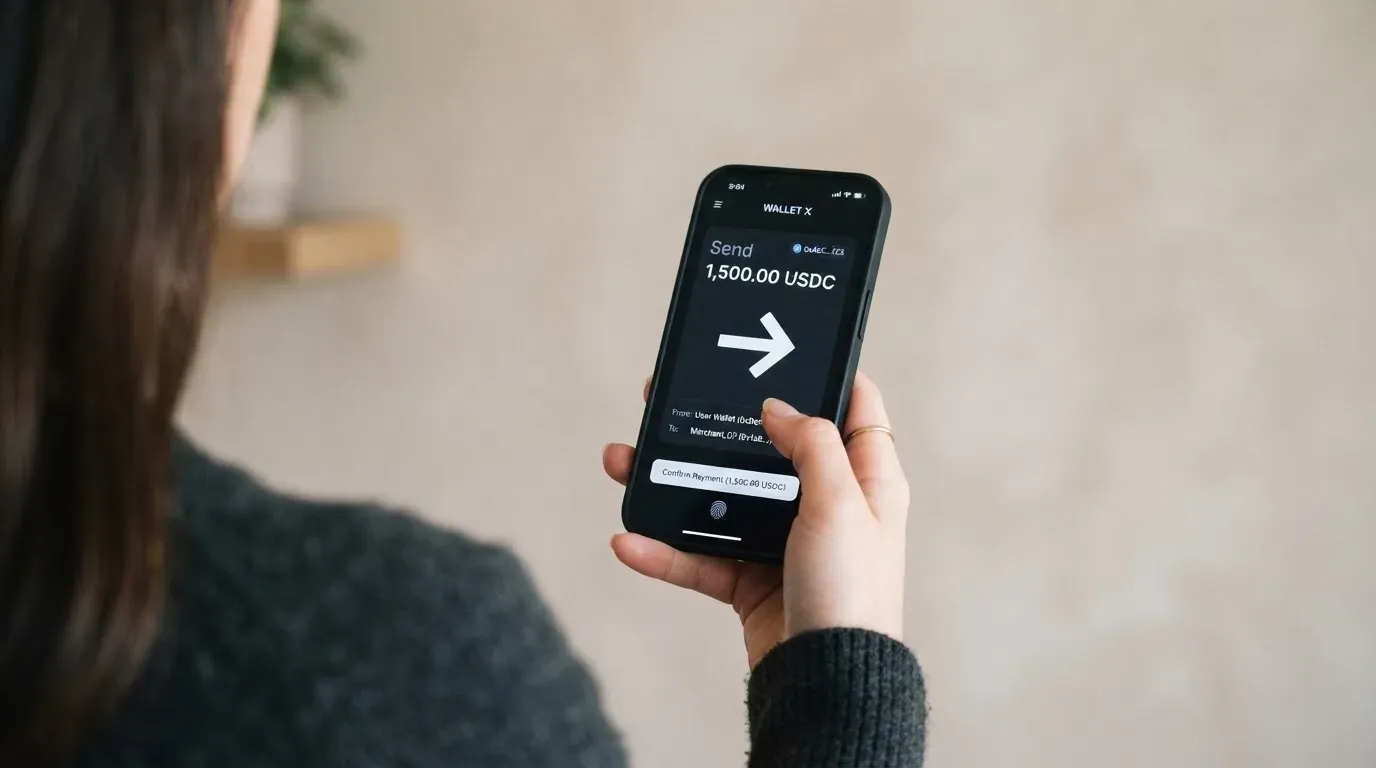
Here is how each area scored and, more importantly, why.
| Criterion | Score | Why |
|---|---|---|
| Who can get it | 7 / 10 | Open to residents of “many international countries and territories”, decided by where you live, not your citizenship; unofficial counts say 42 countries including the US in 30 states |
| Cost | 8 / 10 | No fees on spending or maintaining the account; loading starts at 1% with a $2 minimum and varies by token and network; the issuance fee and the FX fee are not disclosed |
| Top-up options | 9 / 10 | Load straight from your own wallet: 50,000+ tokens across 5 chains, with USDC and USDT on several networks plus Bitcoin, DASH, XRP and Sui |
| Reliability and complaints | 6 / 10 | Spritz Finance runs it, the issuer is not named officially; loaded funds cannot be returned; unofficial reviews sit around 4.0 on Trustpilot and 3.2 on the App Store |
| Everyday use | 7 / 10 | Apple Pay and Google Pay work, virtual and physical card types exist, with the physical card in a limited unofficial release for the US |
The reader this suits is a self-custody holder who loads USDC from many chains. The reader it does not suit is anyone who treats a card balance as savings, who needs a physical card immediately, or who wants the name of the institution holding their money spelled out on the official site.
Will they give you the card?
Eligibility runs on where you live, not what passport you hold. Spritz puts it plainly: the card “works off of your residence versus your citizenship”. The blog says it is available in “many international countries and territories”, with the actual list kept in a help-centre table rather than on the front page. That is the single most important line on this whole page for anyone outside the United States and Europe: check that table with your own country before you spend an afternoon on the application.
Two wrinkles are worth knowing. Nigeria needs conditional approval rather than automatic acceptance, and a country that is not listed is simply not supported. Unofficially, third-party trackers count 42 countries including the US (in 30 states) and single out a restricted group — Belarus, Cuba, Iran, North Korea, Russia, Syria and Venezuela — as places the card does not serve. Those country counts and the restricted list come from a comparison site in August 2026, not from Spritz itself, so treat them as a guide rather than gospel; the help-centre table is the authority.
How to get the card
The route is short. You need to be at least 18. You upload ID for a verified account, and if the automated check stalls you can ask support for manual verification. Once verified, you activate the card in the app at app.spritz.finance/card and the official line is that it takes “in minutes”. The card itself is “the premium Spritz Card”, a Visa with Visa Signature benefits, available in a virtual and a physical version, with funds held in USD.
What you send is more than a photo, in practice. Unofficially, the comparison site lists a government photo ID, your phone number, legal name, date of birth, ID number, address and a live face check, and notes that the partner can also ask for citizenship, passport or address documents. Spritz does not publish its tier structure or its rejection reasons, and it does not give a processing time beyond “in minutes”. So if your file is not straightforward, expect to be in the support chat rather than a queue.
The physical card is the murkiest part. Spritz’s own pages do not say how it is delivered or when. Unofficially, in August 2026, the physical card was described as a limited release with an Alpha allocation of 3,000 cards for US customers, at no published price, replacement fee or delivery schedule. That is the kind of detail that decides whether this card works for you — if you needed the plastic in your hand this week, this is not the card.
Fees and costs: what it really costs
The headline is genuinely good and slightly misleading. Spending on the card and keeping the account open cost nothing — no fees on purchases, no monthly or annual charge. The cost hides in two places: the fee to load the card, and the network (gas) fee you pay to move the crypto in the first place. The card also charges an FX fee on foreign transactions, but Spritz does not disclose it. An unofficial reading of the card in August 2026 says there is no Spritz fee on purchases and that ordinary exchange rates apply abroad, but that is a third-party interpretation, not a published figure.

Here is what the card states about money:
| Item | What it costs or allows |
|---|---|
| Spending on the card | No fee |
| Maintaining the account | No fee |
| Issuance fee | Not stated on the official pages |
| Card load fee | 1% base (0.5% base + 0.5% virtual card load), $2 minimum |
| Load fee additions | USDC on Arbitrum, Avalanche, Base, Optimism, Polygon, Solana +0%; other tokens there +0.5%; Ethereum all tokens +0.5%; Sui USDC +1%, SUI +2%; BSC +1%; XRP +1.5%; Tron USDC +0.5%, USDT +1.5%; Bitcoin +1.5% (min $5); DASH +1.25% |
| Launch waiver | Loading fees waived for the first 30 days after launch |
| FX fee | Not stated officially |
| ATM withdrawal | Not stated officially; unofficial reports say the physical card works at supported Visa ATMs, the virtual card is not practical for one |
| Daily and balance limits | SpritzCard: $10,000 daily limit and $10,000 maximum card balance (US, Canada and all other supported countries); the limit cannot be increased at this time |
| Card currency | All funds on the SpritzCard are denominated and stored in USD |
Three everyday payments show how that adds up. Loading $200 of USDC from Solana costs the 1% base load fee with a +0% adjustment, so $2 on the load, plus whatever the Solana network charges you to send it. Loading the same $200 as USDT on Tron costs the 1% base plus +1.5%, so about $5 on the load, again plus network fee. Paying with the card at the café costs nothing to Spritz. And the $10,000 balance ceiling means the card is not built to hold a large sum between loads — the unofficial per-load cap of $5,000 also conflicts with the official table, so if you plan to load in chunks, confirm the real ceiling in the app.
Worth noting for context: a 1% deposit fee is not unique to Spritz. Some rivals charge 1% to deposit and refund it later through rewards, and some charge more on top. What matters is that Spritz does not say it refunds its load fee, and what you pay depends heavily on which network you use — the cheapest common routes are USDC on the major layer-2s and Solana.
How to top it up
Topping up starts with a transfer from your own wallet, and the network you pick changes both the fee and whether the transfer works at all. From your wallet you can load 50,000+ tokens across 5 chains, and the help article and fee table together name Bitcoin, DASH, USDT and USDC on Tron, plus Arbitrum, Avalanche, Base, Optimism, Polygon, Solana, Ethereum, Sui, BSC, Ripple, Bitcoin and DASH. The crypto is converted to USD through a quote and lands as a program balance on the card.
There are two fees to keep apart, and the help centre separates them on purpose. Spritz charges its load fee as set out above (1% base, $2 minimum, $5 minimum for Bitcoin, with network adjustments). Separately, the blockchain charges you its own network fee to make the transfer. The minimum load amount is not stated, and a plain bank top-up in fiat is not stated either — the route to buying crypto first is a separate on-ramp with its own 1% flat fee.
The one thing you must internalise before your first transfer: this is one-way. Spritz’s words are that “once funds are on your Spritz Card we cannot return or transfer them”, and they must be spent. A bank off-ramp exists only for crypto you send through Spritz’s Off-Ramp product, not for the card balance. What happens to a balance if you close the account is not stated. Blockchain transfers are also irreversible in general, so sending on a network the card does not support, or to an address on the wrong network, can mean lost money with no guarantee of recovery.
Paying with it every day
Day-to-day use is the smooth part. Apple Pay and Google Pay both work, online, in-store and on mobile. You can hold a virtual card and a physical card. Unofficially, the physical card works at supported Visa ATMs and carries an ATM function, while the virtual card is not practical for cash withdrawals. Whether any merchant categories are blocked is not stated; the help article does note that declines can come from merchant restrictions or from 3-D Secure checks, which is the standard identity step on online payments.
On the extras, the official position is Visa Signature benefits — lounge access, travel insurance and purchase protection. Cashback is not stated officially. Unofficially, in August 2026, the card was described as running “Shopping Spree” promotions of 5% at airlines, hotels, restaurants and travel agencies within a three-day window, capped at $20 per merchant and $40 per spree, up to $80 a month, paid as withdrawable Spritz Credits. Spritz Points exist but, unofficially, were not yet redeemable.
If a payment goes wrong, the official line is that refunds should process back to the card within 7 business days, after which you are told to contact the support chat; no separate chargeback process is described. An unofficial reading says merchant refunds can in practice take up to 30 business days. In both the official and unofficial versions, the money returns to the card, not to your wallet.
Two practical notes. A declined payment can still leave a hold on your funds that sits for several days, so a “failed” purchase is not always instantly your money again. And a card issued in one country can look foreign to a shop in another, because merchants can look up the issuing country from the card number and apply extra scrutiny — which is a general property of prepaid and foreign-issued cards, not a Spritz quirk, but it is the most common real-world reason a virtual card gets declined at the counter.
What can go wrong
The serious risk here is not fraud — it is lock-in. Spritz’s own pages publish no incident reports, and the official warnings are structural rather than dramatic: once the money is on the card it stays there until spent, and the issuing institution is not named on the official pages. Spritz Finance runs the card. Unofficially, in August 2026, the Visa Signature card was described as powered by Rain and issued through licensed partners by jurisdiction, with the institution itself still not named. If you are the kind of person who needs to see the name of the entity your money sits with, Spritz does not put it on its own site.
The user complaints line up with the structure. Unofficially, from August 2026, the recurring themes in reviews are that loaded funds cannot be withdrawn back to crypto, Spritz Points are not yet redeemable, cashback is limited, and the physical card is a limited release. On the rating pages the unofficial figures are mixed: Trustpilot shows 4.0 out of 5 in the review text from 319 reviews but 3.8 in the rating box, and the iOS App Store shows 3.2 out of 5 from 11 ratings (with a comparison site listing 3.4 from 10 a couple of months earlier). Small samples and unofficial counts, so I would not treat them as a verdict — but they are consistent with a young product.
There are a few smaller exposures worth naming. The load fee and FX fee are not fully published, so your true cost per dollar is partly a surprise. The $10,000 balance cap means the card is a spending tool, not a parking space. And crypto card programmes do close: this category has seen programmes wound down before, with a notice period, then spending and loading stopped, then a request to withdraw what is left. That history is why “I cannot get my money back out” should be weighed seriously, whatever the reviews say.
What to take instead
Spritz is not the only self-custody-adjacent card, and the right comparison depends on what you want most: cheap loads, a physical card, cashback, or a named issuer. Here is how the main alternatives scored against Spritz’s 7.4.
| Card | Score | Best for | Main catch |
|---|---|---|---|
| Spritz | 7.4 / 10 | Loading many tokens across many chains with no spend fee | Money loaded cannot be returned; issuer not named |
| MetaMask | 7.1 / 10 | Cashback (1% virtual, up to 3% metal) and spending straight from your wallet on Linea, Base, Monad, Solana | Metal costs $199/year; sign-ups closed in the US and UK |
| KAST | 6.1 / 10 | Near-zero fees, with 0% stablecoin top-up and 0.5%–1.75% FX | Tiered membership up to $10,000/year for Private; country rules strict |
| TokenPocket | 5.8 / 10 | A simple Visa or Mastercard debit on Arbitrum | 1% deposit fee; specific coins and networks not listed |
A few things stand out when you line them up. MetaMask is the closest rival on paper for someone who wants rewards and a card that spends directly from a connected wallet rather than a pre-funded balance — but its metal card is a $199-a-year product and its US and UK sign-ups are temporarily closed. KAST is the most generous on fees (0% to top up, 0% to spend, cashback up to 3% on the top tier) but sells that through memberships that run from free to $10,000 a year, and it is strict about which IDs and countries it accepts. TokenPocket is the simplest and the least transparent about which coins and networks it supports.
None of these alternatives is a clean win over Spritz; they trade the same things around. What none of them gives you is both Spritz’s very wide token-and-network coverage and a way to unload the card balance. If getting your money back off the card matters to you, the honest answer is that this whole category mostly behaves like a one-way valve, and you should size your loads accordingly.
Who I would recommend it to
I would recommend Spritz to the reader who already holds crypto in self-custody, mainly USDC, moves it across several chains, and wants a no-monthly-fee Visa Signature card to spend from — someone for whom the card is a spending wallet, not a savings account. If you can name the day you’ll want the money back and it might be soon, this is the wrong card.
I would steer you elsewhere if you need a physical card quickly, if you want cashback as a headline feature, if you want to spend directly from your wallet without pre-loading, or if you want to see the name of the licensed institution holding your funds printed somewhere official. For a named issuer and a metal card with real cashback, MetaMask is the comparison; for the lowest fees with no loading cost, KAST.
My one practical caution, whatever you choose: check the card’s country table before you apply, and treat anything you load as money you intend to spend. Read the fee table for the exact network and token you plan to use, because the load fee swings from effectively nothing on USDC to a couple of percent on other routes, and remember the network fee on the transfer is separate and always yours.
Frequently asked questions
What is the Spritz card?
The Spritz card is a Visa Signature payment card, described by Spritz as “the premium Spritz Card”. It is not a bank account. You fill it from your own crypto wallet, the crypto is converted to USD, and the card spends that stored balance like a prepaid Visa — in shops, online, and through Apple Pay and Google Pay. Funds on the card are held and denominated in USD.
How does the Spritz card work?
You load it, then it spends. Crypto sent from your wallet is converted to USD through a quote and lands as a balance on the card, and from then on the card behaves like an ordinary prepaid Visa in stores, online and in mobile wallets. You can hold both a virtual and a physical card. The important catch is that the balance is one-way: once money is on the card, Spritz says it cannot be returned or transferred, so it must be spent.
Is Spritz a bank, and who owns it?
No — Spritz is not a bank. The company behind the card is Spritz Finance, and the issuing institution is not named on Spritz’s official pages. Unofficially, in August 2026, the Visa Signature card was described as powered by Rain and issued through licensed partners by jurisdiction. If you need to see the licensed entity holding your money, that name is not on Spritz’s own site, which is worth knowing before you load.
Who can get the Spritz card?
Eligibility follows where you live, not your citizenship. Spritz says the card works off your residence rather than your passport, and is available in “many international countries and territories” listed in its help centre. Nigeria needs conditional approval and unlisted countries are unsupported. Unofficially, trackers count 42 countries including the US in 30 states, with Belarus, Cuba, Iran, North Korea, Russia, Syria and Venezuela restricted.
Does the Spritz card require KYC?
Yes. You must be at least 18 and pass identity verification — you upload ID for a verified account, and if the automated check stalls, support can verify manually. Unofficially, the check involves a government photo ID, phone, legal name, date of birth, ID number, address and a live face check, and the partner may also ask for citizenship, passport or address documents. Spritz does not publish its tiers or rejection reasons.
How much does the Spritz card cost to use?
Spending on the card and keeping the account open cost nothing — no purchase fee, no monthly or annual charge. The costs are the load fee (1% base, $2 minimum, adjusted by token and network, from +0% for USDC on the major networks up to +2%) plus the blockchain’s own network fee on the transfer. The issuance fee and the FX fee are not disclosed on the official pages.
Can I get money back out of the Spritz card?
No, not from the card balance. Spritz states that “once funds are on your Spritz Card we cannot return or transfer them” — they have to be spent. A bank off-ramp exists only for crypto you send through the separate Off-Ramp product, not for what is loaded on the card. This one-way behaviour is the main thing to understand before your first top-up.
Is the Spritz card safe to use?
It is an ordinary Visa product with the usual security features: the card can be active, frozen, not activated or cancelled, and PIN and card details are end-to-end encrypted, with Apple Pay and Google Pay tokenisation on top. The risk is structural rather than technical — the money loaded cannot be withdrawn, the issuer is not named officially, and crypto card programmes have closed before. Load only what you are comfortable spending.
Does the Spritz card have cashback or rewards?
Officially, the card’s stated rewards are the Visa Signature benefits — lounge access, travel insurance and purchase protection — and cashback is not stated. Unofficially, in August 2026, it was described as running “Shopping Spree” promotions of 5% at airlines, hotels, restaurants and travel agencies in a three-day window, capped at $20 per merchant and $40 per spree, up to $80 a month, paid as withdrawable Spritz Credits. Spritz Points also exist but were not yet redeemable.
Where can I use the Spritz card, and what are the limits?
You can use it wherever Visa is accepted, and through Apple Pay and Google Pay, online and in stores. The limits are SpritzCard’s: a $10,000 daily limit and a $10,000 maximum card balance, for the US, Canada and all other supported countries, and the limit cannot currently be increased. So the card is built for spending rather than for holding a large balance between loads.
Wallet cards on the shortlist – cryptocardshortlist
Content created by the «cryptocardshortlist» team