
hi card review — what a 4.9/10 score really means for everyday spending
 Available in US
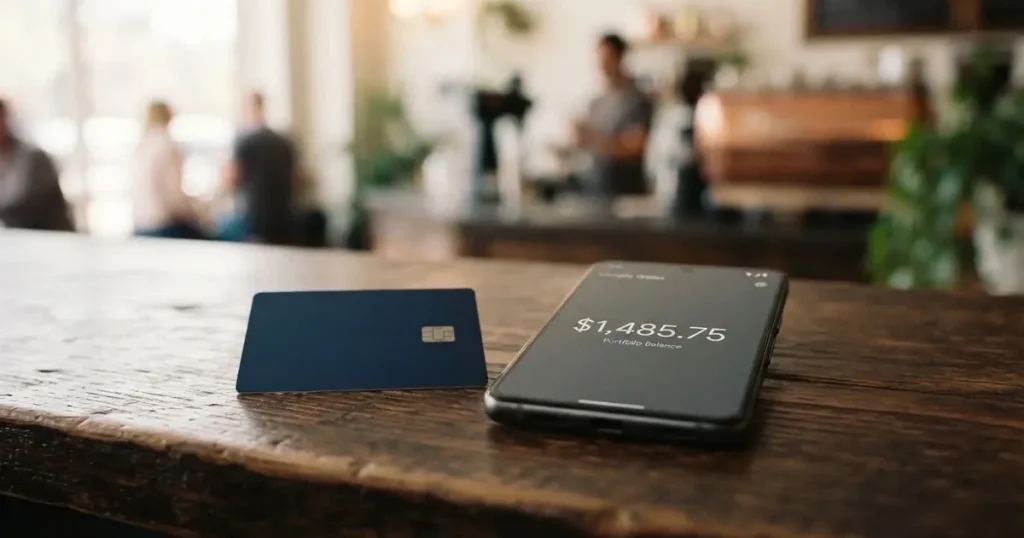
The hi card sits in an unusual spot: the company publishes a virtual debit card on the Mastercard network, lets you pay either from a personal IBAN balance or from crypto held inside the hi app, and says very little about the surrounding details. This review works through what the official page does and does not say, what Trustpilot users report, and where the gaps leave you carrying the risk. By the end you should know whether the hi card fits your situation or whether a more transparent alternative would suit you better.
Conditions are current as of October 28, 2026.
Verdict
The hi card earns 4.9 out of 10. That score reflects a product whose headline promise is generous (a Mastercard debit card you can fund from crypto, with no fees visible on the official page) but whose public information, user experience and complaint record leave a lot of unanswered questions.
The card works best for existing hi app members inside the European Economic Area who already have a personal IBAN in EUR or GBP and who want to spend directly from that balance, or from crypto already sitting in the hi app, without leaving the ecosystem. For that narrow audience the card does what the page says: it works where Mastercard is accepted, and the setup fits into the app they already use.
It does not work as well for anyone who needs physical cards, who wants to add the card to Apple Pay or Google Pay (neither is officially supported, and Google Pay has been reported as not working), who needs clear ATM access, or who is looking for a transparent fee schedule. It also does not work for residents of the United Kingdom — the company exited that market, and users there have reported problems withdrawing funds. Anyone evaluating this card should weight the 1.8 out of 5 Trustpilot score from 587 reviews heavily, because the themes in those reviews (blocked cards, reward cuts, withdrawal difficulties, rug-pull allegations) map directly onto the everyday risks a new user would face.
Score breakdown
| Criterion | Mark | Why it matters |
|---|---|---|
| Who can get it | 5 / 10 | Country list not published officially; 25+ EEA countries at launch, UK later removed |
| Cost | 8 / 10 | No transaction, FX or issuance fees visible; full schedule not stated |
| Top-up options | 5 / 10 | EUR or GBP IBAN plus one crypto at a time; networks and coins not named |
| Reliability and complaints | 2 / 10 | Trustpilot 1.8 / 5 from 587 reviews; UK exit, blocked cards, reward cuts |
| Everyday use | 3 / 10 | Virtual only; Apple Pay and Google Pay not officially supported; ATM unstated |
| Total | 4.9 / 10 |
Will they give you the card
The official hi page does not name a list of supported countries. The starting position is the European Economic Area, and unofficial coverage from 2022 press materials suggests the card launched in 25 or more EEA countries plus the United Kingdom. The UK is no longer part of that picture: Trustpilot users from 2023 and 2024 describe being told to withdraw their funds by a set deadline in January 2024, and the programme appears to have wound down for UK residents since.
What this means for you in practice: if you are an EEA resident, you are likely in the eligible zone. If you are anywhere else, the official page will not tell you yes or no, and you would have to register and start verification to find out. That is a lot of personal information to hand over to a company whose country list is not public, so factor that into your decision before you begin.
There is no published list of blocked nationalities, no FATF grey-list policy, and no sanctioned-country carve-out that you can read in advance. The Mastercard network itself applies its own restrictions on where the card can be used, but hi does not surface that detail on the card page.
If you already have a hi app account inside the EEA with a verified address, the card section becomes available to you. If you do not, you are stepping into a verification flow whose length and document requirements the company does not describe in public.
How to get it
The signup path described on the official page is short on specifics and runs through the hi app rather than a dedicated sign-up form. Three pieces of information do come through clearly enough to plan around.
First, the address has to be verified before the card activates. The page states, “once your address has been verified, you will be able to activate the card.” That sentence implies the standard KYC sequence: identity document, proof of address, and then activation. The company does not publish the exact document list, the age threshold, or the KYC tiers it applies. The help centre contains an “Identity verification (KYC)” collection, but the contents of that collection are not visible without going through the app.
Second, the product is a virtual debit card. The page says “virtual debit cards are now available,” and the date stamp on that statement is 30 June 2026. There is no physical card option described anywhere on the card page. A help article from September 2022 did announce a Mastercard NFT-customisable physical card, but that is a different product path and is not surfaced on the current card page.
Third, the card runs on the Mastercard network and works “at more than 90 million merchants” worldwide (the company’s own figure). The card is denominated in either EUR or GBP, tied to your IBAN currency, and you pick one secondary crypto currency at a time to fund spending from inside the app.
So the realistic flow is: download the hi app, complete registration, verify your address, activate the card in the Card section, and start spending. Anyone who wants the KYC document list, processing times, or age rules will have to go through registration to find out, which is a friction point that more transparent issuers solve by publishing those details up front.
What it really costs: fees, limits, and the everyday math
This is the section where the gap between marketing and disclosure is widest. The official hi page does not publish a fee schedule for the card. The page does not state the issuance fee, the monthly fee, the conversion fee when you pay in a currency other than your IBAN currency, the foreign exchange margin, the ATM fee, or the daily and monthly spending limits. None of those numbers appear in the public material.

Unofficial coverage from a third-party blog (ueex) describes the card as having no transaction fees, no foreign exchange fees, and no issuance fees, with the issuance fee waived for eligible users who complete KYC. That same source flags that fees may apply later. The key word there is “unofficial”: this is third-party reporting, not a fee schedule you can take to the bank, and you should not treat it as confirmed by hi.
| Fee or limit | Stated on official page | Unofficial / third-party |
|---|---|---|
| Issuance | not stated | Free for eligible users who complete KYC (ueex) |
| Monthly fee | not stated | None visible (ueex) |
| Conversion fee | not stated | None visible (ueex) |
| FX fee | not stated | None visible (ueex) |
| ATM withdrawal | not stated | Not addressed |
| Daily spending limit | not stated | Not addressed |
| Monthly spending limit | not stated | Not addressed |
That leaves three everyday payments worth thinking through, because the answers shape whether the card works for you.
Paying for groceries in a supermarket in your home country in your IBAN currency. The merchant receives EUR or GBP, the card debits your IBAN in the same currency, and you would expect no FX cost. Whether there is a flat per-transaction fee on top is not stated, so you only find out after your first statement. In the absence of published numbers, the working assumption from unofficial sources is zero, but you are betting on that assumption each time you tap.
Paying for a hotel booking online in a third currency, say USD, when your IBAN is in EUR. The Mastercard network converts the charge into your IBAN currency. The Mastercard wholesale rate applies, and the question is whether hi adds a margin on top. The official page does not say. Unofficial sources suggest zero markup, but the FX margin is exactly the kind of fee that varies between products and that you usually only notice at the end of a trip.
Withdrawing cash from an ATM abroad. The card page does not address ATM withdrawals at all. The issuer (unofficially identified as Moorwand Ltd, a Mastercard principal member) may set ATM fees through its cardholder agreement, but that agreement is not surfaced on the public page. If you plan to use the card for cash, treat the cost as unknown and assume a worst case until you can read the cardholder terms.
The pattern across all three examples is the same: the visible promise is generous, the published detail is thin, and the burden of finding out the actual cost falls on you after signup. For a low-frequency, low-amount user that may be acceptable. For anyone spending meaningful sums, it is a gap worth closing before you commit.
How to top up the card
The card is linked by default to your personal IBAN, denominated in either EUR or GBP, and transactions are covered by the funds sitting in that IBAN account. The IBAN is the primary funding source, and the top-up mechanic for that side is the same as any euro or pound bank account: money in via the payment rails your bank supports, and the balance is then available to spend.
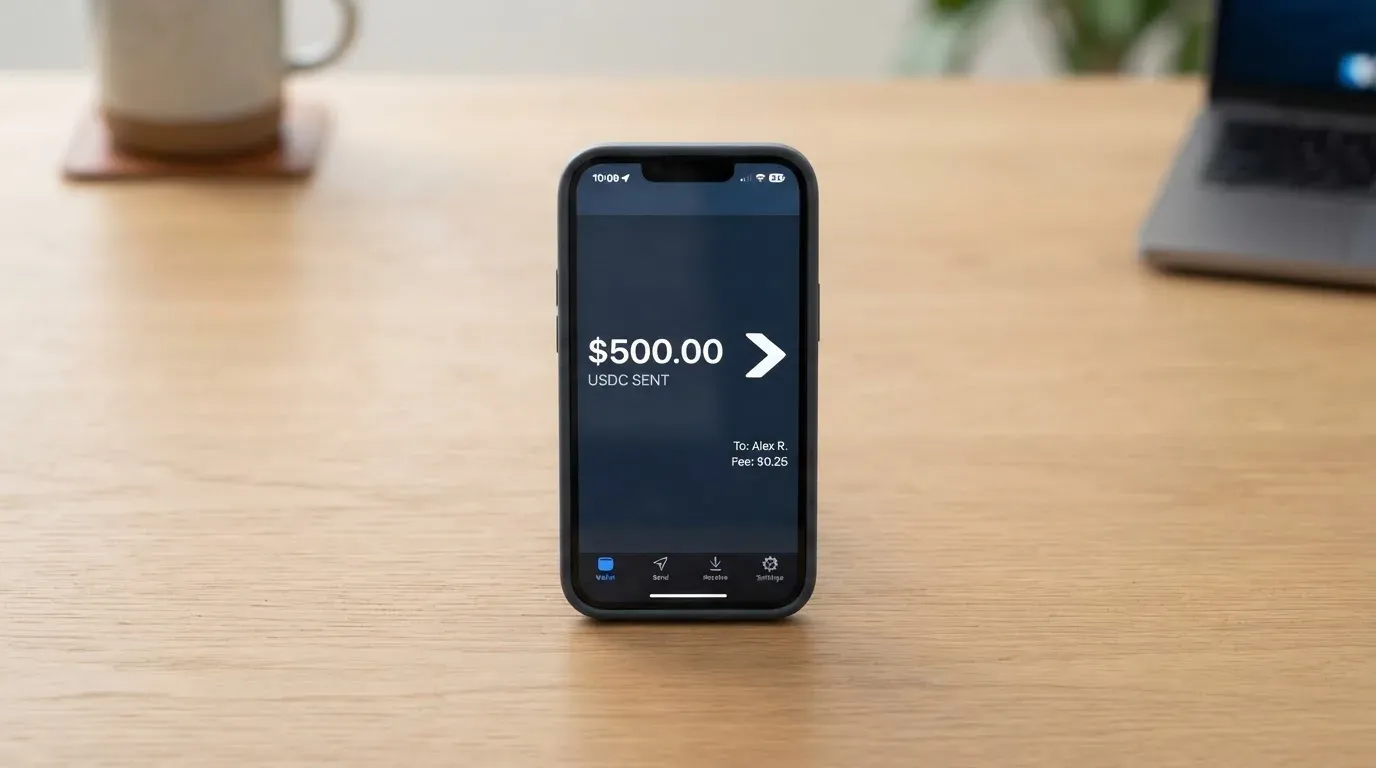
The interesting path is the second one: you can also pay with crypto held in the hi app. The card supports a single secondary currency at a time, which you set inside the app as your “secondary payment currency.” When you choose to spend from crypto, the system converts at the point of sale, deducts the corresponding amount of crypto from your hi balance, and routes the payment to the merchant in fiat.
Three things are not stated, and they matter. First, the specific coins you can use as a secondary currency are not listed on the card page. Second, the networks on which those coins can be transferred in for topping up are not named. Third, the fees for converting crypto to fiat at the point of sale, and the rates at which those conversions happen, are not published. The conversion is almost certainly not free in the long run — every crypto-to-fiat conversion carries a spread somewhere — but the size of that spread is not disclosed.
If your balance runs out mid-payment, the page says you can either top up the IBAN or switch the secondary currency. That second option is useful when the crypto side is empty and you want to keep spending from fiat.
For anyone used to a card like the International Visa Card or UNi Card, where the funding coins and networks are spelled out in the fee page, the absence of this information on hi is a real practical concern. You do not know what you can send, on which chain, before you start the verification flow, and you may only discover a missing coin after you have already sent a transfer to a wallet address that the system does not recognise.
Paying with it every day
The day-to-day picture is mixed, and a lot of it depends on what the official page does not say.
The card is virtual only on the current product page. There is no physical card option described for new sign-ups. A 2018-era press release from Mastercard described a customisable physical card with an NFT design, but that announcement is separate from the present product and is not part of the current sign-up flow. If you need a card you can hand over at a restaurant, this is not that product.
Apple Pay and Google Pay are not officially listed as supported. Trustpilot reviews from 2023 describe Google Pay as not working for at least one user whose card was otherwise functional. If mobile wallet tokenisation matters to you, the absence of an official statement is a meaningful signal: the issuer can decide whether to enable tokenisation, and the lack of a public commitment means the experience may vary, or break, over time.
The card does work at any merchant that accepts Mastercard, and the company quotes “more than 90 million merchants.” That figure is high enough to cover most everyday retail, online shopping, subscriptions and travel, with the usual caveats about merchants who block prepaid or foreign-issued BINs, AVS-only online checkouts, or merchant category codes like gambling (MCC 7995) that some issuers block as a matter of policy.
The card lives inside the hi app, in a “Card” section. Store ratings for the app were not identifiable through standard App Store search, and the help centre does not surface a download link on the card page itself. If you do not already have the hi app installed, the path from “I want the card” to “I have the app open in front of me” is not a straight line.
Rewards are described in general terms. The official page says users can “earn rewards in cryptocurrencies” with the card. No rate, no tier table, no conditions. Unofficial coverage from 2022 launch press materials described 1 to 10 percent back on spending depending on tier, and the help centre has a “hi Benefits” collection that describes tier-based membership by HI token holdings. The details of that collection were not opened in the public material, so treat any specific percentage as unconfirmed.
Dispute handling is not described. The card page does not explain how to file a chargeback, how long a dispute takes, or what the issuer’s process is for goods not received or fraud. Given that the issuer is an e-money institution rather than a full bank, the chargeback rights that apply to bank-issued debit cards under Regulation E in the US, or under the Payment Services Regulations in the UK, do not automatically extend, and the prepaid-card coverage is thinner. Anyone planning to use the card for high-value online purchases should factor that uncertainty in.
What can go wrong
This is where the score drops sharply, and where the Trustpilot record becomes the most important fact in the review.
The Trustpilot score for hi is 1.8 out of 5, drawn from 587 reviews, with only one review in the last twelve months. That is a low score, and the themes in the reviews are not vague complaints about customer service; they are concrete product problems.
The most consistent theme is withdrawal difficulty, especially in the context of the UK exit. Users in the UK describe being told to withdraw their funds by a January 2024 deadline and report problems doing so, ranging from delayed transfers to funds that did not arrive at all. The second theme is the card being blocked for extended periods. One user describes a card that was blocked for two months in August and September 2023, during which the card was unusable at point of sale. The third theme is reward cuts: at least one user reports cashback dropping from 8 percent to 1 percent in July 2023. The fourth theme, and the most serious, is the loss of value in the HI token itself, with several users describing it as a rug pull.
The corporate structure also matters here. The company behind the card is named on the official page as hi Technology Limited. Press coverage from 2022 names Moorwand Ltd as the card issuer, with Moorwand acting as a Mastercard principal member, and announces a Contis partnership for the debit card and fiat accounts. The official page does not surface those relationships. For a user, that means the entity that actually issues the card, holds the funds, and processes disputes is not the brand you interact with in the app. If something goes wrong, you may have to deal with two companies, and the question of who is responsible for what is not answered up front.
Help centre and support. The help centre exists, with a “Contact hi” collection, but the specific channels, languages, and hours are not described on the card page. The help centre is available in English and French at minimum. There is no published phone number, no published email, and no published live-chat window. The combination of a thin official page and a low Trustpilot score is the kind of pattern that makes support harder to reach when you need it most.
Security features are not described. There is no published information about 2FA, card freeze, spending limits, 3-D Secure handling, or tokenisation policy. These are all standard features in the category, but their presence or absence on this product is not confirmed.
The news flow on the official side is limited. The most recent official update on the card page is the 30 June 2026 statement that virtual debit cards are “now available.” Before that, the September 2022 NFT-customisable card launch. The UK exit was communicated to users (per Trustpilot) but is not visible on the public card page in the same direct way.
What to take instead
Three alternatives scored higher on the same kind of card, and the differences are worth walking through.
International Visa Card — 6.7 / 10
The International Visa Card publishes its country list openly. Account and card are not available to residents or legal registrants of Belarus, mainland China, North Korea, Cuba, India, Iraq, Iran, Israel, Myanmar, Nepal, Nicaragua, Russia, Syria, Turkey, Ukraine, Venezuela, or Vietnam, with FATF grey-list countries reviewed case by case. The rule is by residence or registration, not by citizenship. Purchases are blocked in North Korea, Cuba, Iran, Russia, Syria, Ukraine, and Venezuela. If you live in one of those countries, you know where you stand before you sign up.
The card is a US-issued Platinum Visa, virtual, denominated in USD. Physical card is “coming soon.” Issuance is $5 one-time for the virtual card, no maintenance fee, and three plans: Classic (free), Pro ($9.00 per month), and Max ($19.00 per month). Card use in USD is free on all plans. Foreign currency carries “Visa exchange rate + 2% FX fee.” Deposits of any kind are free, including USDC and USDT at 1:1 into the USD account, plus USD, EUR, SEPA, SWIFT, and FedNow rails. There is no cashback stated.
The 2% FX fee is the main thing to know. If you spend mostly in USD, the card is competitive. If you spend in EUR or GBP day to day, that 2% adds up over a year of ordinary spending. The funded stablecoin deposit at 1:1 is genuinely free, which is a real advantage if you are paid in USDC or USDT.
UNi Card — 6.1 / 10
The UNi Card runs on the Mastercard network and is multicurrency, spending from the UNi.Global account balance. The card page does not state whether physical and virtual options are both available, but the network, balance model, and account structure are clear.
There is no annual fee, no foreign transaction fee, and the page says there are “no hidden exchange fees.” Assets are converted at “live OTC (Over-the-Counter) rates,” which means a real market rate at the time of conversion rather than a card-network rate with a markup. The phrasing matters: it tells you where the rate comes from, which is a level of transparency hi does not match.
Cashback is “Spend-to-Earn rewards” of up to 3 percent with the UNi Card. The exact tiering and conditions are not on the card page, but the headline number is published, which is more than hi offers.
The weaknesses of UNi are the ones the page does not cover: the country eligibility list is not stated, the funding mechanics are not detailed, and the card type (physical, virtual, or both) is not explicitly named. So the transparency is uneven — strong on fees, weak on access.
Morse — 7.5 / 10
Morse is the highest-scoring alternative, and it earns that score by being the most open about how the card works. Eligibility is by residence, not citizenship, with users needing to be at least 18 and a resident in a supported country. The P2P app is available in over 140 countries, with local add and withdraw in over 70. The card is “fully virtual for now,” Visa prepaid debit, and spends from the Morse Balance “in any currency.”
Fees are stated on the card page: “zero foreign exchange fees or markups,” real-time Visa exchange rate, conversions on Morse at the real rate “with no markup,” and “paying with the Morse Card, online and contactless, is free.” The cardholder agreement is referenced for any fees that may apply, which is the right way to point users to the full schedule.
Funding covers debit card, stablecoin transfer, and Account Details in USD, EUR, MXN, COP, with BRL needing a Brazilian CPF. USDC, USDG, and EURC on Solana are free; other tokens and blockchains carry a fee. Bitcoin, USDT, Ethereum, and other tokens can be deposited. The Morse Wallet is self-custodial, which means the private keys stay with you, and the card spends from the wallet’s balance in real time.
The catch is access. A long list of countries is in closed beta and needs an invite code: American Samoa, Australia, Cape Verde, Guernsey, Hong Kong SAR China, Isle of Man, Japan, Jersey, New Zealand, Serbia, Singapore, Switzerland, Thailand, Türkiye, United Kingdom, and Western Sahara. The card is “available only in certain countries,” and the full list is in the app, not on the public page. Sanctions from the United States, the United Kingdom, the EU, and the UN are not served.
For a reader who can get past the closed-beta list, Morse is the most complete alternative: transparent on fees, transparent on networks, self-custodial on the wallet side, and clearly stated on who can use it.
Picking between them
If you are inside the EEA and already using the hi app, the hi card is a reasonable fit, and switching costs are low. If you are outside the EEA, or you need a physical card, or you want a published fee schedule, the International Visa Card (US spenders), UNi Card (multicurrency Mastercard), or Morse (self-custodial, transparent fees) will suit you better. The International Visa Card is the strongest fit for US residents, Morse is the strongest fit for self-custody users, and UNi is the strongest fit for users who want multicurrency Mastercard with no foreign transaction fee.
Who I would recommend it to
The hi card earns its 4.9 out of 10 in a very specific situation. It works for existing hi app members inside the European Economic Area who already have a personal IBAN in EUR or GBP, who already hold crypto in the hi app, and who want a virtual Mastercard to spend from those balances without leaving the app. For that person, the card does what the page says: it works at Mastercard merchants, it draws from the IBAN by default, it lets you switch to a crypto secondary currency, and the lack of visible fees is consistent with the unofficial reporting.
It does not work for someone who needs a physical card, who plans to add the card to Apple Pay or Google Pay as a primary use case, who needs ATM access as a core feature, who lives in the UK, who spends meaningful amounts and needs a published fee schedule to plan around, or who is not already inside the hi ecosystem. The Trustpilot record is the deciding factor for the second group: a 1.8 out of 5 score with 587 reviews and themes of blocked cards, withdrawal problems, and reward cuts is not the kind of risk profile you want to add to your daily spending.
The honest summary: the card is a feature of the hi app, not a standalone payment product. If you use hi, the card is convenient. If you are choosing a card first, the alternatives are more transparent, more accessible, or both, and they earn higher scores for a reason.
Frequently asked questions
What is the hi card?
The hi card is a virtual Mastercard debit card issued through the hi app, denominated in EUR or GBP and linked to a personal IBAN. You can fund it from the IBAN or from crypto held inside the hi app, with one secondary crypto currency at a time. The card works at any merchant that accepts Mastercard.
Is hi a bank?
No. hi is a technology company, not a bank. The card is issued under a Mastercard principal member relationship (unofficially identified as Moorwand Ltd in 2022 press coverage), and the IBAN sits with a partner. Customer funds are e-money funds, not bank deposits, and are not covered by deposit guarantee schemes in the same way.
Who owns hi?
hi Technology Limited is the company behind the brand, named on the official page. The card programme involves a Mastercard principal member (Moorwand Ltd, per 2022 press) and a Contis partnership for the debit card and fiat accounts, per the same coverage. The official page does not surface those relationships in the public material.
Is the hi card available in the United Kingdom?
No, not for new sign-ups. The card launched in the UK in 2022, but Trustpilot users from 2023 and 2024 describe being told to withdraw by a January 2024 deadline. The official page does not list the UK as a current supported country.
How do I activate the hi card?
Once your address is verified, the card becomes available in the Card section of the hi app and you can activate it there. The exact document list, age threshold, and processing time are not published on the public page.
How do I top up the hi card?
By default, the card pulls from your personal IBAN in EUR or GBP. You can also pay with crypto held inside the hi app, set as a secondary currency. The specific coins and networks accepted for top-up are not stated on the card page.
Can I add the hi card to Apple Pay or Google Pay?
Neither is officially listed as supported on the hi card page. At least one Trustpilot review from 2023 describes Google Pay as not working for a user whose card was otherwise functional. Treat mobile wallet support as not guaranteed.
Is the hi card free?
The official page does not publish a fee schedule. Unofficial third-party reporting describes no transaction, FX, or issuance fees, with issuance free for eligible users who complete KYC. Treat those figures as unofficial and not confirmed by hi directly.
Is the hi card safe?
The card is on the Mastercard network, which sets the security baseline. The official page does not publish the card’s specific safeguards (2FA, card freeze, 3-D Secure handling, tokenisation). The Trustpilot score of 1.8 out of 5 from 587 reviews, with themes of blocked cards, withdrawal problems, and reward cuts, is the most important signal about day-to-day reliability.
Is the hi card worth it?
It depends on your situation. For an existing hi app member in the EEA with an IBAN and crypto already in the app, the card is a convenient way to spend. For anyone choosing a card first, the alternatives (International Visa Card, UNi Card, Morse) are more transparent on access, fees, and wallet architecture, and they earn higher scores.
App and neobank cards on the shortlist – cryptocardshortlist
Content created by the «cryptocardshortlist» team