
Anytap card review — a Visa paid from a stablecoin balance, built for an Asian launch
 Available in US

Anytap is a Visa debit card that spends from a crypto balance. In practice, that means a user tops the card up with USDT or USDC, the balance converts to fiat at the moment of payment, and the merchant sees an ordinary Visa transaction. There is a virtual card and a physical one, both on the Visa network, and the launch is being pitched first at South Korea, Japan and Indonesia before rolling out further. That single sentence — a stablecoin-funded Visa, built first for Asian markets, run by a U.S.-headquartered fintech whose issuer and licences are not yet named — is the whole story this review is going to walk through.
Conditions are current as of October 28, 2026.
Verdict
Anytap scores 7.7 out of 10 based on the facts available on its site and in its public material. That number is built from five sub-scores: who can get the card, what it costs, how it can be topped up, how reliable it has been so far, and how it works in everyday use.
| Criterion | Mark | Reason |
|---|---|---|
| Who can get it | 9 / 10 | Application form is open to the world short of OFAC-sanctioned countries, with explicit entries for the United States, Singapore, the UAE, the United Kingdom, Vietnam and Japan |
| Cost | 6 / 10 | There is an issuance fee whose amount is not published, and a third-party press release points to a 1% + $0.30 cross-border fee and a 2% ATM fee that Anytap’s own pages do not repeat |
| Top-up options | 9 / 10 | USDT and USDC are accepted, USDT on TRC-20 is described as “faster and cheaper”, and the project says 350+ coins are supported in some form |
| Reliability and complaints | 6 / 10 | The company is described as a U.S. fintech but no issuer, licence or regulator is named, and there is no Trustpilot page or Reddit thread to read yet |
| Everyday use | 9 / 10 | A virtual or physical Visa, with Apple Pay, Samsung Pay and Google Pay support, and ATM cash withdrawals |
| Total | 7.7 / 10 | A capable crypto card on paper, but transparency on cost, the issuer and operational track record still has to catch up |
The card is built for crypto holders who are already comfortable holding USDT or USDC and want a Visa they can pay with in shops, online and through mobile wallets. If you live in South Korea, Japan or Indonesia — the markets the launch is being aimed at first — the product is pitched directly at you. If you only hold BTC or ETH and you would have to convert them to a stablecoin first, the card still works, but you pick up the spread and any on-chain fee of that extra step. If you do not want to pass an ID check, this card is not for you, because the sign-up form is built around passport or ID plus a selfie. If you want a card from a long-established brand with a long complaint history you can read on Trustpilot before you sign up, Anytap is too new for that, and you may want to look at one of the alternatives in the section below.
Who can get the Anytap card
Anytap’s sign-up form is open to applicants worldwide except OFAC-sanctioned countries, and the form itself names the United States, Singapore, the United Kingdom, the United Arab Emirates, Vietnam and Japan alongside a catch-all “Other” option. That is the eligibility picture on Anytap’s own material, and it is the kind of global “yes, unless” stance that is common with crypto cards that are still finding a licensing home.
The first press releases for the brand describe the launch as aimed at Asia, starting with South Korea, Japan and Indonesia, with more markets expected later. That detail does not contradict the worldwide sign-up form: a worldwide form and an Asia-first rollout can sit comfortably together, and the practical question for any reader is whether the card works in their country once they have it. Anytap’s published material does not list blocked countries beyond the OFAC bar, and the press release describing the Asia launch is the closest thing to a public roadmap I have seen.
There is no minimum age, no proof-of-address requirement and no tier of identity check published on the form I read; the KYC step is “passport or ID plus a selfie”, and the page says accounts are “approved in minutes”. Anytap has not published anything about residence versus citizenship and the company has not published an excluded-country list beyond the OFAC bar. That is a thin disclosure, and it matters because crypto card issuers typically apply sanctions screening to citizenship and country of birth as well as the address on the application, so the practical rules can be stricter than the published ones. I would treat the form’s “Other” option as: “the card may work, but check with support before you pay any issuance fee”, because the fee is not refundable and the issuer is not named publicly.
How to get the Anytap card
The application is a web sign-up. The page asks for an email address, full name and address, takes the issuance fee, then runs the ID and selfie check before activating the card. “Approved in minutes” is the only timing the page commits to, so on paper this is one of the faster crypto-card KYC flows in the category.
The card itself is a Visa debit card, and Anytap offers it in two forms: a virtual card for online and in-app payments, and a physical card for shops, ATMs and magnetic-stripe readers. The card currency is not published, so the assumption is that everything is converted to the local currency of the merchant at the till. A third-party press release on nny360.com describes the offering as “physical and virtual cards, all on the Visa network, up to three cards per person” — that detail is unofficial, because it comes from a press release carried by a news site rather than from Anytap’s own pages, and the three-cards-per-person cap should be treated as unconfirmed.
Two things Anytap has not published are: how long the physical card takes to arrive, and whether there are different tiers of KYC (basic, enhanced, source-of-funds) tied to higher limits. Both are common on competing cards, so their absence is a gap rather than a red flag, but it is a gap I would not ignore if I were about to pay a non-refundable issuance fee.
The steps, in the order the sign-up page lays them out, are:
- Open the Anytap sign-up page and enter an email address.
- Fill in full name and residential address.
- Pay the issuance fee, whose amount is not listed on the form.
- Submit the passport or ID document and a selfie for KYC.
- Wait for the “approved in minutes” message and activate the card.
What the Anytap card really costs: Fees
This is the section of the review I have to write with the most caveats. Anytap has not published a fee schedule on the pages, and the figures I have come from a third-party press release, so I will mark them as unofficial.
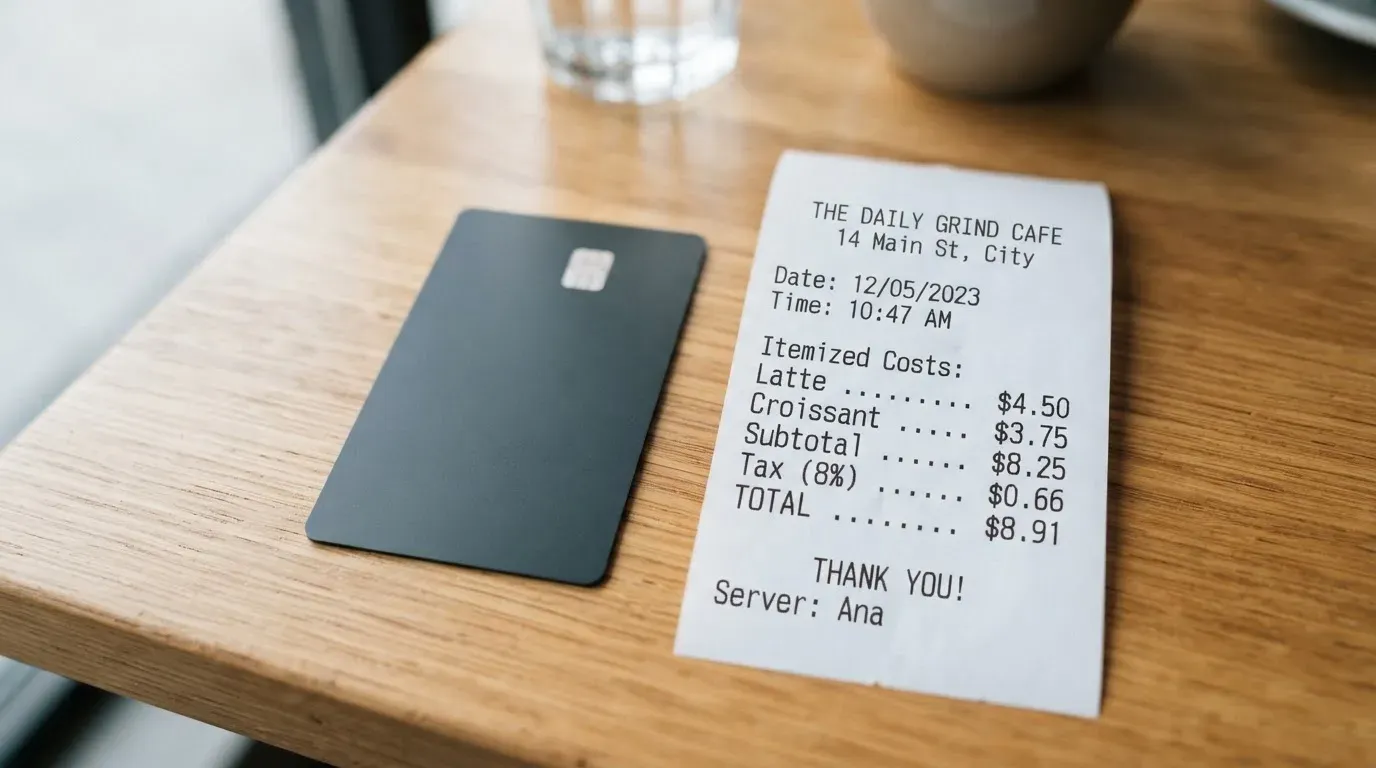
The fee the card does publish, in plain words, is an issuance fee paid before activation. The amount is not listed. There is no monthly fee, no annual fee, no inactivity fee and no minimum-balance fee mentioned on Anytap’s own material, and the project does not appear to publish a fee table in the way most crypto cards do. The risk that follows is real: until the page lists the numbers, a reader cannot tell whether the card costs $5 or $50 to issue, and that unknown is the single biggest cost question a careful applicant would have to ask support before paying.
| Fee or limit | What the card or its material says |
|---|---|
| Issuance fee | Paid before activation; amount not stated |
| Monthly fee | Not stated |
| Conversion / spending fee | Not stated officially; unofficial press release: 1% + $0.30 per cross-border transaction |
| FX (foreign-exchange) fee | Not stated |
| ATM withdrawal fee | Not stated officially; unofficial press release: 2% of amount, minimum $1 |
| Top-up fee | 3% per starting data; minimum top-up 30 USDT per unofficial press release |
| Daily and monthly spending limits | Not stated |
| Network fee for the top-up transfer | Paid by the user on the sending wallet; payer not stated by Anytap |
To make this less abstract, here is what the unofficial fees mean for three ordinary situations. The first is buying a coffee for the equivalent of $5 in a country that issues the card. The card is domestic, so the 1% + $0.30 cross-border leg of the unofficial fee does not apply, and the visible cost is whatever the conversion margin is. Because Anytap has not published a conversion fee, I cannot put a number on it. The second is paying a $50 hotel bill in a country other than the one the card is denominated in. On the unofficial figure, that is 1% of $50 = $0.50, plus $0.30, which is $0.80 in cross-border charges, on top of the FX margin the card issuer takes when it converts USDT into the foreign currency. The third is withdrawing $100 from an ATM abroad. On the unofficial figure, that is 2% of $100 = $2.00, which is above the $1 minimum, so the cash withdrawal cost is $2.00, again on top of whatever the ATM operator charges.
The honest summary of this section is: the only fee Anytap confirms in plain writing is the issuance fee, and that figure is not published. The cross-border and ATM numbers come from a press release on nny360.com and are unconfirmed by the card. I would not sign up without an answer from support to the question “what is the issuance fee in my country, and what is the published cross-border and ATM fee in writing”.
How to top the Anytap card up: Top up
The top-up flow is the part of the card Anytap is most explicit about. The card takes USDT and USDC, and the project says USDT on the TRC-20 network — that is, USDT issued on Tron — is “faster and cheaper” than other routes. Starting data adds that USDT on TRC-20 or ERC-20 (Ethereum) and USDC are accepted, and that 350+ coins are supported in some form. That “350+ coins” line is broader than the explicit USDT and USDC list, and the practical reading is: the most direct top-up routes are stablecoins, with everything else routed through a conversion step inside the app that the project has not fully documented in public.
The fee picture for funding is, again, partly published and partly third-party. Anytap’s starting data lists a 3% top-up fee; the press release on nny360.com adds an unofficial minimum top-up of 30 USDT, and the on-chain network fee (the gas or bandwidth fee the user pays to send the stablecoin) is paid by the user in their own wallet, not by Anytap. That last point is worth pausing on: if the user holds USDT on ERC-20 and has no ETH to pay gas, the transaction cannot be sent, because the Ethereum network requires ETH for fees; on Tron, fees are paid in bandwidth and energy and often in TRX, so a user with USDT but no TRX can run into the same dead end. The user’s own wallet, not Anytap, is responsible for that side of the cost, and the cost is set by the network, not by the card.
The other unofficial detail in this section is the ability to move balances between a user’s own Anytap cards and to withdraw loaded funds to an external wallet. The press release says both are possible; Anytap’s own material does not confirm them. Treating them as plausible but unconfirmed is the right read, because a withdrawal-to-wallet feature is exactly the kind of thing a stablecoin card needs and exactly the kind of thing a careful user should test with a small amount first.
In short: the most likely happy path is to send USDT on TRC-20 from a self-custody wallet to the Anytap deposit address, wait for the network to confirm, and watch the card balance appear. If a user holds ETH or BTC, they will need an extra conversion step to a stablecoin, and the cost of that step depends on which exchange or on-chain route they use. Sending the wrong coin to the wrong network is the single most common way to lose money funding a crypto card, and the user — not Anytap — owns the consequences of a wrong-chain transfer.
Paying with the Anytap card every day
Once funded, the card works like any other Visa. The user can spend in shops, pay online, withdraw cash from a Visa-branded ATM, and add the card to Apple Pay, Samsung Pay or Google Pay. A press release on nny360.com adds the unofficial detail that mobile wallet support is “rolled out progressively depending on card type and local market conditions”, so a user in a market outside the first Asia wave should expect to test the wallet they care about before relying on it.
Three operational notes are worth carrying into daily use. The first is that this is a Visa debit card spending a pre-loaded balance, so the card cannot overdraw, and a payment that exceeds the balance will be declined. The second is that 3-D Secure — the extra confirmation step many online shops ask for — applies to Visa cards the way it does anywhere else, and the issuer can prompt for a code, an in-app approval or a biometric check. The third is that Address Verification Service (AVS) is mainly available in the US, Canada and the UK, so a card issued in one country and used in another can be declined by merchants that rely on AVS as a fraud check; that is a property of the Visa rails, not of Anytap.
The project has not published a list of blocked merchant categories, so the user’s card should work at gambling sites, adult entertainment sites and other categories that some crypto cards block. I would not take that as a promise — most issuers reserve the right to add blocks at any time, and the card’s terms of service are the binding document, not the project’s marketing copy. The app, the support page, the dispute process, the rewards programme, the cashback offer — none of these are documented in the public material I could read. Anytap’s own app does not appear to be published in the App Store under the name I searched for; the only result was an unrelated “AnyTap Accessible Camera”, and Google Play was not findable in the same search. That is a real gap for a card whose daily life is run from an app, and I would want to confirm the app’s name, the publisher and the download link before paying the issuance fee.
What can go wrong with the Anytap card
There are five risks I would keep on the list.
The first is the issuer. Anytap is described as a U.S.-headquartered fintech, but the card’s issuer — the licensed bank or electronic money institution that actually holds the card programme — is not named in the public material. Visa and Mastercard do not issue cards to consumers; they license issuers, and the issuer is the entity that holds the regulatory relationship, safeguards the funds and answers to the regulator. Until the issuer is named, the reader is trusting a brand that has not put a regulator or a banking partner on the page. That is a category risk, not an Anytap-specific one: the history of crypto cards includes programmes that were shut down by their network after their issuer ran into trouble.
The second is the cost picture. The only fee the card publishes in plain writing is the issuance fee, and that amount is not listed.
The third is the operational track record. There is no Trustpilot page, no Reddit thread and no third-party review of the card available as of 2026-10-20. For a brand-new product that is normal — the first wave of users has not had time to post — but it also means there is no public paper trail of how the card behaves when a payment fails, when a top-up goes to the wrong network, when an account is frozen for KYC review, or when the issuer has to deal with a disputed transaction. The user is, in effect, an early tester.
The fourth is stablecoin and network risk. USDT and USDC are designed to hold a value close to $1, but “designed” is not “guaranteed”: TerraUSD collapsed in May 2022, and USDC briefly lost its peg in March 2023 during the US banking crisis. Tether says it disables tokens in wallets on the OFAC sanctions list, so the stablecoins themselves are not censorship-proof; Circle stopped supporting USDC on Tron in February 2024, so a user who tries to send USDC on TRC-20 to a Tron address will hit a wall. Sending the wrong coin to the wrong network is irreversible, and a deposit to the wrong address is typically lost.
The fifth is the regulatory environment. In the EU, MiCA’s rules on asset-referenced and e-money tokens have applied since 30 June 2024, with the wider crypto-asset service provider rules from 30 December 2024 and a transitional period that runs until 1 July 2026 or until a provider gets or is refused a MiCA authorisation. The crypto side of the card is regulated by MiCA, and the card side is regulated by e-money or payment-services law; a card often depends on two licences, and a user in the EU will want to see both. In the US, FinCEN guidance treats administrators and exchangers of convertible virtual currency as money transmitters, so a stablecoin-funded Visa in the US sits inside a different framework, and the user has to trust the issuer’s compliance with that framework.
What to take instead of the Anytap card
If the gaps above feel uncomfortable, three alternatives are worth comparing on the same axes. They are not the only options in the category, and they are not presented in order of preference — they are three cards I have looked at that are reasonably close to what Anytap is trying to do.
| Card | Score | Card | Funding | Cost (the bits that are published) |
|---|---|---|---|---|
| Anytap | 7.7 / 10 | Virtual or physical Visa | USDT, USDC, 350+ coins (official); networks unofficial | Issuance fee published but amount not stated; cross-border 1% + $0.30 and ATM 2% min $1 unofficial |
| CardFlow | 4.9 / 10 | Virtual USD Mastercard | BTC, USDT, ETH or Naira bank transfer; networks not stated | Creating a virtual card is “completely free” per site FAQ; monthly fee not stated |
| HyperCard | 4.7 / 10 | Prepaid HyperCard, USD or EUR balance; network not stated | USDT, BTC, ETH in the app; networks not stated | App Store page lists no fees; fees not stated elsewhere |
| Card.fi | 6.6 / 10 | Virtual Classic/Premium, physical, metal; card scheme not named | 32 coins across 5 networks (Ethereum, Base, BNB, Solana, Kaanch) | Virtual Classic $49, Virtual Premium $249 one-time; top-up Classic 1.5% + $1, Premium 1%; FX Classic 3.5%, Premium 2.5% |
CardFlow pitches itself to Nigeria and “Nigerians and global users”, and the published part of its pricing is a free virtual card, with no monthly fee on the FAQ. That is a tighter product on paper, but the funding list is short, the cross-border and ATM fees are not stated, and the score reflects how thin the public material is. HyperCard, an App Store-listed prepaid card in USD or EUR, also does not publish a fee schedule; the App Store listing shows no fees at all, and the card claims acceptance in more than 176 countries (acceptance, not eligibility). Card.fi is the most explicit of the three: it publishes a one-time issuance fee, top-up fees and FX fees split by tier, supports 32 coins across five networks including Ethereum, Base, BNB, Solana and Kaanch, and pays cashback on card spending of 0.8% to 2% depending on tier, with a 10% headline rate at coffee shops capped at 10 USDT a month. Its terms bar residents of sanctioned countries and order from sanctioned countries, which is the same posture Anytap takes. The honest comparison is that none of the three alternatives answers every question the Anytap review examines, and each one is more transparent on a different axis.
Who I would recommend the Anytap card to
I would recommend Anytap to a crypto holder who already lives in USDT or USDC, who is in one of the first-wave Asian markets the launch is targeting, and who is comfortable being an early user of a brand whose issuer and licence have not been put on the public page. The card is built for that user, the top-up rails are clear, and the mobile wallet support is the right shape for a modern Asian payments mix.
I would not recommend Anytap to a user who needs a published fee schedule before paying a non-refundable fee, who needs a track record of complaint handling they can read in public, or who is sending funds from a chain they have not used before. A first top-up of $50 in USDT on TRC-20, with a wallet that has spare TRX for fees, is the right way to test the rails. A $5,000 top-up on day one is not.
I would also not recommend the card to a user who wants a card with a published cashback programme, a published app, a published dispute process, or a published support contact. The project has not put any of those on the page, and I would wait for that to change before staking a regular spending volume on the card.
Frequently asked questions
What is the Anytap card?
The Anytap card is a Visa debit card, available as a virtual or a physical card, that spends from a crypto balance funded with USDT or USDC. It is run by a U.S.-headquartered fintech whose card issuer and licences are not yet named on the public pages.
How does the Anytap card work?
The user signs up on the web, pays an issuance fee, passes a passport-or-ID-plus-selfie KYC, and activates the card. They then send USDT or USDC — USDT on TRC-20 is described as “faster and cheaper” — to the card’s deposit address, the balance appears after network confirmation, and the card converts the stablecoin to fiat at the point of sale.
Is Anytap a bank?
No. Anytap is described as a U.S.-headquartered fintech, and the licensed bank or electronic money institution that issues the card on the Visa network is not named in the public material. Visa and Mastercard themselves do not issue cards to consumers; they license issuers, and the issuer is the entity with the regulatory relationship.
Who owns Anytap?
The public material describes the company as a U.S.-headquartered fintech and points to a launch aimed at Asia, starting with South Korea, Japan and Indonesia, but it does not name owners, founders, directors, investors or the card’s issuing bank.
Is the Anytap card available in my country?
The application form is open to the world except OFAC-sanctioned countries, with explicit entries for the United States, Singapore, the UAE, the United Kingdom, Vietnam and Japan, plus an “Other” option. There is no further excluded-country list, and the project has not published residence-versus-citizenship rules. A user outside the named list should ask support before paying the issuance fee, since the fee is not refundable and the issuer is not named publicly.
Does the Anytap card require KYC?
Yes. The KYC step is a passport or ID document plus a selfie, and the page says accounts are “approved in minutes”. Proof of address is not listed as a separate step, and the page does not describe enhanced or source-of-funds tiers. If the issuer’s compliance team later asks for additional documents, the application can be paused or refused.
How do I top up the Anytap card?
The user sends USDT or USDC to the card’s deposit address from their own wallet. USDT on TRC-20 (Tron) is the route the project describes as “faster and cheaper”; USDT on ERC-20 (Ethereum) and USDC are also accepted in the starting data. The on-chain network fee is paid by the user in their own wallet, and sending the wrong coin to the wrong network is irreversible.
How do I add the Anytap card to Apple Wallet, Samsung Wallet or Google Pay?
A third-party press release describes Apple Pay, Samsung Pay and Google Pay support as “rolled out progressively depending on card type and local market conditions”. The user adds the card through the wallet app on their phone, and a card that does not appear in the wallet may be a market that has not yet been enabled.
How do I withdraw money from the Anytap card?
The user can withdraw cash from a Visa-branded ATM. A third-party press release puts the cash withdrawal fee at 2% with a $1 minimum, and that figure is not confirmed by Anytap’s own pages. The same press release describes a balance-withdrawal-to-external-wallet feature, which is also unconfirmed by Anytap’s own material.
Is the Anytap card safe?
The card is a Visa debit card spending a pre-loaded stablecoin balance, and a pre-loaded balance cannot overdraw. The risks that remain are category-wide: the card’s issuer and licences are not named in the public material, the fee schedule is partly published and partly unofficial, and there is no Trustpilot page, Reddit thread or third-party review to read yet. A user who is uncomfortable with those gaps should wait, or choose a card from a more transparent issuer.
Virtual cards on the shortlist – cryptocardshortlist
Content created by the «cryptocardshortlist» team