
A look at Kazawallet's virtual Visa, what it costs in practice, and where the official answers stop
 Available in US
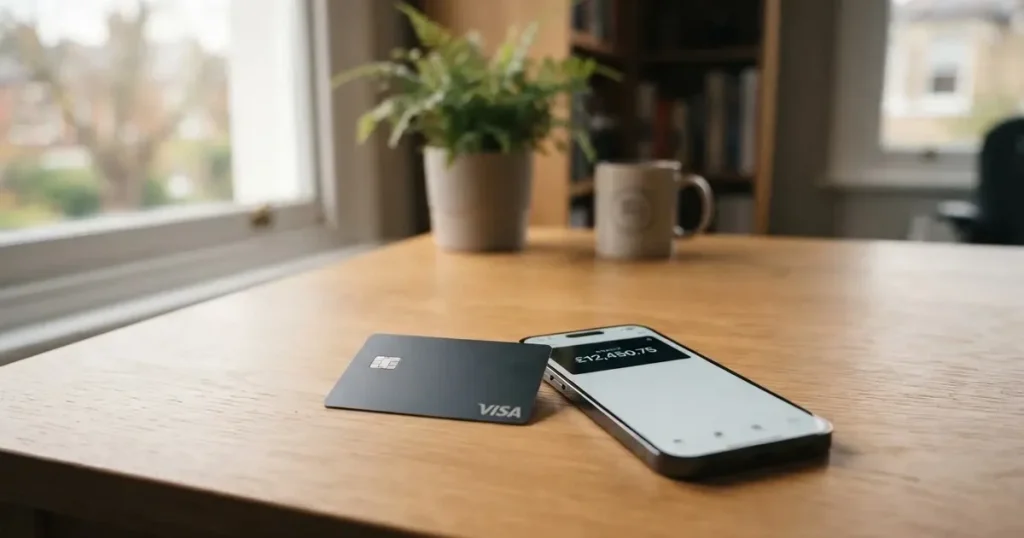
The Kazawallet card is a virtual-only Visa that lets you spend a crypto balance anywhere Visa is accepted online, with tokenised support for Apple Pay and Google Pay. It comes in two tiers — Basic denominated in US dollars and Plus denominated in Singapore dollars — and it is one of the few crypto-funded cards that explicitly markets itself as available worldwide, including to people who have trouble getting a regular bank account. The pitch is straightforward, but a lot of the practical details — fees, KYC, withdrawal mechanics, who actually issues the card — are not stated on the company’s own pages. That gap is the main reason this review exists, and it is the reason the card ends up with a middling score rather than a strong one.
Conditions are current as of October 28, 2026.
Verdict
Kazawallet scores 6.1 out of 10 in this review. That is a middle-of-the-pack result: a card with a genuinely useful worldwide availability angle, but enough missing information and unofficial-only pricing that I cannot give it a higher mark without papering over real gaps.
Here is how the score breaks down across the criteria:
| Criterion | Mark | Why |
|---|---|---|
| Who can get it | 8 / 10 | Worldwide per official FAQ; unofficial reports single out UK residents as excluded |
| Cost | 5 / 10 | Issuance, top-up and FX fees appear only in unofficial sources; official pages disclose nothing |
| Top-up options | 7 / 10 | Nine or more cryptocurrencies, including BTC, ETH, SOL, USDT and USDC, swapped into the card currency; networks not named |
| Reliability and complaints | 5 / 10 | Operators named (KASROAD LTD in the UK and Kasroad FZ-LLC in the UAE), but no card issuer is disclosed; user reports mention declines and account freezes |
| Everyday use | 5 / 10 | Virtual Visa only, no physical card; Apple Pay and Google Pay reportedly supported; cashback listed as coming soon |
Who it suits: a crypto user who lives somewhere mainstream banks are reluctant to serve, who only needs a virtual card for online and contactless spending, and who is comfortable with the fact that several important terms are visible only on third-party sites. Who it does not suit: anyone who needs a physical card, anyone who wants every fee and limit spelled out on the issuer’s own page before they sign up, and anyone whose citizenship or country of residence is not in the small set the unofficial sources mention as accepted.
Who will they give you the card
Kazawallet’s own FAQ says the card is issued worldwide. That is the headline, and it is the main reason someone who has been refused elsewhere might look at this product. The detail underneath that headline is thinner than you would expect: the official page gives the worldwide line and stops.
Unofficial reports I checked name a single country exclusion. According to cryptocards.so, UK residents are not eligible. The same kind of source suggests that some jurisdictions — typically the ones on standard sanctions or AML watchlists — are filtered out at the KYC stage, but the company does not publish a country list, so there is no way to confirm that against the issuer’s own statement. If you are reading this from a country that is usually excluded by international card programmes — and there are many — the worldwide claim is the only practical signal that you might be accepted, and it is worth weighting accordingly.
Beyond geography, the company does not state a minimum age on its public pages, although the wider crypto-card category almost always restricts cards to adults (18 and over). The general rule is that you must be old enough to enter a contract in the country where you live, and the issuer will check that during onboarding.
The bottom line: the card’s geographic reach is its strongest selling point, and it is also the part where official disclosure is weakest. If where you live is the reason an ordinary bank has refused you, Kazawallet is built for that problem. If you are in a well-served country, you have more disclosure-rich options.
How to get it
The company does not publish a step-by-step onboarding guide on its public pages, which is unusual for a card product. Based on the unofficial sources, the flow looks like a fairly standard crypto-card KYC: create an account with an email and phone number, verify your phone, upload a government-issued ID document, supply a proof of address (typically a utility bill or bank statement from the last three months), and complete a selfie check at the “Full KYC (Level 4)” level that the same source associates with the Basic card. The Plus card appears to sit in the same KYC bracket in unofficial reporting.
There is no official statement on what happens if your documents are rejected, how long review takes, or whether a partial KYC unlocks any functionality, and I would expect that to matter if you are applying from a country the company is less familiar with.
Once KYC clears, the card itself is generated. Both Basic and Plus are described in unofficial sources as virtual Visa cards only — no physical plastic — issued in roughly the time it takes to provision the account. The Basic card is denominated in US dollars; the Plus card is denominated in Singapore dollars, which is a useful tell that the company runs an Asia-Pacific corridor as well as a US-dollar one.
Delivery is not stated, which is consistent with a virtual-only product: there is nothing to ship. Activation is also not described on the official pages, and unofficial reporting does not give a confident account of it either. In practice for virtual cards of this kind, activation is usually automatic once KYC and card creation are complete, but you should not assume that here without seeing it on the company’s own page.
Fees: what it really costs
The most important thing to know about Kazawallet’s fees is that they are not stated on the company’s own website. The fee table below is built from unofficial sources, and the values should be treated as indicative rather than confirmed by the card itself.

| Fee or limit | Basic (USD) | Plus (SGD) |
|---|---|---|
| Issuance | $15 (UNOFFICIAL) | Free (UNOFFICIAL) |
| Monthly fee | Free (UNOFFICIAL) | Free (UNOFFICIAL) |
| FX / conversion markup | 2% (UNOFFICIAL) | 2% (UNOFFICIAL) |
| Top-up fee | 1.5% (UNOFFICIAL) | Free (UNOFFICIAL) |
| ATM withdrawals | Listed as free / unlimited (UNOFFICIAL), but no physical card is available | Same |
| Daily spend | Up to $200,000 (UNOFFICIAL) | Unlimited (UNOFFICIAL) |
| Monthly spend | Unlimited (UNOFFICIAL) | Unlimited (UNOFFICIAL) |
Two things stand out. The first is that the same unofficial source that lists ATM access as “free / unlimited” also says no physical card is offered, and a cardless ATM interaction is not really a thing — that is a contradiction I would not rely on, and it is a good example of why I keep saying these numbers are not confirmed by Kazawallet itself. The second is the 1.5% top-up fee on the Basic card versus zero on Plus, which combined with a 2% FX markup on both tiers means a USD cardholder who converts non-USD stablecoins to a US-dollar balance is paying 1.5% on the way in and another 2% on every foreign-currency purchase. That is a meaningful drag, and it is not signposted anywhere on the official site.
To make the fee structure feel real, here are three everyday situations. None of the numbers below are guaranteed — they are built on the unofficial rates above so you can see the order of magnitude, not the exact amount you will be charged.
You buy a $50 video game from an overseas store that charges in euros. The store will bill in euros and your card will treat that as a foreign-currency transaction. On the unofficial figures, the FX markup of 2% adds about $1 to the cost. If you had topped the Basic card up from USDT, you also paid 1.5% on entry, increasing the total cost of the $50 game.
You spend $200 on groceries in Singapore on the Plus card, settled in Singapore dollars. There is no FX event because the merchant and the card currency match, so the only fee in play is the top-up fee, and on Plus that is reported as zero. Your $200 is your $200.
You make a small recurring subscription, say $9.99 a month to a streaming service, from the Basic card funded by USDT. The 1.5% top-up fee is the only charge, and on $9.99 that is roughly fifteen cents. Over a year that adds up to around $1.80, which is small in absolute terms but is the kind of number that matters if you are budgeting tightly.
What I would check first, in order, before you load any meaningful balance: the actual top-up fee on the screen where you fund the card, the FX markup that surfaces in the disclosure you have to tick during card creation, and the published limits for the tier you are on. If any of those numbers differs sharply from the unofficial figures, believe the screen in front of you, not this review.
Top up: funding the card
The funding model is the part of Kazawallet that is most clearly described, because it is the part the company actually has to show in its product. You hold crypto in your Kazawallet account, and when you top up the card the platform converts the crypto into the card’s currency — US dollars for Basic, Singapore dollars for Plus — at the prevailing rate and credits the card balance. The card then spends only that fiat balance, which is the “pre-loaded” model that most prepaid-style crypto cards use.
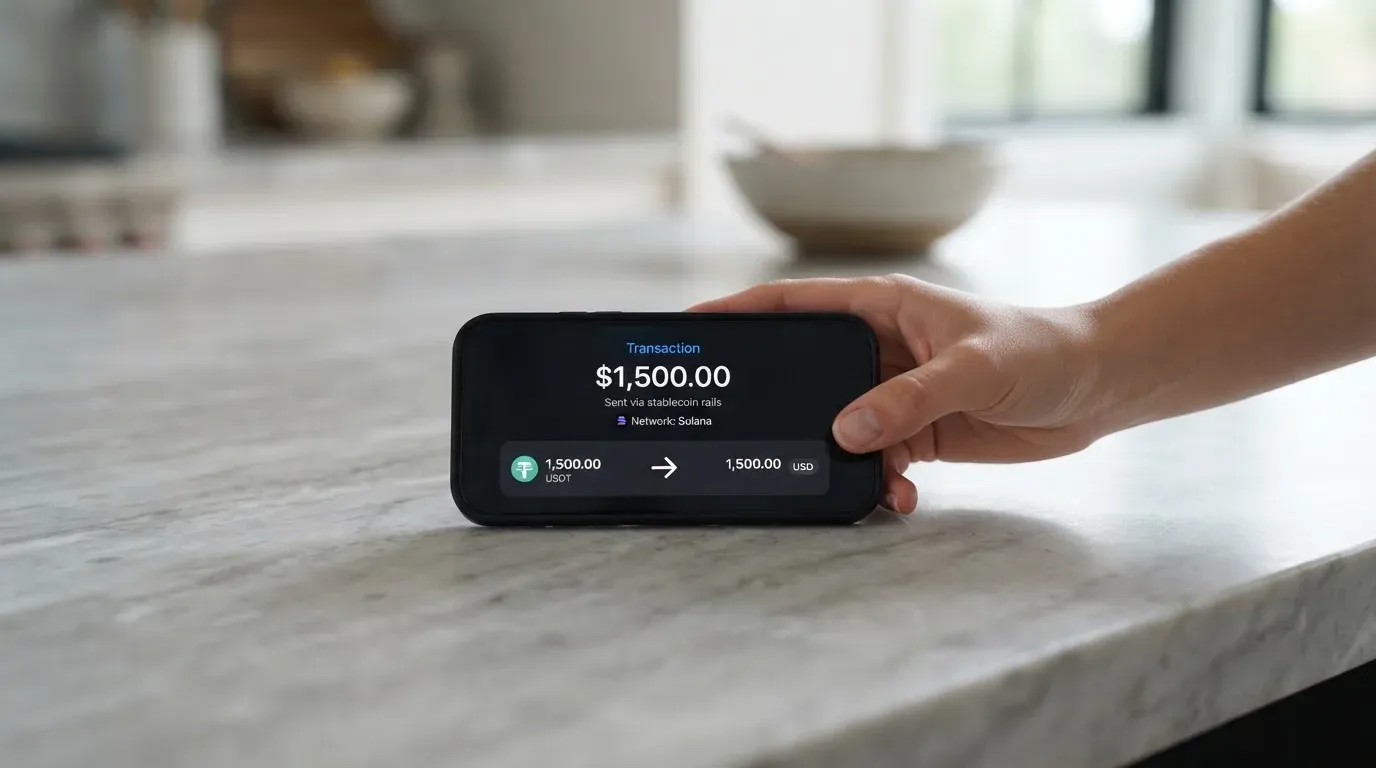
The list of supported coins is broad. The starting data names nine or more, and the explicit examples are BTC, ETH, SOL, USDT and USDC. That is a useful spread: it covers the two largest stablecoins by market share, the two highest-profile non-stablecoin assets, and Solana as a cheaper on-ramp. Beyond that, the company does not publish a full asset list or a network list in the public pages, so the practical question — which chain do I send USDT on — is not answered officially. Unofficial reporting does not fill in that gap with confidence either.
The two fees in this step are the top-up fee (1.5% on Basic, free on Plus, per unofficial sources) and the on-chain network fee that the blockchain itself charges, which is set by the network and not by Kazawallet. If you are sending ERC-20 USDT, that on-chain fee is paid in ETH, so a wallet that holds only USDT and no ETH cannot actually move the funds — a quirk of Ethereum that catches people out. If you are sending on a cheaper chain, the on-chain fee is small, but it is still real.
The single biggest risk in the top-up step is the network mismatch: sending USDT on a chain the platform does not support, or to an address that belongs to a different chain, can mean permanent loss of the funds. Crypto transfers are not reversible, and the customer support path to recover a misrouted deposit is slow at best. The instruction, every time, is to send a small test transaction first, confirm it lands, and only then send the full amount. That is not a Kazawallet-specific rule — it is the rule for any card where the network is not explicitly named on the screen you are looking at.
A separate friction point is the absence of any official withdrawal path for funds back to a private wallet. The company does not state whether you can move fiat off the card back to a bank account, or crypto out of the Kazawallet account to a self-custody wallet. If you need either of those capabilities, the absence of a stated policy is itself a useful signal, and I would ask support directly before relying on them.
Paying with it every day
In normal use, the card behaves like a prepaid Visa that you top up from crypto. Online checkout works the same way as any Visa: you enter the card number, expiry and CVV, and the merchant either approves or declines. The 3-D Secure step that some merchants trigger — the one-time code or biometric challenge — is reported as supported, which is what you would expect for a regulated card programme, and it is the layer that shifts liability for fraudulent online transactions in your favour rather than the merchant’s.
Mobile payments are where the daily-use picture sharpens up. Unofficial sources say Apple Pay and Google Pay are supported, and that is the more useful detail for a card that does not exist in physical form. Tokenised mobile wallets are also the safest way to use a virtual card, because the merchant never sees the real card number — they see a device-specific number, and the device authorises each payment with a one-time code. If you can add the card to Apple Pay or Google Pay, that is the configuration you should default to, both for security and for the practical reason that contactless acceptance in a shop requires either a phone or a physical card, and you only have the phone.
Cashback is officially listed as “coming soon” in unofficial reporting, which means there is no rewards programme to factor into the cost analysis today. If a programme does launch, expect it to be modest — most crypto cards that advertise cashback pay it in the platform’s own token or in a stablecoin, and the rate is typically below 2%.
The Android app, per the same kind of source, holds a 4.6 rating on Google Play from a few hundred reviews, which is a decent signal but a small sample. The same source describes the app as essentially a website wrapper, which is consistent with the kind of lite product the company ships and is also consistent with the absence of a more sophisticated mobile experience.
One everyday-use concern worth flagging: merchants can decline prepaid or foreign-issued cards based on the BIN alone, before any fraud check runs. The BIN is the first six or eight digits of a card number, and it tells the merchant which institution issued the card and in which country. If the BIN lookup reveals an issuer country that does not match your billing address, some merchants — particularly US-based subscription services and airline booking sites — will refuse the transaction outright. That is a category-wide problem with crypto cards, not a Kazawallet-specific one, but it is the reason a card that is technically accepted by Visa can still be declined at a shop that “takes Visa.”
What can go wrong
The official incident record on Kazawallet is empty — no published outages, no enforcement actions, no programme closures that I could find. That is the good news, and it is also partly a function of how small and new the programme is.
Unofficial reporting paints a more textured picture. Themes from user reports include: the virtual Visa being declined at Microsoft with a support runaround that lasted more than a week, an account suspension after what was described as a security incident, rude interactions with Telegram-based support, the Android app being a thin wrapper around the website, complaints about the fee structure, and accounts frozen under AML review. None of these are independently verified, and they are the kind of single-source reports that are easy to over-read, but they are also the kind of complaints that tend to cluster around the same product. The lack of a Trustpilot page or a Reddit presence means there is no larger dataset to triangulate against.
The company side is clearer than the card side. Kazawallet is operated by KASROAD LTD, a UK-registered company (number 16721888), and Kasroad FZ-LLC, registered in the United Arab Emirates. The card issuer — the actual regulated entity that holds the Visa licence and the e-money licence, if there is one — is not named on the public pages. That matters because the issuer is the entity that holds your card balance, and if the issuer is not the same as the brand you are signing up to, you are relying on the brand to intermediate with the issuer if something goes wrong. For a reader choosing between crypto cards, “who issues this” is one of the first three questions to answer, and Kazawallet does not answer it.
Security features, as reported unofficially, are the standard set: a custodial wallet, 3-D Secure, and auto-hiding card details. There is no public statement on two-factor authentication in the app, no mention of biometric login, no published bug-bounty programme, and no insurance or safeguarding statement for the underlying customer funds. In a category where the failure modes include total loss of customer balances — Mt. Gox, Coincheck, Ronin, FTX — the absence of a published safeguarding statement is a meaningful gap.
Support runs through Telegram, according to unofficial sources, and reviews are split: some reviewers describe the support as fast and available around the clock, others describe it as unhelpful. With a regulated card you would normally expect email ticketing, a help centre, and an in-app chat; with this product you are signing up to a Telegram-first support model, and that is worth knowing in advance.
One final risk is the category-level risk of programme closure. Crypto card programmes can be wound down — FTX’s Visa programme in November 2022, WaveCrest’s European Visa programmes in 2018 — and when that happens the user typically gets a notice period, after which loading stops and then spending stops, and any remaining balance has to be withdrawn. If Kazawallet’s programme is wound down, the question of how you get your remaining balance back is one the public pages do not answer today.
What to take instead
Kazawallet is not the only virtual-Visa option for someone who has trouble with a mainstream bank, and the alternatives below are worth a look before you commit. I am summarising the published information for each one — including, where I have it, unofficial rates that the alternative’s own site does not spell out.
CardFlow
CardFlow positions itself as “Nigeria’s smartest fintech card platform” aimed at Nigerians and global users, with no published country list or exclusions. The card is a virtual USD Mastercard that the company says you can create quickly, and the site states that creating a virtual card is free. Monthly fees, FX markups, and any top-up fees are not stated on the pages I could read, which is the same disclosure problem Kazawallet has, just in a different form. Funding is from Bitcoin, USDT, ETH or a Naira bank transfer, with no network-level information given. CardFlow scores 4.9/10 in my notes, and the pitch is “fast virtual USD card from a Nigerian brand” — a different geography, a different currency, and similar opacity on the cost side.
HyperCard
HyperCard is a prepaid card with USD and EUR balance options, no country list on the official pages, and an App Store description that says the card is accepted in “more than 176 countries” — note that “accepted” is not the same as “eligible to apply.” The network is not stated, fees are not stated, and the funding model is “deposit crypto such as USDT, BTC, ETH in the app, converted to USD or EUR on the card,” again with no network details. HyperCard scores 4.7/10 in my notes; the appeal is geographic breadth, the limitation is that every figure that matters is missing from the public pages.
Card.fi
Card.fi is the most disclosure-rich of the three alternatives, and the comparison favours it on cost transparency. The site says cards ship to 200+ countries, with a terms-of-service bar on residents of “a country subject to sanctions that would prohibit the service.” There are four products: a Virtual Classic at $49 one-time, a Virtual Premium at $249 one-time, plus physical and metal cards at unlisted prices, and every physical order comes with a virtual card included. The card-issuing scheme is described as “under licence from the relevant card schemes” — Visa or Mastercard not named explicitly — and the card currency is not stated. Fees, on the other hand, are explicit: top-up fee 1.5% + $1.00 on Classic, 1% on Premium; FX fee 3.5% on Classic, 2.5% on Premium; and the conversion fee is shown to you before each top-up. Funding covers 32 coins across 5 networks (Ethereum, Base, BNB Chain, Solana, Kaanch), with a deposit address per card, and rewards are real: 0.8% to 2% cashback on spending depending on tier, plus headline 10% at coffee shops capped at 10 USDT a month, and up to 18% variable earn on Metal balances. Card.fi scores 6.6/10 in my notes — higher than Kazawallet — and the edge is disclosure and rewards, not geographic reach.
Across the three alternatives, the rough pattern is: CardFlow if you are in Nigeria and want a free virtual USD Mastercard, HyperCard if you want a stated acceptance footprint and are willing to accept that the fee schedule is opaque, and Card.fi if you want a published fee table and a real cashback programme. None of them is a clean substitute for Kazawallet’s worldwide-availability pitch, and if your use case is “I need a card and almost no one will give me one,” Kazawallet is still the one that markets itself for you.
Who I would recommend it to
I would recommend Kazawallet to a crypto user who has been refused an ordinary bank account — or who lives in a country where the local banks are unreliable for crypto-funded spending — and who only needs a virtual card for online purchases, subscription services, and contactless payments through Apple Pay or Google Pay. For that reader, the worldwide availability claim is the load-bearing feature, and the lack of a physical card is not a deal-breaker.
I would not recommend it to a reader who needs a physical card, who wants the full fee schedule visible on the issuer’s own page before they sign up, who plans to move meaningful sums in and out of the platform regularly, or whose citizenship or country of residence is not in the small set the unofficial sources confirm. I would also not recommend it as a primary store of value — the wallet is custodial, the safeguarding policy is not published, and the historical record of custodial crypto platforms includes a long list of failures.
The single most useful thing you can do before signing up is to open a Telegram chat with the support team, ask three questions — who issues the card, what is the official top-up fee, and how do I withdraw my balance — and see how clearly and quickly you get answers. If the answers are confident and the numbers match the unofficial figures in this review, the card is probably worth trying with a small balance. If the answers are vague, the gap between marketing and disclosure is the gap your money will sit in.
Frequently asked questions
What is the Kazawallet card?
The Kazawallet card is a virtual Visa that lets you spend a crypto balance anywhere Visa is accepted online, with two tiers — Basic in US dollars and Plus in Singapore dollars — and reported support for tokenised mobile wallets. The card exists only as a virtual product, and the operating companies are KASROAD LTD in the UK and Kasroad FZ-LLC in the UAE.
How does the Kazawallet card work?
You fund a Kazawallet account with supported cryptocurrencies such as BTC, ETH, SOL, USDT or USDC, the platform converts your crypto into the card’s currency at the prevailing rate, and the resulting fiat balance is what the card spends. The card behaves like a prepaid Visa — it cannot overdraw, and the source of funds is the balance you have loaded, not a linked bank account.
Is Kazawallet a bank?
No. Kazawallet is operated by two companies — KASROAD LTD in the UK and Kasroad FZ-LLC in the UAE — neither of which is described as a bank on the public pages. The card issuer is not named in the materials I could read, which means the regulated entity behind the card programme is not disclosed, and you should not treat the platform as a bank or your balance as a protected deposit.
Who owns Kazawallet?
The public materials name the operating companies — KASROAD LTD (UK company number 16721888) and Kasroad FZ-LLC (UAE) — but do not name the beneficial owners, the investors, or the card issuer. That is a meaningful gap for a financial product, and it is one of the reasons the cost section of this review leans so heavily on unofficial sources.
How do I apply for the Kazawallet card?
Unofficial reporting describes a standard crypto-card onboarding: create an account with email and phone, upload a government-issued ID and a recent proof of address, and complete a selfie check at the “Full KYC” level. The company does not publish a step-by-step guide on its own pages, so the actual flow you experience may differ, and the time it takes to review your documents is not stated.
Does the Kazawallet card require KYC?
Yes, in practice. Unofficial sources describe a full document and selfie check before the card is issued, and there is no public statement of any lower KYC tier that unlocks partial functionality. The exact KYC thresholds and review times are not stated on the company’s own pages.
How do I top up the Kazawallet card?
You send supported crypto from your Kazawallet account to the card’s funding flow, and the platform converts it into the card’s currency at the prevailing rate. Unofficial sources put the top-up fee at 1.5% on Basic and zero on Plus, and the on-chain network fee is paid separately to the blockchain — not to Kazawallet. The most important rule is to send a small test transaction first, because the company does not publish which networks it accepts for each coin.
Where can I use the Kazawallet card?
The card is a Visa, so it works at any merchant that accepts Visa online, and unofficial sources say it can be added to Apple Pay and Google Pay for contactless payments. Some merchants decline prepaid or foreign-issued cards regardless of network, and the card is virtual only, so there is no physical swipe or insert use case.
Is the Kazawallet card safe?
The publicly stated safeguards are limited: 3-D Secure, auto-hiding card details, and a custodial wallet. There is no published safeguarding statement for customer funds, no bug-bounty programme, and no insurance. The official incident record is empty, but unofficial reports mention declines, account suspensions and AML freezes, and the underlying operator companies are smaller and less established than the major crypto-card brands.
How do I withdraw money from Kazawallet?
The public pages do not state a withdrawal path, either for fiat back to a bank account or for crypto back to a self-custody wallet. If you need either of those capabilities, the right move is to ask the Telegram support team before you load any meaningful balance, because there is no published policy to fall back on.
Virtual cards on the shortlist – cryptocardshortlist
Content created by the «cryptocardshortlist» team