
A virtual Visa paid in crypto, with more questions than answers
 Available in US

The VCCPRO card is a virtual-only Visa or Mastercard you pay for in cryptocurrency and receive by email, usually within minutes. The pitch is direct: no bank account, no plastic card in the post, just card details you can type into a checkout or load into Apple Pay or Google Pay. The product suits people who want a quick disposable card for online payments, often because getting a normal bank card is difficult where they live or because they prefer to spend from a crypto balance rather than convert to a bank first.
This review walks through what VCCPRO actually delivers, what it charges, where the gaps are, and whether the alternatives do the same job with less friction. The conditions here are current as of October 28, 2026.
Verdict
VCCPRO earns a 6.1 out of 10. The card does what it says on the tin: it gives you a virtual Visa or Mastercard in minutes, paid in crypto, and the basic fee structure is simple. Beyond that, the picture is less reassuring. The company is not a bank, does not name the issuer of the cards, and the public pages do not tell you what your everyday conversion or foreign-exchange fee will be. Trustpilot feedback is mixed, with a noticeable number of complaints about orders that never arrived and slow support. The product is fine for a small, low-stakes online purchase, but it is not a card to load up with several thousand dollars and rely on as a daily driver.

It suits you if you want a quick virtual card for a one-off online payment, you are comfortable paying in Bitcoin or USDT, and you treat the load like a small prepaid top-up rather than a long-term account. It does not suit you if you want a physical card, an ATM, transparent conversion and FX fees, a regulated e-money institution behind the card, or a rewards programme that pays you back for spending.
Score breakdown
| Criterion | Mark | Why it scored there |
|---|---|---|
| Who can get it | 9 / 10 | Marketed as “Accepted Worldwide By Top Global Platforms”, with BINs from the US, UK, EU and Asia and no country exclusions listed |
| Cost | 6 / 10 | Issuance $4.99, load fee $5.00 (2.0%), no monthly fee, but the conversion spread and FX fee are not disclosed |
| Top-up options | 5 / 10 | Bitcoin and USDT are named, with “such as” for other coins, plus Perfect Money; networks and supported chains are not disclosed |
| Reliability and complaints | 4 / 10 | Not a bank, the issuer is unnamed, no licence numbers given, and Trustpilot sits at 3.5 from 294 reviews with recurring complaints about non-delivery and slow support |
| Everyday use | 5 / 10 | Virtual Visa and Mastercard only, with NFC support for Apple Pay and Google Pay; no physical card and no ATM information |
| Total | 6.1 / 10 | Quick virtual cards for online payments, paid in crypto, with a simple fee structure but limited transparency on costs, the issuer, and what happens when something goes wrong |
Who they will give the card to
VCCPRO does not publish a country list. The homepage says the cards are “Accepted Worldwide By Top Global Platforms”, and the cards use BIN ranges from the United States, the United Kingdom, the European Union and Asia. In plain terms, the company is telling you the card will be accepted by most major online merchants rather than telling you who is allowed to buy one. There is no public blocklist of countries, and there is no application form that asks for your address upfront.
Two things follow from that. First, eligibility is decided in practice by the issuer and the payment partners behind the scenes rather than by a rule on the VCCPRO site. Second, if your card is declined, suspended or refunded, the reason is likely to be an issuer or partner decision that you did not see in the marketing pages.
Age and identity rules are the only ones stated clearly. You have to be 18 or older. The Terms say identity verification, sanctions screening and PEP (politically exposed person) screening “may be required, depending on service providers, issuing partners, or applicable law”, which is a softer version of what you would see from a regulated e-money institution in the EU. VCCPRO does not publish tiered KYC levels or thresholds, so there is no way to know in advance whether your order will trigger a document check or sail through. Treat the lack of a stated check as a possibility rather than a guarantee.
How to get it
The signup path is short and is designed to be completed in one sitting, much like buying a digital gift card.
- Open the VCCPRO shop and pick a card type. The site lists several product lines: a Cheap Visa and MasterCard option, an NFC Contactless Virtual Card, a Reloadable Premium Card, a Platinum High-Limit Visa, a Premium VCC and an “Exclusive BINs” line. The product names are navigation links rather than detailed tier pages, so the practical difference between a “Cheap” card and a “Premium” card is not spelled out in a comparison table.
- Pay at checkout with crypto. Bitcoin and USDT are the named options, with the site indicating other coins “such as” being possible, plus Perfect Money as a non-crypto route. You do not fill in a long application.
- Receive card details by email. The site says delivery usually takes 30 minutes to 6 hours, and up to 24 hours in rare cases. The About page says “cards are issued instantly” in the typical case.
There is no app, no dashboard application and no onboarding quiz. Everything happens through the web shop and a confirmation email. That is a strength if you want a card in minutes and a weakness if you want to manage the card from a phone later.
What it really costs
The headline fees are simple and easy to find, which is one of the better parts of the product. What is not published is what your everyday spending will actually cost in conversion and foreign exchange, and that is where most crypto card users feel the bite.
Costs
| Fee or limit | Amount |
|---|---|
| Issuance | $4.99 |
| Monthly or annual fee | None stated |
| Dynamic load fee | $5.00, or 2.0% of the load |
| Example: $250 load | Estimated total $259.99 |
| Crypto conversion spread | Not stated |
| Foreign exchange (FX) fee | Not stated |
| ATM withdrawal fee | Not stated (virtual card) |
| Load limits | $10 to $1,000 per virtual card transaction |
| Daily spend limit | Not stated |
| Monthly spend limit | Not stated |
To make the cost section concrete, here are three everyday payments and the fees that apply.
A $50 online subscription paid from a USDT balance. The $4.99 issuance is already paid, and the load was a one-time $50 top-up, so the load fee was $5.00 (or 2.0%, whichever the system applied). If the merchant charges in USD and your card balance is in USD, you should pay the subscription amount with no further fee. The unknown here is whether the platform took any spread on the USDT-to-USD conversion, and that figure is not published.
A $200 purchase at an online store that prices in euros. Even with no stated FX fee, the conversion from your USD balance (or USDT) to euros is likely to include a margin that the company does not advertise. This is a common pattern with virtual cards that do not disclose their FX rate: the margin is hidden in the conversion.
A $500 top-up split across five $100 loads. The $5.00 fixed load fee per transaction adds up to $25 in fees alone, or 5% of the loaded amount. This is the structural trap of a per-transaction load fee. The percentage option (2.0%) is cheaper for larger loads, but only up to $250 per load before the fixed dollar fee is the better deal. If you plan to reload regularly, the cumulative fee is worth modelling before you commit.
The site’s own example is a $250 load with an estimated total of $259.99, which is the $250 plus the $4.99 issuance plus the $5.00 load fee, in that order. It is a useful anchor for what a single load looks like, and it makes clear that a $250 spend effectively costs you $10 in fees before the merchant sees a cent.
Top up
Topping up is what you do each time the card runs low, and the structure of the load determines how much of your crypto turns into spendable balance.
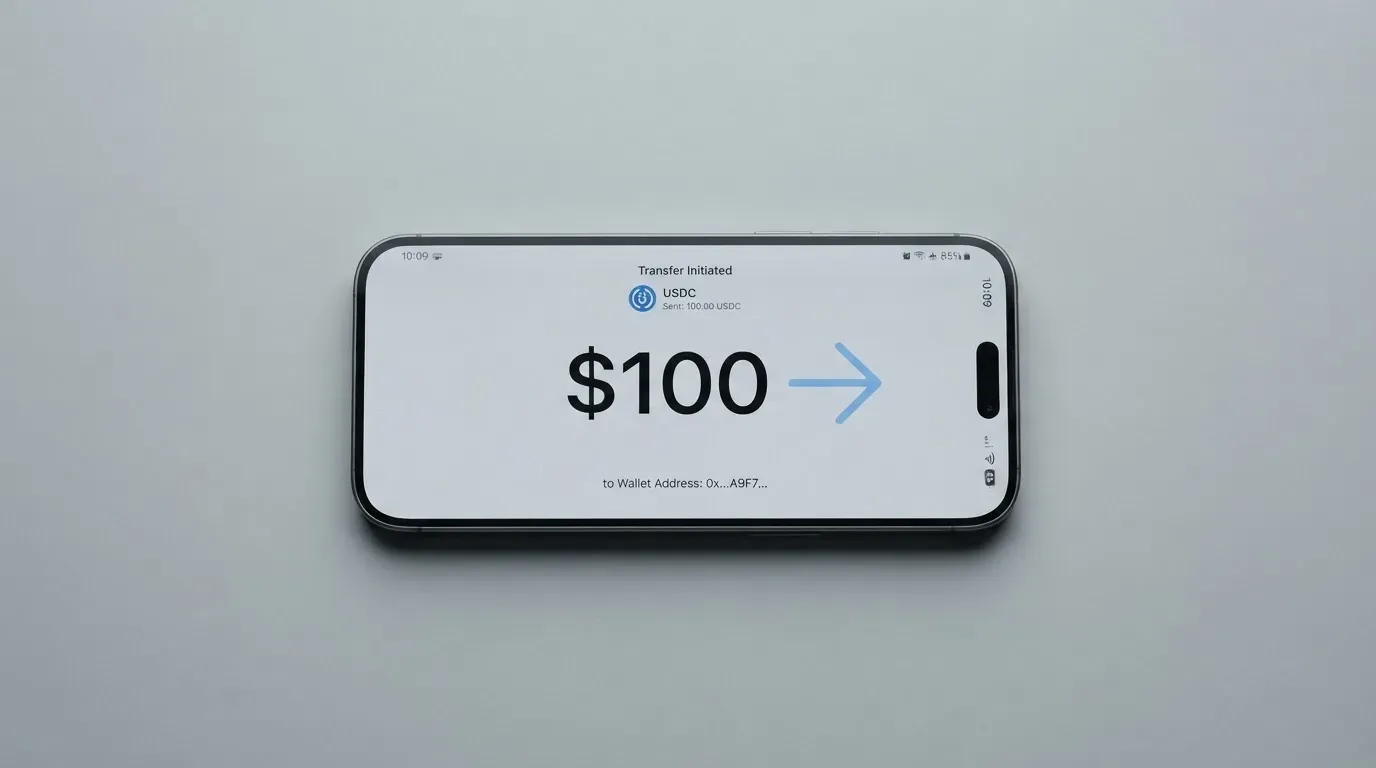
VCCPRO names Bitcoin and USDT as the supported cryptocurrencies and adds “such as” for other coins, which signals the list is wider than two but is not a fixed menu. Perfect Money is also listed as a non-crypto top-up route. PayPal is explicitly not accepted. The card currency is not stated on the public pages, and the site mentions savings in “USA, UK, and European currencies” without saying which currency the card actually settles in. This is a meaningful gap: if the card settles in US dollars and you spend in euros, you will pay an FX conversion on every purchase, and the rate is not disclosed.
The load limits are $10 to $1,000 per virtual card transaction, so a single top-up cannot exceed $1,000. There is no published daily or monthly aggregate limit, which means a heavy user has to break large sums into many loads and pay the $5.00 fee each time.
What the site does not tell you is the network layer underneath the crypto top-up. With Bitcoin, the practical networks are the Bitcoin mainnet and, for wrapped or synthetic versions, other chains. With USDT, the common networks are ERC-20 (Ethereum), TRC-20 (Tron), BEP-20 (BNB Chain), Solana, Polygon and others. Sending USDT on the wrong network to an address expecting a different one is a common, irreversible way to lose money, and VCCPRO does not publish a network guide. The safe assumption is that you must confirm the supported network in the order page or with support before you send, because the company does not commit to recovering funds sent on the wrong chain.
The question of who pays the network fee (the gas charged by the blockchain for moving your coins) is also not stated. In most setups the sender pays, but a percentage-based load fee on top of a network fee can quietly double the cost of a small top-up.
Paying with it every day
In daily use, a VCCPRO card behaves like a prepaid virtual Visa or Mastercard. You type the card number, expiry and CVC into a checkout, or you add it to Apple Pay or Google Pay through the NFC Contactless Virtual Card option and pay by phone. The site says the NFC cards “fully support Apple Pay and Google Pay integration”, which is the closest thing to a tap-to-pay experience you will get from a virtual card.
There is no physical card, no ATM, and no app. There is no published list of blocked merchant categories, although the refund policy refuses refunds for “prohibited or high-risk merchants” without defining them. The site does not publish a rewards or cashback programme, so there is no percentage back on spending.
For online payments this is a working setup. For offline daily spending it is limited, because the only way to pay in a physical shop is through a mobile wallet on a phone, and not every terminal accepts tokenised virtual cards reliably. The product is honest about its shape: it is a virtual card for online use, with mobile-wallet support as a bonus.
Dispute and refund policy
VCCPRO’s refund policy is short and runs against the customer in several places. To report an issue, you must contact support within 24 hours of delivery with your Order ID, email, description and screenshots. Refunds are denied for user error, prohibited or high-risk merchants, change of mind, card use and failed identity checks. The policy says approved refunds are generally processed within 5 business days. Once a card is issued and delivered, the order is treated as final. Chargebacks, the formal process for disputing a charge through the card network, are not addressed at all, which is unusual for a card product and means you have no stated route to the network if a merchant refuses to refund you.
What can go wrong
The most common complaint in user reviews is the one that hurts the most: paying for a card and not receiving the card details. Trustpilot scores VCCPRO at 3.5 out of 5 from 294 reviews, with roughly 70% five-star and 22% one-star. Among the negative reviews, three themes repeat.
Orders not delivered, or stuck “on hold” after payment, appear in reviews dated from about October 2025 through September 2026. Slow or no support response appears from about December 2025 through May 2026, which matters because the refund policy requires you to report a problem within 24 hours of delivery. A cluster of scam accusations appeared from about December 2025 through January 2026, which the company publicly disputes and attributes to harassment by one person.
VCCPRO describes itself as “a technology platform and is not a bank, electronic money institution, or card issuer”. The company is VCCPRO Ltd, registered at Lytchett House, 13 Freeland Park, Wareham Road, Poole, Dorset, UK BH16 6FA. The cards are issued by unnamed licensed third-party providers, and no licence numbers or regulator references are published. That structure is legal, but it puts a layer between you and the institution that actually holds the card programme, and the company has chosen not to name that institution. If something goes wrong, the practical question is who is on the other end of the dispute: the technology platform, the unnamed issuer, or the payment partners.
The site does not state whether your card balance is custodial (held by the company) or self-custodial (held in your own wallet until the moment of payment). It does not mention two-factor authentication or an instant card-freeze feature. The Terms refer to a “secure user account” and to record retention for fraud prevention, which is standard but not specific.
Support is reachable by WhatsApp on +447723833291, by Telegram at @worklinkx, and through a contact form on the site. Hours and languages are not stated.
What to take instead
If you want a quick virtual card but VCCPRO’s lack of disclosure on FX, networks and the issuer bothers you, three alternatives are worth a look.
Comparison at a glance
| Card | Score | Card type | Issuance | Top-up fee | FX fee | Notes |
|---|---|---|---|---|---|---|
| VCCPRO | 6.1 / 10 | Virtual Visa and Mastercard | $4.99 | $5.00 or 2.0% | Not stated | Crypto top-up, no FX disclosure, no physical card |
| CardFlow | 4.9 / 10 | Virtual USD Mastercard | Free (per site FAQ) | Not stated | Not stated | Aimed at Nigeria and “global users”, created in about 3 minutes |
| HyperCard | 4.7 / 10 | Prepaid HyperCard, USD or EUR balance | Not stated | Not stated | Not stated | App-based, “more than 176 countries” for acceptance, deposit crypto in app |
| Card.fi | 6.6 / 10 | Virtual and physical, metal option | Virtual Classic $49, Premium $249 | Classic 1.5% + $1.00, Premium 1% | Classic 3.5%, Premium 2.5% | 32 coins across 5 networks, ships to 200+ countries, cashback on spend |
CardFlow is a free virtual USD Mastercard aimed at Nigerian users and “global users”, with a creation time of about 3 minutes and top-ups in Bitcoin, USDT, ETH or Nigerian naira bank transfer. The cost section on its public pages is thin, so you would want to confirm the load and FX structure before relying on it. It is a quick-and-cheap option if the user base and supported funding methods fit you.
HyperCard is a prepaid card with a USD or EUR balance, run through a mobile app, and deposits are made in USDT, BTC or ETH, converted on arrival. The App Store page says it works in “more than 176 countries” for acceptance, which is a different question from eligibility, and fees on the pages I could read are not stated. The product is app-first, which is the opposite of VCCPRO’s web-shop model.
Card.fi is the closest comparable in spirit and the strongest alternative on transparency. It offers virtual and physical cards, including a metal option, ships to 200+ countries, supports 32 coins across five networks (Ethereum, Base, BNB Chain, Solana and Kaanch), and discloses both top-up fees (Classic 1.5% plus $1.00, Premium 1%) and FX fees (Classic 3.5%, Premium 2.5%) up front. Cashback on spending ranges from 0.8% to 2% depending on the tier, with higher caps on the metal card. The headline 10% at coffee shops is capped at 10 USDT per month, so it is more of a marketing number than a return. The onboarding cost is higher than VCCPRO’s $4.99, especially on the Premium line, but the fee transparency and the option of a physical card make it a more predictable product for someone who plans to use a card regularly rather than for a single purchase.
Who I would recommend it to
VCCPRO is a reasonable pick in a narrow window. If you want a single-use virtual card for an online payment, you are happy to pay in USDT or Bitcoin, and you are willing to size the load so that the $5.00 fixed fee is small relative to the spend, it does the job. The card details arrive fast, the issuance fee is low, and the lack of a monthly fee means you are not punished for using the card only occasionally.
It is a poor pick if you want a card you can use every day, if transparency on conversion and FX fees matters to you, if you want a physical card or ATM access, if you want a regulated e-money institution to be the named issuer of your card, or if the load you plan to make is large enough that the $1,000 per-transaction cap will force you to split it across many top-ups. The unresolved complaints about non-delivery and slow support also mean that if the card does not arrive, you are in a difficult position, because the refund policy treats the order as final once the card is issued and the dispute window is 24 hours from delivery.
If you fall into the second group, Card.fi is the more predictable alternative. If you want a free virtual Mastercard and you are in or near the Nigerian market, CardFlow is worth a look. If you want an app-based prepaid card and you are comfortable with an EU-style crypto-deposit flow, HyperCard is a candidate. Each of those alternatives has its own gaps, and you should read their terms as carefully as you would read VCCPRO’s.
The honest summary is this. VCCPRO is a low-cost entry into a virtual crypto-funded card, with a fee structure that is easy to understand on the surface and a lot of important detail missing underneath. Use it for small, discrete payments where a missing card would be an inconvenience rather than a disaster, and keep your expectations aligned with what the company actually is: a technology platform that sells access to cards issued by unnamed partners, not a bank or e-money institution.
Frequently asked questions
What is the VCCPRO card?
VCCPRO is a virtual Visa or Mastercard you buy with cryptocurrency and receive by email, usually within 30 minutes to 6 hours. There is no physical card and no mobile app; the card details are used online or added to Apple Pay or Google Pay through the NFC Contactless Virtual Card option.
How does the VCCPRO card work?
You choose a card type in the web shop, pay with Bitcoin, USDT, another supported cryptocurrency or Perfect Money, and receive the card number, expiry and CVC by email. Each load costs $5.00 or 2.0%, and the card spends the loaded balance like a prepaid card until it runs out or you reload.
Is VCCPRO a bank?
No. VCCPRO states on its own pages that it is “a technology platform and is not a bank, electronic money institution, or card issuer”. The cards are issued by unnamed licensed third-party providers, and the company does not publish any bank or e-money licence numbers.
Who owns VCCPRO?
The company operating the site is VCCPRO Ltd, with a registered address at Lytchett House, 13 Freeland Park, Wareham Road, Poole, Dorset, UK BH16 6FA. The site does not name individual owners, regulators or registration numbers beyond the address.
Is the VCCPRO card available in my country?
The site does not publish a country list. It says the cards are “Accepted Worldwide By Top Global Platforms” and use BINs from the US, UK, EU and Asia. Eligibility is decided in practice by the issuer and payment partners, and the Terms note that identity and sanctions screening “may be required” depending on those partners.
How do I get a VCCPRO card?
Open the shop, pick a card type, pay at checkout with crypto, and wait for the card details to arrive by email. Delivery is usually within 30 minutes to 6 hours, and the About page says cards are “issued instantly” in the typical case.
Does the VCCPRO card require KYC?
The homepage does not mention KYC. The Terms say identity verification, sanctions screening and PEP screening “may be required, depending on service providers, issuing partners, or applicable law”. There is no published tier system, so a check is possible but not guaranteed.
How do I top up the VCCPRO card?
You load the card with Bitcoin, USDT, other supported cryptocurrencies or Perfect Money, with each load costing $5.00 or 2.0% and capped between $10 and $1,000 per transaction. The site does not publish the supported networks for each coin, so you should confirm the network before sending any crypto.
How do I add the VCCPRO card to Apple Pay or Google Pay?
The NFC Contactless Virtual Card option is described as fully supporting Apple Pay and Google Pay. You add the card details to the wallet app on your phone, complete the wallet’s verification step, and the virtual card becomes a tokenised number on your device for in-store contactless payments.
Is the VCCPRO card safe?
The card uses standard card-network protections, but the company is not a bank or e-money institution, the issuer is unnamed, and the site does not describe account safeguards such as two-factor authentication or an instant freeze. Trustpilot scores the service at 3.5 out of 5 from 294 reviews, with recurring complaints about non-delivery and slow support, so the practical safety of your funds depends on the size of the load and your tolerance for a delayed or unresolved support case.
Virtual cards on the shortlist – cryptocardshortlist
Content created by the «cryptocardshortlist» team