
The Jam card in plain words: a non-custodial wallet with a payment card attached, minus the details
 Available in US
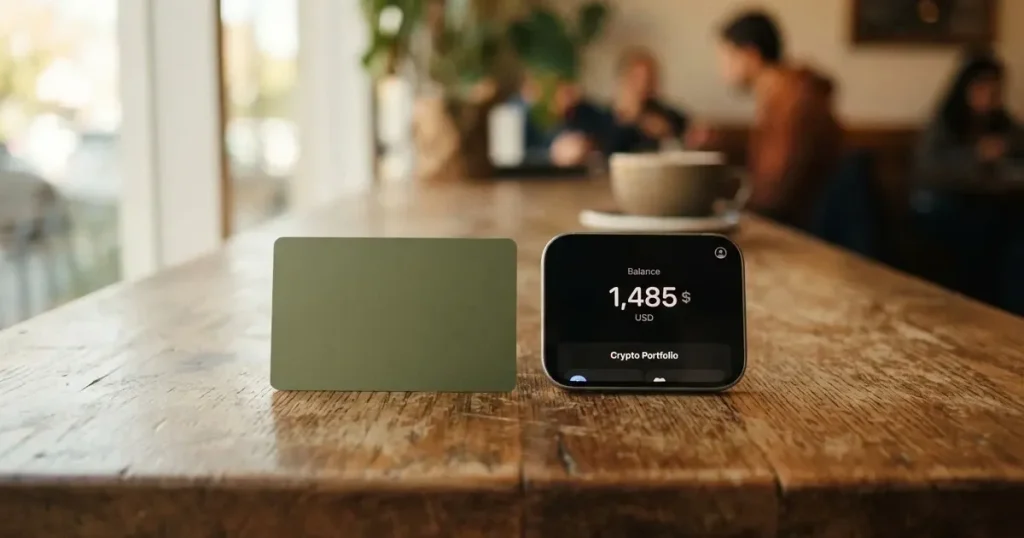
Jam is not a bank account with a card attached. It is a self-custody crypto wallet app, with a payment card that spends from the balance inside it. That distinction decides almost everything else on this page: what the card can and cannot tell you, what happens if something goes wrong, and who should bother with it at all. I have gone through the company’s public pages, its terms and its app listing, and compared them with the alternatives, and I will tell you where the silence is as plainly as where the information is.
The conditions described here are current as of October 28, 2026.
Let me start with the number, because you should see it before the prose.
| Criterion | Mark | Why |
|---|---|---|
| Who can get it | 5 / 10 | No country list published; terms exclude Russia, Belarus, Iran, North Korea, Syria, Cuba, Ukraine and US citizens; on/off ramp said to work in 200+ countries |
| Cost | 3 / 10 | No fees published at all; unofficial figures suggest 4.2% plus gas on stablecoin top-ups and 0.2% on Apple Pay |
| Top-up options | 4 / 10 | USDT stablecoins, “No TRX required”; unofficial sources mention only USDT and BSC-USD |
| Reliability and complaints | 6 / 10 | Non-custodial, JAM Platform LLC in Delaware; issuer and licences not named; Trustpilot 4.1 out of 5 |
| Everyday use | 4 / 10 | Card type and network not named, no physical card apparently yet, Apple Pay and Google Pay present, ATM situation unstated |
| Total | 4.4 / 10 |
So: 4.4 out of 10. That is not a dismissal, it is a description of a product where the mechanics are clear but the paperwork is thin. Read on, because the same 4.4 lands differently depending on what you need it for.
Who you can get the Jam card for
Short answer: probably you, unless you live in Russia, Belarus, Iran, North Korea, Syria, Cuba or Ukraine, hold an Iranian, North Korean, Syrian or Cuban passport, or are a US citizen — and you cannot tell from the site whether some other country is on the list, because the list does not exist in public.
Here is the actual wording. The terms say card and financial services are “categorically forbidden in specific jurisdictions,” and name “including but not limited to Russia, Belarus” — and also Iran, North Korea, Syria, Cuba and Ukraine. Sanctioned persons are barred outright. Then there is a sentence that will matter to a lot of readers: the service is “strictly not intended for use by United States Persons,” and access from a US IP address is prohibited. The terms add that Jamcard may restrict access by IP address or jurisdiction, which means the door can also close based on where your connection appears to be rather than where you live.
Two things the site does not tell you. First, the country list for the card itself is not published — the “200 countries” figure on the site relates to the on/off ramp, that is, the service that moves value between crypto and fiat, not to card eligibility. It is easy to read that line and hear it as “available everywhere.” Second, and this is the one that catches people out, the basis of the test is not stated. Nobody has published whether the rules apply to your citizenship, your passport, your residence, or all three. If you hold the passport of one restricted country but live and work elsewhere, you are in a grey area the company has not resolved in writing.
| Question | What the public pages say |
|---|---|
| Full country list for the card | Not published |
| Countries named as excluded | Russia, Belarus, Iran, North Korea, Syria, Cuba, Ukraine |
| US persons | Not intended for use; US IP access prohibited |
| Citizenship vs residence test | Not stated |
| Ramp reach | “Ramp functionality over 200 countries” |
| Sanctioned individuals | Barred |
If you are outside those named countries, hold an ordinary passport and are not a US citizen, the reasonable read is that the card will not refuse you at the front door. But the check happens somewhere, and the terms do not tell you where the line is drawn, so if your situation is not simple, ask support before you move money.
How to sign up
Short answer: with an email address and a phone number, in 30 seconds — and with identity checks carried out by partners the company has not named.
The site’s own words are “Sign up with email and phone” and “30-second onboarding.” Identity verification, if it happens, is not done by Jam. The terms say KYC is handled by independent third-party compliance partners, and no partner is named. That matters more than it sounds: if a check fails, you are dealing with a company you cannot name through a process you cannot inspect. The age requirement is not stated, and neither is whether proof of address is needed — in the EU and the UK, a regulated firm normally has to collect identity documents, a source of funds in some cases, and proof of address, so the absence of a published answer here is a gap in the documentation rather than evidence that nothing is collected.
One reviewer on Trustpilot in May 2026 described Jam as a “No KYC” first card. I want to be careful with that claim, because it is third-party and unverified by the company, and because the terms themselves reference third-party compliance partners and an anti-money-laundering address check that the app store listing mentions. “No KYC” from one user in one month is not a policy. If avoiding identity checks is part of your reason for looking at this card, do not build on it — and understand that this is exactly the kind of product where unverified claims about checks attract consequences.
On the card itself, the public pages are thin to the point of being odd. The type, the network and the currency of the card are not stated. There is one line that sounds like an early-stage product roadmap: “We start only with one, but will add 20+ card types in the future.” Starting data is converted to a USD balance. Delivery is not stated; one reviewer says there is no physical card yet, which would make this a wallet with a card number rather than a plastic rectangle in your pocket. That single fact changes the whole feel of the product, so I would not assume it either way — check whether a virtual card is what you actually want before you fund anything.
Fees: what it really costs
Short answer: the company publishes no fee schedule at all. Everything with a number attached comes from a third party, and every time you touch the card you should assume a cost you cannot see until it appears in a statement.
There is no fees page linked from the site, no conversion rate, no ATM terms, no monthly charge, no schedule of any kind. The only number printed anywhere is promotional: a referral that pays “$5 for each friend.” That is not a cost, and I would not treat it as one.
What does exist is a single Trustpilot reviewer in May 2026 giving two figures: stablecoin top-ups at about 4.2% plus gas fees, and Apple Pay at 0.2%. One person, one month, unconfirmed by the company. But the shape of that claim is plausible enough to plan around. A 4.2% top-up fee is roughly what a spread-based conversion costs when the provider converts your stablecoin into a card balance and takes a cut of the value, and if it sits on top of network gas the effective cost of putting money in is higher than the headline figure. The 0.2% Apple Pay fee, if real, is small but not zero, and it applies to the payment path you are most likely to use every day.
Limits are more concrete than fees, or at least the marketing is: one page is titled “Spend Up to $250,000 Daily Worldwide.” No per-level breakdown is given, and no levels are described. That headline is not a commitment you should plan around without seeing the terms attached to your own account.
| Item | What is published |
|---|---|
| Issuance fee | Not stated |
| Monthly or maintenance fee | Not stated |
| Conversion fee | Not stated (unofficial: 4.2% on stablecoin top-ups, plus gas) |
| Apple Pay fee | Not stated (unofficial: 0.2%) |
| FX / non-USD spending | Not stated |
| ATM withdrawal | Not stated |
| Daily limit | Page title: “Spend Up to $250,000 Daily Worldwide”; no per-level detail |
| Monthly limit | Not stated |
| Fee tiers | None; “JAM VIP Club” is a private Telegram community with rewards and a personal manager |
| Referral | “$5 for each friend” |
Three everyday payments, and what probably applies to each:
- Buying a coffee with Apple Pay. The 0.2% figure, if it is real, is the cost. On a $5 purchase that is about ten cents. This is the smallest-number case, and it is the reason Apple Pay support matters more than it looks.
- Paying a subscription or a bill in a currency other than dollars. Unstated. You are at the mercy of a rate you cannot see in advance, and the site’s own position is that your starting data is a USD balance, so a non-dollar payment almost certainly involves a conversion somewhere.
- Topping up from a stablecoin. The 4.2% plus gas figure, if it is real, and the gas belongs to the blockchain rather than to Jam. This is the expensive one. It is the first transaction you make and it sets the bar for whether the card is worth using at all.
There is a point worth making about how fee structures interact with your own habits. If you are someone who tops up rarely and spends often, a top-up percentage barely registers. If you move money in monthly and mostly holds it, that 4.2% is the real cost of the product, and no cashback is offered to offset it — the site mentions no cashback, only the referral reward.
Top up: how money gets into Jam
Short answer: with USDT stablecoins, on networks the site does not list. Getting it right matters more here than with almost any other product, because a transfer to the wrong network can simply be gone.
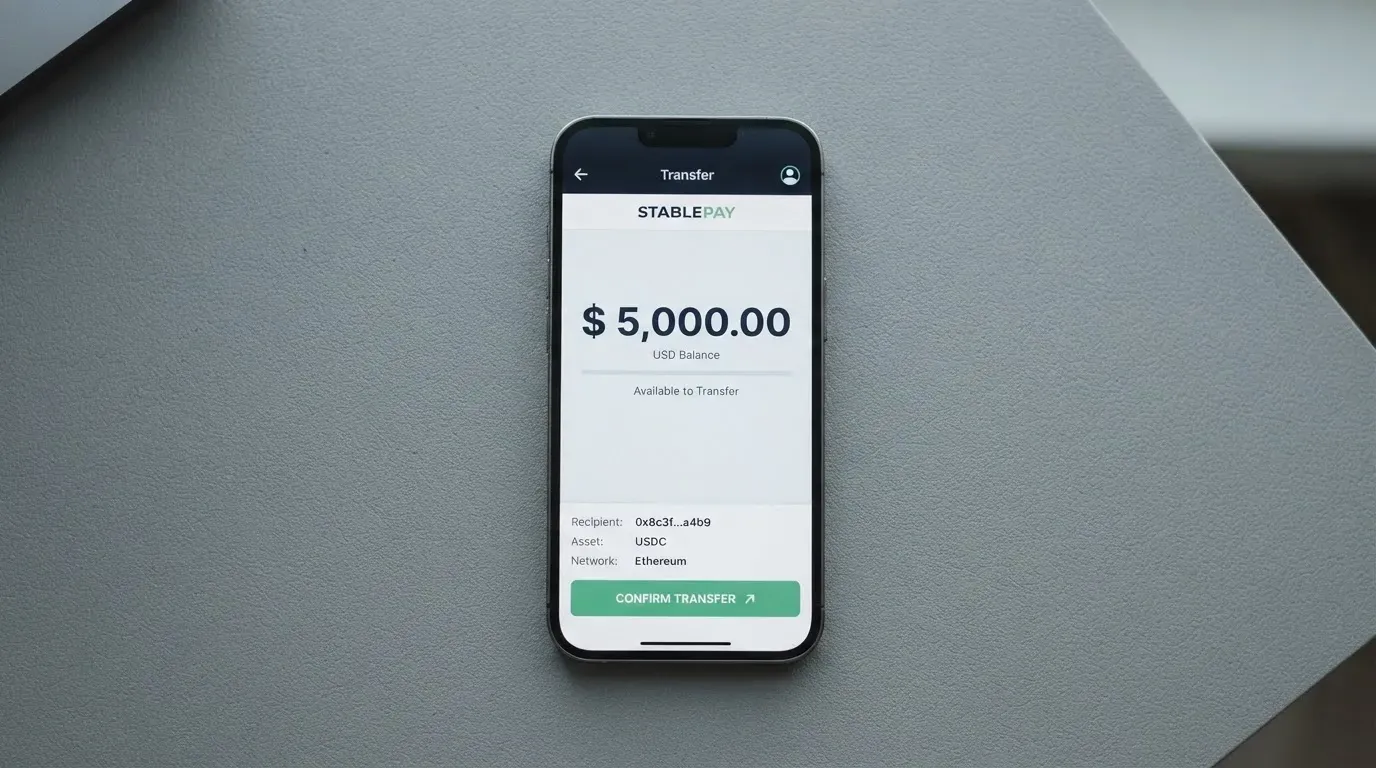
The site says Jam starts with USDT stablecoins and advertises “No TRX required” under its GasFree label. That last point is worth understanding rather than celebrating. Tron fees are paid through network resources, often burning TRX, so “no TRX required” means you do not need to hold Tron to pay the bill — not that the network is optional. The list of coins and networks is not published on the site. One reviewer in May 2026 said only USDT and BSC-USD are supported. If that is accurate, you are sending to one network, and you must know which before you press send.
Everything else about the funding side is not stated: which networks, what happens on arrival, how long conversion takes, and whether you can withdraw money back out. That last one deserves a paragraph of its own in anyone’s decision. Nothing on the public pages says how withdrawal works — not whether there is a fee, not to which addresses, not on which networks, and not whether it is even available. Yet one of the few critical Trustpilot remarks is precisely about funds that could not be withdrawn after loading. I am not going to tell you that is proven or that it is a pattern; I am telling you that when the mechanism is undocumented, that complaint is the one you cannot dismiss.
The general rule for anyone in this category: blockchain transfers are irreversible. A deposit sent on a network the provider does not support, or to an address belonging to a different network, can be lost outright or need manual support recovery with no guarantee of success. Send a small test amount before sending a real one, and confirm the network from support in writing first.
Paying with Jam day to day
Short answer: Apple Pay and Google Pay work, spending comes out of a USD balance, and several things you would want to know — blocked categories, card type, dispute handling — are not published.
The site says “Pay instantly with Apple Pay or Google Pay.” That is the part that matters for daily life: a card that only exists as a number you paste into checkout sites is a nuisance, and a card that tokenises into your phone’s wallet is a normal payment. Apple Pay is the stronger claim of the two because there is a specific fee figure attached to it, unofficial as it is. The iOS app is listed as “Crypto Wallet & Web3 Jam App,” requires iOS 17.6 or later, and had no rating to show when I looked because there were not enough ratings — which itself tells you something about how new or how small the user base is. The Android package is io.jamcard.app, and its rating could not be retrieved.
What is missing from the daily-use picture is more noticeable than what is there. Which merchant categories are blocked is not stated, and this matters more than it might seem: gambling and similar categories are blocked by policy rather than by law, and every issuer keeps a different list. Whether the card can be used at a merchant that treats foreign-issued cards warily is not addressed. And card type and network are not named at all, so I cannot tell you whether this is a Visa or Mastercard card, which is exactly the information you need when a payment is declined and you are trying to work out why.
Two more gaps. Cashback is not mentioned; the only reward of any kind is the $5-per-friend referral. And disputes are not addressed in plain language — the terms say blockchain transactions cannot be reversed, and that disputes with third-party providers fall under those providers’ terms. Read that as: if the thing you paid for does not arrive, your route to a refund runs through somebody else, on somebody else’s rules.
One practical note that belongs here rather than in the theory. Address verification, the check that compares the numbers in the billing address you typed with the issuer’s records, is mainly offered in the US, Canada and the UK and is generally unavailable for foreign-issued cards. If a decline ever happens to you, that is one of the boring, ordinary reasons behind it.
What can go wrong
Short answer: nothing catastrophic is on record, but the absence of records is not the same as safety. The realistic risks are the ones that follow from a product that keeps your keys but publishes almost nothing about who issues the card.
Start with the good news, because it is real and unusual. Jam is non-custodial. The terms say the services are “strictly non-custodial” and that Jamcard never holds your funds, your keys or your seed phrase. The app store listing mentions a live anti-money-laundering address check. If that holds, you are not exposed to the failure mode that has destroyed holders at some of the largest custodial platforms — the custodian being hacked or going bankrupt. That is a genuine structural advantage.
It also transfers the risk rather than removing it. With a self-custody wallet, nobody can restore your seed phrase for you. Transfers are typically irreversible, and there is no recovery mechanism for a stolen key because the network cannot freeze or return anything. And you carry the whole weight of key loss, phishing, and the clipboard-hijacking malware that silently swaps a pasted address. The non-custodial model is not safer in the general sense; it is safer in one specific sense and completely on you in all the others.
| Risk | What I found |
|---|---|
| Official incidents | None found |
| User reports | Trustpilot: only one critical remark, May 2026 — no physical card, funds cannot be withdrawn once loaded, top-up costs; one reviewer on costs and limits |
| Trustpilot rating | 4.1 out of 5, read 2026-10-21; all 5-star, one reviewer commenting on costs and limits |
| Reddit threads | None found in web search |
| Company | JAM Platform LLC, Delaware, USA (8 The Green, Suite A, Dover, DE 19901) |
| Issuer | Unnamed third-party providers shown in the interface |
| Licences | None named |
| Third-party claim | GetApp says the operation is by UAB Jam, registered in Lithuania — unconfirmed by the company |
| Funds custody | Non-custodial; funds, keys and seed phrases are never held by Jamcard |
Two rows in that table deserve a moment each. The issuer is unnamed. That means the entity whose licence governs your card, whose complaint process you would use, and whose capital is behind the balance is not identified on any page I could read. And the licences are not named either — the app store listing shows a live AML address check, which tells you checks are happening, but not under whose authority.
That is not an accusation of wrongdoing. It is a description of a thin disclosure, and thin disclosure has a cost: if something goes wrong, you are negotiating with a company whose own terms hand you to providers you never chose and cannot identify.
The complaints picture is genuinely thin in both directions. Trustpilot sits at 4.1 out of 5 — a good score — but from a very small number of reviews, one of which is the critical one, and a web search turned up no Reddit discussion at all. A product with no public conversation and five reviews is not a product with a track record. It is a product too new, or too small, or both, to have one.
Support is the one area that looks properly built out. There is a help centre at help.jamcard.io in Arabic, English, Portuguese, Russian, Spanish, Turkish and Ukrainian; a Telegram channel; and Instagram, X, TikTok and LinkedIn. Hours are not stated. A seven-language help centre is a real thing, not a brochure line.
What to take instead
Short answer: if you want published fees, a named issuer and a card you can hold, the field is not empty. Here is how the main alternatives line up against Jam on the things Jam leaves blank.
The comparison below uses each provider’s own published figures. I am not blending them with Jam’s, because Jam’s are unpublished.
| Jam | TokenPocket | MetaMask | KAST | |
|---|---|---|---|---|
| Score | 4.4 / 10 | 5.8 / 10 | 7.1 / 10 | 6.1 / 10 |
| Card | Type and network not stated | Mastercard/Visa debit, virtual | Mastercard, virtual then optional metal | Visa, virtual and physical, up to 10 cards |
| Where | Country list not published | Visa: much of Europe. Mastercard: Australia, Canada, Hong Kong, Japan, Taiwan, New Zealand, Singapore, South Korea, UK and others | 45 listed countries/territories; other regions on a waitlist; US and UK sign-ups temporarily closed | Residence-based list shown at KYC, country list not published |
| Cost to hold | Not stated | NFT creation fee partly covered, user pays a small unstated portion; no other fees stated | Virtual free; metal $199/year | $0 / $1,000 / $10,000 a year by tier |
| Spending fee | Not stated | 1% on crypto deposits, to be refunded later via rewards | “Minimal fee for each transaction”, amount not stated; no foreign transaction fee | 0% on USD card spend; 0.5%–1.75% FX on non-USD |
| Top up | USDT; networks not stated | Crypto from the TokenPocket wallet | Spends directly from the connected wallet | USDT, USDC, PYUSD, RLUSD across several networks |
| Cashback | None mentioned; $5 per referral | None stated; the 1% refunded via rewards | 1% virtual, 3% headline on metal with limits | 1.5% / 2% / 3% by tier, monthly caps |
Reading that table across, the pattern is obvious. TokenPocket at 5.8 publishes a fee structure with one awkward element: a 1% deposit fee it promises to refund later through rewards and reduced transaction fees, so the money comes back only in a different shape. MetaMask at 7.1 is the one I would put in front of most people — a free virtual Mastercard, no foreign transaction fee, 1% cashback on the virtual card, and residency rules stated plainly. Its catch is access: 45 named countries, a waitlist everywhere else, and US and UK sign-ups temporarily closed.
KAST at 6.1 is the most transparent on price and the most layered on cost: three tiers at $0, $1,000 and $10,000 a year, billed annually with no monthly option, 0.5%–1.75% FX, a $1 monthly inactivity fee after twelve months, and $0.50 for a declined payment on an insufficient balance. It also publishes the most careful eligibility rules of the four, including the point that living in a supported country is not enough if your ID is from a restricted region. That is precisely the clarity Jam does not offer.
Set against that, Jam’s score of 4.4 is not saying the product is worse than the others at everything. It is saying that for someone choosing a card today, unpublished fees and an unnamed issuer are not a small gap. If you already keep USDT and value the non-custodial structure, Jam may serve you well and you may accept the trade. If you are picking a card the way most people pick one — by reading the fee table and finding the issuer — you will find nothing to read.
Who I would recommend this to
I would recommend Jam to someone who has already decided they will hold their own keys, has USDT sitting on a network they can use, and treats the card as a convenience layer on top of that rather than as a financial account. If that is you, the non-custodial structure is the point: nobody holds your funds, nobody’s bankruptcy takes your balance, and the wallet works as a wallet whatever happens to the card.
I would not recommend it to you if any of these are true. You need to know what a payment costs before you make it. You need a physical card in your hand. You are in one of the named restricted countries, hold a passport from one, or are a US citizen. You plan to lean on cashback or rewards to offset the cost of using it. Or you are choosing a card because your ordinary bank card is refused — because if that is the situation, you want the most transparent provider you can find, with a named issuer and a published dispute process, and that is the opposite of what Jam offers today.
The honest summary is this. Jam has built the easy half of the problem: a wallet that does not take custody of your money, with Apple Pay and Google Pay on top and a seven-language help centre behind it. The other half — publishing what the card costs, who issues it, under which licence, and how you get your money out — is not built, at least not publicly. Four point four out of ten is what that gap is worth today. If it closes, the score moves quickly.
Frequently asked questions
What is Jam card?
Jam is a self-custody crypto wallet app with a payment card attached to it. The card spends from a balance inside the wallet rather than from a bank account, and crypto is converted to that balance first. Crucially, Jam says it never holds your funds, keys or seed phrase. What you get is a card interface on top of a wallet you control, not a bank account with a card attached.
How does the Jam card actually work?
You hold crypto in your own wallet, convert or load it into a spendable USD balance, and the card draws down that balance. Most crypto cards behave like prepaid cards for this reason. Because Jam is non-custodial, the balance and keys stay with you. The card type, network and currency are not published, and the app store listing shows no rating, which suggests a young product.
Is Jam a bank?
No. The company is JAM Platform LLC, registered in Delaware, USA. Card issuance is carried out by third-party providers whose names are not published, and no licences are named anywhere on the public pages. A third-party listing says operations run through UAB Jam in Lithuania, though the company does not confirm that. So there is no bank behind this card that you can identify from its own materials.
Who can get the Jam card?
The terms exclude Russia, Belarus, Iran, North Korea, Syria, Cuba and Ukraine, and say the service is not intended for United States Persons, with US IP access prohibited. Beyond those named countries, no country list is published, and whether the test applies to citizenship or residence is not stated. If your situation is not straightforward — a restricted passport but legal residence elsewhere — ask support before funding anything.
Does Jam card require KYC?
The site says sign-up is with email and phone and takes 30 seconds, and the terms say identity checks are handled by unnamed third-party compliance partners. One Trustpilot reviewer in May 2026 called it a no-KYC card, but that is an unverified individual report. The app store listing mentions a live anti-money-laundering address check. Do not plan around the no-KYC claim.
How much does the Jam card cost?
The company publishes nothing: no issuance fee, no monthly fee, no conversion rate, no FX terms, no ATM terms. A Trustpilot reviewer in May 2026 reported about 4.2% plus gas on stablecoin top-ups and 0.2% on Apple Pay, but that is one unverified user. A daily limit page is titled “Spend Up to $250,000 Daily Worldwide” with no detail behind it. Budget for costs you cannot see in advance.
How do I top up the Jam card?
With USDT stablecoins. The site advertises “No TRX required,” meaning you do not need Tron to pay network fees — not that Tron is unsupported. The full coin and network list is not published; one reviewer said only USDT and BSC-USD are supported. Because transfers are irreversible, confirm the exact network with support in writing, then send a small test amount before sending a real one.
Is Jam card safe?
Structurally safer than a custodial card: Jam says it never holds funds, keys or seed phrases, so a provider hack or bankruptcy cannot take your balance. But that risk moves to you entirely, with no seed-phrase recovery and no reversal of blockchain transfers. Issuer and licences are unnamed, withdrawal terms are not stated, and one critical review reports funds that could not be withdrawn. Non-custodial is a trade, not an upgrade.
Can I add the Jam card to Apple Wallet?
Apple Pay is supported — the site says “Pay instantly with Apple Pay or Google Pay,” and a reviewer reports a 0.2% Apple Pay fee, though the company publishes nothing. Apple Pay replaces your card number with a device-specific number stored in the Secure Element, never on Apple’s servers, and each payment uses a one-time code. The Android equivalent, Google Pay, is also supported. Neither the issuer nor its restrictions are published.
Is Jam card worth it?
If you already hold USDT, value keeping your own keys, and treat the card as a convenience over a wallet rather than as an account, then possibly yes. If you need published fees, a named issuer, a physical card, or a clear withdrawal route, then no — and you would be choosing it on trust rather than on information. A referral pays $5 for each friend, which is a promotional payment, not a saving on fees. Compare it against providers that publish their numbers before you commit.
Wallet cards on the shortlist – cryptocardshortlist
Content created by the «cryptocardshortlist» team