
A cheap virtual Visa that spends straight from a crypto wallet, and nothing more
 Available in US
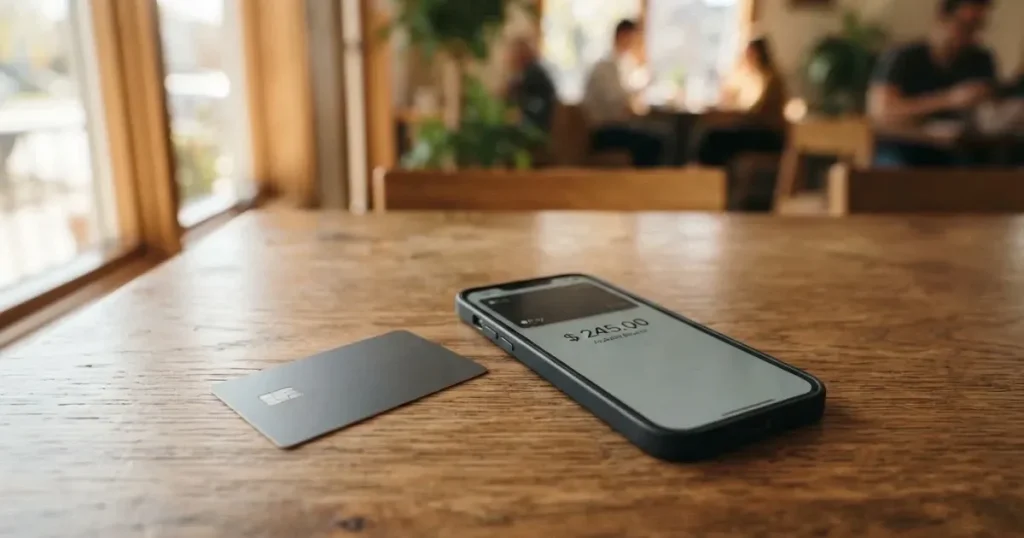
The Grey card is a virtual Visa you create inside an app and pay with online or in a wallet. It is not a bank account, it has no monthly fee, it cannot be topped up, and it cannot be used to take money out at an ATM. Everything else depends on which country you live in, which wallet you fund it from, and how much of your spending happens outside the United States.
Conditions are current as of October 28, 2026.
I scored it 4.9 out of 10. That is a mediocre score for a service that works as described, and the reason is not that it is broken — it is that it is narrow, and several of the things people actually need from a card are simply absent. Before I explain why, it helps to know who this card was built for.
The conditions described on this page are current as of 21 October 2026.
Verdict: 4.9 out of 10, and that is roughly the right number
The Grey card is a competent narrow tool. If you are a freelancer in Africa, Latin America or Asia, paid in dollars, you want a card that costs almost nothing to hold, spends straight from a crypto or stablecoin balance, and works at the international merchants your clients already use — Grey does that job for five dollars and no monthly fee. If you are anything else, you are being sold the wrong product. There is no ATM, no physical card, no budgeting tools, no savings, no interest, no direct top-up, and no published list of networks or issuer. Those omissions are not bugs you will grow out of; they are the design.
The score is not a judgement on honesty. It is a judgement on completeness, and on how much the card can absorb when something goes wrong.
| Criterion | Mark | Why |
|---|---|---|
| Who can get it | 5 / 10 | Visa is supported in 25 countries: Argentina, Australia, Brazil, Colombia, Cote d’Ivoire, Ghana, Kenya, Morocco, New Zealand, Nigeria, Senegal, South Africa, Uganda, Zambia, Bangladesh, Hong Kong, Malaysia, Mexico, Peru, Philippines, Singapore, Thailand, United Arab Emirates, United States, Uruguay. Spending is blocked in Cuba, Iran, North Korea, Russia, Syria, Ukraine, Venezuela |
| Cost | 6 / 10 | Creating the Visa costs 5 USD, with no monthly fee; cross-border fees run up to 2 % plus 0.50 USD, a non-USD wallet adds a conversion fee, and a chargeback costs 30 USD |
| Top-up options | 5 / 10 | The card cannot be topped up directly — it spends from wallets, drawing on USD first, then USDC/T, then any other balance; networks are not named |
| Reliability and complaints | 4 / 10 | Not a bank and the issuer is not named; Trustpilot shows 3.8 out of 4,452 reviews citing fees, KYC failures, reversed incoming payments and slow support |
| Everyday use | 4 / 10 | Virtual only and created instantly; Apple Pay and Google Pay exist, but there is no ATM and it is “payments only” |
| Total | 4.9 / 10 | Works as a narrow payment card, missing almost everything else a card user might expect |
Two things are worth adding to that table before you go further. First, the issuer is not named on the card’s page — the entity you would take a dispute to is not identified in public. Second, Grey is a fintech, not a bank. Both of those matter more than the score suggests, and I come back to them below.
Will they give you the card
The short answer is: if you live in one of 25 countries, probably yes after identity checks. If you live in a blocked country, no. The rules are stated by country, and residence versus citizenship is not stated — so if you hold one citizenship and live in another, you have a genuine ambiguity that only Grey can resolve.
Visa spending is supported in: Argentina, Australia, Brazil, Colombia, Cote d’Ivoire, Ghana, Kenya, Morocco, New Zealand, Nigeria, Senegal, South Africa, Uganda, Zambia, Bangladesh, Hong Kong, Malaysia, Mexico, Peru, Philippines, Singapore, Thailand, United Arab Emirates, United States, Uruguay.
The card “cannot be used for spending” in: Cuba, Iran, North Korea, Russia, Syria, Ukraine, Venezuela.
That split matters more than it looks. A blocked-country list is about where the card works; a supported-country list is about where you may hold it. You can be a resident of a supported country and travel to a blocked one, and the card will not follow you. Conversely, holding a supported-country citizenship does not by itself open an account.
Whether Grey applies these lists to your residence or your citizenship is not stated. If that distinction matters in your case — and for a reader who has moved countries, or holds two passports, it usually does — ask Grey directly before you send any documents.
How to get it
Getting the card is a short process, and almost all of the friction lives in the verification step rather than the card itself.
The USD virtual card requires completed KYC. The accepted ID differs per country: passport, national ID, resident card, ID card or driver licence, with country extras such as Voter ID, PAN card or NIN slip. Proof of address is not stated. Age requirements are not stated either. If you are wondering whether you need a utility bill or a bank statement, the card’s own pages do not say — do not assume from other cards that the answer is yes.
The steps the card gives are: sign up, verify, top up any wallet, and create the card in the app under Cards.
That fourth step is the one that catches people. You do not top up the card; you top up a wallet and the card spends from it. A 5 USD balance is needed before the card can be created.
What you end up with is a virtual debit card on Visa — no physical or metal version is mentioned. A virtual Mastercard also exists in the help centre, and the two are not the same product with different branding: the Mastercard is created for 4 USD with 1 USD credited to your card balance, it funds per transaction between 2 and 2,500 USD, and its balance is refunded to your Grey USD balance if you delete it, whereas deleting the Visa returns nothing at all. How many KYC levels exist is not stated, though the help centre does contain articles titled “KYC verification” and “Why did my KYC verification fail?” — which tells you failures happen often enough to need an article.
Fees: what it really costs
The headline numbers are genuinely good. The Visa costs 5 USD once and has no monthly or maintenance fee at all. What follows is where the cost hides.
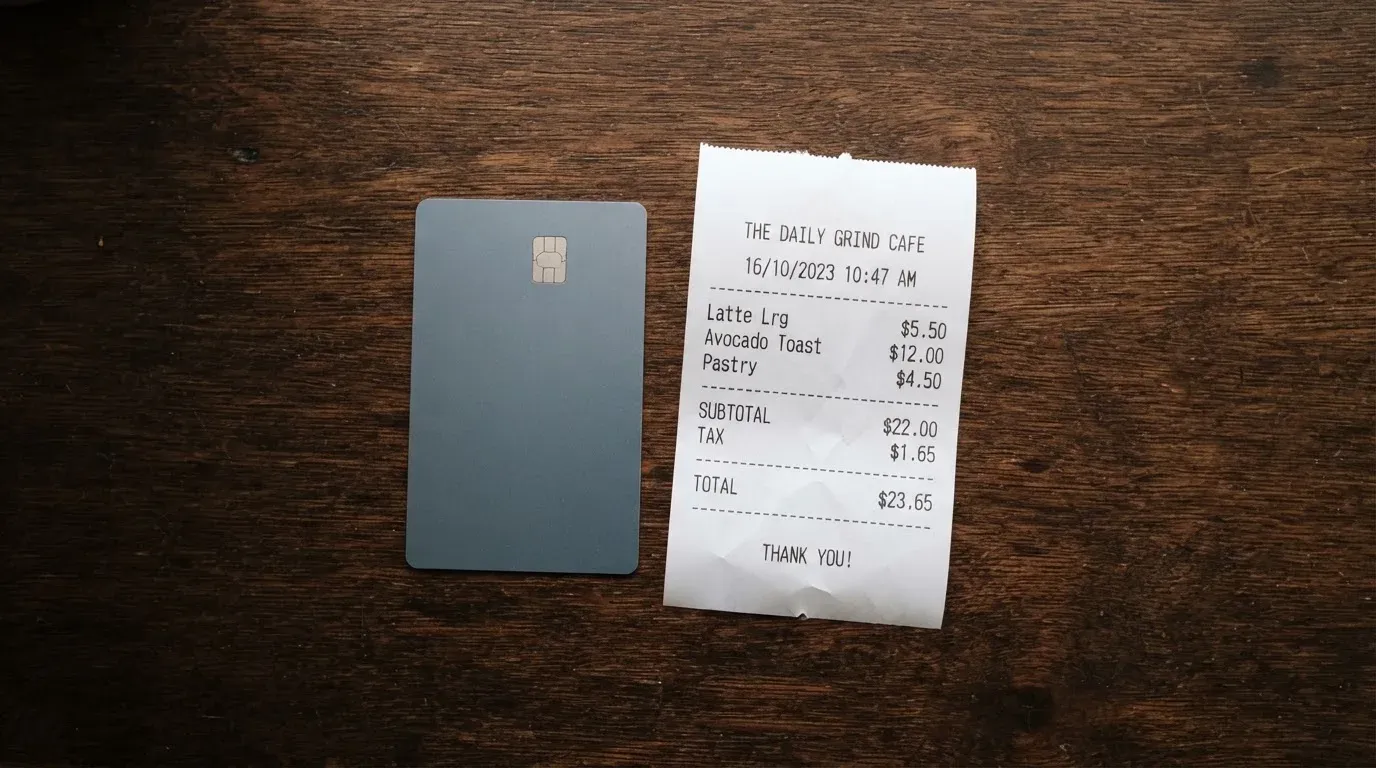
The cross-border fee runs up to 2 % plus 0.50 USD on non-US websites, and the card states this is charged by the merchant or processor. A currency conversion fee applies when the card is linked to a non-USD wallet — the rate is not stated and the fee is not refundable. There is no transaction fee. And there are no ATM fees, because there is no ATM functionality whatsoever: “Withdrawals and transfers are not supported. The card is for payments only.”
| Fee or limit | Value |
|---|---|
| Visa card creation | $5 one-time |
| Mastercard card creation | $4, with $1 credited to card balance |
| Monthly fee | None |
| Transaction fee | None |
| Cross-border fee | Up to 2% + $0.50 on non-US websites, charged by merchant or processor |
| Currency conversion fee | Applies when the card is linked to a non-USD wallet; rate not stated, not refundable |
| Chargeback fee | $30 upfront |
| ATM | Not available — withdrawals and transfers unsupported |
| Daily limit | Up to 10,000 USD |
| Monthly limit | Not stated |
| Mastercard funding per transaction | $2–$2,500 |
Read the limits row carefully. The page says both “up to 10,000 USD per day” and that the card “has no limit”. Those are not the same claim, and no monthly limit is stated at all. If you need to know what a particular payment will do before you make it, you will not find it on the page.
Three everyday payments, priced
A US SaaS tool billed in dollars, paid from a USD balance: 5 USD to create the card once, then nothing per payment — no transaction fee, no cross-border fee on a US website, no conversion fee while the wallet is in USD. This is the case Grey is genuinely good at, and it is why the card scores what it does.
A Berlin hotel billed in euros, paid from a USD wallet: up to 2 % plus 0.50 USD as a cross-border fee on a non-US website, plus the currency conversion fee, because the wallet is not in USD. Two separate percentage charges on one purchase, and the conversion rate is not published. Refunds from that hotel go back to your USD balance, not to the euro you thought you paid.
A Lagos or Manila grocery order paid from a USDC balance: the wallet draw order is USD first, then USDC/T, then any other balance holding funds, so if your USD balance is empty the payment falls to USDC — and the conversion fee applies, on top of whatever network cost the transfer to your wallet carried. For a reader spending most of their income locally, this is the normal case rather than the exception.
Top up: wallets, not the card
You cannot top up this card. That is not a missing feature you can wait for; it is how it works.
The Visa card cannot be topped up and spends from wallets instead, in a fixed order: USD first, then USDC/T, then any other balance that holds funds. Networks are not stated — which matters more than it sounds, as I explain below. There is no funding fee on the card itself, and a 5 USD balance is needed to create the card. What the wallet costs to deposit into, and which fiat routes exist, are not stated on the card’s pages.
Deleting the Visa returns nothing: “no funds will be returned upon deletion”, because the card draws from the wallet rather than holding its own balance. The Mastercard behaves differently, with its balance refunded to your Grey USD balance. Wallet-to-bank and crypto withdrawals are not covered on the card’s pages at all.
Here is the practical consequence of networks not being named. A stablecoin transfer sent on a network Grey does not support, or to an address belonging to a different network, can be lost or need manual support recovery with no guarantee — blockchain transfers are irreversible by design. The same applies to a token on the wrong chain: if your USDC sits on Tron and the wallet expects a different network, that money is simply gone. And note that Circle stopped supporting USDC on Tron in February 2024, so “USDC over TRC20” is not a native option. Before your first transfer, find out which networks your Grey wallet accepts, from Grey, not from a general guide to stablecoins.
Paying with it every day
Daily use is where the card is thinnest. It is created instantly in the app and is virtual only, which means no queue at a postal office and nothing to lose in a wallet, but also no physical card to slide into a terminal at a market stall or a petrol station.
Apple Pay and Google Pay work, for supported online and in-app payments. That is the whole of the physical-world story: if the terminal takes contactless, you are covered through the phone; if it takes a chip-and-PIN insert, you are not.
Blocked merchant categories are not stated. The help centre has an article titled “Where You Can’t Use Your Visa Card” that was not opened for this review, so I cannot tell you which categories are closed to you. If gambling is a category you would expect to work, do not assume — many issuers block that category by policy rather than by law, and the list varies by issuer.
On rewards, no regular cashback is stated. Cashback campaigns do exist — the help centre carries “Visa Card Cashback Campaign FAQs” and “UCL Visa Card Cashback Campaign FAQs” — but their terms were not opened, so treat any cashback as a promotion with its own conditions rather than a standing feature.
The app is on iOS and Android. On the US App Store it shows 4.59 from 5,754 ratings. The Google Play figure was not read.
One last everyday mechanic. If you dispute a payment, the Visa chargeback route only exists after settlement, it costs 30 USD upfront, Visa’s investigation takes 30 to 60 business days, the reversal can take up to 30 days after approval — and if the claim is denied, the 30 USD is kept. That is a real cost to weigh before you use this card on anything you might have to argue about.
What can go wrong
Four risks, in descending order of how likely they are to affect you.
Fees are the most common complaint, and one of them is not on the fee page. The most recent user reports, from September and October 2026, cite fees, KYC and verification failures, incoming payments being reversed, and slow or missing support. Trustpilot shows 3.8 out of 4,452 reviews as of 21 October 2026. App Store reviews additionally mention a deposit fee of at least £2 on deposits under £250 — note the pound, on a card that bills in dollars, and note that this is a wallet deposit rather than a card fee, so it is not in the table above.
Reversed incoming payments are the one that can hurt your balance. If money coming in is reversed after you have spent it, you are covering the gap out of your own pocket. There is no chargeback route for that; the 30 USD chargeback is for purchases, not deposits.
KYC failure blocks the card, not just the account. Verification problems are among the recurring complaints, and the app ships a dedicated article on why verification fails. Once you are blocked, you are dealing with support, which the same reviews describe as slow.
The counterparty is undefined. Grey is a fintech, not a bank. In Canada the entity is Grey Finance Inc., Vancouver BC, registered with FINTRAC; in the United States it is Grey Inc., Middletown, DE, registered with FinCEN. Banking runs through licensed partners — but the issuer of the Visa programme is not named on the page. So when something goes wrong, the identity of the institution that owes you money is not something the public pages tell you.
Two smaller things. Custody of balances is not stated, which is difficult to assess given that Grey is explicitly “not a bank”; electronic money funds are safeguarded differently from bank deposits and should not be assumed to be covered the same way. And the security setup is reasonable — a PIN set in the app, an OTP per transaction, an article on freezing and unfreezing the card — but the freeze feature itself was only seen as a title, not read.
News of dated events at Grey is not stated; no dated events were found.
For context on why all of this matters more than usual in crypto: Tether and Circle say they disable tokens on OFAC-sanctions-listed wallets and freeze funds tied to illicit activity, so stablecoin balances are not censorship-proof. And a prepaid or foreign card can simply be declined — merchants can look up the issuing institution and country from the card number, apply extra scrutiny when it differs from your billing address, and refuse prepaid or foreign-issued cards at their discretion. Card declines can also leave a hold on your funds for up to seven days.
What to take instead
Two things are worth comparing. Neither is a Grey replacement in the strict sense — they solve adjacent problems — but if your reason for wanting Grey is a specific complaint above, one of these may be the better fit.
| Alternative | Score | Card | Cost | Fees | Funding |
|---|---|---|---|---|---|
| Grey (Visa) | 4.9 / 10 | Virtual Visa, USD | $5 once, no monthly fee | Up to 2% + $0.50 cross-border; conversion fee on non-USD wallets | Cannot be topped up; spends from wallets: USD, then USDC/T, then any other balance |
| Morse | 7.5 / 10 | Fully virtual Visa prepaid; spends from Morse Balance in any currency | Issuance and monthly fee not stated; card page says “Fees may apply. See Cardholder Agreement” | Zero foreign exchange fees or markups, real-time Visa rate; online and contactless payment is free | Debit card, stablecoin transfer, Account Details (USD, EUR, MXN, COP; BRL needs Brazilian CPF); USDC, USDG and EURC via Solana are free, other tokens and blockchains carry a fee; self-custodial wallet |
| International Visa Card | 6.7 / 10 | U.S.-issued Platinum Visa, virtual; pays in USD. Physical card: “Coming soon” | $5 one-time issuance, no maintenance. Plans: Classic free, Pro $9.00/month, Max $19.00/month | Card use in USD free on all plans; foreign currency at the Visa exchange rate plus a 2% FX fee; deposits of any kind free | Deposit USDC or USDT into the USD account free at 1:1; also USD, EUR, SEPA, SWIFT, FedNow |
| UNi Card | 6.1 / 10 | Multicurrency Mastercard, spends from the UNi.Global balance | No annual fee; issuance fee not stated | No annual or foreign transaction fee; assets converted at live OTC rates, “no hidden exchange fees” | Not stated |
Morse scores 7.5, the highest of the four, and its fee structure is the cleanest: zero foreign exchange fees or markups, the real-time Visa rate, and paying online and contactless is free. It is also fully virtual. Its funding section is the more informative one — deposits by debit card, stablecoin transfer or bank details in USD, EUR, MXN and COP, with USDC, USDG and EURC over Solana free — and its wallet is self-custodial, which removes the custody question Grey’s pages leave open. Against it: eligibility is by residence and not citizenship, you must be at least 18 and resident in a supported country, the app is available in over 140 countries but local add/withdraw in over 70, Morse cannot serve customers subject to US sanctions (also UK, EU and UN), and a set of countries including Hong Kong SAR China, Japan, Singapore, Switzerland, the United Kingdom, Australia and New Zealand are in closed beta and need an invite code. The card is “available only in certain countries” and the list is not published on the card page — you check the app. Its fee page is the weakest part of the offer: issuance and monthly fees are not stated at all.
International Visa Card scores 6.7, and it is the one with the clearest published economics: a genuine U.S.-issued card, free USD spending on every plan, and a flat 2% FX fee on foreign currency with no separate cross-border percentage. But its exclusions are longer and, for many readers, fatal — the account and card are not available to residents or legal registrants of Belarus, mainland China, North Korea, Cuba, India, Iraq, Iran, Israel, Myanmar, Nepal, Nicaragua, Russia, Syria, Turkey, Ukraine, Venezuela and Vietnam, with FATF grey-list countries reviewed case by case with compliance approval. Note that the rule is by residence or registration, and citizenship is not mentioned. Purchases are blocked in North Korea, Cuba, Iran, Russia, Syria, Ukraine and Venezuela. It also has cashback nowhere in sight, and the free plan is the only one that costs nothing monthly.
UNi Card scores 6.1: a multicurrency Mastercard with no annual fee and no foreign transaction fee, assets converted at live OTC rates with no hidden exchange fees, and spend-to-earn rewards of up to 3%. The information gaps are significant — eligibility and funding are not stated, and physical versus virtual is not stated — so I would not decide anything on it without asking.
Who I would recommend it to
I would recommend Grey to one person: someone whose income arrives in dollars or stablecoins, who spends most of it at online merchants outside their home country, who has already had a bank card refused or frozen, and who treats this as a spending tool with a five-dollar cost rather than as a financial account. For that person it is a good deal — the absence of a monthly fee means the card costs nothing to keep, and instant creation means it can exist in minutes when a bank would take a week.
I would not recommend it to anyone who needs an ATM, a physical card, a direct top-up in fiat, or a predictable monthly ceiling. I would be cautious for anyone whose balance arrives in fiat through a bank transfer and then depends on it, because reversed incoming payments are a documented complaint and the card’s own pages describe the entity structure in a way that makes recovery harder than it should be. And I would be honest with anyone drawn by “no fees” that the fee table is not small — it is just narrow, and the parts of it that are missing (the conversion rate, the networks, the monthly limit, the blocked categories) are the parts that would decide whether the card suits you.
One question is worth asking before you sign anything: is this card a window into a wallet you already trust, or is it the only place your money sits? Grey’s public pages do not answer that. Everything above is accurate as far as the card’s own information goes, but the parts marked not stated are not gaps I can fill from elsewhere.
Frequently asked questions
What is the Grey card?
Grey is a virtual Visa debit card you create inside a mobile app and use for online payments, at contactless terminals, and through Apple Pay or Google Pay. It is not a bank card linked to a bank account. It spends directly from crypto and stablecoin balances held in your Grey wallet — USD first, then USDC/T, then any other funded balance — and it exists only in virtual form, with no physical or metal version mentioned.
Is Grey a bank, and who owns it?
No. Grey describes itself as a fintech, not a bank. The entities it lists are Grey Finance Inc. in Vancouver BC, registered with FINTRAC, and Grey Inc. in Middletown, Delaware, registered with FinCEN. Banking is provided through licensed partners, but the bank that issues the Visa programme is not named on the card’s public pages. Who holds your balance, and under whose safeguarding rules, is not stated there either.
Which countries can I use the Grey card in?
Visa spending is supported in 25 countries: Argentina, Australia, Brazil, Colombia, Cote d’Ivoire, Ghana, Kenya, Morocco, New Zealand, Nigeria, Senegal, South Africa, Uganda, Zambia, Bangladesh, Hong Kong, Malaysia, Mexico, Peru, Philippines, Singapore, Thailand, the United Arab Emirates, the United States and Uruguay. Spending is explicitly not possible in Cuba, Iran, North Korea, Russia, Syria, Ukraine and Venezuela. Whether Grey applies these lists to residence or citizenship is not stated.
How do I get a Grey card, and does it need KYC?
Yes, KYC is required for the USD virtual card, and the accepted ID varies by country — passport, national ID, resident card, ID card or driver licence, plus country extras such as Voter ID, PAN card or NIN slip. Proof of address and age requirements are not stated. The sequence is: sign up, complete verification, fund any wallet with at least 5 USD, then create the card in the app under Cards. The card itself is created instantly.
What does the Grey card cost to use?
Creating the Visa costs 5 USD once, with no monthly or maintenance fee and no per-transaction fee. Cross-border payments to non-US websites can cost up to 2 % plus 0.50 USD, charged by the merchant or processor. If your wallet is not in USD, a currency conversion fee applies on top — the rate is not published and the fee is not refundable. A chargeback costs 30 USD upfront, and that fee is kept if your claim is denied.
Can I top up the Grey card or withdraw cash?
Neither, and this is not a gap that fills in. The Visa cannot be topped up: it spends from your wallets in the order USD, then USDC/T, then any other funded balance. Withdrawals and transfers are not supported — the card is for payments only, with no ATM support at all. Deleting the Visa returns no funds, because the money was never in the card.
Is the Grey card safe, and can I lose money to fees or frozen balances?
It has sensible safeguards — a PIN set in the app, an OTP per transaction, an article on freezing and unfreezing the card, and 24/7 support via the help centre and [email protected]. But balances are custodial: custody arrangements are not stated, and stablecoin providers themselves say they freeze funds linked to illicit activity. User reports from late 2026 cite fees, KYC failures, reversed incoming payments and slow support, with Trustpilot at 3.8 from 4,452 reviews.
What is Grey card’s Trustpilot and App Store rating?
Trustpilot shows 3.8 out of 5 from 4,452 reviews as of 21 October 2026, with individual reports in September and October 2026 about fees, verification problems, incoming payments being reversed, and slow or missing support. On the US App Store the app scores 4.59 from 5,754 ratings. The Google Play rating was not read for this review. None of these figures tells you about your own country or your own balance.
Can I add the Grey card to Apple Wallet?
Apple Pay and Google Pay are both supported, for online and in-app payments and for contactless at terminals that accept them. The card number is tokenised in the device’s Secure Element rather than stored on Apple’s servers, and each payment uses a one-time dynamic code. If a terminal needs a physical chip-and-PIN insert, though, a virtual card cannot help you — there is no plastic.
Is Grey worth it compared with other crypto cards?
For spending dollars or stablecoins online with no monthly fee, it is competitive — but its narrowness shows: no ATM, no top-up, no published networks or conversion rate. Morse scores higher at 7.5 with zero foreign exchange fees and a self-custodial wallet, though its availability list is unpublished and some countries need an invite. An international Visa card costs the same 5 USD with free USD spending but bars residents of many countries entirely.
App and neobank cards on the shortlist – cryptocardshortlist
Content created by the «cryptocardshortlist» team