
A self-custody crypto card with a 0 dollar free tier and a wobbling issuer behind it
 Available in US
The Exodus Card is not really a bank card in the ordinary sense. It is a way of spending crypto you already hold, through an account that sits on Solana and draws, in order, from USDT, then USDC, then XO Cash. What that means in practice is that you cannot overdraw it, because there is no overdraft — there is only a balance, and when the balance is empty the payment simply fails. For people who already keep money in the Exodus wallet and want to spend it without converting to fiat first, that is genuinely useful. For people who want an ordinary debit card with a bank behind it, an ordinary bank account is a different and simpler product, and this is not it.
Conditions are current as of October 28, 2026.
My score is 6.8 out of 10. That is not a bad number and it is not a good one either. It sits where you would expect a card with a very strong score on top-up options and a very weak score on reliability: the money goes in easily from several networks, and the machinery underneath has been through a lot in the last year.
Conditions are current as of October 2026.
Verdict: 6.8 out of 10, and the two things that decide it
| Criterion | Mark | Why |
|---|---|---|
| Who can get it | 7 / 10 | Supported in 42 countries across Europe, Canada, the USA except Vermont, Mexico, Brazil, Argentina, Colombia and others |
| Cost | 7 / 10 | Free tier $0 a year; 1% for use outside the cardholder’s country on Free; ATM 2%; stablecoin in a currency that is not the cardholder’s 0.5% |
| Top-up options | 9 / 10 | USDT and USDC on several networks, plus a bank card and Apple Pay |
| Reliability and complaints | 5 / 10 | Issuer Monavate Ltd (FCA) and operator Baanx, both bought by Exodus on 1 May 2026; reported that Monavate cannot issue cards to new European customers, plus a 25% workforce cut; Trustpilot Exodus 4 out of 5 from thousands of reviews |
| Everyday use | 6 / 10 | Virtual card and physical Metal card; ATM at 2%; Apple Pay described for top-ups; no PIN support on the card |
| Total | 6.8 / 10 | A strong top-up story sitting on an unsteady base |
Who this suits: people who already use the Exodus wallet, particularly in Europe and Latin America, who want to spend stablecoins directly and who are comfortable with self-custody — meaning the coins stay in a wallet they control, and so do the consequences of losing the key.
Who it does not suit: anyone who needs a PIN for a terminal that insists on one, anyone who relies on being able to pay off-plan in more than one currency cheaply, and anyone who would rather not think about a network mismatch when they send money in. And, honestly, anyone who needs a card they can be certain will still be issued to new customers next quarter, given what happened with the issuer.
Will they give you the card
Yes, but only in a fixed list of countries, and the list is worth reading carefully before you get your hopes up.
Exodus Pay itself works in most jurisdictions. The Exodus Card is supported only in: Andorra, Argentina, Austria, Belgium, Bosnia and Herzegovina, Brazil, Bulgaria, Canada, Colombia, Croatia, Cyprus, Denmark, Finland, France, Germany, Gibraltar, Greece, Guatemala, Hungary, Iceland, Ireland, Isle of Man, Italy, Jersey, Liechtenstein, Lithuania, Luxembourg, Malta, Mexico, Netherlands, Niger, Norway, Poland, Portugal, Romania, Slovakia, Slovenia, Spain, Sweden, Switzerland, USA (excluding Vermont), Uruguay.
That is 42 countries and territories, weighted heavily towards Europe and Latin America. Two details are easy to miss. One is Vermont — a US resident in Vermont cannot get the card, and Vermonters are the only Americans excluded. The other is the stray entries: Niger and Guatemala sit in the list alongside the European Union, which tells you the list is a regulatory artefact rather than a market judgement.
Also worth knowing before you apply: Exodus issues a debit card, not a credit one. That means it is usable wherever Mastercard is accepted, it does not build a credit history, and it does not let you spend money you do not have. The physical option is a Metal card; a virtual card is available alongside it.
The issuer is Monavate Ltd, an FCA-authorised e-money issuer, and the programme manager is Baanx, per the EU and UK terms. Hold on to those two names. They explain most of what happens later in this review.
How to get it
The process is standard, and it is worth knowing that “standard” here means you cannot skip anything.
- Identity verification is required for the card, for cash deposits, and for redeeming points.
- You need a phone number that receives a code by WhatsApp or SMS.
- Then email verification, then an ID check inside the app.
- Former Spend Card users migrate without re-verification.
The older Spend Card was described as a virtual Mastercard-based product; the newer Exodus Pay card is the one the countries list above refers to. What the public pages do not say is the level of verification applied, how long it takes, or what would get you rejected — that is not stated, and if you have been rejected by a KYC check before it is worth asking support directly rather than guessing.
One practical thing to plan around if you want the physical card: Metal delivery is expected 6-8 weeks after purchase, and there is a waitlist. Replacement on the Metal card costs $99. The Free tier has no physical replacement card listed at all. So the card people actually receive quickly is the virtual one.
Fees and what a day of spending actually looks like
The card has two tiers, and the free one is genuinely free. The paid one costs a lot.
Annual cost: Free tier $0; Metal $199/year, which auto-renews and can be cancelled within 14 days for a refund. Metal replacement card $99.
The single most important line in this table is the first one: cross-border use — paying at a merchant outside the cardholder’s country — costs 1% on the Free tier and nothing on Metal, subject to fair use. If you are someone who travels, or buys from non-domestic merchants online, that one percentage point is the whole cost of the card to you.
| Fee or limit | Free | Metal |
|---|---|---|
| Annual subscription | $0 | $199/year, auto-renews |
| Purchase outside the cardholder’s country | 1% | none (fair usage) |
| Stablecoin deposited in a currency that is not the cardholder’s | 0.5% | 0.5% |
| ATM withdrawal | 2% | no fee up to $1,200/month, then 2% |
| Purchase limit per transaction | $10,000 | $20,000 |
| Purchase limit per day | $15,000 | $30,000 |
| ATM limit per transaction | $1,000 | $1,000 |
| ATM limit per day | $1,000 | $5,000 |
| ATM limit stated in UK terms | £1,000 per withdrawal; £10,000 per purchase; £15,000 per day | as Free |
| Card replacement | not applicable | $99 |
| Cashback | none stated | 3% on the first $10,000 spent per year, then 1% |
Two clarifications that save confusion later. First, currencies: the card is non-US-denominated, in local currency, or in USD for US cardholders. Second, the conversion rate: Mastercard converts at its wholesale rate, and the terms say plainly that neither Baanx nor Exodus charges an additional currency conversion fee. Purchases in other currencies are converted from USD at the card network and payment processor rate at the time of purchase; the size of that spread is not stated. The ATM operator may charge you on top of the 2%, which is standard and worth remembering when a machine eats your money.
Three everyday payments, and what actually applies:
- Coffee in your own country, 4 USD. The 1% cross-border fee does not apply. The ATM fee does not apply. The spread in the USD conversion does, quietly, at a rate you cannot see at the till.
- A subscription billed in USD while you live in euros. This is where the currency rule bites: you are paying outside your country of issue, so the 1% applies on Free, and the Mastercard rate decides the rest. On Metal the 1% disappears but you have already paid $199 for the year.
- Cash from an ATM, 200 USD. 2% on Free, so 4 USD before the machine’s own charge. On Metal, free while you are under $1,000 a month, then 2%. The withdrawal counts against the daily ATM limit — $1,000 a day on Free.
Top up: the strongest part of this card
This is where the card earns its 9 out of 10. You have a lot of ways to get money in, and the base cost of doing it is close to nothing.
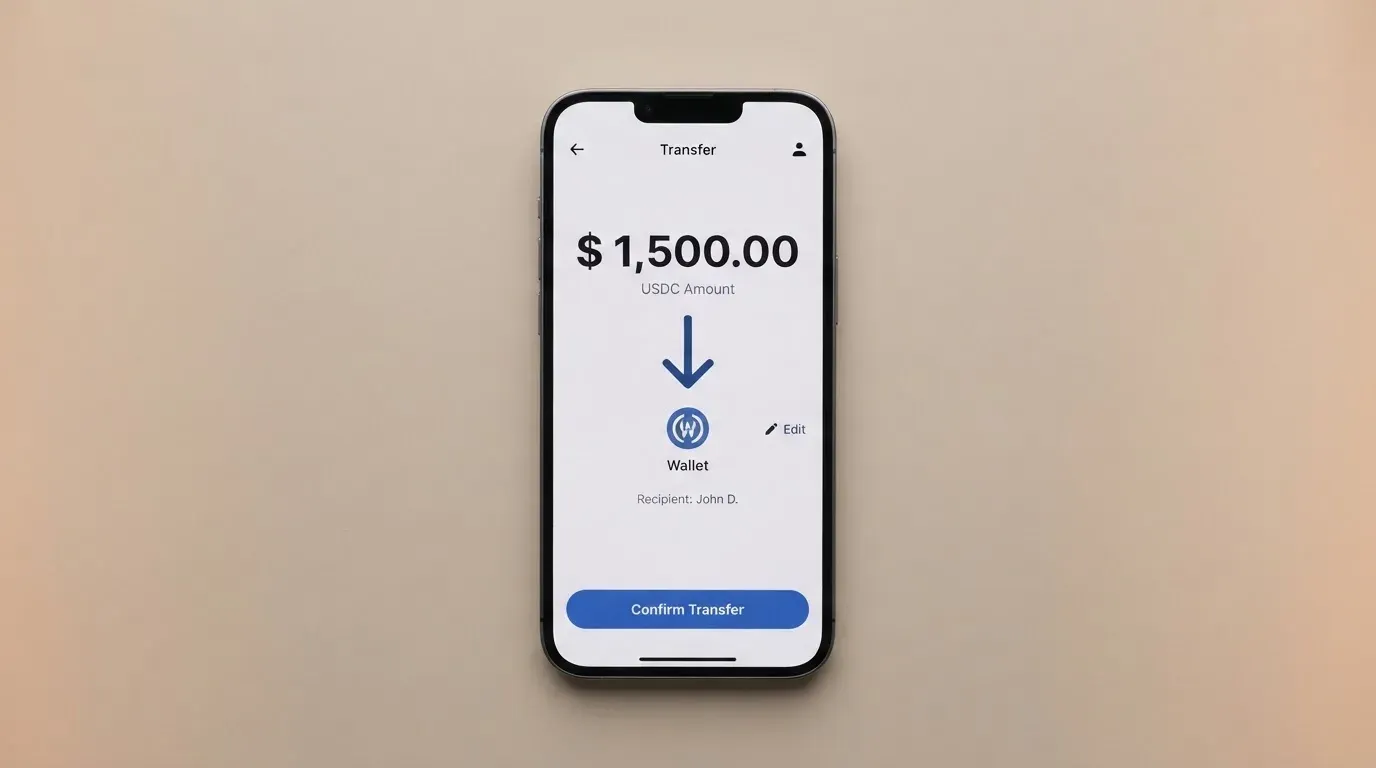
The card draws from the Exodus Pay balance on Solana, in this order: USDT, USDC, XO Cash. A purchase has to be covered by a single asset — you cannot have half a purchase paid by one and half by another, which is the kind of small rule that only matters when you have a balance split across two coins.
Deposits accepted:
- USDC on Solana, Ethereum, Arbitrum One, Base, BNB Smart Chain, Polygon
- USDT on Arbitrum One, Solana, Ethereum, BNB Smart Chain, Polygon
- A debit card
- Apple Pay (iOS)
Fees on the way in: deposits carry “no fee (no min. balance)”. DeFi and yield tokens are free up to $1,200 a month, then 0.5%. Other cryptocurrencies — wETH is the example the terms give — cost 0.875%. Stablecoin deposited in a currency that is not the cardholder’s or the merchant’s costs 0.5%. Network gas is small and variable, typically $0.01. What the debit card and Apple Pay top-up routes cost is not stated.
The network list is the part that deserves a warning, because this is where money actually goes missing. Blockchain transfers are irreversible. If you send on a network the provider does not support, or to an address belonging to a different network, the funds can be lost, or can need a manual support recovery with no guarantee attached. Pick the network from the list above, and check the address character by character — malware that swaps a copied address for its own is one of the oldest tricks in this space, and the blockchain will not undo it.
A few category facts worth holding alongside this, since they explain *why* the network list matters. ERC-20 is the Ethereum token standard, and gas there is paid only in ETH — a wallet holding USDT but no ETH cannot send. Tron prices internally with bandwidth and energy rather than gas. Circle stopped supporting USDC on Tron in February 2024, so “USDC over TRC20” is not a native option. And a note on the coins themselves: despite the name, stablecoins are not necessarily stable; TerraUSD collapsed in May 2022 and USDC lost its peg briefly in March 2023. Tether also says it disables tokens in wallets on the OFAC sanctions list and has frozen funds tied to illicit activity, so these balances are not censorship-proof.
One last thing about where your money sits, because it is genuinely different from most cards. This is a self-custody model: the funds stay in the linked wallet, so there is nothing to withdraw from the card. Refunds are credited to the Card Account and may be unavailable for up to five days. On closing the Card Account you may request a check of the remaining balance, for a fee.
Paying with it every day
The mechanics are simple enough. Wherever Mastercard is accepted, present the card or the virtual card and it spends from the balance. But there are three frictions you will meet in the first week.
The PIN. The card does not currently support a PIN. At terminals that ask for one, you may be able to confirm without entering anything. In practice: card-present payments at shops with contactless should be fine, and anything expecting a four-digit number may be a problem. If your daily life depends on a terminal you cannot tap, this is disqualifying.
Apple Pay. Apple Pay is described for adding money, on iOS. Whether the card can also be pushed into Apple Wallet for payments is not stated, and the fees for the card and Apple Pay top-up routes are not stated either. It is one of the things you would want to ask about before you commit, because adding money by phone is easy but paying by phone is a different question.
Online payments. Look at the mechanics before you are surprised. A merchant category code classifies what a business sells — MCC 7995, for instance, covers gambling — and many issuers block particular codes by policy rather than by law, with the blocked list differing by issuer. Address verification is mostly a US, Canada and UK mechanism and generally unavailable for foreign-issued cards, which can cause declines. And merchants can look up the issuer identification number in your card number to see which institution and country issued it, applying extra scrutiny when the issuer country differs from your billing address. That is why a card issued in one country can look foreign to a shop in another — and it applies to this card like any other.
Also: a declined authorisation can leave a hold on your funds for several days, typically up to seven.
The app itself rates 4.6 out of 5 on the App Store from 38K ratings, read on 2026-10-20, on iPhone, iPad and Vision. The Google Play rating I did not read, so I cannot tell you what Android users think.
There are perks. From 1 July 2026, card holders in Argentina, Brazil, Mexico, Colombia and Uruguay can pay DGO and SKY+ subscriptions, and new customers in those countries could get a 25% cashback offer subject to terms — the general rate is not stated. On Metal, cashback runs 3% on the first $10,000 spent per year and 1% after that, though the rewards programme may be paused or terminated under Schedule C of the terms.
What can go wrong
This is the section that takes the card down to 5 out of 10 on reliability, so read it rather than skipping to the recommendation.
The issuer is in a difficult position. Exodus Movement completed its acquisition of Monavate Holdings (issuer Monavate Ltd, FCA-authorised) and Baanx on 1 May 2026, buying the shares from receivers after a loan default, with $175M announced in November 2025. Q2 2026 results mention a 25% workforce cut. The CEO reportedly said Monavate cannot issue cards for new European clients, following a Bank of Lithuania inspection of Monavate UAB in late 2025. On the user side, a newer help article says new US card issuance is not open.
Let that sink in: the company that issues your card is one the card’s own parent had to buy out of receivership, which has cut a quarter of its staff, and which reportedly cannot onboard new European customers. If you are reading this in 2026 and you are considering applying, the honest question is not “is this card good” but “will I be able to get one, and will the card still work in a year”. I cannot answer that for you, and neither can the marketing page.
What users report. Trustpilot for Exodus sits at roughly 4 out of 5 from about 4,380 reviews, and the company replies to 93% of negative reviews — which is better than many. One review describes a debit card validation failure that was fixed after escalation. No card-specific complaint threads or Reddit results turned up in what I looked at, which is itself worth noting: the negative themes in the reviews are wallet themes (blocked transactions, high fees, unresponsive support), not card themes. That cuts both ways. It may mean the card is not generating complaints, or it may mean the card is too new or too niche to generate them.
What happens if something goes wrong. The terms say purchases are refunded as credit to the Card Account, which may be unavailable for up to five days. Unauthorised-transaction liability is limited to the face amount plus fees. Disputes with the programme manager go to arbitration under Delaware law with a class-action waiver. Chargeback time frames are not stated.
I want to be precise about what that arbitration clause means for you, because it is the kind of thing that matters most when things go wrong and least when reading a review. Waiving your right to a class action and going to individual arbitration in Delaware means that if Exodus or Baanx mishandled your case, you are on your own in a process you did not design, and a small individual claim often makes no economic sense to pursue. In the US, debit card reversal rights come from Regulation E and credit card rights from Regulation Z; prepaid-card coverage varies and should not be assumed. Before you sign up, it is worth reading that clause and deciding whether it changes your mind.
Self-custody cuts both ways. Control of crypto belongs to whoever holds the private key. A seed phrase — typically 12 to 24 words — is an unencrypted form of that key, and anyone who obtains it can restore the wallet and spend its funds. Transfers are typically irreversible and a stolen key has no built-in recovery: the network cannot freeze or return funds. So keeping your coins in your own wallet means you keep the control *and* the full weight of key loss, phishing and clipboard-hijacking malware. That is the trade, stated plainly.
What the terms give you to work with. You can set a spending limit, freeze the card instantly in the card dashboard, add and remove wallets, and report a lost or stolen card immediately — you report it to the toll-free number on the back of the card. Those are the standard safeguards and they are genuinely useful. Insurance is not stated. Support contacts: the official support email for Metal and replacement matters, or Monavate’s official support contact.
Why crypto card programmes close. This is not hypothetical fear. Visa terminated its global agreements with FTX on 13 November 2022 and the FTX US debit card was wound down. WaveCrest, a Visa issuer that supplied crypto card brands, was suspended by Visa in Europe in 2018, closing all WaveCrest-issued Visa programmes. The pattern is consistent: a notice period, then loading and spending stop, then you are asked to withdraw your remaining balance. One 2026 closure reported by a secondary source ended new loads on 8 July 2026 and spending on 8 August 2026 — single source, unconfirmed, but the shape of it is worth knowing.
And the regulatory layer sits underneath all of it. A card is a payment service regulated separately from the crypto side, so a crypto card often depends on two licences: MiCA, the EU’s markets-in-crypto regulation, took legal effect in June 2023, its stablecoin rules applied from 30 June 2024 and the remaining provisions including crypto-asset service provider rules from 30 December 2024, with a transitional period running until 1 July 2026 or until a provider gets or is refused authorisation, whichever comes first. ESMA keeps an interim register you can check. In the US, FinCEN guidance treats administrators and exchangers of convertible virtual currency as money transmitters, while people merely buying goods are not.
One thing nobody should get wrong: taxes. The IRS treats digital assets as property, so exchanging them for goods, services, dollars or other digital assets generally produces a taxable gain or loss. For personal holdings that is a capital gain or loss, short-term if you held it a year or less, measured in local fiat currency at fair market value on the transaction date. That means every card payment funded from crypto may be a separate disposal. I am not telling you what you owe anyone — I am telling you to find out what your jurisdiction’s rules are before you spend, not after.
What to take instead
Three other cards came up in the same category. None is a clear replacement for Exodus, and each fails differently. Here is how they stack up.
| Exodus | TokenPocket | MetaMask | KAST | |
|---|---|---|---|---|
| Score | 6.8 / 10 | 5.8 / 10 | 7.1 / 10 | 6.1 / 10 |
| Network | Mastercard | Visa for much of Europe, Mastercard for Australia, Canada, Hong Kong, Japan, Taiwan, New Zealand, Singapore, South Korea, UK | Mastercard | Visa |
| Where | 42 countries across Europe, the Americas and beyond | European country list, plus a set of Asia-Pacific markets; Americas planned for Q2 2025 | 45 listed countries/territories; other regions on a waitlist; US and UK sign-ups temporarily closed | Residence list shown at KYC, country list not published |
| Annual cost | $0 or $199/year | not stated | Virtual free; Metal $199/year | Standard $0; Premium $1,000/year; Private $10,000/year |
| Headline fee | 1% cross-border on Free | 1% to deposit crypto into the card | minimal per-transaction fee, amount not stated | 0% stablecoin top-up and USD spend; FX 0.5%–1.75% depending on country |
| Rewards | 3% then 1% on Metal | none stated; deposit fee refunded via rewards | 1% Virtual, 3% Metal headline, 3% on first $10,000 then 1% | 1.5% / 2% / 3% cashback on tiered monthly spend caps, plus KAST Points |
| Issuer | Monavate (FCA) | not stated | Monavate | not stated |
Reading across the rows: TokenPocket scores lowest, largely because it charges 1% to deposit crypto and says only that this is refunded later through rewards, and because the Americas were still planned rather than live. MetaMask scores highest at 7.1, mostly on a clean cost story — virtual card free with no annual or maintenance fee, no foreign transaction fee, and Mastercard’s rate — plus broad funding networks (Linea, Base, Monad, Solana) and cashback paid in mUSD. It shares Exodus’s issuer, which means it shares the same underlying uncertainty, and its sign-ups are closed in the US and UK right now. KAST has the most impressive fee table on paper — 0% stablecoin top-up, 0% USD spend, 0% transaction fee — offset by membership tiers that run to $1,000 and $10,000 a year, and an eligibility rule that can lock your KYC even if you live in a supported country but hold an ID from a restricted one.
If your priority is spending a stablecoin you already hold with the fewest moving parts and no annual fee, MetaMask’s virtual card is the one I would look at first. If your priority is cashback on heavy spend, KAST’s tiers are built for volume but the entry price is high. If you want physical metal in the post, both Exodus and MetaMask offer it at $199 a year.
Who I would recommend it to
I would recommend the Exodus Card to someone who already has money in the Exodus wallet, is based in one of the 42 supported countries, is comfortable holding their own keys, and wants to spend stablecoins on Solana-linked balance without a conversion dance each time. If that is you, the free tier is a reasonable thing to try: $0 a year, no physical card to wait six weeks for, and a virtual card you can hold today.
I would not recommend it — yet — to anyone who needs the physical card urgently, who travels often enough for the 1% cross-border fee to matter, who needs a working PIN, or who is uneasy about an issuer in receivership-to-acquisition limbo. And I would read the arbitration clause before you sign up for anything, anywhere in this category.
The honest summary is that the top-up side of this card is excellent and the ground beneath it is moving. The 9 out of 10 for funding is deserved; the 5 out of 10 for reliability is deserved too. When the same issuer is making the same Metal card at the same $199 for a different brand, that tells you something about where this category’s value is right now — in the software, not the plastic.
Frequently asked questions
What is the Exodus Card?
It is a Mastercard debit card that spends crypto directly from a linked self-custody wallet. You do not convert to fiat in advance: the card draws from an Exodus Pay balance on Solana, using USDT, then USDC, then XO Cash, in that order, and one asset must cover a whole purchase. Because there is no credit line, the card cannot be overdrawn.
How does the Exodus Card work?
You top up the balance, then pay wherever Mastercard is accepted. A purchase is covered by a single asset from the balance, converted and settled by the network. Refunds go back to the Card Account and may be unavailable for up to five days. Funds themselves stay in your wallet until the moment of payment, so there is nothing to withdraw from the card itself.
Is Exodus a bank?
No. Exodus Movement is a crypto wallet company, not a bank. The card is issued by Monavate Ltd, an FCA-authorised e-money issuer, with Baanx as programme manager under the EU and UK terms. Both Monavate and Baanx were acquired by Exodus Movement on 1 May 2026. Being an e-money issuer is not the same as being a deposit-taking bank.
Who owns Exodus?
Exodus Movement acquired Monavate Holdings, the parent of issuer Monavate Ltd, and Baanx on 1 May 2026. The shares came from receivers after a loan default, with $175M announced in November 2025. Q2 2026 results mention a 25% workforce cut, and the CEO reportedly said Monavate cannot issue cards for new European clients.
Does the Exodus Card require KYC?
Yes. Identity verification is required for the card, for cash deposits and for redeeming points. You need a phone number receiving a code by WhatsApp or SMS, then email verification, then an ID check in the app. Former Spend Card users migrate without re-verification. The card’s public pages do not state the levels used, processing times or rejection reasons.
Is the Exodus Card free?
There is a Free tier at $0 a year. The Metal tier is $199/year, auto-renews, and can be cancelled within 14 days for a refund. The Free tier charges 1% for purchases outside the cardholder’s country, 2% for ATM withdrawals, and 0.5% on stablecoin deposited in a currency that is not the cardholder’s.
How do I top up the Exodus Card?
By crypto transfer: USDC on Solana, Ethereum, Arbitrum One, Base, BNB Smart Chain or Polygon, and USDT on Arbitrum One, Solana, Ethereum, BNB Smart Chain or Polygon. You can also add money by debit card or by Apple Pay on iOS. Deposits carry no fee and no minimum balance; network gas is small and variable, typically $0.01.
Can I use the Exodus Card in my country?
Only in the 42 supported countries and territories, which are mostly European and Latin American, plus Canada and the USA excluding Vermont. If you are not on the list, the card is not available to you. Exodus Pay itself works in most jurisdictions, but that is not the same as card availability, and new US card issuance is currently reported as not open.
Is the Exodus Card safe?
It depends on what you mean. Your funds stay in your own wallet, which removes counterparty risk but makes you fully responsible for key loss and phishing. You get sensible tools: spending limits, instant freeze, 3-D Secure confirmation. Against that, the issuer has been through receivership, a workforce cut and reported limits on new European customers, disputes go to arbitration under Delaware law with a class waiver, and insurance is not stated.
Is the Exodus Card worth it?
On the Free tier, worth trying if you already hold USDT or USDC and spend in your own country — it costs nothing and the top-up options are the best in this comparison. It is worth less if you travel often, need a PIN, need metal quickly, or want certainty that a new card will still be issued to you in six months. The Metal tier at $199 a year is a bet on the issuer’s stability as much as on the cashback.
Wallet cards on the shortlist – cryptocardshortlist
Content created by the «cryptocardshortlist» team