
A USDT-funded virtual card for people who cannot get a normal bank card
 Available in US

If you have been turned away by a bank, or you live somewhere a normal Visa is hard to get, the NoOnes card is worth putting on a shortlist. It is a virtual card only, denominated in US dollars, and you fund it from a USDT balance inside a custodial NoOnes wallet. If that is your situation, this page goes through who gets the card, what it costs, how you load it, and where it is likely to disappoint you. If you already hold an ordinary debit card with a bank that will open an account for you, read the fee section first — because on everyday payments this card is expensive, and the comparison is not close.
The conditions described here are current as of October 28, 2026.
Verdict: 4.9 out of 10
I scored the NoOnes card 4.9 out of 10. That is not a condemnation. It is a card with one very specific job — turning a USDT balance into a spendable US-dollar Visa number for people who cannot get a normal card — and it does that job, but it does it at a price, with a thin public record about who stands behind it, and with a feedback file that is worse than the average fintech.
| Criterion | Mark | Why |
|---|---|---|
| Who can get it | 7 / 10 | Any country where NoOnes operates except restricted jurisdictions; the card launched in Ivory Coast, Kenya, South Africa |
| Cost | 4 / 10 | Activation 1 USDT; purchases outside the USA 3% + $0.50; top-up 2 USDT under $100 and 1.5% from $100; contactless payment 0.25% |
| Top-up options | 5 / 10 | Only the NoOnes USDT wallet balance — buy on the Marketplace, convert other crypto, or deposit USDT; networks not named |
| Reliability and complaints | 4 / 10 | Issuer and licences not named; Trustpilot 2.9/5 from 1,131 reviews, one report of a vanished card; custodial wallet |
| Everyday use | 4 / 10 | Virtual Visa in USD only; Apple Pay, Google Pay and ATM are not disclosed |
Who this suits: someone trading peer-to-peer, holding USDT, who needs a Visa number that merchants will accept and who cannot open a conventional account. The card exists to be spent, and for that narrow job it works. Who it does not suit: anyone planning to use it as their main everyday card, anyone who expects cash from an ATM, anyone who wants to hold rewards or cashback, and anyone who needs a physical card in their wallet for a shop that insists on plastic.
The single most important thing to understand before you read the rest: this is not a bank account, and the money is not yours in the legal sense until you spend it. It sits in a custodial wallet operated by NoOnes. That shapes the fees, the limits, and the risk, and it is why I mark reliability at 4.
Will they give you the card?
The rule is by account country, and it is a permissive one with a list attached. Any country where NoOnes operates is eligible except restricted jurisdictions. Russia and Belarus are both on the unavailable list, alongside Afghanistan, Cuba, Iran, Iraq, North Korea, Syria, Venezuela and others. Ukraine is restricted only for Crimea, Donetsk and Luhansk, which means Ukrainian residents elsewhere in the country are not excluded by that entry.
The launch announcement of 31 May 2024 named Ivory Coast, Kenya and South Africa as the first markets for the virtual Visa card in US dollars. That is a useful signal about who the product was designed around: markets where a US dollar Visa is not easy to obtain from a local bank, and where a mobile-money and crypto user base already exists. It is not a complete country list, and I would not read it as one.
Two things the public pages do not tell you. They do not name the issuer — the card’s own language is that the issuer is its virtual card provider — and they do not name any licences. So when you are deciding whether this is safe for you, you are making that judgement with the regulatory details missing, not because they are unfavourable but because they are not stated. I would rather say that plainly than imply a picture that is not there.
How to get it
The application path is short and conventional for this category. You create an account, verify your identity, then deposit to the card. Identity verification is at level two: a verified email and phone, ID verification, and your consent to share that ID with the card issuer. Age is not stated.
Address verification is the third layer, and it is the one people are most often surprised by. You need it to top up more than $500 in total, and to spend up to $50,000. That means you can open an account and start spending small amounts without proving your address, but the moment you want this card to function as a real spending account, they will want proof of where you live. Both the processing time for verification and the reasons a verification can be rejected are not stated, so plan for that uncertainty rather than assuming it goes through on the first try.
Once approved, you get a virtual Visa card denominated in US dollars. It is ready in under five minutes according to the card’s own pages. There is no physical version — not a delayed one, not a paid upgrade, none. The card is ready as a card number, and that number is the entire product. You can hold up to three active cards at the same time.
That single fact sets the ceiling on everything that follows. No plastic means no ATM story, no queue at a counter, no backup if your phone is lost, and no second option when a merchant refuses a virtual card.
Fees: what it really costs
This is where the card stops being a bargain. Read this table before you decide anything.

| Fee or limit | What the card says |
|---|---|
| Issuance | Activation 1 USDT; up to 3 active cards at once |
| Monthly fee | None listed |
| Conversion | Not listed; the card is funded in USDT |
| Foreign purchase | 3% + $0.50 per transaction, set by the issuing bank |
| Contactless | 0.25% |
| Failed payment | 0.75 USDT on the 2nd and 3rd attempts |
| ATM | Not stated |
| Spending limit | Up to $50,000 with address verification |
| Card creation | $3 minimum, $500 maximum |
| Minimum balance | $1 to keep the card active |
Let me put three everyday payments through those numbers, because that is where the structure bites.
Coffee or a sandwich. A $5 purchase at a shop outside the United States costs you 3% plus $0.50 on top of the price — $0.65 for a sandwich. If you tap it rather than insert or swipe, add 0.25%, which is $0.01 at this value, but the percentage is not zero and it is charged on every contactless transaction regardless of size.
A monthly subscription. Say $49 for something you pay online from outside the US. That is $1.47 plus $0.50, roughly $1.97 of pure fee on a recurring charge. It recurs every month, and the card gives you no way I can see to convert it into a local-currency charge that would avoid the non-US treatment.
A large purchase. A $500 transaction outside the US carries $15 plus $0.50. If it is declined and you retry, the second attempt costs another $0.75 USDT, and the third as well.
Two details deserve a second look. The 3% plus $0.50 is set by the issuing bank, not by NoOnes, so it is not something you can negotiate away by being a good customer. And because the card is US-dollar denominated, every payment made in another currency is a non-US transaction by construction. There is no multi-currency balance — the card states one tier, one virtual Visa in US dollars. So the FX cost is not something you avoid by paying in dollars; it is built into every purchase you make outside America, and the fee is applied on top of whatever rate the issuer applies.
What is not stated matters too: there is no conversion fee listed, no ATM terms, and no monthly fee listed. I would not read an omission as a zero charge. These are pages that do not say.
How to Top up
Top-up is simple in concept and narrow in practice. The balance comes from the NoOnes USDT (Tether) wallet balance. You can get USDT into that balance three ways: buy it on the NoOnes Marketplace, convert another crypto into it, or deposit USDT from outside. The homepage also mentions crypto, mobile money and banks as routes in. Fees for those fiat routes are not stated.
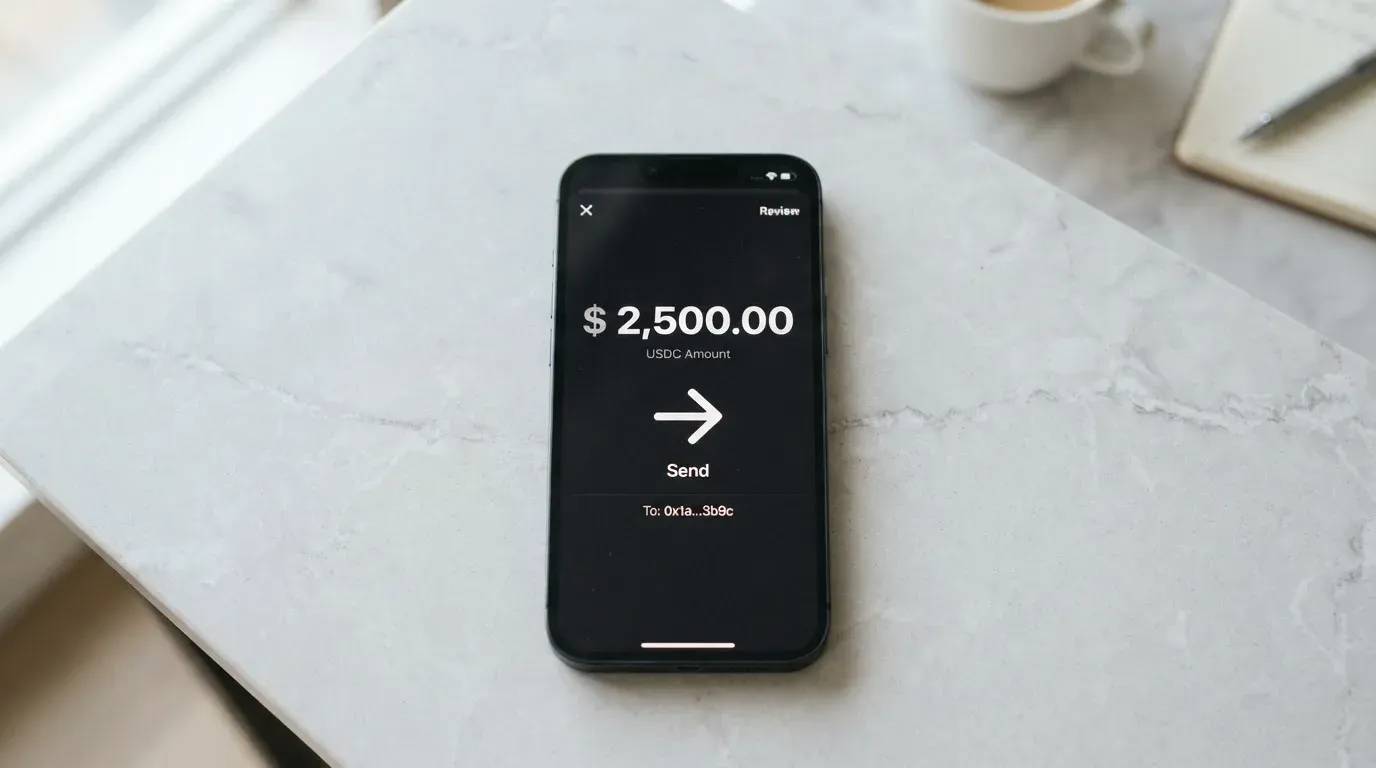
Networks are not named. That is the single most important gap on this page for anyone actually planning to move money, and I would not paper over it. A blockchain transfer sent on a network the provider does not support, or to an address belonging to a different network, can be lost or need manual support recovery with no guarantee — transfers are irreversible, and there is no built-in cancellation. Before you send anything, confirm in the app which networks it accepts. Do not assume the popular ones. USDT exists on Ethereum, Tron, Solana, Polygon, Avalanche and others, and the fact that USDT exists on a network does not mean your card accepts it there.
The top-up pricing:
- Under $100: 2 USDT per top-up
- $100 and above: 1.5%, with a 2 USDT minimum
- Paid in USDT
On-chain network fees are charged by the blockchain, not by NoOnes, so a deposit costs the top-up fee plus whatever gas or bandwidth the network charges. On Ethereum that means holding some ETH alongside your USDT or the transfer will not go through.
Getting money back out is better than the fees suggest. Card withdrawals are free and are credited to your Tether wallet as USDT. You can withdraw your balance minus $1. Two restrictions to know: withdrawals and termination are blocked for 72 hours after your last card activity, and the Terminate option appears only when the balance is below $2, with the remainder going to your Tether wallet. The card is also auto-terminated after three failed attempts.
That last rule and the failed-payment charge interact. Two declined payments cost you 0.75 USDT; a third terminates the card outright. If your balance is too low — below the $1 minimum needed to keep the card active — you are one unlucky sequence away from losing the card entirely.
Paying with it every day
What you actually get is a virtual Visa number in US dollars, spent from the NoOnes wallet. Apps for Android and iOS exist; I did not read their ratings. That is the whole everyday-use picture the public pages give, and the gaps are more informative than the content.
Apple Pay and Google Pay are not stated. Whether your card can be pushed into a phone wallet is therefore unknown from the card’s own pages, and since NoOnes holds the number, it may well be possible — but do not build a plan on it. Blocked merchant categories are not stated either; the only blocked list I found mentioned is blocked e-mail domains at sign-up. That is a sign-up artefact, not a spending restriction, so it tells you nothing about casinos, adult merchants or similar categories. A card with no stated blocked categories is not the same as a card with none. Cashback and rewards are not stated. There is no mention of any reward on any purchase.
Disputes and chargeback handling for card payments are also not stated. That is a real gap for anyone planning to use this card for anything they would fight to recover.
Two general points about why virtual cards sometimes fail at the till, since they apply to any card of this shape. Merchants can look up the BIN and see which institution and country issued the number, and may apply extra scrutiny when the issuer country differs from the billing address — which is exactly your situation when a US-issued card is used elsewhere. Some merchants decline prepaid or foreign BINs for that reason. Separately, address verification service is mainly offered in the US, Canada and the UK and is generally unavailable for foreign-issued cards, which can cause declines. If a transaction is declined, a hold on funds can remain for several days, typically up to seven.
So the honest summary of everyday use is: fine for online and for peer-to-peer settlement, unreliable at physical terminals, and no mobile wallet, no ATM, no rewards, no stated dispute route.
What can go wrong
The risk picture has three layers, and I want to keep them apart.
The money layer. The wallet is custodial. Your funds sit with NoOnes, which holds the credentials — control of crypto belongs to whoever holds the private key, and here that is the provider, so you have to trust them completely. That is counterparty risk, and it is not hypothetical: custodial platforms have a track record, with Mt. Gox (about US$350 million reported stolen, 2011–2014), Coincheck (about US$400 million, 2018) and Ronin Network (US$625 million, 2022). NoOnes describes its safeguards as advanced encryption and fraud detection on every payment; freeze and spending controls are not stated. If the company fails, you are a creditor in an insolvency, not a depositor with a guarantee scheme — e-money funds of this type are safeguarded by segregation or insurance, but they are not bank deposits.
The service layer. NoOnes is described as Nigerian-founded in press coverage. The issuer is not named and no licences are named, which means you cannot check a register for them. And the support record is thin: 24/7 via a help centre and a contact form, languages not stated, and complaints that include slow or unanswered support between July and September 2026.
The reputation layer. Trustpilot shows 2.9 out of 5 from 1,131 reviews, read on 2026-10-21. That is a lot of reviews and a low score. The recurring themes are not about card mechanics: P2P disputes closed without explanation (August 2026), gift-card trade failures (April–August 2026), and slow or unanswered support (July–September 2026). Only one review mentions the Visa card at all. That one, from July–August 2026, reports that the virtual card disappeared; NoOnes replied that technical issues affecting access to the Virtual Visa Card were resolved.
That last complaint is the one I would weight most heavily for a card user, and it is also the one with the least pattern behind it — a single report, answered by the company. If a card vanishes, you are spending from a wallet balance against a card you cannot physically present, and your support route is the same help centre that other reviewers describe as slow. The three attempts rule makes it worse: card access that fails repeatedly ends with the card terminated.
I should also say plainly what I could not check. There is no stated dispute process for card payments, no stated chargeback route, and no stated ATM or mobile wallet support. In the United States, debit card reversal rights come from Regulation E and credit card rights from Regulation Z, with prepaid-card coverage varying and not to be assumed. Which regime applies to a virtual USD card issued by an unnamed issuer is exactly the kind of detail this review cannot answer for you.
What to take instead
I compared this against three cards that come up in the same search, and I scored each on the same scale. The scores differ mostly because the alternatives publish more.
| Card | Score | Who it is for |
|---|---|---|
| NoOnes | 4.9 / 10 | USDT-funded virtual USD Visa, widest country reach of the three, thinnest published detail |
| Young Card | 5.7 / 10 | Tiered cashback in YNG tokens |
| OKX | 6.2 / 10 | Euro Mastercard for EU users, MiCAR entity |
| Coinbase Card | 6.4 / 10 | US only, but the most transparent terms of the three |
Coinbase Card scores 6.4. Its limitation is scope: available in all US states except Hawaii, no other countries, and account opening follows the USA PATRIOT Act identity rules (name, address, date of birth, ID). In exchange, it publishes its economics. It is a Visa prepaid debit card, virtual or physical, spending cash or crypto, with zero spending fees and no annual fees; all fees are disclosed in the Cardholder Agreement and User Agreement. There are no Coinbase transaction fees, but a spread applies when Coinbase buys, sells or trades crypto — the conversion happens at payment, which is the part to watch. You fund it by linking a bank account or depositing part of a paycheck into Coinbase at zero fees, and a crypto balance on Coinbase can be spent directly, converted to USD. Optional crypto rewards on every purchase exist for US Card users, with a variable rate shown in the app and a rotating choice of crypto. If you are in the United States, this is the more legible card. If you are not, it is irrelevant.
OKX scores 6.2 and is the interesting one for a European reader. It is a Mastercard, euro-denominated virtual debit card linked to OKX Pay, issued via an unnamed European licensed payment provider, launched 28 January 2026. Availability follows the rule for EEA users of OKX Europe Ltd, the MiCAR licensed entity; Iceland and Liechtenstein are excluded. Funding is USDC or USDG held in OKX Pay, via Convert or an external deposit — other coins must be converted first, and there is no auto top-up, so a payment is declined if the balance is insufficient. On fees: no card fee (as of May 2026), no transaction fee, no OKX FX fee, and a conversion spread of 0.1% per the explainer as of May 2026 against 0.4% in the launch press release — the newer figure is the one I would use, but note the conflict. Cashback is only on USDG purchases; USDC earns none. Caps are monthly and in euro: Regular 2% cap 10; VIP1 4% cap 300; VIP2 4.5% cap 450; VIP3 5% cap 1,000; VIP4+ 10% cap 1,000. The published text says 2–5% while the table says 10% at the top tier, which is an inconsistency worth keeping in mind.
Young Card scores 5.7, on the strength of one clearly stated feature: cashback paid in YNG tokens at a rate set by Club tier — Essential 0.1%, Gold 1.8%, Platinum 3.6%. Bronze and Silver are not stated, and country eligibility, the card itself, its cost, its fees and its funding are all not stated officially. I would not choose it over NoOnes on that basis, but I would want it on your list if token cashback matters to you.
The honest comparison: NoOnes is the most geographically open of these for someone outside the US and EU banking mainstream, and the least transparent. If your problem is access rather than cost, that trade may be the right one. If your problem is cost, none of these is cheap, and OKX’s euro card with a 0.1% conversion spread is the least painful structure on paper.
Who I would recommend it to
I would recommend the NoOnes card to exactly this person: you are trading peer-to-peer, you hold USDT already, your country has no easy route to a normal Visa, and you need a dollar card number today rather than after an application that will be declined. In that situation it is one of the few things that works, and the $1 minimum balance and the 1.5% top-up above $100 are not what will hurt you.
I would not recommend it if any of these are true:
- You already have a working debit card. You will pay more for the same purchase.
- You need cash from an ATM. ATM terms are not stated.
- You want the card in Apple Pay or Google Pay. Not stated.
- You plan to hold a meaningful balance. It is custodial, the issuer is unnamed, and no licences are named.
- You need to dispute a transaction. No dispute or chargeback process is stated for card payments.
- You want rewards or cashback. Not stated.
The pattern in that list is worth stating plainly: almost every weakness I can name is an absence of published information rather than a disclosed bad term. That cuts both ways. It means NoOnes may be better than this page suggests — there is no disclosed monthly fee, no disclosed conversion surcharge, no disclosed blocked-venue list. It also means you are making the decision on gaps, and you should make it knowing that. If a figure matters to you and it is not on the card’s pages, ask support in writing before you commit money, and keep the answer.
Frequently asked questions
What is the NoOnes card?
It is a virtual Visa card denominated in US dollars that you fund from a USDT (Tether) balance inside NoOnes’s own custodial wallet. There is no physical version. It is aimed at people in markets where an ordinary bank-issued Visa is hard to obtain, and it works as a prepaid card: you load a balance and the card spends only that balance.
Is NoOnes a bank, and who owns it?
NoOnes is described in press coverage as a Nigerian-founded company, and its own pages call the issuer its virtual card provider without naming one. No licences are stated. So it is best understood as a crypto wallet business that runs a card programme on top of an unnamed issuing partner, not as a bank, and I could not verify a regulatory registration for it.
Which countries can use the NoOnes card?
Any country where NoOnes operates, except restricted jurisdictions, judged by your account country. Russia and Belarus are on the unavailable list, along with Afghanistan, Cuba, Iran, Iraq, North Korea, Syria, Venezuela and others. Ukraine is restricted only for Crimea, Donetsk and Luhansk. The card launched in Ivory Coast, Kenya and South Africa on 31 May 2024.
Does getting the card require KYC?
Yes. You need a verified email and phone, ID verification at level two, and consent to share your ID with the card issuer. Address verification is required to top up more than $500 in total and to spend up to $50,000. Processing times and rejection reasons are not stated, and the minimum age is not stated either.
What does a NoOnes payment actually cost?
A purchase outside the United States costs 3% plus $0.50 per transaction, set by the issuing bank. A contactless payment adds 0.25%. A failed payment costs 0.75 USDT on the second and third attempt, and three failed attempts terminate the card. Activation is 1 USDT, and no monthly fee is listed. ATM and conversion fees are not stated.
Can I add the NoOnes card to Apple Wallet?
The card’s public pages do not say. Apple Pay and Google Pay are not stated either way, so I cannot confirm it works and I would not assume it before checking in the app. NoOnes holds your card number, so a tokenised phone wallet may well be available — but treat that as something to verify, not a feature to plan around.
How do I top up, and what will it cost?
You top up from the NoOnes USDT wallet balance, either by buying USDT on the Marketplace, converting another crypto, or depositing USDT from outside. The fee is 2 USDT for amounts under $100, and 1.5% for $100 and above with a 2 USDT minimum, paid in USDT. Blockchain network fees are charged by the network itself, not by NoOnes.
Which network should I send USDT on?
The card does not name supported networks, which is the gap I would close first. Transfers are irreversible, and sending on an unsupported network or to another network’s address can lose the funds or require manual recovery with no guarantee. USDT exists on Ethereum, Tron, Solana, Polygon, Avalanche and others — check which of those NoOnes accepts before you send anything.
Is the NoOnes card safe for large balances?
Not to my judgement, and the reasons are structural rather than incidental. The wallet is custodial, so NoOnes holds the credentials and your funds sit with them. The issuer is unnamed, no licences are stated, and the Trustpilot score is 2.9 out of 5 from 1,131 reviews. Safeguards are described as encryption and fraud detection on every payment; freeze and spending controls are not stated.
Can I withdraw my money and close the account?
Card withdrawals are free and land in your Tether wallet as USDT, and you can withdraw your balance minus $1. Withdrawals and termination are blocked for 72 hours after your last card activity. The Terminate option appears when the balance is below $2, with the remainder going to your Tether wallet, and the card is auto-terminated after three failed attempts.
Exchange cards on the shortlist – cryptocardshortlist
Content created by the «cryptocardshortlist» team