
What MothCard publishes, what it hides, and who should steer clear
 Available in US

MothCard describes itself as a crypto virtual card for global payments. That is accurate and it is also the whole pitch. Everything you would normally use to judge a card — the fee schedule, the issuing bank, the country list, the withdrawal rules — is either held back to the app or missing entirely from the public pages. What remains is a virtual card issued on Visa or Mastercard, settled in US dollars, funded from a crypto wallet, aimed at online spending.
I gave it 5.4 out of 10. That is not a score for a scam. I found no official incident, no complaint pattern, and no evidence of harm. It is a score for opacity: a card that asks you to install an app, send crypto on a network the app chooses, and trust a balance it will not itemise — before it has told you what any of that costs.
Who it suits is narrow. If your problem is that an ordinary bank card is difficult or impossible for you to get, if you already hold USDT on a chain you can check, and if you are comfortable reading the fee screen inside the app before every large payment, MothCard is a workable tool. If you are choosing between cards and comparing them on price, you cannot do it here — the card does not publish the numbers.
Conditions are current as of October 28, 2026.
The score, criterion by criterion
Each mark below is out of 10. I have kept the total at 5.4 exactly as it stands; the marks are the inputs, not my own arithmetic.
| Criterion | Mark | Why |
|---|---|---|
| Who can get it | 6 / 10 | “Accepted worldwide” on the site, but with country and region restrictions; the issuing region depends on which card you pick and is only visible in the app; the company sits in Hong Kong |
| Cost | 5 / 10 | Issuance and maintenance both carry fees and the amounts appear only in the app; operation fees are not disclosed at all |
| Top-up options | 5 / 10 | Wallet top-up in USDT per the App Store listing; other coins and networks appear in the app and are not published |
| Reliability and complaints | 5 / 10 | Operated by Hong Kong Yunmo Technology Co., Limited; issuing bank and licences not named; App Store rating 5.0 from a single rating; no complaints found |
| Everyday use | 6 / 10 | Virtual card with Apple Pay and Google Pay support; cash machine access not disclosed |
| Total | 5.4 / 10 |
Two things pull this up from a bad score and two pull it down. Up: the app exists on iOS, Google Play and as a direct Android APK, and it reached version 2.1.0 from a 1.0.0 first release — that is a functioning product, not a landing page. Down: an unnamed issuing bank, and a fee schedule that exists only inside the app you must already install to read it. That is the friction that decides the score.
Will they give you the card?
Mostly yes, with one real question mark.
The starting data is Hong Kong, stated in the Terms of Service, section 3.1. From there the public site says the card is “accepted worldwide” — but it immediately qualifies that “some countries or regions may have restrictions”. That is the entire eligibility statement. There is no list of excluded countries, no list of included ones, and no statement about citizenship as distinct from residence.
The issuing region varies by card and is shown in the app. That detail matters more than it first looks. When you open the app and are offered several cards, the one you choose carries a different issuing country with it, and that country is what a merchant’s systems will see. Section on paying below explains why.
My honest read: the words “accepted worldwide” describe where the card is honoured, not who can hold one. They answer the wrong question for anyone trying to find out whether they qualify.
How to get it
Four steps, one of which is the identity check.
- Sign in to the app.
- Choose a card and verify your identity.
- Top up the wallet.
- Move funds onto the card.
The identity check is a one-time check tied to anti-money-laundering and sanctions obligations. The card’s own words: “Just one valid personal ID”. Which documents count is shown in the app and varies by country. In some cases there is a face scan. Proof of address is not stated. Minimum age is not stated — the App Store age rating is 18+, which is a store classification, not an eligibility rule.
There is no delivery step. This is a virtual card, so there is nothing to post and no plastic to wait for.
Fees: what it really costs
This is the section that decides my mark, and the honest headline is that MothCard does not publish its prices.
| Fee or limit | What MothCard says |
|---|---|
| Card issuance | There is a fee; the amount appears only in the app |
| Monthly maintenance | There is a fee; the amount appears only in the app |
| Conversion fee | Not stated |
| Currency exchange fee | Not stated |
| Cash machine withdrawal | Not stated — the card is described for online payments |
| Per-transaction spending limit | Applies; exact amount not published, refer to the app |
| Daily spending limit | Applies; exact amount not published, refer to the app |
| Monthly spending limit | Applies; exact amount not published, refer to the app |
Settlement is in USD. Wallet balance and card balance are shown separately, which is a small but real usability detail — you can see which pot the money is in.
There are no tiers to compare. Several cards are selectable in the app and they carry different issuing regions, but the card’s public pages do not set out how they differ.
Let me walk three ordinary payments through what I actually know, because that is more useful than a table of blanks.
A coffee, roughly $5. If the coffee shop is in the US and your card settles in USD, the network, the merchant and the issuer all speak the same currency, so the FX question does not arise. What remains is the conversion from whatever you hold on the wallet side into the balance the card spends, and that conversion fee is not published. You would learn it from the confirmation screen in the app at the moment you send. A declined authorisation can also leave a hold on funds that lingers for several days, typically up to seven — so a $5 coffee can quietly tie up $5 for a week if the authorisation misfires.
A subscription, $12 a month. This is where per-transaction, daily and monthly limits bite. All three exist; none are published. If your monthly cap is below $12 you find out by being declined at a renewal, which is a worse moment to discover a limit than before you subscribe. The blocked merchant categories are not stated, so it is also worth knowing that the four-digit category code attached to a merchant is what issuers use to block things like gambling — and that the blocked list is the issuer’s own policy, not law.
A holiday, $200, in a currency that is not USD. Here you have two unknowns stacked: the conversion rate the app applies, and the fee on top of it. Neither is on the website. Add the possibility that a foreign-issued card is handled differently by the merchant’s own systems — the issuer country is visible in the card’s identifying digits, and a shop may apply extra scrutiny when that country differs from the billing address. Billing address checks, which compare the numeric parts of the address you type against issuer records, are mainly offered in the US, Canada and the UK and are generally unavailable for foreign-issued cards, which is a common cause of declines. If the payment goes through online, 3-D Secure may add a step: the issuer assesses the risk and either approves silently or challenges you with a one-time code.
None of this means MothCard is expensive. It means I cannot tell you it is cheap, and neither can the website.
Top up: how the money gets in
The wallet is topped up in USDT, per the App Store listing. Beyond that the card says only that “you used the network shown in the App” — the list of supported coins and chains is not published anywhere I could read.
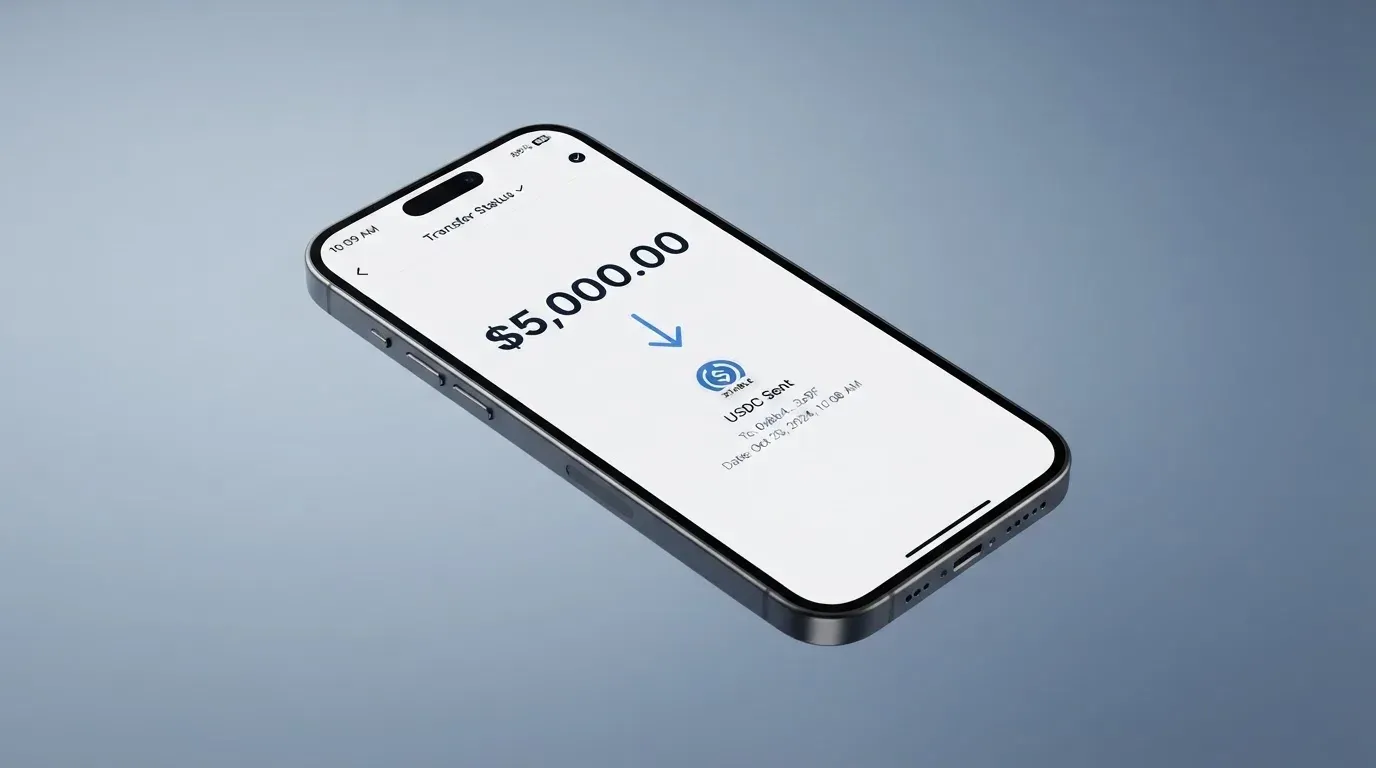
The flow is two-stage, and this is the single most important practical thing on the page: top up the wallet first, then move funds from the wallet onto the card. Depositing straight to the card, or assuming the two balances are the same pot, is a mistake the separate-balance display is trying to warn you about.
The deposit fee and the minimum deposit are not stated. Neither is the fee for moving money between wallet and card — although the card does tell you that sending money carries a service fee and shows a minimum on the in-app confirmation page. So the numbers exist; they are just not on the website.
Network choice is where crypto cards genuinely bite. Blockchain transfers are irreversible. A deposit sent on a network the provider does not support, or to an address belonging to a different network, can be lost entirely, or need manual support recovery with no guarantee attached. The network fee for your deposit is charged by the blockchain, not by the card. And a wallet holding USDT on Ethereum with no ETH in it cannot send at all, because gas is paid only in ETH — a failure that looks like a broken app but is not.
If you use Tron for USDT, expect the fee to be paid through that network’s own resource pricing rather than a straightforward gas number. If you tried USDC on Tron, note that Circle stopped supporting USDC there in February 2024, so that particular combination is not a native option. Stablecoins are not risk-free: TerraUSD collapsed in May 2022 and USDC lost its peg briefly in March 2023.
Paying with it every day
The card is built for online payments. That is the stated purpose and the honest limit of the design.
Apple Pay and Google Pay are both supported; which wallets work with which card is shown in the app. If you add the card to Apple Pay, the number that reaches the merchant is a device-specific token in the Secure Element, not the card number itself, and each payment carries a one-time code — that is a genuine reduction in exposure. The issuer can still restrict a tokenised number, for example blocking it on websites or on phone payments, so a token that works in a shop may not work in an app.
Cash machines. Not stated. The card does not present itself as an ATM card, and I would not plan around one.
Rewards. Not stated — the FAQ does not mention cashback. Not mentioned is not the same as none, but you should not model any.
The app itself. iOS 15.6 and above, Google Play, and a direct Android APK — useful if you are outside the Play Store’s coverage. App Store rating 5.0 from one rating, which I read on 2026-10-21. One rating is not a signal in either direction. I could not obtain the Google Play rating.
Disputes. Not stated. What you do have is app history listing payments, fees and merchant refunds. A chargeback is a refund ordered by the issuer with a reason code — fraud, duplicate billing, goods not received — and for prepaid cards the coverage varies by country and should not be assumed. If you are in the US, debit reversal rights come from Regulation E and credit card rights from Regulation Z; prepaid-card protection is a separate and patchier thing.
What can go wrong
The risks here are not fraud alarms. I found none. They are structural, and they come from the same place: you are asked to commit money before you are told enough to evaluate it.
The unknown issuer. The company behind the card is Hong Kong Yunmo Technology Co., Limited, Tsim Sha Tsui, Hong Kong. The issuing bank or institution is not named and no licences are named. That gap is worth sitting with, because in most card arrangements the issuer is the party that holds customer funds and answers to a regulator. MothCard can be a front end or programme manager over someone else’s licence — a perfectly normal structure — and this card simply does not say who is underneath.
The custody question, unanswered. Who holds the private keys is not stated. If it is custodial, you are trusting the provider completely, and there is precedent for that trust failing: custodial platform failures include Mt. Gox at about US$350 million reported stolen across 2011-2014, Coincheck at about US$400 million in 2018, and the Ronin Network at US$625 million in 2022. If it is not custodial, the card’s protections may not extend to your wallet’s security. The app’s own security features are reasonable on their face — freeze and unfreeze the card in-app, full card number and CVV revealed only after identity confirmation and then hidden, sign-in by email, Apple or Google, optional Face ID or fingerprint — but those protect the card, not necessarily the crypto behind it.
The wrong network. Covered above, and it is the one that costs real money fastest. Transfers are irreversible; there is no built-in recovery and no way to freeze funds after the fact.
Merchant-side declines. Prepaid cards and foreign BINs get declined at a higher rate. The issuer country is readable from the card’s first digits, and so is the card type.
Programmes close. Card programmes do end. Visa terminated its global agreements with FTX on 13 November 2022 and the FTX US debit card was wound down. WaveCrest, a Visa issuer that supplied several crypto card brands, was suspended by Visa in Europe in 2018, closing all WaveCrest-issued Visa programmes. The usual pattern is a notice period, then loading and spending stop, then you are asked to withdraw what is left. MothCard’s FAQ at least anticipates the endgame: it advises moving your remaining balance off a card before cancelling it, and moving funds out of card and wallet before deleting the account. Fees for withdrawal and closure are not stated.
Support. In-app Support, a Telegram bot, and [email protected]. Hours not stated. The site carries a 12-language menu; the App Store listing lists English, Indonesian, Portuguese, Russian, Simplified Chinese, Spanish and Traditional Chinese. Unusually for a Hong Kong company, there is no Chinese in that listing.
Complaints. I found none — and I want to be precise about why that is not reassuring. A search for reviews across Trustpilot and Reddit returned nothing about MothCard at all. No complaints page exists because there is very little public footprint either way. A brand with no complaints and no track record is not the same as a brand with a clean record.
Regulation, briefly. In the EU, the markets-in-crypto-assets regulation (MiCA, Regulation (EU) 2023/1114) took legal effect in June 2023, with rules for asset-referenced and e-money tokens applying from 30 June 2024 and the crypto-asset service provider provisions from 30 December 2024. Under Article 48, e-money tokens may be issued only by a credit institution or an electronic money institution. The transitional period runs until 1 July 2026 or until authorisation is granted or refused, whichever comes first, and ESMA maintains an interim register of authorised providers that you can check. Note the split: a card is a payment service regulated separately, so a crypto card often depends on two licences. E-money institutions must safeguard customer funds by segregation or insurance, and those safeguarded funds are not bank deposits and may not carry deposit-guarantee cover. In the US, FinCEN guidance treats administrators and exchangers of convertible virtual currency as money transmitters; ordinary users buying things are not.
And one tax line, because nobody else will say it: the IRS treats digital assets as property, so spending crypto on goods or services is generally a taxable disposal, measured at fair market value on the date of the transaction. Your treatment may differ by country — this is not advice, only the reason it is on this page.
What to take instead
I compared MothCard against three other cards in the same space. None of them is a clear winner either, which tells you something about the category. The comparison below uses only what each provider publishes; where a cell is empty, that is the finding, not a formatting slip.
| MothCard | CardFlow | HyperCard | Card.fi | |
|---|---|---|---|---|
| My score | 5.4 / 10 | 4.9 / 10 | 4.7 / 10 | 6.6 / 10 |
| Focus | Online payments with a virtual card funded in USDT | Nigeria, “Nigeria’s smartest fintech card platform”, “Nigerians and global users” | Not stated | Cards ship to “200+ countries” |
| Card type | Virtual, Visa or Mastercard, USD settlement | Virtual USD Mastercard, created in about 3 minutes | Prepaid “HyperCard”, network not stated, USD or EUR balance | Virtual and physical Classic and Premium, plus metal |
| Issuance cost | Fee, amount in app only | Creating a virtual card is completely free | Not stated | Virtual Classic $49, Virtual Premium $249 |
| Monthly fee | Fee, amount in app only | Not stated | Not stated | None |
| Conversion / FX fee | Not stated | Not stated | Not stated | Top-up Classic 1.5% + $1.00, Premium 1%; FX Classic 3.5%, Premium 2.5% |
| Funding | USDT, other coins and networks in app | Bitcoin, USDT, ETH or Naira transfer | Crypto such as USDT, BTC, ETH | 32 coins across 5 networks |
| Rewards | Not stated | Not stated | Not stated | Cashback on card spending only, 0.8% to 2% by tier |
CardFlow scores 4.9. Its strength is honesty on the one number that matters most to a first-time user: creating a virtual card is completely free. Its limitation is focus — it is built for Nigeria, and the funding routes are domestic Naira transfer alongside Bitcoin, USDT and ETH, with networks unstated. If you are Nigerian, the Naira rail is likely the reason to choose it. If you are not, you are being offered the crypto side only.
HyperCard scores 4.7, the lowest here. Its App Store page says the card works in “more than 176 countries” — but that is a statement about acceptance, not about who can sign up, and the official pages give no country list at all. Funding is crypto deposited in-app and converted to USD or EUR on the card. No fees are listed on the pages I could read, which is not the same as free.
Card.fi scores 6.6, the highest, and it is the one that publishes. Issuance is priced ($49 virtual Classic, $249 virtual Premium; physical and metal not listed), there is no monthly, annual, inactivity or minimum-balance fee, and every percentage is written down: top-up 1.5% + $1.00 on Classic, 1% on Premium; FX 3.5% on Classic, 2.5% on Premium; conversion fee shown before each top-up. It supports 32 coins across 5 networks — Ethereum, Base, BNB Chain, Solana and Kaanch — with a deposit address per card and conversion at market rate on arrival, and it warns explicitly that the wrong chain risks permanent loss. Its terms bar residents of, or orders from, a country subject to sanctions that would prohibit the service. Cashback is on card spending only: 0.8% Classic capped at 10 USDT a month, 1% Premium, 1.2% or 2% on Metal with the higher tier capped at 250 USDT a month and 20,000 USDT; a headline 10% at coffee shops capped at 10 USDT a month; and up to 18% on balances on Metal, variable.
The pattern is worth stating plainly. On published pricing and named infrastructure, Card.fi leads. On being free to start, CardFlow leads. On coming from Hong Kong with USDT already in hand and a habit of reading the app, MothCard is at least a coherent option. MothCard’s distinct weakness is not that its numbers are bad — I have no idea what they are — but that they are not there to be judged.
Who I would recommend it to
I would recommend MothCard to someone in a fairly specific position. You cannot get an ordinary bank card easily, or at all. You already hold USDT, on a chain you have verified rather than one the app names for you at the moment you send. You intend to spend online, in small amounts, mostly in US dollars. You are the kind of person who opens the confirmation screen and checks the fee before confirming, every time, without being reminded. And you have read the paragraph about transfers being irreversible and still want to proceed.
I would steer you away if any of these are true. You want to compare costs before committing — you cannot, and the app will not help you plan ahead. You plan to use a cash machine. You need to file a dispute and need to know the process in advance. You want to hold rewards. You are somewhere the site’s vague line about “some countries or regions” makes you uneasy. Or you simply prefer a provider that tells you its numbers in advance, in which case Card.fi is the better-documented choice even though it costs more on paper.
One last thing worth your attention, whatever you pick. In the pre-loaded balance model that most crypto cards use, you convert or top up a balance and the card spends only that balance — which is genuinely useful, because the card cannot overdraw. Card payments involve several parties: the network routes the messages and sets the rules, the issuer holds the programme, and the crypto brand is often only a programme manager and front end. Visa and Mastercard do not issue crypto cards to consumers themselves; they license issuers and can suspend a programme, as the FTX and WaveCrest cases show. When a card’s public pages name none of those three parties, you are not being given a detail — you are being denied the information needed to check who actually stands behind your money.
Frequently asked questions
What is MothCard?
MothCard is a virtual payment card that spends from a crypto-funded balance. It describes itself as a crypto virtual card for global payments, issued on Visa or Mastercard, with settlement in US dollars. Your crypto is converted into a card balance and the card spends that balance like a prepaid card. It is not a bank account and not a physical card.
How does MothCard actually work?
Four steps, according to the card: sign in, choose a card, verify your identity, top up the wallet, then move funds from the wallet onto the card. The last step is the one people miss. Wallet balance and card balance are shown separately, so depositing into the wallet does not by itself give you spendable card funds. The card cannot overdraw, because it can only spend what has been loaded.
Is MothCard a bank?
No, and it does not name one. The operator is Hong Kong Yunmo Technology Co., Limited, of Tsim Sha Tsui, Hong Kong. The issuing bank or institution is not named and no licences are named either. MothCard may be a programme manager or front end over another institution’s licence — a normal structure — but the public pages do not say who that is.
Who can get a MothCard card?
The starting data is Hong Kong per the Terms of Service, section 3.1. The site says “accepted worldwide” while also noting that some countries or regions may have restrictions, and gives no list either way. The issuing region varies by the card you choose and is shown in the app. There is no published rule on citizenship as distinct from residence.
Does MothCard require KYC?
Yes, a one-time identity check tied to anti-money-laundering and sanctions rules. The card’s phrasing is “Just one valid personal ID”, with acceptable document types shown in the app and varying by country, and a face scan in some cases. Proof of address is not stated. Minimum age is not stated, though the App Store age rating is 18+.
What does a MothCard card cost?
That is the honest gap. The card states there are fees for issuing and maintaining the card, but the amounts appear only inside the app. Conversion fees, currency exchange fees and ATM fees are not stated. Per-transaction, daily and monthly spending limits all apply, with exact amounts to be found only in the app. Sending money carries a service fee and a minimum shown on the in-app confirmation page.
How do I top up the MothCard card?
Top up the wallet in the app, then move funds from the wallet onto the card. USDT is named in the App Store listing; other coins and networks appear only in-app, and the card’s guidance is simply to use the network shown in the app. Deposit fee and minimum are not stated. Check the network before you send — transfers are irreversible, and the wrong chain can mean permanent loss.
Is MothCard safe?
No official incident and no complaints were found — but there is almost no public footprint either way, so the absence of complaints is not evidence of a clean record. The real question is who holds the crypto, and the custody model is not stated. The app offers sensible card-level protections: freeze and unfreeze, card details hidden after viewing, and optional Face ID or fingerprint.
Can I add MothCard to Apple Pay?
Yes — Apple Pay and Google Pay are both supported, with the app showing which wallets work with which card. Adding to Apple Pay replaces the card number with a device-specific token stored in the Secure Element, and each payment uses a one-time code. The issuer can still restrict a tokenised number for particular channels, such as website or phone payments.
Is MothCard worth it?
I scored it 5.4 out of 10, and the reason is disclosure rather than suspicion. It suits you if you already hold USDT, intend to spend online in USD, and will check the fee screen before each payment. It suits you less if you need to compare costs in advance, need a cash machine, or want published limits. Card.fi publishes more and scores 6.6; CardFlow makes a virtual card free to create and scores 4.9.
Virtual cards on the shortlist – cryptocardshortlist
Content created by the «cryptocardshortlist» team