
A multicurrency Mastercard with a 3% rewards claim and a public page that says less than you'd expect
 Available in US

You want a card that behaves like money when you hand it over — and you cannot get one from an ordinary bank. Or you want to spend what is already sitting in a crypto balance without the round trip through an exchange. Either way, UNi is one of the names that comes up: a multicurrency Mastercard, the kind of card that promises to convert between currencies as you pay, and to hand back up to 3% of what you spend.
I read the card’s own pages with that promise in mind, and here is the honest shape of it. The good news first: no annual fee, no foreign transaction fee, no hidden exchange markup on the conversion, Apple Pay and Google Pay, and a freeze switch in the app that needs no arguments. That is a better set of headlines than most cards in this category manage.
The bad news is quieter but more important. UNi’s public pages do not name the countries it serves, do not say whether the card is physical or virtual, do not say how you top it up, do not say what the ATM or daily limits are, and do not name the bank that issues the card. Those are not small omissions. They are the four questions you would ask before you moved money anywhere.
So: a real card, sold on terms that look generous, and wrapped in enough silence that you cannot fully price your own exposure. My score is 6.1 out of 10. Read on, and I will tell you where that number comes from.
Conditions are current as of October 28, 2026.
Verdict: 6.1 out of 10, and the score is mostly made of what is missing
UNi gets an 6.1/10 because it does two things well and leaves five things unanswered. It suits you if you are a multi-currency spender who wants rewards up to 3%, you already hold or intend to hold a balance in a crypto account, and you are comfortable filling in the gaps yourself. It does not suit you if you need to know your weekly limit, your ATM cost, or the name of the institution that stands behind your balance before you commit a month’s spending to it.
| Criterion | Mark | Why |
|---|---|---|
| Who can get it | 5 / 10 | Countries not named; the card says only “subject to jurisdictional limitations”; nothing is disclosed |
| Cost | 8 / 10 | No annual fee, no foreign transaction fee, conversion at “live OTC rates”; issuance cost not disclosed |
| Top-up options | 5 / 10 | Ways of funding not disclosed; wallet holds 12+ currencies, the card spends the UNi.Global balance |
| Reliability and complaints | 6 / 10 | UNI.Global named as an AUSTRAC-regulated service provider, teams in Sydney, Auckland, Hong Kong and Taipei; issuer unnamed, no complaints found |
| Everyday use | 6 / 10 | Multicurrency Mastercard, Apple Pay and Google Pay, freeze in the app; card form and ATM not disclosed |
| Total | 6.1 / 10 | A generous fee structure attached to a lot of silence |
Three things about that table deserve your attention before anything else.
First, the cost score of 8 is real and it is the strongest thing about this card. “No annual fee or foreign transaction fee,” assets converted at “live OTC (Over-the-Counter) rates,” and “No hidden exchange fees” are the exact words on the page. For anyone who spends in more than one currency, the two fees that usually bite — an annual one and a foreign-transaction one — are both absent.
Second, the two 5s are not penalties for bad behaviour. They are the arithmetic of absence. UNi does not tell you where it operates, or how you put money in. You cannot rate a service you cannot inspect.
Third, look at the reliability row again. It says UNI.Global is an AUSTRAC-regulated service provider — that is an Australian anti-money-laundering registration, and it is a genuine mark of accountability. It also says the issuer is not named. Those two facts sit side by side, and only one of them tells you who holds your money when the network decides to stop.
Will they give you the card?
The card’s public pages do not say which countries it serves, whether you must be a resident or a citizen, or what “subject to jurisdictional limitations” excludes in practice. That single phrase is doing a lot of quiet work, and I would treat it as a reason to ask before you upload a document rather than as a green light.
So the answer to “will they give me the card” is: I cannot tell you, and neither can you, from what UNi publishes. What I can tell you is what happens if they do.
Before any fiat services or the UNi Card itself, there is a single verification. It is KYC, it is not optional, and it covers the same ground the law requires of any regulated financial business: your personal information and confirmation you are 18 or older, a scan of an identity document, a selfie, and your address with proof of address — a bank statement or a utility bill. Verification takes 1-2 business days.
That is one check for both the account and the card, not a two-step ladder, and a 1-2 business day turnaround is fast for a process that involves a document scan and a selfie.
The card itself, once approved, is a multicurrency UNi Card on the Mastercard network. It spends from the balance in your UNi.Global account. Whether it arrives as plastic, as a virtual card in your wallet, or as both is not stated — and that single fact changes how you should plan your first week. A virtual card you add to Apple Pay is usable in minutes. A physical card that arrives in a week, to an address nobody confirmed, is a different month.
The delivery question is also not stated: no timeline, no cost, no countries shipped to. Ask support those two questions — physical or virtual, and how long — before you plan a payment around either.
How to get it
The path is short and almost entirely inside the app: download the UNi.Global App, create an account, submit the identity documents and the selfie, add your address proof, wait 1-2 business days for the single verification, and then the card sits on your UNi.Global balance ready to spend. Apple Pay and Google Pay are supported for the wallet side, so if your card arrives as a virtual card you can push it to your phone straight away.
Two practical notes. The live chat and the FAQ inside the app are for registered customers only, so the questions you most want answered before registering are the ones you may have to find elsewhere — which is why the gaps in this review matter. And the email address published for support is [email protected].
I would use that email, before you register, to ask the five questions UNi does not answer publicly: which countries are served; physical or virtual; issuance cost; how to top up; daily, monthly and ATM limits. A provider that answers all five clearly has told you more than its marketing page has. One that answers none has told you something too.
Fees: what it really costs you
Here is the cost picture in full, and it is short because there is not much to it — and also because three of the most important rows are blank.
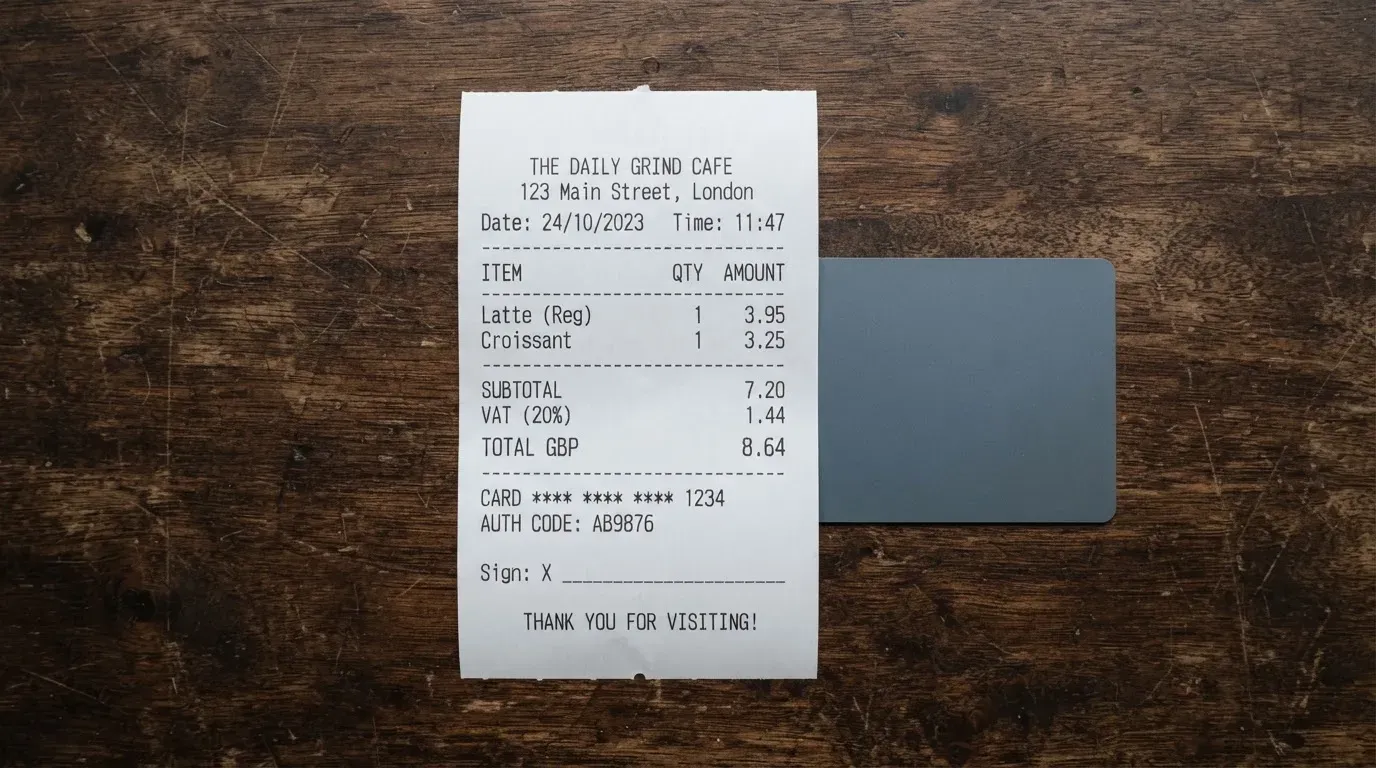
| Fee or limit | What UNi publishes |
|---|---|
| Issuance | not stated |
| Annual fee | “No annual fee” |
| Monthly fee | not stated |
| Conversion | assets converted at “live OTC (Over-the-Counter) rates”; “No hidden exchange fees” |
| Foreign transaction fee | “No annual fee or foreign transaction fee” |
| ATM | not stated |
| Daily limits | not stated |
| Monthly limits | not stated |
| Membership levels | levels exist; what each gives is not stated |
Now let me walk you through three ordinary days with that table in front of you, because the fee structure reads very differently depending on what you are actually doing.
A coffee in your home currency. You pay, the card draws on the balance in your UNi.Global account, and the conversion happens at the live OTC rate. No annual fee, no foreign transaction fee, no hidden exchange fee. On the fees that are disclosed, this is close to the floor. The catch is the one that is not in the table: if you are spending straight from a volatile asset rather than from a stable balance, the rate you receive is not the only variable — the value of what you hold can move between the moment you decide and the moment the payment settles.
A subscription priced in dollars while you think in euros. Here the card’s best feature does its work: it is multicurrency, and you can switch among currencies to pay, against a wallet that holds 12+ currencies. A multicurrency card exists precisely for this payment. And since there is no foreign transaction fee and no markup on the conversion, this is the payment the fee structure was designed for. This is where UNi earns its cost score.
A cash withdrawal abroad. This is the one the table cannot answer for you. ATM fees are not stated, and neither are the daily or monthly limits, so I cannot tell you what a withdrawal will cost or how many you may make. If cash abroad matters to you, this is not a detail — it is the deal. Ask it directly.
Two more things belong next to this table rather than in it. The membership levels exist but what each level gives is not stated, so I would not assume the rewards rate at any tier. And “no hidden exchange fees” is a claim about the exchange, not a promise about everything: on-chain network fees for your own deposits are charged by the blockchain, not by the card provider, so a top-up can still cost you something at the network end.
Top up: the question the card does not answer
I want to be straight with you: the ways of funding the card are not stated, the top-up routes are not stated, and the withdrawal route is not stated. None of the three is described anywhere on the pages I could check.
That leaves you with what you can piece together. The card spends from the balance in your UNi.Global account. That wallet holds 12+ currencies. Membership levels exist. And UNi’s wider business, from the app’s own description in the store listing — “UNi.Global: Invest & Spend BTC” — is investing and spending in crypto. It is a reasonable inference that money arrives via crypto transfer or conversion inside that account. It is an inference, and you should treat it as one: if the sequence of steps for getting money in matters to you, and it usually does, this is the first thing to ask before you rely on the card.
This is the single most likely place for you to lose money quietly, so two warnings that belong here even though they are about crypto rather than about UNi specifically.
If you do send a stablecoin transfer, the network has to be one the provider supports, and it has to match the network of the address you are sending to. Blockchain transfers are irreversible: a deposit sent on an unsupported network, or to an address belonging to a different network, can be lost, or need manual recovery with no guarantee. Take the network from the provider’s own screen, immediately before you send, and match it character by character. Not from memory, not from a note you made last week.
And the coins themselves are not neutral. Circle stopped supporting USDC on Tron in February 2024, so “USDC over TRC20” is not a native option and a transfer built on that assumption can go nowhere. On Ethereum, fees are paid in ETH, so a wallet holding USDT with no ETH cannot send. Tether also describes disabling tokens in wallets on the OFAC sanctions list and freezing funds tied to illicit activity, so stablecoins are not censorship-proof. None of this is a warning against UNi; it is a warning about the mechanism behind it.
Because top-up is the disclosed gap with the most money riding on it, treat it as the first question for support. Then the second question: how do I get money back out, and to where.
Paying with it every day
Used as designed, UNi is a normal card with two extras. You spend in the currency you choose, you hold 12+ currencies in the wallet behind it, and up to 3% comes back through “Spend-to-Earn rewards” on UNi Card spending. Apple Pay and Google Pay are both supported, which in practice is how most people will use the card daily.
The app is where the day-to-day controls live. You can freeze and unfreeze the card in the app, without limit, and you can turn on real-time alerts for each transaction. In practical terms: if the card is lost or you suspect fraud, you stop it in seconds without ringing anyone, and you see each payment as it happens rather than at the end of the statement. For a card you have chosen because the ordinary route was closed to you, those two features are not minor extras; they are the reason to use this card at all.
There is one missing feature you will feel. Whether it is Apple Pay or a physical card, you have no way to read the card number and type it into a merchant that does not accept contactless — a parking meter, a small kiosk, a donation box. UNi does not say whether a virtual card can be viewed, and many prepaid cards of this type hide the number. Treat manual entry as something to ask about, not something to assume.
Online payments will also go through 3-D Secure, the identity check that Visa Secure and Mastercard’s Identity Check belong to. Depending on the issuer’s risk assessment, that means either no extra step or a one-time code or biometric prompt. That is normal and not a sign anything is wrong.
Disputes, the part where you try to get a payment back, are not stated. The mechanics are standard — a chargeback is a refund ordered by the card issuer, with reason codes such as fraud, duplicate billing or goods not received — but prepaid-card coverage varies by jurisdiction and should not be assumed, and no Trustpilot page exists for uni.global, which tells you nothing about service but does mean there is no public complaints record to read either way. If a large purchase is on your mind, ask how disputes work before you make it.
What can go wrong
The honest list starts with the gaps, because they are the ones that are actually specific to UNi.
You do not know the issuer. UNI.Global is described as an AUSTRAC-regulated service provider with teams in Sydney, Auckland, Hong Kong and Taipei. That registration is a real accountability marker in Australia. It is also not the same thing as knowing which bank issues your card and holds your balance. When a card network or a regulator acts, you deal with the issuer. Here you do not have a name to deal with. That is worth asking about in plain terms.
You cannot check your own limits. No daily limit, no monthly limit, no ATM fee. You will find out what your ceiling is the first time you approach it, which is the worst possible moment to find out.
You cannot check where you stand. The card says “subject to jurisdictional limitations” and does not say what they are. If your country is out of scope you may find out after uploading your documents.
Complaints: I found none. That is not the same as a clean record. One search for reviews returned only unrelated companies — Indian Uni Cards and UnCard, which have nothing to do with this — and there is no Trustpilot page for uni.global. A new or small service with no complaint record is exactly what a service with no complaints looks like, and also what a service nobody has written about looks like. No news, corporate or regulatory, is reported either.
The structural risks apply to every card of this kind and are worth knowing plainly. A prepaid card spends a stored balance; it cannot overdraw, which is a real protection — but many crypto cards are prepaid, and that also means your funds sit with a custodian. Custody carries counterparty and hack risk, and the history is not gentle: Mt. Gox, with about US$350 million reported stolen over 2011-2014; Coincheck, about US$400 million in 2018; Ronin Network, US$625 million in 2022.
Programme risk is real too. Visa terminated its global agreements with FTX on 13 November 2022 and the FTX US debit card was wound down. WaveCrest, a Visa issuer that supplied crypto card brands, was suspended by Visa in Europe in 2018, closing all its Visa programmes. When programmes close, the pattern is a notice period, then loading and spending stop, then you are asked to withdraw what is left.
Two smaller things. A declined authorisation can leave a hold on your funds for several days, typically up to 7. And some merchants decline prepaid or foreign BINs — the first six or eight digits of a card number identify the issuer and its country, and a mismatch with your billing address invites extra scrutiny, which is why a card issued in one country can look foreign to a shop in another.
Support, at least, is specified: live chat and FAQ in the app for registered customers, and email at [email protected].
What to take instead
I compared UNi against three other cards in this category. None is universally better; each trades away something.
| UNi | International Visa Card | Morse | Bitpanda | |
|---|---|---|---|---|
| Score | 6.1 / 10 | 6.7 / 10 | 7.5 / 10 | 6.5 / 10 |
| Network and form | Mastercard, multicurrency; physical/virtual not stated | U.S.-issued Platinum Visa, virtual (physical “coming soon”); pays in USD | Visa prepaid debit, fully virtual for now | Physical Visa debit, EUR only; one active card |
| Who can get it | Countries not stated | Not available to residents or legal registrants of a long blocklist; FATF grey list case by case | By residence, not citizenship; 18+; app in 140+ countries; some countries need an invite code | Euro-area resident with a verified account; not via Bankident |
| Annual or monthly fee | No annual fee; rest not stated | Issuance $5 once; no maintenance; plans Classic free, Pro $9.00/month, Max $19.00/month | Not stated (“Fees may apply”) | Account opening and monthly cost not stated; first shipment free |
| FX / conversion | Live OTC rates; no hidden exchange fees | “Visa exchange rate + 2% FX fee” | Zero FX fees or markups; real-time Visa rate; paying with the card free | EUR 0 FX fee but “VISA mark-up fees apply”; conversion spread not stated |
| Top-up | Not stated | USDC or USDT into the USD account free at 1:1, plus USD, EUR, SEPA, SWIFT, FedNow | Debit card, stablecoin transfer, Account Details; USDC, USDG and EURC via Solana free, others fee; self-custodial wallet | Spends from a chosen main asset — listed crypto, precious metals or EUR — converted to EUR at payment |
| Rewards | Up to 3% | No cashback stated | Not stated on card pages | 1% stated in body, “up to 2%” in summary (unreconciled) |
Three conclusions I draw from that.
If you want the cleanest disclosed fee structure, UNi wins that column outright — no annual fee, no foreign transaction fee, live OTC rates, no hidden exchange fees. Morse matches it, with zero FX fees or markups, real-time Visa rates, and paying with the card free online and contactless, but it publishes no issuance or monthly figure and keeps fees behind its Cardholder Agreement.
If you want the best score, it is Morse at 7.5, and it discloses far more: who it serves, how you get money in, what it costs to spend. Its catch is form — fully virtual for now — and its country list is partial, with a set of closed-beta countries needing an invite code, including the UK, Australia, Japan, Singapore, Switzerland and New Zealand.
If you want to know exactly where you stand on sanctions and countries, the International Visa Card names its excluded countries in full — Belarus, mainland China, North Korea, Cuba, India, Iraq, Iran, Israel, Myanmar, Nepal, Nicaragua, Russia, Syria, Turkey, Ukraine, Venezuela and Vietnam among them — and rules by residence or registration, not citizenship, with FATF grey-list countries reviewed case by case. It also charges the 2% FX fee that UNi does not.
And Bitpanda is the reminder that geography is a real wall: a euro-area resident with a verified account, physical Visa, EUR only. Useful if that is you; useless if it is not.
Who I would recommend it to
I would recommend UNi to someone who already keeps money in a crypto account and wants a second card that spends it, who earns or holds several currencies and wants to pay in whichever one they choose, and who is comfortable earning up to 3% back through Spend-to-Earn rewards without needing to understand how the tiers are structured. If your bank card was declined, refused, or never issued to you, this is a card built for that situation, and the freeze switch and real-time alerts are the features you will value most.
I would not recommend it to you if you are deciding with money that is not already at stake somewhere else. The reasons are not that I found anything wrong — I found a good fee structure and a regulated service provider — but that you would be committing funds while three of the essentials are blank: who issues the card, how the money gets in, and what your limits are. If you need those answers on the page before you start, choose a card that publishes them, and Morse and the International Visa Card both publish more of the transaction than UNi does.
And if cash is part of your life — travel, ATMs, small bills — I would not choose UNi until someone has told you the ATM terms. The card is built for contactless, online and app payments, and that is where its disclosed terms point.
If you do go ahead, the sequence I would follow is short: email [email protected] with the five unanswered questions, get the top-up network spelled out to you on screen before your first transfer, freeze the card the moment it lands, turn on the real-time alerts, and keep a balance you can afford to have tied up while you learn how a withdrawal works.
Frequently asked questions
What is UNi card?
UNi is a multicurrency Mastercard that draws on the balance in your UNi.Global account rather than on a bank account. You hold 12+ currencies in the wallet, switch among them to pay, and the card converts what you spend at live OTC (Over-the-Counter) rates. UNI.Global describes itself as an AUSTRAC-regulated service provider with teams in Sydney, Auckland, Hong Kong and Taipei. What the card does not publish is the name of the bank that issues it.
How does UNi card work?
The card spends from your UNi.Global account balance, much like a prepaid card drawing on stored funds, so it cannot overdraw. When you pay in a currency you do not hold, the balance is converted at the live OTC rate with no hidden exchange fees and no foreign transaction fee. You can also add it to Apple Pay or Google Pay, freeze and unfreeze it in the app, and switch on real-time transaction alerts.
Is UNi a bank?
Not as far as its public pages say. UNI.Global is described as an AUSTRAC-regulated service provider, which is an Australian anti-money-laundering registration rather than a banking licence. The card sits on the Mastercard network, and the bank that actually issues it and holds your balance is not named. That distinction matters: in a dispute or a programme shutdown, the issuer is who acts, and here you do not have that name.
Who can get the UNi card?
The card’s pages do not say. They say only “subject to jurisdictional limitations” without naming any country, and they do not distinguish between residence and citizenship. What is stated is what you must prove: a single KYC verification covering personal details and age 18+, an ID document scan, a selfie, and your address with a bank statement or utility bill, taking 1-2 business days.
How do I get and activate the UNi card?
You download the UNi.Global App, register, submit the identity documents, selfie and address proof, and the single verification clears in 1-2 business days, after which the card becomes available on your account balance. UNi does not state whether the card is physical, virtual, or both, nor any delivery time or delivery cost — so ask support those two questions, and whether a virtual card number can be viewed for manual entry at a terminal.
Does UNi card require KYC?
Yes, and one check covers everything. Before you get fiat services or the card, you supply personal information and confirm you are 18 or older, a scan of an identity document, a selfie, and your address with proof of address such as a bank statement or a utility bill. Verification takes 1-2 business days, and there is no separate lighter tier for the card.
How do I top up the UNi card, and which network do I use?
UNi does not publish its top-up routes, so treat any method you have worked out yourself as an assumption to confirm with support. Whatever the route, the network has to be one the provider supports and has to match the address you send to. Transfers are irreversible, so a deposit on the wrong network can be lost or need manual recovery with no guarantee.
How much does UNi card cost?
The disclosed costs are genuinely light: “No annual fee”, no foreign transaction fee, and conversion at “live OTC (Over-the-Counter) rates” with “No hidden exchange fees”. What is not disclosed is the issuance cost, any monthly fee, ATM fees, and daily or monthly limits. Membership levels exist but what each one gives is not stated, so do not assume the 3% rewards rate applies at any particular tier.
Is UNi card safe to use?
For everyday payment security the published safeguards are reasonable: freeze and unfreeze the card in the app without limit, and real-time alerts for every transaction. Against provider risk there is less comfort — the issuer is unnamed, so the card’s funds sit with a custodian, and custodial platforms have a history of failure, from Mt. Gox at about US$350 million to Ronin at US$625 million.
Is UNi card worth it?
Worth it for a multi-currency spender who already holds crypto, wants to pay in whichever currency they choose, wants up to 3% back through Spend-to-Earn rewards, and values being able to freeze the card instantly. Not worth it if you need your limits, ATM terms, top-up route and issuer published before you commit, or if you mainly need cash — in which case a card with published ATM and limit terms is the better bet.
App and neobank cards on the shortlist – cryptocardshortlist
Content created by the «cryptocardshortlist» team