
A Visa you fund with crypto, at a price that has to earn its keep
 Available in US

Crydit is a Visa card you fund with cryptocurrency: you send crypto to a wallet, move it to the card, and the balance turns into ordinary spending money in stores, online and at ATMs. That basic shape is what it does well, and it does it with a physical card that has NFC, virtual cards alongside it, and an official claim of use in 210+ countries and regions. My score is 5.5 out of 10 — the reach is real, but the cost is the highest of any card I looked at, and too many of the numbers that decide whether a card works for you are simply not published.
Conditions are current as of October 28, 2026
The following review examines the card’s coverage, sign-up requirements, fees, funding methods, daily usage, risks, and alternatives. Figures cited are from the card’s own pages unless noted as unofficial information from third-party sources.
Verdict: 5.5 / 10 — broad reach, punishing price
The card suits a specific person: someone who already holds crypto, cannot get or does not want an ordinary bank card, and mainly spends in the currencies their crypto already sits in. If that is you, the argument for Crydit is real — a physical Visa, virtual cards, ATM withdrawals, and a stated 210+ country reach. It also suits someone who wants to fund a Visa card with a wide choice of crypto rather than just two or three coins.
It does not suit the person who wants a cheap everyday card. The issuance fee alone is $199 with a 0 annual fee, and every top-up, every purchase and every cash withdrawal adds a percentage on top. There is no monthly subscription to offset that, no tier with a lower entry price, and no free tier — the official page shows a single “VISA Card” column. For someone who just wants a card to buy groceries, this is not a card to shop around on.
| Criterion | Mark | Why |
|---|---|---|
| Who can get it | 8 / 10 | Official claim of use in 210+ countries and regions, with no excluded-country list published; a third-party review shows a narrower map and names six restricted countries |
| Cost | 2 / 10 | $199 issuance in the table (249 in the same page’s mobile layout), 0 annual fee; 1% top-up, 0.8U+1.5% per transaction, 2.50% ATM withdrawal |
| Top-up options | 6 / 10 | Crypto deposit to the Crydit wallet and “Transfer to Card”, with 1,000 cryptocurrencies and 160+ fiat currencies claimed; networks not listed |
| Reliability and complaints | 6 / 10 | CRYDIT CAPITAL LIMITED claims MSO and VASP licences, custody with Cobo and Ceffu; issuing-bank country not stated; third-party reports of KYC delays and slow support |
| Everyday use | 6 / 10 | Physical Visa with NFC and ATM plus virtual cards; Apple Pay “under preparation”, Google Pay not mentioned |
| Total | 5.5 / 10 |
The overall mark is not an average of neat midpoints — it reflects a comprehensive assessment across those five criteria, heavily influenced by the fee structure. A 2 out of 10 on cost means the card’s value must be justified by its reach, not by cost-efficiency. The details below will help you decide whether that trade-off suits your situation.
Will They Give You the Card?
On paper, almost certainly. The official site says the card is “Used in 210+ Countries and Regions Around the World” and lists “Supported countries 210+”. No excluded-country list, and no rule about citizenship versus residence, is published on the pages I read. So the headline answer is yes for a very wide world — but the headline is doing a lot of work, because nobody has published the list that would tell you where the line actually falls.
Here is where it gets murky. A third-party review (not Crydit, and not confirmed by the card) shows a map of 54 supported countries — which flatly conflicts with “210+” — and names Cuba, Iran, North Korea, Russia, Syria and the United States as restricted, per that site’s update dated 11 August 2026. Treat it as a signal, not a verdict: it suggests the marketing number counts places where the card is accepted, while the number of places you can actually sign up from is far smaller. If your country matters to you, do not read “210+” as permission — the sensible move is to ask support directly for your specific country before you pay anything, because the issuance fee is not refundable-friendly and I could not verify a refund policy.
How to Get It
The sign-up is three steps on paper: choose the card, “Complete KYC certification”, then activate and deposit crypto. The site says KYC can be “Get it done in 5 minutes”. The comparison table alongside says “KYC Duration: 7 Business Days”. Hold both in mind — five minutes is the marketing line, seven business days is the table line, and the gap between them is probably the realistic answer.
What you will be asked for is not stated on the official pages: no list of documents, no proof-of-address requirement, no minimum age. The one KYC step shown is single-tier; what different KYC levels would unlock, and why a review might be rejected, is also not stated. A third-party source (again unofficial) says government ID, a selfie and — for the Mastercard programme — proof of address, with Visa KYC approval in 3–5 business days.
The card itself is Visa. You get a physical card, with ticks next to “Physical Card”, “ATM” and “NFC”, and virtual cards too (“Crydit supports Virtual Credit Cards (VCC)”). The currency the card holds is not stated on the official page. Delivery time is not stated either. A third-party source says shipping is included in the issuance fee worldwide, with replacement at £35 if the card is lost and £50 if it expires on its own — again, unofficial, but useful if you lose it.
Fees: What It Really Costs
This is the section that decides most of it for most people, so I am putting the whole table up front. Two figures deserve attention before anything else. First, the issuance fee appears as $199 in the comparison table but as 249 in the same page’s mobile layout — the card gives two different numbers for what it costs to open the account. Second, the spending fee is printed as “0.8U+1.5% Per Transaction”, which is exactly as clear as it sounds.

| Fee or limit | What the card states |
|---|---|
| Issuance fee | $199 in the comparison table; a second figure, 249, appears in the same page’s mobile layout |
| Annual / management fee | 0 |
| Monthly fee | None stated |
| Top-up fee | 1% |
| Spending fee | “0.8U+1.5% Per Transaction” (as written) |
| FX fee | Not stated officially |
| ATM withdrawal fee | 2.50% (no free allowance stated) |
| Spending limit | Unlimited |
| ATM daily limit | Not stated officially |
| Monthly limit | Not stated officially |
| Card currency | Not stated; 160+ fiat currencies claimed (elsewhere 150+) |
| Tiers | Single “VISA Card” column; no tiers priced |
Let me run three ordinary payments through this and you can see which fees bite.
A coffee. Suppose you top up once with $500. The 1% top-up fee takes $5, and the balance is $495. You buy a $4.50 coffee. The spending fee, “0.8U+1.5% Per Transaction”, applies per transaction — and the “0.8U” part is a fixed unit amount, not a percentage, so on a small purchase that flat component is a large share of the whole cost. A small transaction is where this card hurts most.
A weekly shop. You buy $80 of groceries. The same per-transaction spending fee applies, plus the top-up fee is spread across whatever you loaded. This is the case the card is least bad at: bigger baskets dilute the percentage, and “Spending limit: Unlimited” means the card itself will not cap you.
Cash from an ATM. You take out $100 and pay the 2.50% withdrawal fee — $2.50 — on top. No free allowance is stated, so as published there is no monthly “free withdrawals” figure to budget around.
Two things I could not settle from the card’s own pages. There is no FX fee stated, which is either good news or simply an unstated line; a third-party source says there is no FX markup and ECB rates are used, but that is unofficial and it also gives a different top-up figure (1.5% and conversion 1.5%) than the official 1%. And there are no published ATM or per-KYC-level limits to plan around. A third-party source suggests an ATM limit of £2,000 per day and a bank-transfer withdrawal of £2,000 per 24 hours with a maximum of 10 transfers a day — unofficial, and it does not square with “Spending limit: Unlimited” without explanation.
One more thing that shapes cost: the card is custodial, assets held with Cobo and Ceffu. That is the right place to look if you care about fees, because a custodial setup usually prices the conversion into every spend.
Top up: How the Money Gets Onto the Card
You deposit crypto to the Crydit wallet, then use “Transfer to Card”. Under “Supports:” the page shows “1,000” cryptocurrencies, “160+” fiat currencies and “300” payment channels. Elsewhere the site says “12K+ cryptocurrencies” and “150+ Fiat currencies” — so the headline numbers for crypto and fiat assets differ between two parts of the same site, and you should treat all of them as marketing ranges rather than a precise list.
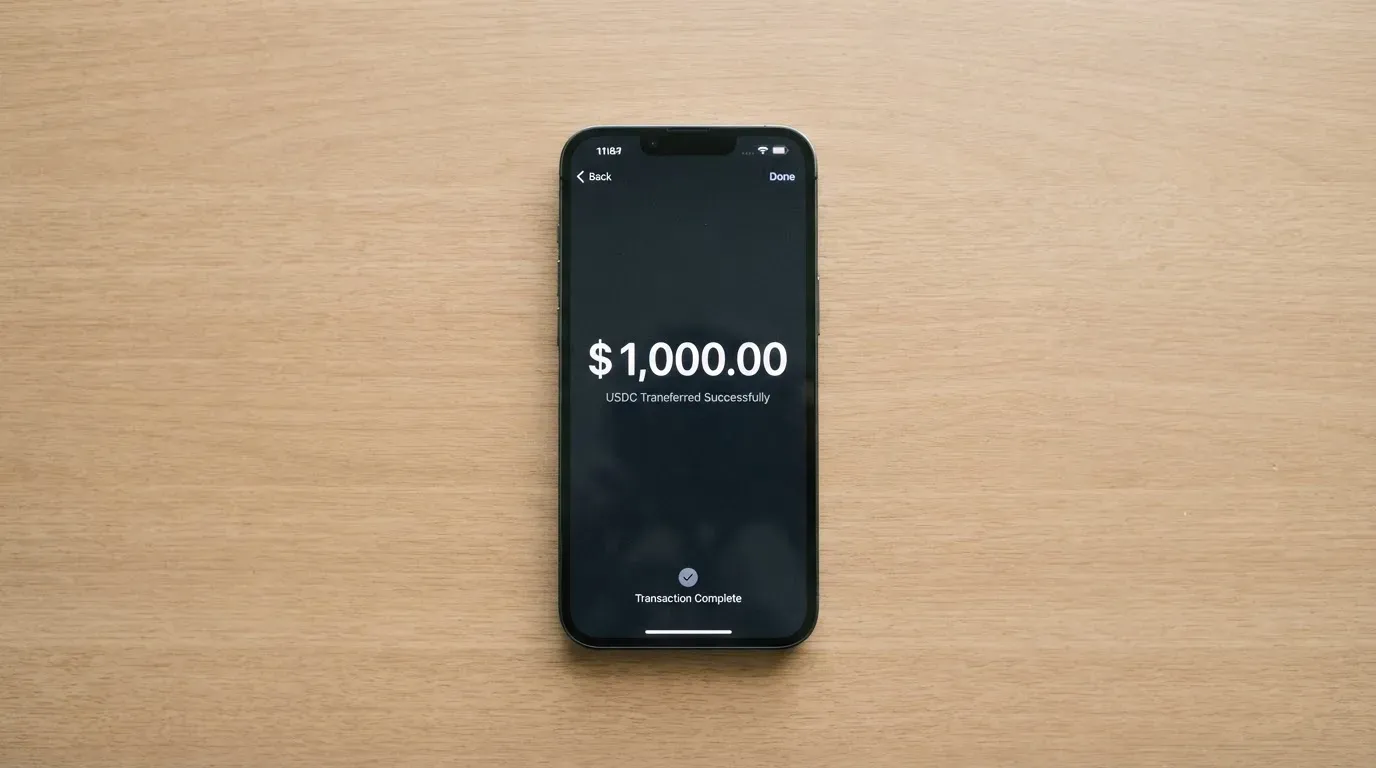
What is not stated is the part that actually bites when you move money. Networks are not listed, so which chain you must send on is something you would have to confirm before your first transfer. The minimum top-up is not stated, it is not stated who pays the on-chain network fee, and fiat top-up fees are not stated. There is a 1% top-up fee either way.
Getting money back off is thinner still. A “Withdrawal” feature and a 2.50% withdrawal fee are listed, but the method for returning a balance to crypto or to a bank account is not stated, and what happens to a leftover balance if you close the account is not stated either.
I will not walk you through how to send a transfer here, and I would not want to if I could. The general risk applies to any card like this, not just Crydit: on-chain transfers are typically irreversible, and a deposit sent on a network the provider does not support, or to an address belonging to a different network, can be lost or need manual recovery with no guarantee. When networks are not published, ask support first. A lost transfer is not an amount of money a fee schedule forgives.
Paying With It Every Day
Day to day, the card behaves like a normal Visa with a few gaps. The physical card has NFC and works at ATMs; virtual cards are there for online use; 3-D Secure is supported (SMS for the Visa). In the app you can “instantly freeze the card” or “Suspend Card”, there is multi-factor authentication, and 24/7 account-level risk monitoring is claimed.
The gaps are in the mobile wallets. The official line is that “Apple Pay support is currently under preparation and will be rolled out progressively in the future”. Google Pay is not mentioned, and which merchant categories are blocked is not stated. So if your daily life runs through tapping a phone, this card does not meet you there yet.
The app on iOS (App Store, Hong Kong storefront) showed 5.0 from 6 ratings when I looked, with the developer listed as Crydit CAPITAL LIMITED. Six ratings is not a signal in either direction, and the Google Play listing is not stated. Rewards are not stated on the official pages; a third-party source says cashback is paid in crypto by VIP tier with rates only visible after login, and cites marketing of up to $110,000 aggregate at VIP 8 — unofficial, and a number like that is a ceiling in a headline, not a plan.
If you are ever locked out or spot a fraud, the stated path is: suspend the card in the app, request a replacement with identity verification, and for unauthorised transactions “Crydit’s risk control team will intervene and initiate a formal dispute process”. The replacement timing on the page is a placeholder — “within X business days”, with no number filled in — and chargeback periods are not stated. A missing number in a dispute timeline is worth noticing before you need it.
What Can Go Wrong
The honest risks, roughly in order of how much they should worry you.
The counterparty. This is a custodial card. Control of crypto belongs to whoever holds the private key, and with a custodial wallet the provider holds the credentials — so you must trust them completely. Custodial platforms have a real record of failure: Mt. Gox (about US$350 million reported stolen 2011-2014), Coincheck (about US$400 million, 2018) and Ronin Network (US$625 million, 2022) are the standard references. Crypto transfers are typically irreversible and a stolen key has no built-in recovery; the network cannot freeze or return funds.
The issuer behind the brand. The footer names CRYDIT CAPITAL LIMITED (no country given on the pages I read). The site says it holds “MSO And VASP Compliance Licenses”, that assets are managed by “COBO & Ceffu”, and that it works “in collaboration with Danske Bank”. The issuing bank’s country is not stated. A third-party source places Crydit Capital Limited in Hong Kong, Crydit Inc. in the BVI, ArcaneQuantix Ltd in the Czech Republic and Crydit Venture Investments Aps in Denmark, with a Hong Kong MSO licence and a European VASP registration, and Danske Bank on the Mastercard programme — unofficial, and the country of the Visa issuer remains the gap. This is the normal shape of the industry: the card network (Visa) routes payments and sets rules, a licensed issuer holds the programme, and the crypto brand is often just the front end. Visa and Mastercard do not issue crypto cards to consumers themselves; they license issuers and can suspend a programme — in November 2022 Visa said it had “terminated our global agreements with FTX” and the FTX US debit card programme was wound down. WaveCrest, a Visa issuer that supplied crypto card brands, was suspended by Visa in Europe in 2018. Programme closures typically give notice, then stop spending and loading, then ask users to withdraw remaining balances. That history is the reason to keep a modest balance rather than parking a large sum here.
Sanctions and country rules. You cannot route around these, and I am not going to help anyone try. Nationality is recorded and screened separately from residence because sanctions screening and issuer risk policy often apply to citizenship and country of birth, not just your address. Tether says it disables tokens in wallets on the OFAC sanctions list and has frozen funds tied to illicit activity — stablecoins are not censorship-proof. In the US, FinCEN guidance (FIN-2013-G001) treats administrators and exchangers of convertible virtual currency as money transmitters, while people merely buying goods or services are not.
Service quality. No official incident notices were found, and searches for complaints and reviews turned up no Trustpilot or Reddit page for Crydit. That silence cuts both ways: no visible pile of complaints, and also no independent track record. A third-party source (August 2026) says users commonly report KYC delays and slow support responses. Support is a Help Center and FAQ, a contact form, email [email protected], Telegram t.me/CryditAssist and X @CryditCard; the site is in English and support hours are not stated.
Payments being declined. A card number starts with a 6- or 8-digit issuer identification number that a merchant can look up, revealing the institution and issuing country — which is why a card issued in one country can look “foreign” to a shop in another, and why some merchants decline prepaid or foreign BINs. Address Verification is mainly a US, Canada and UK thing and is generally unavailable for foreign-issued cards. Some merchants block gambling (MCC 7995) by policy, not law, and the blocked list varies by issuer. A declined authorisation can leave a hold on funds for several days, typically up to 7. In the EU, MiCA (Regulation (EU) 2023/1114) took legal effect in June 2023, with stablecoin rules applying from 30 June 2024 and crypto-asset service provider rules from 30 December 2024, and a transitional period running only until 1 July 2026; ESMA keeps an interim register you can check. A card is a payment service regulated separately from the crypto side, so a card like this often rests on two licences, and electronic-money funds must be safeguarded but are not the same as bank deposits and may not sit under a deposit guarantee scheme.
What to Take Instead
If Crydit’s $199 is the sticking point — and for many readers it is — here is how the same field looks.
| Crydit | CardFlow | HyperCard | Card.fi | |
|---|---|---|---|---|
| Score | 5.5 / 10 | 4.9 / 10 | 4.7 / 10 | 6.6 / 10 |
| Card | Visa, physical with NFC + virtual | Virtual USD Mastercard | Prepaid, network not stated | Virtual and physical Classic/Premium, metal option |
| One-time cost | $199 (249 in mobile view) | Free to create virtual card | Not stated | Virtual Classic $49, Virtual Premium $249 |
| Recurring fee | 0 annual | Not stated | Not stated | No monthly, annual, inactivity or minimum-balance fee |
| Funding | Crypto to wallet, then “Transfer to Card” | Bitcoin, USDT, ETH or Naira transfer | Crypto such as USDT, BTC, ETH in app | 32 coins across 5 networks |
| Audience | Wide stated reach (210+) | Aimed at Nigeria and “Nigerians and global users” | Acceptance in “more than 176 countries” | Ships to “200+ countries” |
Reading across: CardFlow is the cheapest entry (a free virtual card created in about 3 minutes) but is aimed at Nigeria and gives you a virtual USD Mastercard only. HyperCard has the cheapest-looking setup — deposit crypto in the app, converted to USD or EUR on the card — but neither its fees nor its country eligibility are stated on the pages I could read. Card.fi is the strongest of the three on the numbers: a $49 entry, no recurring fee, published fees (Classic top-up 1.5% + $1.00, Premium 1%; FX 3.5% Classic, 2.5% Premium), 32 coins across 5 named networks, and cashback on spending — though it also warns off residents of, or orders from, “a country subject to sanctions that would prohibit the service”. Its own caution, that a wrong-chain deposit risks permanent loss, is the same warning I gave above.
None of these constitutes a formal recommendation. The point is narrower: Crydit’s real competitor is not another crypto card, but the ordinary bank card you cannot get — and against that benchmark, $199 with no monthly fee and a 2 out of 10 on cost is a challenging proposition.
Who I Would Recommend It To
I would recommend the Crydit card to someone in a specific position: you already hold crypto, you have no working everyday bank card or do not want one, you mostly spend where your crypto already is, and you value the stated 210+ country reach and a physical Visa with NFC more than you value paying less. Under those conditions the $199 is a one-off, the 0 annual fee keeps the running cost low, and “Spending limit: Unlimited” removes a ceiling other cards impose.
I would not recommend it to you if any of these are true. You want the cheapest possible way to spend. You spend in many currencies and care about FX. Your everyday payments happen through a phone wallet, because Apple Pay is “under preparation” and Google Pay is not mentioned. You need a card you can rely on at a moment’s notice for support, because a third-party source reports slow support and the KYC table says seven business days while the marketing says five minutes. Or you intend to hold a large balance long-term on the card, because it is custodial, the issuer’s country is not stated, and the industry’s own history includes programmes being wound down.
For those who are unsure, it is advisable to ask support, in writing, three key questions before paying the issuance fee: is my country eligible, which network do I send on, and what happens to my balance if the programme closes? These are not attempts to bypass rules; they are the facts to which you are entitled before committing $199.
Frequently asked questions
What is the Crydit card?
Crydit is a Visa payment card funded with cryptocurrency. You deposit crypto to a Crydit wallet, move it to the card, and it spends as an ordinary balance in shops, online and at ATMs. You get a physical card with NFC and virtual cards. It is a custodial setup, with assets held by Cobo and Ceffu, and it is not a bank account.
Is Crydit a bank?
No — it presents as a crypto card company, CRYDIT CAPITAL LIMITED, that says it holds “MSO And VASP Compliance Licenses” and works “in collaboration with Danske Bank”. The issuing bank’s country is not stated on the pages I read. A card is a payment service regulated separately from the crypto side, so this is a licensed-issuer arrangement rather than a bank.
Who owns Crydit?
The site’s footer names CRYDIT CAPITAL LIMITED, with no country given. A third-party source (not confirmed by Crydit) places entities in Hong Kong, the BVI, the Czech Republic and Denmark, with a Hong Kong MSO licence and a European VASP registration. The official pages do not spell out the ownership structure.
Does the Crydit card require KYC?
Yes. Sign-up is three steps: choose the card, “Complete KYC certification”, then activate and deposit. The site says “Get it done in 5 minutes” while the table says “KYC Duration: 7 Business Days”. Which documents are required is not stated on the official pages; a third-party source says government ID, a selfie and, for the Mastercard programme, proof of address.
Is the Crydit card free?
No. The issuance fee is $199 in the comparison table, and a second figure, 249, appears in the same page’s mobile layout. The annual/management fee is 0. Beyond that, top-up is 1%, each transaction pays “0.8U+1.5% Per Transaction”, and ATM withdrawals pay 2.50%. There is no free tier — one “VISA Card” column only.
How do I top up the Crydit card?
Deposit crypto to the Crydit wallet, then use “Transfer to Card”. The page claims 1,000 cryptocurrencies, 160+ fiat currencies and 300 payment channels, though elsewhere the site says “12K+ cryptocurrencies” and “150+ Fiat currencies”. Networks are not listed, so confirm which chain to use before transferring, because on-chain sends are typically irreversible.
How much does it cost to use the Crydit card?
Top-up is 1% and each purchase pays “0.8U+1.5% Per Transaction” as printed, with no FX fee stated. ATM withdrawals cost 2.50% with no free allowance stated. Spending limit is “Unlimited”; ATM and monthly limits are not stated. A third-party source suggests a £2,000/day ATM limit, but that is unofficial and does not square with the unlimited-spending claim.
Can I add the Crydit card to Apple Wallet?
Not yet. The official line is that “Apple Pay support is currently under preparation and will be rolled out progressively in the future”. Google Pay is not mentioned at all. Until then, the physical card’s NFC and the virtual cards are how you would pay.
Where can I use the Crydit card?
Officially in 210+ countries and regions, with no excluded-country list published. A third-party review shows only 54 supported countries and names Cuba, Iran, North Korea, Russia, Syria and the United States as restricted. Since a card can be declined where the issuer country looks foreign, ask support about your specific country before paying the $199.
Is the Crydit card safe, and is it worth it?
Safe enough to use with modest sums, but trust is the price of admission: it is custodial, so the provider holds the credentials, and the industry has a history of custodian failures and programmes being wound down. Worth it if you need a Visa funded from crypto and cannot get a normal bank card. Not worth it if you want cheap everyday spending or a card that answers the phone quickly.
Virtual cards on the shortlist – cryptocardshortlist
Content created by the «cryptocardshortlist» team