
Spending USDC from a non-custodial Base wallet
 Available in US
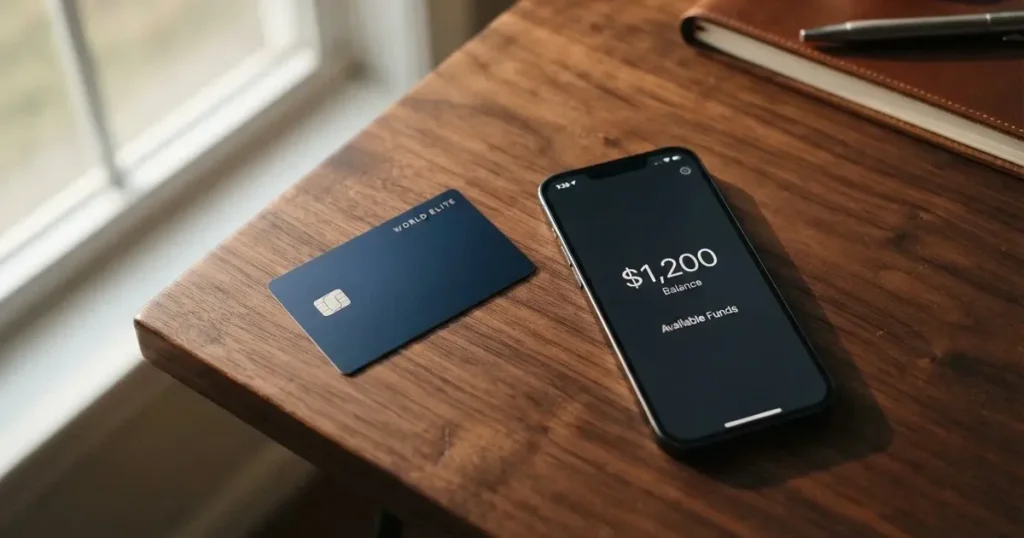
Zerocard positions itself as a simple way to pay in shops and online with a crypto balance. The card is offered by Notzero Technologies Limited and, on paper, it works in 150+ countries. In practice the picture is narrower: a beta launch that started in Nigeria, a card programme whose issuer is not named on the public pages, a fee schedule that lists possible charges without amounts, and a top-up flow that — at least according to one third-party review — accepts only USDC on Base, not the wider pair of USDC and USDT the marketing copy suggests. The card has a real appeal for someone who already lives in USDC on Base and wants to spend it directly, but the missing numbers and the lack of a published customer track record make it hard to recommend as a primary everyday card.
Conditions are current as of October 28, 2026.
Verdict
Zerocard earns a 6.3 / 10 in this review. The score reflects a card that does the basic job — convert crypto at the till, work online and in shops — but leaves the customer guessing on the things that matter when you commit your spending to a product: who issues the card, what the fees actually are, and what happens to your balance if the programme changes. If you are comfortable in USDC on Base and you only need a secondary card, the proposition is workable. If you are looking for a primary card with clear pricing, strong consumer protections and a long compliance trail, the alternatives section later in this page is a better place to start.
| Criterion | Mark | Reason |
|---|---|---|
| Who can get it | 7 / 10 | Works in 150+ countries by the company’s own count, but the eligible-country list is not published, only the restricted one |
| Cost | 7 / 10 | Core services marketed as “zero-fee”, with optional services (card issuance, express processing, currency conversion) potentially paid — amounts not published |
| Top-up options | 6 / 10 | USDC or USDT on Base or Ethereum per the official line; a third-party review says the app accepts only USDC on Base and uses a non-custodial wallet |
| Reliability and complaints | 5 / 10 | Provider is Notzero Technologies Limited, no card issuer named, beta launched in Nigeria, accounts can be restricted without prior notice, no public complaint trail found |
| Everyday use | 6 / 10 | Virtual or physical debit card after KYC; ATM fee exists per unofficial sources; the underlying card wallets and network are not disclosed |
The card suits you if you live in USDC on Base, want a non-custodial path from wallet to checkout, and can live with a fee list that does not show numbers. It does not suit you if you want a card that clearly names its issuer, publishes a full price table, and has a few years of customer reviews behind it. It also does not suit you if you are in a restricted jurisdiction named in the Terms, or if your country is added later by the third-party verification provider, since the list of supported countries is not published.
Who they will give the card to
Zerocard says the card “works in 150+ countries”. That sentence tells you almost everything and almost nothing at the same time. There is no list of eligible countries on the public pages; only a list of restricted jurisdictions in the Terms, and the Terms also reserve the right for the third-party verification provider to add further restrictions. The result is that you can read the marketing claim and still not know whether your country is welcome until you actually try to register.
The restricted jurisdictions, taken from the Terms, are: Belarus, Burundi, Central African Republic, Cuba, Iran, Libya, Myanmar (Burma), North Korea, Russia, Somalia, South Sudan, Sudan, Syrian Arab Republic, Ukraine, Venezuela and Zimbabwe. Anywhere outside that list is, in theory, eligible, but the lack of a published eligible-country list means the practical answer to “is Zerocard available where I live?” is “you have to try and see”.
The Terms do not separately distinguish between citizenship and residence. The compliance section speaks of “customers” and “users” rather than spelling out whether the card is restricted by your passport, by your address, or by both. For a reader who travels or holds dual nationality, this is a real gap: the same person could be eligible by residence and blocked by citizenship, or vice versa, without any way of finding out from the website.
The KYC requirements are standard. You need to be at least 18, and you will be asked for a valid International Passport, a Driver’s Licence or a National Identity Card, plus a residential address and a proof of address such as a utility bill no older than three months. There are no published tiers — the policy does not describe bronze, silver, gold levels of verification — only risk categories labelled High, Medium and Low. The processing time for verification is not stated either, so the practical experience ranges from a same-day approval to a multi-day wait, and you have no published benchmark to compare against.
One important caveat that is easy to miss: the KYC policy says accounts can be suspended or restricted “at its sole discretion and without prior notice”. New users who fail to provide information may have transactions blocked. Existing users can see their account suspended for the same reason. Sanctioned persons cannot open accounts at all. None of this is unusual for a regulated payments product, but it is unusually bluntly worded in Zerocard’s policy text, and it is worth keeping in mind before you load any meaningful balance.
How to get it
The sign-up flow described in the Terms has three steps: register, pass KYC, and request a card. You start by downloading the app (the site has a “Download app” button, although the page that comes up in search does not link to a specific Google Play or Apple App Store listing, and no public ratings for the app are surfaced). You create an account, complete the KYC checks listed in the previous section, and then you can request a virtual or physical Zerocard debit card.
The card is a debit card. The Terms do not state which network it runs on (Visa or Mastercard), and they do not name a card currency. The actual card-issuing institution — the bank or e-money institution licensed to issue under the network’s rules — is not named on the public pages either. All you get from the Terms is “Zerocard” and the operating company Notzero Technologies Limited, with a founder’s blog post referring to a “card infra partner” in Nigeria. For a payments product, that is a thin disclosure: the entity that ultimately carries the regulatory weight of issuing your card is the part you most need to know about, and it is not stated.
Delivery time for the physical card is not stated. The app is described on the site but the company behind it does not publish a store URL on the pages that are reachable, so you cannot pre-check star ratings or read other customers’ impressions of the app before you install it.
In practical terms, you should expect:
- A virtual card available after KYC, in principle instantly, though no timeline is published.
- A physical card ordered from inside the app, with delivery time and shipping fees not stated.
- A possible “express processing” charge on the optional-services list — see the cost section — with no amount published.
If you value transparency about who is actually behind your card, the missing issuer and the missing network make this step harder than it should be.
What it really costs
The most striking thing about Zerocard’s pricing is how little of it is published. The Terms talk about a “zero-fee experience” for core services and reserve the right to charge for optional services, but they do not list the amounts. The fees section later on this page is the closest thing to a price table the company offers, and even there you will see “not stated” more often than a number.
| Fee or limit | What the Terms say |
|---|---|
| Card issuance | Listed as a possible optional-service fee; amount not stated |
| Monthly / annual fee | Not stated; core services marketed as “zero-fee” |
| Currency conversion | Listed as a possible optional-service fee; rate not stated |
| Cross-border / FX | Listed as a possible optional-service fee; rate not stated |
| ATM withdrawal | Not stated officially; unofficial sources describe a separate fee from a ₦5 per-transaction charge (amount not visible in the summary) |
| Daily / monthly limits | Not stated |
| Express processing | Listed as a possible optional-service fee; amount not stated |
The “zero-fee” line is the headline; the optional-services list is the small print. It is reasonable to read that as: spending your loaded balance is free, but anything that involves work on the company’s side — issuing a card, processing a conversion, processing a withdrawal, sending a card faster — can be charged. The risk is that you do not know the rate until the fee appears on your statement.
Crypto is converted to local fiat at the point of sale. The exact conversion path is not described, so the rate you get is whatever the operator quotes at the moment of payment. Network fees on the deposit side — gas on Base or Ethereum — are charged by the blockchain, not by Zerocard, and you will pay them in ETH or whatever the native gas token of the network is.
A few everyday scenarios, walked through:
- You buy a coffee with USDC on Base loaded into your wallet. The company has said the core spending is zero-fee, so on the Zerocard side the fee should be zero. The only cost is the gas you already paid to get USDC onto Base in the first place, and any slippage between the time you topped up and the time the payment cleared.
- You buy something online from a merchant priced in euros with the same wallet. The Terms list cross-border and currency conversion as possible optional-service fees, so a non-USD transaction can attract a fee that is not publicly disclosed. The card currency itself is not stated, so you do not know in advance whether a euro payment is treated as cross-border or as in-network.
- You take cash out at an ATM. The Terms do not state an ATM fee; a third-party review describes a separate ATM fee alongside a ₦5 (Nigerian naira) per-transaction charge, with the fee amount itself not visible in the available summary. The ₦5 figure is unofficial and applies in the Nigerian beta context, so it is not necessarily what you would see in another country.
For a card where every optional service is potentially paid but no amount is published, the only safe assumption is that the bill you actually see on your statement is the bill you pay. If you are the kind of person who wants to know the cost of a payment before you make it, this pricing model is a poor fit.
How to top up
The funding path is the part of Zerocard that is best documented, and it is also the part where the marketing line and the third-party review disagree. The official position, drawn from earlier checks of the site, is that the wallet is funded with USDC or USDT on Base or Ethereum, and that the crypto is auto-converted to local fiat at the point of sale. The unofficial version, from a TechCabal beta review in July 2025, is that the app only accepts USDC on Base — not USDT — and that each user gets a non-custodial wallet on Base rather than a custodial one.
Those two versions are not necessarily contradictory. It is common for a product’s marketing to say “USDC or USDT on Base or Ethereum” while the app ships with one stablecoin on one network first and the rest is added later. The point to take away is that, as of the beta coverage, the practical answer is: USDC on Base, via a non-custodial wallet. If your funds sit on Ethereum mainnet, on a sidechain the app does not yet support, or in USDT, you will need to bridge or swap before you can load the card, and that step costs gas and slippage.
The non-custodial angle is worth pausing on. A non-custodial wallet means the private key is held by you, not by Notzero. If that is genuinely how the wallet is set up, you can in principle hold the funds yourself until the moment of payment, and the company cannot freeze your USDC the way a custodian could. The trade-off is the standard self-custody trade-off: if you lose the seed phrase, you lose the balance; if you sign a malicious transaction, you lose the balance; if you send USDC to the wrong network, the balance is gone and the blockchain cannot reverse it. A non-custodial card is, in that sense, a more honest product for someone who already lives in crypto, and a more dangerous one for someone who does not.
A few practical points on funding:
- A withdrawal of the loaded balance back out requires KYC to be complete. The Terms note the requirement but do not describe a closure-balance fee or a minimum withdrawal amount, so the practical experience is not documented.
- The top-up network is, in the unofficial beta review, limited to Base. The Terms and marketing copy mention Ethereum as an option, so the user-facing reality may depend on when you read this and which version of the app you have.
- The Terms flag that funds are not bank deposits and are not covered by deposit guarantee schemes — a useful sentence to remember if you are deciding how much of your balance to load.
Paying with it every day
Once you are past KYC and have a card in your hand, the everyday experience is, on paper, what you would expect from a debit card: tap to pay in shops, type the card details in online checkouts, withdraw cash at ATMs. The Terms do not describe support for Apple Pay or Google Pay, do not name the card network, and do not state the card currency. The site has a “Download app” button, and the app is where card controls (freezing the card, viewing transactions, contacting support) would normally live.
A founder’s post claims “zero fees” and “free transactions”, and the official marketing repeats the “zero-fee experience” line. There is no cashback scheme published, no rewards rate, no sign-up bonus, and no mention of higher tiers. The card is positioned as a flat-fee spending tool, not a rewards tool.
The unofficial beta review mentions a ₦5 per-transaction charge alongside a separate ATM fee in the Nigerian context. If you are using the card outside Nigeria, those numbers do not apply, but the existence of any per-transaction charge is a reminder that “zero-fee” is the headline, not a guarantee.
On the practical side, there are a few gaps that anyone used to a mainstream card will notice:
- The card network is not stated. You will not know in advance whether a given shop or online checkout accepts it. Most merchants take both Visa and Mastercard, but a few niche merchants restrict to one network, and a crypto card that names neither network is harder to plan around.
- The card currency is not stated. If the card settles in USDC and converts at the till, you take the conversion risk. If it settles in US dollars, the cross-border fee is the question.
- 3-D Secure support is not described. Online checkouts increasingly challenge with a one-time code or biometric. If the card does not handle that flow, online acceptance drops sharply.
- Address Verification Service (AVS), the US/Canada/UK system that compares typed billing addresses to issuer records, is generally unavailable for foreign-issued cards. That is a category fact rather than a Zerocard fact, but it explains why some foreign merchants decline the card at checkout.
The Terms describe a dispute process that begins with contacting Customer Support, providing the transaction reference and date, and then escalating from there. There is no published timeline, no chargeback reason code, and no refund policy. If your card is charged twice or the merchant does not deliver, the recovery path is essentially “ask support and see”. For a primary card, that is a thin safety net.
What can go wrong
The risk picture for Zerocard has three layers: the company, the card programme, and the underlying crypto.
On the company side, the operator is Notzero Technologies Limited, registered in a jurisdiction that the Terms do not name. The Terms name “Zerocard” as the brand and stop there; the founder’s blog refers to a “card infra partner” in Nigeria for the issuing side. The card issuer — the bank or e-money institution that holds the BIN and is licensed to issue — is not stated on the public pages. That is the first risk: when a payments company does not name its issuer, the customer is relying on a brand rather than a regulated entity, and the brand is the first thing to disappear if the programme changes.
The card programme itself was launched in beta in Nigeria in May 2025, according to the founder’s post, and was covered by TechCabal in July 2025. There is no Trustpilot page for Zerocard that surfaces in search; the only “Zero” card results in the search were for an unrelated US product. There is no public complaint trail to lean on, which can mean either that the product is too new to have built one or that the audience is too small. The Terms reserve the right to suspend or restrict accounts “at its sole discretion and without prior notice”, which is a standard compliance clause written in unusually direct language. Sanctioned persons cannot open accounts. Funds are not bank deposits and are not covered by deposit guarantee schemes.
On the crypto side, the product relies on USDC (and, per marketing, USDT) on Base or Ethereum. Both are dollar-pegged stablecoins, but the peg has slipped before: USDC briefly depegged during the US banking stress of March 2023, and the TerraUSD collapse in May 2022 is the canonical example of how a “stable” coin can fail. Circle, the issuer of USDC, describes the token as 100% backed by cash and cash equivalents, mostly in an SEC-registered government money-market fund, with monthly reserve attestations by a Big Four firm; Tether, the issuer of USDT, describes its reserves as intended to back the token 1:1, with a different disclosure cadence. Neither is without risk. If your payment is processed during a depeg event, the conversion to local fiat at the till may not be 1:1.
The self-custody angle cuts both ways. If the wallet is genuinely non-custodial on Base, the company cannot freeze your USDC; you hold the keys, and only you can move the funds. That is the upside. The downside is the standard self-custody downside: a lost seed phrase means a lost balance, a clipboard-hijack malware that swaps a copied address means a lost transfer, and a deposit on the wrong network means a balance that no one at Notzero can recover because the blockchain does not allow reversals. If you are not already comfortable managing your own keys, this is the wrong card to learn on.
A few risk-shaped facts that fall outside the usual buckets:
- The Terms say accounts may be suspended or restricted without prior notice, including for new users who fail to provide information.
- The dispute process is “contact Customer Support first”, with no published timeline, no chargeback reason code, and no refund policy.
- The customer support channel is in-app or by email (the address is partially obscured on the public page), and no support hours or languages are stated.
- The card’s network and card currency are not stated, so the consumer’s right to a chargeback depends on the unnamed issuer’s policy rather than on a published Zerocard policy.
What to take instead
If you are drawn to the idea of a crypto-funded debit card but you want something with a more transparent structure, three alternatives are worth looking at. They are not all the same kind of product, and the differences are the point.
TokenPocket (TP Card) is a card that runs on Arbitrum and is offered under two networks: a Visa debit card in a list of European countries and territories (Germany, France, Spain and Switzerland among them), and a Mastercard debit card in Australia, Canada, Hong Kong, Japan, Taiwan, New Zealand, Singapore, South Korea and the UK, with the Americas planned. Balances are held in EUR24 and USD24 stablecoins on the Fiat24 rails; the cards are virtual. The fee structure is partial: an NFT creation fee partly covered by TokenPocket (you pay a “small portion” — the amount is not stated), a 1% fee on crypto deposits into the TP Card that the company says is later refunded through rewards or reduced transaction fees, and possible fees from inter-institution settlement. TokenPocket scores 5.8 / 10 in this review set, with the main trade-off being the partial fee disclosure and the regional split between Visa and Mastercard.
MetaMask Card is a Mastercard from the MetaMask wallet, issued by Monovate and provided by Crypto Life. Sign-up is open in 45 listed countries and territories (Andorra, Argentina, Brazil, Canada, Mexico, Germany, France, Spain and Uruguay among them); other regions join a waitlist, and the US and UK were temporarily closed at the time of writing. Proof of residency is required, and citizenship rules are not stated separately from residence. The Virtual card is free with no annual or maintenance fee; the Metal card is $199 per year. There is a “minimal fee” per transaction (amount not stated on the public pages), no foreign transaction fee, and the Mastercard rate is used. The card spends directly from the connected wallet on Linea, Base, Monad and Solana, with named tokens including mUSD, wETH, EURe, GBPe, USDC and USDT. Cashback is paid in mUSD into the Money Account: 1% on Virtual, 3% on Metal (the Metal headline is 3%, with a footnote capping 3% at the first $10,000 of spend and dropping to 1% after that), plus a $FLY bonus multiplier through the Blackbird dining app (5X on Virtual, 7X on Metal). MetaMask Card scores 7.1 / 10 and is the most transparent of the three on cost and rewards.
KAST is a US-based stablecoin card on Visa, with three tiers: Standard (free, 1.5% cashback on the first $2,000 of monthly spend), Premium ($1,000 per year, 2% on the first $10,000) and Private ($10,000 per year, 3% on the first $40,000), plus a +1% or +2% KAST Points layer on the upper tiers. The card supports up to 10 cards per user, virtual and physical, in Visa Platinum, Visa Infinite metal and Visa Infinite gold-plated designs, with themed Pengu, Solana and Bitcoin versions. Funding is by stablecoins (USDT, USDC, PYUSD, RLUSD) on Ethereum, Solana, Polygon, Arbitrum and TRON. Spends are deducted from the user’s own balance at the moment of authorisation, with 0% on stablecoin top-ups, 0% on card spend in USD, 0% on Apple and Google Pay, and 0.5% to 1.75% on non-USD FX depending on residence country, transaction country and programme. KAST scores 6.1 / 10 and is the strongest of the three on rewards and on tier choice; its main gap is the $1,000 and $10,000 annual fees for the upper tiers, which only pay off if your monthly spend is high.
| Card | Issuer / provider | Where you can sign up | Top-up | Cashback | Notable fees |
|---|---|---|---|---|---|
| Zerocard | Notzero Technologies Limited; issuer not named | 150+ countries (eligible list not published) | USDC / USDT on Base or Ethereum (unofficial: USDC on Base only) | None stated | Optional services can be charged; amounts not published |
| TokenPocket / TP Card | TokenPocket on Fiat24 rails | Europe (Visa), selected APAC and UK (Mastercard) | Crypto from the TokenPocket wallet on Arbitrum | None stated | 1% deposit fee, later refunded; partial disclosure |
| MetaMask Card | Monovate (issuer), Crypto Life (provider), Mastercard | 45 listed countries; US/UK temporarily closed | Linea, Base, Monad, Solana; mUSD, wETH, EURe, GBPe, USDC, USDT | Virtual 1% in mUSD; Metal 3% up to $10,000 then 1% | Virtual free, Metal $199/yr; minimal per-transaction fee |
| KAST | Visa Platinum / Infinite; KAST programme | Country shown at KYC; restricted list referenced but not published | USDT, USDC, PYUSD, RLUSD on Ethereum, Solana, Polygon, Arbitrum, TRON | Standard 1.5% up to $2,000/mo; Premium 2% up to $10,000/mo; Private 3% up to $40,000/mo | Standard free; Premium $1,000/yr; Private $10,000/yr; non-USD FX 0.5%–1.75% |
If the priority is a free, transparent card with a real issuer behind it and a working cashback line, MetaMask Card is the safer pick. If the priority is a rewards-heavy programme on stablecoin balances and you spend enough to clear the higher tiers, KAST makes sense. TokenPocket / TP Card is worth a look if you are in the listed European or APAC countries and you are already a TokenPocket user.
Who I would recommend it to
Zerocard is a niche product that does a niche job well. If your funds already sit in USDC on Base, if you want a non-custodial path from your own wallet to a checkout, and if you do not need a published fee schedule, a rewards line or a named issuer to feel comfortable, the card is a reasonable fit. It is small enough that you can use it as a secondary card without putting your primary spending flow at risk, and the on-chain part of the experience is, in principle, the most honest version of “pay with crypto” — your keys, your USDC, your conversion at the till.
It is the wrong card if any of the following apply: you are not comfortable holding your own seed phrase; you want a card that publishes a full price table in advance; you want a card that names its issuer and its card network; you want cashback or rewards; you need a card with a public complaint trail and years of operating history; or you live in one of the restricted jurisdictions. For those readers, the alternatives section is the better place to spend your time.
A practical checklist before you sign up:
- Confirm your country is not on the restricted list, and accept that the eligible-country list is not published.
- Read the KYC requirements — international passport, driver’s licence or national ID, plus a proof of address less than three months old — and have the documents ready.
- Decide how much of your USDC you are willing to load into a self-custody wallet on Base, given that blockchain transfers are irreversible and that an unsupported network means lost funds.
- Test the card with a small payment first, both online and in person, to see whether the card network and currency match what your usual merchants expect.
- Keep a backup plan for getting your balance back out, since the closure-balance fee and minimum withdrawal are not described.
If those steps feel proportionate to the product, Zerocard is a workable niche tool. If they feel like too much for a card with no published numbers, pick a card that publishes them.
Frequently asked questions
What is Zerocard?
Zerocard is a crypto-funded debit card from Notzero Technologies Limited. The card spends a balance loaded from a crypto wallet, and the crypto is auto-converted to local fiat at the point of sale. The card is offered as a virtual or physical card after KYC.
How does Zerocard work?
You register, complete KYC, request a virtual or physical debit card, and load the card by transferring USDC (or, per marketing, USDT) to a wallet on Base or Ethereum. At the till, the loaded balance is converted to local fiat and the merchant is paid in fiat. The card’s network and card currency are not stated on the public pages.
Is Zerocard a bank?
No. Zerocard is operated by Notzero Technologies Limited, and the card-issuing institution is not named on the public pages. Funds loaded into the product are not bank deposits and are not covered by deposit guarantee schemes.
Who owns Zerocard?
The brand “Zerocard” is run by Notzero Technologies Limited. The company’s registration jurisdiction is not stated on the public pages, the card-issuing institution is not named, and a founder’s blog post refers to a “card infra partner” in Nigeria for the card programme.
Is Zerocard available in my country?
The card is marketed as working in 150+ countries, but the public pages do not list eligible countries. The Terms list restricted jurisdictions: Belarus, Burundi, Central African Republic, Cuba, Iran, Libya, Myanmar, North Korea, Russia, Somalia, South Sudan, Sudan, Syria, Ukraine, Venezuela and Zimbabwe, with the third-party verification provider able to add more. The only way to confirm eligibility is to try to register.
How do I apply for Zerocard?
You download the app, register an account, complete KYC with a valid passport, driver’s licence or national ID plus a proof of address no older than three months, and then request a virtual or physical card from inside the app. The card network, the card currency and the physical-card delivery time are not stated.
Does Zerocard require KYC?
Yes. KYC must be completed before you can withdraw funds or request a card. The policy does not describe KYC tiers, and processing time is not stated. The Terms say failure to provide information can block transactions for new users or suspend the account, and that sanctioned persons cannot open accounts at all.
How do I top up Zerocard?
The official line is USDC or USDT on Base or Ethereum. A third-party beta review from TechCabal (July 2025) says the app only accepts USDC on Base and uses a non-custodial wallet. In practice, check the app for the current list of supported networks before sending funds, because transfers on the wrong network are usually lost.
Are there fees for using Zerocard?
Core services are marketed as “zero-fee”. Optional services (card issuance, express processing, currency conversion, cross-border transactions) can be charged, but the amounts are not published. ATM fees are not stated officially; a third-party source describes a separate ATM fee alongside a small per-transaction charge in the Nigerian beta. On-chain gas for deposits is paid to the network, not to Zerocard.
Is Zerocard safe to use?
Zerocard is a regulated payments product in the sense that it runs KYC, screens against sanctions, and reserves the right to suspend accounts. It is less regulated in the sense that the card issuer is not named, the fee schedule is not published, the dispute process has no timeline, and the wallet is non-custodial — which means the safety of your balance depends on how well you hold your seed phrase. As with any crypto-funded card, the usual risks apply: stablecoins can depeg, blockchain transfers are irreversible, and an issuer or programme change can affect access to your balance.
Wallet cards on the shortlist – cryptocardshortlist
Content created by the «cryptocardshortlist» team