
A small Visa card that wants to be your daily spender, with a fee page that isn't there yet
 Available in US

I spent a week going through the WebitPay terms, the help centre, the App Store listing and what is said in the FAQ about how the card works in practice. The WebitPay card is a Visa debit (physical and virtual) that you load with USDT or USDC from your own wallet and then spend at merchants that take Visa. The score I land on is 6.0 out of 10 — and the single biggest reason it isn’t higher is that the company hasn’t published the fee schedule it points to, so the everyday cost of using this card is genuinely unknown until you start using it.
If you came here wondering whether to apply, this review walks through who WebitPay will onboard, what the signup flow actually involves, what the costs look like in the small amount of detail the company has released, how to top the card up, what daily use feels like, the things that can go wrong, and which alternatives I would consider if the gaps in the fee page worry you.
The conditions in this review are current as of October 28, 2026.
Verdict
WebitPay does the small, ordinary things that a Visa debit card should do, and it does them without obvious rough edges. The App Store rating is 5.0 from a tiny sample of two raters, I found no user complaints, no publicised incidents, and the company is a real Hong Kong entity with a named Hong Kong issuer (Reap Technologies Limited). The day-to-day experience is the part I’d give the highest marks: a physical and a virtual Visa, Apple Pay and Google Pay on the virtual card, ATM on the physical, and a stablecoin-funded balance. That combination is genuinely useful if you live somewhere your bank won’t issue a Visa, or if you simply prefer paying with USDT or USDC.
The marks that bring the total down are the ones a real reader will care about. Country availability is not stated. The fee schedule is described as “will be made available on our website” — and a fee page exists in the FAQ, but its contents aren’t visible. The only fee number the company commits to in the public materials is a 1% currency-conversion fee on ATM withdrawals, plus a separate ATM fee whose amount is not shown. The list of networks you can use to send USDT or USDC is not published, the minimum top-up isn’t published, and there’s no published tier structure beyond the two card types. So before I tell you to apply, I have to be honest with you: most of the day-to-day cost of running this card is left for you to find out.
If the gaps in the fee page would bother you more than they bother me, the alternatives later in this review will suit you better. If the idea of a Visa funded straight from USDT or USDC is what you actually came for, and you can tolerate not seeing the full price list up front, WebitPay is a reasonable small card to try.
Here’s the score breakdown.
| Criterion | Mark | Why |
|---|---|---|
| Who can get it | 5 / 10 | Country list is not shown in public; sanctions exclusion stated in terms; a “prohibited countries” list is referenced in the FAQ but not visible |
| Cost | 5 / 10 | Fee schedule described as “will be made available on our website”; only ATM conversion fee (1%) and a separate ATM fee (amount not shown) are stated |
| Top-up options | 5 / 10 | USDT or USDC directly from a wallet is supported; supported networks, minimum and top-up fee are not stated |
| Reliability and complaints | 7 / 10 | Named Hong Kong company and named Hong Kong issuer (Reap Technologies Limited); no licences named; 2FA via Google Authenticator; no incidents or complaints found; App Store 5.0 from 2 ratings |
| Everyday use | 9 / 10 | Physical and virtual Visa; Apple Pay and Google Pay on the virtual card; ATM on the physical card |
| Total | 6.0 / 10 |
The audience I’d point at WebitPay is a user who wants a Visa card that is funded directly with USDT or USDC and is comfortable discovering the fee detail inside the app after signing up.
Will they give you the card
The single thing I checked first was who WebitPay will actually onboard, because this is where most crypto-card disappointments happen — the marketing is global and the eligibility page is short. WebitPay is in the same situation, only more so: the public materials don’t show a list of supported countries at all. The terms say users must not be subject to sanctions, and the FAQ refers to a list of prohibited countries and regions, but the list itself is not published in the materials I could see.
Practically, this means three things for you as a reader. First, you can’t tell from the website whether your country is supported; you only find out when you start the sign-up flow. Second, “supported” and “prohibited” are different lists in different places: a country that isn’t named in a public “we don’t serve here” list may still fail the KYC step. Third, the sanctions clause in the terms is a real exclusion — WebitPay isn’t going to onboard anyone on a sanctions list regardless of country.
There are also no published KYC tiers (no “basic” vs “verified” levels with different limits) and no stated processing time. I’ll come back to what the KYC process itself looks like in the next section, because whether you pass it is the real gate.
The only comfort I can offer on the eligibility question is that the company describes itself as having “necessary financial licenses” without naming any, and the issuer is a real Hong Kong company. Hong Kong has its own regulated virtual-asset regime, but the issuer (Reap Technologies Limited) and the licences involved are not spelled out in the materials I could see, so I can’t tell you which regulator is in fact overseeing the card programme. If regulator status matters to you, this is something to ask support about before you top the card up.
How to get it
The signup flow for WebitPay is similar to other crypto cards: you download the iOS app (Android is not mentioned in the materials I could see), create an account, complete KYC, order a card and then start topping up. None of the steps are unusual for the category, but each one has gaps worth knowing about before you start.
The KYC step is described as fully automated through a third-party provider called Shufti Pro, using facial recognition and data matching, with a possible manual review if the automated checks don’t pass. The published materials don’t say which documents Shufti Pro will ask for, what counts as proof of address, or what the minimum age is. The terms do say that refusing to provide KYC documents can lead to account suspension, so the KYC step is not optional. In practice, “facial recognition + data matching” usually means a government-issued photo ID and a selfie, sometimes with a liveness check, but I can’t confirm that for WebitPay specifically.
There are two card products — a physical card and a virtual card — both on the Visa network. The App Store description says the card works at “millions of Visa-supported merchants”, which is Visa’s way of saying acceptance is global wherever Visa is taken. The currency the card balance is denominated in is not stated, although the same description mentions “multi-currency payments across international platforms”, which I read as meaning the card converts to the merchant’s currency at the point of sale rather than locking you into one currency on the card. The physical card supports ATM withdrawals, which the virtual one does not (standard for the category).
Delivery time for the physical card is not stated. The processing time for KYC is not stated. The reason KYC might be rejected is not stated. I can tell you that KYC processing at an automated provider with manual-review fallback usually takes minutes to a few business days, but that’s industry experience, not WebitPay’s published timeline.
So the practical advice is this: expect to give the KYC step some real attention (good lighting for the selfie, a readable ID, a usable network connection), and don’t plan around a specific physical-card delivery date.
What it really costs — Fees
This is the part of the review I’d most like to be able to write in detail, and it’s the part I can’t. WebitPay’s public materials describe the fee schedule as something that “will be made available on our website”, and a “WebitPay Card Service Fees” FAQ page exists, but the contents of that page are not shown in the materials I have. The only fee figure the company commits to in public is a 1% currency-conversion fee on ATM withdrawals, plus a separate ATM fee whose amount is not shown. So the best I can do is lay out what I do know, what I don’t, and what the absence of a fee page typically means in this category.
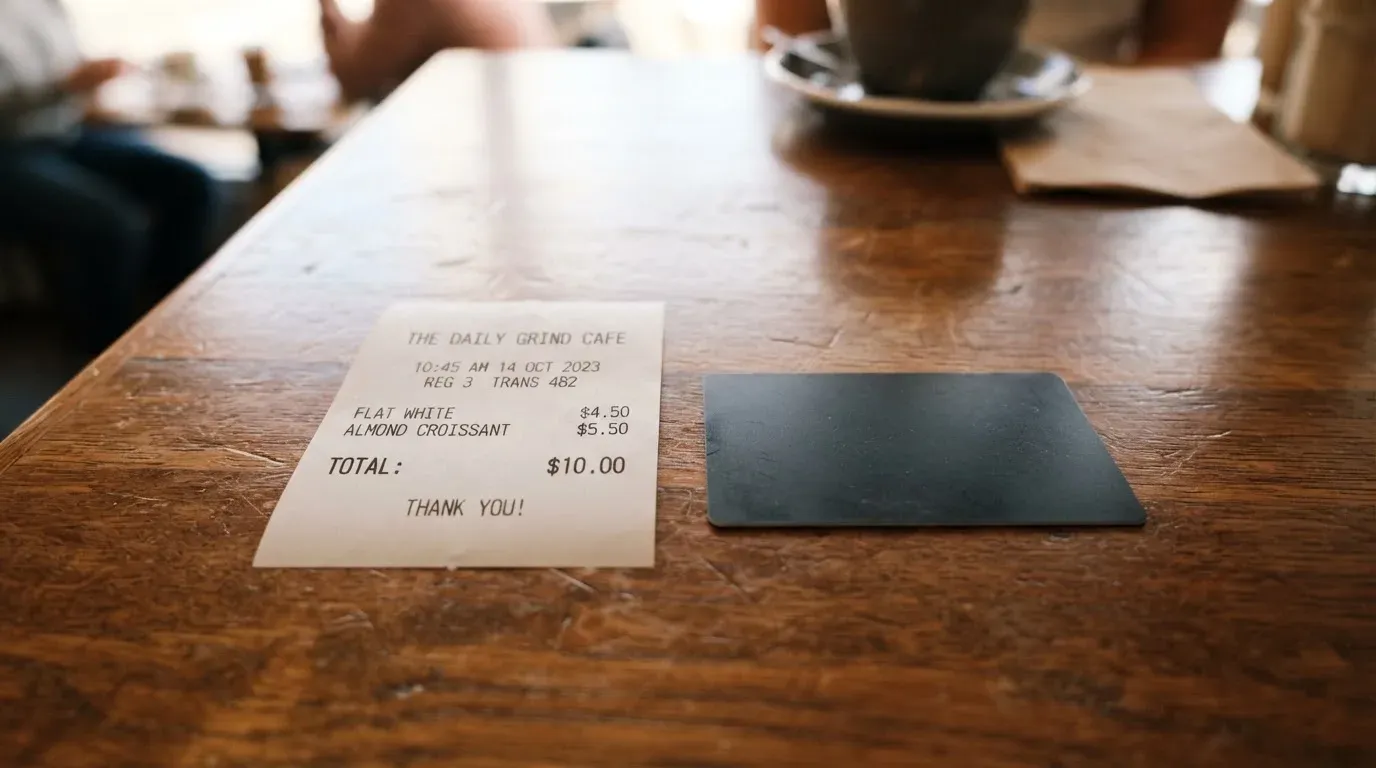
Here’s the published detail in one place.
| Fee or limit | Value |
|---|---|
| Card issuance | Not stated |
| Monthly / annual fee | Not stated |
| Crypto conversion fee | Not stated |
| FX fee (general) | Not stated |
| ATM withdrawal | 1% currency-conversion fee + separate ATM fee (amount not shown) |
| Free ATM allowance | Not stated |
| Daily spending limit | Not stated |
| Monthly spending limit | Not stated |
Walking through a few everyday payments, this is what I can and can’t tell you.
A coffee paid for in the local currency with the virtual card: the cost is the network’s FX margin (whatever WebitPay charges, plus what Visa charges, plus what the merchant’s bank charges — usually hidden inside the exchange rate). I can’t give you a percentage because the FX-fee line on the published fee schedule isn’t there.
A coffee paid for in US dollars with the physical card: if the card’s balance is in USD and the merchant settles in USD, you would not expect an FX fee at all. If the card balance is in a different currency and the merchant settles in USD, you’d expect the conversion fee plus a normal FX spread. Which of these you get depends on what the card’s base currency actually is, and the company hasn’t said.
ATM withdrawal of 200 in the local currency: 1% on the conversion, plus whatever the ATM operator itself charges. If the ATM operator charges 3 and the conversion is 1%, the visible cost of the withdrawal is around 5 on a 200 withdrawal, before any other fee line on the unpublished schedule.
A subscription billed monthly in another currency: this is where the FX margin typically shows up most clearly over time, as FX spreads can compound over repeated payments. Without the published FX fee, it is not possible to determine the actual cost for WebitPay.
The honest summary is that the public materials tell you a card exists, that it works, and that ATMs cost 1% on the conversion plus an unstated ATM fee. Everything else is held back behind a fee page that exists but isn’t filled in, in the materials I could see.
How to top it up — Top up
Topping up WebitPay is the part of the product that is described most clearly, even if the supporting detail is thin. The card is funded with stablecoins — USDT or USDC — sent directly from your own wallet to a WebitPay deposit address. Once the transfer confirms, the balance is available to spend.
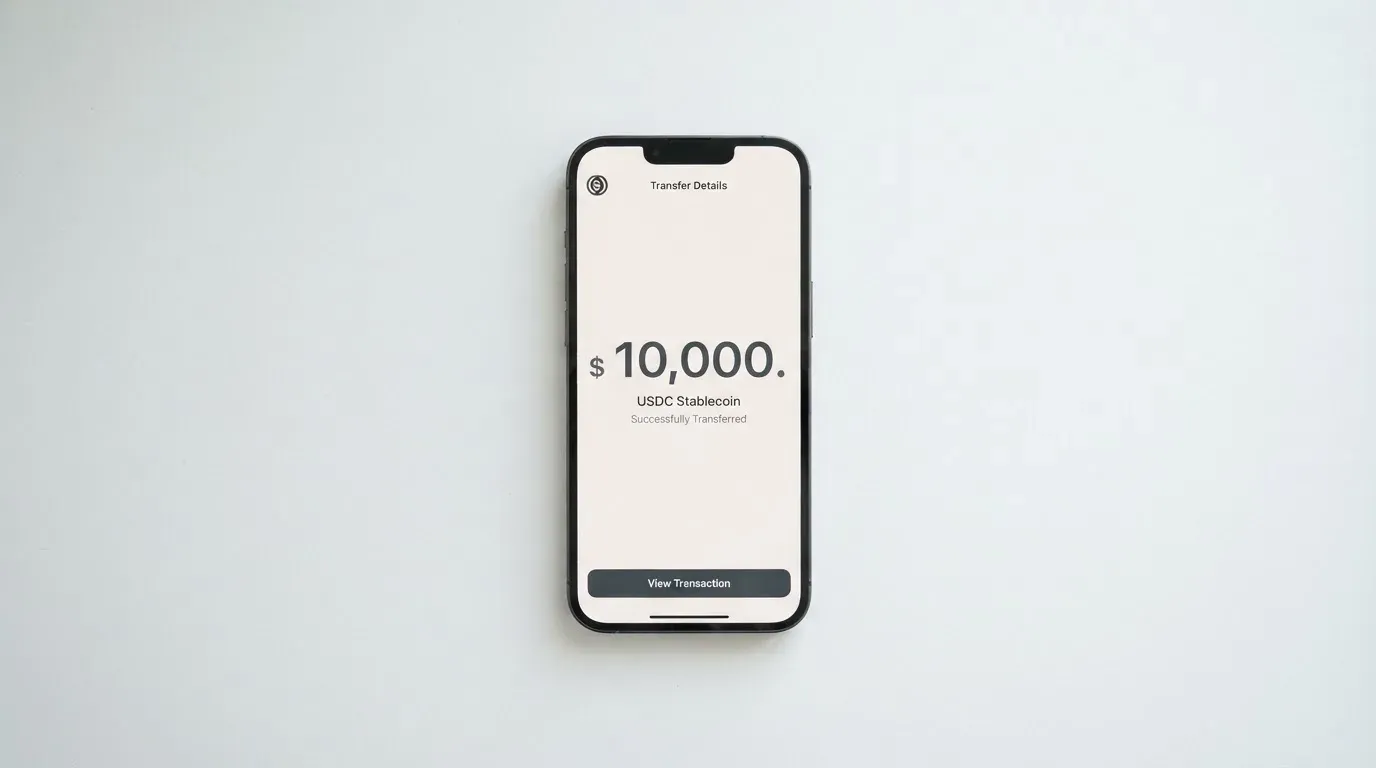
What is not stated in the public materials is just as important as what is. The list of supported networks (Ethereum, Tron, Solana, Arbitrum, Base, and so on) is not published. The minimum top-up is not published. The fee, if any, that WebitPay charges for top-up is not published — although the terms require that top-ups come from “legitimate sources”, which is standard anti-money-laundering language. There is no fiat on-ramp in the materials I could see, so the only way in is by sending stablecoins from a wallet you control.
For a reader, this is the most operationally important section, because sending stablecoins on the wrong network is a real and irreversible way to lose money. In general for the category, a stablecoin transfer sent on a network the card provider does not support, or to a deposit address of another network, can be lost entirely or need manual support recovery with no guarantee of getting it back. Circle stopped supporting USDC on the Tron network in February 2024, so “USDC over TRC20” is no longer a native option at all. If WebitPay publishes supported networks in the app at the deposit step (which most card apps do), follow that screen carefully and don’t rely on memory.
There is no withdrawal process described in the public materials, and the terms say that remaining funds “may be returned under applicable law” on account closure — language that’s deliberately careful. If your plan is to top the card up and treat the balance as spendable cash, that is fine, but treat the balance as a spending balance rather than a savings balance, because the path back to stablecoins isn’t described.
Paying with it every day
For a card in this category, the everyday-use experience is the brightest spot. The virtual card supports Apple Pay and Google Pay, which means a phone-based tap-to-pay at any contactless terminal that takes Visa, plus tokenised online checkout on sites that accept wallet payments. The company explicitly says there is no extra Webit fee for Google Pay, though network, third-party and issuer (Reap) charges may still apply. The physical card supports ATM withdrawals (with the 1% conversion fee plus an unstated ATM fee discussed above), and the card can be frozen in the app if the physical card is lost.
There are a few things I would want to know that the public materials don’t tell me. The list of blocked merchant categories is not stated. Most cards in this category block gambling (MCC 7995) by default, and some block other high-risk categories. Whether WebitPay does the same, and what else is on the list, isn’t shown. There are no rewards or cashback figures published either, so I would treat this as a straight spending card rather than a card that pays you back.
The app is iOS only. The current version is 1.4.5 (dated 16 September 2026), with earlier updates adding WhatsApp OTP and an Anti-Phishing Code (1.2.1, 29 January 2026) and balance alerts (1.2.3, 6 March 2026). The App Store rating is 5.0 from a sample of two ratings, which is too small to be meaningful, but the fact that the two raters who did rate it gave a perfect score is a small positive signal. Android availability is not stated.
If a card payment goes wrong — wrong amount charged, item not received, duplicate billing — the published process is to contact the merchant first, then raise a claim with WebitPay if the merchant doesn’t resolve it. WebitPay says it will then liaise with the issuer (Reap) and the card networks “subject to eligibility and timelines”, with reversal not guaranteed. The dispute process is described as available rather than guaranteed, and the practical strength of the dispute team at a small programme is something I have no way to verify from outside.
What can go wrong
The risk picture for WebitPay has two parts: the things the company has actually addressed, and the things that are still open. I’ll go through them in turn.
On the addressed side, account security is reasonably thorough for a card at this scale. Two-factor authentication is via Google Authenticator (a standard TOTP authenticator app), an Anti-Phishing Code and WhatsApp OTP were added in app version 1.2.1 in late January 2026, and a physical card can be frozen in the app if it is lost. The Help Center runs on Zendesk, a mainstream customer-support platform, and you can reach support by email ([email protected]) and by phone (+852-96958088) Monday to Saturday from 8:00 to 18:00, Hong Kong time. A live phone number is unusual for a card of this size and is a small positive signal.
On the open side, the bigger risks are familiar from the category. The first is platform risk: WebitPay describes the account as an “electronic money account”, but whether customer funds are safeguarded (segregated in dedicated accounts, or insured) is not stated. In the EU, electronic-money institutions must safeguard customer funds, but the company is based in Hong Kong and I can’t tell from the public materials which jurisdiction’s safeguarding rules apply. If you treat the card balance as spending money rather than stored value, this risk is small; if you plan to keep a large balance sitting on the card for a long time, it is the single biggest open question.
The second is issuer risk: the card is issued by Reap Technologies Limited, and the WebitPay side is the “programme provider”. If Reap’s own position changed — for example, if Reap lost a card-network licence, as happened to WaveCrest in Europe in 2018, or if the issuer ended the WebitPay programme — the card programme could be wound down. There is no public news of this happening, and the App Store version history shows ordinary product updates, not emergency notices, but it is the structural risk of any card where a third party is the licensed issuer.
The third is country and sanctions risk: because the supported-country list isn’t published, and the prohibited-country list isn’t published either, you may pass KYC in one country and not in another, and there is no public schedule of how that changes. The terms say sanctioned persons are excluded, and the company has the right to close accounts that don’t pass ongoing monitoring.
The fourth is operational: deposits sent on a network the provider doesn’t support can be lost; stablecoin transfers are irreversible; the issuer, not WebitPay, is the entity you have a cardholder agreement with in any dispute; and “reversal not guaranteed” in the dispute process is the honest version of how this works at smaller programmes. None of these are unique to WebitPay, but together they mean the card is a reasonable spending tool and a poor place to park a balance.
I did not find a Trustpilot page for WebitPay in the materials available to me, and I did not find user complaints or published incidents. That silence is informative but not conclusive — a small programme can have a clean public reputation simply by being small.
What to take instead
If the gaps in the fee page or the country list are deal-breakers for you, here are three cards from the same category that I would compare WebitPay against. None of these is a perfect substitute, and each has its own trade-offs, but the comparison is the kind of thing I’d want to see before committing.
| Card | Score | Card type | Funding | Cost (key figure) | Note |
|---|---|---|---|---|---|
| WebitPay | 6.0 / 10 | Physical and virtual Visa | USDT, USDC | ATM 1% conversion + unstated ATM fee; everything else not stated | Funded with stablecoins; fee page not visible |
| International Visa Card | 6.7 / 10 | Virtual US-issued Visa, physical “coming soon” | USDC, USDT at 1:1; USD/EUR/SEPA/SWIFT/FedNow | Virtual card $5 one-time; Pro plan $9.00/month, Max plan $19.00/month; card use in USD free; foreign currency “Visa exchange rate + 2% FX fee” | Long published list of countries where the card isn’t available and where purchases are blocked |
| UNi Card | 6.1 / 10 | Mastercard, multicurrency (physical/virtual not stated) | Not stated | “No annual fee or foreign transaction fee”; OTC rates; “No hidden exchange fees” | Spend-to-Earn rewards up to 3% |
| Morse | 7.5 / 10 | Virtual Visa prepaid (physical not stated) | Stablecoins (USDC, USDG, EURC on Solana free; other tokens/blockchains carry a fee); debit card; bank transfers in some regions | “Zero foreign exchange fees or markups”; online and contactless “free” | Card country list not published; closed-beta countries need an invite code; app available in 140+ countries for P2P |
The International Visa Card is the most operationally similar to WebitPay (USDC/USDT at 1:1 to a USD balance, spent on a Visa), but it has a published fee schedule, a published country-exclusion list, and a tiered monthly plan. If seeing the fee page up front matters to you, this is the closer comparison.
UNi Card is the spend-to-earn alternative: it runs on Mastercard, the conversion is at live OTC rates with no extra FX fee, and the published rewards go up to 3%. If you want a small ongoing kickback on spending, this is the direction I’d look.
Morse is the score leader of the three alternatives. It runs on a self-custodial model (your crypto stays in your own wallet until the moment of payment), publishes “zero foreign exchange fees or markups”, and lists the free deposit paths (USDC, USDG and EURC on Solana). The trade-off is that the card is fully virtual for now, and the card country list isn’t published — you’d have to check the app.
Who I would recommend it to
Pulling the threads together, here is who I think WebitPay suits and who I’d steer away from it.
I’d recommend WebitPay if you specifically want a Visa card funded directly with USDT or USDC, you already hold those stablecoins in your own wallet, you live in a country that your bank makes it hard to get an ordinary Visa, and you can tolerate opening the app, finding the deposit screen, and reading the supported network list there before sending a top-up. The card product itself — physical and virtual Visa, Apple Pay and Google Pay on the virtual, ATM on the physical — does the everyday things well, and the security basics (Google Authenticator 2FA, an Anti-Phishing Code, a freezable physical card) are in place. The everyday-use mark in the score (9 / 10) is genuinely earned, on the public materials available.
I’d steer you away from WebitPay if you want a fee schedule you can read before you sign up, if you want a published list of supported countries, if you want rewards or cashback, if you want a card that explicitly safeguards your balance, or if the idea of a small programme with an unpublished fee page and an unnamed set of licences makes you uncomfortable. None of those are fatal on their own, but together they add up to a card that asks for more trust than the published materials reward.
If any of those friction points push you off WebitPay, the three alternatives in the previous section are the place to start. The International Visa Card is the closest match on product; UNi Card is the better pick if you want small ongoing rewards; Morse is the pick if you care about a self-custodial model and a “zero FX fees” commitment.
The honest one-line summary is this: WebitPay is a small, decent Visa card that you fund with stablecoins, and the public information available to me is enough to tell you how it works and how safe it feels, but not enough to tell you what it will cost.
Frequently asked questions
What is the WebitPay card?
The WebitPay card is a Visa debit card — available as a physical card and a virtual card — issued by Reap Technologies Limited and run by WebitPay (Webit Information Technology Limited, Hong Kong). It is funded with the stablecoins USDT or USDC sent from your own wallet, and you spend the balance anywhere Visa is taken. The virtual card supports Apple Pay and Google Pay; the physical card supports ATM withdrawals.
How does the WebitPay card work?
You create an account, complete KYC, order a card, and then send USDT or USDC from your wallet to a WebitPay deposit address. Once the transfer confirms on the blockchain, the balance is available to spend. At the till, the card settles through Visa in the merchant’s currency. The published materials don’t say which network the deposit is on, so the deposit screen in the app is the place to read it before you send.
Is WebitPay a bank?
No, and the company doesn’t describe itself as one. WebitPay describes the account as an “electronic money account”, and the card is issued by a separate Hong Kong entity, Reap Technologies Limited. The licences the company holds are not named in the public materials I could see; the company says it holds “necessary financial licenses” without listing them.
Who owns WebitPay?
WebitPay is operated by Webit Information Technology Limited, with an office at Room 2706, 27/F, Everbright Centre, 108 Gloucester Road, Wan Chai, Hong Kong. The card programme is run together with Reap Technologies Limited, which is the licensed card issuer. The site doesn’t name individual owners, and the licences the issuer relies on are not listed in the public materials.
Is the WebitPay card available in my country?
The public materials do not publish a supported-country list. The terms exclude persons subject to sanctions, and the FAQ references a list of prohibited countries and regions, but that list is not shown in the materials I could see. In practice, the only way to find out whether your country is supported is to start the sign-up flow and pass (or fail) the KYC step.
Does the WebitPay card require KYC?
Yes. KYC is required via an automated third-party provider, Shufti Pro, using facial recognition and data matching, with a possible manual review. The exact documents requested, what counts as proof of address, and the minimum age are not stated in the public materials, and refusing to provide KYC documents can lead to account suspension under the terms.
How do I top up the WebitPay card?
You top up by sending USDT or USDC from your own crypto wallet to a WebitPay deposit address. The supported blockchain networks, the minimum top-up and any top-up fee are not published in the public materials, so the deposit screen in the app is the source of truth at the moment of sending. The terms require that top-ups come from “legitimate sources”, which is standard anti-money-laundering language.
Is the WebitPay card free?
The public materials don’t say. The fee schedule is described as something that “will be made available on our website”, and a “WebitPay Card Service Fees” FAQ page exists but its contents aren’t visible in the materials I have. The only fee number published is a 1% currency-conversion fee on ATM withdrawals, plus a separate ATM fee whose amount is not shown. Until the fee page is filled in, the everyday cost of using the card is not knowable from outside.
How do I add the WebitPay card to Apple Wallet?
The virtual WebitPay card supports Apple Pay, and the App Store description confirms Google Pay on the virtual card too. Adding the card to the wallet is done from inside the WebitPay iOS app: open the card detail, choose “Add to Apple Wallet” (or Google Pay), and follow the on-screen tokenisation flow. No extra Webit fee is mentioned for Google Pay; network, third-party or issuer (Reap) charges may still apply.
Is the WebitPay card safe?
The account security is reasonable for a card at this scale: two-factor authentication via Google Authenticator, an Anti-Phishing Code and WhatsApp OTP added in late January 2026, and a card freeze for a lost physical card. The structural risks are the ones common to the category — platform risk on the issuer (Reap), country and sanctions screening, irreversible stablecoin transfers on the wrong network, and an “electronic money account” whose safeguarding is not described. I did not find public incidents or user complaints in the materials I could see.
App and neobank cards on the shortlist – cryptocardshortlist
Content created by the «cryptocardshortlist» team