
The Vban card, read carefully: a $7 virtual USD card with an unstated fee list and a narrow documented footprint
 Available in US

The Vban card exists for a specific person: someone in Nigeria or elsewhere in West Africa who wants a card number they can spend online and cannot easily open an ordinary bank account. On that narrow promise it delivers something real — a virtual Visa-based card loaded from a USD balance, created after a BVN check, for $7 up front. Beyond that promise, the card’s public pages are thin. The fee list is not published, the countries are not named, the card network is not stated on the main page, the wallet limits are quoted in naira and cedis while the card is in dollars, and the operator describes itself as “not a bank.” I scored it 4.0 out of 10. That is not a verdict on whether Vban is a scam; it is a verdict on how much you can verify before you put money in.
The conditions described here are current as of October 28, 2026.
Verdict: 4.0 out of 10
| Criterion | Mark | Why |
|---|---|---|
| Who can get it | 2 / 10 | The country pages name no countries; the starting data points to Nigeria, Ghana and West/Central Africa, and a Nigerian BVN is required |
| Cost | 7 / 10 | Creation is $2 once plus a $5 card funding charge, $7 in total; no monthly fee and no per-transaction fees are disclosed |
| Top-up options | 4 / 10 | The card is funded from a USD account and the wallet must hold at least $7; USDT and USDC are named in the starting data with no networks disclosed |
| Reliability and complaints | 4 / 10 | Operated by TM Payments Limited, “not a bank”, Canada-based, powered by Maplerad; the site FAQ names Lead Bank and Bridge Ventures LLC; Trustpilot 3.2 from 13 reviews, with refused refunds and missing incoming transfers in 2025–2026 |
| Everyday use | 2 / 10 | Virtual USD card only; Apple Pay and Google Pay are not offered, Google Pay “may not work consistently due to region mismatch”; no ATM information |
That table is the whole story, and I want to be blunt about which row is doing the most damage. “Who can get it” and “Everyday use” are both 2, and both fail in the same way: information. The Vban site does not publish a country list. It does not offer a mobile wallet. If you are not already inside the target region, you cannot even find out whether you qualify.
The row that is *not* a 2 is cost, at 7. Seven is not a triumph; it is the absence of bad news. The $7 is real and stated. Everything after it — monthly fee, conversion fee, foreign-exchange fee, ATM fee — is marked “not stated” in the card’s own public material. I give it 7 because what is disclosed is cheap and transparent, not because the card is cheap. Nobody should read that row as “Vban costs $7 and nothing else.”
And the audience note that sits underneath all of it: this is a card for Nigerian and West African users who hold a BVN. If that is you, the rest of this review is worth your time. If you are anywhere else reading about a crypto card, skip to the alternatives — the comparison section is where your decision actually gets made.
Will they give you the card?
Short answer: only if you can satisfy a BVN check, and the public pages never say which countries qualify.
The page lists no countries. What exists is starting data pointing at Nigeria, Ghana, Ivory Coast, Senegal, Cameroon, Togo, Benin, Burkina Faso, Mali, Niger, Guinea-Bissau, Equatorial Guinea, the Republic of the Congo, Gabon, the Central African Republic and Chad. That is a West and Central African footprint with Nigeria at the centre. It is not a published eligibility rule — it is data gathered from the site’s own material — so treat it as a strong hint, not as a guarantee that a specific country’s address will be accepted.
The hard requirement is the BVN, the Nigerian Bank Verification Number. Your identity is tied to a Nigerian banking identifier rather than to a passport or a national ID alone. That single fact does more to shape who this card is for than anything else on the page: the smoothest path runs through a Nigerian bank account, because that is where a BVN comes from. A resident of Ghana with no Nigerian banking history is in a much weaker position than the country list alone suggests.
If you have no Nigerian connection at all, read this section as a no. Not a “maybe” — the check happens *before* card creation, so there is no way to get a card first and sort the identity question out later.
The verification itself is described as fast: BVN verification is required before card creation, and the card’s blog says it is completed “within minutes.” One valid government ID is mentioned as the document needed.
What is not stated, and it matters
Proof of address is not stated. Age requirements are not stated. The card page publishes no tier table, so there is no visible ladder of verification levels — you either clear the single BVN step or you do not. What the system *does* reveal is what happens when it fails: KYC statuses include pending and rejected, with name mismatch named as a rejection reason. So expect that the name on your ID, the name in your account and the name in your BVN record have to agree exactly.
That is the whole eligibility picture. There is no published country list, no tier table, no age rule, no address rule. Fourteen of the parameters you would use to decide whether to bother are simply absent.
How to get it
Three steps, and they are quick.
- Verify your BVN.
- Hold at least $7 in your USD wallet.
- Create the card in the app.
That is the whole flow. There is no branch visit and, since the card is virtual only, no delivery to wait for.
The card itself is a virtual, multi-use USD card. On the network question, the main article does not name one; the site FAQ says the card is “issued by Lead Bank” under a Visa licence. If the network matters to you for a specific merchant, that is something to confirm directly before you rely on it, because the main card page does not tell you.
One thing to internalise early: this is a virtual card only. There is no physical card option stated. Everything in the daily-use section below follows from that single fact.
And on tiers — there is one tier. No upgrade path, no higher limit you can buy into, no premium version. Whatever the card does, it does for everyone.
Fees: what it really costs
The upfront number is the easy part. The ongoing number is the part Vban does not publish.
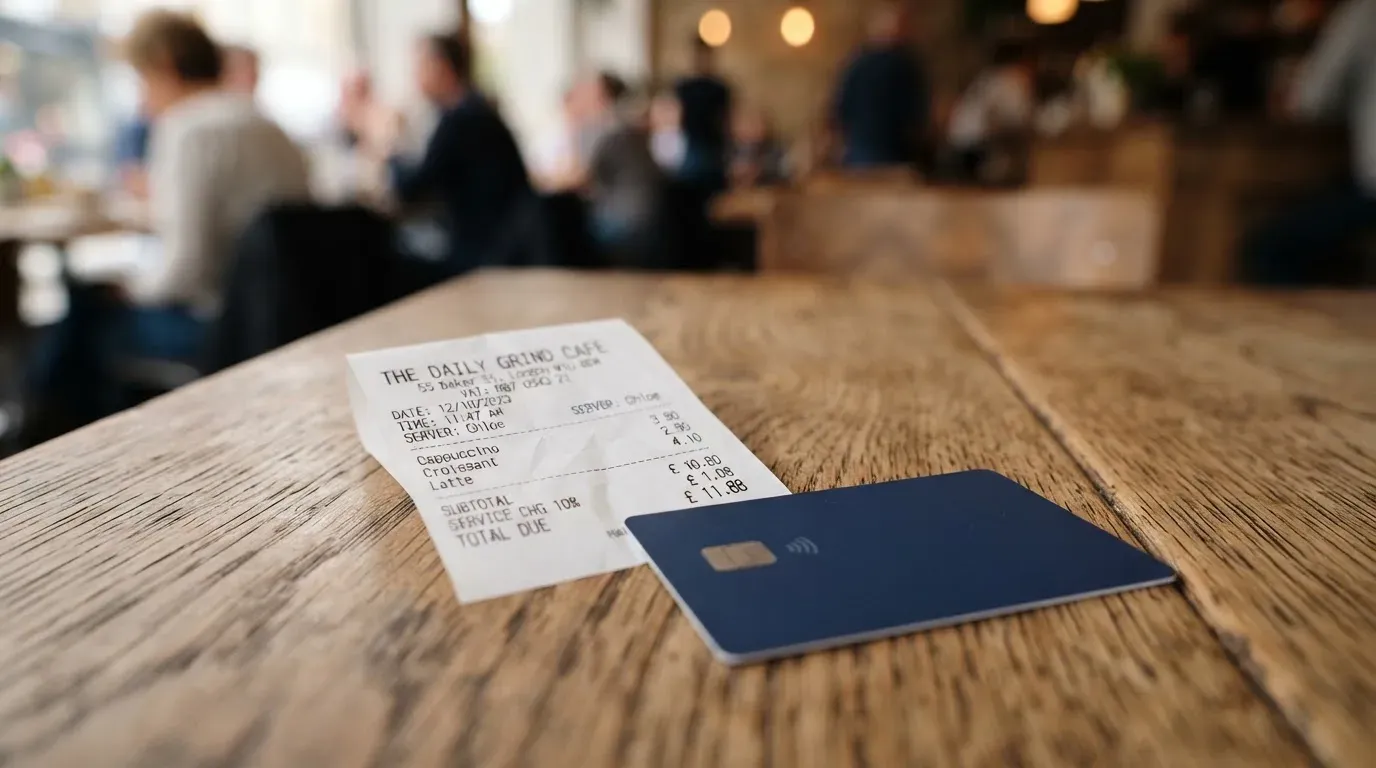
| Item | What Vban states |
|---|---|
| Card creation | $2 one-time |
| Card funding charge | $5 |
| Total to create | $7 |
| Monthly fee | not stated |
| Conversion fees | not stated |
| Foreign exchange fees | not stated |
| ATM fees | not stated |
| Card spending limits | not stated |
| Wallet withdrawal limits | NGN: 20,000,000 daily, 200,000,000 monthly, 10,000,000 per transaction; GHS: 100,000 daily, 1,000,000 monthly, 10,000 per transaction |
Read that table again and notice its shape: six of the lines say “not stated.” The two prices that *are* stated are both one-time and both attach to the card’s creation. That is not a fee schedule — it is an entry price with the running costs left blank.
Three everyday payments
Because the per-transaction and conversion fees are not disclosed, I cannot tell you what a coffee costs. What I can do is show you where the unknown sits in an ordinary week, so you can see which questions to ask before you load money.
A typical subscription payment. You tap the card, the merchant charges you, and the balance drops. No fee is named for this. But note the currency mismatch: the card is USD, so if the merchant charges you in euros, pounds or naira, a conversion happens at a rate and a fee the card’s pages do not state. That is the first place a surprise can enter.
A $40 purchase in a local currency. This is where the absence of numbers bites hardest. The card holds dollars; the shop wants its own currency. Somebody converts, and the conversion rate, the markup and the fee are all undisclosed. I cannot tell you whether you lose one percent or three, and neither can the public pages.
Withdrawing at an ATM. The card does not state whether ATM withdrawals are supported, and no ATM fee is published. There is, however, a line in the terms worth reading closely: the $5 card funding charge is described as “the minimum card withdrawal amount.” That is an unusual formulation. It suggests $5 is a floor on how much can be withdrawn, not just a setup cost — so a small cash withdrawal may not be possible at all.
The limits that *are* published are wallet withdrawal limits, and they are denominated in local currency rather than dollars. For naira: 20,000,000 daily, 200,000,000 monthly, 10,000,000 per transaction. For cedis: 100,000 daily, 1,000,000 monthly, 10,000 per transaction. There is no published cap on what the *card* may spend — only on what the wallet may pay out.
One more currency detail that will matter if you hold more than dollars: accounts are available in USD, GBP and EUR, but the card is USD. Holding a balance in another account currency does not mean the card spends it directly.
Why the missing fees are not a technicality
Card conversion economics are where the difference between providers lives. One of the alternatives I looked at charges “Visa exchange rate + 2% FX fee” and says so plainly. Another advertises “zero foreign exchange fees or markups” with a real-time Visa rate. Both of those are stated costs. When a provider publishes no number at all, the honest description is that you will find out at the till.
Top up: how the card gets money
The card is funded from the USD account, and your wallet must hold at least $7. The $5 card funding charge rides on top of that, which is why the total to create is $7 rather than $5.
The coins named in the starting data are USDT and USDC. The networks are not disclosed. This is the single most common way people lose money with cards like this, so it deserves a plain explanation.
A stablecoin like USDT exists on several blockchains — it has been issued on Ethereum, Tron, Solana, Polygon, Avalanche and others. If your provider supports one chain for deposits and you send on another, the transfer can be lost, or land where nothing can use it. Blockchain transfers are irreversible: the network cannot freeze or return them. So “which network does Vban accept” is not a detail. It is the question to ask before your first transfer, not after.
A second, quieter risk: sending to the wrong network is not the only way to lose funds. ERC-20 transfers — the Ethereum standard, proposed in November 2015 — charge gas in ETH only. A wallet holding USDT with no ETH cannot actually send it. Tron works differently, pricing internally with bandwidth and energy and often burning TRX. None of this is Vban’s design; it is the substrate underneath every card that accepts crypto, and it is where deposits quietly disappear.
Deposit rules that are stated
For deposits of USD into an account:
- Individuals: a maximum of $3,999 per deposit. Anything above that is refunded.
- Businesses: no fixed limit.
- Anything above $9,999 requires extra documents.
That $3,999 individual ceiling is a number worth planning around, because it is the kind of limit that makes large one-off transfers annoying enough that people split them — and split transfers invite mistakes.
Withdrawing back out
You can make cross-currency withdrawals to a local bank, subject to the wallet limits in the fee table above. And keep in mind the earlier note about the $5 funding charge doubling as the minimum card withdrawal amount.
The honest summary of this section: the direction Vban documents least well is the one that matters most to you if anything goes wrong. Inflow is described — a USD account, a minimum balance, two stablecoins. Outflow is described with limits in two currencies and a minimum that reuses the funding charge.
Paying with it every day
Here is where the virtual-only design meets ordinary life, and where the card is weakest.
No mobile wallets. Apple Pay and Google Pay are not offered as a wallet feature. The card’s own note on Google Pay is that it “may not work consistently due to region mismatch.” That is not me being cautious about a minor feature — tokenised mobile wallets are how most people pay now, and their absence is a structural gap, not a missing extra.
No physical card. Virtual only. That means no contactless terminal tap, no use in a shop that wants to see a card, and no fallback if your phone dies. It also means every payment goes through a checkout form or a saved card number.
No ATM story. Not stated.
No rewards. Not stated. Do not assume any.
The app. Available on the App Store and Google Play. I did not read the ratings, so I have no opinion on them.
Disputes and chargebacks. Not stated. This one deserves emphasis, because it is not a nice-to-have. When something goes wrong with a payment — goods not received, duplicate billing, a fraud attempt — the mechanism that resolves it is the issuer’s chargeback process, with reason codes such as fraud, duplicate billing or goods not received. A provider that does not publish how disputes work is asking you to trust a process you cannot inspect. And prepaid-card coverage varies by jurisdiction and should never be assumed.
What every card payment involves, so you can read the terms
Underneath any crypto card sit a few layers worth understanding before you judge the fee list.
A card number starts with an issuer identification number of 6 or 8 digits — the BIN — which identifies the institution that issued it. Merchants can look that up and see which institution and country issued the card, and may apply extra scrutiny if the issuer country differs from your billing address. This is why a card issued in one country can look “foreign” in a shop in another, and why some merchants decline prepaid or foreign BINs.
Address Verification Service compares the numeric parts of a billing address you type against issuer records. It is mainly offered in the US, Canada and the UK, and is generally unavailable for foreign-issued cards — which causes declines.
Three-D Secure adds an identity step to online payments. Visa’s brand is Visa Secure, Mastercard’s is Identity Check. Under it, liability for a fraudulent online payment can shift from the merchant to the cardholder’s bank — or, per its critics, to the cardholder.
And a practical one that catches people out: a declined authorisation can leave a hold on your funds for several days, typically up to 7.
None of this is Vban-specific. It is the terrain every card in this category crosses, and Vban’s added problem is that it does not tell you which of these mechanisms it uses.
What can go wrong
No official incident involving Vban surfaced. That is worth saying plainly, and it is not the same as saying nothing happened.
What is documented is user reports. On Trustpilot the card sits at 3.2 out of 5 from 13 reviews — read 2026-10-21, a very small sample that I would not treat as a statistically meaningful verdict on anything. But the themes are specific enough to take seriously, because they are the two things that can hurt you most:
- Refunds refused with repeated document requests (November 2025, June 2026).
- Incoming funds not showing (November 2025, May 2026).
Both cluster in the last year. The first is a support-and-dispute problem: money out, documents requested repeatedly, resolution not arriving. The second is a deposit problem: money sent, balance unchanged. Given that Vban’s published deposit ceiling is $3,999 per deposit for individuals, and that networks are not disclosed, an incoming transfer that fails to appear is exactly the failure mode the crypto-card category produces most often.
Who is actually behind the card. This is where I would want a reader to read most carefully.
The card is operated by TM Payments Limited, and the company’s own words are “It is not a bank.” The office is in Richmond Hill, Ontario, Canada. The service is “powered by Maplerad.” The site FAQ names Lead Bank and Bridge Ventures LLC as Programme Manager. Licences are not named.
So there are at least four entities in the chain — the programme manager, the card issuer, the platform powering the accounts, and the operator — and the public material does not tell you which of them holds which licence. “Not a bank” is not an insult; it is a description. But it means your balance sits with a non-bank, and the protections that come with a bank deposit do not automatically attach.
Security safeguards. Not stated. No published detail on two-factor authentication, instant card freeze, spending limits or 3-D Secure handling.
Support. There is a Help Centre at support.vban.com, hours not stated, interface in English.
News and corporate developments. Not stated.
There is a category-level pattern here too, and it explains why “who is behind this” matters more than usual. Visa and Mastercard do not issue crypto cards to consumers themselves; they license issuers and can suspend a programme. In November 2022 Visa said it had “terminated our global agreements with FTX,” and the FTX US debit card programme was wound down by its issuer. Earlier, WaveCrest — a Visa issuer that supplied several crypto card brands — was suspended by Visa in Europe in 2018, closing all WaveCrest-issued Visa programmes. Programme closures typically follow a pattern: a notice period, then spending and loading stop, then users are asked to withdraw remaining balances. One 2026 closure reported by a secondary source ended new loads on 8 July 2026 and spending on 8 August 2026 — a single unconfirmed source, cited only to show how fast this can happen.
The general lesson is not “avoid crypto cards.” It is that the brand you hold the money under and the network that carries your payments are different parties, and either can change its mind about the other.
What to take instead
I compared three alternatives on the same basis: who can get it, what it costs, what it does with FX, how it funds, and whether it rewards you.
| Option | Score | Who can get it | Card | Cost | FX and fees |
|---|---|---|---|---|---|
| Vban | 4.0 / 10 | Unstated country list; BVN required | Virtual USD card | $7 to create; no ongoing fees stated | Not stated |
| International Visa Card | 6.7 / 10 | Not available to residents or registrants of 17 named countries | U.S.-issued Platinum Visa, virtual; physical “coming soon” | $5 issuance, no maintenance; plans Classic free, Pro $9.00/month, Max $19.00/month | Card use in USD free on all plans; foreign currency “Visa exchange rate + 2% FX fee” |
| UNi Card | 6.1 / 10 | Not stated | Multicurrency, Mastercard network, spends from the UNi.Global balance | “No annual fee”; issuance not stated | “No annual fee or foreign transaction fee”; live OTC rates, “no hidden exchange fees” |
| Morse | 7.5 / 10 | By residence, 18+, supported countries; app in over 140 countries | Fully virtual Visa prepaid debit, spends from the Morse Balance in any currency | Issuance and monthly not stated; card page says “fees may apply, see Cardholder Agreement” | “Zero foreign exchange fees or markups”, real-time Visa rate; card use online and contactless free |
Who each one is actually for
International Visa Card (6.7) — the most transparent of the three on money, and the most restrictive on geography. It explicitly names the countries it will not serve: Belarus, mainland China, North Korea, Cuba, India, Iraq, Iran, Israel, Myanmar, Nepal, Nicaragua, Russia, Syria, Turkey, Ukraine, Venezuela and Vietnam, with FATF grey-list countries reviewed case by case subject to compliance approval. Purchases are blocked in North Korea, Cuba, Iran, Russia, Syria, Ukraine and Venezuela. The rule is by residence or registration, not citizenship. It funds with USDC or USDT into the USD account free at 1:1 (per an earlier check; the fee page states deposits of any kind are free), plus USD, EUR, SEPA, SWIFT and FedNow. No cashback is stated. It is also the only one of the four with a published price ladder you can actually plan around — and the odd one out with a physical card on the roadmap.
UNi Card (6.1) — the least documented of the three on eligibility; who can get it is not stated, which is a real limitation when comparing. On paper, though, it is clean: no annual fee, no foreign transaction fee, assets converted at live OTC rates, “no hidden exchange fees.” It is multicurrency on the Mastercard network and spends from the UNi.Global account balance. It is the only one of the four that states a rewards rate — “Spend-to-Earn rewards” up to 3% with UNi Card. How you fund it is not stated, and neither is physical versus virtual. If rewards and fee transparency are your priorities and you are willing to apply without knowing the eligibility rule in advance, it is worth a look.
Morse (7.5) — the strongest of the alternatives on the two things Vban is weakest on: published FX treatment and a stated breadth of reach. It is fully virtual for now, a Visa prepaid debit that spends from the Morse Balance in any currency, with “zero foreign exchange fees or markups” at the real-time Visa rate, and paying online and contactless is free. Deposits come by debit card, stablecoin transfer or Account Details (USD, EUR, MXN, COP; BRL needs a Brazilian CPF); USDC, USDG and EURC via Solana are free while other tokens and blockchains carry a fee, and Bitcoin, USDT and Ethereum can be deposited. The Morse Wallet is self-custodial — which cuts both ways, as I explain below. Its catch is a closed-beta list: American Samoa, Australia, Cape Verde, Guernsey, Hong Kong SAR China, Isle of Man, Japan, Jersey, New Zealand, Serbia, Singapore, Switzerland, Thailand, Türkiye, the United Kingdom and Western Sahara all need an invite code. Eligibility runs by residence, not citizenship, and the card is “available only in certain countries” with the list not published — check the app. It cannot serve customers subject to US, UK, EU or UN sanctions. Issuance and monthly fees are not stated.
The custody question, since two of these differ on it
Vban’s structure puts the money with the operator. Morse’s wallet is self-custodial, which means the funds stay in your own wallet until the moment of payment — and that you carry sole responsibility for key loss, phishing, and clipboard-hijacking malware that swaps an address after you copy it. A seed phrase, typically 12 to 24 words, is an unencrypted form of the private key; anyone who gets it can restore the wallet and spend the funds, because blockchain transfers are irreversible and a stolen key has no recovery.
Neither model is safe by default. Custody carries counterparty and hack risk with a documented history: Mt. Gox (about US$350 million reported stolen, 2011–2014), Coincheck (about US$400 million, 2018), Ronin Network (US$625 million, 2022). Self-custody carries the risk that the mistake is yours and unrecoverable.
If you are in Nigeria or West Africa with a BVN
Be honest about your position. Vban is one of very few options built for you specifically — a $7 entry point into online payments with no branch and no physical card. The alternatives either exclude your region by name, need an invite code, or will not tell you at all whether you qualify.
If Vban is your route, then: confirm the accepted deposit network before sending anything; test with a small amount first; and read the Help Centre’s own dispute process before you need it, because the card’s pages do not publish one. Treat the $7 as the cost of finding out.
Who I would recommend it to
I would recommend Vban to someone in Nigeria or Ghana who holds a BVN, needs a card number for online payments this week, cannot open a conventional account easily, and is willing to treat the card as a prepaid instrument with a $7 floor rather than as a bank account.
I would not recommend it to anyone who needs a physical card, a mobile wallet, a published fee list or ATM access; anyone outside West and Central Africa; anyone whose income arrives in a currency the wallet does not hold; or anyone planning to keep a meaningful balance there long-term without understanding that “not a bank” describes the counterparty holding their money.
Two things you should check before you decide anything, in this order.
First, the deposit network. Ask Vban which network USDT and USDC deposits must arrive on. This is not stated anywhere public, and a wrong answer costs real money with no recourse. The same applies to USDC over TRC20, which is not a native option since Circle stopped supporting USDC on Tron in February 2024.
Second, the dispute process. Ask how a failed payment or a missing deposit gets resolved and how long it takes. The Trustpilot reports — refunds refused with repeated document requests, incoming funds not showing — are both recent, and both are exactly the scenarios this process would have to handle.
Frequently asked questions
What is Vban card?
The Vban card is a virtual, multi-use USD card you create inside an app after verifying a Nigerian Bank Verification Number. It is funded from a USD account rather than a bank account, so it behaves much like a prepaid card: money is loaded first, then spent. Creation costs $2 once plus a $5 card funding charge, $7 in total. It is virtual only, with no physical version stated.
How does the Vban card work?
You verify your BVN, hold at least $7 in your USD wallet, and create the card in the app. The card then draws on that USD balance like a prepaid instrument. The site FAQ says the card is issued by Lead Bank under a Visa licence, and the service is operated by TM Payments Limited, powered by Maplerad. The main card page does not name the card network.
Is Vban a bank?
No — and the company says so itself, describing itself as operated by TM Payments Limited and stating “It is not a bank.” The office is in Richmond Hill, Ontario, Canada, the platform is powered by Maplerad, and the FAQ names Lead Bank and Bridge Ventures LLC as Programme Manager. Licences are not named publicly. Bank deposit protections should not be assumed.
Who can get the Vban card?
The public pages name no countries at all. The starting data points to Nigeria, Ghana, Ivory Coast, Senegal, Cameroon, Togo, Benin, Burkina Faso, Mali, Niger, Guinea-Bissau, Equatorial Guinea, the Republic of the Congo, Gabon, the Central African Republic and Chad. BVN verification is required before card creation and completes within minutes. Proof of address and age requirements are not stated.
What does the Vban card cost?
Creation is $2 one-time plus a $5 card funding charge, $7 in total. Beyond that, the monthly fee, conversion fees, foreign exchange fees, ATM fees and card spending limits are all not stated on the public pages. Wallet withdrawal limits are published in naira and cedis only. The $5 funding charge is also described as the minimum card withdrawal amount.
How do I top up the Vban card?
You fund the card from the USD account, and the wallet must hold at least $7. USDT and USDC are named in the starting data, but the accepted networks are not disclosed — which matters, because sending on the wrong chain can lose funds irreversibly. Individual USD deposits are capped at $3,999 per deposit, with the excess refunded; businesses have no fixed limit.
Can I add the Vban card to Apple Pay or Google Pay?
No — Apple Pay and Google Pay are not offered as a wallet feature. Vban’s own note on Google Pay says it may not work consistently due to region mismatch. Since the card is virtual only, there is also no physical card for contactless payments, so online checkout forms are the main way you would use it.
Is the Vban card safe?
There is no way to answer that as published. Security safeguards are not stated, dispute handling is not stated, and the card is operated by a company that describes itself as not a bank, with licences not named. On Trustpilot it sits at 3.2 from 13 reviews, read 2026-10-21, with recent reports of refused refunds and missing incoming funds. The small sample size means treat it as signal, not statistics.
Is Vban free?
Partly. Creating the card is not free — it costs $7 in total, split between a $2 issuance fee and a $5 funding charge. But no maintenance fee or transaction fee is stated anywhere, which does not mean there are none; it means the public pages do not say. If the absence of a fee list bothers you, that is a reasonable reason to choose one of the alternatives, which publish their FX and transaction terms.
Is Vban worth it?
For someone in Nigeria or West Africa with a BVN who needs a virtual card quickly, the $7 buys something few alternatives will offer them at all. For anyone else — needing a physical card, mobile wallets, published fees, or ATM access — it is not worth it, because the card does not offer those and does not commit to them in writing. Confirm the deposit network first; that question matters more than the price.
App and neobank cards on the shortlist – cryptocardshortlist
Content created by the «cryptocardshortlist» team