
A crypto-funded Visa for people locked out of ordinary banking, weighed against its real costs and teething problems
 Available in US
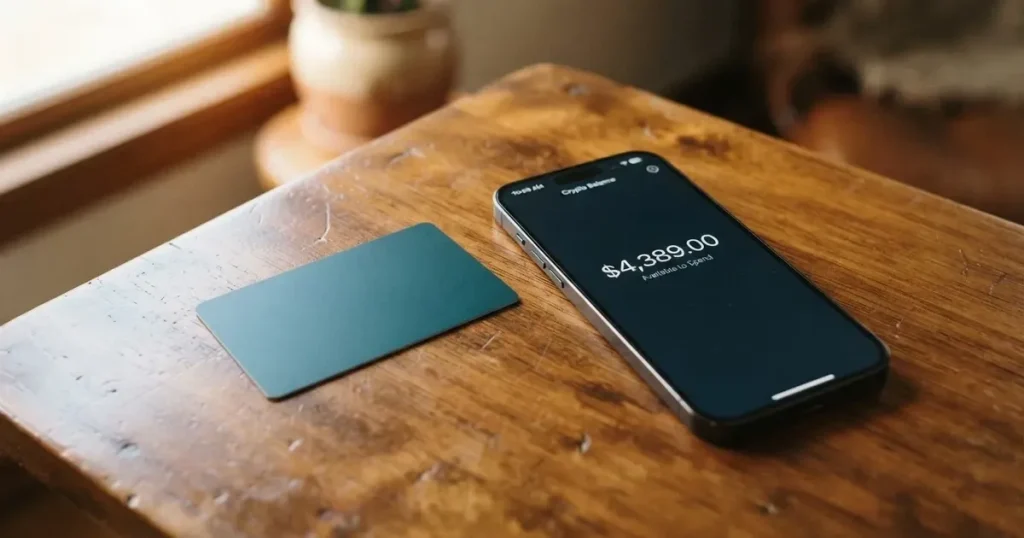
I went through Tuyo’s terms, fees page, Cardholder Agreement and the public reporting around it, and what I came away with is a card with a genuinely unusual design — your crypto stays in your own wallet until the moment you pay, and the card spends a converted USDC balance — wrapped in a young app with a few rough edges. If you are weighing it against an ordinary bank card or another crypto card, here is what I found and what I think.
Conditions are current as of October 28, 2026.
Verdict
I land on 7.3 out of 10 for the Tuyo card. The reason it does not score higher is not the fees — those are reasonable — but the gaps: a single verification level, a virtual-only card for now, no published dispute process, and reports of an app that freezes and a support team that takes days to come back. The reason it does not score lower is the genuine upside: you keep custody of your funds, USDC funding is free to receive, and the 1% + 1% fee structure is easy to understand.
Here is how the score breaks down by criterion:
| Criterion | Score | In short |
|---|---|---|
| Who can get it | 7 / 10 | Wide coverage with named exclusions: 27 countries and 25 US states/territories off-limits, including the UK, Russia, Turkey, Ukraine, China, India and Vietnam. |
| Cost | 7 / 10 | No issuance or monthly fee, but 1% FX plus 1% abroad can combine to 2%; crypto conversion is 0.25%. |
| Top-up options | 9 / 10 | USDC on Base natively, plus any token on Base, Ethereum, Arbitrum, BNB Chain or Polygon converted in-app; fiat via SEPA, ACH, SPEI, Apple Pay, Google Pay. |
| Reliability and complaints | 6 / 10 | Not a bank; fiat handled by Bridge Ventures, cards issued by partner Rain under Visa; the BNPM rewards programme ends 31 October 2026, and reviews flag app freezes and slow support. |
| Everyday use | 8 / 10 | Virtual Visa issued instantly, Apple Pay and Google Pay supported, ATM up to $250 per withdrawal with three attempts per 24 hours, but no physical card yet. |
The card fits a specific reader: someone already comfortable holding their own crypto, with USDC on Base ready to move, who has been refused a bank card or wants to keep that step out of the chain. It fits less well if you need a physical card today, if you live in a sanctioned or restricted country, if you want a tiered verification with higher limits, or if you depend on responsive support when something goes wrong.
Will they give you the card
This is the section that decides whether Tuyo is even an option for you, so it is worth reading carefully. Tuyo uses two layers of restriction: a platform-wide list by verified residence, and a second list from the card provider for card issuance. The rule on both is residence, not citizenship — your verified home address is what matters.
The platform-wide prohibited countries, by verified residence, are 27 in total: Afghanistan, Bangladesh, Belarus, China, Democratic Republic of the Congo, Cuba, India, Iran, Iraq, Lebanon, Libya, Mali, Myanmar, Nepal, Nigeria, North Korea, Russia, Somalia, South Sudan, Sudan, Syria, Turkey, Ukraine, United Kingdom, Venezuela and Vietnam. If you live in any of these, you cannot open the account, regardless of which passport you hold.
The card provider layers on extra issuance restrictions for: Belarus, mainland China, Cuba, India, Iran, Iraq, Israel, Myanmar, Nepal, Nicaragua, North Korea, Russia, Syria, Turkey, Ukraine, Venezuela and Vietnam. Belarus is a special case: the platform is closed but card payments are still available — meaning some existing user flow rather than new issuance.
In the United States, the card is not available in these states and territories: Arizona, Delaware, Georgia, Idaho, Louisiana, Maryland, Mississippi, Missouri, Nevada, New Mexico, North Dakota, Ohio, Oregon, Rhode Island, South Dakota, Tennessee, Vermont, Washington, Wisconsin, the District of Columbia, Puerto Rico, the US Virgin Islands, American Samoa, Guam and the Northern Mariana Islands. That is 25 names.
The eligibility check is by verified residence, so a US citizen living in Germany is treated as a German resident, and a German living in London is treated as UK-resident and therefore out. If your country is not on either list, you can in principle apply.
To apply, you need a government-issued photo ID — a passport or national ID card — and you must be at least 18. Tuyo does not explicitly require a separate proof-of-address document, but it does check “verified residence”, and rejections happen for what the company calls “document issues, unclear photos, or unsupported occupation codes.” The processing time is not stated on the public pages, and a rejected application “is final” — there is no second review. If the app shows a generic setup error instead of a clear pass or fail, Tuyo says to contact support to check for missing or wrong profile data.
How to get it
The signup flow is short, by design. You download the iOS or Android app, register an account, pass identity verification with a government-issued ID, deposit USDC on Base, and the virtual card is issued instantly in the app once KYC is approved. There is no separate “apply for card” step, no delivery to wait for, and no plastic to ship.
The card you get today is virtual only — a Visa number and the ability to add it to Apple Pay or Google Pay. A physical card is described as “coming soon” with no date, no cost and no delivery time announced. There is no metal tier and no paid card option; it is one product, free to issue.
If you want to know what verification you are signing up for, the answer is: one level. Tuyo does not describe a basic/enhanced KYC split the way some competitors do. A single government-issued ID is the entry point, and beyond that, Tuyo says it may do ongoing checks — but no second tier is documented.
A useful thing to know before you start: if your KYC is rejected, you can still withdraw your crypto to your own wallet, because the wallet is self-custodial. That is worth holding onto if you are worried about being stuck.
What it really costs: Fees
The headline is friendly: no issuance fee, no monthly fee, no yearly fee. The detail is what does the work. Every cost on Tuyo falls into one of three buckets — a currency fee, an abroad fee, or a crypto conversion fee — and they stack in ways that are easy to miss.
| Item | Amount |
|---|---|
| Card issuance | Free |
| Monthly / annual fee | Free |
| Crypto conversion / trading | 0.25% volume fee (or network fee if higher during congestion); bridging and stablecoin-to-stablecoin swaps exempt |
| FX fee (non-USD spend) | 1% |
| Abroad fee (non-US spend) | 1% |
| Combined non-USD spend outside the US | Up to 2% per purchase |
| USD spend inside the US | 0% card fee |
| Legal maximum FX (per agreement) | “Up to 3%” |
| Legal maximum abroad fee (per agreement) | “Up to 3%” |
| ATM (Tuyo’s own fee) | None |
| ATM operator surcharge | Applies and counts toward the $250 per-withdrawal cap |
Three everyday examples make the table easier to read:
- A $50 coffee in New York, paid in USD: 0% from Tuyo. The merchant’s own processor may charge something, but on Tuyo’s side the cost is nothing.
- A €45 dinner in Berlin: the 1% currency fee plus the 1% abroad fee both apply, so Tuyo takes 2% (about €0.90) on top of what Visa and your bank might do.
- Buying a $30 e-book in USD from a US-based merchant while you are physically in Tokyo: the spend is in USD so no currency fee, but the abroad fee of 1% applies, so 1% (about $0.30) on top.
A few extra notes. The Cardholder Agreement I read (International, November 2025) puts the legal maximum FX fee and cross-border fee at “up to 3%” each, so today’s 1% sits well below the published ceiling. There is no free ATM allowance — the first dollar you take out is at the mercy of the ATM operator’s own surcharge, and that surcharge counts toward the $250 per-withdrawal cap. The crypto conversion fee of 0.25% is the only cost Tuyo takes when you move USDC into the spendable balance; it is not charged on bridging between networks or on stablecoin-to-stablecoin trades.
How to top it up: Top up
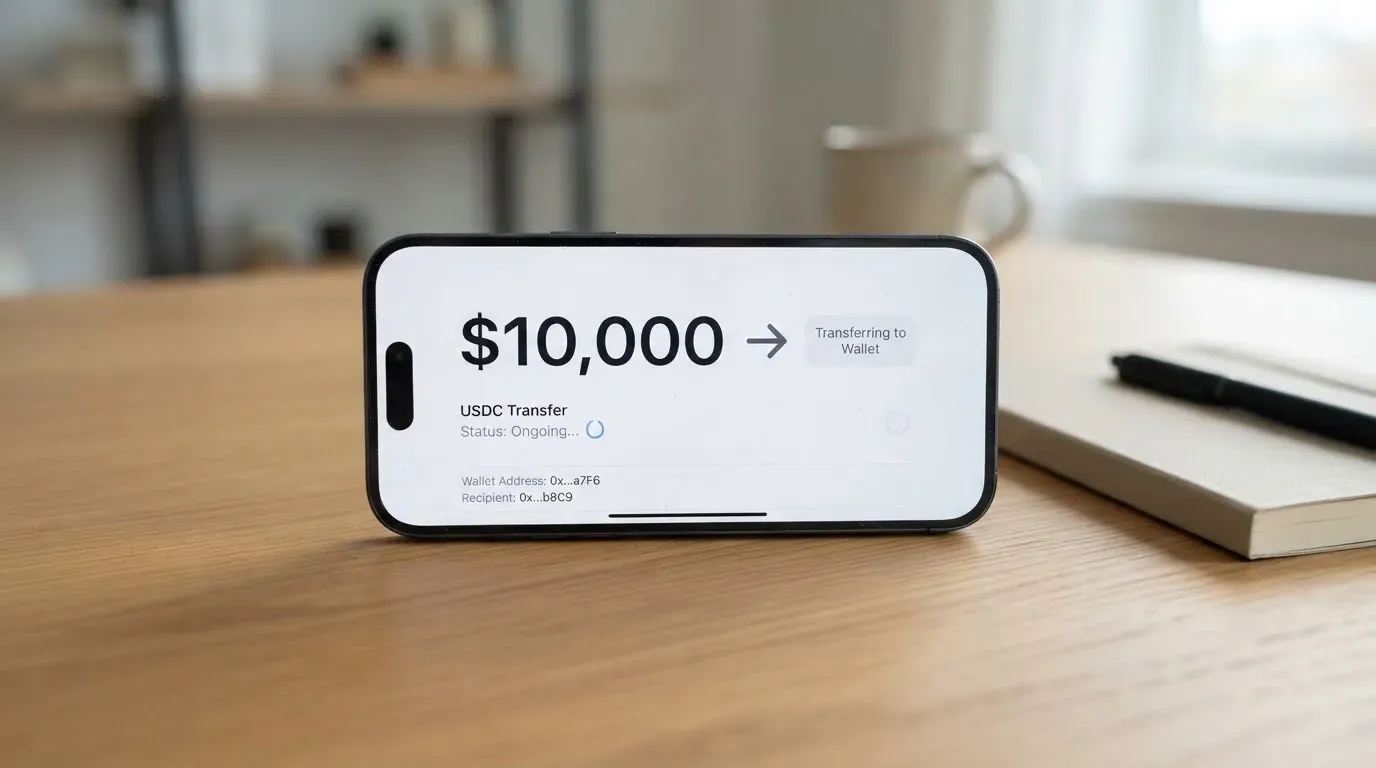
This is where Tuyo does unusually well. The card is powered by USDC on the Base network, and USDC on Base is free to receive on Tuyo’s side — you only pay the gas fee on the chain you are sending from. From there, you can deposit any token on Base, Ethereum, Arbitrum, BNB Smart Chain or Polygon, and Tuyo will convert it into Base USDC in-app. The conversion fee is 0.25%, and the bridging step between networks is exempt from that fee.
If you would rather top up with fiat, Tuyo supports a wider set than most crypto cards:
- Apple Pay and Google Pay
- Debit and credit card
- Linked US bank account
- USD bank transfer via ACH or domestic wire (no SWIFT)
- EUR bank transfer via SEPA or SEPA Instant, from an account in your own name (no SWIFT)
- MXN bank transfer via SPEI
You also get multi-currency account numbers for spending or receiving: a USD account with routing number, a EUR IBAN, and a MXN CLABE. EUR deposits can auto-convert to USD on the way in, so you do not need to hold euros manually.
A minimum top-up amount is not stated on the public pages. The fiat-to-crypto spread is described in the FAQ as “usually under 1%”, which is in line with the rest of the market but is not a guaranteed rate.
Two practical warnings. First, blockchain transfers are irreversible, so sending USDC on a network Tuyo does not support, or to an address for a different network, can mean lost funds or a manual support recovery with no guarantee. Second, Ethereum gas fees can be material for small top-ups — if you only plan to add $20 at a time, Base or Polygon will be friendlier than mainnet.
Paying with it every day
Once you have a balance, Tuyo behaves like a regular Visa in most places. You can add the virtual card to Apple Pay or Google Pay, set a PIN in-app, and toggle the card on and off. Spending controls include a daily limit you can change in-app after your first purchase.
The current daily limit on a new card is $50,000 USD, and the structure is interesting: once your cumulative spend reaches $50,000, the limit rises to $100,000; once it reaches $100,000, it rises to $200,000. There is no published monthly limit.
ATM use is supported at any Visa ATM, with a maximum of $250 per withdrawal (including any operator surcharge) and a maximum of three withdrawal attempts per 24 hours — both approved and declined attempts count. Tuyo does not charge an ATM fee itself, but operator surcharges apply and eat into the $250 cap.
Some merchant categories are blocked — when that happens the app shows “Merchant not supported”. Apple or Google can also reject the wallet addition based on their own risk checks on your device, location or account history, which is outside Tuyo’s control.
A word on rewards. Tuyo does not currently run a traditional cashback programme. What it has been running is BNPM (Buy Now Pay Maybe) — random free purchases at Tuyo’s discretion. That programme is closing on 31 October 2026. From 1 November 2026, it is replaced by a 1.5% cashback on all purchases globally, with no minimums, no caps, no category restrictions, and no membership requirements. The 1.5% rate is scheduled to apply through the end of 2026, after which terms may be updated.
There is also a points programme called TUYOs: you earn points from card spend, trading and Earn strategies, but these are off-chain points, not a tradable token. A token generation event (TGE) is “expected in 2026”, with at least 20% of supply earmarked for users and community, but the page I read does not commit to a date.
App quality matters here. On iOS, the App Store rating is 4.4 out of 5 from 130 ratings (read 21 October 2026). On Android, Google Play shows 3.9 out of 5 from around 305 reviews, with 10,000+ downloads, last updated 27 July 2026. Both ratings reflect a working product with a not-small minority of unhappy users.
What can go wrong
I want to walk through this carefully, because a crypto card that holds your money has to be judged on what happens when things break.
Programme changes. The single biggest known change is BNPM ending on 31 October 2026 and being replaced by 1.5% cashback from 1 November 2026. The reason given by the co-founder was that users “exploited rewards” and the costs and team distraction were unsustainable. The same co-founder had earlier, in May 2026, declared that “cashback is dead” — which makes the 1.5% replacement a notable turn. This 1.5% rate is scheduled to apply through the end of 2026.
Issuer and partners. Tuyo Inc. is not a bank. Fiat services (converting fiat to stablecoin, providing virtual bank account numbers) are handled by Bridge Ventures, Inc., a US-licensed money transmitter that is also regulated in relevant US and EEA jurisdictions. Cards are issued by a partner under Visa licence — Tuyo names Signify Holdings, Inc., which trades as Rain. Rain’s CEO told Forbes in June 2026 that the company was “not looking at or doing” probabilistic rewards like BNPM, citing legal and regulatory concerns. Tuyo Inc.’s own registration jurisdiction is not stated on the site; third-party directory tracxn.com lists Delaware, which I am treating as unofficial.
App reliability. The recurring complaints I found across App Store, Google Play and Trustpilot reviews are consistent enough to take seriously: the app can freeze after verification, requiring a reinstall that sometimes locks users out of their accounts; support takes days to respond; verification can fail in confusing ways (the app says a country is eligible, the user deposits funds, the card is then denied); and the BNPM free-purchase frequency dropped sharply after the first couple of months of use. One user reported a forced EUR-to-USD conversion at around 0.50% — broadly in line with the published fee, but presented as a surprise.
Security model. The good news is structural: Tuyo is self-custodial, which means you hold the private keys and Tuyo never takes custody of your funds. The app uses biometrics (Face ID) and the device’s secure enclave for key storage, with iCloud or Google Drive backup. You can freeze and unfreeze the card in-app, set a PIN, and adjust the daily limit. The card can only pull up to the activated daily limit from your USDC on Base at the time of purchase. Funds are not FDIC-insured, and Tuyo itself does not hold them.
The other side of self-custody is the responsibility it puts on you. Lose your seed phrase and the funds are gone. Sign a phishing transaction that drains your wallet and there is no one to call. Paste the wrong address from clipboard-hijacking malware and the transfer is irreversible. The 12–24 word seed phrase is the unencrypted form of the key — anyone who gets it can restore the wallet and spend the funds.
Documentation gaps. Tuyo’s public pages do not address chargebacks, disputed transactions, refund handling or specific timeframes. The Cardholder Agreement (International, November 2025) is hosted on Notion, and Trustpilot’s aggregate score for tuyo.com is not accessible due to anti-bot measures. For US debit card rights, Regulation E sets a baseline for many card types, but prepaid-card coverage varies and should not be assumed.
What to take instead
These alternatives are independent comparisons rather than direct competitors, reflecting different trade-offs given Tuyo’s self-custody model and single-tier design.
| Card | Score | What it does differently | Cost shape | Funding |
|---|---|---|---|---|
| TokenPocket (TP Card) | 5.8 / 10 | Mastercard/Visa debit for a list of European and Asia-Pacific countries, on Arbitrum | A 1% fee on crypto deposits, later refunded via rewards; FX fee not stated; extra settlement fees can apply | Crypto from the TokenPocket wallet (Arbitrum) |
| MetaMask Card | 7.1 / 10 | Mastercard issued by Monovate via Crypto Life, spending directly from a connected wallet on Linea, Base, Monad, Solana | Virtual free, Metal $199/year; minimal transaction fee (amount not stated on the page); no foreign transaction fee | Tokens including mUSD, wETH, EURe, GBPe, USDC, USDT directly from wallet |
| KAST | 6.1 / 10 | Visa Platinum/Infinite on stablecoin balance, up to 10 cards, multi-tier membership | Standard 0 USD/year, Premium $1,000/year, Private $10,000/year; non-USD FX 0.5%–1.75%; no fee on USD card spend or stablecoin top-up | USDT, USDC, PYUSD, RLUSD on Ethereum, Solana, Polygon, Arbitrum, TRON |
If you want the most similar self-custody feel with a bigger network and a more developed card product, MetaMask Card is the closer match — it also spends straight from your wallet, has a virtual + Metal option, and supports a broader set of tokens, though it costs $199/year for the metal tier and is open in only 45 listed countries with US/UK sign-ups temporarily closed.
If you want the simplest fee structure and the most card tiers, KAST is worth a look — 0% on USD card spend and stablecoin top-up, 0.5%–1.75% on non-USD, and a cashback ladder up to 3% — but the country list is not published and the $1,000/year Premium tier is a real commitment.
If you are already in the TokenPocket ecosystem and live in one of its listed European or Asia-Pacific countries, the TP Card is a low-friction option, but the absence of a published FX fee and the 1% crypto-deposit fee make it harder to budget for.
Who I would recommend it to
Putting all of the above together, here is who I think the Tuyo card actually serves.
Yes, if you: hold your own crypto and are comfortable with USDC on Base; want a virtual Visa you can put in Apple Pay or Google Pay the same day you sign up; live in a country that is not on either of the two restricted lists; are fine with a 1% + 1% combined fee on non-USD or non-US spend; and do not need a physical card yet. The self-custody angle is real, the top-up options are unusually broad, and the cashback switchover from 1 November 2026 is a concrete benefit if you time your sign-up around it.
No, if you: live in the UK, Russia, Turkey, Ukraine, China, India, Vietnam, Belarus, or any of the other restricted countries; need a physical card today (none is available); need a higher tier of verification with higher limits (only one KYC level is described); rely on responsive support to fix things — the reviews suggest a wait of days; or you want a published dispute and chargeback process before you sign up.
Wait and watch, if you: are on the fence. The product is changing — BNPM is ending, cashback is starting, a token launch is “expected in 2026” with at least 20% of supply earmarked for users. The fees and limits may shift once that lands. Reading the Cardholder Agreement in full before depositing material sums is worth the hour it takes.
For a USDC holder who has been locked out of bank cards, Tuyo is one of the cleaner self-custody options on the market. Just go in knowing it is virtual-only, single-tier, and the support team is the part that still has catching up to do.
Frequently asked questions
What is the Tuyo card?
Tuyo is a Visa payment card whose balance is funded from USDC held in a self-custody wallet on the Base network. You download the app, pass KYC with a government-issued ID, deposit USDC, and a virtual Visa is issued instantly that you can add to Apple Pay or Google Pay. Tuyo Inc. is not a bank; fiat services are handled by Bridge Ventures and the card is issued by a licensed partner under Visa.
How does the Tuyo card work?
At purchase, Tuyo pulls from your USDC on Base up to your activated daily limit, converts it to fiat at the card’s rates, and the merchant is paid by Visa. You can deposit any token on Base, Ethereum, Arbitrum, BNB Smart Chain or Polygon and Tuyo will bridge and convert it to USDC on Base for you. A 0.25% crypto conversion fee applies, with bridging and stablecoin-to-stablecoin swaps exempt.
Is Tuyo a bank?
No. Tuyo Inc. is a financial technology company, not a bank. Fiat-to-stablecoin conversion and the virtual bank account numbers are provided by Bridge Ventures, Inc., a US-licensed money transmitter, and the card itself is issued by Signify Holdings, Inc. (“Rain”) through licensed partner institutions under a Visa licence. Funds are not FDIC-insured.
Who owns Tuyo?
Tuyo is operated by Tuyo Inc. The company does not publicly state its registration jurisdiction; a third-party business directory (tracxn.com) lists Delaware, which I am treating as unofficial. Bridge Ventures is the licensed money-transmitter partner for fiat services and Signify Holdings (Rain) is the card-issuance partner.
Is the Tuyo card available in my country?
It depends on your verified residence, not your citizenship. 27 countries are platform-wide prohibited (including the UK, Russia, Turkey, Ukraine, China, India, Vietnam, Belarus, Cuba, Iran and others), and a smaller subset of those plus 25 US states and territories are also blocked from card issuance. If your country is not on either list, you can in principle apply, but Tuyo notes applications sometimes fail for “unsupported occupation codes”.
Does the Tuyo card require KYC?
Yes. You verify with a government-issued photo ID (passport or national ID card) and must be at least 18. There is one verification level — no basic/enhanced split is described. A rejected application is final per Tuyo’s documentation, and a separate proof of address is not explicitly required but “verified residence” is checked.
How do I add the Tuyo card to Apple Wallet?
Open the Tuyo app after your virtual card is issued, find the card details, and follow the in-app “Add to Apple Wallet” prompt. From there, the standard Apple Pay verification (Face ID, passcode) takes over. Apple can decline wallet addition based on its own device, location or account risk checks, which is outside Tuyo’s control.
How do I top up the Tuyo card?
The primary route is to send USDC to your Tuyo deposit address on the Base network — free to receive on Tuyo’s side, you only pay the gas on the chain you are sending from. You can also send any token on Base, Ethereum, Arbitrum, BNB Smart Chain or Polygon and convert in-app. Fiat options include Apple Pay, Google Pay, debit/credit card, US bank transfer (ACH/wire), SEPA / SEPA Instant in EUR, and SPEI in MXN.
Is the Tuyo card safe?
The architecture is genuinely safer than a custodial card in one important way: Tuyo never takes custody of your funds. Your private keys stay on your device, secured by Face ID and the device’s secure enclave, with optional iCloud or Google Drive backup. You can freeze the card and adjust the daily limit at any time. The trade-off is full self-custody responsibility — lose your seed phrase and there is no recovery. Tuyo also does not document a chargeback or dispute process, which is a gap to be aware of.
Is the Tuyo card worth it?
For a USDC holder who has been refused a bank card or wants to keep banking out of the chain, yes — the 0% USD-in-US fee, free USDC on Base receipt, and 1.5% cashback from 1 November 2026 are a strong package. For someone who needs a physical card, lives in a restricted country, or wants tiered KYC with higher limits, the answer is no — at least not yet.
Wallet cards on the shortlist – cryptocardshortlist
Content created by the «cryptocardshortlist» team