
The TokenPocket card puts a Visa or Mastercard behind your crypto wallet, but its service record is the weak point
 Available in US
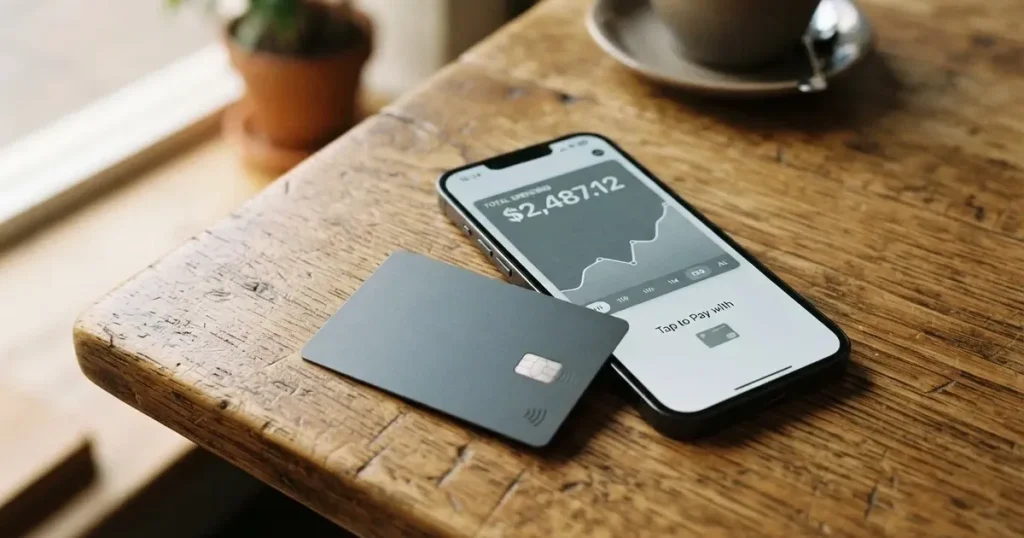
The TokenPocket card is not a bank account. It is a Visa or Mastercard debit card that sits behind a crypto wallet, and getting one is an unusual process: you mint an account NFT, and that NFT is what the card is attached to. That design is genuinely convenient once it works — the card loads from crypto, spends like an ordinary debit card, and lives inside the same app as your wallet — but it also makes the product dependent on pieces that are hard to see from outside. The issuer is not named on the card’s public pages, support sits with a service called Fiat24, the published fee list has gaps, and there is a public complaints history that runs against the product.
I gave it 5.8 out of 10. Not a warning, exactly — more a card that does one thing clearly and leaves you to guess at several others.
The conditions described below are current as of October 28, 2026.
Who the TokenPocket card suits, and who it does not
It suits someone who already lives in the crypto world, spends in Europe or Asia-Pacific, and would rather not move money through a bank account to pay for everyday things. If that is you — a self-custody user who is comfortable with a seed phrase, an Arbitrum wallet, and an NFT acting as your account — the card is coherent and the fees are unusually restrained.
It does not suit someone who wants a card that “just works” everywhere, or who wants a bank behind it. It does not suit anyone in the Americas, and it does not suit anyone who needs cash from an ATM. It also does not suit a person who plans their finances around chargeback protection or spending limits; neither is described on the pages I read.
| Criterion | Mark | Why |
|---|---|---|
| Who can get it | 7 / 10 | Visa for a list of European countries (Germany, France, Spain, Switzerland), Mastercard for Australia, Canada, Hong Kong, Japan, Taiwan, New Zealand, Singapore, South Korea, UK; the Americas “planned for Q2 2025” |
| Cost | 7 / 10 | NFT creation is partly covered by TokenPocket and you pay a “small portion” (the amount is not disclosed); a 1% fee on crypto top-up, with no other fees charged |
| Top-up options | 4 / 10 | Crypto deposits from the TokenPocket wallet on Arbitrum; the FAQ names no specific coins or networks, and balances are held in EUR24 and USD24 |
| Reliability and complaints | 4 / 10 | No issuer named in the FAQ, support sits with Fiat24; Fiat24 scores 2.2 out of 8 reviews on Trustpilot, all one-star, with complaints about silent support and delayed funds |
| Everyday use | 6 / 10 | Apple Pay, Google Pay, Samsung Pay, Alipay and WeChat Pay; the cards are virtual, with no plastic card or ATM details given |
| Total | 5.8 / 10 | A workable product with an unusually thin published fee list and a weak service record |
The number that pulls this down is not the fees. It is that you are asked to trust a chain of parties — an unnamed issuer, a support partner, an NFT account, an on-chain wallet — and the public record on the support side is poor.
Will they give you the card?
Here is the honest answer on eligibility: it depends on where you are, and the list is not one list.
- Visa debit is offered for a list of European countries and territories, with Germany, France, Spain and Switzerland named as examples.
- Mastercard debit is offered for Australia, Canada, Hong Kong, Japan, Taiwan, New Zealand, Singapore, South Korea and the UK, among others.
- The Americas are described as “planned for Q2 2025” in the FAQ. That is a statement from the FAQ, not a launch I can confirm; treat it as a plan on paper, not a country you can apply in.
Two things the card does not tell you. It does not publish a citizenship rule, so I cannot tell you whether nationality matters the way residence does — it may not, and it may, and the pages are silent. And it does not describe a separate document list for identity checks; verification is described as happening through your on-chain wallet instead.
If you are outside these lists, there is nothing to apply to. This is the single most common disappointment with this card, and it is worth checking before you install anything.
How to get it
Getting the card is a five-step process, and step three is the one that will stop you cold if you are not expecting it.
- Download TokenPocket.
- Create or import an Arbitrum wallet.
- Mint an account NFT. This is the unusual part. TokenPocket partially covers the minting cost and you pay “a small portion” — the amount is not disclosed. One account NFT per wallet.
- Complete registration.
- Receive the card.
Verification runs through the on-chain wallet. There is no separate document list stated, and the card’s own pages do not set out identity-verification levels, so I cannot tell you what a review looks like at each stage.
What you end up with is a “Mastercard/Visa debit card” running on Arbitrum, held in balances called EUR24 and USD24. The cards are virtual, and no physical card or delivery details are stated. EUR24 and USD24 balances can be transferred to another registered account-NFT holder, which is worth knowing if you are thinking of this as a shared arrangement; it is also worth remembering that your balance is only as movable as the other holder.
Fees: what it really costs
The published fee position is unusually clean, with one hole in it.

| Item | What the card says |
|---|---|
| Issuance / account NFT | Minting partly covered by TokenPocket; you pay a “small portion” (amount not stated) |
| Monthly fee | “Apart from these, TP Card does not charge any additional fees” |
| Crypto top-up fee | 1% charged when depositing cryptocurrency into the TP Card |
| Conversion fee | Not stated |
| FX fee | Not stated |
| ATM fee | Not stated |
| Daily spending limit | Not stated |
| Monthly spending limit | Not stated |
| Currency | Balances in EUR24 and USD24 |
| Extra fees | Can arise from inter-institution settlement |
So the cost model is: one percentage fee, at 1%, when you load with crypto, plus whatever the network charges you, plus whatever a settlement intermediary might add. That is a short list and a good sign. The gaps are the problem — conversion and FX are the two places a crypto card usually earns its keep, and neither is priced on these pages.
Three everyday payments, so you can see where the fee bites:
- A EUR 40 grocery shop. If your balance is in EUR24 and you hold EUR24, there is no conversion to do. The 1% was charged when the money arrived as crypto.
- A EUR 40 shop paid from USD24. This is where a conversion happens, and the card’s pages do not price it. You are relying on the terms of the service, not on a published rate.
- Topping up EUR 100 of crypto. 1% is charged on deposit, which the card says “will later be refunded to users through rewards, reduced transaction fees, etc.” That is a promise of future value, not a refund today — treat the 1% as a real cost.
One more cost sits outside the card: on-chain network fees for your deposit are charged by the blockchain, not by the card provider. If you are sending on Arbitrum, that is cheap; the point is that it exists regardless.
How to top it up
Topping up means one thing here: sending crypto from your TokenPocket wallet to the card. Deposits come from the wallet, on Arbitrum. The FAQ does not name which specific coins or networks are supported, which is an unusual omission for a product whose entire funding path is crypto.
- The minimum deposit is not stated.
- Whether you or the provider pays the network fee is not stated.
- Whether there are any fiat top-up options is not stated. On the evidence I read, there is no bank transfer route described for adding funds, only crypto.
Withdrawals go the other way by wire transfer, generally credited within 1–2 business days, with fees not stated.
That last point deserves a second look. A card you cannot add fiat to, and can only empty by wire, is a fairly narrow instrument. If you are comparing this with a card that takes a bank transfer, that difference may matter more to you than the 1%.
Paying with it every day
Day-to-day spending is where this card is at its most ordinary, and most of that is inherited from the card networks rather than from TokenPocket.
- Apple Pay, Google Pay and Samsung Pay all work, which is the practical answer to “where can I use it” for anyone without a plastic card.
- Alipay and WeChat Pay are supported as well, which matters if you are in Asia-Pacific.
- The card is managed inside the TokenPocket app. Store ratings were not checked, so I am not going to rate the software quality.
What is not stated: which merchant categories are blocked. This is not a detail to shrug at. Gambling (MCC 7995) is blocked on many cards by issuer policy, and prepaid or foreign-issued card numbers get declined at some merchants because the issuer and country are visible in the card number itself. If you travel with this card, expect the occasional refusal that has nothing to do with you.
On refunds: a merchant refund is credited 15–30 business days after the merchant completes its own refund process. Chargeback rules are not stated. That is a real difference from a bank card, where a disputed payment is a formal process with reason codes and a deadline. Read it as: refunds work, disputes are undefined.
On rewards: no cashback is stated. The 1% deposit fee is described as refunded later through rewards or reduced transaction fees, and the mechanism for that is not set out.
What can go wrong
The most important risk here is not a fee. It is that you are trusting a service that its own users complain about, with an issuer you cannot name.
The service layer. Support for frozen accounts, refunds and lost or stolen keys sits with Fiat24, reachable at [email protected]. Fiat24 does not appear in the FAQ as the issuer, though support emails point to it. TokenPocket describes itself as working “jointly with a compliant financial institution” and a Swiss-compliant bank; no licence is named. I found no official incident involving the card itself. But on the issuer-side service there is a real public record: a Trustpilot score of 2.2 out of 5 from 8 reviews, all one-star, plus user reports of unresponsive support (December 2024 to May 2026), funds held or delayed (April 2024 to May 2026), and payment or transfer failures (November 2024 and February 2026). Eight reviews is a thin sample and I would not treat it as statistically meaningful. It is enough to tell you where to ask your questions before you commit money.
Losing your key. TokenPocket uses Web3 wallet credentials rather than an account and password. If you lose your key, Fiat24 verifies your identity, then locks and resets the account by moving the NFT and your funds to a new Arbitrum wallet; a small fee may apply. If your key is stolen, you lock the card and move funds if you can still log in, and contact Fiat24. The custody model and whether two-factor authentication is supported are not stated.
Understand what that recovery path is. It works by a company confirming who you are and then moving things on-chain. It is a managed reset, not a self-service one, and it depends on that support record above being better than the complaints suggest.
Irreversibility. Crypto transfers do not reverse. A deposit on a network the provider does not support, or sent to an address belonging to a different network, can be lost or need manual recovery with no guarantee. This is the most common way people lose money on cards like this, and it is why the missing list of supported coins and networks in the FAQ bothers me.
Censorship is not zero. Tether describes disabling tokens in wallets on the OFAC sanctions list and freezing funds tied to illicit activity. Stablecoins are not censorship-proof, and neither is anything else in this stack.
Holds on declined payments. A declined authorisation can leave a hold on your funds for several days.
Country rules change. Nothing here is permanent. Programme closures typically mean a notice period, then loading and spending stop, then you withdraw what is left. That is not a prediction for this card — it is what closure looks like in this category, and it happened to FTX (Visa terminated its global agreements in November 2022) and to WaveCrest (Visa suspended it in Europe in 2018, closing all WaveCrest-issued Visa programmes).
What to take instead
I looked at three cards that are more transparent than this one. None is perfect; the point is that their fee lists are published.
| Alternative | Score | Card | Annual cost | Published fees |
|---|---|---|---|---|
| TokenPocket | 5.8 / 10 | Visa (Europe) / Mastercard (Asia-Pacific) | Not stated beyond the NFT mint | 1% crypto top-up; conversion and FX not stated |
| MetaMask | 7.1 / 10 | Mastercard | Virtual free; Metal $199/year | Minimal per-transaction fee; no additional MetaMask fees; no FX fee, Mastercard rate used |
| KAST | 6.1 / 10 | Visa Platinum / Infinite | Standard $0; Premium $1,000/year; Private $10,000/year | Stablecoin top-up 0%; USD spend 0%; non-USD FX 0.5%–1.75%; small fixed fees under $25 and on declines |
| Zeal | 6.1 / 10 | Visa | Not stated | No additional FX fee; conversion at Visa wholesale rate; Gnosis Pay fees may apply |
MetaMask is the strongest of the four on score and the clearest on disclosure. Sign-up is open in 45 listed countries and territories (Andorra, Argentina, Brazil, Canada, Mexico, Germany, France, Spain, Uruguay among them), proof of residency is required, and ineligible regions limit sign-ups rather than spending — a distinction that matters if you travel. You spend straight from your connected wallet on Linea, Base, Monad and Solana. The catch is the metal card at $199/year, and cashback that is 1% on the virtual card but whose headline 3% on Metal is footnoted down to 1% after the first $10,000 spent.
KAST publishes the most complete fee schedule in this group: 0% to top up with stablecoins, 0% to spend in USD, 0% FX fee for USD, and a 0.5%–1.75% FX fee for non-USD spending. It accepts USDT and USDC on Ethereum, Solana, Polygon, Arbitrum and TRON, no bank account needed. The membership ladder is the problem — $1,000 and $10,000 a year for Premium and Private — and eligibility is decided at KYC from a country list it does not publish.
Zeal spends from stablecoin balances in the card Safe, converts at the Visa wholesale rate with no added FX fee, and pays up to 4% cashback in GNO (which you must hold in the Safe to qualify). It has no published fee schedule on its own site or App Store listing, its card programmes are live in the EU, UK and parts of Asia-Pacific and Latin America, and its pricing for a physical card is not stated.
If you want a card where the fee is written down before you commit, KAST or MetaMask are the two to compare first. If you want the widest spend reach and do not mind a two-tier cashback that changes shape, MetaMask. If you specifically want no-FX-fee conversion and crypto-denominated rewards, Zeal.
Who I would recommend it to
I would recommend the TokenPocket card to a person who already holds crypto on Arbitrum, keeps a EUR24 or USD24 balance there deliberately, and wants a virtual card for daily spending without routing funds through a bank. Someone who lives in one of the named European or Asia-Pacific countries. Someone comfortable with an NFT being their account and with the idea that recovering a lost key means dealing with a support agent.
I would not recommend it as a first crypto card, as a travel card, or as a way to access money in cash. The 1% deposit fee is small and the absence of other fees is genuinely good — but the unnamed issuer, the thin fee disclosure and the complaints record mean you should put a modest amount in and see how support answers before you put more.
One thing to check before anything else, if you are still considering it: whether your country appears on the right network. Visa for the European list, Mastercard for the Asia-Pacific list, Americas planned but not stated as live. Everything else on this page is a detail inside that answer.
Frequently asked questions
What is the TokenPocket card?
It is a Visa or Mastercard debit card that spends from crypto you hold, rather than from a bank account. You load it from your TokenPocket wallet on Arbitrum, and it keeps that value in balances called EUR24 and USD24. It behaves like a prepaid card: the card can only spend what has been loaded, so it cannot overdraw. The card is virtual and is managed inside the TokenPocket app.
How does the TokenPocket card work?
You mint an account NFT, register, and the card attaches to it. Spending draws down the EUR24 or USD24 balance; topping up means sending crypto in, which costs 1% and carries the network’s own fee. Because it is a normal debit card on a normal network, it works in shops, and it can be added to Apple Pay, Google Pay, Samsung Pay, Alipay and WeChat Pay.
Is TokenPocket a bank?
No. TokenPocket is a crypto wallet company that describes itself as working jointly with “a compliant financial institution” and a Swiss-compliant bank, and says it is supported by a compliant institution. No bank licence is named on the pages I read, and the FAQ does not name the card issuer. Treat the money you load as held by a payment service provider, not as a bank deposit.
Who owns TokenPocket?
TokenPocket is the crypto brand behind the card; it is not the issuer. Card issuing under Visa and Mastercard rules is done by a licensed issuer, and here the FAQ does not name one. Customer support for frozen accounts, refunds and lost or stolen keys is handled by Fiat24, at [email protected]. So there are at least three parties in your setup — and you can only name two of them.
Which countries can I use the TokenPocket card in?
The card is issued as a Visa debit for a list of European countries and territories, with Germany, France, Spain and Switzerland named, and as a Mastercard debit for Australia, Canada, Hong Kong, Japan, Taiwan, New Zealand, Singapore, South Korea and the UK, among others. The Americas are described in the FAQ as planned for Q2 2025. You can spend the card wherever the network is accepted, but you need a listed country to get one.
How do I apply for the TokenPocket card?
You download TokenPocket, create or import an Arbitrum wallet, mint an account NFT, complete registration, and the card is issued. The mint costs a “small portion” of a fee that TokenPocket partly covers — the amount is not disclosed — and there is one account NFT per wallet. Verification runs through the on-chain wallet rather than a stated document list.
Does the TokenPocket card require KYC?
Registration is required, and verification is described as happening through your on-chain wallet. The card’s pages do not publish a separate document list or a set of identity-verification levels, so I cannot tell you exactly what you will be asked for. Worth knowing generally: in the EU, customer due diligence covers identity documents, a sanctions check and a politically-exposed-person check, and in the US it covers name, date of birth, address and an identification number.
How do I top up the TokenPocket card?
With crypto, sent from your TokenPocket wallet, on Arbitrum. A 1% fee applies on the deposit, which the card says is refunded later through rewards or reduced transaction fees — so budget for it as a cost now. The FAQ does not list which specific coins or networks are supported, does not state a minimum, and does not describe any fiat top-up route. Getting money back off the card is by wire transfer, generally within 1–2 business days.
Is the TokenPocket card safe?
It depends which risks you mean. There is no official incident I could find involving the card itself, and you hold your own wallet credentials. But the support service is Fiat24, which has a Trustpilot score of 2.2 out of 5 from 8 reviews, all one-star, with complaints about silent support and delayed funds. And crypto transfers are irreversible — a deposit on an unsupported network can be lost. Small amounts first.
Is the TokenPocket card worth it?
Worth it if you already hold crypto, want a virtual card for daily spending, and accept a 1% cost to load it. Not worth it if you need cash, if you travel outside your country’s list, if you rely on chargeback protection, or if you need published spending limits. Against the field, its fee list is thinner than MetaMask’s and KAST’s, and its service record is weaker. That is why it scored 5.8 out of 10.
Wallet cards on the shortlist – cryptocardshortlist
Content created by the «cryptocardshortlist» team