
A crypto Mastercard built for a small audience, with more questions than answers in its public materials
 Available in US
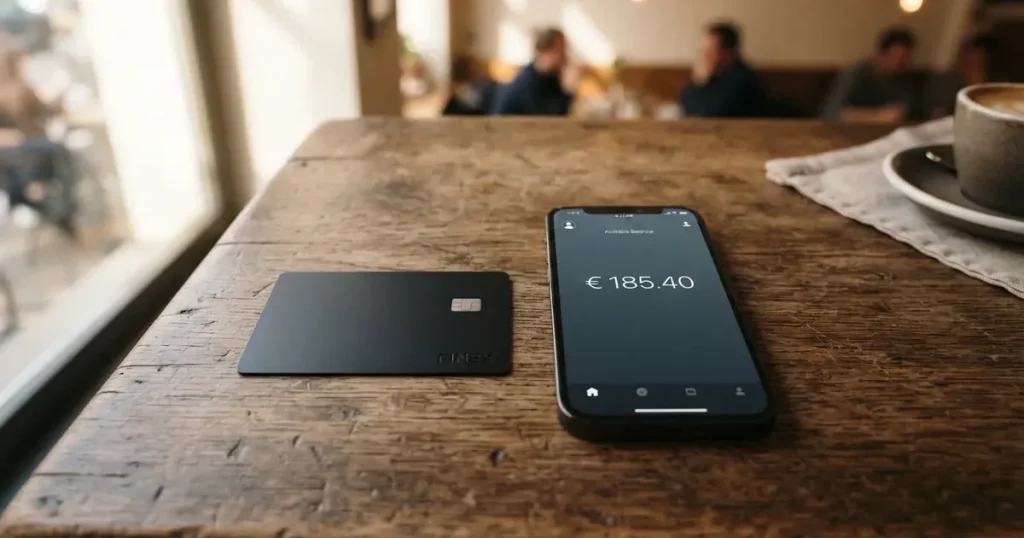
The Tap card sits in an unusual corner of the crypto-card market. It is one of the few cards that combines a euro-denominated Mastercard with an on-and-off ramp between your bank and crypto, plus a multicurrency account that holds seven national currencies. On paper, that is a wider set of features than most competitors offer. In practice, the public materials leave a lot of blank space where fees, country lists and KYC requirements usually sit, and that blank space is the main thing you should weigh before you apply.
This review is written for anyone, anywhere, who is considering a Tap card as a way to spend a crypto balance in the real world — especially readers who have trouble getting an ordinary bank card and want to know whether Tap fills the gap or just trades one set of problems for another. I went through the card’s own site, the app store listing, the company filings, the user reports and the public alternatives, and I will walk you through what I found, what I couldn’t find, and what each of those gaps means for you.
Conditions are current as of October 28, 2026.
Verdict
Tap ends up with a 5.6 out of 10 in my scoring, and the reason is less about the product itself than about the missing information around it. The card, the licence and the issuer structure are real, but the day-to-day details that a normal cardholder checks before signing up — fees, country list, KYC levels, ATM limits, conversion rates — are not published on the site. The features that are documented (an 80+ currency account, up to 8% cashback, instant freeze, dedicated IBANs for seven national currencies) are appealing, but the gaps make it hard to know in advance what you will actually pay or whether you will be able to use the card at all in your country.
It suits a narrow audience: people who already understand crypto, who want a euro balance, a multicurrency account and a Mastercard that can be frozen from the app, and who are comfortable filling in the gaps from support. It does not suit a first-time crypto user, anyone who needs to know the exact fee before tapping a payment, or anyone whose country is not clearly listed as supported.
| Criterion | Mark | Why |
|---|---|---|
| Who can get it | 6/10 | The site does not publish a country list and warns that services “may not be available in all jurisdictions” |
| Cost | 6/10 | The site does not publish a fee schedule; third-party sources say monthly fee, issuance, top-up and ATM use are free, with 1.5% FX, and user reports mention a $35 crypto withdrawal fee and inactivity charges |
| Top-up options | 5/10 | The list of supported coins is not published; stablecoins, USDT, BTC and SOL are mentioned, and third-party sources say crypto has to be converted before loading the card |
| Reliability and complaints | 4/10 | Tap Global Limited is licensed in Gibraltar, with Moorwand Ltd as the new card’s issuer; Trustpilot sits at 3.4/5, with user reports of accounts frozen for days or weeks and delayed withdrawals |
| Everyday use | 7/10 | Physical and virtual Mastercard; third-party sources both confirm and deny Apple Pay and Google Pay; ATM withdrawals reported as free |
| Total | 5.6/10 | A real product with real licences, let down by an unusually thin public fee and country disclosure |
Will they give you the card
The shortest honest answer is: I can’t tell you from the public site whether you personally can get it. Tap does not publish a list of supported countries, and the only guidance on the card pages is that “Services May Not Be Available In All Jurisdictions” and that you should “verify eligibility in your region.” That phrase, more than any other, is what drags the eligibility score down to 6/10.
What I could verify: Tap Global Limited, the operating company, is incorporated in Gibraltar (company number 118724) at Madison Building, Midtown, Line Wall Road, Gibraltar GX11 1AA, and is licensed by the Gibraltar Financial Services Commission under the DLT Regulatory Framework (Licence No. 25532). On 5 October 2026, Tap Global Group PLC announced that Moorwand Ltd has been appointed as the issuer and BIN sponsor for a new multi-currency Tap Mastercard, replacing the existing euro card. The CEO’s statement around that announcement cited 400,000 customers, which gives a rough sense of scale even if it does not tell you where those customers live.
For the new card programme, the issuing bank or e-money institution is described as “Our Authorised Issuing Partners”, with the specific provider “shown in the app and varies by region, currency, account type”. In other words, who actually issues the card you hold depends on where you are and what you load. That is common in this industry but worth knowing — the regulator you deal with if something goes wrong is the issuer’s regulator, not Gibraltar’s.
One thing the site does not say at all: whether the card is available to US residents. That is unusual for a Mastercard programme of this size, and worth checking with support before you sign up if you are in the US.
How strict the identity check is when you do apply is also not stated on the official pages. A third-party site (cryptocards.so, 2026) reports that the basic flow involves email, phone and an identity document, and that proof of address and a selfie are not required at entry level. I am treating that as unofficial and unconfirmed by Tap, but it matches the lighter onboarding several readers tell me they expect from crypto cards. Treat it as a starting point, not a promise: KYC levels often rise the moment you try to move larger amounts or change currencies.
If you are in a country under financial sanctions, do not assume the card will work for you. The site does not list excluded jurisdictions, but a sanctions programme and a Gibraltar-licensed DLT provider do not mix well in practice, and if your country is on a major list, support will tell you so during onboarding rather than after.
How to get it
The site does not publish a step-by-step application flow, and that is part of the same information gap. From the app store listing, the user reports and the third-party write-up, the practical path looks like this: download the app, register an email and phone number, complete the identity document step, request a card (physical or virtual, or both), and wait for issuance. The app is available in English, French, Greek, Italian, Spanish and Swedish, which is a useful tell about where Tap expects its users to be.
Card form factor: Tap offers both a physical and a virtual Mastercard, and the photos on the site show a dark-finish physical card. Whether you can start with a virtual card and add a physical one later, or have to order them separately, is not stated. The card currency is not stated either, which is surprising for a product that pitches itself as multicurrency — for the existing card, Tap describes it as euro-denominated, with other currencies converted at the point of sale, and the 5 October 2026 announcement covers a new multi-currency Tap Mastercard that will spend directly from app balances, with a launch date not yet given at the time of writing. The “80+ currencies” figure on the site refers to the currencies you can hold in the account, not necessarily the currencies the card itself settles in.
Delivery times for the physical card are not stated. There is no “you will receive it in X business days” line on the public pages, which is a small thing but the kind of detail that signals how much customer-handholding to expect.
If you are the type of person who wants to know the exact cost, the exact timing and the exact list of accepted identity documents before you upload a passport photo, Tap is going to feel under-specified. If you are happy to discover those details inside the app, the onboarding itself looks quick in user reports.
What it really costs: Fees
The honest summary of the costs section is in two halves. The first half is what Tap itself publishes, and it is almost nothing: no fee table, no “Zero” claims, no conversion or FX percentages on the card pages, no ATM fee line, no daily or monthly cap. The second half is what users and third-party sites report, and it is more concrete.

Third-party sources (cryptocards.so, 2026) describe monthly fee, issuance, top-up and ATM as free, with a 1.5% FX markup. User reports on Trustpilot, which I will come back to in the risks section, mention a $35 crypto withdrawal fee and an inactivity or monthly fee that has reportedly drained balances for some users. None of these numbers is on Tap’s own pages, so I am giving them to you as unofficial and not confirmed by the card.
| Fee or limit | Value | Source |
|---|---|---|
| Card issuance | Free | Unofficial, cryptocards.so (2026) |
| Monthly fee | Free | Unofficial, cryptocards.so (2026) |
| Top-up fee | Free | Unofficial, cryptocards.so (2026) |
| Foreign exchange (FX) | 1.5% | Unofficial, cryptocards.so (2026) |
| ATM withdrawal | Free, unlimited | Unofficial, cryptocards.so (2026) |
| Crypto withdrawal | $35 reported | Unofficial, user reports (Trustpilot) |
| Decline fee | Free | Unofficial, cryptocards.so (2026) |
| Daily spend limit | “Unlimited” in one place, 15,000 EUR cap cited as a con | Unofficial, cryptocards.so (2026) |
| Cashback | “Up to 8%” | Official, site (payout asset and caps not stated) |
| Inactivity or maintenance fee | Reported | Unofficial, user reports (Trustpilot) |
The ATM row is the one to read twice. “Free and unlimited” is a strong claim, and it is from a single third-party site; the user reports I have seen do not contradict it, but they do not independently confirm it either. The FX row is the one that hits you in everyday life: at 1.5% on top of the network’s exchange rate, every non-euro or non-card-currency purchase costs you 1.5% before you count any bank or wallet fee you paid to fund the card in the first place.
To make that concrete, here is what three everyday payments look like, using only figures from this section.
A coffee in Berlin paid with the euro card: no FX, no conversion; the only cost is whatever you paid to load the card (free, per the third-party source). A lunch in London paid with the same card: the card converts pounds to euro at the Mastercard rate plus 1.5%, and any fee you paid to top up in euro is already sunk. A monthly subscription in US dollars paid from a euro balance: same 1.5% FX markup on top of the conversion, every month, for as long as you keep the subscription. None of these payments triggers the reported $35 crypto withdrawal fee, because that fee is for moving crypto out, not for spending the card balance.
The cashback line is harder to plan around. “Up to 8%” is the official wording, and the third-party source describes VIP tiers with an entry level of 0.5%. Until Tap publishes the tier table and the cap per period, treat 8% as a ceiling that almost no one will hit and 0.5% as a more realistic floor for everyday use.
How to top it up: Top up
The top-up flow is where Tap tries to be more than a card. The site talks about a bank/wallet to crypto on/off ramp “available anytime”, dedicated IBANs to hold 7 national currencies, and yields on USDT, BTC and SOL. The card is positioned as the spending side of a broader account: you hold balances in the currencies you want, you earn yield on selected crypto, and you spend from the card.
What is not on the site: the list of supported coins for funding, the networks each coin uses, the minimum top-up amount, and any fee on the crypto side. The third-party source I mentioned earlier (cryptocards.so, 2026) lists 48 supported tokens in its pros and 0 in its funding section, and notes that crypto generally has to be converted before it is loaded onto the card. That conversion is not a free in-app swap; it is a sale of your crypto for euro or another fiat, and the rate you get for that sale is part of your real cost.
For a reader, the practical workflow I would plan for looks like this: open the app, find the IBAN for the currency you want to hold, send a bank transfer or SEPA payment to that IBAN, then optionally convert euro into a supported crypto, then spend from the card. If you want to fund the card with a stablecoin instead, you would transfer the stablecoin to the wallet Tap gives you and either hold it or convert it to fiat before the card spends. None of those steps has a published fee.
A few things follow from this. First, the IBAN approach is convenient in the eurozone and in countries with cheap SEPA; it is less convenient in the US, the UK after Brexit, or anywhere that does not have a cheap local rail into euros. Second, because transfers are irreversible on-chain, sending USDT on the wrong network — for example, sending TRC-20 USDT to an ERC-20 address — is a real risk, and Tap’s support may or may not be able to recover it. Third, the “yield” feature on USDT, BTC and SOL is not a card feature, it is a wallet feature, and any yield comes with the counterparty risk of the platform that pays it.
Paying with it every day
The everyday-use score is the highest of the five (7/10), and the card itself is the reason. A physical and virtual Mastercard covers most online and in-store situations; an in-app freeze and PIN view covers the moment you misplace the card; and the reported free ATM withdrawals (third-party) make it useful for cash. The app’s App Store rating is 4.5/5 from 25 ratings (version 3.8.8, iOS 15.6+, read 2026-10-20), which is a thin sample but a clean one.
The contact-less wallet picture is messier. The third-party source marks Apple Pay and Google Pay as supported, then lists “No Apple Pay support” under cons. I cannot reconcile those two claims, and the official Tap site does not state wallet support either way. Until Tap publishes a wallet support line, treat it as a question for support before you rely on tap-to-pay on your phone.
Blocked merchant categories (MCCs) are not stated. Many issuers block gambling (MCC 7995) and similar high-risk categories, and some block crypto purchases; Tap does not tell you which categories are blocked, so the only way to know is to try. If you have a regular subscription in a sensitive category, plan for a declined transaction.
3-D Secure is part of the Mastercard rails, so for online payments in the EEA you should expect a one-time code or a biometric step under Mastercard Identity Check. Address Verification Service (AVS) is mainly a US, Canada and UK tool and is generally unavailable for foreign-issued cards, which can cause declines at US merchants even when the card is valid — that is an industry-wide quirk of the BIN system, not a Tap-specific issue, but it shows up more on a card issued by a Gibraltar-licensed programme.
Cashback: the official wording is “up to 8%” on qualified purchases, with no published payout asset, no tier table and no monthly cap. Third-party sources describe VIP tiers with an entry level of 0.5%. Without the official tier table, you cannot plan a return on spend; the only safe assumption is that the headline number is a ceiling, not a default.
Dispute and chargeback process: not stated. The terms page text did not load for me at the time of writing, so I cannot confirm how a disputed transaction is handled, how long refunds take, or what evidence you need to provide. If chargeback rights matter to you, ask support to send you the cardholder agreement before you load meaningful funds.
What can go wrong
The risks section is where the card’s score is most exposed. Trustpilot reads 3.4/5 from 321 reviews (36 in the last 12 months, read 2026-10-20), and the user reports cluster around a small number of recurring problems. None of these are unique to Tap, but the volume and the consistency are worth taking seriously.
Accounts frozen for days or weeks: multiple reviewers describe accounts locked for 13 days or longer without a clear explanation, followed by repeated KYC document requests. This is a familiar pattern with regulated crypto platforms — under EU-style rules, an institution that cannot complete customer due diligence is required to suspend the relationship — but for the user it means a frozen balance and a delay that the public materials give you no way to estimate.
Deposits and withdrawals not arriving: reviewers in 2026 describe bank transfers and crypto withdrawals that did not land for days, with slow weekend support. Crypto transfers are irreversible by design, so a delayed on-chain transfer usually means a wallet or compliance hold, not a transaction failure.
Inactivity or monthly fees: a number of reviewers from April to June 2026 describe a fee (described as inactivity or monthly) that drained their balance. Tap’s response in replies is that the fees are in its terms, which is fair — but the terms page is the page I could not load cleanly, and a fee that quietly empties a balance is the kind of detail that needs to be front and centre, not buried.
A high crypto withdrawal fee: at least one reviewer cites a $35 fee on a crypto withdrawal. That is consistent with the third-party reports, and it is the kind of fee that hurts most when you are trying to move a small balance out of the platform.
Slow support at weekends: the site advertises 24/7 availability, and reviewers report that the reality, particularly on weekends, is slower. The site does not name the support channels (chat, email, in-app), which makes it hard to know what to expect.
On the regulatory side, the picture is more reassuring. Tap Global Limited holds a Gibraltar FSC DLT licence (No. 25532), and the new card programme has Moorwand Ltd as the issuer and BIN sponsor. The company is also a public plc (Tap Global Group PLC), which means the company-level financials are in the public domain in a way that a private crypto startup’s are not. The site says Tap Global is “not a bank” and that accounts are provided by authorised issuing partners, which is a careful and accurate way of putting it — your funds sit with the issuer, not with Tap, and the protections you have are the issuer’s protections, not a deposit guarantee scheme.
The security features the site does name are useful: instant card freeze, in-app PIN reveal, and account lock. The site does not name 2FA, insurance, or the specifics of how funds are safeguarded by the issuer. Standard safeguards in this category include app-based 2FA, spending limits, 3-D Secure and tokenised mobile wallets; whether all of these are on by default is a question for support.
The most concrete near-term event to be aware of is the 5 October 2026 announcement of the new multi-currency Mastercard. Existing customers will, at some point, be migrated from the euro card to the new card. The site does not give a migration date, a transition plan or a deadline for spending down the old balance. Until those details are published, treat any euro balance you load as potentially needing to be moved or spent before the cutover.
What to take instead
Tap is not the only game in town, and the alternatives worth comparing first divide into two groups: cards that publish a clear fee and country list, and cards that are more crypto-native but less feature-rich. Here is how three of them stack up against Tap on the points a reader usually cares about.
International Visa Card (score 6.7/10) is the most direct contrast on transparency. It publishes a fee table, a country list, and a sanctions policy. Residents of Belarus, mainland China, North Korea, Cuba, India, Iraq, Iran, Israel, Myanmar, Nepal, Nicaragua, Russia, Syria, Turkey, Ukraine, Venezuela and Vietnam cannot hold an account or card, and purchases are blocked in North Korea, Cuba, Iran, Russia, Syria, Ukraine and Venezuela; FATF grey-list countries are reviewed case by case. That kind of clarity is exactly what Tap is missing. The card itself is a US-issued Platinum Visa, currently virtual only (physical “coming soon”), denominated in USD, with $5 one-time virtual issuance, no maintenance fee, and three plans (Classic free, Pro $9.00/month, Max $19.00/month). USD spending is free on all plans; non-USD spending carries the Visa exchange rate plus a 2% FX fee. Funding is by USDC or USDT into the USD account free at 1:1, plus USD, EUR, SEPA, SWIFT and FedNow deposits. There is no cashback programme. The trade-off against Tap is the lack of cashback and the lack of physical card today, in exchange for fee and country clarity.
UNi Card (score 6.1/10) sits between the two. It is a multicurrency Mastercard on the UNi.Global account balance, with “no annual fee or foreign transaction fee” and assets converted at “live OTC rates” with “no hidden exchange fees”. Spend-to-Earn rewards go up to 3%. The site does not state the issuance fee, the country list, the KYC levels, or the funding methods, so it shares some of Tap’s information gap — but the fee side is at least stated in headline form, and the 3% reward ceiling, while not as eye-catching as Tap’s 8%, is more credible without published tiers.
Morse (score 7.5/10) is the crypto-native option. The Morse Card is fully virtual, on the Visa prepaid debit rails, and spends from your Morse Balance in any currency. There are “zero foreign exchange fees or markups”, payments are free, and conversions on Morse use the real exchange rate. The card is in closed beta in 16 listed countries (American Samoa, Australia, Cape Verde, Guernsey, Hong Kong SAR China, Isle of Man, Japan, Jersey, New Zealand, Serbia, Singapore, Switzerland, Thailand, Türkiye, United Kingdom, Western Sahara), and the app is available in over 140 countries for peer-to-peer use. Funding is by debit card, stablecoin transfer, and Account Details in USD, EUR, MXN, COP and (with a Brazilian CPF) BRL; USDC, USDG and EURC via Solana are free, other tokens and blockchains carry a fee; Bitcoin, USDT, Ethereum and other tokens can be deposited; and the Morse Wallet is self-custodial. Rewards are not stated on the card pages. The trade-off against Tap is the closed-beta country list, the virtual-only card for now, and the self-custody responsibility.
If you want Tap’s multicurrency account and euro Mastercard and you can live with the missing information, Tap is the more feature-rich product. If you want to know exactly what you will pay and where you can use the card before you sign up, International Visa Card is the easier choice. If you want a self-custody wallet with a virtual card on top, Morse is the cleaner crypto-native option.
Who I would recommend it to
Putting all of that together, the card I would recommend Tap to is a specific person: someone who already holds crypto, is comfortable converting it to euro (or, after migration, to one of the new multicurrency balances) before spending, wants a Mastercard with a multicurrency account behind it, and is happy to confirm fees, country support and KYC levels with support before loading meaningful funds. For that person, the euro card (and the upcoming multi-currency Mastercard) is a real product from a Gibraltar-licensed company with a public-company parent, and the features that Tap does publish — 80+ currencies, instant freeze, 8% cashback ceiling, seven-currency IBANs — are genuinely useful.
I would not recommend Tap to a first-time crypto user. The fee table is not on the site, the country list is not on the site, and the $35 crypto withdrawal fee reported by users is exactly the kind of charge that catches people out when they are still learning. I would not recommend it to anyone whose country is not clearly listed as supported, because “may not be available in all jurisdictions” is the only line on offer. I would not recommend it to anyone who needs to know in advance what their cashback payout asset, monthly cap or tier structure is. And I would not recommend it to anyone who plans to hold a large balance on the card, because the inactivity and monthly fee reports on Trustpilot, even if they are in the terms, are the kind of slow drain that is easy to miss.
The simplest way to think about it: Tap is a real product with real licences and a thinner-than-usual public disclosure. If that trade-off fits the way you make decisions, the card is worth a closer look. If it does not, the alternatives above are easier to evaluate on the page.
Frequently asked questions
What is Tap card?
Tap is a Mastercard (physical and virtual) linked to a multicurrency account that holds euro and, after the October 2026 announcement, several other national currencies; the account supports a bank-and-wallet to crypto on/off ramp, and the card spends from your fiat balance.
How does Tap card work?
You fund the account by bank transfer to a dedicated IBAN, or by transferring crypto and converting it to fiat in the app; the card then draws on that stored balance at the point of sale, so it behaves like a prepaid card rather than a debit card linked to a bank account.
Is Tap a bank?
No. Tap Global Limited, the operating company, is licensed by the Gibraltar Financial Services Commission under the DLT Regulatory Framework (Licence No. 25532) and describes itself as “not a bank”; card issuing is done by authorised issuing partners (Moorwand Ltd for the new multi-currency Mastercard).
Who owns Tap?
Tap Global Limited (Gibraltar, company number 118724) is the operating company, and the group is Tap Global Group PLC, a public company; the 5 October 2026 announcement named Moorwand Ltd as the issuer and BIN sponsor for the new card.
Is Tap card available in my country?
The site does not publish a country list and warns that “Services May Not Be Available In All Jurisdictions”; the only reliable way to confirm availability is to register in the app or contact support, and applicants from sanctioned jurisdictions should expect to be refused.
How do I get a Tap card?
Download the Tap app, register an email and phone number, complete the identity document step, request a physical or virtual Mastercard, and wait for issuance; exact delivery times and KYC levels are not published.
Does Tap card require KYC?
The official site does not state the KYC levels; a third-party source (cryptocards.so, 2026) describes a basic flow with email, phone and an identity document, with proof of address and a selfie not required at entry level; higher limits or currency changes typically trigger additional checks.
How do I top up Tap card?
You can top up by bank transfer to a dedicated IBAN in one of seven national currencies, or by transferring crypto to the in-app wallet and converting it to fiat before spending; the supported coin list, networks and any fees are not published on the site.
Is Tap card free?
The site does not publish a fee schedule; a third-party source (cryptocards.so, 2026) lists issuance, monthly fee, top-up and ATM use as free with a 1.5% FX markup, and user reports mention a $35 crypto withdrawal fee and inactivity charges, all of which I am giving you as unofficial and not confirmed by the card.
Is Tap card safe?
The operating company is Gibraltar-licensed and the new card programme has a named issuer (Moorwand Ltd), but funds sit with the issuer rather than under a bank deposit guarantee, several user reports describe accounts frozen for days or weeks during KYC reviews, and crypto transfers are irreversible if sent to the wrong network; treat any balance you load as exposed to counterparty and operational risk.
App and neobank cards on the shortlist – cryptocardshortlist
Content created by the «cryptocardshortlist» team