
Tangem Pay Review: Free Virtual Visa From a Self-Custody Wallet, With Fees That Add Up
 Available in US
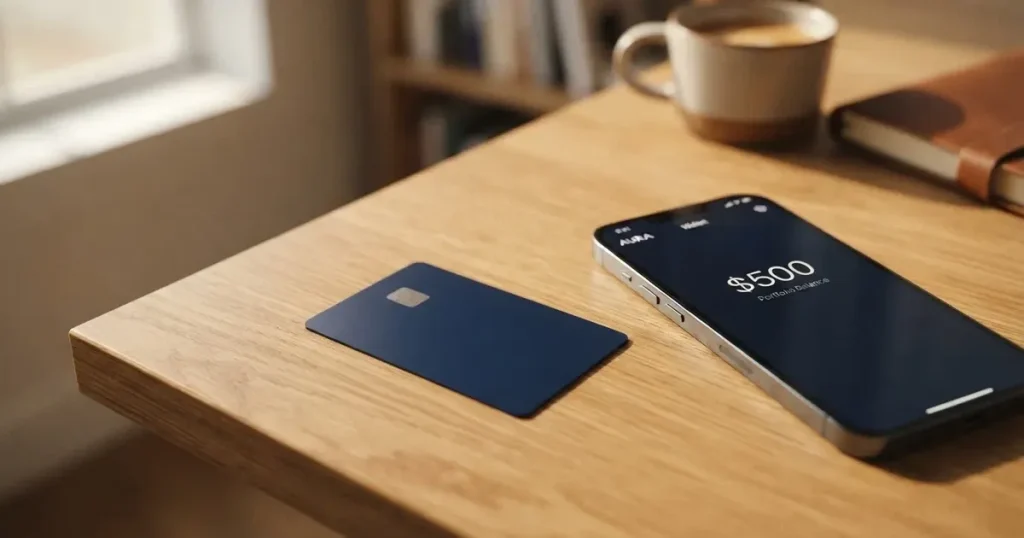
If you already keep your crypto in a self-custody wallet and you have spent months without a card that works, the Tangem Pay card is one of the more interesting things to come out of the crypto-card category. The basic plan is free, the first virtual card is free, and the card is issued inside a wallet app that does not ask you to hand over your seed phrase. That combination is unusual enough to look at closely.
It is also, in places, genuinely confusing. The same programme publishes two different figures for what a plastic card costs to deliver. Two help articles say ATM withdrawals work and one says they are not yet available. An unofficial review names a different card issuer than the official pages do. I have kept all of that visible below rather than smoothing it over, because if you are choosing a card for everyday spending, the mess is part of what you are signing up for.
The conditions described on this page are current as of October 28, 2026.
The score: 7.5 out of 10, and who it suits
My score for the Tangem card is 7.5 out of 10. That is a good card with sharp edges, and the edges cluster in predictable places: eligibility is narrower than the marketing suggests, cash costs more than the free plan implies, and the operational picture is still stabilising.
Here is the breakdown, criterion by criterion, with the reason I gave each mark.
| Criterion | Mark | Why |
|---|---|---|
| Who can get it | 7 / 10 | Available in the US and selected countries across Latin America, APAC, the Middle East and Africa; not every country and not every US state |
| Cost | 7 / 10 | Basic plan $0, first virtual card $0, FX at the Visa exchange rate plus 1.5%, $0 transaction fee, 4% ATM fee; Plus costs $29.99 a month |
| Top-up options | 9 / 10 | USDC and USDT on Polygon, Base, Arbitrum and BNB Smart Chain, plus ACH or Fedwire bank transfers, plus other tokens via a swap |
| Reliability and complaints | 7 / 10 | Issued by Rain, a Visa Principal Member, with the programme run by Paera LLC; Tangem is not regulated as a financial services provider; unofficial sources name a different issuer, and there are complaints about network outages and support |
| Everyday use | 8 / 10 | Basic gives a virtual card, Plus gives plastic, Apple Pay and Google Pay are supported, ATM fees are 4% on Basic and 2% on Plus, but another page says cash withdrawal is not yet available |
So who should take this card, and who should not?
Take it if you are already a Tangem hardware-wallet owner, you want a virtual Visa without paying a monthly fee, and you are comfortable with the small uncomfortable details of crypto card life: wrong-network deposits that cannot be undone, a conversion spread nobody publishes, and a support team split across two email addresses. The top-up options are the best I have seen in this category, and the free tier is genuinely free.
Stay away if your spending has to work in a specific country you cannot verify in advance, if you take out cash regularly, or if you need a card in a specific physical form. Cash withdrawal is the worst-value part of this card, and availability outside the United States is narrower than the headline suggests.
Who will they give you the card to?
Eligibility is residence-based, and the honest answer is: it depends where you live, and the card does not publish a full country list.
Tangem Pay is available in the US and in selected countries across Latin America, APAC, the Middle East and Africa. Not every country and not every US state qualifies. The tariff PDF says eligibility for some features “is determined based on your country and region of residence”, and the app shows you what applies once you enter your country during onboarding. That is the mechanism to use: put your actual country of residence into the app before you get excited about anything else.
Two requirements are stated plainly. You must be 18 or older, and you must have a residence address in a supported country. Applications are rejected during KYC if the region turns out to be unsupported, so an application that looks like it is going through can still fail at the identity-check stage.
What is not stated: the country list itself. The Tangem Pay page and the tariff PDF do not publish one, so I cannot tell you whether your country is in it, and neither can I tell you it will be checked at a particular moment. Treat the app as the source of truth and assume you may be declined.
One more thing worth knowing early, because it surprises people: your citizenship is not the same thing as your residence. The card screens your identity document as well as where you live, and a supported residence does not guarantee a supported nationality. If you hold a passport from a restricted jurisdiction but live in a supported country, do not assume you will pass.
How to get the card
Getting a Tangem card means completing identity verification and then choosing a plan. The programme is operated by Paera LLC, which is described as “responsible for your onboarding including performing KYC & AML verification”. The page also says “ID verification and eligibility checks applies to the card account only” — meaning this is about the card account, not a re-verification of your existing self-custody wallet.
The verification itself runs through Sumsub with a single KYC flow. You give a phone number and an email, both confirmed by codes, plus a government-issued ID and your residence address. Biometric data is collected by Sumsub. You must be 18 or older, and US residents also supply their SSN. A separate proof-of-address document is not stated as required.
Limits depend on your verification level, which is worth knowing if you are planning large daily spending.
Timing is the good part: the card is usually issued within 5 minutes, occasionally up to 48 hours. If 48 hours pass, [email protected] is the address to write to.
There are two failure modes to expect. First, an unsupported region or state gets you rejected at KYC. Second, a repeat application with the same identity is auto-rejected, so if you try again with the same documents after a mistake, the system will turn you away without telling you why — Tangem says it cannot see the reason. If you are rejected, check your country first, then wait before reapplying.
The card forms differ by plan. Basic is a virtual Visa Platinum. Plus is a plastic Visa Signature. Prestige would be a Visa Infinite, virtual, plastic or metal, and is marked as coming soon. Maximum cards per account are 3, 5 and 10 respectively. The card currency is USD, so anything you pay in another currency is converted.
Ordering a plastic card is where the details pile up. It ships only inside the country you verified at KYC. The country list and estimated delivery time appear in the app when you order. Addresses are Latin letters only. The order cannot be cancelled. The fee is taken from your Tangem Pay balance: for the first Basic card, $15.63 to $63.45, while the tariff PDF dated 25 August 2026 gives $14.53 to $82.10 — two official figures that do not match, and you should ask which one will be charged. On Plus, the first card is free and later ones carry the same fee. Reissue is $5 on one page and $1 replacement in the tariff PDF. Additional virtual cards cost $5 and arrive in about a minute, rarely up to 48 hours. Every card arrives inactive.
Fees: what the card really costs
The free part is genuinely free. But the free part is smaller than it looks once you start converting currencies, and the plan fee is not the main cost for most people.

Here are the stated fees and limits:
| Fee or limit | Value |
|---|---|
| Basic plan fee | $0 |
| Plus plan fee | $29.99 per month |
| Prestige plan fee | $999 per year (coming soon) |
| First virtual card | $0 |
| Additional virtual card | $5 |
| Replacement card | $1 per the tariff PDF; reissue $5 on the main page |
| Physical card delivery | $15.63-$63.45 on the main page; $14.53-$82.10 in the tariff PDF dated 25 Aug 2026; first card free on Plus |
| Transaction fee | $0 |
| Foreign exchange fee | Visa Exchange Rate + 1.5% |
| On-chain withdrawal | $0 |
| Dispute fee | $30 |
| Bank top-up via ACH / Fedwire | $1 / $11 on Basic, $0 on Plus |
| ATM fee | 4% Basic, 2% Plus, 1% Prestige |
| Max card balance | $10,000 Basic, $50,000 Plus |
| Daily spend per card | $10,000 Basic, $50,000 Plus, $100,000 Prestige |
| Annual spend per card | $10,000,000 |
| Transactions | 100 per day, 1,000 per month |
The crypto conversion fee and spread is not stated. That is the single biggest unknown in the cost picture, and it is the one you will feel every time you spend from a non-stablecoin token.
Now, three everyday payments, and which fees actually apply.
Buying coffee in New York. No transaction fee. No FX fee, because it is a USD purchase. If you paid an amount into the card with USDC, the only cost is whatever spread applied when your stablecoin was converted to the card balance, and that spread is not stated. This is the cheapest way to use the card.
A $60 online subscription priced in euros. Here the 1.5% markup plus the Visa exchange rate applies, so roughly $0.90 on top of the conversion. Then add the cross-border fee your payment provider applies on top of the Visa rate. The help centre’s advice is to choose the local currency at the terminal rather than letting the merchant convert — that choice alone can save you the merchant’s own markup. Blocked categories matter here too: the issuer restricts gambling and online casinos, liquor stores, and certain subscription services, so a subscription service is exactly where a decline can catch you out.
Withdrawing $100 in cash from an ATM. On Basic, 4% is $4. On Plus, 2% is $2. There is no free allowance stated, so every withdrawal is charged in full. The cap is 3 withdrawals per 24 hours and $250 per transaction.
Two limits deserve a second look. Your maximum card balance is $10,000 on Basic, which means a stablecoin holding above that cannot all sit on the card — the rest stays in the wallet. And the Plus plan fee is charged every 30 days: if the balance cannot cover it, you have 30 days to top up before your Signature cards are closed and the plan drops to Basic. That is a deadline, not a warning.
Top up: how the money gets in
Top-up options are the strongest thing about this card, and they are why I scored this section highest.
You can fund the card “with stablecoins or fiat directly from your bank account”. Concretely, USDC and USDT are supported on Polygon, Base, Arbitrum and BNB Smart Chain. Bank transfer by ACH or Fedwire is available where offered, in some regions, converted to USDC. Other tokens go in by swap.
There are three routes, and they suit different situations:
- From your Tangem Wallet. The simplest path, with a swap built in if you hold another token.
- From another wallet or exchange. You get a deposit address per network — meaning you must send on the network the app is showing you, not the one you usually use.
- By bank transfer. ACH or Fedwire where available, with the bank deposit fee deducted from the amount received: send $1,001 to receive $1,000 by ACH, or $1,011 by Fedwire. On Plus the transfer is free. The network gas for the top-up is paid by the sender.
Limits on loading: $100,000 per day, 24 loads per day, 150 per month. A minimum top-up is not stated.
Two warnings that matter more than they look on paper. Blockchain transfers are irreversible, so sending the wrong token or the wrong network is permanently lost — not delayed, not reversed, gone. And the gas fee is yours to pay, which for a small top-up on a busy network can be a meaningful share of the amount.
Paying with it every day
Tangem Pay lives inside the Tangem app on iOS and Android. Apple Pay and Google Pay are both supported, with Apple Pay depending on the country. On Plus you get the Visa Signature protections: extended warranty, price protection, purchase protection, auto rental insurance and Airport Companion lounges. On Basic it is a virtual Platinum card.
Cashback is 1% on Basic, 2% on Plus and 4% on Prestige, with monthly caps of $100, $300 and $1,000. The payout currency is not stated. Larger extras — extra 5% to 15% on the first $500, and a welcome bonus up to $75 — are marked coming soon, so treat them as advertising you cannot yet rely on.
The card’s balance is in USD. USDC and USDT are combined into one balance and spent from the highest balance first, and the on-chain balance updates within 2 business days after a purchase. That lag is worth noting: your available amount can lag behind what you have just spent.
Controlling the card from the app is genuinely good. You can freeze and unfreeze it instantly — a frozen card shows as Suspended in Apple Wallet and Google Wallet — set a custom daily spending limit that can go down to $0, and use a 4-digit PIN. Only one wallet is linkable per account.
Merchants restrict certain categories: gambling and online casinos, liquor stores and certain subscription services. A wider blocked-merchant list is not stated.
If a payment goes wrong, disputes go through [email protected] under the standard Visa chargeback procedure. You must report within 60 days of the transaction appearing on your statement. A $30 fee applies when a formal dispute opens, and extra documents may be requested. Note that a merchant refund credits your card balance only — it does not go back to your wallet as crypto.
What can go wrong
I would rather list these plainly than reassure you.
The card can be frozen by someone else’s policy. Issued by Rain, described as a Visa Principal Member, with the programme operated by Paera LLC. Tangem is the hardware-wallet brand, and its own footer says it is not regulated as a financial services provider. Registration country and licences for Paera and Rain are not stated. An unofficial source contradicts the official issuer line: a January 2026 Coin Bureau review describes Tangem Pay as provided by Paera LLC and issued through Third National, a Visa licensed partner, with Rain providing co-signing and compliance. That is unofficial and not confirmed by the card’s own pages, but it is exactly the kind of detail you would want settled before you park money on it.
You can be cut off at the border of eligibility. At the launch of the physical cards, Tangem said shipping was restricted in about 20 countries including China, Russia, North Korea and Palestine, citing KYC, sanctions and banking rules. So the answer to whether you can use it in your country is genuinely country-dependent, and the app’s own output is the check.
A wrong-network deposit is gone. Nothing recovers it. This is the failure mode with the least ambiguity attached to it.
ATM access is contradicted by the card’s own help pages. One help article describes the full schedule: 2% on Plus, 4% on Basic, on the withdrawal amount, maximum $250 per transaction, three per 24 hours, at contactless-enabled ATMs only, and only for cards issued after 10 March 2026 that show Platinum or Signature in Apple or Google Pay. Another says “ATM cash withdrawals are not yet available”. If cash matters to you, ask [email protected] directly and get the answer in writing.
Deleting your Tangem account loses access. A factory reset or deleting the Tangem account loses access to Tangem Pay and the funds in it, and there is no relink process yet. This is the sharpest edge in the whole design, because Tangem is a self-custody brand and your instinct will be to treat the app like a wallet.
Support is split in two. [email protected] handles card setup and features; [email protected] handles the account, KYC, disputes, declined payments, refunds and personal data. Tangem Support cannot see your KYC status.
The launch is recent. A gradual launch from November 2025, tariff terms dated 25 August 2026, a physical card launch covered with a 5,000-card initial run. Reputational themes are thin rather than rosy: a Trustpilot Tangem rating around 4.1 out of 5 from roughly 876 reviews (read 2026-10-20) is about the brand and wallet, not this card; one card-specific report is a one-star review of a card ordered from Hong Kong with poor support; and some users dispute the self-custody claim because USDC withdrawal passes through a swap that charges fees. No Reddit threads were found. Formal official incidents are not stated.
What to take instead
If Tangem does not fit, these are the alternatives from the same shortlist, with what actually differs.
| Tangem | TokenPocket | MetaMask | KAST | |
|---|---|---|---|---|
| Score | 7.5 | 5.8 | 7.1 | 6.1 |
| Card | Visa Platinum virtual (Basic), Signature plastic (Plus) | Mastercard/Visa debit, virtual | Mastercard, virtual then optional metal | Visa Platinum, Infinite metal, Infinite gold |
| Free tier | $0 plan, $0 first virtual card | NFT creation fee partly covered | Virtual card free, no annual or maintenance fee | Standard membership $0/year |
| Paid tier | Plus $29.99/month; Prestige $999/year | — | Metal $199/year | Premium $1,000/year, Private $10,000/year |
| FX fee | Visa rate + 1.5% | Not stated | No foreign transaction fee, Mastercard rate | 0.5%-1.75% depending on country; 0.10 on non-USD under 25 |
| Other fees | ATM 4%/2%; dispute $30; ACH $1, Fedwire $11 on Basic | 1% on crypto deposit, later refunded via rewards | “Minimal fee” per transaction, amount not stated; no added MetaMask fees | Stablecoin top-up 0%, spend 0%, declined transaction 0.50 |
| Cashback | 1% Basic, 2% Plus, capped | None stated | 1% virtual, 3% on first $10,000 for metal, in mUSD | 1.5% / 2% / 3% on the first $2,000 / $10,000 / $40,000 a month |
| Where | US and selected LATAM, APAC, MEA, Africa | Europe list for Visa; Australia, Canada, Hong Kong, Japan, Singapore, South Korea, UK and others for Mastercard | 45 listed countries, waitlist elsewhere | Country list not published, shown at KYC |
Where the differences actually hurt.
TokenPocket is the one to consider if you want a card in a specific European country or in Australia, Canada, Hong Kong, Japan, Singapore, South Korea or the UK — it has a published list where Tangem does not. But the 1% deposit fee, later refunded “through rewards, reduced transaction fees, etc.”, is a fee described in terms of a promise, and no cashback is stated.
MetaMask is the closest competitor on the free tier, with a free virtual Mastercard, no annual fee and no foreign transaction fee. The catch is geography: 45 listed countries with a waitlist elsewhere, and US and UK sign-ups temporarily closed per the FAQ. Spending networks are Linea, Base, Monad and Solana, and Solana-only wallets cannot withdraw credit. The metal card’s headline 3% drops to 1% after the first $10,000 spent, which the footnote admits.
KAST has the most generous stated fee schedule of the three: 0% top-up, 0% spend, 0% ATM-style friction, non-USD spending under $25 costs a flat $0.10, and cashback tiers run to 3% on the first $40,000 a month. Against that, Standard has a $40 physical card delivery fee, there is a $1/month inactivity fee after 12 months, and its country list is not published at all — you find out at KYC, and holding an ID from a restricted region can disqualify you even when you live in a supported country.
Who I would recommend it to
If you already own a Tangem hardware wallet and you want a card that spends from it, without a monthly fee and without giving up custody, this is a reasonable choice — and the top-up options are the best in its category. You get a free virtual Visa, a spending card you can freeze from your phone, and a plan fee of nothing if you stay on Basic.
I would not push it at you if any of these apply. You need a card in a country whose eligibility you cannot confirm in the app. You take out cash often — 4% on Basic is a poor price for the privilege. You want a physical card and the delivery quote turns out to be the higher of the two official figures. Or you are the kind of person who would rather see one published conversion spread than discover it per purchase.
The honest summary is that Tangem has taken the parts of this category that matter most to a self-custody user — custody kept, top-up routes plentiful, a genuinely free tier — and left the customer-service and documentation edges unresolved. Two conflicting delivery fees and a help centre that contradicts itself on cash withdrawals are solvable problems. Check them before you need them.
Frequently asked questions
What is the Tangem card?
The Tangem card, called Tangem Pay, is a Visa payment card that spends from a balance you load yourself, held alongside a non-custodial Tangem hardware wallet. On the free Basic plan it is a virtual Visa Platinum issued inside the Tangem app; the paid Plus plan adds a plastic Visa Signature card. The card is issued by Rain, a Visa Principal Member, with the programme operated by Paera LLC. Your main crypto stays in the self-custody wallet, not with the card.
Is Tangem a bank, and who owns it?
No. Tangem is a hardware-wallet brand, not a bank. Its own footer states that Tangem is not regulated as a financial services provider, and that the card programme runs through Paera LLC and Rain. Paera handles onboarding and KYC/AML verification. One unofficial source — a January 2026 Coin Bureau review — says the card is issued through Third National with Rain providing co-signing, which conflicts with the official issuer line and is not confirmed by Tangem’s own pages.
Does the Tangem card require KYC?
Yes. Verification runs through Sumsub with a single flow: phone and email codes, a government-issued ID, your residence address and biometric data. You must be 18 or older, and US residents also give their SSN. Tangem says identity verification applies to the card account only. Applications are rejected if your region is unsupported, and a repeat application with the same identity is auto-rejected without Tangem being able to tell you why.
How much does the Tangem card cost to open and keep?
The Basic plan is $0 and the first virtual card is $0. Plus costs $29.99 per month, charged every 30 days, and gives you the first plastic card free. A further virtual card costs $5, and Prestige is listed at $999 per year as coming soon. Beyond that, foreign currency purchases carry the Visa exchange rate plus 1.5%, the transaction fee is $0, and a bank top-up costs $1 by ACH or $11 by Fedwire on Basic, free on Plus.
Which countries can I use the Tangem card in?
Tangem Pay is available in the US and selected countries across Latin America, APAC, the Middle East and Africa — not every country and not every US state. Tangem does not publish the country list on its Tangem Pay page or in its tariff PDF. Eligibility for some features is determined by your country and region of residence and is shown in the app, so enter your real residence country during onboarding to see the answer for yourself.
How do I top up the Tangem card?
Three ways: from your Tangem Wallet, with a swap if you hold a different token; from another wallet or exchange using the deposit address shown for a specific network; or by bank transfer by ACH or Fedwire where available, converted to USDC. USDC and USDT are supported on Polygon, Base, Arbitrum and BNB Smart Chain. Loads are capped at $100,000 a day, 24 a day and 150 a month, and you pay the network gas.
Can I use the Tangem card in Apple Pay and Google Pay?
Yes, both are supported, though Apple Pay availability depends on the country. You can add the card to your phone wallet from the app, and if you freeze the card it shows as Suspended in Apple Wallet and Google Wallet. Apple Pay replaces the card number with a device-specific number stored in the phone’s secure element, not on Apple’s servers, so tokenised use is the normal way people pay with it.
Is the Tangem card safe for my crypto?
The design leans toward safety: funds sit in separate Tangem Pay smart-contract accounts, your main assets stay in the non-custody Tangem Wallet, and you can freeze the card instantly or set a daily spending limit as low as $0. Against that, no deposit protection or insurance is stated, Tangem is not regulated as a financial services provider, and a factory reset or deleting your Tangem account loses access to Tangem Pay and its funds with no relink process yet.
Why is the ATM fee so high, and can I even use ATMs?
On Basic the ATM fee is 4% of the withdrawal amount, on Plus it is 2%, with no free allowance stated. The cap is $250 per withdrawal and three withdrawals per 24 hours, at contactless-enabled ATMs only, and only for cards issued after 10 March 2026. That is one help article; another states that ATM cash withdrawals are not yet available. If cash is part of your plan, ask [email protected] before you rely on it.
What happens if I delete my Tangem account?
You lose access to Tangem Pay and the funds held in it, and there is no relink process yet. If you want to close the card account instead, withdraw your balance first — USDC or USDT can go to your Tangem Wallet at no on-chain withdrawal fee, while bank withdrawal by ACH costs $1 or by Fedwire $11 on Basic, free on Plus, to US banks only with a $10,000 per-transaction cap — then email [email protected] to close the account. Merchant refunds only ever credit the card balance.
Wallet cards on the shortlist – cryptocardshortlist
Content created by the «cryptocardshortlist» team