
A Western Union-branded Visa that spends from a USD-pegged stablecoin, and what that means in practice
 Available in US
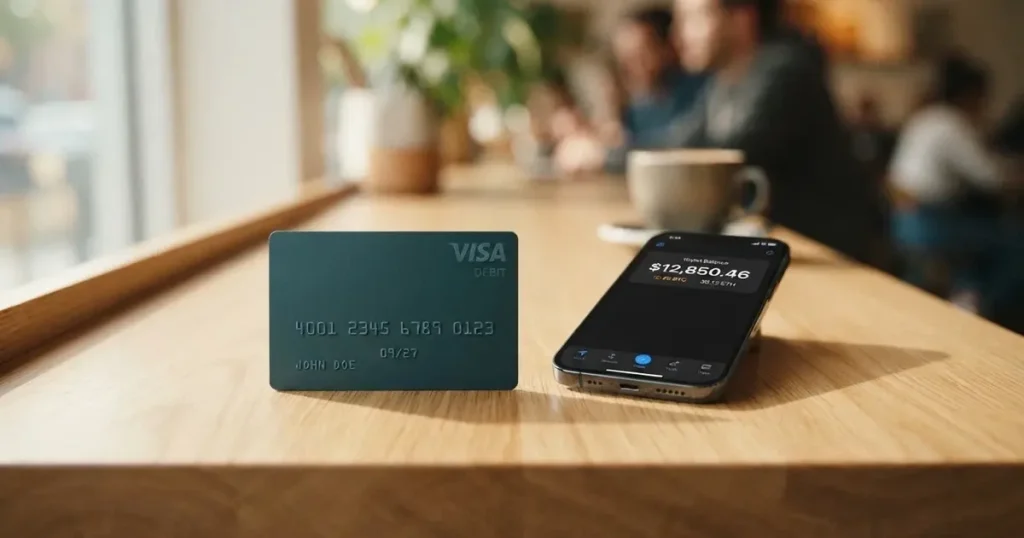
The Stablecard by Western Union is a Visa payment card whose balance is held in USDPT, a US-dollar-pegged stablecoin issued by Anchorage Digital Bank and running on the Solana blockchain. It sits on top of the Western Union brand, which most people know for international cash transfers, and on top of Rain (Third National) as the licensed card issuer. The pitch is straightforward: load USDPT, spend USD anywhere Visa is taken, and pull cash out through Western Union’s agent network when needed. Whether that pitch translates into a card you would actually want depends a great deal on where you live, what you already hold, and how transparent you need the fees to be before you sign up.
This review walks through who the card is aimed at, what it costs in practice, how the top-up flow works, and what you can and cannot do with it day to day. The information below is current as of October 28, 2026 and is based on the card’s official product pages, app store listings, and the limited third-party coverage that exists so far.
Verdict
The Stablecard scores 6.7 out of 10. It is not a card for everyone. It is essentially a tool for two overlapping groups: people who already hold USDPT and want a clean way to spend it through Visa, and existing Western Union customers who want to redirect their remittances into a payment card rather than collecting cash. If you are in either of those groups and you live in one of the launch markets, the card does its job and it does so through a familiar brand. If you are outside that overlap, the limited country list, the single-asset balance, and the lack of published fees make it harder to recommend.
The table below breaks the score down by criterion, with the marks taken directly from the card’s evaluation and the reasons restated in my own words.
| Criterion | Score | Reason |
|---|---|---|
| Who can get it | 6 / 10 | 37 markets at launch with a target of 60+ by end of 2026, but the country list is not published and eligibility is gated by geographic and regulatory rules. |
| Cost | 5 / 10 | No hidden fees are claimed at sign-up, the physical card has a fee, and foreign transaction fees may apply; the full fee schedule sits behind terms and conditions that could not be opened. |
| Top-up options | 4 / 10 | Only USDPT on Solana, either by transfer from another wallet or by redirecting a Western Union transfer; no bank card, bank transfer or on-ramp inside the app. |
| Reliability and complaints | 9 / 10 | Backed by Western Union (NYSE: WU), with Rain as a licensed Visa issuer and Anchorage Digital Bank as the USDPT issuer; no public incidents since the 4 August 2026 launch. |
| Everyday use | 10 / 10 | Virtual card issued immediately, physical card on request, Apple Pay and Google Pay supported, ATM access, and a non-custodial wallet holding the balance. |
| Total | 6.7 / 10 | A useful but narrow product, well suited to Western Union customers spending USDPT through Visa and held back by opaque fees and a small country footprint. |
Who they will give the card to
The card launched on 4 August 2026 in 37 markets, and the stated goal is 60 or more markets by the end of 2026. Western Union has not published the list of launch countries, so the honest answer for a reader anywhere is that you only find out by trying to sign up. The product page says availability is “subject to geographic, regulatory, and eligibility requirements,” which is the same wording you would expect from any cross-border card programme and not a commitment to any specific country.
Western Union screens customers against US, EU and UK sanctions lists, and the card’s identity verification step is run by Rain or its authorised service providers. There is no mention in the official material of any country being specifically excluded, nor of any country being specifically cleared, beyond the 37-market launch figure. Citizenship is treated as part of the same check: the verification process asks for personal information and documentation “as required by applicable laws and regulations, including anti-money-laundering, sanctions screening, and customer identity verification requirements.” For a reader who holds citizenship or residency in a heavily sanctioned jurisdiction, the realistic outcome is a rejection at the verification stage, and the card’s own pages do not promise otherwise.
There is no credit check, no minimum balance, and the app’s age rating is 18+. The onboarding steps in the app are: download the app, complete onboarding and identity verification, and on approval receive a virtual card straight away. A single verification level applies to everyone, with no tiered KYC in the public material. Processing time for the approval itself is not stated; what is stated is that the virtual card becomes available immediately on approval.
If you live in a country that is not on the launch list, the app will tell you. Until you try, the published 37-markets figure and the 60-markets target are the only signals you have.
How to get it
The signup flow is what you would expect from a modern fintech app. You install the Stablecard by Western Union app on iOS (iPhone, iOS 17.6 or later) or Android, run through onboarding, complete the identity verification, and on approval the virtual card appears in the app. The physical card is requested after approval and is mailed to the address on file “for a fee.” The exact amount of that fee is not published on the public site, and the full terms live at the card’s official website, a page that was behind a Cloudflare anti-phishing block when this review was researched and could not be opened.
A few practical points worth flagging for the signup stage:
- The app is in English and Spanish only, with no published support for additional languages.
- Support is reachable through in-app chat and at [email protected]; hours are not stated.
- Delivery time for the physical card “varies by shipping method and destination,” and the list of countries the physical card can be shipped to is not published.
- The replacement cost for a lost or damaged physical card is not stated either.
The card itself is a Visa, denominated in USDPT, and it is non-custodial in the sense that the USDPT you deposit is held in a non-custodial wallet rather than at the issuer. Your USDPT balance is not on Rain’s balance sheet and is not FDIC-insured; it is your stablecoin, sitting in a wallet whose keys you ultimately control.
Fees: what the card really costs
The cost picture is the weakest part of the card. The public material is consistent in saying there are “no hidden fees” at account setup, that there is no monthly or annual fee published on the public site, and that the physical card carries a fee whose amount is not published. The full fee schedule is described as living in the terms and conditions, which were inaccessible at the time of writing. A third-party search for the same numbers came up empty, so the only honest line is that the precise cost of running this card is not on the public page. If a clear, itemised fee schedule matters to you, this is something to check directly with support before you sign up.
What is published, and what you can plan around, is the shape of the fees rather than the numbers:
- Foreign transaction fees may apply, which matters because the card’s balance is USDPT and most merchants settle in their local currency.
- A crypto conversion fee or spread is not stated on the public FAQ or product page.
- ATM withdrawals at any Visa-branded ATM, and cash withdrawal at Western Union agent locations, “may” carry fees; the free allowance is not stated.
- The full limit schedule — daily and monthly spending and ATM caps — is also in the terms and conditions and is described as based on “program-level risk controls and regulatory requirements.”
The costs table below sets out each line item as the card presents it, with the “not stated” flag where the public site is silent.
| Fee or limit | Amount |
|---|---|
| Account setup | No fee stated; “no hidden fees” claimed |
| Physical card issuance | “For a fee” (amount not stated) |
| Monthly or annual fee | Not stated on public site |
| Crypto conversion fee / spread | Not stated on public FAQ or product page |
| Foreign transaction fee | “May apply” |
| ATM withdrawal fee | “May apply” (free allowance not stated) |
| Daily and monthly spending limits | In terms and conditions; not published on public site |
| Replacement card cost | Not stated |
Three everyday situations make the picture more concrete. First, paying a coffee in your home currency with USDPT on the card: the merchant is paid in local currency through the Visa network, the conversion is USDPT to USD to your local currency, and the card says foreign transaction fees may apply, which is the most likely fee you would actually be charged. Second, paying online in US dollars at a US merchant: the settlement is in dollars, which matches the USDPT peg, so the foreign transaction fee should not apply, and what you are exposed to is the unstated conversion spread. Third, withdrawing cash at a Western Union agent location: this is one of the card’s distinctive features, and fees “may apply,” so the practical advice is to confirm the cashout fee with the agent before you commit.
A general point about crypto cards that is worth keeping in mind: on-chain network fees for the deposit itself are charged by the blockchain, not by the card provider. On Solana these are typically a fraction of a cent, but they are real and they are not shown on the card’s fee schedule.
How to top up the card
Top-up is where the card is most opinionated. There is no bank transfer top-up, no bank card top-up, and no in-app on-ramp from a fiat balance. The card balance is USDPT, and the only ways to put USDPT onto it are:
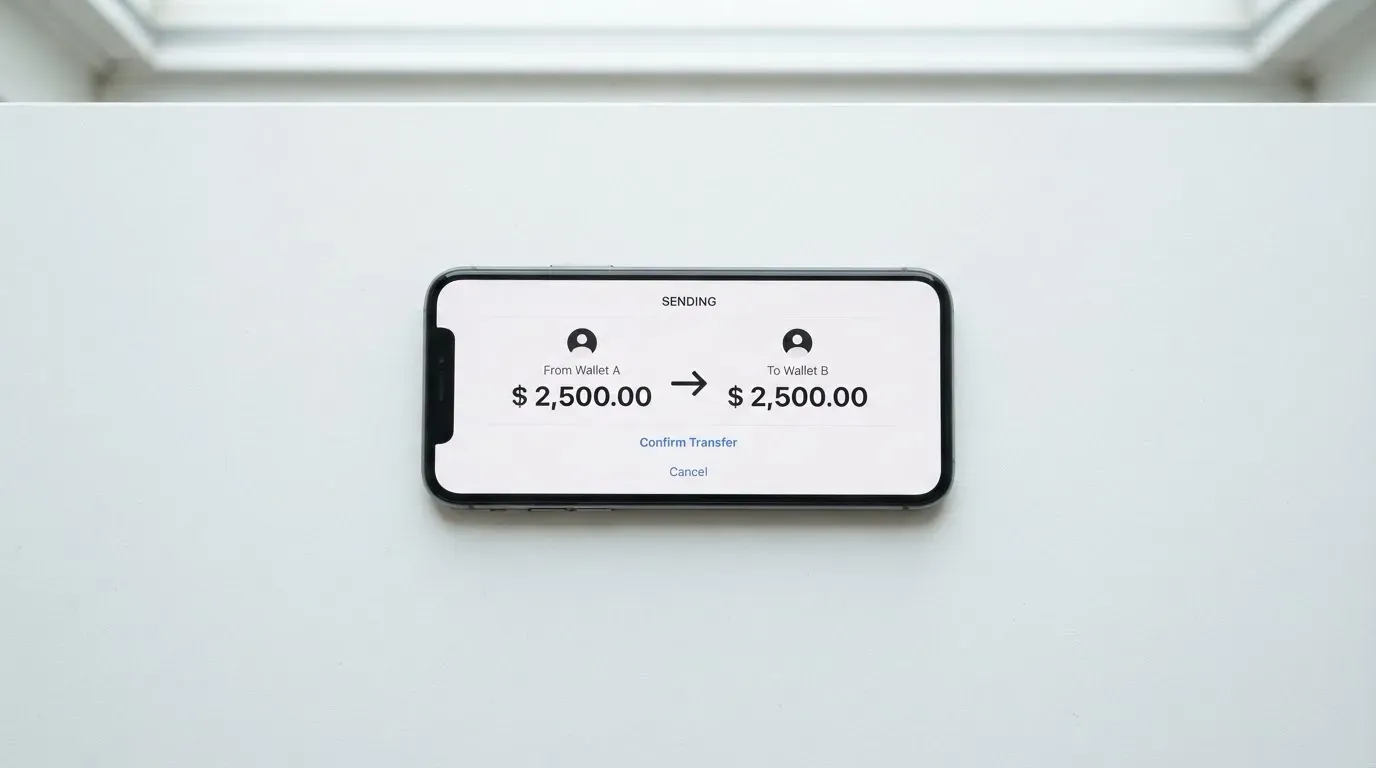
- Transfer USDPT from another digital asset wallet or from a compatible crypto exchange wallet. The receiving address is a Solana address, and the token must be USDPT on Solana, not USDC, not USDT, and not a wrapped version of either.
- Redirect an incoming Western Union money transfer that was originally sent for cash pickup. The transfer is converted from fiat into USDPT and credited to your card balance.
There is no minimum balance and no stated deposit fee; the card repeats the “no hidden fees” line on top-ups. Network fees on the Solana transfer are paid in SOL and are not described in the card’s own fee schedule; they are a property of the blockchain.
The two paths are useful in different ways. The first is what you would do if you already hold USDPT on Solana, perhaps from an exchange that supports it or from another self-custody wallet; you send the token to the deposit address shown in the app, wait for the network confirmation, and the card balance updates. The second is the more distinctive flow: instead of having your family pick up cash at a Western Union agent, the sender chooses to redirect the transfer to your Stablecard, and the card balance goes up by the equivalent amount in USDPT. For a reader who is the recipient of regular remittances, that is the single most useful thing the card does.
A few things that are not supported and that the public material does not mention: there is no Apple Pay or Google Pay top-up, no debit card top-up, and no SEPA or ACH transfer. If your USDPT lives on a network other than Solana, you would have to bridge it first, which adds another step and another fee.
The off-ramp works in two directions. For crypto, you can transfer USDPT from the card’s wallet to any compatible digital asset wallet or exchange. For fiat, you can initiate a cashout through Western Union’s global network and pick up cash at a Western Union retail location; fees may apply. On account closure, any remaining USDPT balance must be transferred or spent according to the terms and conditions.
Paying with the card every day
In day-to-day use, the card does the things most people would expect. The virtual card is available immediately on approval and is what you would use for online purchases, subscriptions, and adding to a mobile wallet. The physical card is requested after approval and is mailed to the address on file; the cost is not published. The card supports Apple Pay and Google Pay: you add the card to your digital wallet from inside the Stablecard app, and from then on the tokenised number is what merchants see, not the card’s PAN.
There is no published list of blocked merchant categories, so there is no way to know in advance whether the card will work at gambling sites, adult entertainment, or other categories that some issuers restrict. The public material does not say.
A few things you will not find in the public material and that may matter to you:
- No cashback or rewards programme. The Western Union Rewards programme that exists is for money transfers, not for the card.
- The dispute path is in-app chat with the customer care team, and disputes are handled under the Visa dispute rules and the programme’s own policies. The time frames for filing and resolution are not stated.
- The app store ratings are an early signal rather than a verdict. On the Apple App Store the app shows 5.0 out of 5 across 10 ratings; on Google Play the listing shows 1,000+ downloads and no star rating is displayed. The card launched in August 2026 and has only been live for a few months at the time of writing, so any rating is based on a very small sample.
For payments, the card behaves like a prepaid Visa: it spends from the loaded USDPT balance, the balance is debited at the moment of authorisation, and there is no credit line. A decline leaves a hold on the merchant side that can take several days to clear, which is true of card payments in general rather than a Stablecard quirk.
What can go wrong
The card has been live only since 4 August 2026, so the track record is short. The good news is that there are no public incidents: no shutdowns, no reported hacks, no programme changes. The Western Union Company is a NYSE-listed firm (ticker WU) headquartered in Denver, Colorado, with a long history in money transmission. The card programme is run by Rain, doing business as Third National (Nimbus LLC), a Visa Principal Member licensed in Puerto Rico. USDPT itself is issued by Anchorage Digital Bank, N.A., a US national trust bank, on the Solana blockchain. The money transfer services that sit underneath are operated by Western Union Financial Services, Inc. (NMLS #906983) and Western Union International Services, LLC (NMLS #906985), licensed as money transmitters by the New York State Department of Financial Services. None of that removes the risks below, but it puts the card in a different category from a card run by an unknown shell company.
The risks that are real and worth thinking about are:
- Stablecoin risk. USDPT is pegged 1:1 to the US dollar, and it is issued by a US national trust bank, but “stable” is a target, not a guarantee. Stablecoins have depegged before, including a high-profile USDC depeg during the March 2023 US banking stress, and the longer your money sits in USDPT the more you are exposed to that risk. Tether has publicly disclosed that it freezes funds tied to illicit activity, and stablecoins in general are not censorship-proof.
- Issuer and programme risk. Visa can suspend a card programme, as it did with FTX in November 2022 and with WaveCrest in Europe in 2018, and the cardholder is dependent on the issuer’s solvency. A programme closure typically runs as a notice period, then a stop on new loads, then a stop on spending, then a request to withdraw the remaining balance. The card’s own terms describe this kind of wind-down for the Stablecard.
- Custody and security. The card holds USDPT in a non-custodial wallet, which is more secure in the sense that the provider does not hold your private key, but it is less forgiving in the sense that if you lose your seed phrase or send funds to a scammer, there is no customer support line that can reverse the transaction. The public material does not list 2FA, spending controls, or safeguarding arrangements, so these are also things to ask about before you commit meaningful funds.
- Geographic risk. Thirty-seven launch markets is a small footprint for a “global” card, and the country list is not published. If you travel, you may find the card works in some countries and not in others, and the physical card’s shipping countries are not stated either.
- Sanctions risk. Western Union screens against US, EU and UK sanctions lists, and the verification process records your nationality and country of birth. If your circumstances change, your account can be frozen or closed pending documents, and the card’s own pages do not promise otherwise.
There is no dedicated Trustpilot page for the Stablecard; Western Union’s general Trustpilot page scores 4.5 out of 5 across roughly 173,000 reviews, but those reviews are about the money transfer business, not the card. The product is too new for any meaningful card-specific complaint pattern to have emerged, which is why the reliability score above is high: the absence of incidents is real, but it is also the absence of evidence rather than evidence of absence.
What to take instead
The Stablecard is not the only crypto card in this corner of the market, and the alternatives below are organised by who they tend to suit. None of them is a direct replacement, because the Stablecard’s distinctive features are the USDPT balance and the redirect-from-Western-Union flow, but each of them is worth considering depending on what you actually need.
TokenPocket (TP Card) is a Visa or Mastercard debit card linked to the TokenPocket wallet and running on Arbitrum. The signup geography is split: the Visa is available in a list of European countries and territories (Germany, France, Spain, Switzerland, and others), while the Mastercard is available in a different set including Australia, Canada, Hong Kong, Japan, Taiwan, New Zealand, Singapore, South Korea, the United Kingdom, and the Americas were “planned for Q2 2025.” TP Card charges a 1% fee on crypto deposits, which is later refunded through rewards or reduced transaction fees; the card itself does not add extra fees. Balances are held in EUR24 and USD24 stablecoins. It is the closest match if you are looking for a self-custody-style card with a published fee structure and you live in one of the supported countries. It scores 5.8 out of 10.
MetaMask Card is a Mastercard issued by Monovate, with Crypto Life as card provider, and spends directly from a connected self-custody wallet. Sign-up is open in 45 listed countries and territories, with other regions on a waitlist; the United States and United Kingdom sign-ups are temporarily closed per the FAQ. There is a virtual card issued immediately on approval and a Metal card that can be pre-ordered in the app. The virtual card has no annual or maintenance fee; the Metal card is $199 per year. There is no MetaMask fee on transactions, no foreign transaction fee, and a Mastercard rate is used for currency conversion. The headline cashback is 1% on Virtual and 3% on Metal, with the 3% on Metal limited to the first $10,000 spent and stepping down to 1% after that; there is also a $FLY bonus multiplier through the Blackbird dining app. It supports Linea, Base, Monad and Solana, and a list of tokens including mUSD, wETH, EURe, GBPe, USDC and USDT. It is the best fit if you already live inside MetaMask, you want a non-custodial spend flow, and your country is on the published list. It scores 7.1 out of 10.
KAST is a Visa card programme with a residence-based eligibility check at KYC, and three tiers: Standard (free), Premium ($1,000 a year) and Private ($10,000 a year), billed annually upfront. Stablecoin top-up is 0%, card spend in USD is 0%, and the non-USD foreign exchange fee is 0.5% to 1.75% depending on residence country, transaction country, and card tier. Cashback runs from 1.5% on Standard (capped at the first $2,000 a month) to 3% on Private (capped at $40,000 a month), with KAST Points adding 1% or 2% on top for Premium and Private. KAST supports USDT, USDC, PYUSD and RLUSD across multiple networks, and spending is from your own balance rather than from a credit line. It is the strongest match if you want a tiered programme with clear published fees and a meaningful cashback ceiling, and you are willing to pay an annual fee for the higher tiers. It scores 6.1 out of 10.
In summary, the Stablecard is a good fit if you specifically want a Western Union-backed card whose balance is USDPT and you can route remittances onto it. TokenPocket is a fallback if you are in one of its supported regions and want a self-custody flow on Arbitrum. MetaMask Card is a better everyday card if you live in one of its 45 listed countries and you want Mastercard acceptance and a real cashback programme. KAST is the right choice if you want published fees, multiple stablecoins, and a tiered cashback structure and you do not mind an annual fee for the higher tiers.
Who I would recommend this card to
If I had to summarise the reader profile that the Stablecard by Western Union actually fits, it would be this: someone who already holds USDPT on Solana, or who receives regular Western Union transfers that they would rather route onto a card than collect as cash, and who lives in one of the 37 launch markets. For that reader, the card is well-aligned with their needs: a non-custodial USDPT balance, an instant virtual Visa, a physical card on request, mobile wallet support, and a global Western Union cashout network for the moments when a card is not enough.
If you do not match that profile, the card is harder to recommend. The fee schedule is in the terms and conditions and not on the public page, the country list is not published, the only top-up is USDPT on Solana, and there is no cashback or rewards programme. The everyday-use score is high, but that score reflects the card’s features rather than its fit: features that you cannot reach because you are not in a launch country, or because the conversion spread is not on the public page, are not features that work for you.
The honest line, in the end, is that this is a card worth watching rather than a card to commit to today. Western Union’s brand and Rain’s licensing give it a strong foundation, and the 60-markets target for end of 2026 is a credible expansion path. The product is two and a half months old, and the public material is still closer to a launch press kit than to a fully documented card programme. If you are in the sweet spot, sign up and try it. If you are not, wait for the country list, the fee schedule, and the first wave of independent reviews before you move meaningful money onto it.
Frequently asked questions
What is the Stablecard by Western Union card?
The Stablecard by Western Union is a Visa payment card whose balance is held in USDPT, a US-dollar-pegged stablecoin issued by Anchorage Digital Bank on the Solana blockchain. The card is issued by Rain (Third National) and the brand is owned by Western Union. A virtual card is available immediately on approval, and a physical card can be requested for a fee whose amount is not published on the public site.
Is the Stablecard by Western Union a bank?
No. The card is a Visa payment product issued by Rain, doing business as Third National (Nimbus LLC), a Visa Principal Member licensed in Puerto Rico. Western Union provides the brand and the money transfer infrastructure, but it is not the card issuer. USDPT itself is issued by Anchorage Digital Bank, N.A., a US national trust bank.
Who owns the Stablecard by Western Union?
The card is owned by The Western Union Company, which trades on the New York Stock Exchange under the ticker WU and is headquartered in Denver, Colorado. The card programme is operated by Rain, and the stablecoin balance is issued by Anchorage Digital Bank. The three roles are separate and are described in the card’s own material.
Is the Stablecard by Western Union card available in my country?
The card launched in 37 markets on 4 August 2026, with a stated target of 60 or more markets by the end of 2026. The country list has not been published. The only reliable way to find out whether your country is supported is to download the app and start the sign-up process; the app will tell you before you complete identity verification.
How do I get a Stablecard by Western Union card?
You download the Stablecard by Western Union app on iOS (iPhone running iOS 17.6 or later) or Android, complete the onboarding, and pass the identity verification. On approval, the virtual card becomes available immediately. The physical card can be requested after approval and is mailed to the address on file for a fee.
Does the Stablecard by Western Union card require KYC?
Yes. Identity verification is required for every applicant, with personal information and documentation collected as part of anti-money-laundering, sanctions screening, and customer identity checks. There is no tiered KYC in the public material; the same verification level applies to everyone. Western Union screens against US, EU and UK sanctions lists.
How do I top up the Stablecard by Western Union card?
You can top up by transferring USDPT on Solana from another digital asset wallet or from a compatible exchange wallet, or by redirecting an incoming Western Union money transfer so that the cash pickup becomes a USDPT credit on the card. There is no bank card, no bank transfer, and no in-app fiat on-ramp.
Can I add the Stablecard by Western Union card to Apple Pay or Google Pay?
Yes. The card supports Apple Pay and Google Pay, and you can add it from inside the Stablecard app. Tokenised mobile wallet payments use a device-specific number rather than the card’s PAN, which is the standard mobile wallet behaviour and is generally safer than handing over the physical card number.
Is the Stablecard by Western Union card safe?
The card combines a Western Union-branded programme, a Visa-licensed issuer, a US national trust bank as the stablecoin issuer, and a non-custodial wallet holding the USDPT balance. That structure is a stronger starting point than many crypto cards. The risks that remain are stablecoin peg risk, issuer and programme risk, the irreversibility of crypto transfers, and the lack of published detail on 2FA, spending controls, and safeguarding arrangements.
How do I close my Stablecard by Western Union account?
You contact customer care through in-app chat or at [email protected] and follow the closure process. Any remaining USDPT balance must be transferred out of the wallet or spent according to the terms and conditions before the account can be closed. The specific steps and time frames are in the terms and conditions rather than the public FAQ.
Wallet cards on the shortlist – cryptocardshortlist
Content created by the «cryptocardshortlist» team