
A crypto-backed Visa with zero monthly fees and a 1% FX mark — thin on detail everywhere else
 Available in US
If you have trouble getting an ordinary bank card — because of where you live, what document you hold, or simply how long a traditional application takes — the Avalanche card is one of the more plausible names on the list. It is a crypto-backed Visa, virtual and physical, offered by a product line built on Avalanche and powered by a fintech called Rain Liquidity. The pitch is unusually clean on the price side: no monthly fee, no issuance fee, no delivery fee, and a single 1% foreign-exchange fee stated in public. Everything else about it is thinner.
I have been through the card’s own public pages and the surrounding documentation and written down what is actually stated, what is only claimed by third-party comparison sites, and what simply is not said anywhere. Where the answer is missing, I say so rather than filling the gap. That matters for you because several of the gaps here are the ones that would decide whether this card works for you.
The conditions described on this page are current as of October 28, 2026.
The verdict: 6.9 out of 10
The Avalanche card scores 6.9 / 10. That is a mid-table result, and it comes almost entirely from one half of the picture being very good and the other half being very incomplete.
The score breaks down as follows:
| Criterion | Mark | Why |
|---|---|---|
| Who can get it | 7 / 10 | Residence-based eligibility covering many U.S. states, Latin America and the Caribbean, and expanding — but 18 countries and 16 U.S. states are closed, and unofficial sources put availability at about 172 countries |
| Cost | 8 / 10 | Virtual issuance $0, physical card $0, delivery $0, monthly fee $0, FX 1%. Unofficial sources report 2% under some documents and up to 3% under others |
| Top-up options | 6 / 10 | USDC, USDT, AVAX and WAVAX as collateral on the Avalanche network; Ava Labs adds sAVAX. Networks are not stated on the card’s own pages |
| Reliability and complaints | 6 / 10 | Runs on Rain Liquidity, the bank issuer is not named outright, no official incidents found, App Store rating 3.1/5 from 22 ratings, and unofficial reports of slow support |
| Everyday use | 7 / 10 | Virtual and physical Visa, Apple Wallet and Google Pay. Unofficial sources say ATM is not part of the product, and comparison sites disagree |
| Total | 6.9 / 10 | Strong on price, incomplete on disclosure |
Who this suits: you already hold USDC and live in Latin America, the Caribbean, or one of the many eligible U.S. states; you want a card that costs nothing to keep and nothing to issue; and you are comfortable holding a balance in a stablecoin rather than in a bank account.
Who it does not suit: you need to know exactly how much you can spend per day or per month, you rely on cash withdrawals, you are in one of the 18 closed countries or 16 closed U.S. states, or you are the kind of customer who reads the fee schedule before signing up. There is a real difference between a card being cheap and a card being cheap *and* documented, and this one is very much the former.
Will they give you the card
Eligibility here is based on residence, not citizenship, and that distinction is doing real work in this product.
You need legal residence in a supported country or region and to be 18 or older. The card’s own description of who qualifies is deliberately broad: “many U.S. states, Latin America, and the Caribbean,” with the list expanding. Shipping goes to the same set of countries as eligibility.
What is closed is specific and worth reading properly. Eighteen countries are excluded: Belarus, Cuba, India, Iran, Iraq, Israel, Mainland China, Nepal, Nicaragua, Nigeria, North Korea, Russia, Sri Lanka, Syria, Turkey, Ukraine, Venezuela, Vietnam. Sixteen U.S. states are also excluded: AZ, DE, GA, ID, LA, MD, NV, NM, ND, OH, OR, RI, SD, VT, WA, WI.
One unofficial figure you may encounter: a third-party site puts availability at about 172 countries with 18 restricted (including China, India, Russia, Turkey, Vietnam) and 16 U.S. states unavailable. That is not confirmed by the card, and while the restricted list matches the official one for Russia and Turkey, treat the country count as an outside estimate rather than a promise.
Note what is *not* the rule here: many crypto cards screen citizenship or accept documents from a list of countries. This one is framed purely around where you live. If you are a resident of an eligible country holding an ID from a restricted one, the card’s public wording does not tell you either way, so this is a question to ask before you invest an afternoon in the form.
How to get it
There is one application process, not several tiers. Verification is standard and unremarkable, which is a point in the card’s favour — nothing exotic is demanded.
You need your legal name, email, date of birth, SSN or national ID, a government-issued ID, a selfie, and a valid phone number. Expired IDs and P.O. boxes are not accepted. Approval is typically a matter of seconds but can take up to 72 hours. Proof of address is not stated anywhere on the public pages — so if your ID is old, or your name has changed, or you are registering from a new flat, do not assume the document you have will carry you through.
On the card itself: it is a Visa, described by the card as a “crypto-backed Visa card,” available virtual and physical. One account can hold up to 3 virtual and 1 physical card, with one of each active at a time.
The physical card ships at $0. Most users receive it in 14 to 30+ business days depending on location. The virtual card is issued after approval, so that is your working card in the meantime — which is why the wallet support later in this review matters more than usual. The replacement fee is not stated.
Card currency is not stated either. The card does not say what currency it converts into, which is an unusual silence for a card whose headline fee is an FX percentage.
Fees: what it really costs
The headline numbers here are the best part of this product, and they are worth repeating plainly because most cards in this category do not look like this.
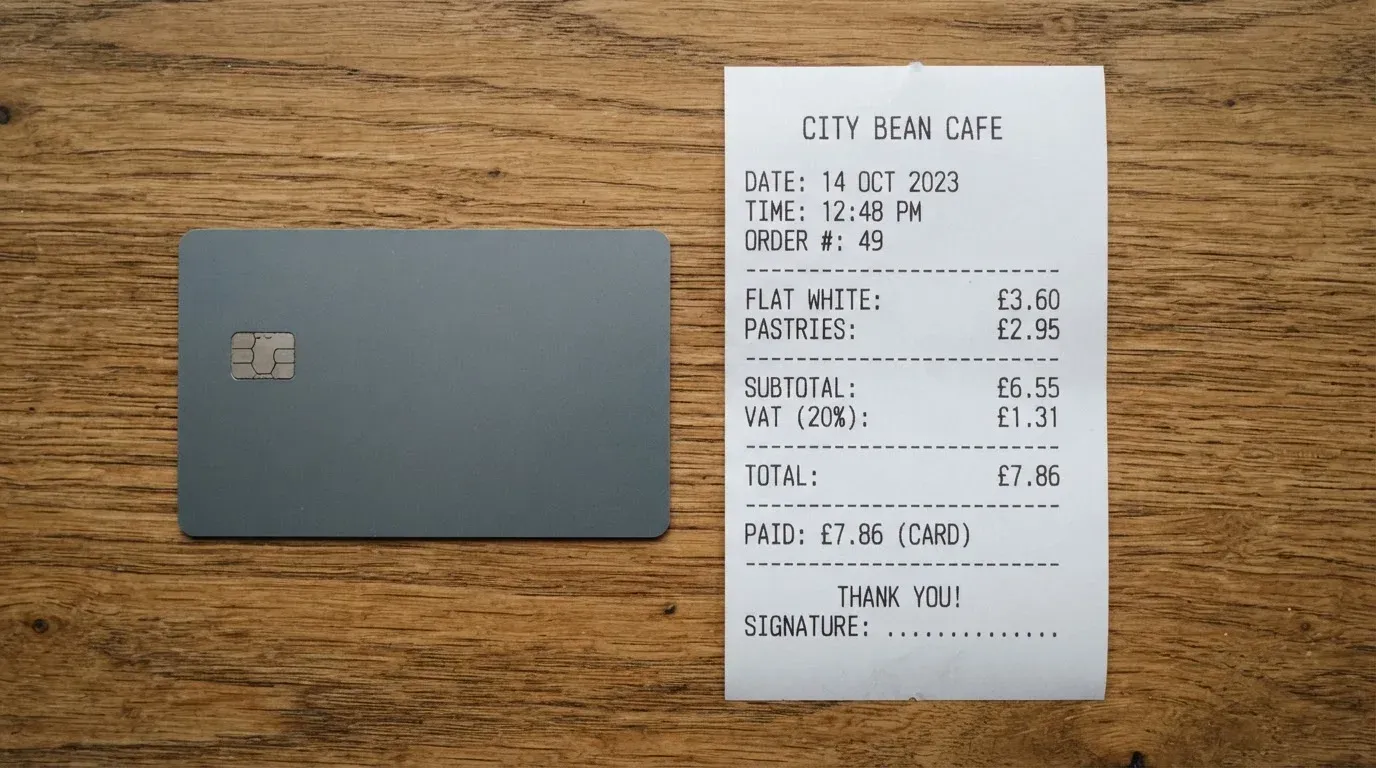
| Fee or limit | What the card states |
|---|---|
| Virtual card issuance | $0 |
| Physical card | $0 |
| Delivery | $0 |
| Monthly account fee | $0 |
| FX fee | 1% |
| ATM | not stated |
| Daily and monthly limits | not stated |
[image: avalanche-fees | A receipt and a card on a café table | What a Avalanche payment costs depends on the conversion and currency fees]
Beyond that: “No gas fees or conversion fees are charged by Avalanche Card.” Note the careful shape of that sentence — the card charges none, but users may pay the network’s gas directly.
Now the part that should make you pause. Unofficial sources — a third-party comparison site and a second one — report that the FX fee is 2% under the U.S. disclosure and up to 3% under the international agreement, against 1% in the public FAQ. The same sources mention a late payment of up to 2% of the outstanding balance and a $10 statement copy in the U.S. None of this is confirmed by the card’s public pages, and it directly contradicts the 1% figure. The honest reading is that you do not currently know which FX rate applies to you, and that is a question to put in writing before you rely on the card abroad.
Two or three everyday payments, so the arithmetic is concrete:
- A $40 lunch out of state or out of country. If your balance is USDC and your card converts, the 1% is $0.40. If the 3% figure turns out to be the one on your agreement, it is $1.20. Same meal, different document.
- A $15 subscription. At 1% that is $0.15 — small enough that you may not notice, which is precisely why it is worth knowing. At 3% it is $0.45, roughly a fifth of the purchase.
- A $200 monthly transfer of habits — a phone bill, a transport pass, two supermarket shops. At 1% that is $2 a month. At the unofficial 3% it is $6 a month, which is the difference between the card feeling free and the card feeling like it has a fee.
On ATM, the sources flatly contradict one another: one unofficial site says ATM withdrawals and cash advances are not part of the current product, another lists ATM as unlimited at $0 fee, a third says ATM terms are not disclosed. Nothing is confirmed by the card. If cash is part of how you live, this is the single fact you most need in writing.
Tiers: there is one. No tiers are described on the card’s site, and the account holds up to 3 virtual and 1 physical card.
How to top up
This is where the product is clearest about what it accepts and vaguest about how.
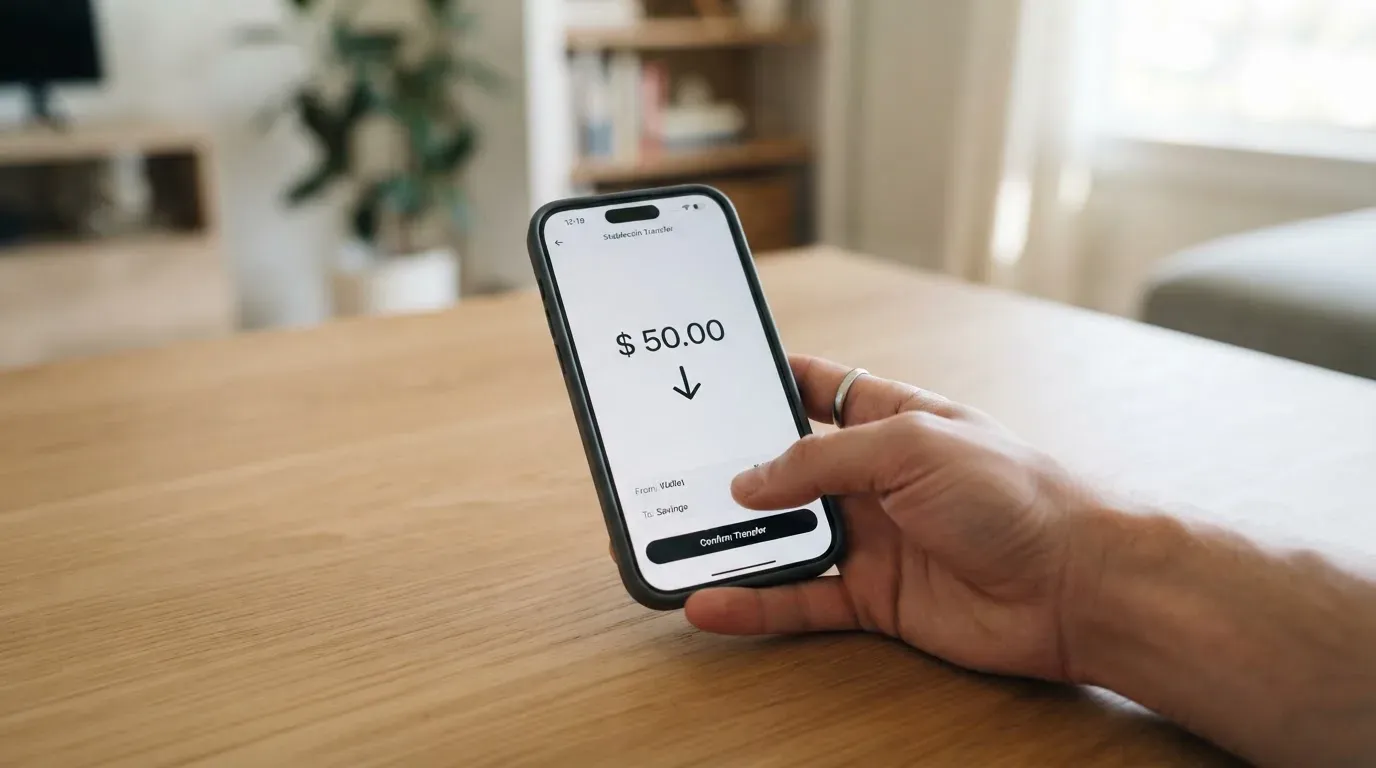
The homepage lists USDC, USDT, AVAX and WAVAX as collateral. The FAQ on the same site mentions only USDC and AVAX, which is an inconsistency rather than a choice. The networks are not stated on the card’s own pages.
[image: avalanche-topup | A phone showing a stablecoin transfer screen | Topping up Avalanche starts with a transfer to the right network]
Ava Labs’s help material is more specific: Avalanche-native USDC, USDT, AVAX and Wrapped AVAX at launch, with more assets planned, on the Avalanche blockchain. Rain’s own article adds sAVAX to the list. That gives you five assets across two sources, one of which — sAVAX — you will not find on the card’s homepage.
Mechanically, you add or withdraw funds in the app, and you can close cards there at any time. The minimum top-up is not stated. The withdrawal fee is not stated. And again the gas point: no gas fees or conversion fees are charged by the card, but you may pay network gas directly.
The practical rule that follows from all this, and it is the one thing I would tell anyone starting out: get the network right before you send anything. A transfer to a network the card provider does not support, or to an address belonging to a different network, can be lost or need manual support recovery with no guarantee of success. Transfers are irreversible by the nature of the technology. Sending a small test amount first costs less than a support ticket.
Paying with it every day
Day to day, the card behaves like a prepaid Visa: you load a balance, it spends that balance, and it cannot overdraw. Virtual cards can be added to Apple Wallet or Google Pay/Wallet, which for most people will be the only card they actually use in the first weeks, because the physical one takes 14 to 30+ business days to arrive.
Merchant category codes are not stated. That is a real limitation for anyone who expects to know in advance whether gambling, adult, or gift-card merchants will be blocked — those blocks are set by issuer policy rather than by law, and the list varies by issuer, so a missing list means you find out at the till.
Rewards are not stated on the card’s site, and no cashback is mentioned. Unofficial sources describe “Avax Points” rather than cashback: the earn rate is shown only in the app, and redemption is said to be 1 cent per point for travel or 0.7 cent for statement credit. The card site itself says nothing about cashback, so I would plan on none.
Disputes are not addressed on the public site. Unofficially, the U.S. agreement caps liability for unauthorized use at $50 before notice — this figure comes from third-party sources and is not confirmed by the card — and none after prompt notice, and disputed transactions do not earn points.
The app is on the Apple App Store and Google Play. On the App Store it is listed as “Avalanche Card – Pay Anywhere” by Rain Liquidity LLC, rated 3.1/5 from 22 ratings. I did not read the Google Play listing. A 3.1 from 22 ratings is a small sample, but it is not the profile of a widely loved product either, and it is the only public rating figure the card itself publishes.
What can go wrong
No official incidents were found for the Avalanche Card. No Trustpilot or Reddit pages for the card were found either — the search results that came back were about Rain, the earned-wage app, which is a different company from Rain Liquidity and an easy place to get misled. So the absence of complaints is not evidence of a good track record; it is closer to evidence of a young product with a thin public footprint. One unofficial user report describes slow or generic support on withdrawal and access problems, which is the kind of thing that matters a great deal when your money is the thing being slow.
Who is actually behind the card is worth being precise about. It is powered by Rain Liquidity, described on the card’s site as “a financial technology company and not a bank,” with cards “issued by partners licensed in their respective jurisdictions” — the bank is not named. Ava Labs’s help page says the card is issued with Rain Liquidity. Rain’s own site footer says its debit cards are issued by Cross River Bank, Member FDIC, with Rain Products, Inc. as programme manager — but it does not explicitly tie that arrangement to the Avalanche Card. I am not going to fill in the gap for you. Ask which bank actually issues your card.
On security, the self-custody story is the strongest thing here. The card site says users own and custody their assets and that Rain Liquidity is not a custodian. You can lock a virtual card in the app, and wallet recovery is via iCloud backup or PIN. Two-factor authentication is not mentioned — which is a gap, not a virtue. Ava Labs’s help page states plainly that neither Avalanche, nor the card, nor any cryptocurrency is FDIC insured.
Understand what self-custody buys you and what it costs you. Your assets stay under your control, so a platform failure does not sweep them away. But that also means nobody can restore them for you: a seed phrase is typically 12 to 24 words in plain form, anyone who obtains it can restore the wallet and spend the funds, crypto transfers are typically irreversible with no built-in recovery, and you carry the full weight of key loss, phishing, and malware that swaps a copied address behind your back. There is history here: Mt. Gox (about US$350 million reported stolen, 2011–2014), Coincheck (about US$400 million, 2018), Ronin Network (US$625 million, 2022).
On spending power, unofficial sources say Rain may set daily or monthly limits, reduce them, or set spending power to zero, and that U.S. terms allow up to 100% of the value for stablecoins (USDC, USDT) and up to 50% for AVAX/wAVAX. Dollar limits are not published.
One more thing to know about how these payments behave in general, because it will save you a declined payment at a supermarket. Address Verification Service compares the numeric parts of your billing address against the issuer’s records; it is mainly offered in the US, Canada and the UK and is generally unavailable for foreign-issued cards, which causes declines. Some merchants decline prepaid or foreign BINs outright, because the BIN lookup reveals the card type and the issuer country — and a card issued in one country can look “foreign” to a shop in another. And a declined authorisation can leave a hold on your funds for several days, typically up to 7.
On the news side: Rain and Avalanche launched the Avalanche Card, first in Latin America and the Caribbean, with a waitlist described as “late January.” Launch coverage appeared from Forklog and Bitcoin.com. Rain’s article lists collateral as USDC, USDT, WAVAX, sAVAX and native AVAX, while the card site lists USDC, USDT, AVAX and WAVAX.
I cannot give you tax or legal advice, and this review does not try. What I can say is that in the US the IRS treats digital assets as property, so exchanging them for goods, services or dollars generally produces a taxable gain or loss, measured in local fiat currency at fair market value on the date of the transaction. Every card payment funded from crypto may therefore be a separate disposal. Whether that applies to you, and how, is a question for a professional who knows your situation.
What to take instead
The alternatives below are here so you can compare on the same axes, not because any of them is obviously better. Their scores are their own.
TokenPocket — 5.8 / 10. A Visa debit for a list of European countries and territories (Germany, France, Spain, Switzerland among them), and a Mastercard debit for Australia, Canada, Hong Kong, Japan, Taiwan, New Zealand, Singapore, South Korea, the UK and others, with the Americas “planned for Q2 2025” — so if the Avalanche card’s Latin America coverage is what you need, this one is not there yet. It runs on Arbitrum, Fiat24 cards are virtual with no physical card mentioned, and balances are EUR24 and USD24. TokenPocket covers part of the NFT creation fee and the user pays “a small portion,” with no other fees stated. But 1% is charged when depositing cryptocurrency into the card, to be refunded later via rewards or reduced transaction fees. No cashback is stated.
MetaMask — 7.1 / 10. The highest score of the three, and the one with the clearest economics. Sign-up is open in 45 listed countries and territories (Andorra, Argentina, Brazil, Canada, Mexico, Germany, France, Spain, Uruguay among them) with other regions on a waitlist, proof of residency required, and the note that “ineligible regions limit sign-ups, not spending” — the citizenship rule is not stated, and US and UK sign-ups were temporarily closed per its FAQ. Mastercard, issued by Monovate with Crypto Life as card provider, one card per user: Virtual is free with no annual or maintenance fee, Metal is $199/year. Fees are a “minimal fee for each transaction” with no amount published, no additional MetaMask fees, and no foreign transaction fee. It spends directly from the connected wallet on Linea, Base, Monad and Solana, with mUSD, wETH, EURe, GBPe, USDC and USDT named. Cashback in mUSD is 1% on Virtual and a headline 3% on Metal — with a footnote limiting 3% to the first $10,000 spent, then 1% — plus a $FLY bonus via a dining app. Note the Solana-only wallet restriction on credit withdrawal.
KAST — 6.1 / 10. The most elaborate tiering of the three, and the most expensive if you climb it. Residence-based eligibility is shown at KYC with the country list itself unpublished, a restricted-locations list referenced but no countries named, and one rule worth knowing: “If you currently live in a supported country but only hold an ID from a restricted region, you may still be ineligible to pass KYC.” Dual citizens with an ID from a supported country may pass, only the account holder’s own ID is accepted, a VPN does not bypass anything, and an account created in an unsupported country keeps KYC locked. Up to 10 cards per user, Visa Platinum (Standard), Visa Infinite metal (Premium), Visa Infinite gold plated (Private), plus Pengu, Solana and Bitcoin designs. Membership: Standard 0 USD, Premium 1,000 USD/year, Private 10,000 USD/year, billed annually upfront with no monthly option. Fees are generous where it counts — stablecoin top-up 0%, card spend in USD 0%, transaction fee 0%, Apple/Google Pay 0% — with a non-USD FX fee of 0.5%–1.75% by residence, transaction country and programme, 0.10 USD on non-USD transactions under 25 USD, and 0.50 USD for a declined transaction on insufficient balance. Funding is USDT, USDC, PYUSD and RLUSD across Ethereum, Solana, Polygon, Arbitrum and TRON, with no bank account needed, though its own Terms say acceptable tokens are “currently USDT and USDC.” Cashback is tiered at 1.5%, 2% and 3% to monthly caps of 2,000, 10,000 and 40,000 USD, plus KAST Points of +1% and +2% on Premium and Private.
| Avalanche | TokenPocket | MetaMask | KAST | |
|---|---|---|---|---|
| Score | 6.9 | 5.8 | 7.1 | 6.1 |
| Network | not stated on card site; Avalanche per Ava Labs | Arbitrum | Linea, Base, Monad, Solana | Ethereum, Solana, Polygon, Arbitrum, TRON |
| Card | Visa, virtual and physical | Visa/Mastercard debit, virtual | Mastercard, Virtual and Metal | Visa Platinum/Infinite, virtual and physical |
| Monthly or annual cost | $0 monthly | not stated | $0 (Virtual), $199/year (Metal) | $0 to $10,000/year by tier |
| FX fee | 1% stated; 2–3% reported by others | not stated | no foreign transaction fee | 0.5%–1.75% |
| Rewards | not stated on card site | 1% deposit fee refunded via rewards | 1% to 3% cashback in mUSD | 1.5% to 3% USD cashback plus points |
| Main gap | limits, ATM, issuer, card currency | Americas not yet live | fee amount unpublished; US/UK sign-ups closed | country list unpublished; costly top tiers |
Who I would recommend it to
I would recommend the Avalanche card to you if you are in Latin America, the Caribbean or an eligible U.S. state, you already hold or are willing to hold USDC, you want to spend from that balance without paying a monthly fee or an issuance fee, and you are the kind of person who reads the app before you rely on it.
I would steer you elsewhere if your spending depends on cash, if you are in one of the 18 excluded countries or 16 excluded U.S. states, if you cannot tolerate not knowing your daily or monthly ceiling, or if the FX rate that will apply to you being 2% or 3% rather than 1% would matter. In the last case, MetaMask’s no-foreign-transaction-fee structure is worth a look if your country is on its list.
Before you commit an afternoon to the form, put four questions in writing: which bank issues the card; what my FX rate actually is; what my daily and monthly spending limits are; and what happens to ATM. You should not have to sign up to find out, and if the answers are not forthcoming, that is itself the answer.
Frequently asked questions
What is the Avalanche card?
The Avalanche card is a crypto-backed Visa offered as virtual and physical, built on the Avalanche network and powered by Rain Liquidity, a fintech that describes itself as a financial technology company and not a bank. You load collateral — USDC, USDT, AVAX, WAVAX and, per Ava Labs, sAVAX — and the card spends from that balance like a prepaid card. It has no monthly fee and no issuance or delivery charge. It is aimed at people who hold stablecoins and want ordinary card payments from them.
How does the Avalanche card work?
You top up a balance in crypto, the balance is treated as spendable value, and each purchase is deducted from it, so the card cannot overdraw. The site says “No gas fees or conversion fees are charged by Avalanche Card,” though you may pay the network’s gas yourself. You add and withdraw funds in the app, and can close cards there. Unofficial sources add that Rain may cap spending at up to 100% of value for stablecoins and 50% for AVAX or wAVAX.
Is Avalanche a bank?
No. Avalanche is a blockchain, not a financial institution, and Ava Labs’s help page states plainly that neither Avalanche, nor the card, nor any cryptocurrency is FDIC insured. The card is powered by Rain Liquidity, which calls itself a fintech and not a bank, and says cards are “issued by partners licensed in their respective jurisdictions” without naming one. Rain’s site footer mentions Cross River Bank, Member FDIC, for its own debit cards, but does not tie that to this card.
Who can get the Avalanche card?
Eligibility is based on legal residence in a supported country or region, age 18 or above. The card’s description covers “many U.S. states, Latin America, and the Caribbean,” expanding. Excluded are 18 countries including India, Russia, Turkey, Vietnam and Ukraine, and 16 U.S. states including CA-adjacent restrictions such as AZ, GA, NV, OR and WA. Citizenship is not the stated criterion, and what happens if you live in a supported country with an ID from a restricted one is not stated.
Does the Avalanche card require KYC?
Yes, and it is a single standard process rather than tiers. You supply your legal name, email, date of birth, SSN or national ID, a government-issued ID, a selfie and a valid phone number. Expired IDs and P.O. boxes are rejected. Approval is typically seconds but can take up to 72 hours. Proof of address is not stated on the public pages, which is the one detail worth confirming if your documents are old.
Is the Avalanche card free?
Mostly, yes. The monthly account fee is $0, virtual issuance is $0, the physical card is $0, and shipping is $0. The published FX fee is 1%, though third-party sources report 2% under a U.S. disclosure and up to 3% under an international agreement. ATM terms, daily and monthly limits, the minimum top-up and the withdrawal fee are not stated by the card.
How do I add the Avalanche card to Apple Wallet?
You add the virtual card to Apple Wallet, and Google Pay/Wallet works too. Virtual cards are issued after approval, which matters because the physical card takes 14 to 30+ business days to arrive in most locations — so the wallet version is likely to be your only card for the first month. The site does not state which merchant category codes are blocked, so some purchases may be declined at the till without warning.
Is the Avalanche card safe?
The custody picture is the strongest part: the site says you own and custody your assets and that Rain Liquidity is not a custodian, and you can lock a virtual card in the app. Against that, two-factor authentication is not mentioned, recovery is via iCloud backup or PIN, and crypto transfers are irreversible with no built-in recovery if a key is lost. No official incidents were found, but the product is young, its App Store rating is 3.1/5 from 22 ratings, and there are unofficial reports of slow support.
Can I withdraw money from the Avalanche card?
You can withdraw funds in the app, and you can close cards there at any time. The withdrawal fee is not stated, and neither is the minimum top-up. The network gas may also be payable by you. Since the collateral list differs between the card’s homepage and Ava Labs’s help page, confirm the exact asset and network with support before sending, because a transfer to an unsupported network can be lost.
Is Avalanche Card worth it?
Worth it if your priority is a zero monthly fee, a free virtual card usable in Apple Pay and Google Pay today, and you already hold USDC on Avalanche. Worth weighing twice if you need cash, need to know your spending ceiling in dollars, or will use it heavily across currencies — the FX rate that applies to you is not confirmed by the card’s public pages, and one third-party site reports that ATM is not part of the product at all.
Wallet cards on the shortlist – cryptocardshortlist
Content created by the «cryptocardshortlist» team