
PayWide card review: a virtual crypto card with a thin public paper trail
 Available in US
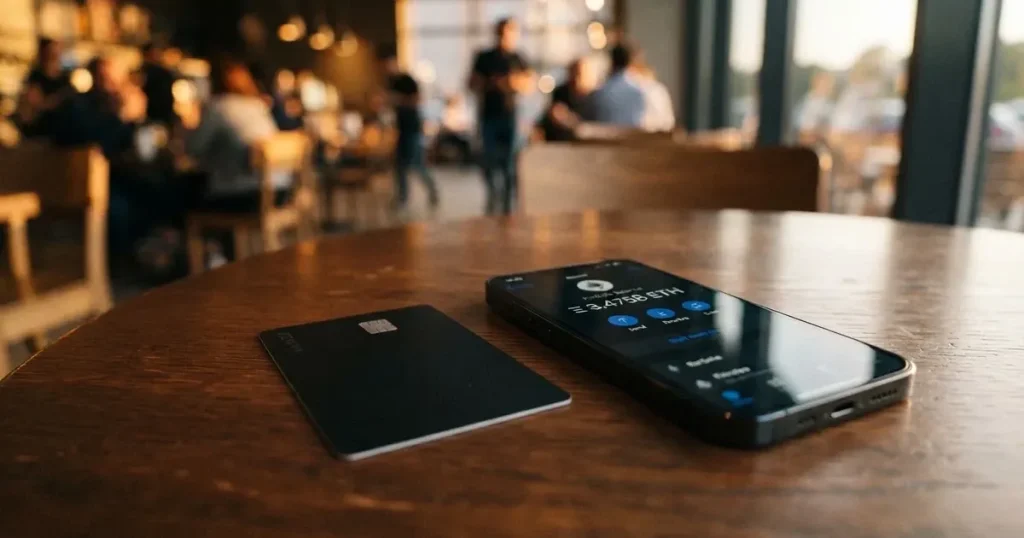
PayWide is a virtual Visa and Mastercard that draws on a crypto balance you top up from your own Web3 wallet. The pitch is simple: convert tokens at the Uniswap rate, load the card, spend anywhere cards are taken. The reality, as of writing, is murkier. PayWide’s own pages leave the country list, the operator and the issuing bank unstated, the visible review count on Trustpilot is two, and most of what I can verify comes from third-party aggregators, not from the card issuer. That makes this a useful product in narrow circumstances, and a hard one to recommend in general.
Conditions are current as of October 28, 2026.
The conditions described here are current as of October 2026.
Verdict
PayWide scores 4.6 out of 10. The strong point is top-up flexibility: 40-plus tokens across six major networks, which is more breadth than most prepaid crypto cards offer. The weak points are cost and trust. The reported top-up fee is 4% on Mastercard and 5% on Visa, there is a 1.25% purchase fee on Mastercard plus $0.35 per authorisation attempt, the legal operator and issuing bank are not named publicly, and the company is reachable only through a Telegram channel that itself requires an invitation code. It is a workable tool for a Web3 user who already lives in a wallet like MetaMask and is comfortable routing around an incomplete public paper trail. It is not the right card for someone who needs a card from a regulated, named issuer with a clear complaint path.
| Criterion | Mark | Why it earns that mark |
|---|---|---|
| Who can get it | 6 / 10 | A third-party map lists 150 countries as available and 35 as restricted, including the United States, the United Kingdom, Germany, France and most of the EU; an invite code is required, and one card is allowed per code |
| Cost | 2 / 10 | Reported top-up fees of 5% on Visa and 4% on Mastercard, a 1.25% purchase fee on Mastercard, and a $0.35 authorisation-attempt fee, with no published FX markup and issuance free only with an invite |
| Top-up options | 8 / 10 | 40-plus cryptocurrencies across Ethereum, Polygon, Arbitrum One, OP Mainnet, BNB Smart Chain and Avalanche, sent from a connected Web3 wallet and converted at the Uniswap rate |
| Reliability and complaints | 3 / 10 | The operator, issuing bank and regulator are not named publicly; Trustpilot holds a 3.4 out of 5 from just two reviews and the third-party aggregator score is 2.3 out of 5 |
| Everyday use | 5 / 10 | Virtual Visa and Mastercard in USD; Apple Pay and Google Pay are reported only on Mastercard BINs 5258 and 5395; no physical card or ATM access |
| Total | 4.6 / 10 |
Who it suits: Web3 wallet users who want a virtual card they can fund with dozens of tokens from a self-custody wallet, and who do not need a physical card, mobile wallet support across every BIN, or a publicly named issuer.
Who it does not suit: residents of the United States, the United Kingdom, Germany, France and most of the EU; anyone who needs Apple Pay or Google Pay on a Visa; anyone who needs a named, regulated issuer for dispute and refund reasons; and anyone who needs to withdraw cash from an ATM.
Who will they give you the card
PayWide’s own pages do not publish a country list, and the official site page that would normally carry eligibility was empty when checked. The public picture comes from a third-party aggregator: a country map that lists 150 jurisdictions as “Available” and 35 as “Restricted” (unofficial, not confirmed by PayWide). Restricted territories include the United States, the United Kingdom, Germany, France and most EU member states. The aggregator’s wording is worth repeating because PayWide has not echoed it: the lists, it says, “do not establish residence eligibility.” Treat the map as a starting point, not a guarantee.
The application flow that third-party observers describe does not request identity or address documents; you can enter an alias and an existing address on the card. PayWide has not confirmed this in its own materials, so it is worth reading it as a snapshot rather than a rule. If you do not see an identity check today, that does not mean one will not appear at withdrawal, dispute or a future programme update. The minimum age is not stated by the card.
The other gate is structural: you need an invitation code, distributed through PayWide’s Telegram channel, and the aggregator says one code corresponds to one wallet. There is no published sign-up form on the open web. That is a deliberate choice on PayWide’s part, and it has a consequence: if you lose access to the Telegram channel, or the channel changes, your onboarding path narrows.
If you are in a restricted country, the safe reading is that the card is not for you. If you are in a country the aggregator lists as available, the application still depends on the operator accepting your address, your wallet and the invite code you hold.
How to get it
PayWide does not publish a step-by-step application page; the practical flow, as described by third-party sources, looks like this.
- Join the PayWide Telegram channel and obtain an invitation code. One code is reported to map to one wallet.
- Connect a Web3 wallet, with MetaMask the recommended choice. The card is reported to work with most Web3 wallets.
- Choose between a virtual Visa and a virtual Mastercard. The Visa BINs reported are 4931 and 4383; the Mastercard BINs are 5258 and 5395. Both are prepaid and denominated in USD.
- Enter an alias and an address for the card. The public flow, again per third-party sources, does not ask for identity documents.
- Receive the card details on screen. The card is virtual; there is no physical card and no delivery step.
There is no app to download. The flow is web-based, and support is reached through the Telegram channel that distributed the invite.
Two practical points to verify before you start. First, an invitation code is reported to allow one wallet only, so you cannot use a single code to fund a household of cards. Second, the address you enter is the one a merchant will see on the statement, so it needs to be one you can actually receive deliveries at if a chargeback ever needs a paper trail.
The cards are USD-denominated and prepaid, which means the balance is loaded before you spend, and the card cannot overdraw. That is a structural feature of the product, not a limit you can negotiate.
Fees and what a PayWide payment really costs
PayWide does not publish a fee schedule on its site, and what follows comes from a third-party aggregator, marked unofficial and not confirmed by PayWide. Treat every number as the best available reading, not as a contract.
| Fee or limit | Reported value |
|---|---|
| Card issuance | Free with invitation code |
| Monthly or annual fee | None listed |
| Top-up fee (Visa) | 5% |
| Top-up fee (Mastercard) | 4% |
| Authorisation fee (Mastercard) | $0.35 per attempt, approved or declined |
| Purchase fee (Mastercard) | 1.25% per purchase |
| FX markup | Not published |
| ATM withdrawal | Not published; cards are marketed as virtual |
| Classic programme limit | Up to $3,000 (unofficial, not confirmed by PayWide) |
| Business programme limit | Up to $10,000, one-year validity (unofficial, not confirmed by PayWide) |
| NFT programme limit | Marketed as unlimited, terms not itemised |
| Top-up amount limit | Not advertised |
Three everyday scenarios show how the costs stack.
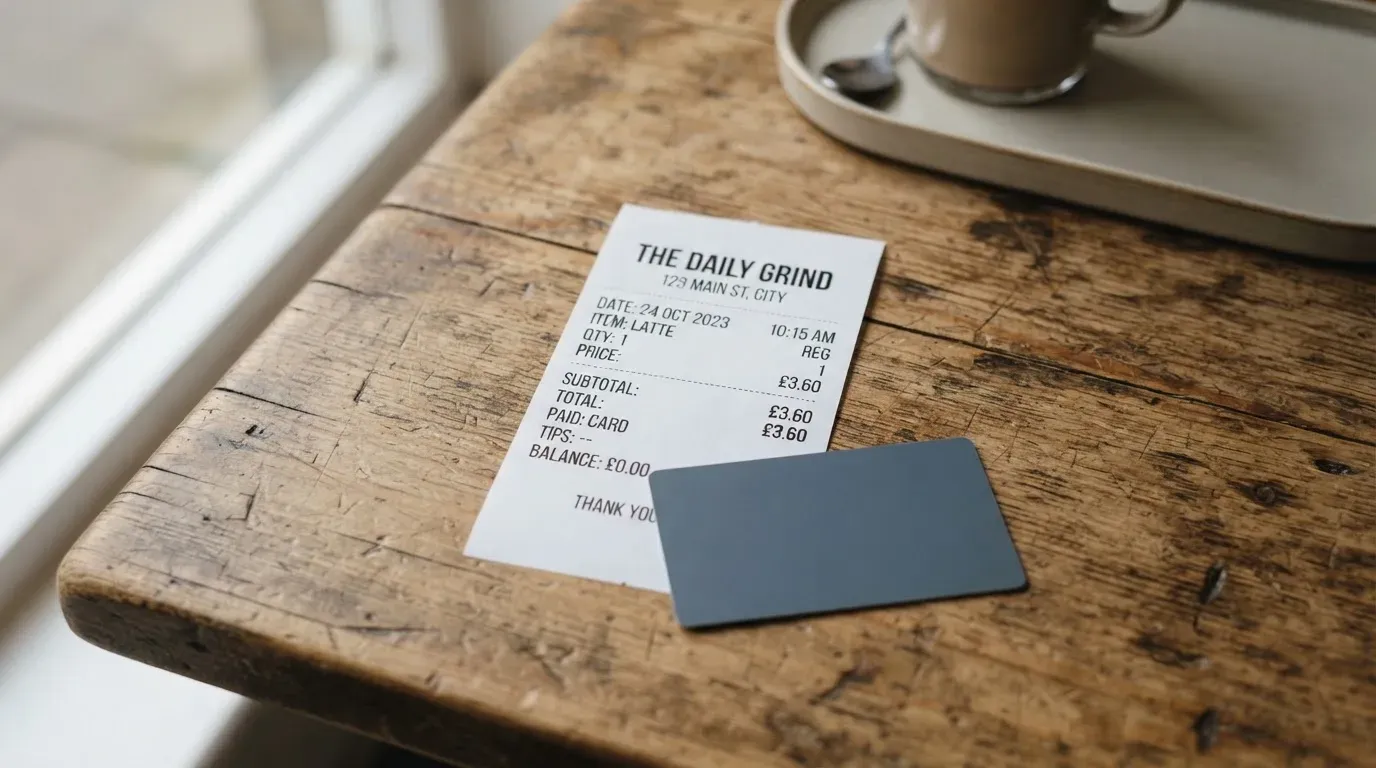
Coffee at a domestic merchant, paid with the Mastercard. The 4% top-up fee has already been paid when the balance was loaded, so the coffee itself is free of further charges. The authorisation fee is $0.35 whether the payment goes through or not, and the 1.25% purchase fee applies on top of the merchant’s price. On a $5 coffee that is roughly $0.06 in purchase fee, $0.35 in authorisation fee, and $0.20 in amortised top-up fee if you top up in $25 lumps. The fixed authorisation fee is what hurts on small tickets: it is a larger share of a $5 spend than of a $200 one.
Online purchase in a foreign currency, paid with the Visa. The 5% top-up fee dominates, and there is no published FX markup, so you cannot tell from the public materials how much the currency conversion will cost. In practice, an undisclosed FX margin is one of the easiest places for a prepaid card programme to add revenue, and the absence of a number is a flag, not a reassurance. If you routinely pay in foreign currency, this is the column to pressure-test with a small test transaction before loading meaningful balance.
Loading $3,000 (unofficial limit, not confirmed by PayWide) onto the Classic programme, with the Visa. A 5% top-up fee on $3,000 is $150 charged up front, before you have bought anything. The card’s own ceiling is the programme limit, and any further top-up would either fail or push you onto the Business tier, which is reported to cap at $10,000 (unofficial limit, not confirmed by PayWide) with a one-year validity. The cost of capital is real: you are paying $150 to convert crypto into spendable USD balance, and that balance cannot be recovered with the wallet’s private key after conversion.
The takeaway: the headline rate is the top-up fee, and for the Visa it is high enough that the card is only a sensible choice if the alternative (a card with a lower top-up fee and a published FX margin) is not available to you.
Top up: how the card is funded
Topping up PayWide starts with a transfer to the right network. The card is reported to accept 40-plus cryptocurrencies across six networks: Ethereum, Polygon, Arbitrum One, OP Mainnet, BNB Smart Chain and Avalanche. The token list is described as the Uniswap default list, and MetaMask is the recommended wallet, though the aggregator says most Web3 wallets work. Conversion to USD happens at the Uniswap rate, and the funds land on the card as a prepaid USD balance.
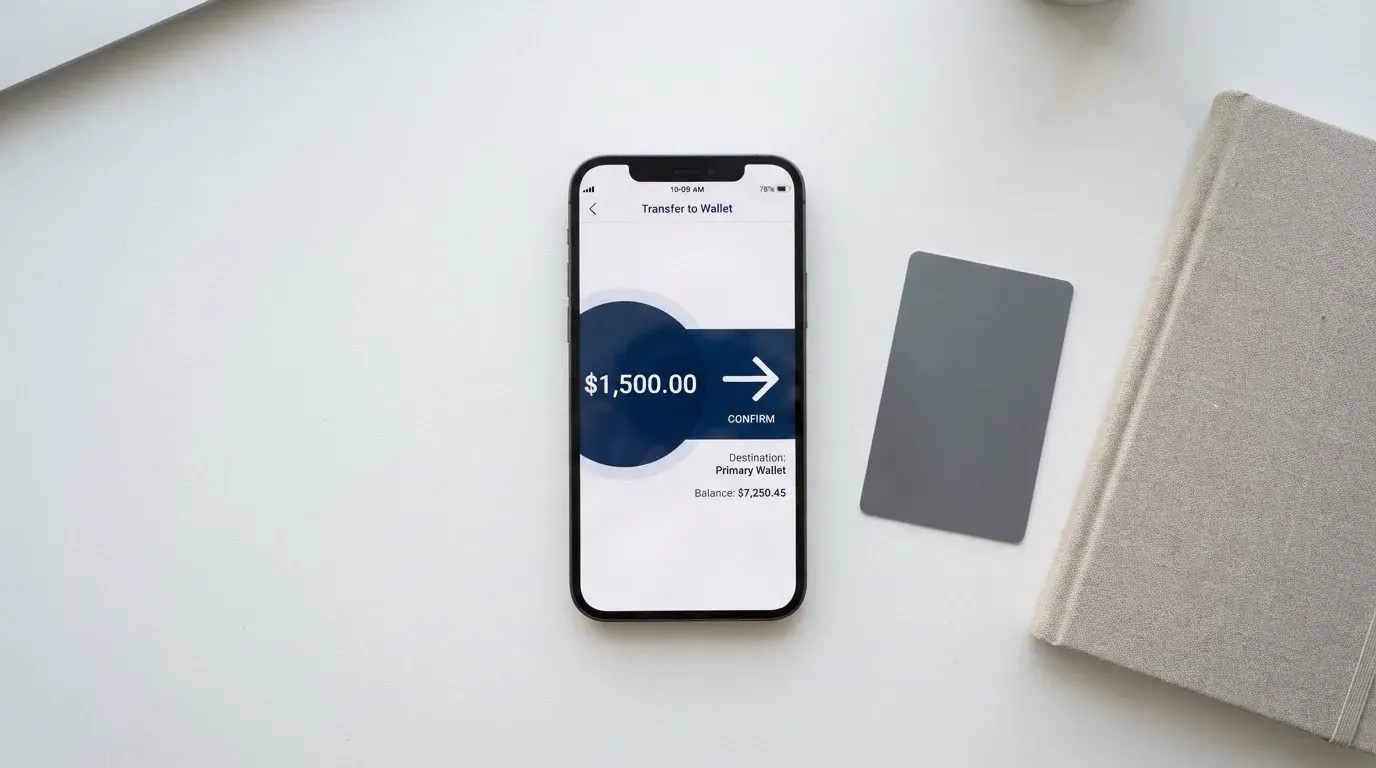
Funding usually takes one to three business days after the payment is confirmed on-chain. That is slower than a same-day ACH pull from a bank, and the gap is worth budgeting for: a top-up made on a Friday may not be spendable until the following week.
The irreversible-transfer risk is the part most users underestimate. Crypto transfers are final once confirmed, and a deposit sent on a network PayWide does not support, or to an address of another network, can be lost or need manual support recovery with no guarantee of return. The third-party description is also explicit that the funded balance cannot be recovered with the wallet’s private key after conversion. Once the tokens leave the wallet and become USD on the card, they sit inside PayWide’s infrastructure rather than your self-custody wallet.
A practical checklist before you top up:
- Confirm the network PayWide expects for the token you are sending. Sending USDT on Tron when the card expects USDC on Ethereum is the most common failure mode.
- Hold a small balance of the network’s native gas token. On Ethereum that means ETH; on BNB Smart Chain it means BNB. A wallet with USDT but no ETH cannot send.
- Send a small test transaction first. A $5 test that arrives is worth more than a large-value lesson.
- Keep the transaction hash. If anything goes wrong, support will ask for it, and a blockchain record is the only receipt you have.
Paying with it every day
The card is virtual and prepaid, denominated in USD. The reported mobile-wallet support is narrow: Apple Pay and Google Pay work on the Mastercard BINs 5258 and 5395 only, and not on the Visa. If mobile wallet is how you intend to pay, the choice of network and BIN is not cosmetic.
There is no physical card and no ATM access, which removes two common daily uses. Cash-back is reported as a top-up cashback rather than a purchase cashback: 0.10% to 1.00% (unofficial, not confirmed by PayWide) depending on your top-up volume over the prior three months, starting at $6,000 (Level 1) and rising to $100,000 or more (Level 5). That structure rewards loading, not spending, and the headline rate is below what many purchase-cashback cards offer. A referral scheme is also reported: the referrer gets one extra card slot and $3 after the new user’s first top-up.
Online payments use 3-D Secure, with EMV 3-D Secure 2 the standard for both Visa (Visa Secure) and Mastercard (Identity Check). That means an online merchant is likely to send you a one-time code or a biometric prompt at checkout. If your mobile number or email is the only channel PayWide can reach you on, keep it current, or risk a stream of declined authorisations.
Address Verification Service is mainly offered in the US, Canada and the UK, and is generally unavailable on foreign-issued cards. A US merchant that relies on AVS may decline a card whose issuing country is not the United States, and a foreign-issued virtual card is exactly the case the merchant is watching for. The practical answer is to keep a backup card from a major scheme on hand, because no single prepaid virtual card is universally accepted.
A declined authorisation can leave a hold on funds that can stay in place for several days, often up to a week. With a prepaid card, that hold is drawn against the loaded balance rather than a bank account, so a $0.35 authorisation fee plus a held amount can briefly reduce the balance you have available to spend.
What can go wrong
The structural risks on PayWide are not the kind that show up in a fee table. They sit underneath the product.
The operator, the issuing bank, the BIN sponsor and the regulator are not named publicly, and a previous check named “PayWide (Wage3)” as a possible operator, which is unconfirmed. A card with an undisclosed issuer means there is no bank to escalate a dispute to, no regulator to complain to, and no published safeguarding jurisdiction for the converted USD balance. In the EU, an e-money institution is required to safeguard customer funds in segregated accounts or by insurance, and that protection is not the same as deposit insurance. None of that is visible here.
The custody model is also partial. The card is funded from a self-custody wallet, which keeps the crypto in your control until the moment of payment. Once the tokens are converted, the description is that PayWide and undisclosed partners control the USD balance, held in “encrypted MPC wallets” with no insurer named. Card details are shown once, and EMV 3-D Secure is advertised. The visible review footprint is thin: Trustpilot holds a 3.4 out of 5 from two reviews, neither in the last twelve months; the themes are a card that was not received in April-May 2023 and a one-to-three-day delay between blockchain confirmation and card deposit in April 2023; the third-party aggregator score is 2.3 out of 5.
Crypto transfers are irreversible, and a private key that leaks has no recovery path. Tether and Circle, the issuers of USDT and USDC, have both frozen wallets on sanctions lists, and stablecoins are not censorship-proof. The aggregator describes the funded balance as unrecoverable with the wallet’s private key after conversion, which means a PayWide failure or a sanctions event could leave you without access to the converted USD. Visa has terminated card programmes in the past (FTX in November 2022, WaveCrest in Europe in 2018), and when a programme is closed the pattern is the same: a notice period, then a stop on spending and loading, then a window to withdraw the remaining balance. That is the kind of risk that does not look like a fee but acts like one.
Finally, the entry point is a Telegram channel that requires an invite code. If PayWide changes its onboarding, suspends the channel, or quietly stops issuing codes, there is no public sign-up form to fall back on. The product is small and the surface area for surprises is narrow, but the same features that make it cheap to run also make it quick to disappear.
What to take instead
Three alternatives are worth comparing, each chosen because it covers a different reason a reader might be looking at PayWide.
CardFlow
CardFlow is positioned for Nigeria and “Nigerians and global users”, with no country list or exclusions published. The card is a virtual USD Mastercard, created quickly, and the site FAQ states that creating a virtual card is free. The monthly fee is not stated. Funding accepts Bitcoin, USDT, ETH or a Naira bank transfer, with networks not stated. The reported score is 4.9 out of 10, slightly above PayWide, and the trade-off is similar: thin public disclosure on fees and country coverage, but a card that is cheap to create.
HyperCard
HyperCard’s official pages do not state a country list, and the App Store description says acceptance in more than 176 countries, which is acceptance, not eligibility. The card is a prepaid HyperCard with balance in USD or EUR; the network is not stated on the App Store page. Funding is by depositing crypto such as USDT, BTC or ETH in the app, converted to USD or EUR on the card; networks are not stated. The reported score is 4.7 out of 10. HyperCard sits in a similar niche to PayWide: a prepaid card aimed at crypto users, with limited public detail on costs.
Card.fi
Card.fi is the most transparent of the three. The site says cards ship to more than 200 countries, with a sanctions clause in the terms. It offers Virtual Classic, Virtual Premium, physical Classic and Premium, and a metal (stainless steel) option; every physical order includes a virtual card, and the cards are issued “under licence from the relevant card schemes”, without naming Visa or Mastercard. One-time prices are Virtual Classic $49 and Virtual Premium $249, with no monthly, annual, inactivity or minimum-balance fee. Top-up fees are 1.5% plus $1.00 for Classic and 1% for Premium, and FX fees are 3.5% for Classic and 2.5% for Premium, shown before each top-up. Funding covers 32 coins across five networks (Ethereum, Base, BNB Chain, Solana, Kaanch), with a deposit address per card, conversion at the market rate on arrival, and a warning that the wrong chain can permanently lose the funds. Cashback is on card spending only: 0.8% on Classic (cap 10 USDT per month), 1% on Premium, 1.2% on Metal (cap 100 USDT per month, 5,000 USDT), or 2% on Metal (cap 250 USDT per month, 20,000 USDT), with a 10% headline at coffee shops capped at 10 USDT per month and a balance-earn rate “up to 18%” on Metal. The reported score is 6.6 out of 10. Card.fi costs more to set up and has a more visible fee schedule, but the issuer is closer to a traditional e-money model.
| Card | Reported score | One-time cost | Reported top-up fee | FX fee published | Physical card | Mobile wallet |
|---|---|---|---|---|---|---|
| PayWide | 4.6 / 10 | Free with invite | 4% Mastercard, 5% Visa | Not published | No | Mastercard BINs 5258, 5395 only |
| CardFlow | 4.9 / 10 | Free to create | Not stated | Not stated | No | Not stated |
| HyperCard | 4.7 / 10 | Not stated | Not stated | Not stated | Not stated | Not stated |
| Card.fi | 6.6 / 10 | $49 Classic, $249 Premium | 1.5% Classic, 1% Premium | 3.5% Classic, 2.5% Premium | Yes, including metal | Not stated |
The honest summary is that none of these cards is a substitute for a bank-issued debit card. PayWide is the cheapest to start and the broadest on tokens; CardFlow is similarly priced but more narrowly geographic; HyperCard sits between them with a wider acceptance claim; Card.fi is the most expensive to set up but the most transparent on fees and the only one with a published FX margin.
Who I would recommend it to
PayWide is a reasonable tool for a specific reader. If you already keep most of your assets in a self-custody wallet, you are not in a restricted country, you have an invite code, you do not need a physical card, and you are happy with a virtual Mastercard on mobile wallet or a virtual Visa for online purchases, PayWide will do the job. The token breadth is genuinely wider than most prepaid crypto cards, and the prepaid structure means you cannot overdraw.
It is not the right card for a reader who needs the protections that come with a named issuer. If you want chargeback rights backed by a regulated bank, if you need a published FX margin to budget for, if you need a physical card for in-person verification, or if you are in a restricted country, the answer is to look at a card from a more visible programme. The headline cost on PayWide is high enough that for a light user the simpler answer is to convert to USD on an exchange and use a normal prepaid card, paying a more visible but lower overall cost.
The deeper question is one of trust. PayWide is a small product with a thin public paper trail, an invite-only onboarding, and a support channel that is itself gated. That is not automatically a reason to walk away, but it is a reason to keep the balance on the card small, to treat the loaded USD as money you could lose, and to keep a primary payment card from a regulated issuer in your wallet as a fallback.
Frequently asked questions
What is PayWide card?
PayWide is a virtual prepaid Visa and Mastercard that you fund with cryptocurrency from your own Web3 wallet. The crypto is converted to USD at the Uniswap rate and loaded as a prepaid balance, and the card is then spent at any merchant that accepts Visa or Mastercard.
How does PayWide card work?
You connect a Web3 wallet, choose a virtual Visa or Mastercard, and top up by sending one of 40-plus supported tokens across Ethereum, Polygon, Arbitrum One, OP Mainnet, BNB Smart Chain or Avalanche. The tokens are converted to USD on the card, and the balance is spent through the card network at merchants worldwide.
Is PayWide a bank?
PayWide has not named a bank, an e-money institution or a regulator in its public materials. A third-party source named “PayWide (Wage3)” as a possible operator, which is unconfirmed. The card behaves like a prepaid product rather than a bank account, and the converted USD balance is not described as safeguarded under any published regime.
Is PayWide card available in my country?
A third-party country map lists 150 jurisdictions as available and 35 as restricted, with the United States, the United Kingdom, Germany, France and most of the EU in the restricted set. The aggregator notes the map does not establish residence eligibility, so the safe approach is to treat it as a starting point and verify with the Telegram channel.
How do I get a PayWide card?
The reported flow is to obtain an invitation code from PayWide’s Telegram channel, connect a Web3 wallet, choose a virtual Visa or Mastercard, enter an alias and an address, and receive the card details on screen. There is no public web form, no app to download, and one invite code is reported to map to one wallet.
Does PayWide card require KYC?
PayWide has not published its KYC requirements. A third-party observer says the public application flow does not request identity or address documents, but the same source notes that may change. The minimum age is not stated, and a regulated check could appear at withdrawal, dispute or future programme update.
How do I top up my PayWide card?
Connect the Web3 wallet you used to sign up, choose a supported token, and send it on the network PayWide expects. Conversion to USD happens at the Uniswap rate, and the funds usually appear on the card one to three business days after the on-chain confirmation.
How do I add PayWide card to Apple Wallet or Google Pay?
Mobile wallet support is reported only on the Mastercard BINs 5258 and 5395, and not on the Visa. Open the wallet app on your phone, choose to add a card, and enter the Mastercard details shown when the card was issued. If the BIN is one of the two supported, the tokenisation should go through; if it is a Visa or a different Mastercard BIN, the card will not tokenise.
Is PayWide card safe?
The crypto you hold stays in your own wallet until the moment of top-up, and 3-D Secure is in use. The published safeguards thin out after that: the legal operator, issuing bank and regulator are not named, the USD balance after conversion is described as held in “encrypted MPC wallets” with no insurer named, and a Trustpilot score of 3.4 out of 5 from two reviews and an aggregator score of 2.3 out of 5 are the only public markers. Treat the card as a small-balance tool rather than a primary payment method.
Is PayWide card worth it?
For a Web3 user in a country the card serves, with a MetaMask wallet and a habit of loading small balances, PayWide is a workable prepaid card with the widest token list in its peer group. For anyone who needs a named issuer, a published FX margin, a physical card, ATM access or stable dispute rights, a card from a more transparent programme will be a better fit, and the headline top-up fee on PayWide is high enough that the savings need to be real to justify the trade-offs.
Virtual cards on the shortlist – cryptocardshortlist
Content created by the «cryptocardshortlist» team