
OSMO card, examined: who it suits, what it costs, and what is still unclear
 Available in US
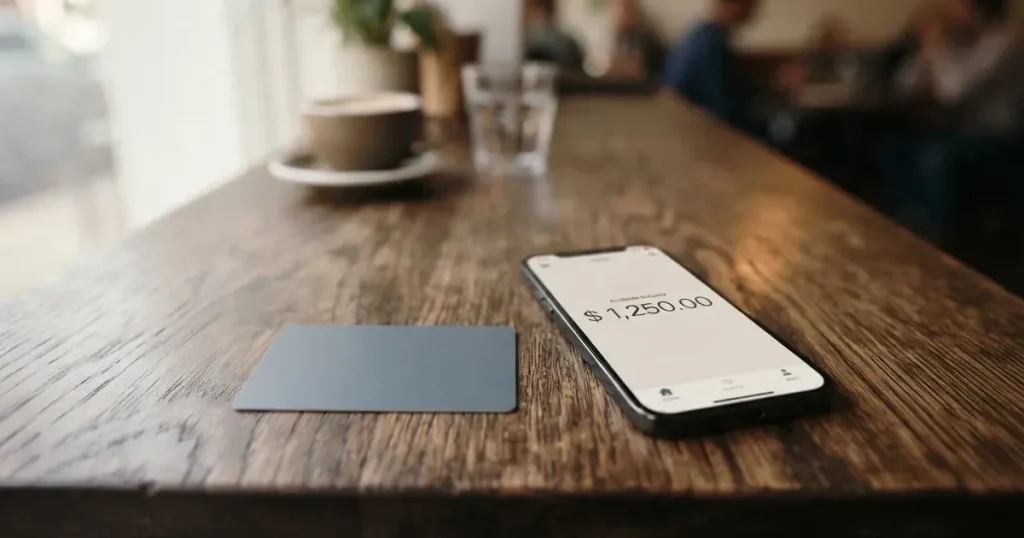
OSMO is a virtual Visa debit card that spends from a US-dollar balance held inside the OSMO app, with the option to fund that balance from Bitcoin, USDT, a card, a bank transfer or cash. The company describes itself as “no un banco” — that is, not a bank — and the card is part of a Latin America-focused product line that includes crypto custody and a separate “OSMO Private” tier. If you live in one of the supported Latin American countries and want to pay card-accepting merchants from a US-dollar or Bitcoin balance without the friction of a traditional bank account, the basic idea is straightforward. The part that requires more attention is the gap between what the card openly says about itself and what it does not.
The conditions described below are current as of October 28, 2026.
Verdict
OSMO scores 6.4 out of 10 in this review. The card is free to issue and free to hold, it pairs a US-dollar balance with a virtual Visa that can be added to Apple Pay right away, and it has an unusually strong App Store rating of 4.8 out of 5 from about 1.8 thousand ratings. Against that, the publicly available material is silent on a few things most readers want to know before signing up: the card’s foreign-exchange fee, whether Google Pay is supported, whether there is a physical card, what the daily or monthly spending limits are, and what categories of merchant are blocked. The country list is also Latin America-only, with sixteen named countries and a note from the app store that “product availability depends on where you live.”
The card suits readers who live in one of the supported countries, already hold US dollars or Bitcoin, want a low-friction virtual Visa and are comfortable making decisions on the back of partial disclosure. It does not suit readers who need a physical card to insert at a terminal, who travel and pay in many currencies, who want a clear public FX schedule, or who live outside the published country list.
Score breakdown
| Criterion | Mark | Why |
|---|---|---|
| Who can get it | 4 / 10 | Sixteen named Latin American countries; nothing else stated |
| Cost | 8 / 10 | “$0 de cuota mensual”, virtual card free; cash and bank withdrawals 1% |
| Top-up options | 7 / 10 | Bitcoin, USDT, card, bank, cash; FX fee for the card not stated |
| Reliability and complaints | 8 / 10 | Cards from Rain and SOINSA, regulated custody in El Salvador, strong App Store rating |
| Everyday use | 5 / 10 | Apple Pay works from day one; Google Pay and ATM support not stated |
| Total | 6.4 / 10 |
Who OSMO will give the card to
The starting data OSMO lists covers sixteen countries: Costa Rica, Guatemala, El Salvador, Panamá, Honduras, República Dominicana, Argentina, Colombia, Chile, Ecuador, México, Uruguay, Paraguay, Puerto Rico, Perú and Bolivia. The App Store description adds that “product availability depends on where you live,” which in practice means the in-app sign-up flow decides who gets through. Nothing in the public material extends the card to readers in Europe, the United Kingdom, the United States, Canada, Africa, Asia or Oceania.
The card is offered to residents, not to citizens of a particular passport. The conditions are stated by country of residence, so a citizen of a non-listed country living in Costa Rica would appear to be eligible, while the same citizen living in Spain would not. The reverse case — a citizen of Costa Rica living abroad — is not described, and the help-centre articles on limits suggest that limits vary by country, which is one more reason to check the in-app screens before you commit.
The audience OSMO is built for is, in the company’s own framing, Latin American residents who hold dollars and Bitcoin in one app. That is a specific fit: a Guatemalan professional paid in dollars who wants to spend dollars from a phone, a Salvadoran who treats Bitcoin as part of daily savings, an Argentinian looking for a way to keep a US-dollar position outside the local banking system. Readers outside that profile will find the country list closing the door before they get to the fees.
How to get the card
Sign-up is in the app. You start with an email address or a phone number and the company says the process takes 30 seconds. Once you have an account, you complete identity verification, listed in the app as “verificación de identidad.” The help centre has a KYC collection with six articles, and the company’s regulated arm in El Salvador, Osmo El Salvador S.A., holds Bitcoin custody under the supervision of CNAD, BCR and SSF, so the verification process is not a marketing afterthought.
What is not stated is which documents the verification asks for: passport, national ID, proof of address, a selfie, a liveness check — none of these are listed in the public material. The category facts on KYC for crypto cards note that EU rules require name, address, date of birth, nationality and identity documentation, a sanctions check and a politically-exposed-persons check, and that US rules call for name, date of birth, address and an identification number. What you can be sure of is that the company is regulated in at least one jurisdiction, and regulated businesses verify customers as part of anti-money-laundering and counter-terrorism-financing law, including ongoing transaction monitoring and suspicious-activity reporting. If verification cannot be completed, the rules require the institution to stop the transaction or relationship, which is one reason accounts end up closed or frozen pending documents.
There is no physical card to wait for, so the section on delivery does not really apply. The card is a virtual Visa International debit card, and the public material describes it as free. Visa cards in the OSMO programme are issued by Rain (a brand under Signify Holdings), and Mastercard cards are issued by SOINSA. OSMO itself is part of the HODL Group. The split matters: the brand you see in the app is the front-end, the licensed issuer is the bank or e-money institution that actually holds the card programme, and the card network (Visa or Mastercard) sets the rules. If anything ever went wrong, the regulated issuer is the party that owes you the obligations, not the crypto brand.
What this means for you in practice: download the app, create the account, complete the verification, generate the virtual card, add it to Apple Pay. You do not wait for anything in the post.
What it really costs
The headline number is simple: the card costs nothing to issue and nothing a month. The site’s tariff page states “$0 de cuota mensual” and the virtual card is free. Beyond that, every charge you will meet is a percentage on a specific action, and the schedule lives on a page called Tarifas. The card’s own foreign-exchange fee is not stated, which is the single most important gap in the public material and the reason this section spends time on what is missing, not just on what is published.
Costs
| Fee or limit | Value |
|---|---|
| Virtual card issuance | Free |
| Monthly fee | $0 |
| Card conversion / FX fee | Not stated |
| Cash withdrawal (affiliated agencies) | 1% |
| Bank withdrawal | 1% |
| Receiving USD | No cost |
| Bitcoin send | 3% |
| Card top-up fee | Not stated |
| Daily and monthly spending limits | Not stated (user can set own limits; vary by country) |
| KYC tiers | Not stated |
The cash and bank withdrawal fees are clear and low. Receiving a US-dollar payment in is free. The card’s FX fee — the charge that applies when you pay in a currency you do not hold — is the one that ought to be on the label of every crypto card, and OSMO does not publish it. That is a problem, because the cost you actually pay on a foreign-currency purchase is the spread on the conversion plus the issuer’s percentage. Without the percentage, you cannot tell from the public material what a coffee in Mexico City on a US-dollar balance will cost you in fees.
The first everyday case worth walking through is paying in a shop in your local currency from a US-dollar balance. The card converts US dollars to the local currency at the moment of payment; the FX fee the card charges on top of that conversion is the one not stated. The second case is withdrawing cash. OSMO does not describe a traditional ATM relationship in its public material; instead, it offers cash at “agencias afiliadas” (affiliated agents) at 1%, with the cash delivered immediately, and bank withdrawals at 1% over one to two business days, with SINPE as one of the rails. The third case is sending Bitcoin out of the OSMO app to a wallet you control: that is charged at 3%, and it is the only on-chain percentage clearly published.
The category context matters here. On-chain network fees — the gas on Ethereum, the bandwidth on Tron, the fees on the Lightning Network — are charged by the blockchain, not by the card provider. If you top the card up with USDT on Polygon, you will pay a small amount of MATIC to move your USDT; that is outside OSMO’s fee schedule. Stablecoin transfers are also typically irreversible, so a deposit sent on a network the card does not support, or to an address belonging to another network, can be lost or sit in support limbo.
The bottom line on cost: the published fees are low, and the absence of a published FX fee is the gap to watch.
How to top it up
Top-up is the part of OSMO that the public material does describe most clearly. You fund the card by moving value into the app’s US-dollar balance, and the source can be Bitcoin, USDT, a card top-up, a bank transfer or a cash top-up. Receiving US dollars is free, the minimum Bitcoin purchase inside the app is $1, and the card top-up fee is not stated.
The crypto top-up options are the ones to look at carefully. Bitcoin can be sent on the Bitcoin network or the Lightning Network. USDT can be sent on Polygon. Those are the only three on-chain combinations the public material names. The category context is that Tether’s USDT and Circle’s USDC are the two largest dollar-pegged stablecoins by market capitalisation, and that USDT has been issued on Ethereum, Tron, Solana, Polygon, Avalanche and other networks. If you keep your USDT on Tron, the network that uses bandwidth and energy as internal resource pricing and often burns TRX as fees, you will not be able to send it to an OSMO USDT deposit address; you would need to bridge it to Polygon first, paying network fees in the process. The same applies if you keep USDT on Ethereum: the ERC-20 token standard pays gas only in ETH, so a wallet with USDT but no ETH cannot send. Circle’s own documentation lists USDC as natively supported on 38 networks, including Polygon PoS, but OSMO’s published options are Bitcoin, Lightning and Polygon for USDT only.
What this means for you in practice: before you top up, decide which network your Bitcoin or USDT is currently on, and only send on a network OSMO says it supports. Blockchain transfers are typically irreversible, so a deposit sent on the wrong network is a support ticket rather than a quick reversal, and stablecoins are not censorship-proof in the sense that issuers have frozen funds tied to illicit activity. The company itself is not anonymous: it describes fiat as backed 1:1 by bank accounts and Bitcoin as backed 1:1 (80% in cold storage, 20% hot), with USD accounts at Bridge Ventures LLC, card issuance by Rain and SOINSA, and Bitcoin custody at Osmo El Salvador S.A. under CNAD, BCR and SSF supervision. That is a meaningful set of regulated counterparties, but it does not change the on-chain reality that a misrouted transfer cannot be reversed by the network.
The category context also helps frame what “self-custody” would mean here. With a self-custody-linked card, the funds stay in the user’s own wallet until the moment of payment; the user holds the seed phrase and bears the responsibility for key loss, phishing and clipboard-hijacking malware that swaps copied addresses. OSMO’s model is custodial: you hold a balance with the company, and the company holds the keys. The advantage is convenience; the cost is counterparty risk, and history is not reassuring on that front — Mt. Gox, Coincheck and the Ronin Network are the canonical examples of large custodial failures.
Paying with it every day
The virtual Visa can be added to Apple Pay right away, which is the day-one experience. Whether Google Pay is supported is not stated. Whether a physical card exists is not stated. Whether the card works at automated teller machines is not stated; the public path to cash is via affiliated agencies and bank transfers, both at 1%.
The card spends from the US-dollar balance. If the user does not hold the local currency, the system auto-converts at the moment of payment. This is the “pre-loaded balance” model that many crypto cards use, where the user first converts or tops up a fiat (or stablecoin-denominated) balance, and the card spends only that balance, so the card cannot overdraw. The trade-off is FX risk between the top-up moment and the payment moment, plus whatever FX fee the card charges on top.
A few category points are worth keeping in mind for everyday use. Merchants classify businesses with a four-digit merchant category code, and the same ISO 18245 standard applies whether a card is a debit card, a credit card or a crypto card. The list of blocked categories on OSMO is not stated, and that includes the well-known MCC 7995 (gambling) that some issuers block by policy. 3-D Secure adds an identity check to online card payments; the issuer assesses risk and either approves frictionlessly or challenges with a one-time code or biometric, and Visa’s brand for it is Visa Secure while Mastercard’s is Identity Check. The Address Verification Service compares numeric parts of the billing address with issuer records, is mainly offered in the United States, Canada and the United Kingdom, and is generally unavailable for foreign-issued cards, which can cause declines. Some merchants also decline prepaid or foreign bank identification numbers, because the BIN lookup reveals the card type and the issuer country. A virtual Visa issued in a Latin American country to a customer in another country can look foreign to a merchant, and that is something to plan for when you travel or shop online with merchants who do strict BIN matching.
In the app itself, you can freeze and unfreeze the card and refresh the digital details, the app uses encryption, and spending limits are user-configurable. The category context here is that instant card freeze, user-set limits, 3-D Secure and tokenised mobile wallets are the standard safeguards a sensible crypto card should have. OSMO’s App Store rating is 4.8 out of 5 from about 1.8 thousand ratings; Google Play has the app listed but the rating was not read for this review. That is a strong app rating, but it is a rating of the app, not a rating of the card programme, and the two can diverge.
What this means for you: the everyday experience is a phone wallet, with a virtual card inside it, and a US-dollar balance behind it. Most friction will not come from the card; it will come from the merchant side, where BIN and 3-D Secure behaviour can make a foreign-issued virtual Visa behave differently from a domestic debit card.
What can go wrong
The public material does not record an official incident involving OSMO. The relevant third-party signal is small: Trustpilot shows 3.2 out of 5 from a single review, and that single 1-star review, dated 14–17 July 2026, describes a USDC deposit sent via Polygon that was not credited and three days of “investigating” replies from support. The category context is that the same review pattern shows up at far larger platforms: a user reports an uncredited deposit, support takes days to escalate, and the resolution (or absence of one) drives the rating. With only one review the Trustpilot score is essentially uninformative, but the underlying complaint — Polygon deposit not credited — sits inside a real risk that affects many crypto cards, namely, that a misrouted stablecoin transfer can take manual recovery with no guarantee.
The other risks to weigh are structural rather than incident-driven. The first is counterparty risk: OSMO is not a bank, the company says so itself, and the published structure is a multi-entity arrangement with USD accounts at Bridge Ventures LLC, card issuance by Rain and SOINSA, and Bitcoin custody at Osmo El Salvador S.A. under the supervision of CNAD, BCR and SSF. That is a regulated stack, but it is still a stack, and each link has its own obligations and its own failure modes. The second is the difference between fiat-backed and Bitcoin-backed funds: fiat is held in bank accounts (and the company says 1:1), Bitcoin is held 80% in cold storage and 20% hot, and “hot” means the keys are on internet-connected systems, which is the part of the balance that bears the brunt of an attack. The third is the legal framework: a card is a payment service, regulated separately under e-money and payment-services law, and the crypto side falls under the relevant crypto regime (MiCA in the EU from 30 June 2024 and 30 December 2024, depending on the token category, with a transitional period until 1 July 2026 or until a MiCA authorisation is granted or refused). For a card that operates across sixteen Latin American countries, the question is which of those regimes applies, and the public material does not walk the reader through that.
Two more risks are worth naming. The first is that card programmes can be closed by the network: Visa terminated its global agreements with FTX on 13 November 2022 and the FTX US debit card was wound down by its issuer; WaveCrest, a Visa card issuer that supplied crypto card brands, was suspended by Visa in Europe in 2018 and all WaveCrest-issued programmes were closed. Visa and Mastercard themselves do not issue crypto cards to consumers; they license issuers, and they can suspend a programme. The second is the everyday-decline risk: a declined authorisation can leave a hold on funds that can remain for several days (typically up to seven), and the dispute process (a chargeback ordered by the issuer) is not something the public material describes for OSMO, so what the reader is actually buying into on a contested transaction is unclear. Support is reachable through a contact page (listed as /contacto) and through a Spanish-language help centre; support hours are not stated.
What this means for you: keep only what you can afford to be temporarily inconvenienced with, treat a deposit as confirmed only when the app shows the balance, plan for the foreign-Visa-issued-card friction at some merchants, and read the in-app fee schedule before you make a large payment.
What to take instead
The cards below are alternatives, not direct substitutes. The first is the broadest by geography, the second is a multicurrency option, the third is the strongest scoring of the three.
International Visa Card
A U.S.-issued Platinum Visa card, virtual, paying in USD. The plan structure is transparent: virtual card issuance is $5 one-time, the Classic plan is free, Pro is $9.00 per month, Max is $19.00 per month. Card use in USD is free on every plan; foreign currency carries “Visa exchange rate + 2% FX fee.” Deposits of any kind are free, including USDC and USDT into the USD account at 1:1. The card is not available to residents or legal registrants of a long list of countries that includes Belarus, mainland China, North Korea, Cuba, India, Iraq, Iran, Israel, Myanmar, Nepal, Nicaragua, Russia, Syria, Turkey, Ukraine, Venezuela and Vietnam, with FATF grey-list countries reviewed case by case. Purchases are blocked in North Korea, Cuba, Iran, Russia, Syria, Ukraine and Venezuela. The rule is by residence or registration, not by citizenship. A physical card is described as “coming soon.” This card suits readers who want a clear published FX fee and a clear plan structure, and who can live within the residency rules.
UNi Card
A multicurrency card on the Mastercard network, spending from the UNi.Global account balance, with “no annual fee” and “no foreign transaction fee.” Assets are converted at “live OTC (Over-the-Counter) rates” and the marketing claims “no hidden exchange fees.” A “Spend-to-Earn rewards” programme offers up to 3%. What the public material does not state is the issuance fee, the country eligibility list, the funding options, and the detailed fee schedule. This card suits readers who value the multicurrency structure and the no-FX-fee promise, and who are willing to read the issuer’s terms to confirm the rest.
Morse
A fully virtual Visa prepaid debit card for now, spending from a Morse Balance “in any currency.” Conversions on Morse use the real exchange rate with no markup, “paying with the Morse Card, online and contactless, is free,” and the card pages say “zero foreign exchange fees or markups.” The Morse Wallet is self-custodial, which is the architectural difference from OSMO. Eligibility is by residence, not by citizenship: at least 18, resident in a supported country, with the P2P app available in “over 140 countries” and local add/withdraw in over 70. The card is “available only in certain countries” with no published list. Closed-beta countries needing an invite code include American Samoa, Australia, Cape Verde, Guernsey, Hong Kong SAR China, Isle of Man, Japan, Jersey, New Zealand, Serbia, Singapore, Switzerland, Thailand, Türkiye, the United Kingdom and Western Sahara. The card cannot serve customers subject to sanctions issued by the United States, the United Kingdom, the EU or the UN. Stablecoin deposits of USDC, USDG and EURC on Solana are free, other tokens and blockchains carry a fee. This card scores 7.5 out of 10 in this review, the highest of the alternatives here, and it suits readers who want zero FX markup and are comfortable with a self-custody wallet and a published sanctions policy.
Side-by-side
| OSMO | International Visa Card | UNi Card | Morse | |
|---|---|---|---|---|
| Score | 6.4 / 10 | 6.7 / 10 | 6.1 / 10 | 7.5 / 10 |
| Country list | 16 named, Latin America | Long exclusion list; not OSMO-style regional | Not stated | 140+ app, 70+ local, card “in certain countries” |
| Card type | Virtual Visa | Virtual Visa (physical “coming soon”) | Mastercard | Fully virtual Visa |
| Issuance | Free | $5 one-time | Not stated | Not stated |
| Monthly | $0 | $0 / $9 / $19 | “No annual fee” | Not stated |
| Card FX fee | Not stated | “Visa rate + 2%” | “No foreign transaction fee” | Zero FX markup |
| Funding | BTC, USDT, card, bank, cash | USDC, USDT, USD, EUR, SEPA, SWIFT, FedNow | Not stated | Stablecoins, debit card, bank; self-custody |
| Custody | Custodial | Custodial | Custodial | Self-custody |
Who I would recommend it to
OSMO is a reasonable fit for a narrow reader. If you live in one of the sixteen named countries, hold US dollars and Bitcoin in one app, and want a free virtual Visa on Apple Pay that spends from a US-dollar balance, OSMO does the basics at a low published cost. The company is not a bank, the regulated counterparties are listed, and the App Store rating is strong. None of that changes the fact that the card’s foreign-exchange fee is not published, Google Pay support is not confirmed, a physical card is not described, daily and monthly limits are not disclosed, and blocked merchant categories are not listed.
I would recommend OSMO to a reader who is already inside that country list, has a clear use case in their local currency from a US-dollar balance, and treats the card as one of several tools rather than a primary account. I would not recommend it to a reader who needs a physical card, who travels frequently and pays in multiple currencies, who requires a published FX schedule, who needs Google Pay, or who lives outside the published country list. For those readers, the alternatives above — particularly Morse for zero FX markup and self-custody, or the International Visa Card for a published 2% FX fee and a clear plan structure — are a better starting point.
The honest summary is that the card’s published cost story is appealing, but the publication is incomplete, and the reader has to make the decision with both eyes open on what is missing.
Frequently asked questions
What is the OSMO card?
OSMO is a virtual Visa International debit card that spends from a US-dollar balance inside the OSMO app. The app also holds a Bitcoin balance, and the card can be funded from Bitcoin, USDT, a card, a bank transfer or cash.
How does the OSMO card work?
You create an account, complete identity verification, generate a free virtual card and add it to Apple Pay. The card converts your US-dollar balance to the local currency at the moment of payment; the card’s own FX fee is not publicly stated.
Is OSMO a bank?
No. The company states “no un banco” — that is, not a bank. USD accounts sit with Bridge Ventures LLC, Visa cards are issued by Rain (Signify Holdings), Mastercard cards by SOINSA, and Bitcoin custody is at Osmo El Salvador S.A. under the supervision of CNAD, BCR and SSF.
Who owns OSMO?
OSMO is part of the HODL Group. The licensed entities in the structure include Bridge Ventures LLC, Rain, SOINSA and Osmo El Salvador S.A.
Is the OSMO card available in my country?
The published list covers sixteen Latin American countries: Costa Rica, Guatemala, El Salvador, Panamá, Honduras, República Dominicana, Argentina, Colombia, Chile, Ecuador, México, Uruguay, Paraguay, Puerto Rico, Perú and Bolivia. The App Store description adds that “product availability depends on where you live,” and the in-app sign-up flow is the final word.
Does the OSMO card require KYC?
Yes. Identity verification is performed in the app, and the help centre has a KYC collection. The specific documents requested are not listed in the public material.
How do I top up the OSMO card?
You can fund the US-dollar balance with Bitcoin (on the Bitcoin or Lightning networks), USDT (on Polygon), a card top-up, a bank transfer or a cash top-up. Receiving US dollars is free, the minimum Bitcoin purchase inside the app is $1, and the card top-up fee is not stated.
How do I add the OSMO card to Apple Wallet?
The virtual card can be added to Apple Pay right away from the app. Google Pay support is not stated in the public material.
Is the OSMO card safe?
The company describes fiat as backed 1:1 by bank accounts and Bitcoin as backed 1:1, with 80% in cold storage and 20% hot, and the app offers card freeze and unfreeze plus user-set spending limits. The third-party signal is thin: Trustpilot shows 3.2 out of 5 from a single review describing an uncredited USDC deposit over Polygon.
Is the OSMO card worth it?
It depends on where you live, what you want from a card, and how much weight you put on the public material. The published fees are low and the card is free, but the absence of a published FX fee, a physical card option, Google Pay support and clear spending limits means the decision is partly a judgment about the company rather than a pure numbers comparison.
App and neobank cards on the shortlist – cryptocardshortlist
Content created by the «cryptocardshortlist» team