
A crypto card built for quick USD online payments, but a low score tells the rest of the story
 Available in US
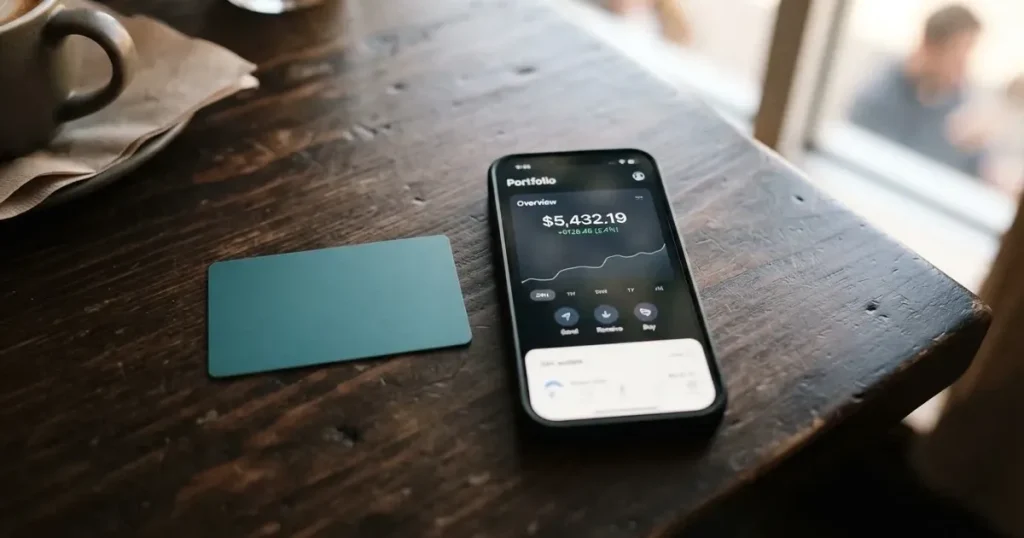
The Moon card is pitched as a simple way to spend crypto at any merchant that takes Visa. You load the card from BTC, Lightning, USDT, USDC or ETH, and the balance sits in USD on a Visa card that you can use online the moment it is created. The pitch is clean, and on the surface it is: no monthly fee, no FX fee, a first card at no cost, and a 1% transaction fee on the Moon X product. Look past the headline, though, and the picture changes. Moon does not name its issuing bank or its legal entity in the public pages I could read, the Trustpilot score is 2.5 out of 5, and the recurring complaints are the kind that hurt: frozen accounts, withheld funds, refunds gated behind ID checks. That is why the card lands at 5.6 out of 10 in my scoring, not higher. This Moon card review walks through who it suits, what it actually costs to run day to day, how the top-up works in practice, and where the alternatives I would pick instead sit.
Conditions are current as of October 28, 2026.
Verdict: 5.6 out of 10, useful for small USD online spends, not for storing money
I score the Moon card 5.6 out of 10. That is the average of how it does on five things that matter for a prepaid crypto card: who can actually get one, what it costs, how it tops up, how it behaves day to day, and how reliable the company is when something goes wrong. The detailed score sits in the table below. Two things pull the number up and one big thing pulls it down. The pull-up is access: 130-plus countries and a generous list of coins. The pull-down is reliability, which I score 2 out of 10 because the company behind the card is hard to identify on the public pages and the user reviews say the obvious things: frozen accounts, slow support, refunds tied to extra ID checks.
The card suits a narrow reader: someone who wants to make small online payments in USD straight from a crypto balance, who can absorb the risk that their funds could be held while Moon asks for more documents, and who does not need an Apple Pay or Google Pay wallet. It does not suit someone who wants a primary everyday card, a card for travel with strong ATM access, or anyone who plans to keep a meaningful balance on the card for any length of time.
| Criterion | Mark | Reason |
|---|---|---|
| Who can get it | 8 / 10 | Unofficial coverage of 130+ countries for Moon X, sanctioned regions excluded |
| Cost | 6 / 10 | First Moon X card free, 1% transaction fee, no FX fee, but several edge-case fees |
| Top-up options | 8 / 10 | BTC, Lightning, USDT on Tron, USDC on Ethereum, ETH |
| Reliability and complaints | 2 / 10 | Issuer and legal entity not named in public pages, Trustpilot 2.5/5 with frozen-account themes |
| Everyday use | 3 / 10 | Virtual card ready instantly, but no Apple/Google/Samsung Pay, ATM access not stated |
Who will they give you the card to
Moon X is officially available in over 130 countries. That figure comes from a third-party site summarising Moon’s terms, and Moon itself does not publish a public country list, so the exact roster is not transparent. What is clear is the shape of the rule: sanctioned regions are out, and Moon is allowed to refuse purchases from countries it does not support, which means a card that works for signup may still fail at the till. The phrase “Over 130 countries” is the one to remember, with the asterisk that not every product is available everywhere, and that even a country on the list could be tripped up if the merchant or the BIN is flagged.
There is no age band published beyond the standard 18-plus, no citizenship-versus-residence rule spelled out in the pages I could read, and no public document list for KYC. The signup screen asks for an email and a password, then sends a 2FA code by email. That is the floor. From there, Moon reserves the right to ask for proof of eligibility, and some blocked merchants only open up after extra verification. If your country of residence is unusual, expect to be asked for documents before a meaningful top-up or a refund.
The honest framing: this is a card for someone whose country is unproblematic, who is comfortable letting Moon decide later whether to ask for an ID, and who is not moving their life savings through it. The 130-country headline is generous, but the country detail is thin, and any reader whose situation is non-standard should expect friction.
How to get it
Signup is a small affair on paper. Email, password, and a 2FA code that lands in your inbox. There is no published list of accepted identity documents, no in-person step, and no waiting period before the card exists. The card is virtual from the moment you create it, so once your account is up, you can read the number and start spending. If you are looking for a physical card to swipe in a shop, Moon does not state on the public pages whether one is offered or how it is delivered, so the safe assumption is that the main product is the virtual Visa.
There are two products in the Moon line, and the choice matters before you sign up. Moon X is the reloadable card: you top it up, spend it down, top it up again, valid for three years from purchase. Moon 1X is a single-load card aimed at US merchants, with an unofficial minimum load of $5 and an unofficial maximum of $1,000 per card. The signup path is the same, but the card you create after that is different, and so is the cost: Moon X has a 1% transaction fee, Moon 1X has no transaction fee but a $1.49 card fee. The signup is light because the real friction arrives later, in the form of verification requests when you try to do something the system flags, like a refund or a large top-up.
Refunds, when they happen, are paid back in Bitcoin, not in the original coin you sent, and the network and partner fees are taken off the top. So if you load with USDT, do not expect a USDT refund. If you want a refund and Moon asks for an ID, expect that to take time, and expect your funds to sit while the check is open.
What it really costs — Fees, in everyday numbers
Moon’s headline is friendly: first Moon X card free, no monthly fee, no FX fee. The 1% transaction fee is on the cheap side for a crypto card. The fine print, though, is where the cost lives. Several smaller fees can sting, and they are the kind you only meet when something unusual happens: a refund you should not have made, a dispute Moon decides to take on, a card that you stop using before its balance runs out.

| Fee or limit | Amount |
|---|---|
| Moon X first card | Free |
| Moon X additional card | $2.99 |
| Moon 1X card | $1.49 |
| Moon X transaction fee | 1% with a $1.00 minimum per transaction |
| Moon 1X transaction fee | None |
| FX or foreign transaction fee | None |
| Decline / reversal / refund fee after 20 per month | $0.50 (unofficial) |
| Excess-refund fee | $40 (unofficial) |
| Overdraw fee | $25 (unofficial) |
| Chargeback dispute fee | $17.50 (unofficial) |
| Unused balance at expiry | Charged as a fee (unofficial) |
| Moon X monthly spend cap (across all cards) | $4,000 (unofficial) |
| Card creation cap | 10 per day, 30 per month (unofficial) |
| Moon Credit purchase cap | $10,000 daily, $30,000 monthly (unofficial) |
| Moon 1X load | $5 minimum, $1,000 maximum per card (unofficial) |
To make these concrete, everyday payments. First, a $20 streaming subscription on Moon X. The 1% transaction fee with a $1.00 minimum applies, so the fee is $1.00, not $0.20. Total cost to you: $21.00. Second, a $0.99 in-app purchase on Moon 1X. There is no transaction fee on Moon 1X, so the cost is $0.99. Third, a $200 cross-border payment that another card might hit with an FX fee. Moon says it does not charge any FX or foreign transaction fees, so the cost is the 1% transaction fee on Moon X, $2.00, plus the conversion that happens between your coin and the USD balance on the card.
The pattern to watch is the one-shot fees. A single chargeback dispute is unofficially $17.50. An overdraw is unofficially $25. A refund that Moon considers excessive is unofficially $40. The unused-balance-at-expiry rule is a quiet cost: any balance left on the card when it expires is treated as a fee and disappears, so leaving money on a card you stop using is literally leaving money on the table. The everyday cost is fine; the edge-case cost is high.
How to top up Moon — Top up by sending crypto to the right network
Topping up Moon starts with a transfer. You buy Moon Credit inside the app using BTC, Lightning, USDT on Tron, USDC on Ethereum or ETH, and the credit is what the card actually spends. The card is loaded in USD, so once the credit is on the account, the conversion step is over and the balance is held in dollars until you spend. That is a useful design if you think in dollars and want to insulate the card from intra-day coin moves, and a less useful design if you wanted to stay exposed to the coin you sent.
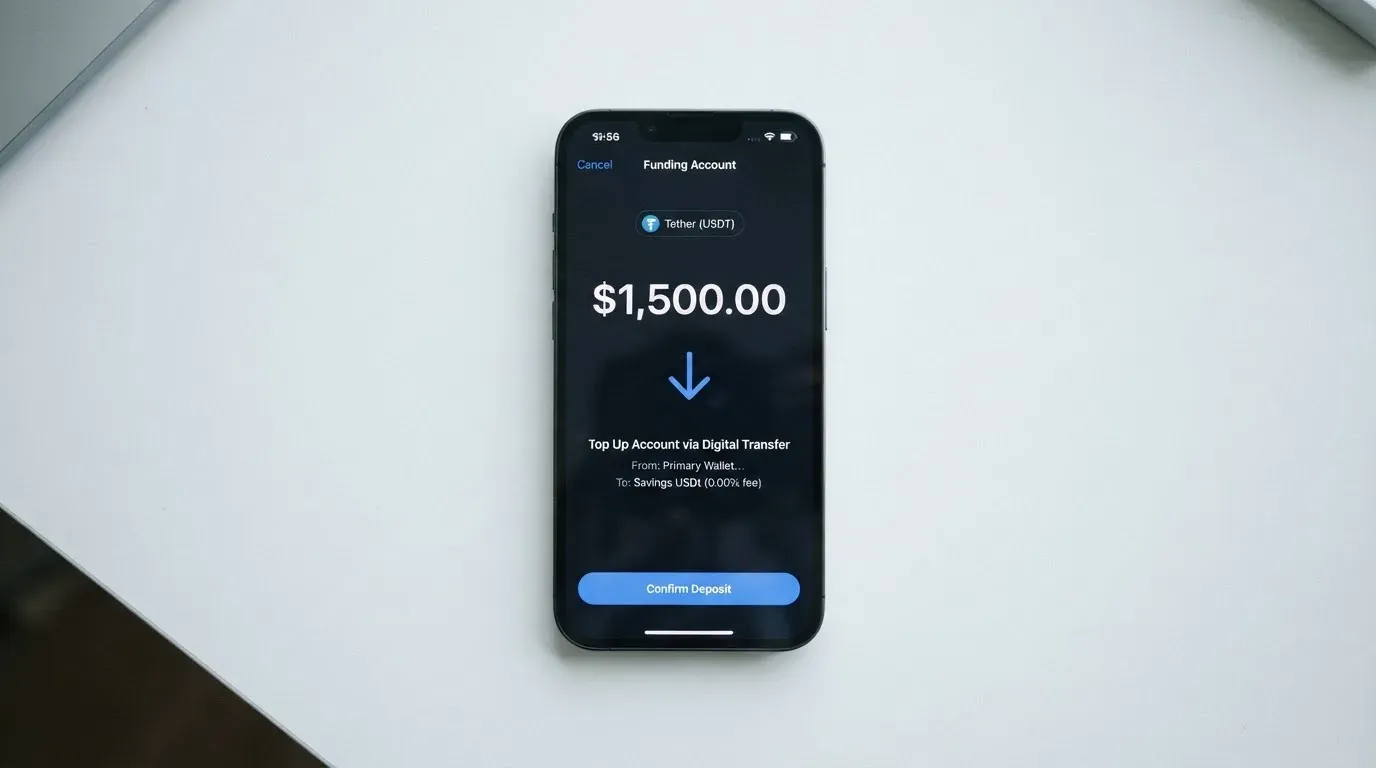
The five coins cover most of what a typical crypto card user holds, and the mix is balanced: one major coin (BTC), one fast and cheap network (Lightning), one stablecoin on a cheap network (USDT TRC-20), one stablecoin on the most-used smart-contract network (USDC ERC-20), and ETH itself. A few practical warnings. The network choice matters: send USDT to the wrong network and the deposit can be lost or need manual support recovery with no guarantee of return. USDC on Tron is not a native Circle-supported route, so if you are a USDC user, stick to ERC-20. The deposit fee and which side pays the network fee are not stated on the public pages, so assume the standard rule: the blockchain charges for the deposit, not Moon.
Fiat top-up is not stated. Withdrawal to a bank account is not stated either. What is stated is that refunds, including refunds of remaining balance, are paid back in Bitcoin, minus network and partner fees. If you ever want to take money off the card back to a bank, the route is unclear, and the safest assumption today is that the route is “spend it on the card, then receive a refund in BTC if Moon agrees”.
The practical upshot: top up only in coins you actually hold, on the network Moon specifies, and treat the card as one-way, not as a balance you park.
Paying with it every day
The Moon card is built for online checkout. The virtual card is ready the moment you create it, so you can paste the number into a checkout page and the transaction goes through the Visa rails. The cards load in USD, the merchant sees USD, and Moon does not charge an FX fee, so a US-dollar merchant is the natural home. There is no published detail on ATM access, and the public pages do not describe ATM fees or limits, so I would not plan a cash trip around a Moon card.
Mobile wallets are the gap. Apple Pay, Google Pay and Samsung Pay are not currently supported, with the language “on the way” being the only commitment. That is a real limitation in 2026, when most people expect to tap their phone at a café. Without a mobile wallet, the card works in two modes: a virtual card you type into a web checkout, or, if a physical card exists, a physical card you swipe or insert. A blocked-merchant list is acknowledged in Moon’s terms but is not enumerated publicly, so the safest framing is that some merchants will not take the card, and you will only know which ones by trying.
There is no published rewards or cashback scheme. There is no app rating or detailed app description in the materials I have. There is also no published list of which merchant category codes are blocked, although MCC 7995 (gambling) is a near-universal block on prepaid cards, and most issuers restrict the categories they consider high-risk. The everyday-use picture is honest rather than rosy: it works for the case it was built for, online USD spends, and it does not try to be more than that.
What can go wrong
The everyday-use section is the front of the card. The risk section is the back, and the back is the reason the score is 5.6 rather than 7. The risks come in three families: the company, the funds, and the operational record.
On the company, Moon LLC is the named entity behind the brand, and the copyright line on the public pages reads “(c) 2025 Moon LLC”. Beyond that, the legal entity, the registration, the issuing bank, and the licences are not published on the pages I could read. Cards are issued by partner financial institutions under a Visa licence, which is the industry-standard arrangement, but the lack of a named issuer on a public-facing site is a transparency gap. The phrase “Moon is not a custodial service” appears in the public material, which is technically a non-custodial claim, but the practical effect is that Moon does not promise to safeguard your balance the way an e-money institution would. In a category where users routinely lose access to funds when an issuer or partner bank pulls support, naming the issuer is not a luxury.
On the funds, the recurring user-reported pattern on Trustpilot is the same one: accounts get frozen or restricted, funds are withheld, refunds are delayed or tied to fresh ID verification, and support tickets sit without an answer. The reviews span November 2025 to September 2026, with the heaviest concentration in the early months of 2026. Trustpilot shows 276 reviews, 2.5 out of 5, with 47% five-star and 44% one-star, so the split is closer to a coin-flip than to a clean thumbs-up. Specific incidents users describe include a multi-day outage in early December 2025 (3 to 6 December) and another in January 2026, with cards cancelled during the downtime. None of this is an official notice, but the volume and the consistency of the themes matter.
On the operational record, the smaller costs are worth weighing too. A chargeback dispute that Moon takes on costs you unofficially $17.50, and the company decides whether to proceed. A refund Moon considers excessive costs you unofficially $40. An overdraw is unofficially $25. Unused balance at expiry becomes a fee. None of these are everyday costs, but they are the costs you meet when something is already going wrong, which is the worst time to discover a fee. The category-level risk is also worth noting: a Visa programme can be wound down (FTX in 2022, WaveCrest in 2018), and the result for users is a stop on new loads, then a stop on spending, then a request to withdraw a balance that may be denominated in BTC after a delay.
The plain-English version: this is a card to spend from, not a card to hold money on. If the worst thing that happens is you lose the $20 you loaded last week, the cost is bearable. If the worst thing that happens is you had a meaningful balance on the card when an outage or a verification request hit, the cost is real.
What to take instead
Three alternatives from the shortlist that cover different reader needs, each with its own score and a short note on the trade-off.
| Card | Score | Best for | Trade-off |
|---|---|---|---|
| CardFlow | 4.9 / 10 | A virtual USD Mastercard, funded by BTC, USDT, ETH or Naira bank transfer | Country list not stated; aimed at Nigeria, with “Nigerians and global users” in the marketing |
| HyperCard | 4.7 / 10 | A prepaid card in USD or EUR, with crypto funding inside the app, and acceptance framed as 176+ countries | Eligibility not stated separately from acceptance; fees not stated on the pages I could read |
| Card.fi | 6.6 / 10 | A clear fee ladder with cashback, ships to 200+ countries, and ships physical and metal cards as well as virtual | Top-up fees 1.5% + $1.00 on Classic, 1% on Premium, with FX fees of 3.5% and 2.5% respectively |
A short read on each. CardFlow’s pitch is a free virtual card, with funding in BTC, USDT, ETH or Naira bank transfer; the country scope is light in the public pages, and the product is positioned as “Nigeria’s smartest fintech card platform” with a “global users” add-on, so treat it as best suited to a Nigerian reader or to readers for whom that positioning is not a barrier. HyperCard is closer to Moon in shape: a prepaid card in USD or EUR, crypto funding inside the app, and a global footprint framed as 176+ countries (acceptance, not eligibility). It does better than Moon on acceptance scope but worse on what is published about fees, so the picture is incomplete. Card.fi is the strongest of the three by score, with a transparent fee ladder (Classic 1.5% + $1.00 top-up, 1% on Premium, FX fees of 3.5% and 2.5%), cashback on spending, and a path to a metal card. The trade-off is that the headline fees on Classic are higher than Moon’s, and you pay an FX fee that Moon does not charge.
If you read the three together, the pattern is clear. CardFlow is the speed pick. HyperCard is the closest in shape to Moon, with a broader acceptance story but a thinner published fee picture. Card.fi is the structured pick: more expensive on the top-up line, more rewarding on the spend line, and clearer about who runs it.
Who I would recommend it to
I would recommend the Moon card to a narrow reader. You are comfortable holding crypto in your own wallet, you have a use case that maps cleanly to small USD online payments, and you can size the top-up to a spend you intend to make in the next few days rather than a balance you intend to keep. You are also comfortable with the possibility that Moon may ask for an ID check at an awkward time, and that a refund, if it ever comes, arrives in BTC and not in the coin you sent. If any of that is a problem, the Card.fi option in the alternatives table is the next place to look, and HyperCard is worth a read for the global-acceptance framing. The 5.6 is a fair score for the product as it is in October 2026, and it would move up sharply if Moon published its issuer and its country list, and moved down if the Trustpilot themes continue without a published response.
Frequently asked questions
What is the Moon card?
The Moon card is a Visa-branded prepaid card that spends from a USD balance, which you fund with crypto. There are two products in the line: Moon X, a reloadable card, and Moon 1X, a single-load card aimed at US merchants.
How does the Moon card work?
You sign up with email and a 2FA code, create a virtual card, and top it up with BTC, Lightning, USDT on Tron, USDC on Ethereum or ETH. The crypto is converted into a USD balance on the card, and you spend that balance at any merchant that takes Visa.
Is Moon a bank?
Moon does not present itself as a bank on the public pages. Cards are issued by partner financial institutions under a Visa licence, and Moon describes itself as not a custodial service, so the card sits in a prepaid-and-programme-manager space rather than in a full banking space.
Who owns Moon?
The brand is operated by Moon LLC, sometimes styled “Pay with Moon”. The legal entity, registration, and the named issuing bank are not published on the public pages I could read.
Is the Moon card available in my country?
Unofficial coverage of “over 130 countries” is reported for Moon X, with sanctioned regions excluded and a note that not all products are available in all countries. Moon does not publish a country list, so the honest answer is “probably, but you will only know by signing up and trying”.
How do I get a Moon card?
Sign up on the Moon site or app with an email and password, confirm the 2FA code, and create a virtual card. The first Moon X card is free, additional Moon X cards are $2.99, and Moon 1X cards are $1.49.
Does the Moon card require KYC?
The signup itself is an email and a 2FA code, with no public document list. Moon reserves the right to ask for proof of eligibility later, and reviewers report refunds being held pending ID verification, so the practical answer is “no upfront, but possibly on demand”.
How do I top up the Moon card?
Inside the app, buy Moon Credit using BTC, Lightning, USDT on Tron, USDC on Ethereum or ETH. The card is loaded in USD, and the conversion happens at the top-up step rather than at the till.
Can I add the Moon card to Apple Wallet?
Not currently. Apple Pay, Google Pay and Samsung Pay are listed as “on the way”, with no published date for support in any of the three.
Is the Moon card worth it?
It is worth it for small USD online spends funded from crypto, where the no-FX-fee rule and the 1% transaction fee are honest. It is not worth it as a primary card, as a travel card, or as a place to park a balance you cannot afford to have on hold while a verification check runs.
Virtual cards on the shortlist – cryptocardshortlist
Content created by the «cryptocardshortlist» team