
The card that spends USDC, and what it costs you to do it
 Available in US
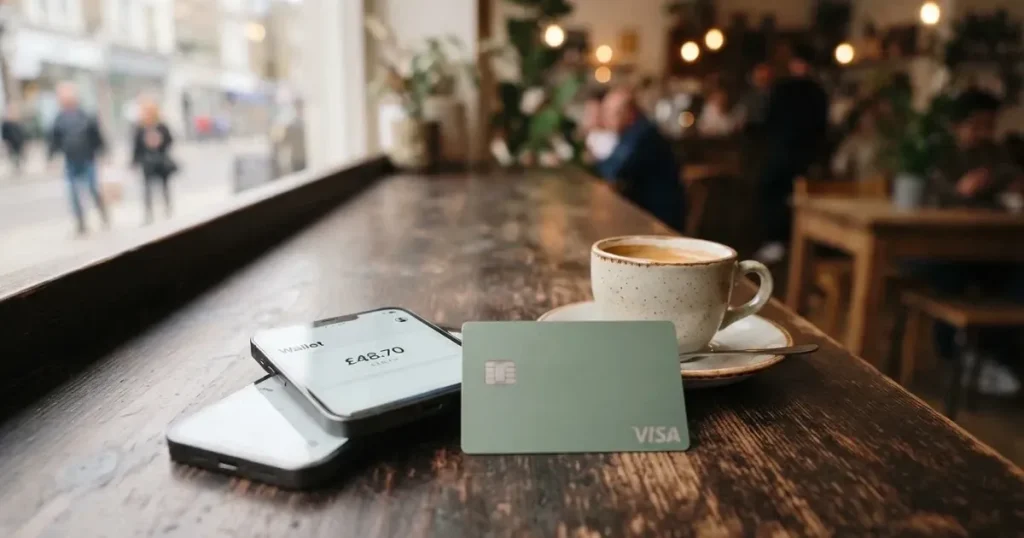
The Laso Finance card is not a bank account in the ordinary sense. It is a virtual, prepaid payment card that draws on a stored balance, and the balance you spend is funded with USDC — a dollar-pegged stablecoin — rather than with money sitting in a current account. That single design choice explains most of what follows: why the fee on the international version is a percentage rather than a flat monthly charge, why the card only exists as a virtual card with nothing posted to you, and why the customer service story is close to the product story.
I went through the company’s own documentation and API references, then read the user reports and third-party write-ups that go along with them. What follows is what I found, arranged in the order you would actually hit it: whether you can get one, how, what it costs to load and spend, how it behaves in daily life, and what has gone wrong for other people.
The conditions described here are current as of October 28, 2026.
Verdict: 5.6 out of 10
This card does a narrow thing and does it inexpensively at the entry point, and it does nothing else. On my scoring it lands at 5.6 out of 10 — a middle-of-the-road result that reflects a product with real strengths on access and funding but real weaknesses on cost, everyday usability and reliability.
Let me show the working, criterion by criterion, because a single number tells you nothing about whether the card is right for you.
| Criterion | Score | Why |
|---|---|---|
| Who can get it | 8 / 10 | The official API names no restricted countries for the international card; third parties put availability at 170 countries with 26 restricted |
| Cost | 3 / 10 | The US card charges 0%, the international card 3.8% on top of the amount; no monthly fee is published |
| Top-up options | 8 / 10 | USDC over the x402 rail on Base and Solana; third parties list a much wider set of coins and networks |
| Reliability and complaints | 6 / 10 | A registered money services business in Austin, Texas, with an unnamed issuing bank; Trustpilot sits at 4.1, and the bug bounty was paused indefinitely on 21 September 2026 |
| Everyday use | 3 / 10 | Virtual only, no physical card; Apple Pay is not guaranteed, reports in October 2026 say only Google Pay works, and ATM withdrawals are blocked |
That table is the verdict in miniature. Access and funding score well because the card is open in principle and takes USDC on modern networks. Cost and everyday use score badly because you pay a real percentage on the international version, you cannot hold a physical card, and the mobile-wallet experience is shaky. Reliability sits in the middle because the company is real and registered, but the issuing bank is not named, the bug bounty is paused, and user complaints cluster around Apple Pay and regional account closures.
Who does this suit? People and AI agents who already hold USDC, mostly on Base or Solana, and who want to pay for things online without exposing an ordinary bank account to those payments. If that is you, the US card at 0% is genuinely cheap and the funding rail is modern.
Who does it not suit? Anyone who needs a physical card, who wants to withdraw cash, who relies on Apple Pay, or who expects a bank-like relationship with chargeback rights and a named issuer. If you want to spend ordinary fiat from an ordinary bank account, this is the wrong shape of product. The costs section below shows exactly how the 3.8% adds up on ordinary payments, and that is where the decision usually gets made.
Who will they give you the card
There are two products, and which one you are offered changes almost everything downstream.
The USA card is for U.S. merchants. The catch is that physical goods must ship to a U.S. address, so this version is really for people transacting with American shops.
The International card is the one most people reading this will mean. It is aimed at merchants outside the United States and at checkouts priced in something other than dollars. The official API names no restricted countries for it, and the card’s own description of its country coverage is “No fixed list.”
That last phrase is doing a lot of work, and it deserves a caution. The company’s official material gives you no fixed list, but third-party reporting — not confirmed by the card itself — describes the card as available in 170 countries with 26 restricted. Those 26 named are Afghanistan, Albania, Belarus, the Central African Republic, Cuba, DR Congo, Eritrea, Ethiopia, Iran, Iraq, Lebanon, Libya, Mali, Myanmar, Nicaragua, North Korea, Russia, Somalia, South Sudan, Sudan, Syria, Tunisia, Ukraine, Venezuela, Yemen and Zimbabwe. Another phrase floating around, “100+ countries,” refers to where the international card can be *used*, which is a different question from who can hold one.
The most important thing to understand about the restriction is *how* it works. It is not a list you check at sign-up and then ignore. It is enforced by device fingerprinting — the platform looks at where your device appears to be and closes or blocks accounts it considers to be in a prohibited region. That enforcement is the subject of several of the user complaints in the risks section, and it means your eligibility can be affected by where your device is located rather than only by your passport. I am not going to tell you how to appear to be somewhere you are not; the practical point is simply to know that this card reads your location and reacts to it.
The card itself: virtual only. The USA card is a prepaid card with a single load. The International card is a prepaid card that is non-reloadable — per third-party reporting it is Visa-compatible — and the card currency is USD, which is why the international version is the one built for non-USD checkouts. No tiers, no loyalty levels; the products are separate rather than graded, and a separate Canadian card also exists.
How to get it
The application route is not a normal form. Identity verification is built around the idea that a person, not an agent, verifies themselves.
The account holder cannot be an AI agent. The principal completes identity verification personally, and payments made with Venmo or PayPal require that personal verification. What documents you need for a card purchase specifically is not stated on the public pages, so I cannot tell you what to have ready.
Third-party reporting, again not confirmed by the card, says Laso does not require the conventional identity-document upload or credit check for card purchases. Even so, wallet screening, sanctions checks, device fingerprinting and ongoing monitoring all still apply. That is the honest version of “no credit check”: it means no credit scoring of your finances, not an absence of compliance screening.
On delivery: the card is virtual, so there is no shipping and no waiting for post. The USA card issues instantly. International orders are queued and fulfilled manually, “typically within 24 hours,” and you can cancel while the order is still in the queue — which is worth knowing, because it is the one clean off-ramp if you change your mind. There are no published verification levels; the help material simply doesn’t set out tiers, so don’t expect a “tier 1 / tier 2” ladder here.
What it really costs
This is where the card earns its low cost score, and where a lot of readers should slow down and read carefully, because the numbers differ sharply between the two products.
The USA card charges 0%. The International card charges 3.8% on top of the amount on the card. The card says a promotion can lower that, possibly to 0%, but I would treat a promotion as a promotion, not a price. No monthly fee is stated.
There is one reassuring line in the fees: “Every fee, no per-authorization or per-decline charges.” That matters more than it sounds. Cards that levy a fee per declined payment punish you for a merchant’s decision; this one says it does not.
Beyond that, the picture is patchier, and much of it comes from third parties rather than the card. Here is the full fee and limit table as far as the public material supports:
| Fee or limit | USA card | International card |
|---|---|---|
| Purchase fee | 0% | 3.8% on top of the on-card amount |
| Monthly fee | not stated | not stated |
| Top-up fee | 0% | 3.8% |
| FX fee on non-USD spending | — | about 2% (unofficial) |
| ATM withdrawal | not stated | blocked (unofficial) |
| Refund of unused balance | not stated | 14%, $10 minimum; only if card never used (unofficial) |
| Per-authorization or per-decline charge | none | none |
| Load range | $5 to $1,000 | $100 to $1,000 on-card |
| Daily card spend | — | $1,000 (unofficial) |
| Spending caps | owner sets per-payment and rolling 24-hour | owner sets per-payment and rolling 24-hour |
| Currency | USD | USD, for non-USD checkouts and non-U.S. merchants |
Note the refund line in particular. An unofficial 14% fee with a $10 minimum on returning an unused balance, payable only if the card was never used, is a real cost if you buy a card, change your mind and want your money back. Combined with a non-reloadable six-month expiry, it means you should load in the amount you actually intend to spend.
Two or three ordinary payments
To make this concrete, let us walk three everyday purchases through the fees and see where the money goes. I am using the international card, since that is where the charges live, and I am not adjusting any of the figures — these are the published numbers applied to a notional spend.
A $20 software subscription in dollars. On the international card you pay 3.8% on top of the $20, which is $0.76, so $20.76 comes off the card. If your checkout converts into another currency, the unofficial ~2% FX fee applies on top of that. The USA card, had you qualified for it, would have cost $20.00.
A $60 grocery order priced in euros. Base amount $60, plus 3.8% is $2.28, so $62.28. Add the unofficial 2% currency fee and the effective cost rises further, and the billing address you enter has to match the one the card returns or the payment can simply fail. That address-matching requirement is worth internalising: it is a common cause of declines on foreign-issued cards.
Three $10 coffee purchases in a month. Each incurs the 3.8% fee plus an unofficial 2% currency fee, meaning these small payments become noticeably more expensive than the sticker price. This is the shape of the problem: percentage fees are invisible on a large one-off payment and obvious on small repeated ones.
The pattern to take away: the international card’s 3.8% is fine if you are spending real amounts on things you buy rarely, and expensive if you are using it as an everyday spending card. That is why the everyday-use score is low.
How to top it up
Funding is the card’s strongest suit, and the reason is that it is built on a modern rail rather than a legacy one.
The official route is USDC over the x402 payment rail, settling on Base and Solana. International orders are paid in USDC directly from the agent’s wallet via x402. That is the headline, and it is a genuinely clean design: stablecoin in, card balance out, no bank transfer in the middle.
The unofficial picture is broader. Third-party reporting lists USDC, USDT and DAI across Ethereum and other EVM networks, Solana, Stellar, Arbitrum, Polygon, Optimism, Base, BNB Smart Chain and PulseChain. Treat that as a description of what the platform has been reported to support, not a promise from the card.
Fees and ranges on funding: USA load 0%, International load 3.8%. The International load range is $100 to $1,000 on-card. Network fees are not stated, and fiat top-up is not stated — so I cannot tell you whether you can buy USDC with a card or bank transfer through this product, because the public material doesn’t say.
Getting money back off the card
This is the part I would read twice, because it is where the design is least forgiving.
Non-reloadable cards expire six months after issuance. Any remaining balance is “forfeited to the card issuer (not Laso Finance)” — a legal distinction that matters if you are trying to recover money, because the party holding it is the issuer, not the company whose site you bought from.
The reloadable cards that once offered withdrawal are discontinued, per third-party reporting. For those, the terms were: withdrawal of $2 to $10,000 to a Base wallet, “usually within 1-3 business days,” with no fee listed. If you are holding an older reloadable card, that is the rule that would have applied to it; if you are applying today, you are in the non-reloadable world with the six-month expiry and the forfeiture rule.
That single fact — six months, then forfeit to the issuer — is the most consequential line in this review for anyone planning to hold a balance.
Paying with it every day
If you are picturing a card in your wallet that works everywhere, this is where the picture gets thin, and the low everyday-use score comes directly from here.
The card is virtual only. There is no physical card to carry. That is a non-issue if you are paying for software, hosting, API calls or online services; it is a serious limitation if you need to hand something over in person.
Mobile wallets are the shakiest part. The help centre does have an “Apple Pay & Google Wallet” collection with four articles, which tells you the topic is documented. What it does not tell you is whether Apple Pay works for you. Unofficial sources say Apple Pay “depends on device eligibility and isn’t guaranteed,” a company reply on Trustpilot said the same in September 2026, and a reviewer writing in October 2026 said only Google Pay is currently available. In plain terms: do not plan around Apple Pay with this card. Plan around Google Pay, and treat Apple Pay as possible but unpromised.
Financial-transfer merchant categories are blocked, per third-party reporting, so the card is for goods and services, not for moving money to another person.
Rewards: none officially, and third parties report no cashback and no points. There is nothing to earn here — the card’s value proposition is access and cost, not perks.
The app situation: a Chrome extension exists; mobile platforms are not widely documented. An unofficial rating of 3.9 out of 5 from just 11 ratings on the US Apple App Store as of 8 August 2026 is a small sample and should be read as such — too few ratings to lean on, but not nothing.
On disputes: the help centre has a “Withdrawals & Refunds” collection with five articles covering merchant refunds, reversals, duplicate charges and disputes. I have not read the contents of those articles, but their existence is a point in the card’s favour — there is somewhere documented to start. The card-lifecycle documentation, separately, does not cover disputes at all, so do not assume the lifecycle rules say anything about chargebacks.
What can go wrong
This is the section I would want a friend to read before applying. Several of these are not hypothetical.
Apple Pay promised but not delivered. Across September and October 2026, user reports describe being told Apple Pay was available and then finding it was not. This is the single most repeated complaint theme, and it directly matches the company’s own “isn’t guaranteed” reply.
Accounts closed by region. In August 2026 a user reported their account being deleted as a “prohibited region,” triggered by fingerprinting rather than by anything they did in the app. This is the enforcement mechanism from the who-is-it-for section firing on a real customer.
Merchants declining the card. In January 2026 users reported cards not working at some merchants. Some of this is inherent to the category — a foreign BIN can look “foreign” to a shop and attract extra scrutiny — and some is specific to this card.
Manual balance updates. Between January and March 2026, users reported that balance updates were handled manually after the reloadable cards were discontinued. Slower, more friction, more room for error.
A programme still in motion. A competitor page claimed a Laso card stopped working in July 2026. That is unconfirmed and I am not treating it as fact, but it is a reminder that a card programme can be switched off.
The bug bounty is paused. Officially, the bug bounty is “paused indefinitely as of September 21, 2026.” For a company holding funds and running a payments rail, a paused security-bounty programme is a signal worth noting, even though it is not itself evidence of a breach.
The company underneath: Laso Finance LLC, founded in March 2023, based in Austin, Texas, registered with FinCEN as a money services business (registration no. 31000328975254). The card works through “regulated partners,” and the issuing bank is not named in the current material; earlier third-party reporting pointed to Celtic Bank via Stripe Issuing. FinCEN registration is not the same as a bank licence or deposit insurance, and the unnamed issuer is the reason I would not treat this as a bank.
Trustpilot sits at 4.1 out of 5, with 22 reviews in the last 12 months (I read the page on 21 October 2026; 73% five-star, 14% one-star). A 4.1 is respectable but not glowing, and the complaint themes behind it are the ones above. Support is reachable at help.laso.finance, [email protected] and [email protected], and reviewers do praise the Telegram support — a small but real point in the company’s favour.
The category risks nobody mentions until it is too late
A few risks come from how crypto cards work in general, not from this card specifically, and they are worth a paragraph each because they apply to the decision, not just the product.
How these cards work: a card number begins with a 6- or 8-digit issuer identification number, which merchants can look up to see which institution and country issued it. If that country differs from your billing address, the merchant may apply extra scrutiny — this is the structural reason a foreign-issued card gets declined. And in the pre-loaded model this card uses, the card spends only the balance you put in, so it cannot overdraw.
Custody: a custodial wallet means the provider holds your credentials and you must trust it completely; a seed phrase is an unencrypted private key, and anyone who gets it can restore the wallet and spend the funds. Transfers are typically irreversible, with no built-in recovery. Custodial platforms have a real record of failure — Mt. Gox (about $350 million, 2011–2014), Coincheck (about $400 million, 2018) and Ronin Network ($625 million, 2022). This card holds funds on the prepaid card and runs a Laso-custodied Solana wallet for the managed agent wallet, with owner-set spending caps and guardrails that refuse certain external x402 challenges. The caps are under your control; the custody is not.
Declines and holds: a declined authorisation can leave a hold on your funds for several days, typically up to seven. On a balance that expires in six months, a week of held funds matters.
Chargeback rights: in the US, debit-card reversal rights come from Regulation E and credit-card rights from Regulation Z; prepaid-card coverage varies and should not be assumed. Given this is a prepaid product with an unnamed issuer, I would not assume strong chargeback protection either.
Taxes: the IRS treats digital assets as property, so exchanging them for goods or dollars generally produces a taxable gain or loss, measured in local currency at the fair market value on the transaction date. Each card payment funded from crypto may be a separate disposal. I am not giving tax advice — I am flagging that the tax picture is not “a purchase,” it is potentially a taxable event, and that is worth researching separately for your own situation.
What to take instead
If Laso does not fit, these are the other cards I looked at, and I have included the ones that score higher so you can see the comparison honestly. All figures are as published by each provider.
| Card | Score | Card type and cost | Funding |
|---|---|---|---|
| Card.fi | 6.6 / 10 | Virtual Classic $49, Virtual Premium $249; physical and metal prices not listed; no monthly, annual, inactivity or minimum-balance fee | 32 coins across 5 networks; top-up Classic 1.5% + $1.00, Premium 1%; FX Classic 3.5%, Premium 2.5% |
| CardFlow | 4.9 / 10 | Virtual USD Mastercard, created in about 3 minutes; creating it is free; monthly fee not stated | Bitcoin, USDT, ETH or Naira bank transfer; networks not stated |
| HyperCard | 4.7 / 10 | Prepaid card, balance in USD or EUR; fees not stated on the pages I could read | Deposit crypto such as USDT, BTC, ETH, converted to USD or EUR; networks not stated |
| Laso Finance | 5.6 / 10 | Virtual prepaid card; USA 0%, International 3.8%; ATM blocked; 6-month expiry on non-reloadable | USDC over x402 on Base and Solana (official); broader coin and network list (unofficial) |
Two things stand out in that table.
Card.fi is the strongest of the four on my scoring, and the only one with a rewards structure — cashback on card spending: Classic 0.8% (capped at 10 USDT a month), Premium 1%, Metal 1.2% or 2% with caps. Its costs are up front and one-time rather than per-transaction, and it explicitly states no monthly, annual, inactivity or minimum-balance fee. On eligibility it bars residents of, or orders from, countries subject to sanctions that would prohibit the service, and its banner says cards ship to 200+ countries. It also lists 32 coins across 5 networks, with a deposit address per card — and a warning that a wrong chain risks permanent loss. If you want cashback and predictability rather than a percentage on every payment, Card.fi is the one I would look at first.
CardFlow and HyperCard are both thinner on published detail. CardFlow targets Nigeria and “Nigerians and global users,” gives a virtual USD Mastercard in a few minutes, and is free to create, but states no country exclusions, no fees beyond the creation being free, and no rewards. HyperCard’s App Store says the card works in more than 176 countries — that is where it is *accepted*, not who can hold it — and publishes no fees, no network and no rewards on the pages available.
None of the three names its issuer on the pages I read, either. That is a pattern across this category, not a Laso failing, and it is worth internalising before you pick any of them.
Who I would recommend it to
I would recommend the Laso Finance card, with eyes open, to exactly one kind of person: someone who already holds USDC on Base or Solana, pays mostly online for things like software, hosting or services, wants to spend without touching an ordinary bank account, and can live with a virtual card, a percentage fee on the international version, and a balance that expires in six months.
For that person it is a good tool. The funding rail is modern, the US card is free to use, the access is broad in principle, and the company is a registered money services business with a real support presence. The score of 5.6 is not a verdict of “bad” — it is a verdict of “specialised, and only worth it if your situation is the situation it was built for.”
I would not recommend it to someone who needs any of the following: a physical card, cash withdrawals, Apple Pay as a given, cashback or rewards, a named issuing bank, strong chargeback protection, or a way to hold a balance for longer than six months. If you are in the US and shopping at US merchants, the 0% USA card is the version to look at; everywhere else, the 3.8% is a real number that adds up on small repeated payments.
And the one question I would ask any applicant before anything else: how long do I need this money to sit here? Six months after issuance the balance is forfeited to the issuer. That single line, more than the fee, decides whether this card fits.
Frequently asked questions
What is the Laso Finance card?
The Laso Finance card is a virtual prepaid payment card funded with USDC. It is not a bank account and not a debit card tied to your current account — it draws on a stored balance that you load with crypto. It comes in a USA version and an International version, both virtual with no physical card, and the balance is held on the prepaid card itself.
How does the Laso Finance card work?
You load USDC, and the card spends the resulting balance like any prepaid card. Official funding is USDC over the x402 rail on Base and Solana, with international orders paid in USDC from the agent’s wallet. Payments work wherever a virtual card is accepted, though foreign-issued BINs can attract extra scrutiny at some merchants.
Is Laso Finance a bank?
No. Laso Finance LLC is a company founded in March 2023 in Austin, Texas, registered with FinCEN as a money services business (no. 31000328975254). It issues the card through unnamed “regulated partners” — the issuing bank is not named. It is a money services business, not a deposit-taking bank, so this is not where you keep savings.
Who owns Laso Finance?
The card is operated by Laso Finance LLC, the Austin, Texas company registered with FinCEN. The issuing bank behind the card is not named in the current material. Earlier third-party reporting pointed to Celtic Bank via Stripe Issuing, but that is unofficial and not confirmed by the card.
Can I use the Laso Finance card in my country?
The official API names no restricted countries for the international card. Third-party reporting — not confirmed by the card — describes availability in 170 countries with 26 restricted, including Russia, Ukraine, Iran, North Korea, Cuba and others on that list. Restrictions are enforced by device fingerprinting, so eligibility can depend on where your device is located.
How do I get the Laso Finance card?
You order it through the platform. The USA card issues instantly; international orders are queued and fulfilled manually, “typically within 24 hours,” and can be cancelled while queued. The card is virtual only. Identity verification is personal — agents cannot hold the account — and the documents needed for a card purchase are not stated on the public pages.
Does the Laso Finance card require KYC?
Identity verification is required and must be completed personally by the account holder; Venmo and PayPal payments need it too. Third-party reporting says the conventional identity-document upload and credit check are not required for card purchases, but wallet screening, sanctions checks, device fingerprinting and monitoring still apply. No tiered verification levels are published.
What does the Laso Finance card cost?
The USA card charges 0%. The International card charges 3.8% on top of the amount, with no per-authorization or per-decline charge and no stated monthly fee. Unofficial reporting adds about 2% FX on non-USD spending, blocks ATM withdrawals, and says unused-balance refunds cost 14% with a $10 minimum.
How do I top up the Laso Finance card?
Officially, with USDC over the x402 rail settling on Base and Solana; international orders are paid in USDC from the agent’s wallet. Loading is free on the USA card and 3.8% on the international one, where the on-card range is $100 to $1,000. Network fees and fiat top-up are not stated.
What happens to money left on the card?
Non-reloadable cards expire six months after issuance, and any remaining balance is forfeited to the card issuer, not to Laso Finance. Third-party reporting adds that an international-card refund carries a 14% fee with a $10 minimum and applies only if the card was never used. Plan to spend what you load.
How do I add the Laso Finance card to Apple Wallet?
Be cautious here. The help centre has an Apple Pay and Google Wallet section, but Apple Pay “depends on device eligibility and isn’t guaranteed” per a company reply, and a reviewer in October 2026 said only Google Pay currently works. Apple Pay is a possibility, not a promise — Google Pay is the safer bet.
Is the Laso Finance card safe and worth it?
It is a registered money services business with a modern funding rail and a real support presence, and Trustpilot sits at 4.1. But the issuing bank is not named, the bug bounty was paused indefinitely on 21 September 2026, non-reloadable balances expire in six months, and complaints cluster around Apple Pay and regional account closures. Safe enough for its narrow purpose, not a general-purpose financial relationship.
Virtual cards on the shortlist – cryptocardshortlist
Content created by the «cryptocardshortlist» team