
Fasset card review: a USD Visa aimed at USDT users, with blanks where the fine print should be
 Available in US
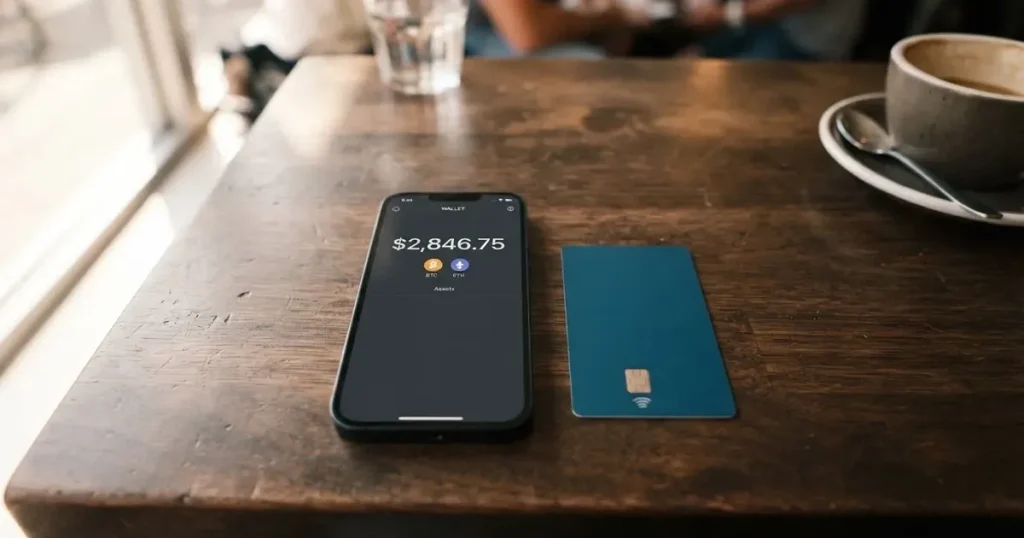
Fasset is a name most readers will meet for the first time on a payments page, not a bank statement. The product is a Visa card that spends in US dollars and is fed from a Fasset crypto wallet, with rewards paid in Tether Gold (XAU₮). That is a useful starting point, but it is not the whole picture. The card is live, it is being promoted in the press, and the underlying company has been signing up for regulatory licences across several emerging markets. The problem is the size of what is *not* said: Fasset’s own card page returned a 403 error during this review, so a lot of detail that a normal card review would rely on is simply missing from the public material. That gap is itself a finding, and it shapes the score below.
The conditions described here are current as of October 28, 2026.
Verdict
Fasset earns 5.3 out of 10 in this review. The number is not a moral judgement; it is a balance between what the card genuinely offers and what a normal applicant needs to know before they hand over identity documents and crypto.
The mark sits where it does because Fasset covers the basics: a Visa network, USD spending, top-up from a Fasset wallet with USDT, and a tiered XAU₮ rewards scheme that, at the top end, gives 6% back. Those are real features, and for someone who already keeps USDT in a Fasset account, the card lines up neatly with how they already think about their money. The 5.3 is dragged down by the parts the public material does not cover at all: card issuance and monthly fees, conversion and FX mark-up, ATM charges and allowances, daily and monthly limits, the physical card’s existence, and whether Apple Pay or Google Pay are supported. On a card that asks you to load it with stablecoins, the missing FX and conversion numbers are the most conspicuous gap, because they decide whether the rewards actually beat the cost of spending.
The card suits a fairly narrow reader: an existing Fasset account holder in Asia or Africa who holds USDT, is comfortable with the XAU₮ rewards model, and either does not need a physical card or is willing to wait for more information before relying on one. It does not suit the reader who needs to compare a complete fee schedule before signing up, who wants a physical card with a known issuance fee, or who needs an ATM allowance to withdraw cash. For that last group, the public material mentions ATMs only in a press release headline and stays silent in the body text; that is not enough to plan around.
| Criterion | Mark | Reason |
|---|---|---|
| Who can get it | 6 / 10 | 36 countries listed in the starting data, spanning Asia, Africa and the Caribbean, but the card page itself returned a 403 during this review |
| Cost | 5 / 10 | Issuance fee, monthly fee, FX, conversion and ATM charges are not stated in the public material |
| Top-up options | 5 / 10 | USDT from the Fasset wallet is supported, with XAUt convertible to USDT first; supported networks are not named |
| Reliability and complaints | 6 / 10 | Fasset Labuan Limited is identified and regulatory approvals are listed in the UAE, Indonesia, Malaysia, the EU, Turkey and Pakistan, but the card issuer and licence numbers are not named |
| Everyday use | 4 / 10 | The card is a virtual USD Visa; physical card, Apple Pay and Google Pay support are not stated, and ATM details are limited to a press release headline |
| Total | 5.3 / 10 | A USD Visa with USDT funding and XAU₮ rewards, let down by a public card page that does not publish the basic fee and limit information an applicant needs |
Will they give you the card
Fasset’s starting data names 36 countries where the card is positioned for use, grouped by region. The full list is: Australia, Bangladesh, Hong Kong, Japan, Malaysia, New Zealand, Philippines, Singapore, Pakistan, Egypt, Ghana, Kenya, Morocco, South Africa, Uganda, Zambia, Côte d’Ivoire, Senegal, Antigua & Barbuda, Bahamas, Barbados, Belize, Cayman Islands, Costa Rica, Dominican Republic, El Salvador, Grenada, Guatemala, Honduras, Mexico, Panama, Saint Kitts & Nevis, Saint Lucia, Saint Vincent & the Grenadines, Trinidad & Tobago, and Turks & Caicos Islands. It is a list weighted towards Asia, Africa and the Caribbean, with a smaller presence in the Pacific and Central America.
What that list does not tell you is how the company decides who actually qualifies. The card’s terms page did not load during this review, so the basic onboarding questions — minimum age, residency versus citizenship rules, sanctioned-country handling, what identity documents are accepted — could not be confirmed. The starting data gives a country list, not an eligibility rule book. In practice this means the list is a starting point: it tells you where the product is being pushed, not the precise conditions under which an individual application will be approved or refused.
If you are reading this from one of those 36 jurisdictions, treat the country list as a hopeful signal rather than a guarantee. If you are reading this from anywhere else, the public material does not currently support an application.
How to get it
Fasset describes the card as a Visa that spends in US dollars at Visa merchants worldwide, and the card’s name refers to a virtual card. Whether there is also a physical card, and whether that physical card is metal or standard plastic, is not stated in the public material reviewed here. A press release about the card exists, but the body of that release did not surface any of the operational details — issuance fee, shipping, what happens on activation — that a normal card review would rely on. Delivery timelines and activation steps are also not stated. The KYC depth required, the documents a new applicant will be asked for, and any tiered verification levels (for example, a basic tier that allows spending up to a small limit, and a higher tier after further documentation) are not described either.
The sign-up process, the verification it asks for, and what arrives at the end of it are not publicly documented. A reader who is comfortable opening an account without seeing the full terms first will find a product that is being marketed. A reader who wants the full schedule in writing before they upload an ID will need to wait for the card page to load correctly or contact support directly.
Fees
This is the section where the gap between what the card is and what the card’s public material says is widest. A card that takes USDT from a wallet, converts it, and spends in USD has at least four fee lines that matter: how much it costs to issue the card, how much it costs each month to keep it, what the conversion and FX mark-up is when crypto turns into the merchant’s currency, and what an ATM withdrawal costs. None of these are stated in the public material reviewed for this page. The card’s own page returned a 403 error, and the press release did not fill the gap. That is not a “no” — Fasset may well have a fee schedule behind the login wall — but it is a “you cannot confirm from public sources”, and a “you cannot confirm from public sources” is the right way to read the table below.

| Fee or limit | Value |
|---|---|
| Issuance | Not stated |
| Monthly fee | Not stated |
| Crypto-to-fiat conversion | Not stated |
| FX mark-up on non-USD spend | Not stated |
| ATM withdrawal fee | Not stated |
| ATM allowance | Not stated |
| Daily spending limit | Not stated |
| Monthly spending limit | Not stated |
For a reader thinking about real spending, the missing numbers matter most in three places. First, a coffee in a non-USD country: if Fasset’s FX mark-up is 1–2%, that is a small number in absolute terms but a meaningful one against a 6% rewards ceiling. Second, a holiday in a country that uses a different currency: if there is a flat foreign-transaction fee, every transaction pays it. Third, an ATM withdrawal abroad: if there is a flat ATM fee plus a percentage, small withdrawals become uneconomic. Without those numbers, “is this card worth it” is a question that cannot be answered with arithmetic, only with gut feel.
Cashback is tiered by spending — Fasset says the tiers rise as you spend more — but the tier names and the spend thresholds are not stated. The promotional rate, “up to 6% back in XAU₮”, is the public ceiling; the lower tiers and the steps between them are not public. The card spends in USD at Visa merchants worldwide, so the currency basis is clear, but that is one of the few things that is.
How to top it up
The funding path that the public material does describe is USDT. You hold USDT in the Fasset wallet, you top up the card from that balance, and the card spends from a USD balance at Visa. The starting data also describes XAUt (Tether Gold) as a route: the gold-backed token can be converted into USDT inside the Fasset app, and the resulting USDT can then be spent on the card. That gives an existing Fasset user two ways in — direct USDT, or XAUt converted to USDT first — and keeps the on-card balance in a single asset, which is simpler to reason about.
What the public material does not name is the network. USDT exists on Ethereum (ERC-20), Tron (TRC-20), Solana, Polygon, Avalanche and other chains, and the right network is the difference between a deposit that lands and a deposit that is lost. If Fasset’s deposit address expects ERC-20 USDT and the user sends TRC-20 USDT, the funds will not arrive at the card balance. The network, and the wallet address it ties to, are not stated in the public material reviewed here, which means the safest reading is to open the Fasset app, copy the deposit address the app shows you, and send the network the app tells you to send. The general lesson is that stablecoin deposits are unforgiving — blockchain transfers are irreversible, and a wrong network is the classic way to lose a top-up. Beyond the Fasset wallet, the public material does not describe other top-up paths: bank transfers, debit card loads, Apple Pay or Google Pay cash-in are not stated.
Paying with it every day
The card is a Visa that settles in USD, and that is the daily-use picture in one sentence. What sits around that sentence is mostly missing. A physical card is not confirmed in the public material, so on the assumption it is virtual-only, the card works online at any Visa merchant that takes a USD Visa number. In a physical shop, a virtual card on its own cannot be tapped; it would need to be added to a phone wallet for that, and Apple Pay and Google Pay support are not stated either. So the “every day” path is, in practice, “online at Visa merchants, in USD”, until the public material confirms anything wider.
On the rewards side, the public material is more forthcoming. Card spend earns up to 6% back in XAU₮, the gold-pegged token, on eligible transactions, with the rate rising through tiers as you spend more. Rewards are credited to the wallet in real time, and Tether has put up to US$1 million of XAU₮ behind the rewards pool. There is also a round-up feature: the spare change from a transaction, rounded up to the next dollar, is invested in XAU₮. For a reader who already thinks in XAU₮, that is a clean loop — earn gold-pegged token, accumulate gold-pegged token, and (eventually) convert it through USDT back to card balance. For a reader who does not, the rewards are denominated in an asset they will then have to think about.
A few things that would normally be in this section are not stated: which merchant category codes are excluded from rewards, how disputes work, whether the app has a transaction feed, and what customer support looks like in practice. There is no App Store listing that surfaced in the searches for this review, which means the everyday-use story is, in practice, what the Fasset app and the card’s terms say — and those are the very documents the public review could not fully reach.
What can go wrong
There are three layers of risk worth taking seriously with a card like this, and the Fasset review surfaces something to say about each.
The first is the company. Fasset Labuan Limited is the entity named in the starting data, and the company is described as a US-founded neobanking and investment platform founded by Mohammad Raafi Hossain and Daniel Ahmed, who is named as CEO. The public material lists regulatory approvals in the UAE, Indonesia, Malaysia, the EU, Turkey and Pakistan, with the phrase “and others” beyond that. What is not named is the card issuer, the licence number behind each approval, or the BIN that would identify which bank actually issues the Visa. On a card that takes identity documents and a stablecoin balance, “who is the issuer” is a fair question; the public material does not answer it.
The second is the operational risk of a programme closure. The wider category has a track record here: Visa terminated its global agreements with FTX on 13 November 2022, and the FTX US debit card was wound down by its issuer; WaveCrest, which issued Visa cards for several crypto brands in Europe, was suspended by Visa in 2018 and the programmes closed. The pattern is that the card network can end a programme, the issuer winds the cards down, and users get a notice period, a stop on new loads, and a window to withdraw the balance. There is no public indication that Fasset is heading that way, but it is the structural risk every crypto card carries, and Fasset’s narrower public footprint does not make it less exposed.
The third is the stablecoin layer. USDT and USDC are dollar-pegged but they are not guaranteed to hold the peg — USDC briefly lost its peg in March 2023, and the wider category has more dramatic failures behind it. A card balance funded from USDT carries that exposure on the way in. Tether has, on the record, frozen tokens in wallets on the OFAC sanctions list, so a USDT balance is not censorship-proof in the way some crypto literature suggests. On top of that, the wrong-network deposit risk is the everyday hazard: send USDT on the wrong chain and the funds are not coming back without manual support, and “manual support” is the kind of phrase that should make a cautious reader pause.
The complaint record in the public material is short. The searches run for this review did not surface a Trustpilot page or a Reddit thread specifically about Fasset, and no incident was found in the public material. That is not the same as “no complaints exist” — it is “no complaints surfaced in this review’s search run”, and a reader who is about to load a meaningful balance should do their own search.
What to take instead
A reader who likes the shape of what Fasset is doing — a Visa, USD spending, stablecoin funding — but wants a card with the fee schedule in writing has options. The three below are the alternatives supported with detail in this review. None of them is a clone of Fasset; each is a different trade.
| Alternative | Score | Card | Spending | Funding | Rewards | Best fit |
|---|---|---|---|---|---|---|
| International Visa Card | 6.7 / 10 | U.S.-issued Platinum Visa, virtual now, physical “coming soon” | USD, with a 2% FX fee on non-USD card use | USDC/USDT to a USD account at 1:1 free; USD, EUR, SEPA, SWIFT, FedNow also accepted | No cashback | Readers who want the FX fee in writing and are happy to hold USDC or USDT in a USD-denominated account |
| UNi Card | 6.1 / 10 | Multicurrency Mastercard, account-linked | Spends from the UNi.Global balance, OTC rates, no foreign-transaction fee | Not stated in the public material | Spend-to-Earn up to 3% with UNi Card | Readers who want multicurrency Mastercard spending and an explicit “no foreign-transaction fee” line |
| Morse | 7.5 / 10 | Fully virtual Visa prepaid debit, any currency | Real-time Visa rate, no FX markup on the card | USDC, USDG, EURC on Solana free; other tokens and chains carry a fee; self-custodial wallet | Not stated on card pages | Readers who want a self-custodial wallet feeding a no-markup Visa |
A few points of contrast are worth pulling out. The International Visa Card is the only one of the three with a fee schedule that names the FX mark-up in the public material — 2% on top of the Visa exchange rate — which makes it the easiest to do arithmetic on. UNi Card is the only multicurrency option in the trio and is the one that says “no foreign-transaction fee” out loud. Morse is the only one of the three that ties the card to a self-custodial wallet, which means the crypto stays under the user’s keys until the moment of payment, and is the only one that runs on Solana-native USDC, USDG and EURC at zero deposit fee. None of them is a 1:1 substitute for Fasset’s USDT-and-XAU₮ rewards model, but each of them is a card the public material describes more completely.
Who I would recommend it to
The Fasset card is a reasonable answer for a specific kind of reader. If you already have a Fasset account, hold USDT, and want a Visa to spend that USDT at online merchants in USD, the card does what the public material says it does, and the XAU₮ rewards make it a more interesting product than a standard card with no cashback. If you are in one of the 36 countries in the starting list, and your country is not on a sanctions list, and you are comfortable with the XAU₮ rewards model, the product lines up with how you already manage your money.
It is not a reasonable answer if you need to know the fee schedule in writing before you sign up. The issuance fee, monthly fee, FX mark-up, ATM charges and daily limits are not stated in the public material, and a 403 error from the card page during this review means that gap is real, not a research shortcut. It is also not a reasonable answer if a physical card is the plan, because the public material does not confirm one. It is not a reasonable answer if Apple Pay or Google Pay is the plan, for the same reason. And it is not a reasonable answer if the ATM is a meaningful part of how you spend, because the public material mentions ATMs only in a press release headline and stays silent in the body.
For a cautious reader, the right reading of the Fasset card is “wait for the card page to publish the fee schedule, then decide”. For an existing Fasset user who already accepts the gaps, the card is a usable USD Visa with a USDT top-up path and a real (if partially documented) XAU₮ rewards scheme.
Frequently asked questions
What is the Fasset card?
The Fasset card is a Visa-branded payment card that spends in US dollars at Visa merchants worldwide. It is funded from a Fasset crypto wallet, with USDT as the documented top-up route, and it earns rewards paid in XAU₮, Tether’s gold-pegged token. The card is described as virtual by name; a physical card is not confirmed in the public material.
How does the Fasset card work?
You hold USDT in a Fasset wallet, you top up the card from that balance, the card converts the USDT to a USD spend balance, and that balance is used to pay Visa merchants. Rewards are credited in XAU₮ to the same wallet. The conversion and FX mark-up — the numbers that decide whether the rewards beat the cost — are not publicly stated.
Is Fasset a bank?
The public material describes Fasset as a US-founded neobanking and investment platform, but it does not describe the Fasset card entity as a bank. The card issuer is not named, and Fasset Labuan Limited is the company identified in the starting data, with regulatory approvals listed in the UAE, Indonesia, Malaysia, the EU, Turkey and Pakistan.
Who owns Fasset?
Fasset’s founders are named in the public material as Mohammad Raafi Hossain and Daniel Ahmed, with Daniel Ahmed listed as CEO. The operating entity in the starting data is Fasset Labuan Limited. Beneficial ownership beyond the founders is not described in the public material.
Is the Fasset card available in my country?
The starting data lists 36 countries, grouped across Asia, Africa, the Caribbean and a smaller Pacific and Central American presence. The list is: Australia, Bangladesh, Hong Kong, Japan, Malaysia, New Zealand, Philippines, Singapore, Pakistan, Egypt, Ghana, Kenya, Morocco, South Africa, Uganda, Zambia, Côte d’Ivoire, Senegal, Antigua & Barbuda, Bahamas, Barbados, Belize, Cayman Islands, Costa Rica, Dominican Republic, El Salvador, Grenada, Guatemala, Honduras, Mexico, Panama, Saint Kitts & Nevis, Saint Lucia, Saint Vincent & the Grenadines, Trinidad & Tobago, and Turks & Caicos Islands. If you are outside that list, the public material does not support an application.
How do I apply for the Fasset card?
The sign-up process, the KYC documents required, and the verification tiers are not publicly stated. The card’s own page returned a 403 error during this review, so the practical answer is to open the Fasset app or visit the card’s official page directly and follow the flow there.
Does the Fasset card require KYC?
KYC is implied for any regulated card product and is required across the crypto-card category, but the specific documents, the depth of checks, and whether the verification is tiered are not stated in the public material for Fasset.
How do I top up the Fasset card?
The documented top-up path is USDT from the Fasset wallet. The starting data also describes XAUt (Tether Gold) being converted to USDT and then spent. The network on which USDT should be sent is not stated in the public material, which is why the safest reading is to follow the network the Fasset app displays at the deposit step.
Is the Fasset card free?
The issuance fee, monthly fee, conversion fee, FX mark-up and ATM fee are not publicly stated. The card’s own page returned a 403 during this review, and the press release did not fill the gap. A reader who needs the fee schedule in writing before signing up will need to wait for the card page to load correctly.
Is the Fasset card safe?
The public material lists regulatory approvals across several jurisdictions and identifies Fasset Labuan Limited as the operating entity, but the card issuer, the licence numbers, and the security and support details are not stated. There is no public incident, Trustpilot page or Reddit thread about Fasset that surfaced in the searches for this review, which is not the same as “no complaints exist”. Treat it as a partly-documented product rather than a fully-documented one.
App and neobank cards on the shortlist – cryptocardshortlist
Content created by the «cryptocardshortlist» team