
The ether.fi card pays 3% back in ETHFI and spends straight from your own vault — but the trust record and the hidden costs deserve a careful look first.
 Available in US
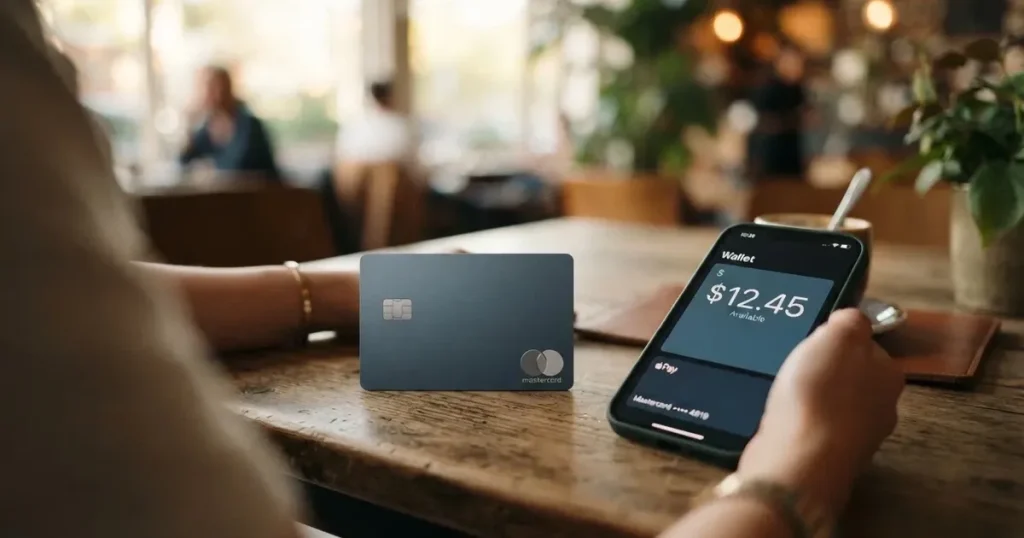
The ether.fi card is one of the more interesting crypto cards in circulation right now, because it is not really a “card account” in the ordinary banking sense. Your crypto stays where it already is — in a Safe vault you control — and the card spends from that balance. On top of that, the card pays cashback in ETHFI, its own token, which is the part that makes it unusual and the part that makes it speculative. I scored it 6.7 out of 10 overall. That is not a condemnation. It is a card that does a few things genuinely well and carries a few things you should not close your eyes about, mostly around reliability, support and which countries will actually let you in.
The conditions described below are current as of October 28, 2026.
Verdict: 6.7 out of 10
Let me put the whole picture in front of you first, then break it down.
| Criterion | Mark | Why |
|---|---|---|
| Who can get it | 7 / 10 | Issued only in a named list of jurisdictions — Austria, Australia, Brazil, Canada, Germany, Hong Kong, Japan, Singapore, Switzerland, the UAE, the UK and others, plus 31 US states |
| Cost | 7 / 10 | Core tier gives one free virtual card and a free physical card, though delivery is paid; FX 0.5% on Core |
| Top-up options | 7 / 10 | Any supported token can be deposited to your Safe, from several networks |
| Reliability and complaints | 4 / 10 | The issuer is not named officially; Trustpilot sits around 3.3 out of 5 from 47 reviews; cards were suspended in November 2025 after fraudulent transactions |
| Everyday use | 9 / 10 | Virtual and physical Visa, Apple Wallet and Google Pay, ATM withdrawals up to $5,000 |
That reliability line is the one that decides the score for me. Everything else about this card is either solid or good. The single question you have to answer for yourself is whether the card keeps working when you need it — and the record on that is mixed, with reports of frozen accounts and lost deposits.
Who this suits: residents of the listed countries who already hold crypto and want to spend it directly, who are comfortable with the card being tied to a token’s price, and who have a backup payment method in case the card is suspended. The cashback is real money in ETHFI, and if you want to be paid in that token rather than in dollars, this card is built exactly for that.
Who this does not suit: anyone who needs their card to work without interruption, anyone who cannot clear identity verification, anyone living outside the listed jurisdictions, and anyone treating the Cash Protection Program as insurance — it is explicitly not insurance, and it excludes the most common way people lose funds, a compromised key or device.
Will They Give You the Card?
The list is long, and it is a real list, not a vague “most countries”. Officially, the card is issued in jurisdictions including Andorra, Argentina, Australia, Austria, Brazil, Canada, Cyprus, the Czech Republic, France, Germany, Hong Kong, Hungary, Italy, Japan, Mexico, Poland, Portugal, Singapore, Spain, Switzerland, the UAE, the UK, and 31 US states. Belgium and Ireland are eligible, though without physical delivery. The card’s own words are worth repeating because they are unusually blunt: if your jurisdiction is not listed, you will not be able to apply. Not “not guaranteed” — will not be able to.
That is residence and jurisdiction based, and it comes “subject to KYC and compliance”, meaning your eligibility is confirmed during verification rather than at the moment you press the button. Citizenship rules are not stated by the card. This matters more than it sounds. Nationality is normally screened separately from residence, because sanctions rules and an issuer’s own risk policy are usually applied to citizenship and country of birth as well as to your address. So it is entirely possible to live in a listed country and be turned away on citizenship grounds, and the card’s public pages do not tell you how that works.
One hard boundary does exist geographically: ATM withdrawals are blocked in North Korea, Iran and Myanmar. If you travel, that is the rule to know.
If your country is not on that list, stop here — nothing else on this page will change that.
How to Get It
The order of operations is unusual, and you should know it before you start, because it means you are committing funds before you know whether you pass.
- Deposit tokens to your Safe. The card spends from your own vault, so there has to be something in it.
- Complete KYC. Activation includes “Verify your identity via KYC”.
- Order your card — virtual or physical — inside the app.
There is a practical wrinkle: a $10 crypto deposit is required before KYC can complete, in all regions. If verification fails, that deposit can be withdrawn. So the sequence is deposit, prove who you are, then order.
On the verification itself: there is one KYC flow, no tiers of it. You give a phone number with OTP, an identity document (passport, national ID or driver’s licence), a selfie with liveness check, and your address. Sometimes there is also a questionnaire from the card issuer. Proof of address is only required in some cases, must be no older than 3 months, and phone bills or screenshots are not accepted. Most reviews describe approval “within 48 hours” — I would read that as the happy path, not a promise, because the complaints I found later describe waits measured in weeks and months.
The reasons your documents get rejected are not officially listed, but the practical causes that recur are legible enough: an expired or cropped ID, screenshots instead of photographs, information that does not match between documents, and an address mismatch. That last one is worth taking slowly, because address problems are the ones that are hardest to fix after the fact.
Fees: What It Really Costs
Here is where crypto cards get murky, and ether.fi is no exception. Some numbers are clear, some are genuinely not stated, and a few are floating around on third-party sites that I will flag as unofficial rather than treat as fact.
| Fee or limit | Value |
|---|---|
| Free virtual card | One, on Core |
| First virtual card, regional pricing | $10 (Argentina, Angola, Bangladesh, Bolivia, Colombia, Ecuador, Indonesia, Malaysia, Mexico, Nigeria, Peru, Philippines, South Africa, Thailand) |
| Physical card, Core | Free, but a shipping fee applies — amount not stated |
| Physical card, Luxe+ | Shipping included |
| Monthly or annual fee, Core | Not stated |
| FX fee, Core | 0.5% on top of the base rate |
| FX fee, Luxe | 0.25% |
| FX fee, Pinnacle and VIP | None |
| FX on EUR purchases | Separate 0% FX article |
| Crypto conversion fee | Not stated |
| ATM withdrawal cap | Up to $5,000 per withdrawal |
| ATM, rolling 24 hours | 5 withdrawals and $25,000 |
| Daily and monthly limits | User-set, in the Cash tab |
| Weekly per-card limits by MCC | $500 for crypto purchases, gambling, FX and prepaid loading; $1,000 for money transfers, stock brokers, dating; $3,000 for pharmacies, licensed online casinos (MCC 7800-7802) and funding crypto accounts; advertising $30,000 per transaction |
Now let me put that table to work on three ordinary payments, because abstract fee tables do not tell you what a coffee costs.
A coffee in your own country, priced in dollars. You pay the price on the till, plus 0.5% on Core if the purchase is in a currency other than USD or EUR. That is the cheapest case, and it is genuinely cheap.
A coffee in a country that is not the US or the eurozone. The structure changes. USD and EUR are the two currencies the card spends directly, and EUR purchases have their own 0% FX article. For anything else, Core pays 0.5% on top of the base conversion rate. On unofficial sources — cryptocards.so in 2026, and an OzBargain post that also cites 1% — the figure for non-USD, non-EUR spend is 1%, but I could not confirm that against the card’s own pages, so treat it as a warning rather than a number to budget on. Note also that the crypto conversion fee is not stated, which means the real cost of turning ETHFI into a cup of coffee is partly unknown.
Anything at an ATM. Here the card’s own documentation is inconsistent, and you should know that before you need it. One help article allows up to $5,000 per withdrawal with 5 withdrawals and $25,000 per rolling 24 hours across Core, Luxe, Pinnacle and VIP. Another help article says $1,000 per ATM withdrawal (MCC 6011), 5 per 24 hours, and does not state a fee. A third-party source, cryptocards.so in 2026, puts the ATM fee at 2% with a $250 per day cap — unofficial and unconfirmed. Pinnacle and VIP get free ATM withdrawals up to 10 per month; Core and Luxe list ATM withdrawals as “Available” without a stated fee. For anyone who expects to use cash machines regularly, that gap is not a detail. It is the difference between a card you use and a card you avoid.
The weekly MCC limits deserve attention too, and not only because of the gambling and crypto-funding rows. Money transfers and stock brokers cap at $1,000 a week per card, and crypto purchases at $500. If you buy crypto through a broker with this card, you will hit that ceiling quickly.
One more cost that is not a fee at all: cashback arrives in ETHFI and is locked for 7 days before it becomes claimable. So it is not spendable the moment you earn it, and its dollar value moves with the token in the meantime.
Top Up: How the Money Gets In
There is no bank account behind this card. You top it up by depositing tokens to your Safe, where they act as collateral in Credit mode; in Direct Pay mode the balance is what gets spent.
The good news is flexibility. You can deposit “any supported token”, and deposits are accepted from multiple chains. The bad news is that the coin and network list is not stated on the main pages — it is buried in help articles titled “Supported assets and networks for your Vault with Cash” and “USDC and USDT deposit networks and addresses”.
This is the single most important operational point on the page, and the reason is general to the category rather than to this card: blockchain transfers are irreversible. A deposit sent on a network the provider does not support, or to an address belonging to a different network, can be lost outright or need manual support recovery with no guarantee. There is no chargeback button on a blockchain. Before your first transfer, go and read those two help articles and match your coin and your network to them exactly.
Other details worth knowing:
- Deposit and network fees for your transfer are charged by the blockchain, not by the card provider, so they vary with network conditions.
- Fiat top-up by bank transfer exists and has its own article with its own country list; I did not read its fees.
- Withdrawing your vault balance takes a request with the token, the amount and the recipient address, and it executes once the required Safe owners sign. Cross-chain withdrawals have their own article. Fees are not stated.
- Deleting your account requires a $0 balance, no active borrows and no pending card transactions, then a 14-day waiting period.
One thing the card does well: your funds are held in a self-custody-style Safe, and withdrawals require Safe owner signatures. That is structurally better than handing a provider your keys.
Paying With It Every Day
This is the card’s strongest suit, and the reason its everyday-use score is 9 out of 10.
The card is a Visa, available as virtual or physical. You can add it to Apple Wallet and Google Pay using the card details, and mobile wallet payments work normally. That matters more than it sounds: Apple Pay replaces your card number with a device-specific number stored in the Secure Element, never on Apple’s servers, and each payment uses a one-time dynamic security code. It is a genuinely stronger security posture than repeatedly handing over a card number.
The app is iOS “ether.fi: Crypto Card & Spend”, requiring iOS 16.0 or later, rated 4.9 from 141 ratings in the US storefront as read on 2026-10-20. The Google Play listing was not found or not read, so I cannot tell you what the Android experience is like.
Cashback. This is the headline feature and it works on a ladder:
- Core: 3% on the first $2,000 a month, then 1% to $3,000, then 0.5%
- Luxe: 3% on the first $10,000
- Pinnacle: 3% on the first $50,000
- VIP: 4% on the first $50,000
- Business: 1%
Cashback is paid in ETHFI, locked for 7 days and then claimable. EUR purchases use a lower ladder, which is a quietly significant penalty if you spend in euros. ATM withdrawals, cash advances, P2P and gambling merchant categories are excluded, and no payout cap is stated.
Where cashback does not apply. Cashback-excluded or limited merchant categories include MCC 6011, 6012, 6211, 6513, 6532 and 7995 — that last one being gambling. Gambling is capped at $500 a week rather than fully blocked.
That list exists because of how card acceptance actually works, and the background matters for your expectations. A merchant category code is a four-digit number classifying a business, and merchants can look up the BIN — the issuer identification number at the start of your card — to see which institution and which country issued it. Some shops apply extra scrutiny when the issuer country differs from your billing address, and some decline prepaid or foreign BINs outright. This is why a card issued in one country can look foreign to a shop in another. Address verification, which compares the numeric parts of your billing address against issuer records, is generally unavailable for foreign-issued cards and can cause declines. None of that is ether.fi’s fault, but it will feel like it is when a payment is refused abroad.
When things go wrong with a payment, the routes are documented. Disputes and chargebacks go through in-app chat with support. For an unauthorized transaction, you delete the card and contact support, which enters Visa’s fraud process. For merchant problems — goods not received, duplicate charges, subscriptions — you go through Visa’s dispute process, and the card tells you to contact the merchant first. Disputes “may take up to 90 days to complete”. No dispute fee is mentioned. Refunds come from the merchant. A declined payment can also leave a hold on your funds for several days, typically up to 7.
What Can Go Wrong
This is the section that made me score the card where I did, and I want to be specific rather than gloomy.
The issuer is not officially named. The card’s help articles mention Visa and there is a Cash Protection Program, but the legal entity and issuer are not stated. Blogs disagree: bleap.finance says Rain, slash.com says Third National under a Visa licence. Both are unofficial, both are 2026, and they contradict each other. For a card where you are depositing funds, not knowing which institution is legally responsible for them is a genuine gap, not a technicality.
Cards were suspended in November 2025. PANews reported that cards were suspended after fraudulent transactions, with the CEO promising refunds. That is not a hypothetical. It is a demonstration that this programme can be switched off, and it happened inside the last year. In 2026 searches, I found no confirmed licence loss or issuer change, but I also found no statement that it cannot happen again.
Complaints are real and specific. Trustpilot reads around 3.3 out of 5 from 47 reviews — though the same 47 reviews showed 3.5 on a different reading, which tells you how thin this sample is. Do not treat 3.3 as precise. The themes underneath it matter more: KYC and address-verification limbo lasting weeks to months; denial after approval with “suspected fraud” and no specific reason given; compliance freezes combined with slow automated support; and deposited funds lost during card activation in 2025.
Verification can fail after approval, not just before. A denial after you have been approved, with no stated reason, is the pattern I would warn a friend about most. It is the one complaint that leaves you with nothing to appeal to.
The Cash Protection Program is not insurance. It reimburses unauthorized movement of smart-contract assets, with caps of $10,000 on Core, $50,000 on Luxe, $200,000 on Pinnacle and Business, and $500,000 on VIP. Programme capacity is $5 million. There is a $100 claim fee, refunded if the claim is approved. And critically, it excludes compromised keys, credentials and devices — meaning if your own key or phone is compromised, the programme is exactly the thing that will not help you.
Support speed is a risk in itself. Support is in-app and web live chat plus email at [email protected]. Pinnacle has a dedicated account-manager team and VIP has executive support. Core has none of that, and the complaint pattern of slow automated responses on compliance holds is the one to factor in.
On-chain mistakes are yours. Blockchain transfers are irreversible. Clipboard-hijacking malware that swaps a copied address, a phishing page, a lost seed phrase — none of these can be undone, and the network cannot freeze or return funds. With a self-custody-linked card you keep control of the keys, but you also carry sole responsibility for key loss, phishing and address mistakes.
Stablecoins are not perfectly stable. Tether’s USDT and Circle’s USDC are dollar-pegged, and the BIS in July 2025 put about 90% of stablecoin market capitalisation in those two. But stablecoins can depeg: TerraUSD collapsed in May 2022, and USDC temporarily lost its peg in March 2023 during the US banking crisis. They are also not censorship-proof — Tether says it disables tokens in wallets on the OFAC sanctions list and freezes funds tied to illicit activity.
And a category-level risk you should understand even though it is not this card’s doing. Card programmes close. Visa terminated its global agreements with FTX on 13 November 2022 and the FTX US debit card was wound down. WaveCrest, a Visa card issuer that supplied crypto card brands, was suspended by Visa in Europe in 2018, closing all its Visa programmes. When a programme closes, the pattern is a notice period, then spending and loading stop, then you are asked to withdraw what is left. One 2026 closure reported by a secondary source ended new loads on 8 July 2026 and spending on 8 August 2026 — a single unconfirmed source, but the shape of it is the shape you should expect.
One last thing, which is yours rather than the card’s. In the US the IRS treats digital assets as property, so exchanging them for goods or dollars generally produces a taxable gain or loss. Every payment funded from crypto may be a separate disposal. That is a tax matter, not a card matter, and you should take your own advice on it.
What to Take Instead
I am not going to tell you these are safer in every respect — they are not, and the category has shared risks. But you should compare rather than accept the first option.
| ether.fi | Xplace | Anodos Card | Sponge | |
|---|---|---|---|---|
| My score | 6.7 / 10 | 7.7 / 10 | 7.2 / 10 | 4.9 / 10 |
| Card | Visa, virtual and physical | Visa, virtual instant and physical (Silver live; Gold and Platinum coming soon, delivery 7-14 business days) | Physical or virtual, under licence from Visa | Virtual card, described as a credit card issued by Rain, a Visa Principal Member |
| Where | Named jurisdiction list plus 31 US states | Country list not stated; “not available in all jurisdictions”; Visa accepted in 160+ countries | 150+ countries with a few exceptions; separate US programme in 30 states | Not stated; platform terms set a minimum age of 13 |
| Cost | Core free tier, FX 0.5% | Basic free, Silver $99/yr, Gold $249/yr, Platinum $999/yr; no origination fee on borrowing | Free tier $0, Pro $9.99/mo or $99.90/yr, Elite $29.99/mo or $299.90/yr; extra virtual card $20 / $10 / $10 | Not stated |
| FX | 0.5% Core, 0.25% Luxe, none Pinnacle and VIP | 0% on Platinum; other tiers not stated | 1.50% Free, 1.25% Pro, 1.00% Elite | Not stated |
| Funding | Any supported token to your Safe, multiple networks | BTC (cbBTC), ETH (wETH), SOL, JitoSOL, USDC, USDT, xStocks on Solana | Collateral on Ethereum, Polygon, Optimism, Arbitrum | USDC from the Sponge wallet, base network |
| Cashback | 3% Core to $2,000/month, in ETHFI | 0.5% Basic to 2% Platinum, in USDC, Credit mode | Not stated in the card terms | Not stated |
Xplace is the stronger pick if your priority is a documented price list rather than a token reward. It has a free Basic tier, four priced tiers, no borrowing origination fee, and no hidden spread on stablecoin spending. Its Cash mode spends a stablecoin balance while Credit mode borrows against holdings. Its cashback runs 0.5% to 2% and is paid in USDC — a real currency, not a token. But its country list is not stated, and it is up-front that services are not available in every jurisdiction.
Anodos Card has the broadest stated reach, “150+ countries, with a few exceptions”, but it is the only one of these with an explicit and detailed exclusion list, and you should read it: no cards for residents of Belarus, China (Mainland), Cuba, India, Iran, Iraq, Israel, Myanmar, Nepal, Nicaragua, North Korea, Russia, Syria, Turkey, Ukraine, Venezuela or Vietnam; Chinese and Hong Kong passports not eligible; Nigeria, Sri Lanka and South Africa only with enhanced review and explicit approval. Spending is blocked in Cuba, Iran, North Korea, Russia, Syria, Ukraine and Venezuela. Its terms also require you to attest that you are not a US citizen, since the international programme is for people outside the United States. Interest on purchases is currently 0% APR, with late payment “up to $40” and a returned payment of $29.00.
Sponge is the weakest of the four and I would not put it first. There is no country list on the card pages, no stated fees, no stated cashback, and its positioning as a credit card issued by Rain sits uneasily next to the fact that the entire fee structure is unstated. The description of it as a “credit card” also sits oddly beside the borrowing model of the category, where credit usually means borrowing against your own collateral rather than extending you money.
What none of these change: crypto transfers are irreversible, and the pattern of a card programme being suspended or wound down is a property of the industry, not of any one brand.
Who I Would Recommend It To
Yes, if you live in one of the listed jurisdictions, you already hold crypto and want to spend it without selling it first, you are comfortable being paid in ETHFI and watching its price, and you keep a second payment method for the weeks when the card is under review or frozen. If your spending is mostly in USD or EUR, the FX cost is genuinely low and the 3% back is the best cashback rate in this comparison.
No, if any of these apply to you: your country is not on the list, or you are unsure about your citizenship’s treatment; you need a card that has never failed at a till; you are in a situation where a freeze would leave you without money; you cannot tolerate depositing funds before knowing whether you pass KYC; or you are treating the Cash Protection Program as insurance against your own mistakes.
If you want the same “spend from my own crypto” idea with a more conventional fee schedule and cashback in a stablecoin, look at Xplace first. If you want the widest country reach and you are willing to read a detailed exclusion list, look at Anodos. If you want to be paid in a token that is trying to be a currency rather than a protocol, the ether.fi card is doing something the others are not — and you should hold it with the understanding that you are early, and that in November 2025 the cards stopped for a while.
Frequently asked questions
What is the ether.fi card?
The ether.fi card is a Visa debit card that spends directly from crypto you hold in your own Safe vault, rather than from a bank account. You get virtual and physical versions, and purchases earn cashback paid in ETHFI, ether.fi’s own token, after a 7-day lock. In Credit mode your tokens act as collateral; in Direct Pay mode the balance is what gets spent. The card’s public pages do not name the issuing bank.
How does the ether.fi card work?
You deposit supported tokens to your Safe, complete identity verification, then order a virtual or physical card in the app. At payment, your balance is converted and the card spends it. Withdrawals from the vault need signatures from the required Safe owners, which is the self-custody element. You can also freeze the card instantly in the app and set your own daily and monthly spend caps in the Cash tab.
Is ether.fi a bank?
No, and the card does not describe itself as one. ether.fi is a crypto protocol and card programme manager; the actual issuer is not named in the card’s public pages, and unofficial blogs disagree on whether it is Rain or Third National. What you hold stays in your own Safe vault, but the payment card side sits with an institution the card does not name publicly.
Does the ether.fi card require KYC?
Yes. Activation includes “Verify your identity via KYC”, and there is a single flow with no levels: phone OTP, an identity document such as a passport or driver’s licence, a selfie liveness check, and your address. Proof of address is required only in some cases, must be under 3 months old, and phone bills or screenshots are not accepted. A $10 crypto deposit is needed before verification can complete.
How do I get the ether.fi card?
Three steps, in this order: deposit tokens to your Safe, pass KYC, then order a virtual or physical card in the app. Core members normally get one free virtual card, though in regional-pricing countries the first virtual card costs $10. The physical card is free on Core but a shipping fee applies, and the amount is not stated. PO boxes are not allowed and the address must be in Latin characters only.
How much does the ether.fi card cost?
On Core the FX fee is 0.5% on top of the base rate, with 0.25% on Luxe and none on Pinnacle and VIP, and EUR purchases have a separate 0% FX article. You get one free virtual card and a free physical card on Core, though delivery is paid. The monthly or annual fee, the physical card fee, the shipping amount and the crypto conversion fee are all not stated by the card.
How do I top up the ether.fi card?
You deposit any supported token to your Safe, from multiple chains, and the coin and network list is not stated on the main pages — it sits in help articles on supported assets and networks. Match your coin and network to those articles exactly before transferring, because blockchain transfers are irreversible. On-chain deposit and network fees are charged by the blockchain, not by ether.fi. Fiat bank-transfer top-up also exists with its own country list.
Can I add the ether.fi card to Apple Wallet?
Yes, Apple Wallet and Google Pay are both supported, added using the card details. This is a real security benefit rather than a convenience: mobile wallet payments replace your card number with a device-specific number stored in the phone’s Secure Element and use a one-time code per payment. Worth knowing that the iOS app requires iOS 16.0 or later and was rated 4.9 from 141 US storefront ratings; I could not confirm the Google Play listing.
Is the ether.fi card safe?
It depends on what you mean by safe. Your crypto is held in a self-custody-style Safe with withdrawal signatures, you can freeze the card instantly, and there is a Cash Protection Program with tier caps from $10,000 to $500,000 — but that programme is explicitly not insurance and excludes compromised keys, credentials and devices. Trustpilot reads around 3.3 from 47 reviews, with reports of verification limbo, denial after approval, and lost deposits. Cards were also suspended in November 2025.
How do I delete my ether.fi account?
Account deletion requires a $0 balance, no active borrows and no pending card transactions, followed by a 14-day waiting period. Because the balance must be emptied first, you will need to withdraw your vault balance before you can close — and what happens to any remaining balance is not stated by the card. Withdrawals themselves need a request with token, amount and recipient address, and execute once the required Safe owners sign.
Credit and cashback cards on the shortlist – cryptocardshortlist
Content created by the «cryptocardshortlist» team