
A self-custody spending card that says less than it shows
 Available in US
The Cadmos card sits in a slightly awkward corner of the crypto card market. It is pitched as a spending card funded from a wallet you hold yourself — no exchange account holding your money in the middle — and it comes in a Premium version that costs nothing monthly and carries Visa Signature benefits, including lounge access and a concierge. On paper, that is an unusually generous shape for the category. In practice, a great deal of what you would want to know before paying with it is simply not published on the card’s public pages: the list of countries, the issuance fee, the card currency, the ATM situation, the delivery time, the blocked merchant categories. That absence is not by itself a warning sign, but it does mean you have to make your decision with gaps rather than with answers.
So who is this for? A user who already holds USDC or USDT in a self-custodial wallet, already understands that a transfer on the wrong network can burn money, and who wants a card that spends from that wallet without handing over custody to a platform. If that is you, the mechanics are simple and the funding networks are the ones you probably already use. If instead you want to know exactly which country you will be approved in, what a purchase in a currency other than dollars will cost you, or what happens to the balance after the company folds, this card’s public terms will not answer those questions — and you would be well advised to ask support before you commit to anything.
The conditions described here are current as of October 28, 2026.
Verdict: 7.0 out of 10
| Criterion | Mark | Why |
|---|---|---|
| Who can get it | 7 / 10 | The country list is not published; the terms exclude only countries under a US embargo |
| Cost | 7 / 10 | Premium: 0 USD a month and a 1.75% FX fee; issuance and crypto-conversion fees are not disclosed. Standard: prices appear on the order screen |
| Top-up options | 9 / 10 | USDC and USDT from your own wallet, over Arbitrum, Solana and Tron |
| Reliability and complaints | 6 / 10 | Cadmos LTD, Limassol, Cyprus, founded 2021; issuer and licence not named; no complaints found; non-custodial wallet |
| Everyday use | 6 / 10 | Premium: Apple Pay and Google Pay. Standard: Apple Pay; virtual or plastic and ATM not disclosed |
| Total | 7.0 / 10 | A capable self-custody card wrapped in thin documentation |
The Premium version is the one to look at. It is the tier with the $175,000 monthly spend limit, the lounge access, the concierge, and a monthly fee of zero. The Standard version is a thinner product: Visa or Mastercard, Apple Pay, whatever costs your app shows you at the moment of ordering. Neither is a bad card. But the appeal here is narrow and specific, and it is worth being blunt about that rather than pretending otherwise.
Will they give you the card?
No list of eligible countries is published. Availability depends on your eligibility and the options shown inside the app, so the definitive answer for you is what your own app displays on your own account. The one rule the terms do state is negative: users must not be in a country under a US embargo. That is the only geographic condition written into the public terms, and it is a sanctions rule rather than a licensing statement.
This is a meaningful difference from most cards in the category, where the country list is the first thing published. TokenPocket publishes a split list by scheme — Visa debit for a set of European countries and territories including Germany, France, Spain and Switzerland; Mastercard debit for Australia, Canada, Hong Kong, Japan, Taiwan, New Zealand, Singapore, South Korea and the UK, among others, with the Americas described as planned. MetaMask opens sign-ups in 45 listed countries and territories and puts everyone else on a waitlist. KAST shows you a residence list at the KYC step and tells you plainly: if your country is not on it, the service is not available there — and it adds the sharper point that living in a supported country while holding only an ID from a restricted region can still make you ineligible.
Cadmos does none of that publicly. The honest answer to “can I get it in my country” is that only the app can tell you. That is not a disqualifying flaw — plenty of well-run products gate the country list inside the account — but it does mean you should find out before you fund anything.
How to get it
The signup path runs through the app, and the KYC step differs by card product, with the requirements shown on the order screen. What that can include: a government ID, personal information, and proof of liveness. What is not stated anywhere: whether proof of address is required, and whether an age requirement is enforced beyond the general rule that prepaid and debit cards are usually available to adults.
The card itself depends on the tier you order. Premium is a Visa Signature. Standard is Visa or Mastercard, and the app shows you which one before you confirm. Whether the card arrives as a virtual card, a plastic one, or both is not stated, and neither is the currency the card is denominated in. Delivery time is not stated. The number of KYC levels, if there is more than one tier of verification, is not stated.
Compare that with what MetaMask publishes: Mastercard, a virtual card issued instantly, a metal version you can pre-order in the app once the virtual card is approved, one card per user, and the issuing and card-provider entities named. And KAST: virtual and physical, up to ten cards per user, Visa Platinum for Standard, Visa Infinite metal for Premium, Visa Infinite gold-plated for Private, plus themed designs. These are not the same scale of product — KAST runs to four figures a year for its top tier — but the difference in disclosure is stark. Cadmos tells you the network on the front of the card and leaves the logistics unstated.
Fees: what it really costs
Here is everything Cadmos publishes about money, gathered into one place. Where a cell says not stated, that means the card’s public pages do not say — it is not a zero.
| Fee or limit | Premium | Standard |
|---|---|---|
| Monthly fee | $0 | Not stated — costs are shown on the order screen |
| Issuance fee | Not stated | Not stated |
| Crypto conversion fee | Not stated | Not stated |
| FX fee | 1.75% | Cross-border and FX fees per the programme terms, no figures published |
| ATM | Not stated | Not stated |
| Monthly spend limit | $175,000 | No wallet-balance or cumulative transfer cap set by Cadmos; card limits are set by the programme and shown in the app |
| Card currency | Not stated | Not stated |
| Benefits | Visa Signature benefits: lounge access at 1,300+ lounges in 500+ cities, 24/7 concierge, Visa Airport Companion | No benefits listed |
Two things to sit with. First, the 1.75% FX fee on Premium is charged on top of whatever the card network and the merchant’s own pricing do. It is not small, and if you spend in a currency other than the card’s own — and since the card currency is not published, you may not know which that is — it applies to every transaction. For a card whose whole point is spending stablecoins, 1.75% on a converted purchase is the single largest recurring cost you are signing up for, and it dwarfs the $0 monthly fee in every practical sense.
Second, the absence of a published crypto-conversion fee on either tier. A card that converts stablecoins to fiat at the merchant has to convert somewhere, and a number that is not published is a number you will discover at the till. Ask for it before your first large purchase.
Three everyday payments
Coffee, same currency, £8. If the merchant accepts your card and nothing else intervenes, the $0 monthly fee means this is the cheapest possible use of the product. The network fee and the merchant’s own payment processing are outside Cadmos’s pricing and outside this review.
A $30 online subscription billed in euros while your balance is in dollars. This is where the FX fee bites. At 1.75%, the conversion on $30 is 52.5 cents — and that is only the Cadmos-side figure, before any network or issuer conversion spread you have not been told about.
A $400 purchase in a shop abroad. At 1.75%, the FX fee alone is $7. Then add the possibility that the shop’s own terminal declines a foreign-issued card outright, which is common with prepaid and foreign BINs and is a routine risk in this category, not a Cadmos defect.
For comparison, the rest of the field is more transparent about its pricing but not necessarily cheaper. KAST publishes the most complete fee schedule I found on any of these: stablecoin top-up 0%, card spend in USD 0%, transaction fee 0%, Apple and Google Pay 0%, a non-USD FX fee of 0.5%–1.75% depending on where you live, where you spend and which card programme you hold, a $0.10 charge on non-USD transactions under $25, and $0.50 for a declined transaction on insufficient balance. TokenPocket charges 1% on a crypto deposit into the card, refundable later through rewards, and states that apart from its NFT creation fee — of which the user pays “a small portion” — it charges nothing else. MetaMask says the virtual card is free with no annual or maintenance fee, the metal card is $199 a year, and there is “a minimal fee for each transaction” whose amount sits behind a linked table, with no foreign transaction fee and the Mastercard rate used.
How to top up
This is the strongest part of the product, and it is where the 9 out of 10 comes from. The card draws on a self-custodial wallet, and the stablecoins that top it up are USDC and USDT. The transfer networks listed are Arbitrum, Solana and Tron. That covers the three networks most stablecoin users actually live on, and the choice matters more than it looks.
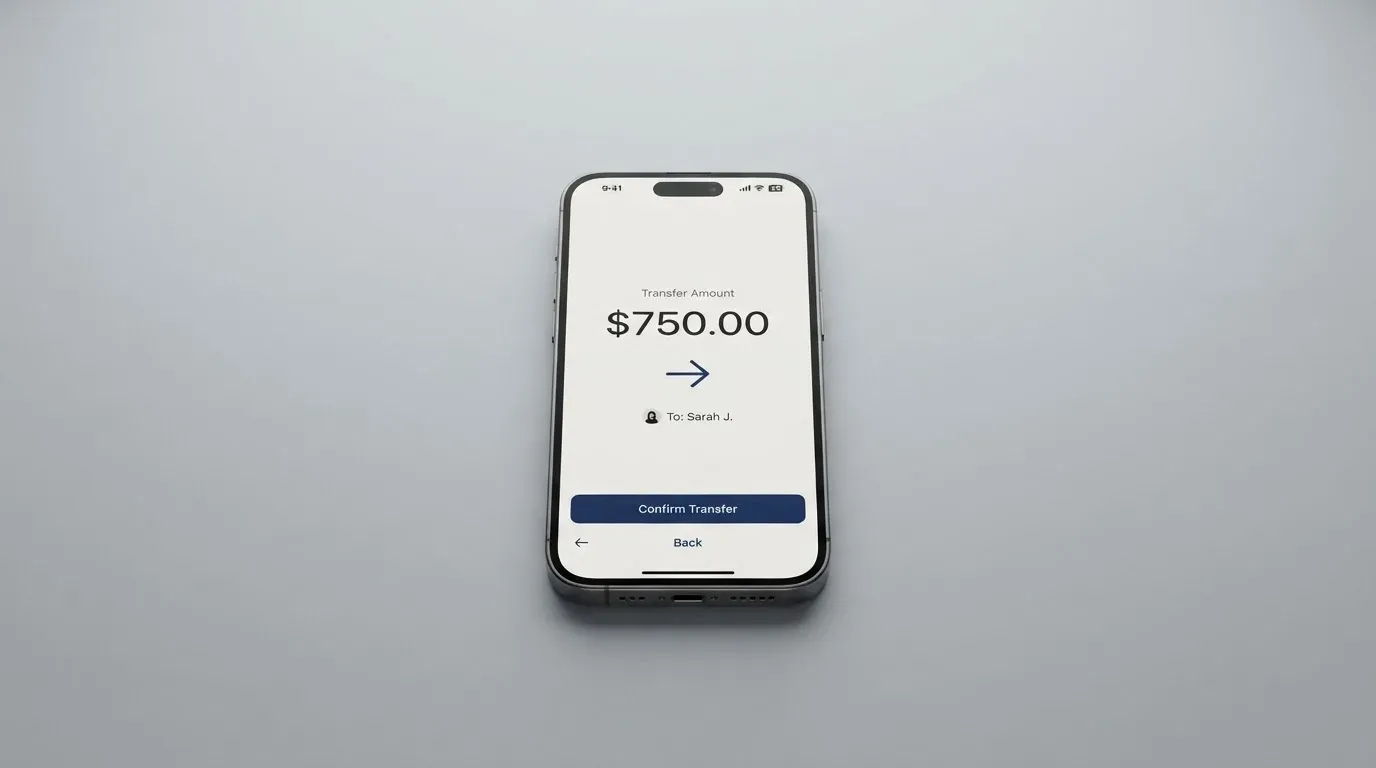
Your balance stays self-custodial until a card top-up is approved. In other words the money is yours, in your wallet, until the moment you deliberately move it — and that is the single structural difference between this card and a custodial one. Fees and minimums for top-ups are not stated.
Two technical points, because this is where mistakes cost real money. First, network choice: send on a network Cadmos supports, and confirm you are sending the token the card accepts. A transfer to an address belonging to a different network can be lost outright, and blockchain transfers are irreversible — there is no chargeback and no support guarantee for a misdirected transfer. Second, on Tron, USDT is native but USDC is not: Circle stopped supporting USDC on Tron in February 2024, so a USDC transfer over TRC20 is not something you can do. If you hold USDC on Tron you are holding a bridged representation, and how that interacts with this card is not stated. Check which token you are actually sending before you press send, not after.
One last thing about the network fee: the gas or bandwidth cost of your deposit is charged by the blockchain, not by Cadmos. It comes out of your wallet, not the card balance.
The contrast with the alternatives is instructive here too. MetaMask spends directly from the connected wallet across Linea, Base, Monad and Solana, naming mUSD, wETH, EURe, GBPe, USDC and USDT — and notes that Solana-only wallets cannot withdraw credit. KAST takes stablecoins USDT, USDC, PYUSD and RLUSD, with USDT and USDC available on Ethereum, Solana, Polygon, Arbitrum and TRON, converting deposits 1:1 with a 0% spread. KAST’s own terms and its app conflict on which tokens count — the Terms say the acceptable tokens are “currently USDT and USDC” — which is a small reminder to check the terms rather than the marketing screen.
Paying with it every day
Premium works with Apple Pay and Google Pay. Standard works with Apple Pay, on both the Visa and Mastercard versions; Google Pay is not mentioned. That is the whole of the mobile-wallet picture.
The mechanism underneath is the standard one. When you add a card to Apple Pay, the card number is replaced by a device-specific number stored in the phone’s secure hardware, never on Apple’s servers, and each payment carries a one-time dynamic code. It is a genuinely good way to use a card like this: the physical card never leaves the wallet, and a tokenised number can be restricted by the issuer per channel if something goes wrong.
The gaps: whether the card is virtual or physical is not stated; whether you can add it to a mobile wallet before the plastic arrives is not stated; which merchants decline it is not stated, because blocked categories are not listed. That last one is worth knowing about in this category in general — some merchants refuse prepaid or foreign-issued cards outright because the BIN lookup reveals the card type and the issuer’s country, which is why a card issued in one place can look foreign in a shop in another.
Rewards are not stated for either tier, which is an unusually blank spot given that most competitors publish something. Premium’s benefits are travel benefits — lounge access, concierge, Visa Airport Companion — rather than cashback. TokenPocket, by contrast, has no cashback stated and instead refunds its 1% deposit fee later through rewards or reduced transaction fees; MetaMask pays cashback in mUSD into a Money Account, 1% on the virtual card and a headline 3% on metal with a footnote capping 3% at the first $10,000 spent and 1% after that; KAST pays USD cashback of 1.5% to 3% depending on tier, each capped at a monthly spend ceiling, with KAST Points adding a further percentage on Premium and Private.
Support is reachable at [email protected], through tickets in Settings > Help Center, and by phone on +1 (845) 588-8434. Premium adds a 24/7 concierge by email and WhatsApp. An app download page exists at /download; the store ratings were not read.
If something goes wrong with a transaction, the terms say French law and the courts of Paris, with 30 days for a good-faith resolution after written notice. The chargeback process for card purchases is not stated, which matters more than it sounds: a chargeback is a refund the issuer orders to settle a dispute, and if no process is documented, a disputed purchase may have no defined route.
What can go wrong
The honest risk picture has two halves: the things that are the same for everyone in this category, and the things specific to Cadmos.
Self-custody means you carry the key risk alone. Control of crypto belongs to whoever holds the private key or seed phrase. A seed phrase is typically 12 to 24 words and unencrypted; anyone who obtains it can restore the wallet and spend the funds. Transfers are generally irreversible, and a stolen key has no recovery path — the network cannot freeze or return what has gone. With a self-custody card the funds stay in your wallet until the payment, which is the point of the design, but you bear sole responsibility for key loss, phishing, and clipboard-hijacking malware that silently swaps a copied address. That last one has killed more people than hacks, and it happens while you are copying an address to paste into a deposit page.
The counterparty is still there. Cadmos states that it “does not receive, hold, safeguard, or acquire title to your Digital Assets or fiat funds”, which is a clear and welcome commitment. But the card programme itself sits somewhere. Cadmos LTD is registered in Limassol, Cyprus, number HE 457316, founded 2021. The card issuer is not named, and no licence is named in the Terms. In this category that combination is the thing to press on: Visa and Mastercard do not issue crypto cards to consumers themselves — they license issuers and can suspend a programme. WaveCrest, a Visa issuer that supplied several crypto card brands, was suspended by Visa in Europe in 2018, closing all its Visa programmes. FTX’s US debit card was wound down by its issuer after Visa said it had terminated its global agreements with FTX on 13 November 2022. Programme closures typically follow a pattern: a notice period, then loading and spending stop, then you are asked to withdraw what is left. That is not a prediction about Cadmos. It is the shape of what happens in this category, and it is why the missing issuer name matters.
Balances and closure. Account closure is by email, and closing the account does not freeze or move your digital assets — they stay in your wallet. Whether the card balance itself can be withdrawn is not stated. Ask that question in writing before you load a large balance.
No complaints is not the same as a track record. My search returned no Trustpilot or Reddit reviews of Cadmos Pay, and there is no Trustpilot page. A young product with no complaints may simply be young. It may also mean nobody has written about it yet, which is the same gap in knowledge as the country list.
Depegging and network risk are still yours. Stablecoins are not stable by name alone: TerraUSD collapsed in May 2022, and USDC temporarily lost its peg in March 2023 during the US banking crisis. Tether says it disables tokens in wallets on the OFAC sanctions list and has frozen funds tied to illicit activity. And network fees bite in ETH on Ethereum, which means an ERC-20 balance with no ETH cannot be moved at all.
Declines and holds. A declined authorisation can leave a hold on your funds for several days, typically up to seven. Online payments can be challenged with 3-D Secure, which is Visa Secure on Visa and Identity Check on Mastercard, and under 3-D Secure liability for a fraudulent online payment can shift toward you.
Compliance checks run anyway. KYC is a legal obligation, not a favour. In the EU, due diligence covers name, address, date of birth, nationality, identity documents, a sanctions check, and whether you are a politically exposed person. If due diligence cannot be completed, the institution must refrain from the transaction and, where necessary, end the relationship — which is why accounts close or freeze pending documents. Nationality is screened separately from residence, because sanctions screening and issuer risk policy apply to citizenship and country of birth as well as to where you live.
What to take instead
None of these is a clear substitute for Cadmos; they are different bets. Here is how they compare on what is actually published.
| Cadmos | TokenPocket | MetaMask | KAST | |
|---|---|---|---|---|
| Score in this review | 7.0 / 10 | 5.8 / 10 | 7.1 / 10 | 6.1 / 10 |
| Card | Premium: Visa Signature. Standard: Visa or Mastercard | Visa/Mastercard debit, on Arbitrum | Mastercard; virtual first, metal optional | Visa Platinum / Infinite metal / Infinite gold-plated |
| Countries | Not published; US-embargo countries excluded | Split list by scheme for Europe, Asia-Pacific and others | 45 listed countries; waitlist elsewhere | Residence list shown at KYC, not published |
| Free tier | Premium $0/month | No stated monthly fee | Virtual card free | Standard 0 USD/year |
| Highest tier | Premium at $0/month | — | Metal $199/year | Private 10,000 USD/year |
| FX fee | 1.75% on Premium | Not stated | None; Mastercard rate | 0.5%–1.75% by residence and programme |
| Cashback | Not stated | 1% deposit fee refunded via rewards | 1% virtual, up to 3% metal | 1.5% / 2% / 3% USD by tier |
| Funding | USDC, USDT on Arbitrum, Solana, Tron | Crypto from TokenPocket wallet | Spends from connected wallet | USDT, USDC, PYUSD, RLUSD |
Choose Cadmos if you already hold USDC or USDT in your own wallet, you want the funds to stay there, and the $175,000 monthly limit and travel benefits matter to you at no monthly cost. It is a good fit for a self-custody user who spends stablecoins, and the funding story is the best of the four on networks alone.
Choose MetaMask if you want the most published detail and a free virtual card in a country list you can read before signing up, with cashback from day one. Its fee for each transaction is the one to look up, since the amount sits behind a link.
Choose KAST if fee transparency is your priority and you spend mostly in dollars. Its published schedule is the most complete in the category, and a $0 annual Standard tier with 1.5% cashback to $2,000 a month is a coherent product. The trade-off is the annual membership on the upper tiers, running to $10,000, plus a $1/month inactivity fee after twelve months.
Choose TokenPocket if you want a plain debit card in a long list of European and Asia-Pacific countries and can tolerate a 1% deposit fee. It scores lowest of the four, mainly because the country lists, while broad, come with a 1% charge on every top-up.
Who I would recommend it to
If you are reading this because you cannot get an ordinary bank card, and you hold stablecoins in a wallet of your own, Cadmos is worth an application — and the reason is structural, not promotional. The wallet stays self-custodial, the card has no monthly fee on Premium, the spend limit is high, and the top-up networks are the three you would use anyway.
Before you do, send support three questions and read the answers. What is the card’s currency, and what exactly does the 1.75% FX fee apply to? What is the crypto conversion fee at the point of settlement? And which entity issues the card, under which licence, and in which country? Those three answers tell you more than any review can.
If you are holding assets on a custodial exchange and thinking about moving them to a self-custody wallet to use this card, that is a decision about custody with tax consequences attached, not a card decision. I am not going to advise you on it here — take your own advice on that, from someone qualified to give it in your jurisdiction.
The honest summary is this: the mechanism is good, the funding is good, the price is good, and the documentation is thin. That combination suits a confident crypto user. It does not suit someone who needs a bank to tell them, in writing, what their money is doing.
Frequently asked questions
What is the Cadmos card?
The Cadmos card is a payment card that spends from a self-custodial crypto wallet rather than from a bank account. You hold the wallet, and you move USDC or USDT into the card over a supported network; the card then settles with merchants in ordinary currency. Two versions exist: Premium, a Visa Signature card, and Standard, Visa or Mastercard depending on what the app shows.
How does the Cadmos card work?
You load the card from your own wallet. USDC and USDT are the stablecoins accepted, over the Arbitrum, Solana and Tron networks. Your balance remains self-custodial until a top-up is approved, at which point it is converted and settled in fiat at the merchant. After that the card behaves like any other payment card at the till, online or in a terminal.
Is Cadmos a bank?
No — and the card’s terms do not name a bank or a licence. The company behind it is Cadmos LTD, registered in Limassol, Cyprus, number HE 457316, founded 2021. The card issuer is not named and no licence is named in the Terms. The card runs on Visa or Mastercard rails, but those networks license issuers rather than issuing consumer cards themselves.
Who owns Cadmos?
Cadmos LTD, a Cyprus-registered company founded in 2021 with registration number HE 457316, registered in Limassol. Cadmos describes itself as a programme that does not receive, hold, safeguard or acquire title to your digital assets or fiat funds — the wallet stays yours. The card issuer behind the programme is not named publicly.
Which countries can I use the Cadmos card in?
The card does not publish a country list. Availability depends on your eligibility and the options shown in the app, so your app is the only reliable answer for you. The one written condition is negative: the terms require that users are not in a country under a US embargo. That is a sanctions exclusion, not a statement of where the card is licensed.
Does the Cadmos card require KYC?
Yes. Identity verification differs by card product and is shown on the order screen, and it can include a government ID, personal information and proof of liveness. What the public pages do not state is whether proof of address is required, or what age rule applies. If the checks cannot be completed, accounts are typically frozen or closed pending documents.
How much does the Cadmos card cost?
Premium has a $0 monthly fee and a 1.75% FX fee, and it includes Visa Signature benefits such as lounge access at 1,300+ lounges in 500+ cities, a 24/7 concierge and Visa Airport Companion. Its issuance fee and crypto conversion fee are not stated. Standard charges are not published either — they appear on the order screen. The 1.75% is the number to weigh, since it applies on top of everything else.
How do I add the Cadmos card to Apple Wallet?
Premium supports Apple Pay and Google Pay; Standard supports Apple Pay on both its Visa and Mastercard versions. Adding a card to Apple Pay replaces the card number with a device-specific number held in the phone’s secure hardware, and each payment uses a one-time code. Whether you can do this before a physical card arrives is not stated, and whether the card is virtual or physical at all is also not stated.
How do I withdraw from Cadmos?
Digital assets never leave your own wallet unless you move them yourself, so your crypto is not held by Cadmos to withdraw. The account can be closed by email, and closing it does not freeze or move your digital assets. Whether the card’s own balance can be withdrawn is not stated — ask support in writing before loading a large amount, and ask before you need it.
Is the Cadmos card safe and worth it?
The safety story depends on which risk you mean. Self-custody means you hold the recovery phrase and carry the full risk of key loss, phishing and misdirected transfers, which are irreversible. Against that, Cadmos states it does not take title to your assets, and there are no licence details or issuer name published. I found no complaints and no Trustpilot page, which on a young card means little either way. It is worth it if you already understand wallets; if you need a bank to tell you where your money is, it is not.
Wallet cards on the shortlist – cryptocardshortlist
Content created by the «cryptocardshortlist» team