
A prepaid virtual dollar card aimed at African crypto users, with quiet fees on paper and loud complaints in public
 Available in US
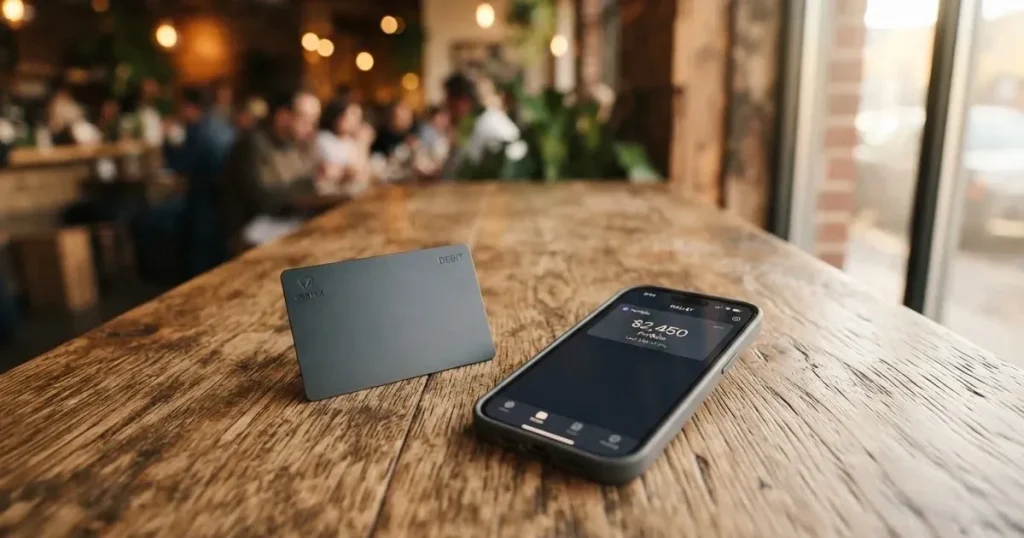
A prepaid Visa or Mastercard in dollars that you fill from a Bitcoin or stablecoin balance and spend online — that is the whole idea, and for someone who cannot get an ordinary bank card in their own country it is a genuinely useful thing. Bitnob launched its virtual dollar card on 22 February 2023, describes itself as serving “dollar-scarce markets,” and is built around a Nigerian company that has expanded into eight other African countries. The appeal is obvious. The detail is where it gets complicated: the card’s public pages publish almost no numbers, the company says outright that it is not a bank, and the review score I landed on after reading the terms and the complaints is 5.1 out of 10.
Conditions are current as of October 28, 2026.
The conditions described on this page are current as of October 2026.
Verdict: 5.1 out of 10, a narrow yes for one specific reader
I gave this card a 5.1. That is not a dismissal. It is a card that does one job plausibly, charges nothing it admits to, and has a support and complaints record that made me hesitate. Here is the breakdown, criterion by criterion, with my reasoning in the open rather than buried in a total.
| Criterion | Mark | Why |
|---|---|---|
| Who can get it | 6 / 10 | No country list on the card page; Nigeria-based company expanded to eight other African countries; 2023 press says anyone with the app can create a virtual card; availability varies by region and partner institution |
| Cost | 6 / 10 | No amounts published officially; unofficial sources say card creation is free or USD 1; a Trustpilot complaint mentions USD 6 for new cards; conversion fee never named |
| Top-up options | 6 / 10 | From a Bitcoin, USDT or USDC wallet balance; networks not disclosed; unofficial figure of funding up to USD 10,000 |
| Reliability and complaints | 3 / 10 | Bitnob Technologies Limited is not a bank and not a licensed card issuer; cards are issued by “regulated partners”; Trustpilot 2.9 out of 5 across 48 reviews, half of them one-star, on missing funds and cards cancelled without notice |
| Everyday use | 4 / 10 | Virtual only; Apple Wallet and Google Pay added by typing the card details in; no 3-D Secure; no ATM access |
| Total | 5.1 / 10 |
Who this suits: someone based in Africa who holds Bitcoin, USDT or USDC and needs a virtual dollar card for online payments they cannot otherwise make. The design is aimed squarely at that reader, and if you are in it, the mechanism works in the way it says it does.
Who it does not suit: anyone who wants a physical card, anyone who needs an ATM, anyone who pays a lot of attention to how much a payment costs before they make it, and anyone for whom an unexplained cancellation or a balance that looks wrong would be a serious problem. I would also hesitate for a reader whose priority is being able to resolve a dispute. The public pages say nothing about how disputes are handled, and prepaid-card protections vary by jurisdiction and should not be assumed.
Will they give you the card?
Here is the honest answer: probably, if you can pass verification, and the deciding factors are your region and the partner institution — not a published country list.
The card page does not name any countries. It talks about “dollar-scarce markets,” which tells you the target audience rather than the eligibility rule. The company is Nigeria-based and says it has expanded to “eight other countries in Africa.” Press coverage from 2023 is broader still: users “located anywhere in the world who have access to the Bitnob app” can create a virtual card. So the practical test is not “which countries are allowed” but “is there a working partner in your region” — availability varies “by region and partner institution,” by the card’s own description.
Two things to keep in mind about that. First, the 2023 statement predates whatever verification rules apply now, and the card has clearly tightened since: verification is mandatory, and there is at least one user report of verification being denied after a deposit, from September 2025. Second, the question people actually ask — can I use the card in my country — is a different question from who can get it. The card is a USD Visa or Mastercard, and merchant acceptance follows the card networks, not Bitnob. What you are really asking is whether the card will be recognised and whether the merchant will accept a foreign-issued prepaid card.
You do not need a physical card to apply, because there is no physical card. Not “not yet” in any sense you can rely on — physical cards are not currently offered at all.
How to get it
The short version: verify your identity in the app, create the virtual card, and receive the card details to enter wherever you need them. There is no delivery step, because there is nothing to deliver.
Identity verification is not optional. Cards can only be issued to customers who have passed verification, and the requirements are specific. You need an image of your ID and the details that match it. If you use a national ID card from one of the countries on their list, you must submit it front and back together — one photo is not enough. Passports and driver’s licences are not affected by that particular requirement. You must be 18 or older.
Proof of address is not stated. I want to be careful about how I say that: it means the card’s public pages do not say whether a proof-of-address document is needed, not that it is waived. The generic background here matters, though. Regulated businesses are required under anti-money-laundering rules to verify customers and assess risk, and in the EU that due diligence covers name, address, date of birth, nationality, identity documentation, a sanctions check, the purpose of the relationship, and politically-exposed-person screening. Where due diligence cannot be completed, the institution is expected to stand back from the transaction or the relationship. That is the general reason an account gets frozen pending documents, and it is why a missing line in a card’s FAQ is not the same as “not required.”
The card itself: virtual only, USD-denominated, described on the card page as “Visa and Mastercard USD cards” and in the API documentation as “USD-denominated virtual Visa cards.” So the clearest reading of the documentation is a virtual Visa card in dollars. There is no tier structure — a single product, no card levels to compare.
If verification is refused, you have no published appeal route on these pages. I would not put money in before your account is fully verified.
Fees: what it really costs
The honest answer is that Bitnob publishes no numbers, and what circulates about its fees comes from third-party sites rather than the card itself.
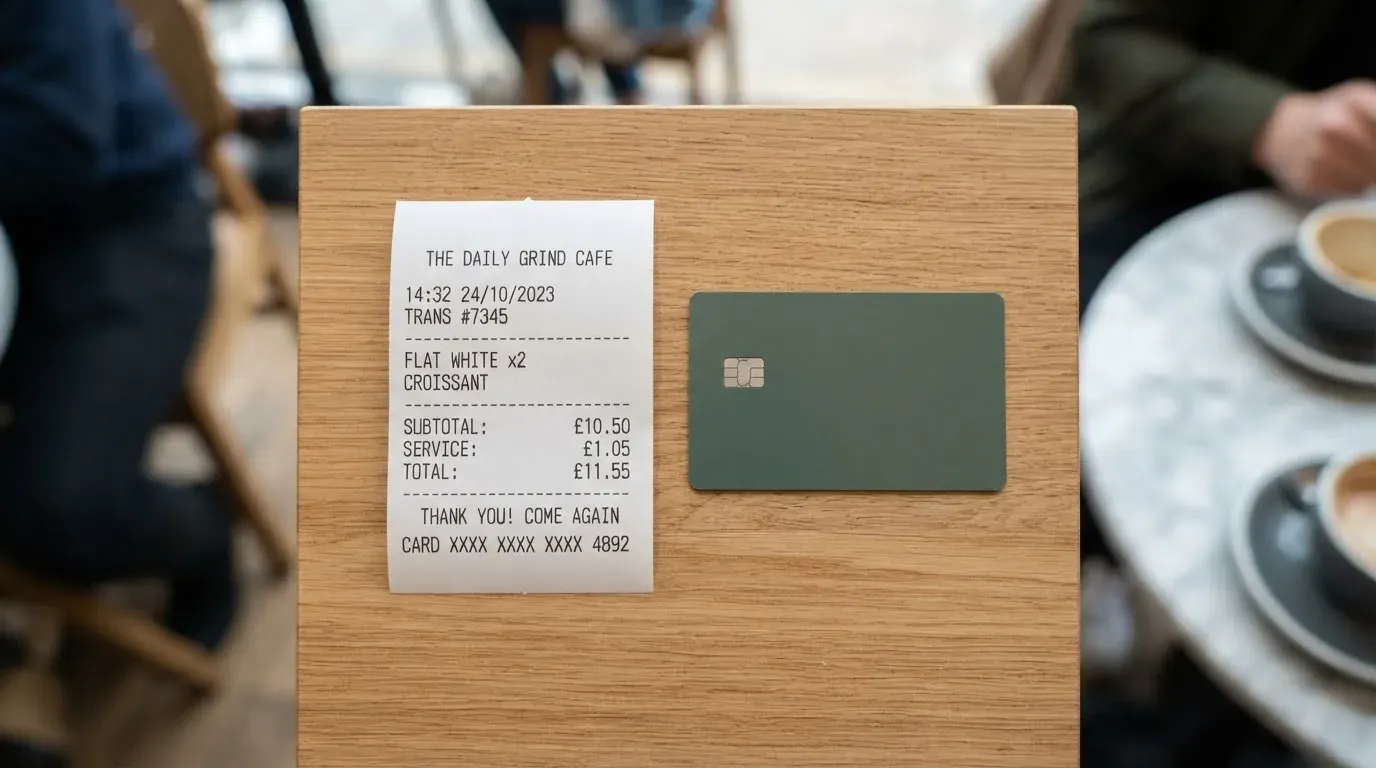
Officially: no amounts at all. Cardholder fees are “defined per platform integration,” which is a way of saying that what you pay depends on where you found Bitnob — an app, an API integration, a partner wallet. The card page promises “seamless conversion at the best available rate,” and states no FX fee and no conversion fee. Whether that promise is generous depends on the rate you actually get at the moment you convert, which you should look at on screen rather than assume.
What I could find outside the card’s own pages: The Paypers reported in February 2023 that card creation was free, as did cryptocards.so with no date given; nairacompare.ng lists a USD 1 creation fee in 2026. One Trustpilot reviewer complains of a USD 6 fee on new cards. Treat all of these as unofficial — none is confirmed by the card.
Here is every cost line that exists, with its source status made explicit:
| Fee or limit | What the card says | Status |
|---|---|---|
| Card creation | No amounts published; fees “defined per platform integration” | Official: nothing published. Unofficial: free, or USD 1 |
| Monthly fee | Not mentioned on the card pages | Not stated |
| Conversion fee | “Seamless conversion at the best available rate”; no figure | Not stated |
| FX fee | None stated | Not stated |
| ATM withdrawal | Not available — the API documentation lists “no ATM withdrawals” | Official |
| Spend limits | No numeric limits published; configurable per card by amount, merchant, channel and time of day | Official: configurable, unquantified |
| Card tier | Single product, no tiers | Not stated |
| Currency | USD cards only; no local-currency cards | Official |
| Funding ceiling | Up to USD 10,000 | Unofficial (The Paypers, February 2023) |
| Cashback | 0% | Unofficial (cryptocards.so, undated) |
Three everyday payments, so this is not abstract. First, you top up from USDT and buy a subscription. What applies: whatever the card’s conversion works out to, plus the blockchain’s own network fee for moving the stablecoin, which the blockchain charges rather than Bitnob. Second, you spend in a shop where the local currency is not dollars. The card holds dollars and the merchant prices in local currency, so a conversion happens somewhere in the chain and no fee is published that tells you who takes a spread. Third, you try to get cash out. There is no option; the card does not do ATM withdrawals. That one is at least unambiguous.
The absence of published numbers is the real cost here, not the amount. You cannot compare what you have not been told, and a rate described only as “the best available” tells you nothing on the day you need it.
How to Top up the card
The answer is short because the card’s funding options are narrow: you load it from your Bitnob wallet balance in Bitcoin, USDT or USDC. There is no overdraft.
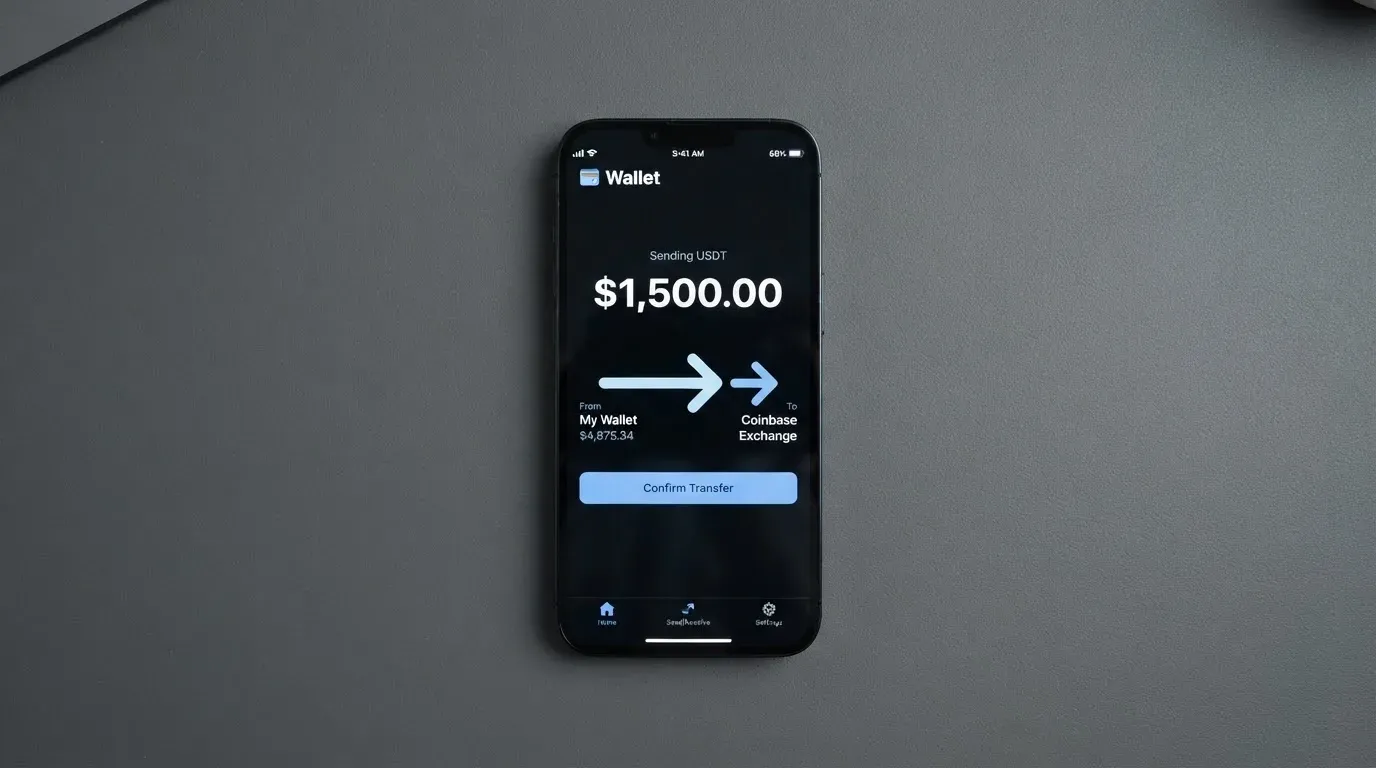
That is the entire list of funding assets named by the card. Networks are not stated — and networks are not a technicality. If you send USDT on a chain the provider does not support, or to an address belonging to a different network, the transfer can be lost or need manual support recovery with no guarantee, because blockchain transfers are irreversible. A provider that does not name its supported networks has left you to work this out yourself.
Two mechanics worth knowing, even if they are not Bitnob’s doing. On Ethereum, fees are paid in ETH, so a wallet holding USDT with no ETH in it cannot send. Tron prices fees through bandwidth and energy, often burning TRX. And on the stablecoin side, Tether’s USDT has been issued on networks including Ethereum, Tron, Solana, Polygon and Avalanche, while Circle lists USDC as natively supported on 38 networks as of 16 September 2026, including Ethereum, Solana, Base, Polygon PoS, Avalanche, Arbitrum and Stellar. Circle stopped supporting USDC on Tron in February 2024, so USDC over TRC20 is not a native option.
Withdrawal is not stated, and top-up mechanics beyond “from wallet balance” are not stated either. USD cards only — there is no local-currency version of any of this.
Paying with it every day
Virtual only, USD-denominated, no ATM. In a wallet it works, but only because you type the numbers in yourself. Apple Wallet and Google Pay are supported by adding the card details manually, and for Apple Wallet your Apple ID region must be the United States. That single condition rules the wallet out for a lot of readers outside the US.
What you give up when you add a card by hand is the part worth thinking about. Apple Pay replaces the card number with a device-specific account number held in the Secure Element, never on Apple’s servers, and each payment uses a one-time dynamic code. A manually entered number does not get that treatment. There is also no 3-D Secure on this card, which means there is no one-time code or biometric challenge on online payments to confirm you are you — 3-D Secure is the mechanism where the issuer assesses the risk of an online transaction and either lets it through or challenges you, and Visa’s version is called Visa Secure while Mastercard’s is Identity Check. Its absence removes a layer that many merchants now expect.
Merchant category restrictions exist. The card refers to purchases “within allowed categories,” and does not publish the list. You will find out what is blocked by finding out at the till. A merchant category code is the four-digit number classifying a business by goods or services, assigned when a business starts accepting cards — the kind of system that lets an issuer block, say, gambling under MCC 7995 by policy rather than by law, with the list differing by issuer.
Two more things that shape daily use. Card payments may decline if the merchant does not accept prepaid or foreign-issued cards, because the issuer identification number at the front of the card is publicly readable and shows card type and issuing country — which is why a card issued in one country can look foreign in another. And a declined authorisation can leave a hold on your funds for several days, typically up to seven.
Rewards are not stated. The one unofficial figure is cashback at 0%. The app’s iOS listing on the US App Store reads 3.79 from 108 ratings as of 21 October 2026; I did not read the Google Play rating.
What can go wrong
Let me split this into what the card acknowledges and what users report.
On the company’s own side: no official incidents were found. Bitnob is Bitnob Technologies Limited. It states plainly that “Bitnob is not a bank,” that it is “not a licensed card issuer,” and that cards are issued by “regulated card partners” — licensed issuing banks and Visa programme managers. The jurisdiction and licences behind those partners are not stated on the pages I read. What you are holding is a programme run by a fintech front-end over someone else’s card licence, and the card says so itself.
This is normal for the category. Visa and Mastercard do not issue crypto cards to consumers; they license issuers, and they can suspend a programme. Visa terminated its global agreements with FTX on 13 November 2022, and the FTX US debit card was wound down by its issuer. WaveCrest, a Visa issuer that supplied crypto card brands, was suspended by Visa in Europe in 2018 and all its Visa programmes were closed. Programme closures typically mean a notice period, then spending and loading stop, then users are asked to withdraw remaining balances.
On the user-report side, this is where the score drops hardest. Trustpilot shows 2.9 out of 5 from 48 reviews, half of them one-star, as read on 21 October 2026. The recurring themes: funds missing or disappearing, reported from June 2025 through August 2026; cards cancelled and details changed without notice, with a USD 6 fee for new cards, reported in June 2025; verification and withdrawal errors from September to October 2025; poor support and an unclear virtual card balance in January and July 2026. One individual account of verification being denied after a deposit came in September 2025. A score like this is not proof of anything specific, and a Trustpilot page is not a regulator’s record. It is fifty times more informative than silence, and silence is what the official pages offer.
Two structural risks sit underneath. The first is custody. The card is funded from your Bitnob wallet balance, which means the provider holds the credentials and you must trust it completely. Custodial platforms have a real history of failure: Mt. Gox, Coincheck and Ronin Network are the standard references. Against that, stablecoins are not censorship-proof either — Tether says it disables tokens in wallets on the OFAC sanctions list and has frozen funds tied to illicit activity.
The second is that a declining balance on a virtual card is harder to monitor than a physical one, and a card that disappears without notice leaves you with a number in an app rather than an object in your wallet. There are controls, and they are genuinely good ones: freeze the card from the dashboard menu, set spend limits by amount, merchant, channel and time of day, and it is prepaid so it cannot overdraw. Use them. Support is a help centre at help.bitnob.com, a contact page, and [email protected] for data requests — disputes are not stated, and given the complaint themes, I would not assume a dispute process exists until you have seen one work.
What to take instead
Three alternatives came up in the same category, and each fails or succeeds in a different place. I am not ranking them for you — I am showing you what changes if the Bitnob details do not suit you.
| Bitnob | CardFlow | HyperCard | Card.fi | |
|---|---|---|---|---|
| Score | 5.1 | 4.9 | 4.7 | 6.6 |
| Card type | Virtual USD Visa/Mastercard | Virtual USD Mastercard, made in about 3 minutes | Prepaid card, balance in USD or EUR | Virtual Classic and Premium, physical and metal |
| Cost | Not published; unofficial free or USD 1 | “Creating a virtual card is completely free” (site FAQ) | Not stated; App Store page lists no fees | Virtual Classic $49, Virtual Premium $249, one-time; physical and metal prices not listed |
| Fees | Conversion described only as “the best available rate” | Not stated | Not stated on the pages available | Top-up: Classic 1.5% + $1.00, Premium 1%; FX: Classic 3.5%, Premium 2.5%; conversion fee shown before each top-up |
| Funding | Bitcoin, USDT, USDC from wallet balance | Bitcoin, USDT, ETH or Naira bank transfer; networks not stated | Crypto such as USDT, BTC, ETH in the app; networks not stated | 32 coins across 5 networks — Ethereum, Base, BNB Chain, Solana, Kaanch |
| Who | Not stated; Nigeria-based, eight other African countries | Aimed at Nigeria; “Nigerians and global users”; no exclusions stated | No country list; App Store says it works in “more than 176 countries” | Ships to “200+ countries”; sanctions-restricted countries barred |
| Rewards | Not stated (unofficial: 0% cashback) | Not stated | Not stated | Cashback Classic 0.8% capped at 10 USDT/month, Premium 1%, Metal 1.2% or 2% at higher caps |
| Other terms | USD only; no ATM; no 3-D Secure | — | — | No monthly, annual, inactivity or minimum-balance fee; every physical order includes a virtual card |
Where CardFlow is clearer than Bitnob: it states its creation fee, and it takes a Naira bank transfer as well as crypto, which is a real option for readers whose money is already local. Where it is vaguer: fees unstated.
Where HyperCard is different: a balance in EUR as well as USD, and an explicit statement about acceptance in “more than 176 countries.” That is acceptance, not eligibility — the two are not the same question, and the App Store listing does not say who may sign up.
Where Card.fi is the outlier: it is the only one of the four that publishes a full fee schedule, and the only one with a rewards programme worth describing. It charges real one-time money for the virtual cards, and it charges a percentage on top-ups and FX. It also carries its own risk you should read: funding accepts 32 coins across 5 networks including one called Kaanch, and a deposit on the wrong chain risks permanent loss. Its terms bar residents of, or orders from, countries subject to sanctions that would prohibit the service.
The honest comparison: Bitnob is the cheapest on paper and the vaguest in writing. Card.fi is the most expensive and the most transparent. If you can live with published percentages, transparency has real value.
Who I would recommend it to
I would recommend Bitnob to a reader in Africa who holds Bitcoin, USDT or USDC, cannot get a normal dollar card, and needs one for a narrow set of online payments — and who will check the conversion rate on screen before each top-up, freeze the card when they are done, and keep a balance small enough that an unexplained cancellation would not hurt much.
I would steer a reader toward Card.fi if what they want is to know what they are paying before they pay it, and toward CardFlow if they want a free virtual card with a local bank transfer on the side.
What I would not do is recommend this card to someone whose problem is that a bank turned them down. It is not a banking relationship, it will not build one, and the answer to “my card was cancelled without notice” is a support ticket, not a deposit guarantee. Read the terms, keep the balance small, and judge it on what the pages actually say — which is a great deal less than a crypto card is usually assumed to.
Frequently asked questions
What is Bitnob?
Bitnob is a Nigerian fintech company that launched a virtual dollar card on 22 February 2023, aimed at what it calls “dollar-scarce markets.” It describes itself as not a bank, and the card itself is issued by partners it calls regulated card partners rather than by Bitnob directly.
How does the Bitnob card work?
You load a balance from Bitcoin, USDT or USDC in your Bitnob wallet, and the card spends that balance as dollars. It behaves like a prepaid card rather than a debit card, which means it cannot overdraw and only ever draws on what you have put in.
Is Bitnob a bank?
No — the company says so itself, stating that Bitnob is not a bank and is not a licensed card issuer. Cards come from regulated card partners, meaning licensed issuing banks and Visa programme managers.
Who can get the card?
The card page names no countries. The company is Nigeria-based and has expanded to eight other African countries, and press in 2023 said anyone with the app could create one. Availability varies by region and partner institution, and verification is mandatory.
What does the Bitnob card cost?
No official amounts are published; cardholder fees are defined per platform integration. Unofficial sources report creation as free or USD 1, and one Trustpilot reviewer mentions USD 6 on new cards. No conversion, FX or monthly fee is stated anywhere.
Does Bitnob require KYC?
Yes. Cards are issued only to customers who have passed verification, with an ID image and matching details. National ID cards from listed countries need front and back together; passports and licences are unaffected. Age 18+.
How do I top up the Bitnob card?
You fund it from a Bitcoin, USDT or USDC wallet balance in the app. Networks are not stated, and that matters: sending on an unsupported network can lose the funds, because blockchain transfers cannot be reversed.
Is there a physical Bitnob card?
Not currently — the card is virtual only, so there is no delivery and nothing to lose in the post. The card page describes Visa and Mastercard USD cards, and the API documentation refers to USD-denominated virtual Visa cards.
Can I use Bitnob in Apple Wallet?
You can add the card details manually, and Google Pay works the same way, but your Apple ID region must be the United States. The card also has no 3-D Secure, and merchant category restrictions apply without the list being published.
Is Bitnob safe?
No official incidents were found, and the card is prepaid with freeze and spend controls. But Trustpilot shows 2.9 out of 5 from 48 reviews, half one-star, with reports of missing funds and cards cancelled without notice — and dispute handling is not stated.
Virtual cards on the shortlist – cryptocardshortlist
Content created by the «cryptocardshortlist» team